Tag: government-to-government agreement

  • Major boost for Pakistan’s port infrastructure: Gulf countries to invest $500 million

    Major boost for Pakistan’s port infrastructure: Gulf countries to invest $500 million

    Maritime Affairs Minister Faisal Sabzwari revealed that a comprehensive agreement to secure a noteworthy investment of $500 million from Gulf countries is currently in the final stages of preparation. To facilitate this endeavor, an intergovernmental agreement policy will be presented to the law ministry on Monday.

    Its potential approval will lay the groundwork for direct foreign investment, in accordance with the conditions outlined by the International Monetary Fund (IMF).

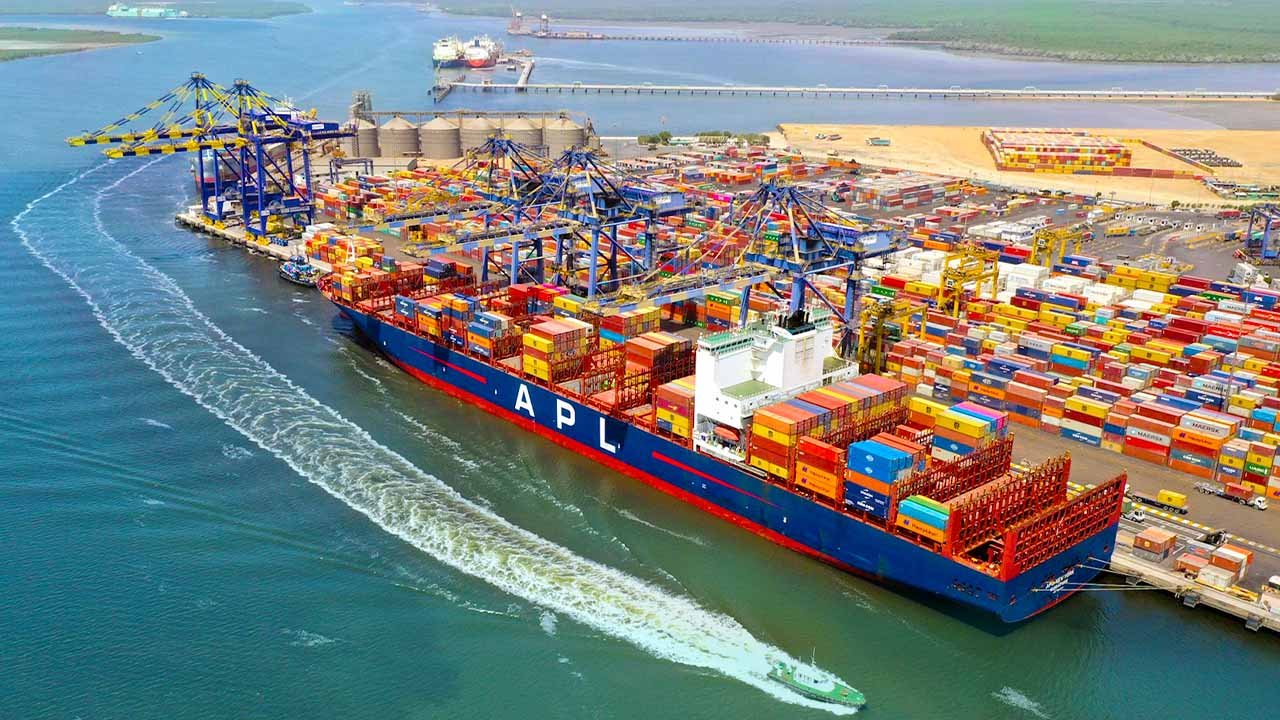
    During an address to members of the Korangi Association of Trade and Industry (KATI), Minister Sabzwari informed them that Pakistan and the United Arab Emirates (UAE) are collaboratively operating under a government-to-government (G2G) agreement. This partnership is focused on three key projects, including the establishment of bulk terminals.

    As outlined in a press release by KATI, Mr Sabzwari revealed plans to develop industrial parks spanning 1,250 acres within Port Qasim. These parks will provide a range of facilities designed to attract foreign investors.

    Mr Sabzwari acknowledged that there have been no tariff increases at the port, although the implementation of digitalization is still pending. Additionally, limitations on leases have been imposed. He added that terminal charges have recently been adjusted from 60 cents to 80 cents, resulting in a modest 1.5 per cent increase in production costs for industrialists.

    Furthermore, the minister highlighted the successful consultations conducted with various stakeholders, including container operators, to mitigate demurrage charges and penalties at the port. As a result, Karachi Port has eradicated all penalties associated with these charges.

    According to Dawn, the minister also announced the acquisition of a maritime vessel for transporting edible oil, thus expanding the fleet at Karachi port. In addition to this development, approval has been granted for the construction of a beach wall at Karachi Fish Harbour, aimed at promoting tourism and recreational activities. Furthermore, plans have been set in motion to establish a laboratory dedicated to marine fisheries.

    Previously, KATI President Faraz-ur-Rehman stressed the importance of regulating shipping companies and proposed the implementation of a system for demurrage charges and penalties based on the value of containers. He suggested that this system should be made accessible online, similar to the shipping booking system WeBoC.

    Zubair Chayya, Deputy Patron-in-Chief of KATI, expressed that Pakistan, with its extensive 1,400-kilometre-long coastline and abundant marine resources, including highly sought-after fish species, should prioritize utilizing the coastal region for tourism, thereby reaping substantial economic benefits.

  • Pakistan moves closer to finalising oil deal with Russia as team arrives in Karachi

    Pakistan has taken a step forward in its efforts to secure a loan deal with Russia, as a delegation has arrived in Karachi to finalise a crude oil deal with Pakistan State Oil (PSO). However, the Energy Ministry has not yet revealed the payment method or the discount rate for the crude oil prices, keeping it confidential for now.

    Technical teams from the Operational Services Centre held talks with the PSO team last month, but progress was not made on the constitution of a Special Purpose Vehicle responsible for importing crude and making payments. The Russian delegation is now in Pakistan to finalise the government-to-government agreement, including the mode of payment. Pakistan wants to pay in rupee, while Russia is asking for payment in China’s Yuan or Ruble. Once the deal is done, Pakistan will place an order with Russia for crude oil purchase.

    According to sources, the Russian ship will arrive in mid-May, and the current Brent price in the international market is $85.16 per barrel, while Russian oil is available at $47-48 per barrel. The State Bank of Pakistan (SBP) is asking local banks to open letters of credit for importing Russian oil, but they are hesitant to do so mainly because of the G7 countries’ regulations of following the price cap of $60 per barrel or below it and making payments under Society for Worldwide Interbank Financial Telecommunications (SWIFT) arrangement.

    PSO has never imported crude oil before, and refineries have been importing crude under long-term agreements from ADNOC and Saudi Aramco. However, in the case of Russian crude, refineries will not be involved in the import, but it will be an SPV with representatives from PSO and PSC. Pakistan may get Russian crude price with a discount close to $50 per barrel, $10 per barrel below the cap price imposed by G7 countries on Russian oil in the wake of the war on Ukraine.

    One of the top officials in the coalition government suggests that the decision to import Russian crude under the government-to-government agreement at a 30 per cent discount may not provide the required relief as shipping and refining costs will erode the maximum discount. Additionally, Pakistan refineries will only be able to extract 10 per cent MS out of Ural crude and 50 per cent furnace oil.

    The government needs to conduct a commercial analysis to determine if importing Russian oil will benefit Pakistan’s economy and to what extent. Industrial sources suggest that the government should evaluate the economic benefits of importing Russian oil carefully.