The federal cabinet okayed a two-day weekend for government personnel on Tuesday, but no decision on early market closure could be made.
The meeting was hosted by Prime Minister (PM) Shahbaz Sharif, during which methods to limit loadshedding, which has increased in recent weeks, were reviewed. The meeting was unable to reach a consensus on early market closures and referred the matter to a sub-committee for additional study and consultation with stakeholders.
Power Division gave a summary for the Energy Conservation Measure at today’s meeting, which included market closures by 7 pm with Saturdays off due to rising petroleum prices, according to Geo.
As part of the austerity plan to decrease costs, the cabinet also approved a 40 per cent reduction in government employees’ petrol entitlement.
Minister for Defence Khawaja Asif proposed four and a half working days a week on Monday to help save fuel and energy in the face of rising fuel prices and power shortages.
“In the current situation, all around the country, there should be a total holiday on Saturday and Sunday and a half working day on Friday in every week,” the defence minister stated on Twitter.
He suggested that there should be four and a half working days in a week, as well as an hour increase in office hours during working days.
The federal minister, in another meeting, suggested changing market schedules at a separate meeting last week, which was led by the premier.
Khawaja Asif has strenuously opposed the idea to open markets from 1 pm to 1 am, arguing that marketplaces should only be open during the day to maximise the use of sunshine, which is accessible 365 days a year.
He had stated that even without Karachi, we could save 3,500MW if the markets adjusted their timings correctly, but that painful decisions would have to be taken.
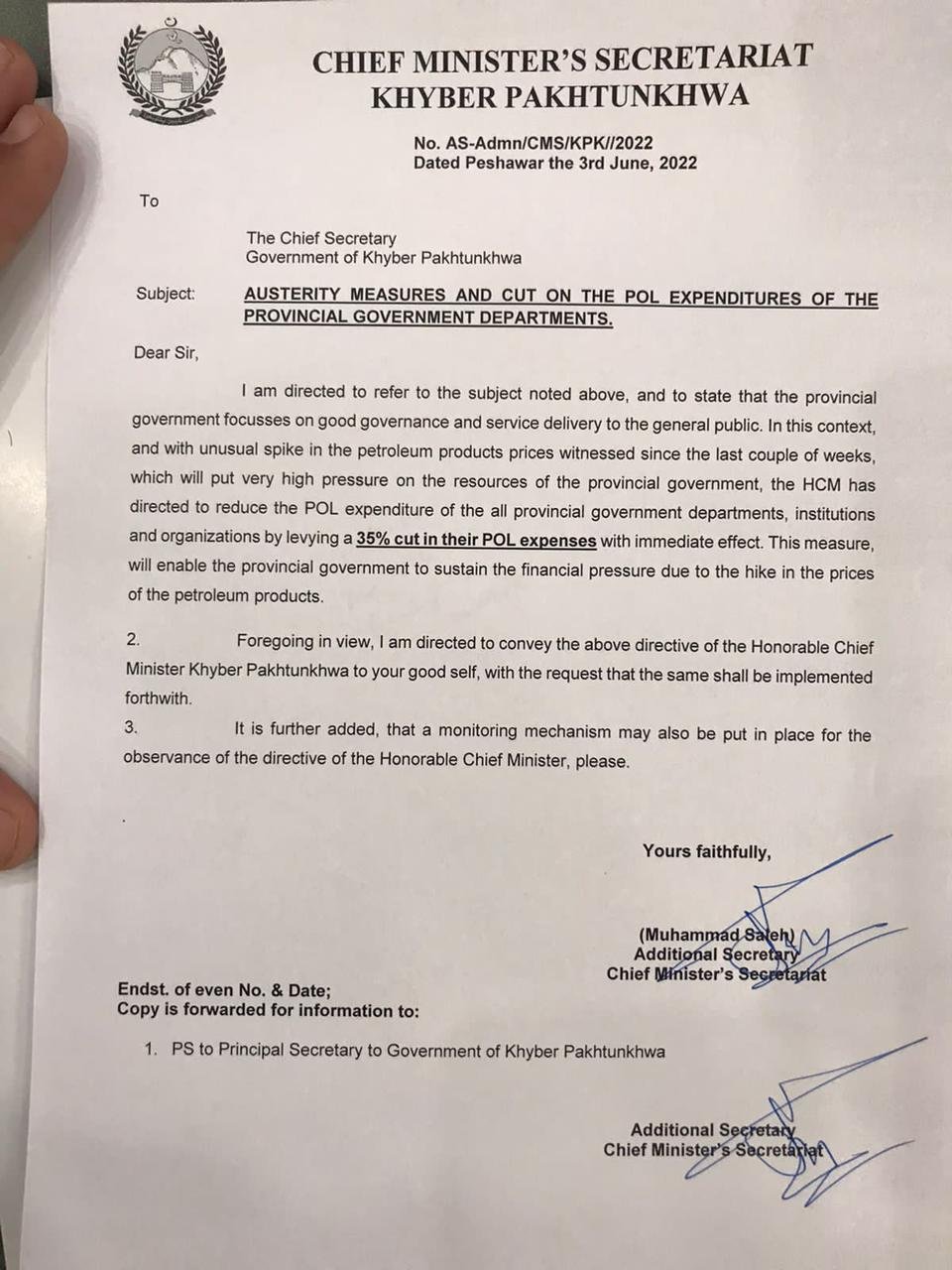
Following Sindh, the Khyber Pakhtunkhwa (KP) government has decreased free petroleum quotas for all provincial government departments, institutes, and organisations.
Chief Minister of KP, Mehmood Khan, has approved a 35 per cent reduction in the free gasoline allotment, according to an official notification issued by the KP Chief Secretary.
The news comes just hours after the Sindh government decided to reduce the Chief Minister’s (CM), ministers’, and provincial government employees’ free fuel quotas.
Keeping in view a substantial spike in POL prices within the last few days, the decision was made to limit spending and decrease the strain on the national kitty.
The latest petrol price hike came just hours after the National Electric Power Regulatory Authority (NEPRA) approved a power tariff hike of Rs7.91 per unit.
Sindh Chief Minister (CM) Murad Ali Shah lowered the petrol allotment of ministers and government officials by 40 per cent this week as part of his moderation campaign following another spike in petroleum prices.
Keeping in view a substantial spike in POL prices within the last few days, the decision was made to limit spending and decrease the strain on the national kitty.
“The rise in petrol price should not be a burden on the exchequer,” Sindh CM Murad Ali Shah said, increasing the treasury’s load entails intensifying the burden on individuals.
To meet the International Monetary Fund’s (IMF) conditions, the government has unleashed another big gasoline bomb on the country after another hike of Rs30. In less than a month, the price of petrol has risen by Rs60 to Rs209.86.
The latest petrol price hike came just hours after the National Electric Power Regulatory Authority (NEPRA) approved a power tariff hike of Rs7.91 per unit.
The price hike sparked riots in Karachi, with protesters wrecking a petrol pump and torching tyres on University Road. Despite expressing their dissatisfaction with the situation, the general public has requested that the government tightens its belt instead of putting the weight on the populace.
CM Sindh reduced the 40 % fuel ⛽️ Quota of cabinet members and government officials due to current inflation on petroleum prices. Purpose of this decision is to reduce financial burden on government.
— Sharjeel Inam Memon (@sharjeelinam) June 3, 2022
Senator Mustafa Nawaz Khokar, a top PPP lawmaker, also shared this attitude, suggesting a 50 per cent wage cut for politicians, generals, judges, and senior bureaucrats.
“Why should common folk shoulder the failures of the political, military and judicial elite? This joke has to end”.
If the average citizen is compelled to narrow his belt, Khokar believes that politicians, generals, judges, and top bureaucrats’ income should be halved and all amenities, including free utilities, should be removed.
The administration warned on June 2 that it would raise fuel prices by Rs30 for the second time in ten days, as an attempt to obtain the remaining funds from IMF.
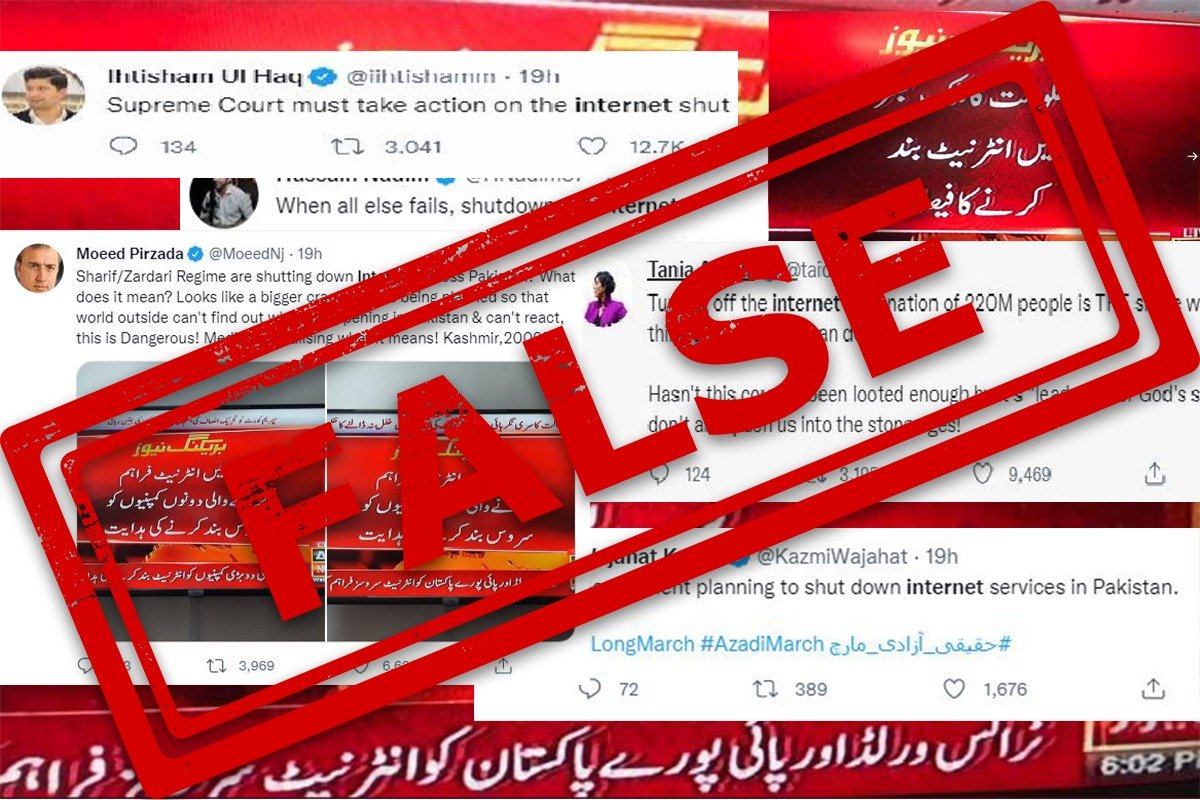
Claim: Internet was shut down for people in various parts of Pakistan in order to suppress the coverage of Imran Khan’s PTI rallies
Fact: The internet was not shut down but there is evidence of internet ‘throttling’ by internet service providers throughout the country
On May 25, several social media users took to Twitter to condemn the government’s “draconian” decision to shut down the internet. Popular personalities came out on Twitter, with their verified accounts with millions of followers and announced that the federal government has decided to shut down the internet, in light of the escalating tensions in Islamabad and to avoid social media coverage of Imran Khan’s rally.
Internet throttling is when your internet service providers limit the speed or bandwidth of your internet without taking your consent or informing you. In some cases, throttling also helps manage an unusual amount of traffic on the internet in order to equally distribute the bandwidth.
However, this is false.
Several people also tweeted that they had internet services available. However, everyone noted varying speeds at different times in the day. At The Current Check‘s office, we faced internet slowdowns throughout the day, but it was never shutdown.
Hija Kamran, digital rights advocate working at Media Matters for Democracy, tweeted asking people in Pakistan to confirm whether their internet is working fine and several people reported operational internet in Karachi and Islamabad, others claimed that they were facing issues in internet speed.
Hi, those in Pakistan, could you please confirm if your internet is working fine? Have you noticed any change in speed since morning? Which network and city?
An internet observatory organization called Net Blocks released a report on the same day confirming “disruptions” in the internet across Pakistan. However, according to their report these disruptions only lasted for two hours within the whole day, which does not even come close to the claim that the internet was shut down.
⚠️ Confirmed: Real-time network data show internet disruptions across #Pakistan as ousted Prime Minister Imran Khan organizes mass rallies; metrics show impact to multiple providers in cities including Karachi, Lahore and Islamabad 📉#LongMarch
In their report, NetBlocksconfirms that disruptions were faced by multiple internet service providers across Paksitan after 5pm on Wednesday, May 25. The service was restored within two hours, following the surge in complaints being posted on social media about the internet being throttled by ISPs across the country.
NetBlocks used “diffscans”, a tool which allowed them to map the IP address space of Pakistan in real time and display corresponding internet connectivity levels and outages, which are represented in the graph attached in their tweet.
Instagram blogger @karachista1, on Tuesday, uploaded a story sharing several screenshots of conversations and images showing passengers’ items being confiscated at the Karachi and Lahore airport. Several social media users including lawyer Abdul Moiz Jaffery and actor and comedian Shafaat Ali, complained on Twitter about this being a ‘draconian step’.
The complaints ranged from AC Customs confiscating their private goods and others complaining that their bags were opened and imported items removed before they even landed in Karachi. Conflicting reports came forward with others reporting that they went through nothing like this. For some, only expensive makeup was confiscated and for others even biscuits and chocolates were not spared. Some customers were given receipts and some were not even informed.
The slip provided by the Airport Customs officers for future recovery of the items
So does this mean that if you plan on going abroad for a vacation this summer and want to bring back some goods for your family, you will not be allowed to take them from the airport? Pretty much.
We spoke to Irshad Gul, a Karachi businessman who regularly imports and exports items for his businesses. According to him, using passengers to bring back imported goods is usually considered an easy method of bringing imported items inside the country without paying any duty. He confirms that at the Karachi airport, Customs officers have become extremely vigilant, looking into all luggage bags and hand carries to scavenge for imported items. Large quantities of a single item like chocolates might be confiscated and you have to pay customs on them, but if you have a personal, small amount of chocolates, those should be allowed to go through. If you are planning to bring back some gifts from your vacation abroad, consider carrying only a few items which you can explain very well.
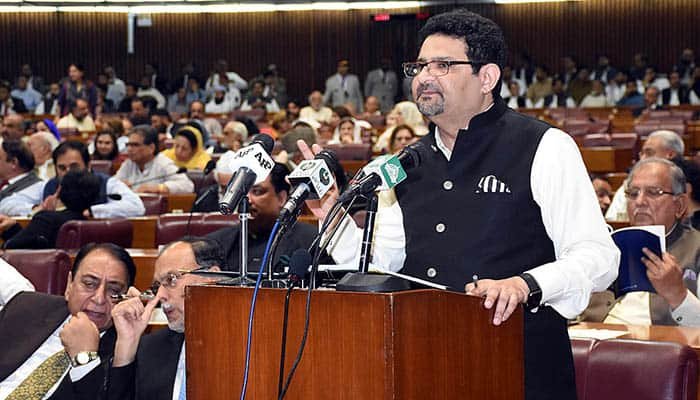
The irregularity in people’s online reported experiences only shows the usual inconsistency in Pakistani bureaucracy. A short while ago, Finance Minister Miftah Ismail tweeted an explanation for the airport and Customs staff’s behavior, clarifying that these steps are being taken to counter the smuggling of the banned items by professional packers. Although Ismail claims that ordinary citizens with a few items will not be harassed but citizens are reporting that even a few personal makeup items are being confiscated. Others say they were allowed to leave the airport unscathed.
As the govt has banned the import of a few non-essential items, we fear that smuggling of these items will increase. Therefore we have increased enforcement against professional khaipyas. Officials know who they are. Ordinary citizens bringing in a few items will not be harassed. pic.twitter.com/NFXJMAymUs
Finance Minister Miftah Ismail attached this official notice with his tweet, clarifying that all steps being taken by the airport staff are in accordance with government directive and compliance is necessary. Confiscated items include ‘food stuff, fruits, sanitary ware, used mobile phones and branded shoes’.
Several Twitter users including Shafaat Ali requested Miftah Ismail to take action as they believe personal products should be allowed and only commercial consignments should be subjected to these limitations.
The coalition partners have decided that the present government will go ahead with the completion of its term instead of early elections in the country, reports Geo News.
The decision comes after a meeting of the heads of the ruling alliance today (Monday). The allied parties’ heads met to discuss the political situation in the country after the announcement of a long march towards Islamabad by Pakistan Tehreek-e-Insaf (PTI) Chairman Imran Khan on May 25.
As per the news outlet, the government has also decided to take tough decisions in a bid to steer the country out of an economic crisis. As Finance Minister Miftah Ismail has left for Doha, Qatar, for talks with the International Monetary Fund (IMF), the tough measures will reportedly be taken in a couple of days.
The Shehbaz Sharif government has stated that it needs support from “all sides” to take tough decisions in order to revive the economy.
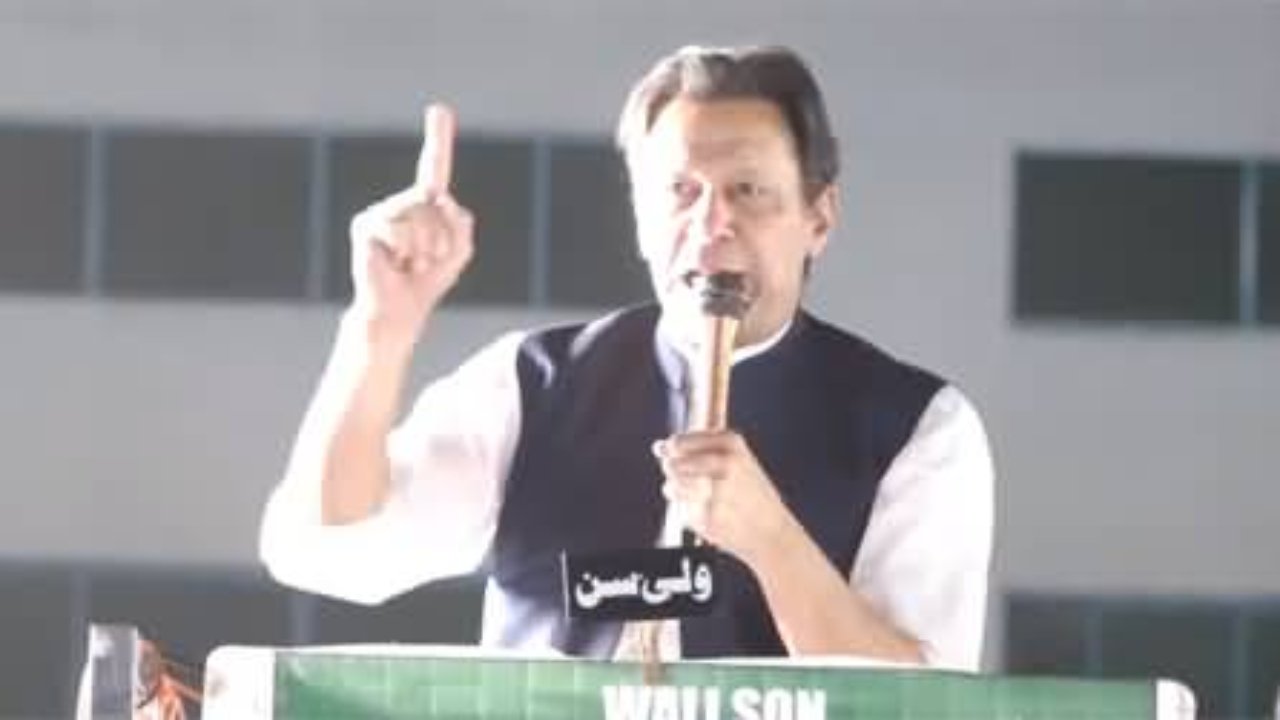
Pakistan Tehreek-e-Insaf (PTI) Chairman and Former Prime Minister (PM) Imran Khan said that he has recorded a video, in which he has mentioned each and every character behind the “conspiracy” against his government, and if something happens to him, it will be released.
Addressing a rally in Sialkot on Saturday, Khan claimed that his life is in danger and a “conspiracy” is being hatched to take his life. According to him, the video is stored in a “safe place.”
“I have recorded this video as I don’t consider what I do as politics, this is jihad to me,” the PTI chairman added.
The former PM said, through this video, he will expose everyone who went “against the country’s interest. He urged people to come out against the current government and support PTI and if they do not do this, the “public will have no future”.
Khan praised the judiciary and said they took a good initiative by taking a suo motu on the night of the no-confidence vote and opened the gates of the courts.
The PTI chairman told the judiciary that Rs24 billion corruption cases were filed against the current PM Shehbaz Sharif, Chief Minister (CM) Hamza Shahbaz, and his brother, Suleman Shahbaz.
He said that the former Federal Investigation Agency (FIA) director Dr Rizwan, was bold enough to continue investigating corruption cases against the “Sharif mafia”.
Reacting to a police crackdown at the party’s venue, Khan said that when PTI was in power, it did not stop the then-Opposition from holding long marches, rallies, or sit-ins.
On Saturday, police got the PTI’s rally venue vacated after they tried to hold a public meeting at the CTI ground, a property belonging to the Christian community, without their consent. However, the party changed the venue to the public VIP Ground in Sialkot.
Khan claimed that his party has always remained peaceful, but warned Interior Minister Rana Sanaullah and the government, that if they resort to violence, then they would “not get any place to hide”.
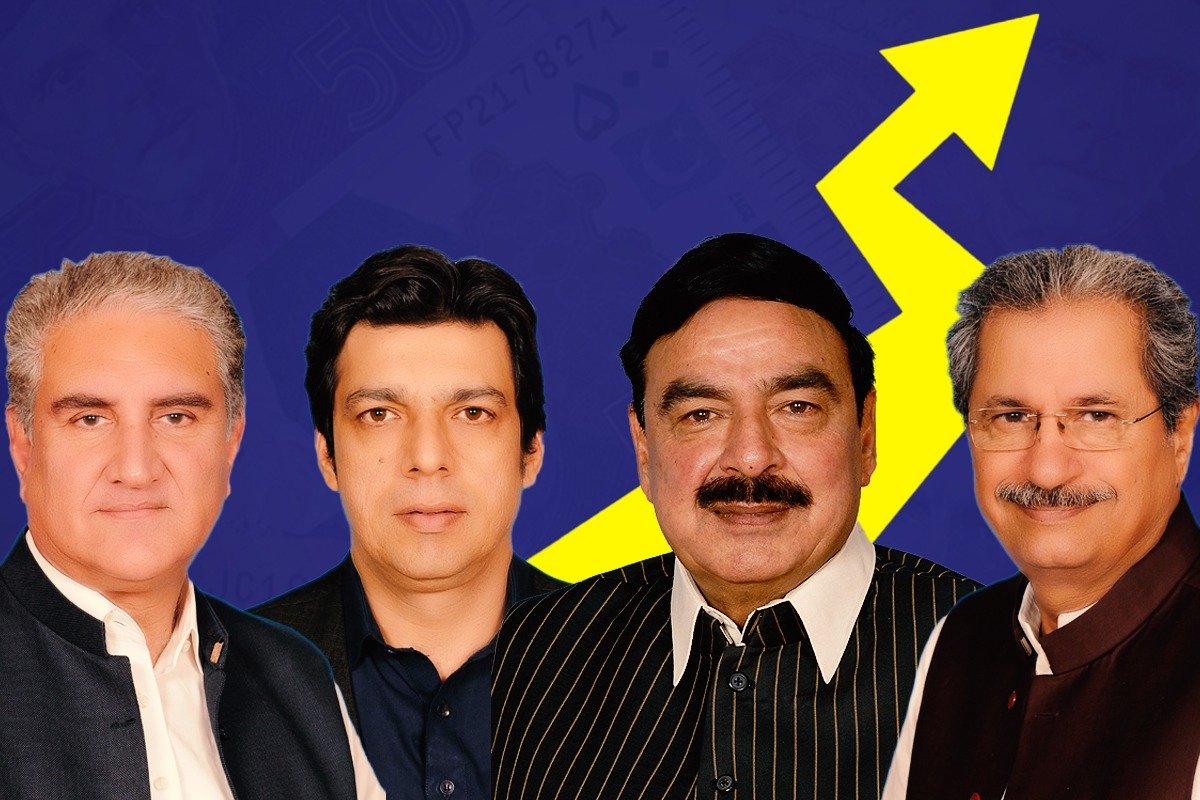
Official documents revealed that several members of Pakistan Tehreek-e-federal Insaf’s cabinet enjoyed gains in their fortunes during their term in parliament and as ministers, despite being elected on pledges of fighting corruption.
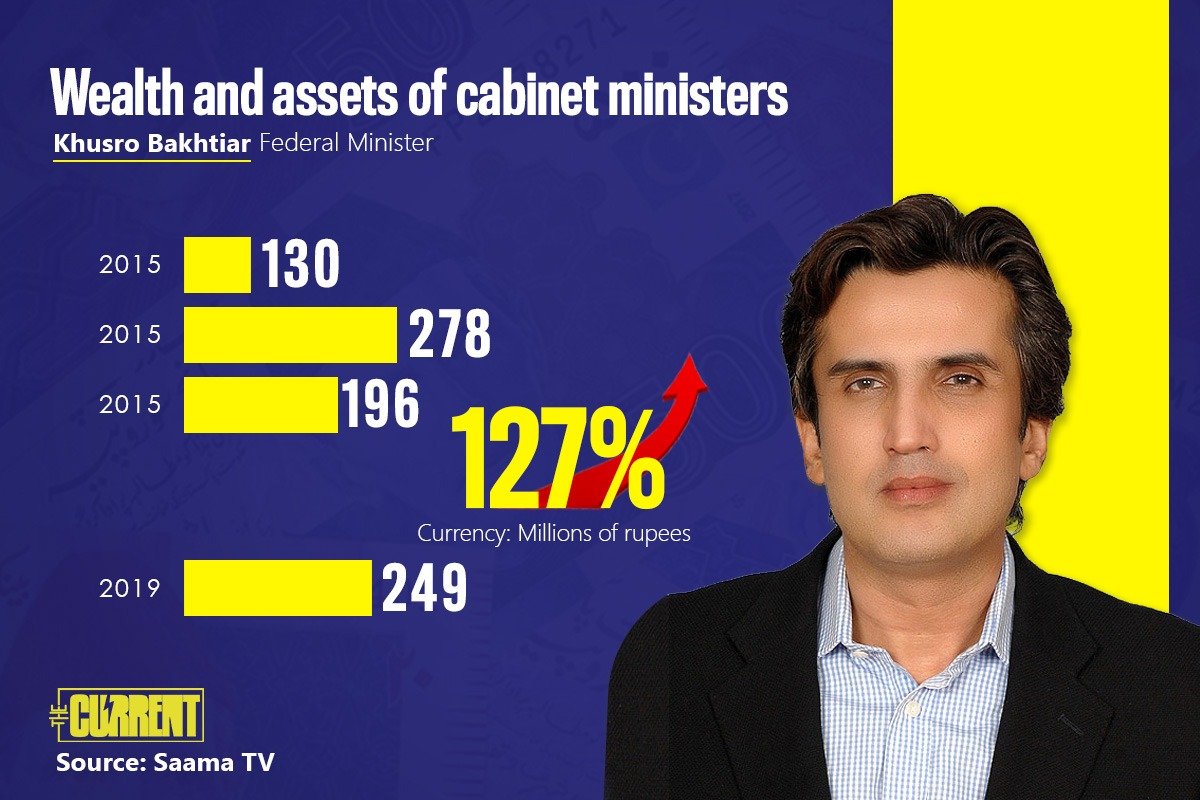
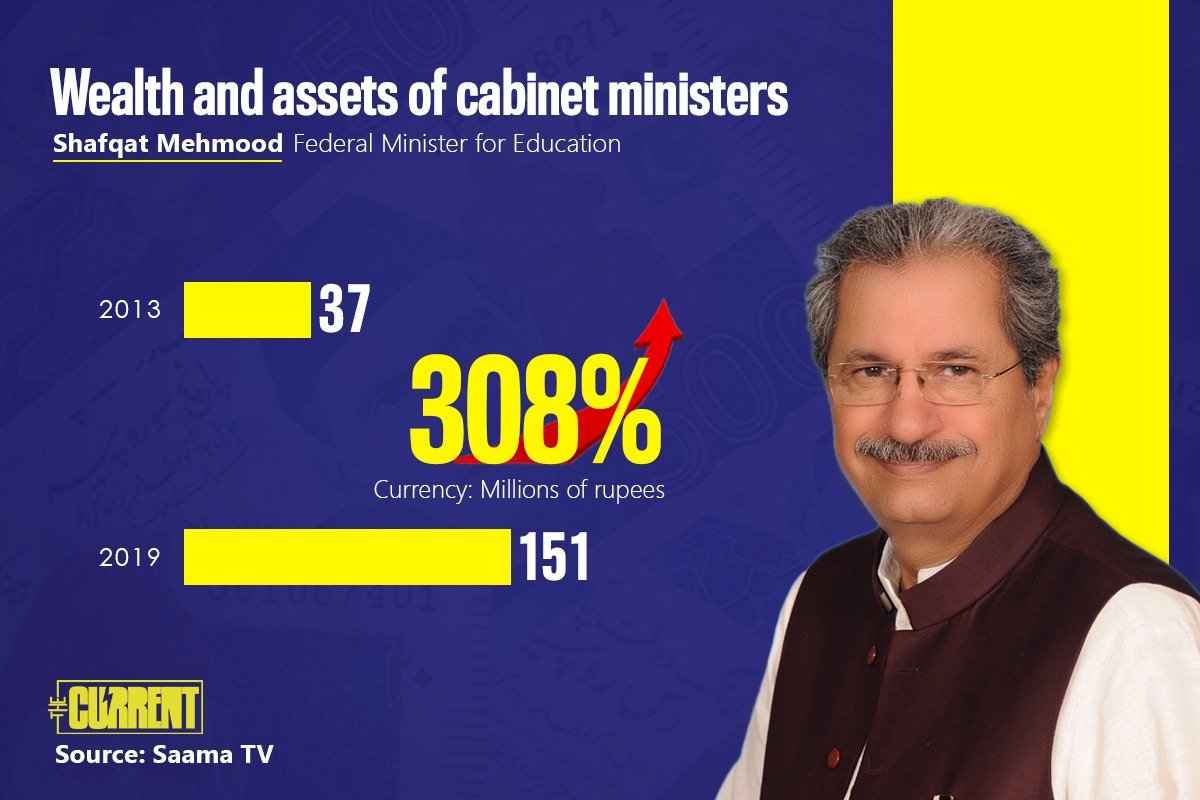
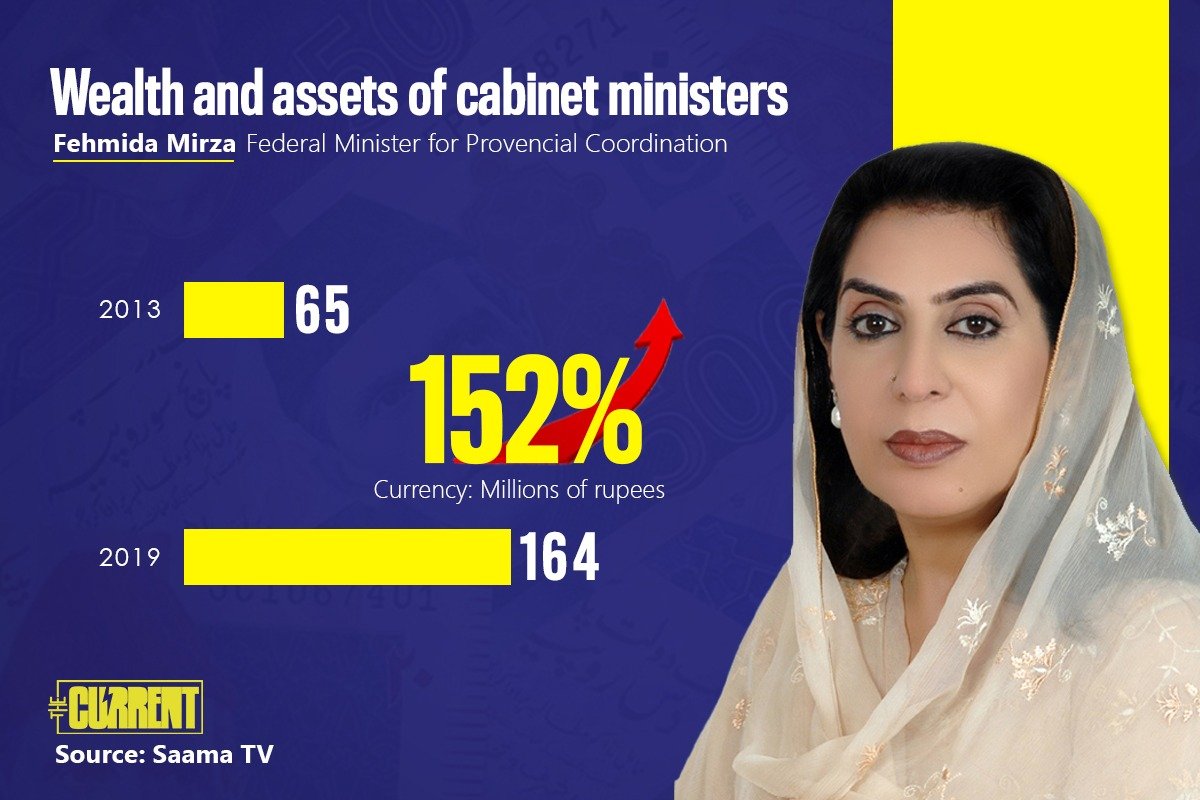
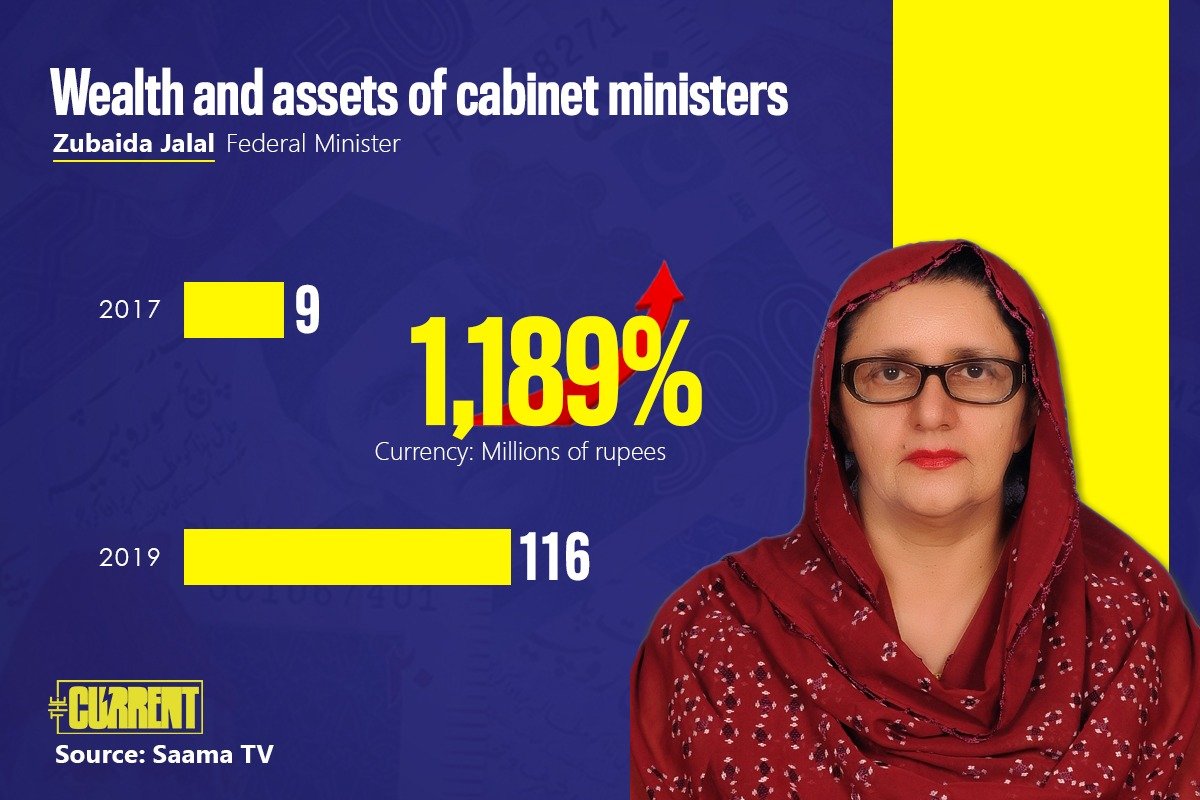
According toSAMAA TV, Shah Mehmood Qureshi and Sheikh Rasheed Ahmad, Omar Ayub Khan, Azam Khan Swati, Khusro Bakhtiar, Faisal Vawda, Shafqat Mehmood, Fehmida Mirza, Zubaida Jalal, Mahboob Sultan, and Tariq Cheema are among the listed former ministers.
Since select ministers received notices to explain their excessive wealth, the majority blamed weak wealth and asset declaration regulations, which did not contribute to increases in the valuation of assets overtime or the amalgamation of entities.
An inquiry into assets spontaneously declared before the Election Commission of Pakistan (ECP) and Pakistan’s tax authorities — primarily the Federal Board of Revenue (FBR) — by cabinet members who worked under former Prime Minister Imran Khan disclosed that plenty of of them saw a tremendous upsurge in their riches, with growth proportions primarily in the triple digits.
As per the official record, the ECP sent notices to at least six former ministers while they were still in government in 2019 and 2020, requesting them to clarify their wealth-related issues.
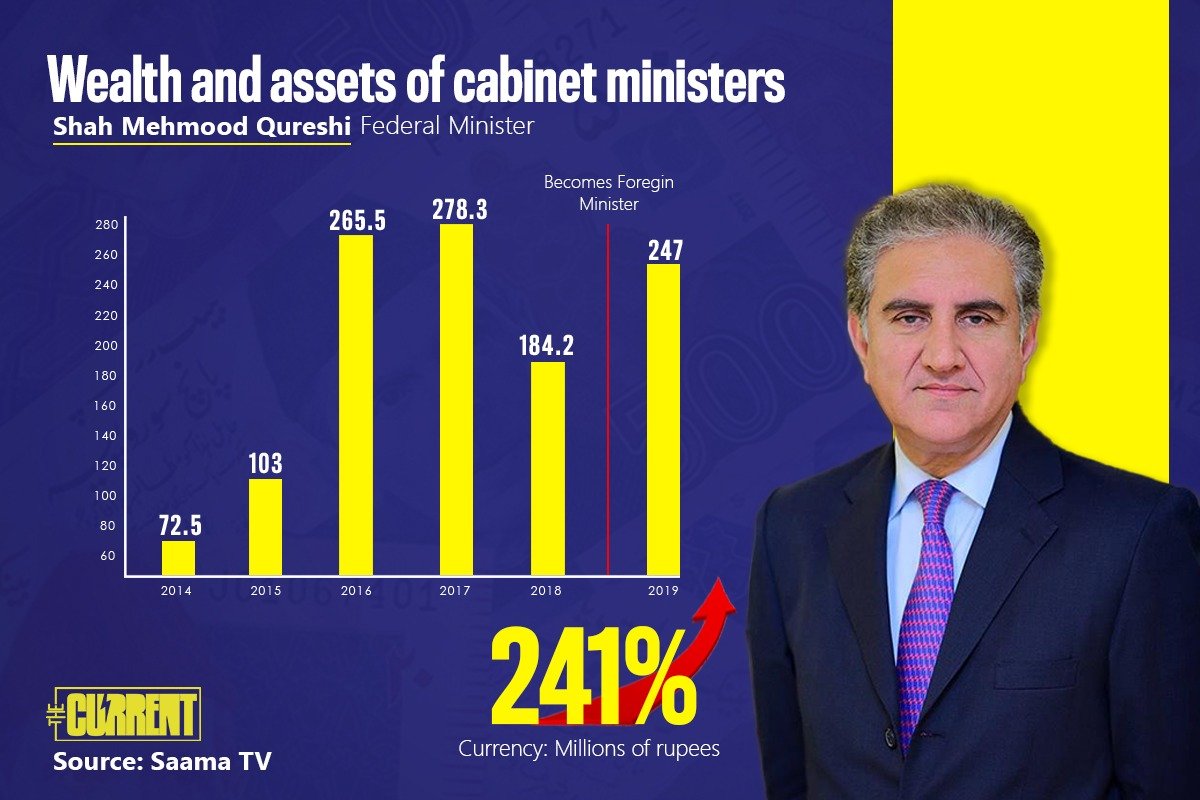
From 2014 to 2019, former foreign minister Shah Mahmood Qureshi, who has been a staple of the parliament for more than a decade and served twice in the federal cabinet in two different governments, had a 241 per cent growth in his wealth.
He and his wife held assets worth only Rs72.5 million in 2014, according to asset declarations he submitted to the ECP and the FBR. In the following three years, his assets nearly quadrupled, reaching Rs278.3 million, a 283.86 per cent increase over his wealth in 2014. Qureshi’s fortune dropped dramatically to Rs184.2 million in 2018, the year he returned to the Treasury benches, albeit with a new party, the PTI. However, while in power, it soon increased to Rs247.1 million in 2019, a rise of 240.82 per cent since 2014.
When questioned, Qureshi recounted how the worth of his assets had evolved over the years.
“The reason for the increase in assets was that during 2015-16, my wife received her share from the sale of property situated in Lahore, which had been gifted by her mother, and shares from sale proceeds of inherited property worth Rs169.6 million and Rs22.6 million,” he claimed. In October 2017, duplicates of sale deeds were handed to the ECP, according to the former minister.
“The ECP raised this observation too,” he said regarding the increase in his wealth, adding, “I and my dependent family members are all filers with the FBR”.
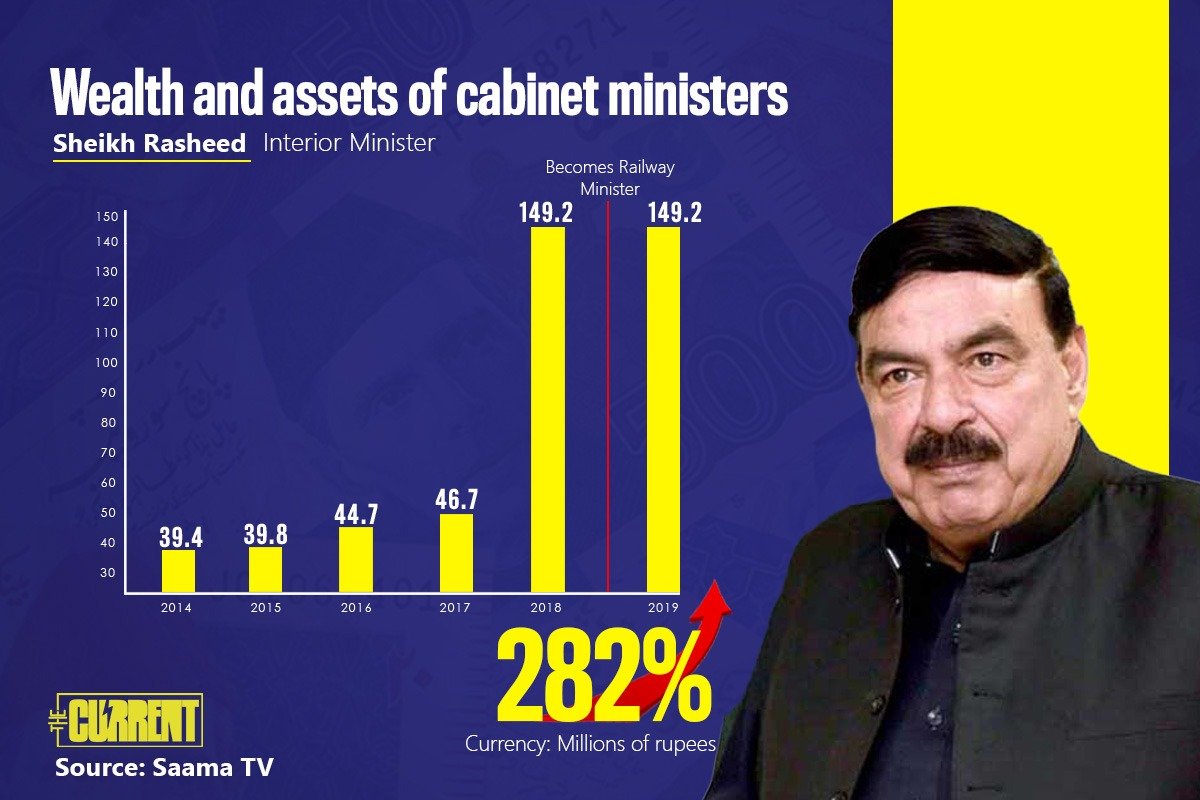
Sheikh Rashid, the former interior minister, watched his fortune increase by nearly 278.68 per cent between 2014 and 2019.
The financial disclosures for 2014 revealed that he only had Rs39.4 million in assets. Earnings climbed by Rs0.4 million to Rs39.8 million. His holdings steadily expanded over the next two years, reaching Rs44.7 million in 2016 and Rs46.7 million in 2017.
Conversely, in 2018, the time he was elected to power, his assets boosted by Rs100 million to Rs149.2 million. In 2019, there was no movement in reported assets. After inquired why his assets had suddenly changed, Rashid said that the discrepancy was due to an advance payment he had obtained for reselling a portion of land in 2018.
“I received Rs100 million as advance after making a deal of land to be sold last year, [2021],” he said, adding, “There is no such increase in my assets”. The former interior minister stated that the rise in his declarations submitted with the FBR and the ECP had been properly disclosed.
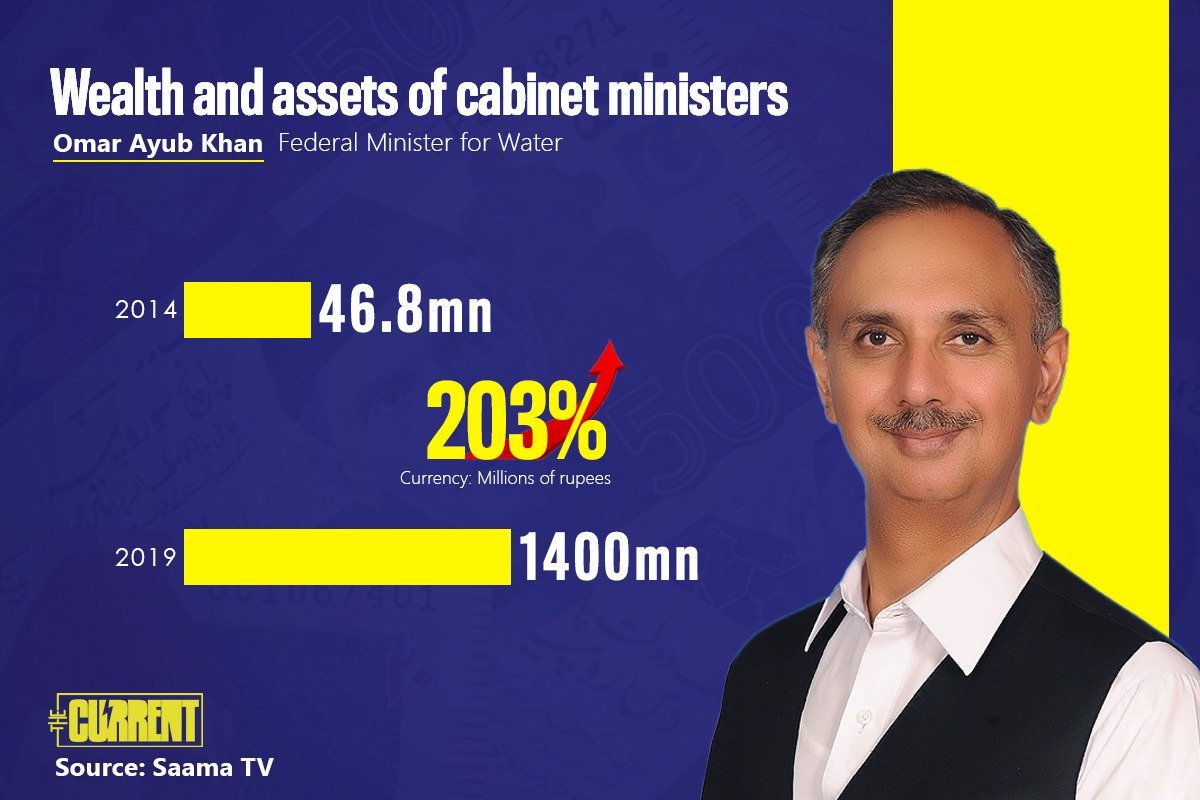
Between 2014 and 2019, the fortune of former federal minister of water Omar Ayub and his wife jumped by 203 per cent.
As per Ayub’s filings to the ECP and FBR in 2014, he and his wife held assets worth Rs461.8 million. This comprised Rs132 million in assets held by his wife and Rs329 million in assets owned by the minister. This value had risen to Rs1.4 billion by 2019. Surprisingly, while his wife’s holdings increased slightly to Rs201 million, Ayub’s assets increased to Rs1.2 billion. Each has debts worth only Rs26.3 million, according to the disclosures.
As a result, the ECP expressed concerns about Ayub’s and his family’s unexpected surge in wealth.
“It was explained to the ECP in 2019 that it [increase in wealth] is because of group formation having no cash involvement,” Ayub said, confirming that the top poll body had issued him a notice on this subject. Ayub claimed that he owned shares in Nova Synpac Ltd. and NovaGene Pharmaceuticals Ltd., which increased in value by approximately Rs1.071 billion.
“My assets have decreased (excluding this group formation) since I took an oath as a minister because I resigned from my group,” he claimed, adding that the increase was due to the consolidation of all of his businesses under the group.
“This cannot be reflected in a declaration, which is always a reflection of statements submitted to the FBR and there cannot be any difference [between them] otherwise it would have been challenged there,” he explained.
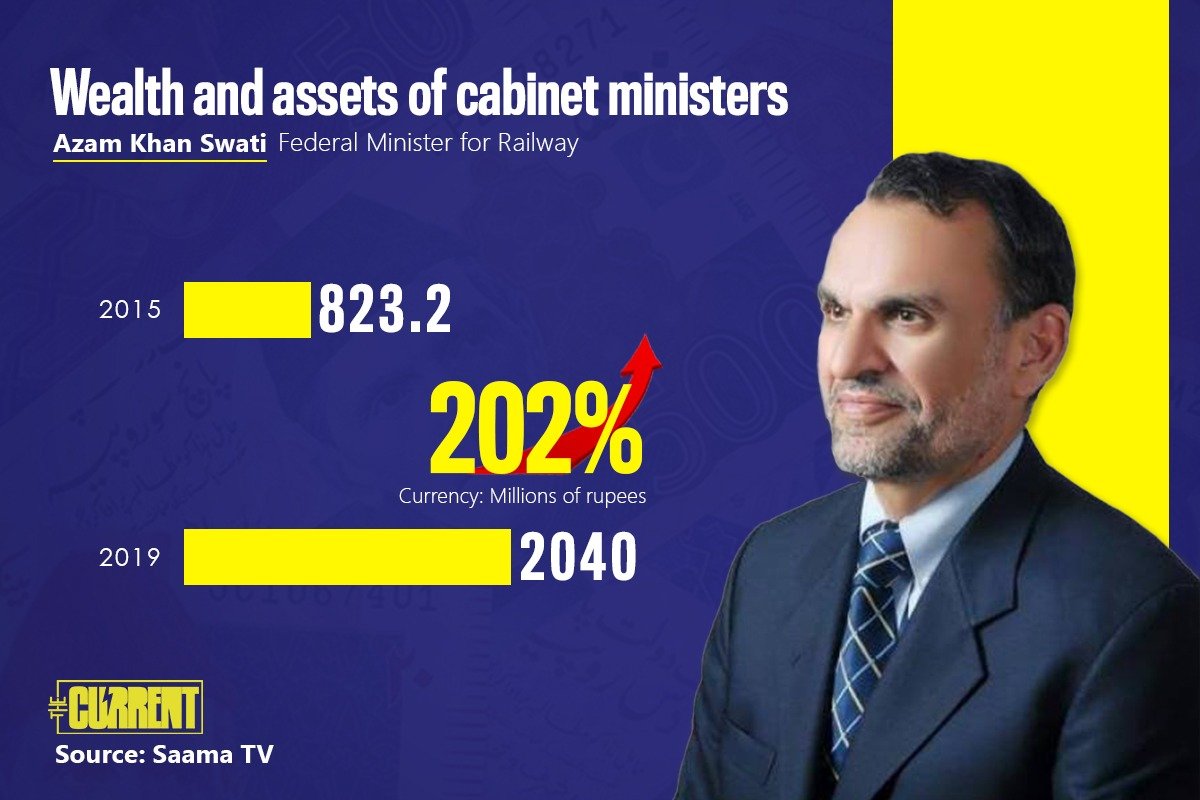
Azam Swati, the former federal railways minister, saw his fortune grow by 202 per cent from Rs823.2 million in 2015 to about Rs2.04 billion in 2019. He reported that his liabilities increased from Rs417 million in 2015 to Rs811 million in 2019.
“[Your] figures are wrong due to incomplete information being furnished before ECP by members and cabinet members owing to faulty legal requirements mentioned in ECP Act 2017,” he explained.
He further said that his situation was slightly unusual. “In Pakistan, I have no income and no business.” I am confident that our FBR wealth statement [filed] will be compared to ECP in 2019 [asset declarations],” he remarked, worried that the statistics may contain a few errors.
“ECP has no efficiency and capability to audit assets and liabilities,” he disclosed, adding, “We were making mistakes filing combined [wife and husband together]”.
“Now we have corrected the mistake and filed separately because the wife is not dependent,” Swati told SAMAA TV.
Khusro Bakhtiar, the former federal commerce minister, saw his fortune rise by 127.8% from Rs109.3 million in 2013 to Rs249 million in 2019. In 2014, he had assets of Rs130 million, which more than doubled to Rs278 million in 2015, shrank to just Rs196 million in 2016, and then surged again in the next three years.
“Increase in assets were mainly comprised of [various] sources during the year 2014 to 2019,” he told SAMAA TV, detailing that these sources included savings from agricultural income, proceeds from the sale of land worth Rs40 million, other sources which contributed Rs20 million.
Bakhtiar also claimed that he actually paid Rs27.5 million in agricultural taxes from 2017 to 2020, and that he owed Rs60 million in 2016.
Former federal minister for education Shafqat Mahmood and his family had a 308 per cent growth in asset valuation between 2013 and 2019, making them one of the most successful federal ministers in terms of percentage increases. According to Mehmood’s filings, his and his family’s assets were valued at just Rs37 million in 2013, but had grown to Rs151 million by 2019.
“My assets have not changed since 2013 onwards,” Mehmood asserted, explaining “The change that you see is the cost re-evaluation from purchase price to market price”. The ex-minister further said that he has 360 kanals of hereditary land, a few more plots, and automobiles that he never assessed.
“There will, of course, be some variation regarding bank accounts. There will also be a slight difference in detail offered to FBR and ECP with regards to bank accounts,” he maintained. He went on to say that in his previous disclosure, he had combined the amounts in all of his bank accounts to present a single total.
“My wife is a distinct taxpayer because she works, but I have included her assets as well”, he explained.
Fehmida Mirza, the former federal minister for interprovincial coordination, had a similar scenario, with her net worth rising from Rs65 million in 2013 to Rs164 million in 2019.
“I did not see any rise in my assets and wealth at all,” she told SAMAA TV. She did, although, reveal that she had sold some property in Pakistan in order to purchase a home in the United Kingdom.
“This new increase in my assets has already been declared with the FBR and the ECP,” she stated.
Contrary to the PTI’s cabinet’s millionaire members, one of the “weakest” members of the federal cabinet, former federal minister Zubaida Jalal and her husband, had a 1,189 per cent growth in their fortune in a short period of time. Their riches increased from Rs9 million to Rs116 million in 2019.
Jalal, on the other hand, described the quick spike in wealth as the outcome of changes in declaration requirements.
“There is no big difference in my assets’ declaration” she asserted while speaking to SAMAA TV. The value of immovable assets was not mentioned in data provided in past elections, she said, noting that the ECP declaration requirements changed over time.
“[We are] required to mention values of assets in the asset declaration for this time,” she stated. She explained that the variations in asset values were attributable to market forces working on enterprises.
“Ups and downs will keep happening [in mining operations and business],” she said, as she reminded that her husband owns the National Coal Mining Company since the 1960s.
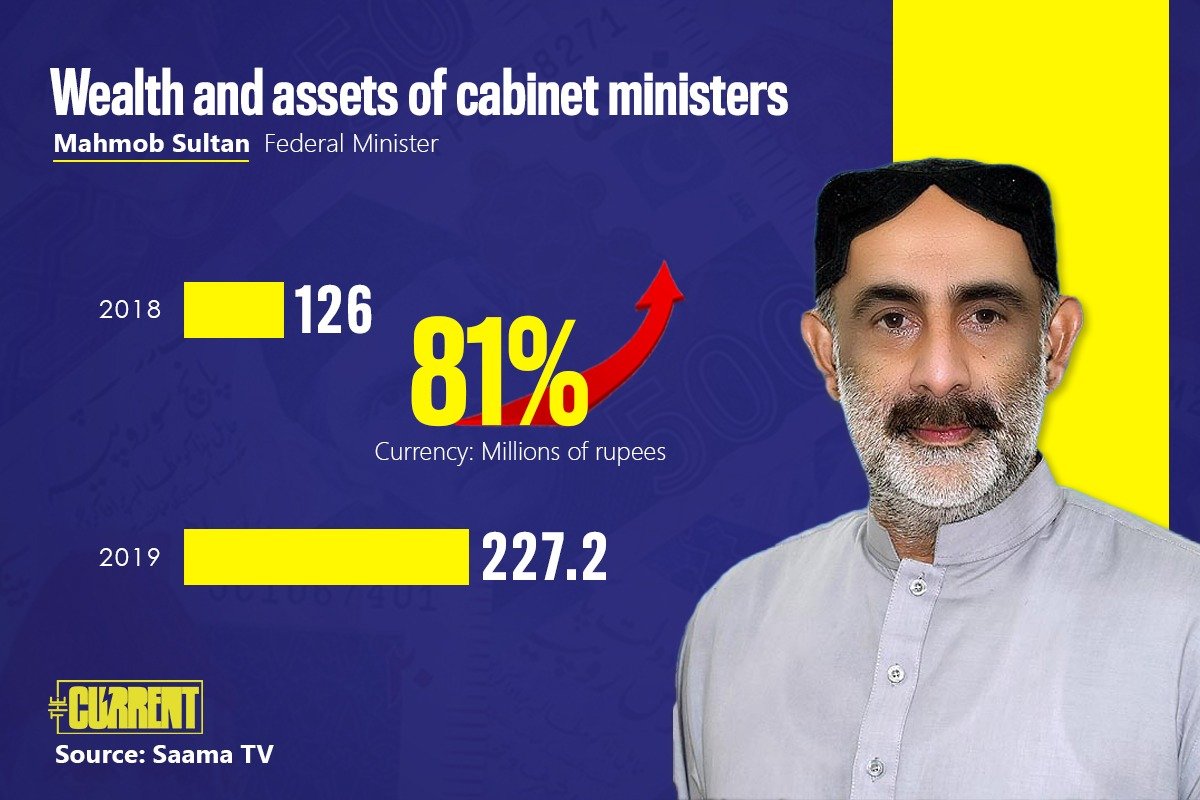
Former state minister Mahboob Sultan was one among the ministers who saw only double-digit asset growth. Only 81 per cent of his assets increased from Rs126 million in 2018 to Rs227.2 million in 2019. It’s worth noting, however, that his growth of nearly Rs100 million occurred while he was in the cabinet of ministers.
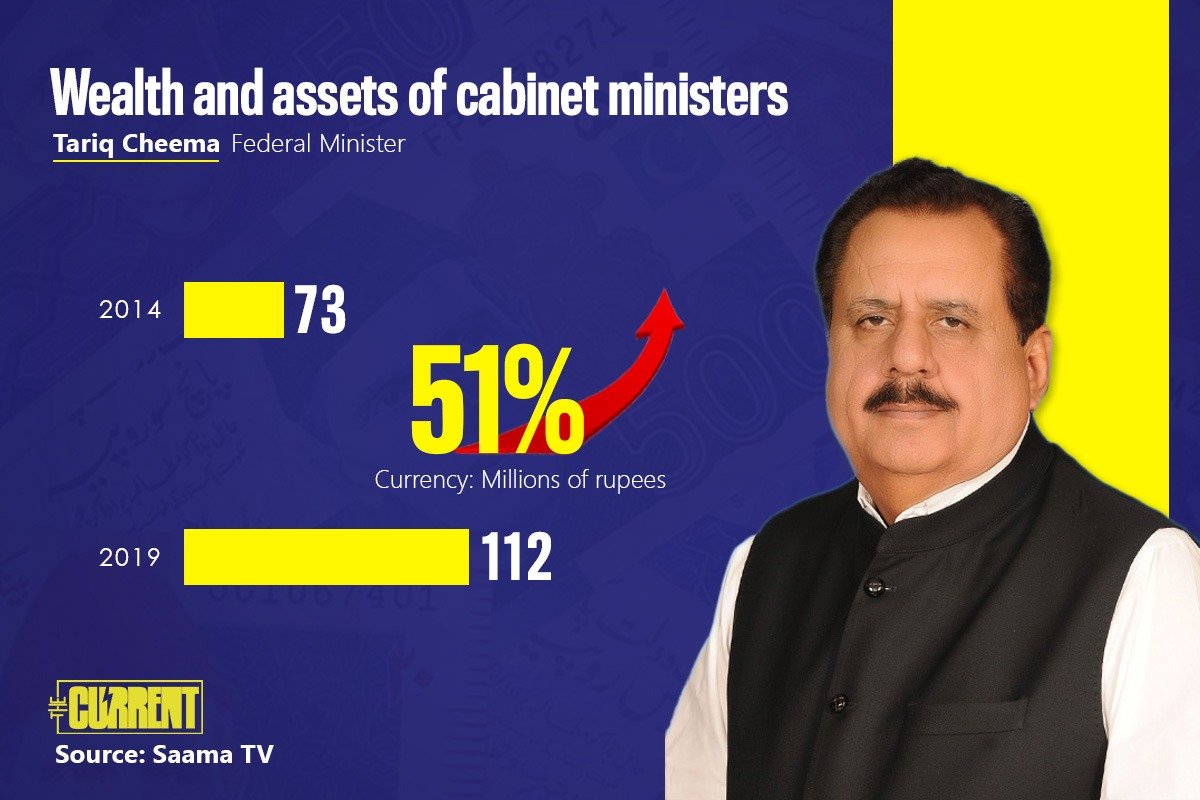
Tariq Cheema, the former federal minister for housing and infrastructure, showed the smallest growth in his wealth, going from Rs73 million in 2014 to Rs112 million in 2019. He did not, however, assess the value of his inherited assets and report them to the electoral or tax authorities.
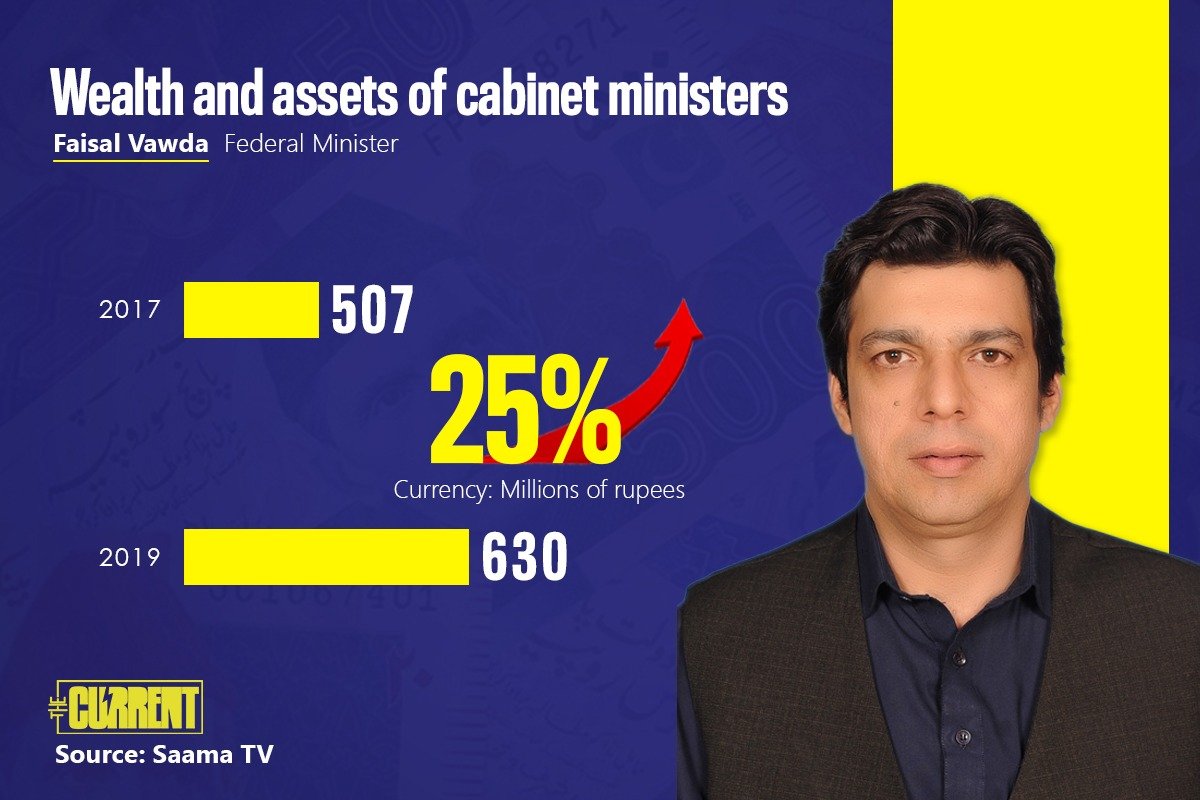
Former federal minister Faisal Vawda and his family witnessed their fortune increase by 25 per cent from Rs507 million in 2017 to Rs630 million in 2019. He was among the most controversial cabinet ministers who were eventually dismissed by the ECP.
Despite multiple requests from SAMAA TV, neither Sultan, Cheema, Vawda, nor an ECP official have commented on inquiries regarding their wealth.
Lahore Police has recently revealed performance statistics on eliminating crime during the first three months of 2022.
According to Capital City Police Officer (CCPO) Lahore Additional IG Fayyaz Ahmad Dev, the first three months of the current year were peaceful in terms of overall law, order and security.
He stated that the Lahore Police Department has applied advanced operational techniques, effective modalities, and systemic reforms to help bolster its force’s capacity to limit violence and preserve tranquility in the city.
Performance Statistics
Lahore Police detained 648 wanted members of 253 dacoit gangs and recovered cash and precious items valued at more than Rs27 crore.
From the criminals, police recovered nearly 70 vehicles, 1,123 motorcycles, 14 laptops, and 843 cell phones. During the city’s big anti-illegal weapons operation, Lahore Police detained 1,214 criminals and registered 1,207 cases against them. From these criminals, police confiscated 05 Kalashnikovs, 90 rifles, 41 guns, 1,007 pistols, 01 carbine, 07 revolvers, and over 6,000 bullets.
During the last three months, police arrested 1,973 criminals, filed 1,939 FIRs against them, and recovered more than 19 kg heroin, 843 kg charas, three kg ice, 50 kg opium, and 13,815 liters of liquor from them.
Likewise, the Lahore Police Department nabbed 1,119 gambling suspects and filed 237 cases against them, collecting more than Rs23 lakh 69 thousand in gambling money. Moreover, the Punjab Police is aggressively chasing violators of the tenancy registration, displaying weapons, and violation of the Loudspeaker Act throughout Punjab. There were 1,117 incidents of exhibiting firearms, 4,795 cases of illegal possession of arms, and 624 licenses cancelled.
According to a Punjab Police spokesperson, 882 cases of tenancy law violations were reported in the metropolis, with 1,233 people arrested. Similarly, 304 cases of violation of the Loudspeaker Act were registered, 310 individuals were arrested, and 1,203 cases of exhibiting and carrying illegal weapons were registered, with stern legal action being taken.
Special squads have been created on the orders of IG Punjab Rao Sardar Ali Khan to apprehend the culprits, while the effectiveness of the Anti-Riot Force, Dolphin Squad, and Police Response Unit has also been improved. The Commander of Lahore Police is closely watching the productivity of police officers in order to meet crime-control objectives.
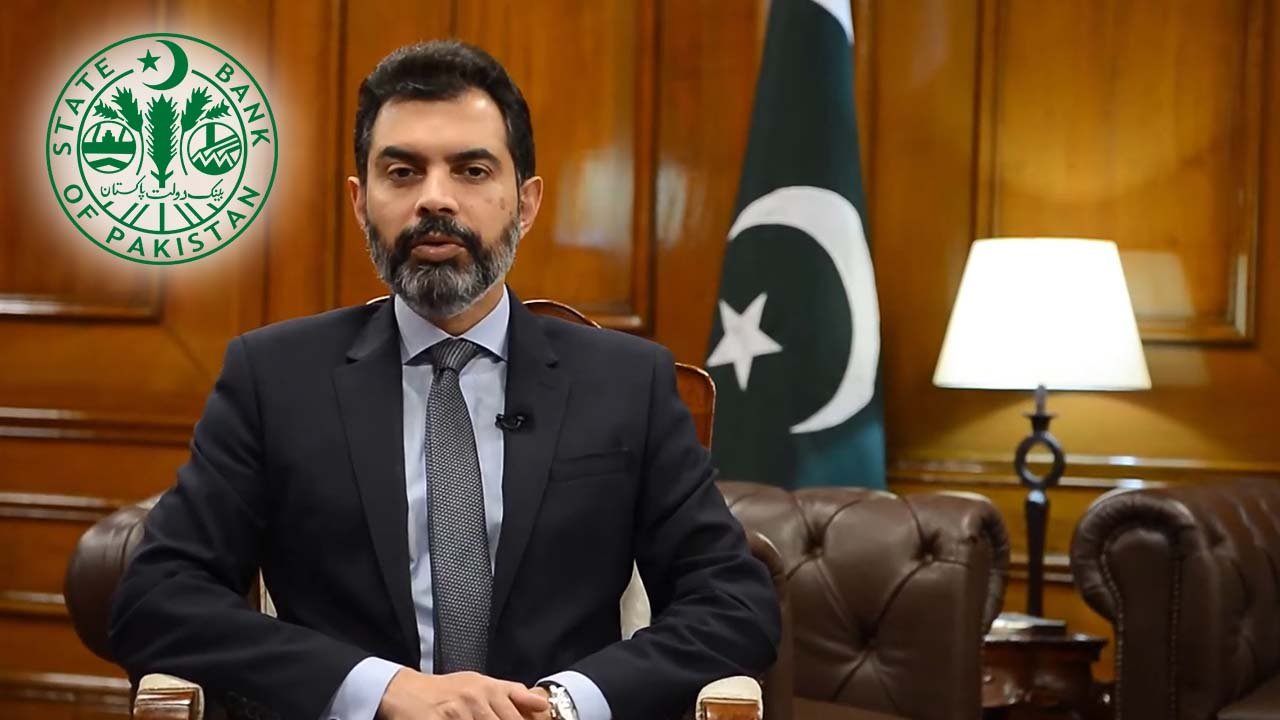
In a recent interview, the Governor of the State Bank of Pakistan (SBP), Dr. Reza Baqir expressed concern over the continuous deterioration in foreign exchange reserves but remained optimistic that a renewal of loans will be witnessed in the near future, which, coupled with SBP’s initiatives, will enhance market confidence.
He claimed that the decline in reserves is “clearly alarming, but we are convinced that the central bank’s initiatives will prevent further deterioration”.
According to data issued by the central bank on April 7, the reserves massively declined by $728 million to $11.32 billion as of April 1.
The decline, according to SBP, is primarily attributable to debt repayment and government payments linked to the settling of an arbitration judgment.
In addition to this, the currency even hit new lows in the week, forcing the SBP to intervene by boosting the policy rate, declaring a 100 per cent cash margin on 177 commodities with instant effect, and hiking the markup percentage by 2.5 per cent for borrowing under the Export Finance Scheme (EFS).
In response to the Monetary Policy Committee’s (MPC) recent rate hike, Baqir stated that the move was made to tackle growing inflation and lessen external pressures. “The foreign exchange market has been under a lot of pressure for more than a month. A number of factors contributed to it: first, there was political uncertainty; second, our reserves were drained due to debt payments”.
Consequently, the Pakistani rupee ended its devaluation run on April 8, and the KSE-100 Index witnessed positive sentiment, ending the day with an impressive gain of 658 points.
The SBP Governor also discussed the skyrocketing petrol prices, which remain elevated because of the Russia-Ukraine conflict, adding more pressure on the local currency.
The central bank made a determined decision after analyzing the statistics to lower inflation, improve foreign exchange reserves, and boost business confidence.