Tag: government

  • Govt allows private companies to import COVID-19 vaccine

    Govt allows private companies to import COVID-19 vaccine

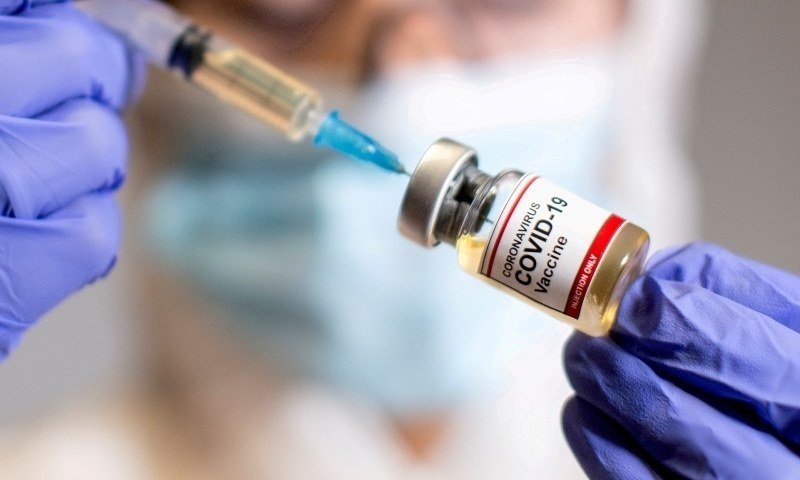
    The government will allow private companies to import coronavirus vaccines and has agreed to exempt such imports from price caps as the world scrambles to secure supplies.

    The documents show the National Health Services, Regulations and Coordination division had sought a special cabinet exemption to allow for such imports while excluding the imported vaccines from the strict price cap regime that is typically applied to all drug sales within the country.

    The federal cabinet, the documents suggest, has approved the proposal.

    State Minister of Health Dr Faisal Sultan said that the government still planned to inoculate its population for free and only a “small minority” who wish to pay for the shots will have that option in the open market.

    “Only those who wish to get it via private sector will pay anything,” he said. “Personally, my assessment is that when the vaccines are available and we have market competition, that will automatically set the prices.”

    Pakistan began rolling out the anti-coronavirus jabs last week after receiving half a million shots of the Chinese Sinopharm vaccine.

    As per the roll-out plan, the vaccine will first be made available to more than 400,000 doctors and frontline healthcare workers, teachers and social workers because they run the highest risk of exposure to the contagious disease.

    After that, the shots will be provided to citizens over the age of 65, who generally face a higher mortality risk from the virus.

    Pakistan received its first tranche of the Sinopharm jabs, given by China as a “gift”, on Tuesday last week. The shipment marked the first shots to be imported into the country where more than 550,000 cases of the disease have been reported since the outbreak in February last.

    In addition, the government is due to receive a further 1.1 million doses of the Sinopharm vaccine by the end of this month, Foreign Minister Shah Mahmood Qureshi had announced late last month.
  • Protesting govt employees face authorities’ wrath in Islamabad

    Protesting govt employees face authorities’ wrath in Islamabad

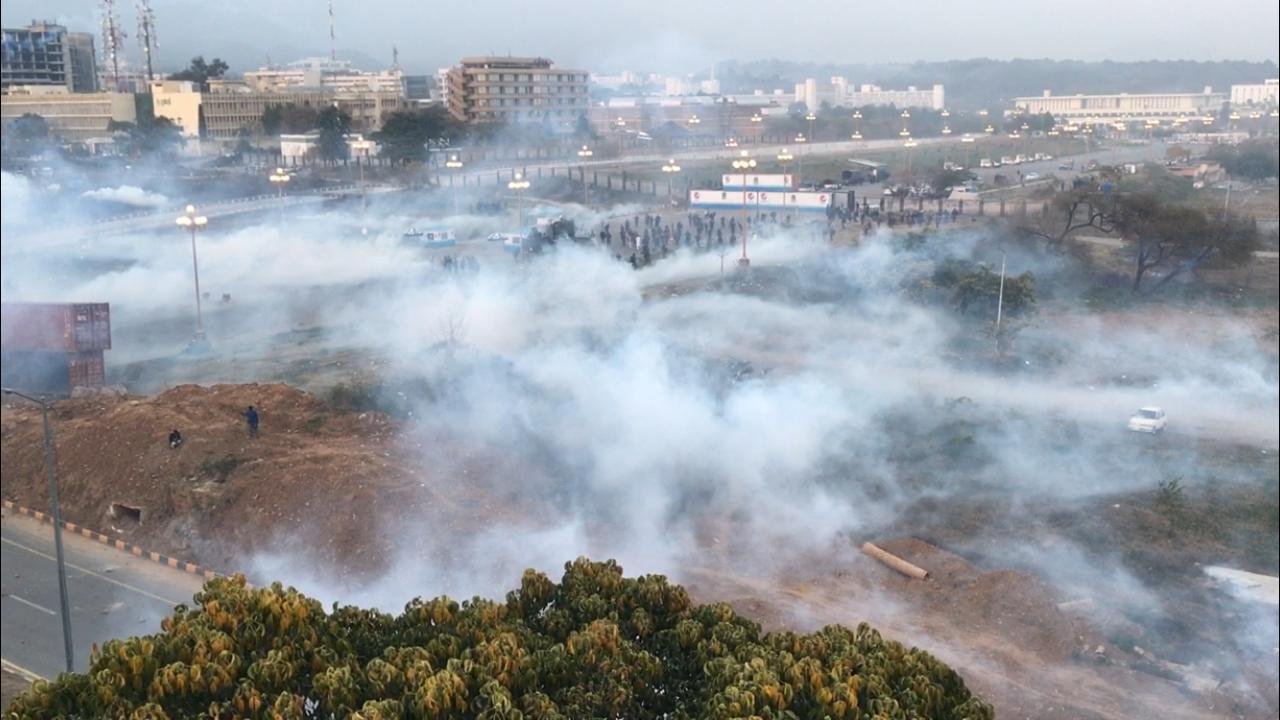
    Protesting government employees on Wednesday faced wrath of authorities in Islamabad as they headed towards the Parliament House on Constitution Avenue.

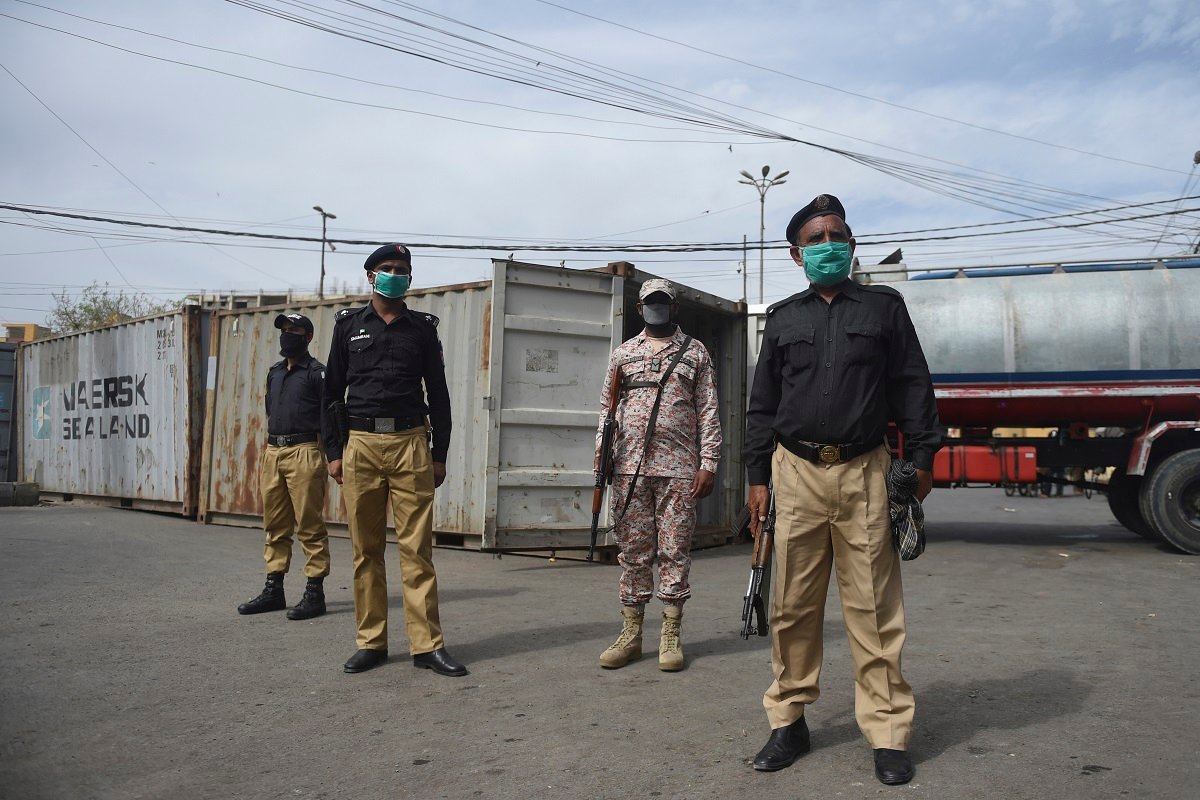
    According to Geo News, the protesters have reached D Chowk while Islamabad authorities have blocked the way towards the Parliament with containers. Demonstrators have started bypassing the containers because of which the police once again resorted to tear gas shelling to disperse them.

    Because of the tear gas, some police and Rangers personnel also had to retract for a while, reports said.

    The protesters have demanded that the containers be removed or else they will remove it themselves.  

    The federal government employees are demanding a raise in their salaries and had gathered today after their leader Rehman Bajwa and nine others were arrested overnight.

    Following the arrests, the government workers in the federal capital had announced they will march towards the Parliament House from Pakistan Secretariat for their demands and the release of their leaders.

    The police had resorted to tear gas shelling after they made a move towards the parliament. The protesters at one point also encircled Federal Minister for Information Shibli Faraz.

    At another, the protesting employees also closed the doors to the secretariat bringing the government machinery to a halt.

    At least two dozen protesting employees were taken into custody under Section 16 of the Maintenance of Public Order Ordinance (MPO).

    The government employees were protesting against the income disparities between various federal government employees. They have been demanding a 40% increase in their salaries.

    The protesters have received support from government employees over grade 17, who have also demanded an increase in their salaries.

    The All Pakistan Clerks Association and government employees of Khyber Pakhtunkhwa (KP), Balochistan, Punjab and Sindh are also supporting the protest.

    Speaking on the matter, Interior Minister Sheikh Rasheed said that the government dealt with the protesters “correctly” and it was the demonstrators who had backtracked on the agreement.

    “We dealt with this correctly we are increasing the salaries of 95% of employees at an average of 40%,” the minister told Geo News when asked about the situation.

    “The matter will be resolved [if] they go back to their initial demands,” said the interior minister.

    Geo also quoted sources as saying that a two-member committee, comprising interior and defence ministers, had been tasked with dealing with the protesters and was in contact with the finance ministry over the raise.

  • Shahid Khaqan Abbasi ‘approached with offer to form government’

    Former prime minister (PM) Shahid Khaqan Abbasi has claimed that during his time in jail over corruption allegations, he was approached with an offer to form a government.

    “I told the messengers to go and talk to party supreme leader Nawaz Sharif instead,” the former premier said while speaking to The News.

    Avoiding naming the messenger, Abbasi added that both Nawaz and the Pakistan Muslim League-Nawaz (PML-N) would not be willing to be part of any dialogue leading to the setting up of what he termed “another hybrid government”.

    He reiterated his stance for an inter-institution dialogue for the sake of a better future for Pakistan, and added that Nawaz would be ready to be part of a meaningful dialogue with all stakeholders.

    Abbasi said that Nawaz Sharif’s recent speeches were not meant to humiliate anyone but to identify the problems and fix them for the sake of a brighter future and in the interest of the people of Pakistan.

    To a question, he said that it was his personal view that an inter-institution dialogue was the only way forward for the country.

    When asked if Nawaz would agree to such an idea, he responded in the affirmative and said that the PML-N supremo had no personal agenda or grudge with anyone but wanted to address the fundamental wrongs of the system, which could only be corrected through a meaningful dialogue process.

    He said that the purpose of the opposition’s current public mobilisation campaigns was to pave the way for a meaningful dialogue process.

    He explained that neither Nawaz nor the Pakistan Democratic Movement (PDM) is against institutions; instead, they only refer to the mistakes of certain individuals holding responsible positions.

    READ: Ex-PM Abbasi speaks about meeting on economy with Gen Bajwa

    Once again referring to Nawaz’s recent speeches, he said that although the PML-N supremo had named the army and the Inter-Services Intelligence (ISI) chiefs, the purpose was not to humiliate them but to point out what went wrong.

    He said that all the stakeholders should sit together for the greater good of the masses instead of focusing on personal issues and grudges.

    Regarding the PML-N’s contacts with the establishment, he said that politicians and the establishment have always maintained contacts but after the recent episodes, where such contacts were revealed in a scandalous manner, the trust level for such interactions was dashed. At times, these contacts are made in the best national interest, he said, but the manner in which such meetings were recently portrayed, has compelled the PML-N to stop such interactions.

    Abbasi maintained that currently there was no contact between the PML-N and the establishment and such contacts could not be restored before the revival of trust between the two sides.

  • Govt to reopen schools with strict COVID-19 SOPs: Shafqat Mahmood

    Govt to reopen schools with strict COVID-19 SOPs: Shafqat Mahmood

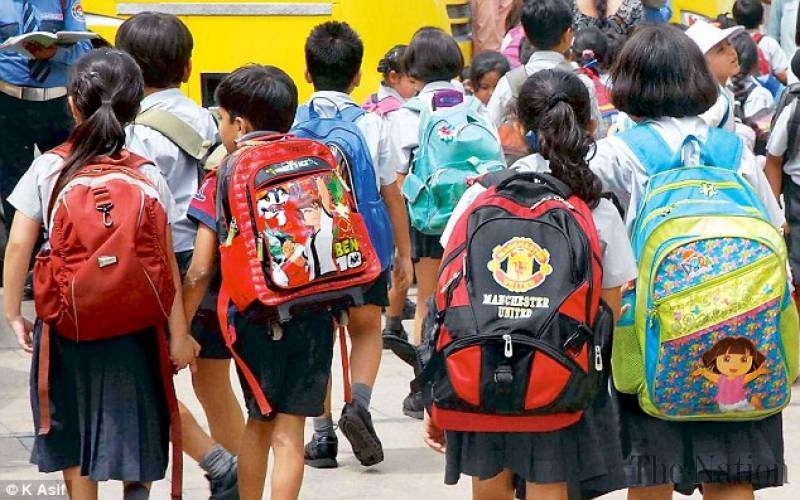
    Federal Education Minister on Monday said the government was considering reopening of schools under the implementation of COVID-19 Standard Operating Procedures (SOPs).

    Talking to the media after a meeting at the minister’s office, the minister said suggestions had been taken from the private schools and Madaris of all provinces, including Azad Jammu and Kashmir and Gilgit-Baltistan.

    Mahmood said a meeting had also been arranged with the Ministry of Health in this regard, and that the decision would be taken keeping in view the NCOC data. He said the education ministry also discussed with those countries that had opened schools under various SOPs through UNICEF.

    The minister said according to the Gallup Survey, around 70% of parents were willing to send their children to school under COVID-19 SOPs.

    “We want to end the uncertainty on the basic important issue like education,” he said.

    The minister hinted at holding a press conference on the issue to take parents into confidence after the preparation of a road map.

    While the Provincial Minister of Punjab for School Education took to Twitter and stated that there is no definite date announced for reopening of schools in the province.

  • Amid shortage, govt likely to allow petrol stations to set their own prices

    Amid shortage, govt likely to allow petrol stations to set their own prices

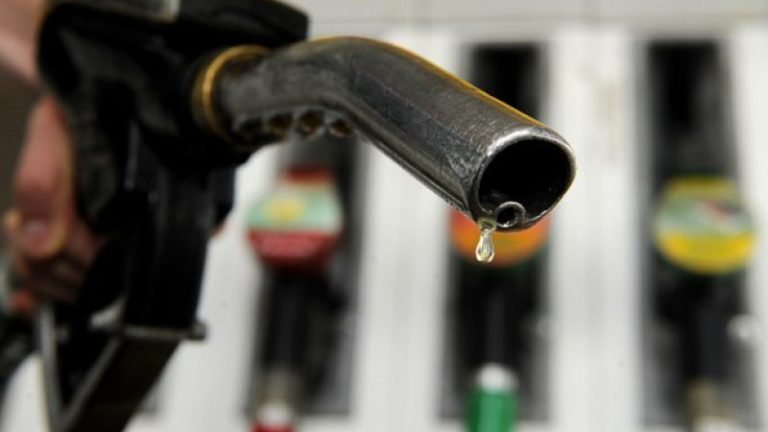
    As consumers across the country face difficulties due to petrol shortage, the government is currently contemplating completely deregulating pricing and marketing of petrol. 

    According to a report published in Dawn,  the government is considering doing away with uniform pricing of petrol and deregulating it in line with other petroleum products like hi-octane blending component (HOBC) which are already deregulated. 

    Recently oil marketing companies (OMCs) have come under severe criticism for their alleged collusive behavior that has seen the price of HOBC, to increase to Rs148-160 per litre. 

    While the government slashed petrol prices to Rs74 per litre in line with the decrease in international oil prices, no such reduction was seen in the price of HOBC. 

    According to the report, the government has also decided to deregulate the Inland Freight Equalisation Margin (IFEM) that currently ensures uniform prices throughout the country. As a result, consumers that are close to ports and refineries will be able to buy petroleum products at a cheaper price that may differ anywhere from Rs1 to Rs5 depending on the transportation cost.

    Earlier, on June 4, the Competition Commission of Pakistan (CCP) had taken notice of public concerns and complaints about the shortage of petroleum products in the country and had initiated an inquiry to see whether such a shortage is the result of any anti-competitive activity.

    The CCP’s inquiry will determine the possibility of the existence of any anti-competitive practices causing the shortage of fuel in the country and the undertakings involved in it.

    The inquiry will further examine why the impact of the reduction in the prices of oil have not resulted in the corresponding reduction in the prices of the lubricants and other oil-based products, including the prices of hi-octane, which are primarily deregulated products.

    Similarly, the Oil and Gas Regulatory Authority (OGRA) had also expressed its reservations last week regarding high prices of HOBC and had asked OMC’s to set prices at reasonable levels keeping in view the interests of the consumers. 

  • Govt announces Eid holidays

    Govt announces Eid holidays

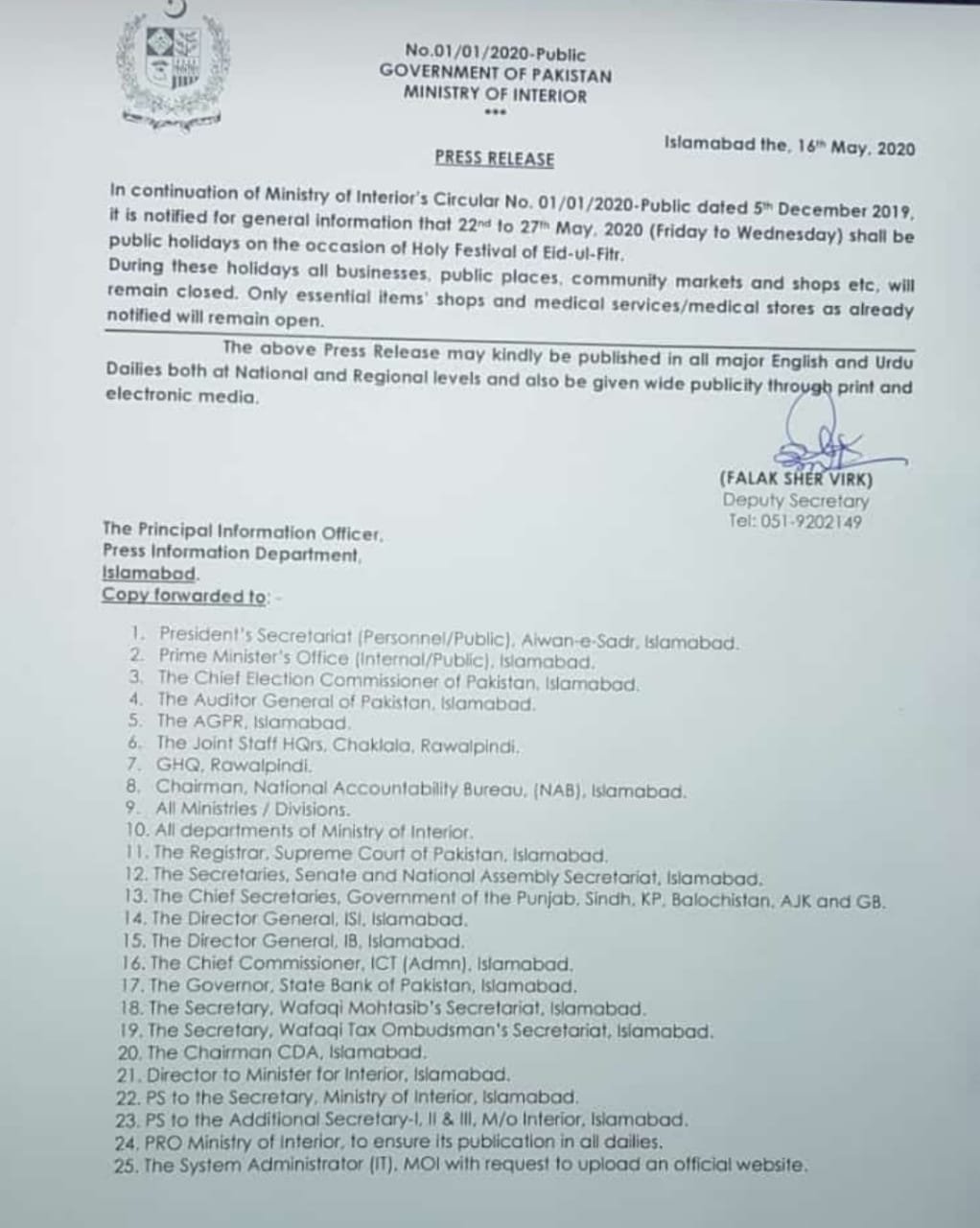
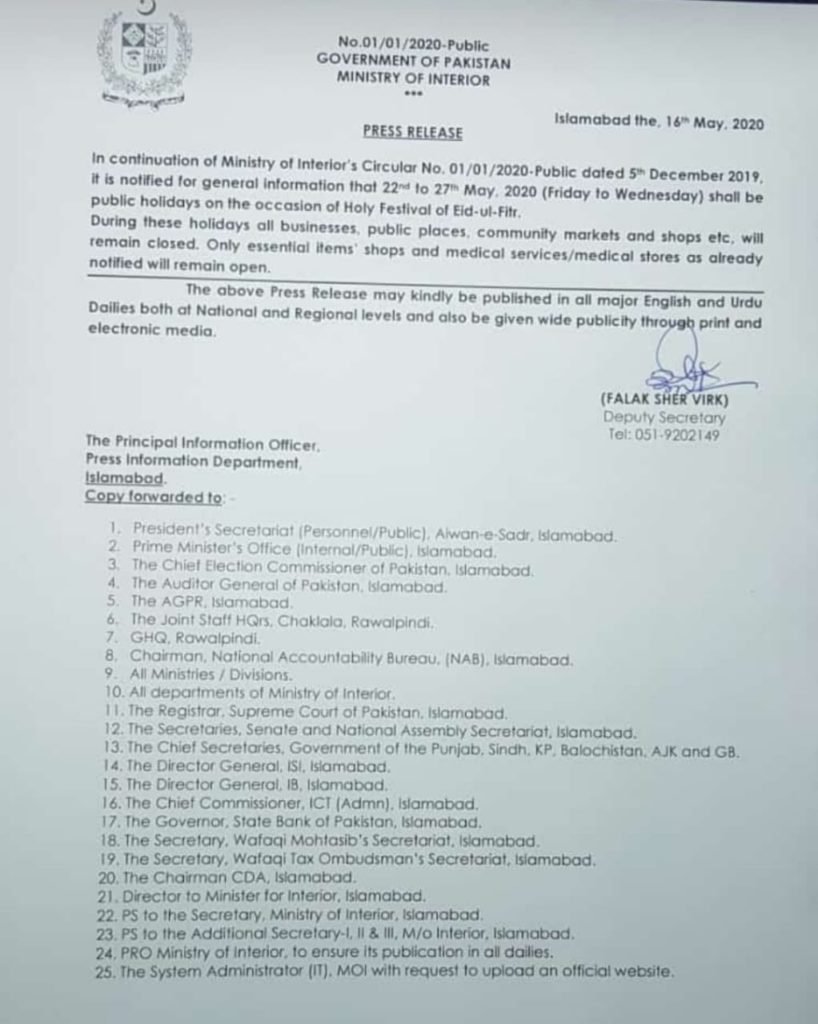
    The federal government has announced Eid holidays from 22nd to 27th May (Friday to Wednesday).

    According to the notification, all businesses, public places, community markets and shops, etc will remain closed during these holidays. Only essential items’ shops and medical stores/pharmacies will remain open.

  • Not-so-‘smart lockdown’

    Not-so-‘smart lockdown’

    More than 30,000 confirmed cases of coronavirus have been reported in Pakistan with over 600 deaths. The government has opted for a “smart lockdown” as both the number of cases and fatalities continue to increase on a daily basis, but nationwide lockdowns are also being eased with each passing day.

    Some government officials allude to the theory of herd immunity while others say that since the mortality rate of coronavirus is low in Pakistan, we must reopen the economy as the country cannot survive without it. We are left to our own devices now. You can choose to stay at home and in isolation if your work allows you to do it. Otherwise, go out but take precautions and hope that you don’t get coronavirus.

    We understand that the decision must not have been easy for the government but are we really preferring death over struggle?

    The world is also facing the brunt of easing lockdowns: South Korea warned of a ‘second wave’ of the coronavirus as infections rebounded to a one-month high on Sunday while coronavirus infections are rising in Germany days after the country eased its lockdown restrictions. These were two countries that had actually flattened the curve and had controlled the coronavirus cases to quite an extent.

    Imagine if the said countries — with the capacity of aggressive testing and better healthcare facilities — are struggling once again due to the second wave of the virus, what can happen in the near future in Pakistan — a country where a proper lockdown was hardly imposed for two weeks. Where the prime minister was against locking down from day one and where the ‘elite’ were blamed by the premier for somehow enforcing lockdown. Where the lockdown restrictions were eased but it led to everyone thinking that things were back to normal.

    Punjab is now allowing gyms, hair salons and barbershops to reopen again. If the administrations could not ensure that proper SOPs were followed in mosques during Ramzan, how will the local administrations ensure the same at barbershops or gyms or salons? While KP and Balochistan seem to be taking the pandemic lightly, hard-hit Sindh is also mulling opening markets.

    We talk of a ‘smart lockdown’ but we are not too smart, are we? People follow rules when they are enforced and properly implemented. They follow government instructions when the government is not giving out mixed messages or confusing messages. First, we tell them that only old people die of coronavirus, then we tell them that coronavirus doesn’t kill too many people and then we say well, even if it kills people, we must not give up hope and we need to go back to work because… economy.

  • ‘We cannot afford this anymore’: Traders in Sindh, KP, Balochistan to reopen businesses from today

    Traders across the country have said that they would resume operations from today (April 15), however, the business community in Punjab has urged the government to permit activities for a limited time.

    Prime Minister (PM) Imran Khan, in his address to the nation on Tuesday, extended the lockdown till April 30, saying that some industries such as construction would be allowed to operate from Wednesday.

    The business community in Karachi said that they would resume operations from April 15 and that the traders would follow preventive measures. “We cannot afford the imposed restrictions anymore,” said a representative of Karachi’s trader community while addressing a press conference.

    “The businessmen have paid their employees a month’s salary but we will be unable to do so if the lockdown extends,” he said, adding that they would hand over the keys to their shops to the officials at the Chief Minister (CM) House and protest outside the provincial chief executive’s office if they are kept from resuming business activities.

    Voicing the traders in Sindh, Balochistan’s business community said that they would also resume operations from April 15. They said that the traders could no longer bear the lockdown restrictions, adding that activities would be conducted and precautionary measures would be followed. “The provincial government has been informed regarding the decision to resume operations.”

    Furthermore, the traders in Khyber Pakhtunkhwa (KP) said that they could not afford the lockdown further and that they would open shops from April 15 as well.

    United Business Group President Ilyas Bilour said that small scale traders were forced into starvation due to the lockdown, and lamented that labourers were severely affected due to the closure of business centres.

  • COVID-19 in Gilgit: Another health worker passes as region awaits Chinese help

    Days after Dr Usama Riaz died due to coronavirus, another health worker in Gilgit-Baltistan (GB) has passed away.

    According to reports, 55-year-old Malik Ashdar was looking after suspected and confirmed coronavirus patients in Nagar district, but due to the lack of protective gear among health workers, he soon developed coronavirus symptoms. After spending a week in an isolation centre, he passed away on Sunday while his test reports came hours later, confirming his infection.

    A number of health workers continue to perform their duties in the area without proper protective gear. There are currently 34 confirmed cases of the virus in the district, including 11 locally-transmitted cases, but health officials and residents suspect there could be more cases and have urged the federal government to ensure the provision of better facilities.

    Muhammad Jamil, a local resident, told Pakistan Today that there are currently 100 suspects who are either waiting for their test results or are awaiting the test itself. When asked about Ashdar, he said that the health worker was not given proper treatment in the isolation centre.

    Although his test results came positive, the GB Information Department is yet to confirm his death as the second coronavirus casualty in the area.

    The report also quoted an official of the GB Health Department as saying that due to the non-availability of testing kits, no suspected patient was tested in the past three days. The official said that the National Institute of Health (NIH) in Gilgit has limited resources and the fact that samples have to be sent there manually also causes a delay in treating patients effectively. However, he added, China’s assistance in this regard would enable GB to conduct more tests.

  • Military discusses assisting govt in war on coronavirus

    Military discusses assisting govt in war on coronavirus

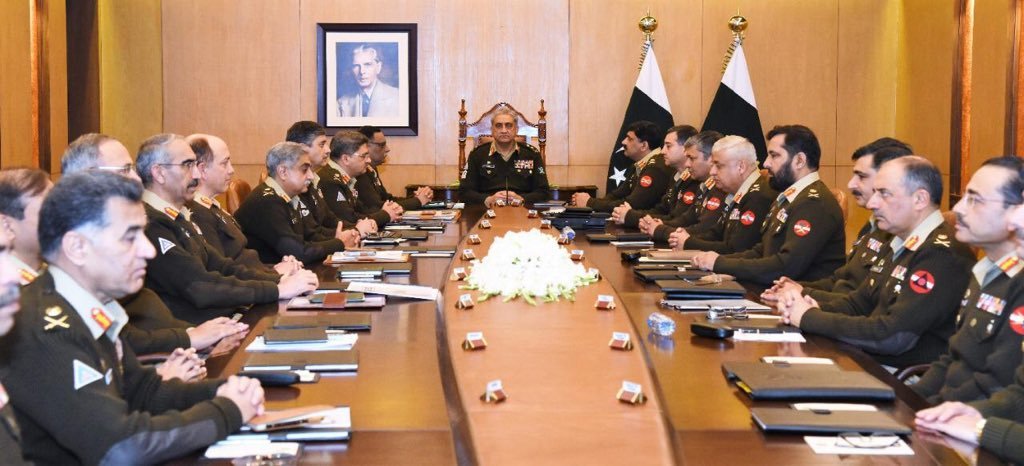
    The top military brass has held a special meeting to discuss the measures taken by the military to support the federal and provincial governments in the fight against the coronavirus.

    According to the Inter-Service Public Relations (ISPR), corps commanders took part in the meeting via videolink.

    The commanders expressed resolve to assist the government in its efforts to contain the pandemic. It may be noted here that Punjab and Balochistan government have sought the army’s help to impose the lockdown in the provinces.

    On Saturday, Chief of Army Staff (COAS) General Qamar Javed Bajwa directed the Pakistan Army to fast-track operations to help out the civil administration as the country grapples with a rapidly spreading coronavirus outbreak.

    “As a follow up of National Coordination Committee (NCC) meeting on March 20 chaired by the Prime Minister Imran Khan and COAS’ meeting with PM, the COAS directs for stepping up Army’s assistance to civil administration for containment of COVID-19,” the military’s media-wing had said in a statement.