Tag: government

  • Sindh Chief Minister is going to solarise govt institutions

    Sindh Chief Minister is going to solarise govt institutions

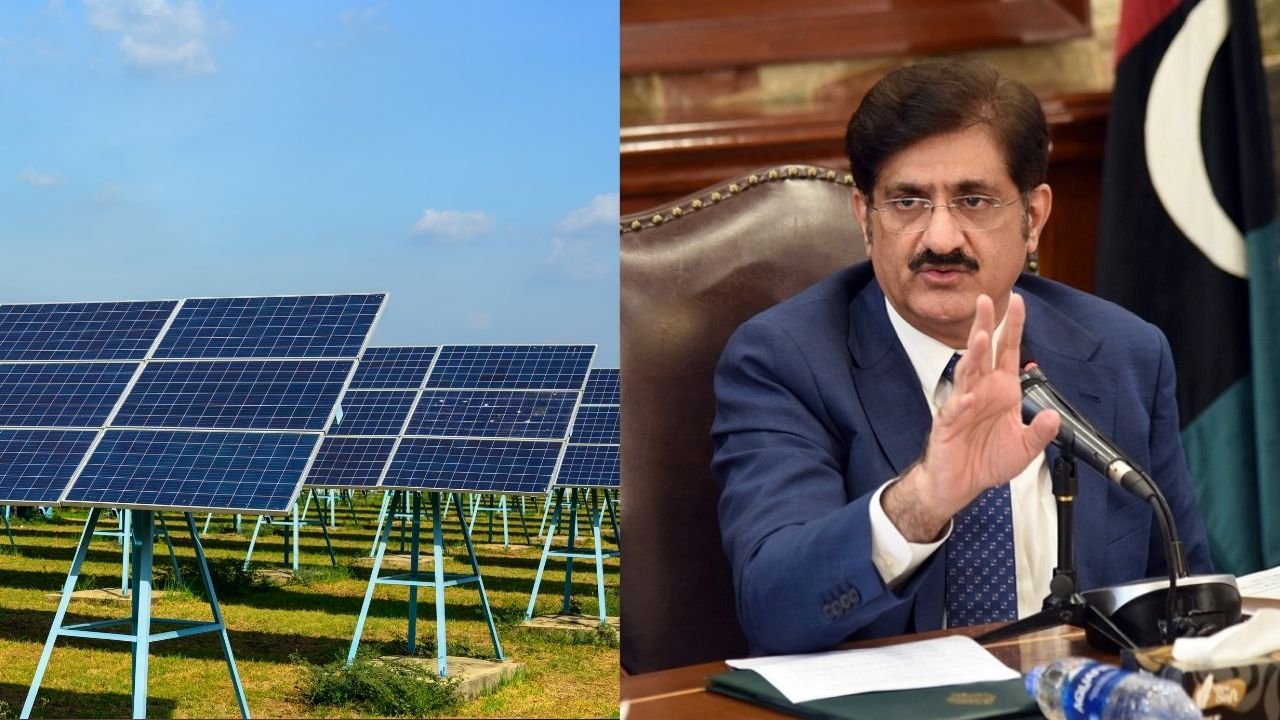
    Chief Minister Sindh Murad Ali Shah chaired a meeting on energy where he instructed the Energy Minister to initiate the process of solarising government institutions.

    According to a spokesperson, Shah emphasised that solarising government buildings would reduce electricity bills.

    Energy Minister Nasir Shah pledged to expedite solarisation efforts in the new financial year.

    The Chief Minister then ordered that electricity supply should be disconnected in government’s residential buildings where bills are not being paid.

    Additionally, he instructed officials to settle HESCO, SEPCO, and K Electric bills in August.

  • Naan ho ya Non: Nabeel Zafar roasts the government with naan and dhaniya

    Naan ho ya Non: Nabeel Zafar roasts the government with naan and dhaniya

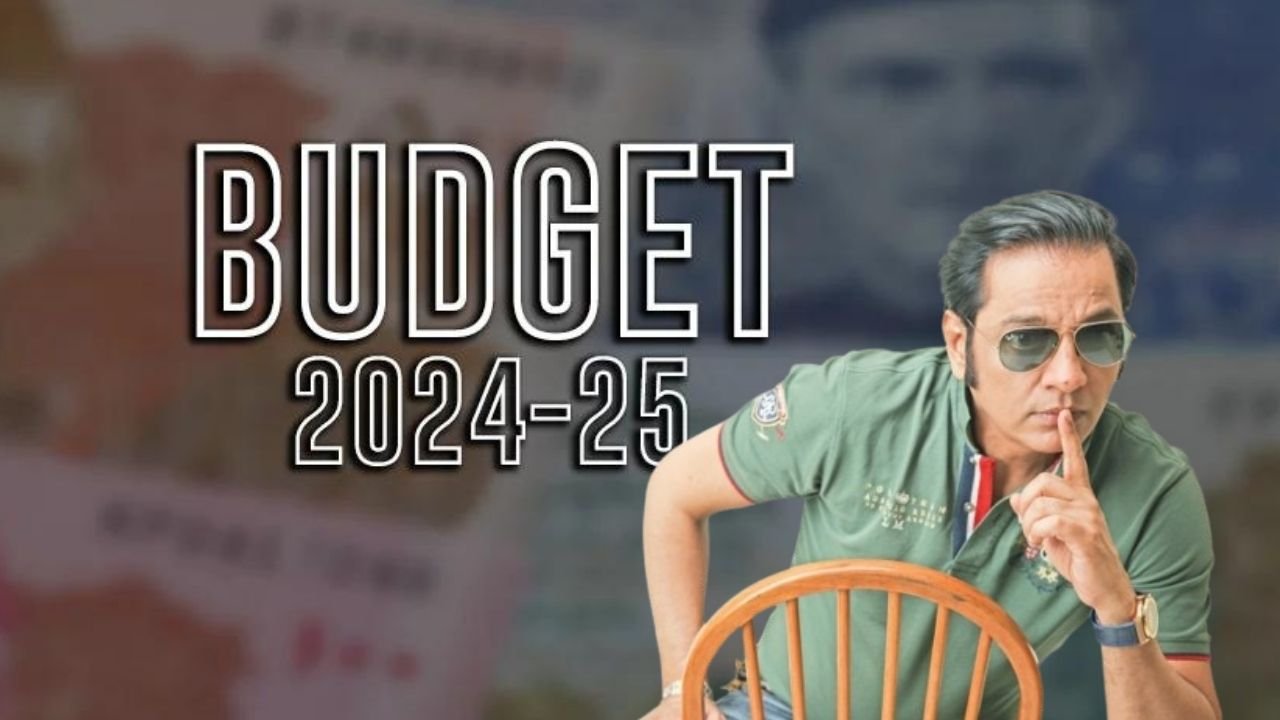
    Actor Nabeel Zafar isn’t holding back when it comes to his opinions on the new 2024 government budget, which has everyone talking.

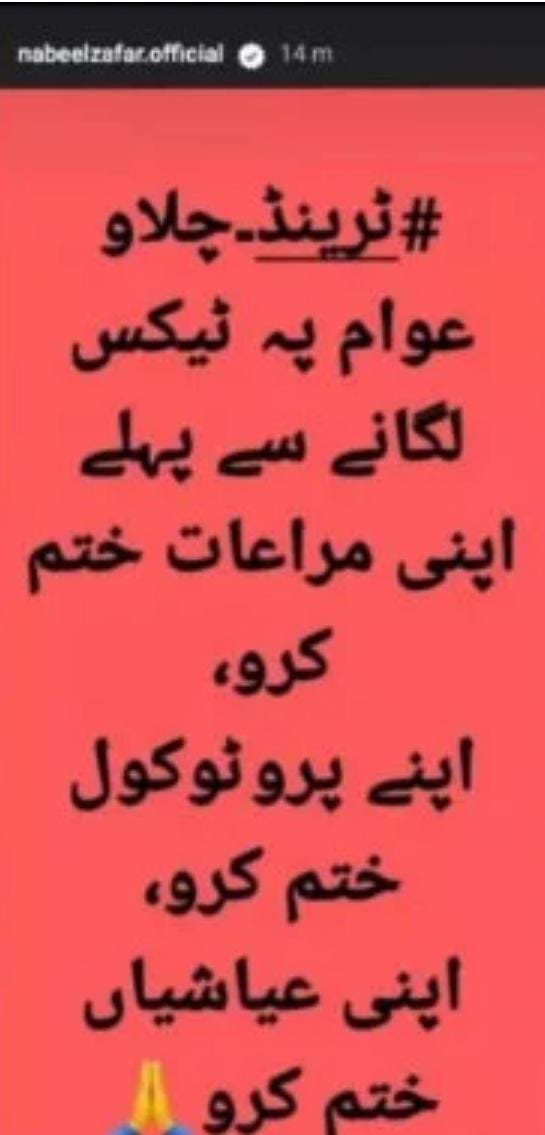
    Nabeel posted a story about his views on the new financial budget with the caption, “End your perks before imposing taxes on the public, cut down on your protocols and luxuries.”

    He also sarcastically joked about the budget with captioned, “Naan Faailer ko sabzi ke saath muft dhaniya nahin milay ga,” hitting back at the government’s decisions on not to let non-filers travel out of the country and other restrictions.

    In another story, Nabeel posted the story, “Naan Faailer ko har do ghante baad chapriyan maarnay ka hukm, Budget (2024).”

    The new financial budget was revealed by Finance Minister Muhammad Aurangzeb last week and has faced severe criticism about how restrictions will be imposed on the rich.

  • Further reduction in naan prices by Punjab government

    Further reduction in naan prices by Punjab government

    The Punjab government has set the new price of plain bread in the province at Rs 14, effective from tomorrow.

    Chief Minister Punjab Maryam Nawaz issued a statement on the reduction in the price of naan, stating that while the price of plain bread is fixed at 14 rupees in Lahore, prices in other cities is fixed at 12 to 14 rupees.

    Previously, the Punjab government had reduced naan price to Rs 16.

  • Massive recruitments approved for vacancies in government departments

    Massive recruitments approved for vacancies in government departments

    If you are young and unemployed, this one’s for you: the government is recruiting for 1,102 vacant posts for grades 1 to 17 in federal ministries and subordinate institutions.

    The Establishment Division has issued separate NOCs for each institution.

    NOC has been issued for the recruitment of 12 vacancies of Medical Officers (Grade 17) in District Health Office Islamabad. These recruitments will be through FPSC while two of Grade 16 and 17 in National Library, five for Information Service Academy of Grade I to 13, and 206 recruitments of Grade 4 to 15 will be made in the Defense Division.

    Additionally, 66 Grade I to 15 in the Ministry of Overseas Pakistanis, 429 Grade I to 15 (including 85 regulars) in PIMS Hospital, one Information Officer Grade 17 and Grade 16 Computer Operator in Ministry of Defense (GHQ). Another Federal Government Polyclinic Hospital will be filled for 77 posts from Grade I to 15.

    Surplus of Establishment Division to recruit 85 of Grade 4 to 15 in Ministry of External Affairs, six of Grade 16 in Staff Welfare Organization, 13 of Grade I to 14 in Pakistan Public Administration Research and 199 of Grade I to 15 in FIA.

  • Why is South Africa still waiting for a female president?

    Why is South Africa still waiting for a female president?

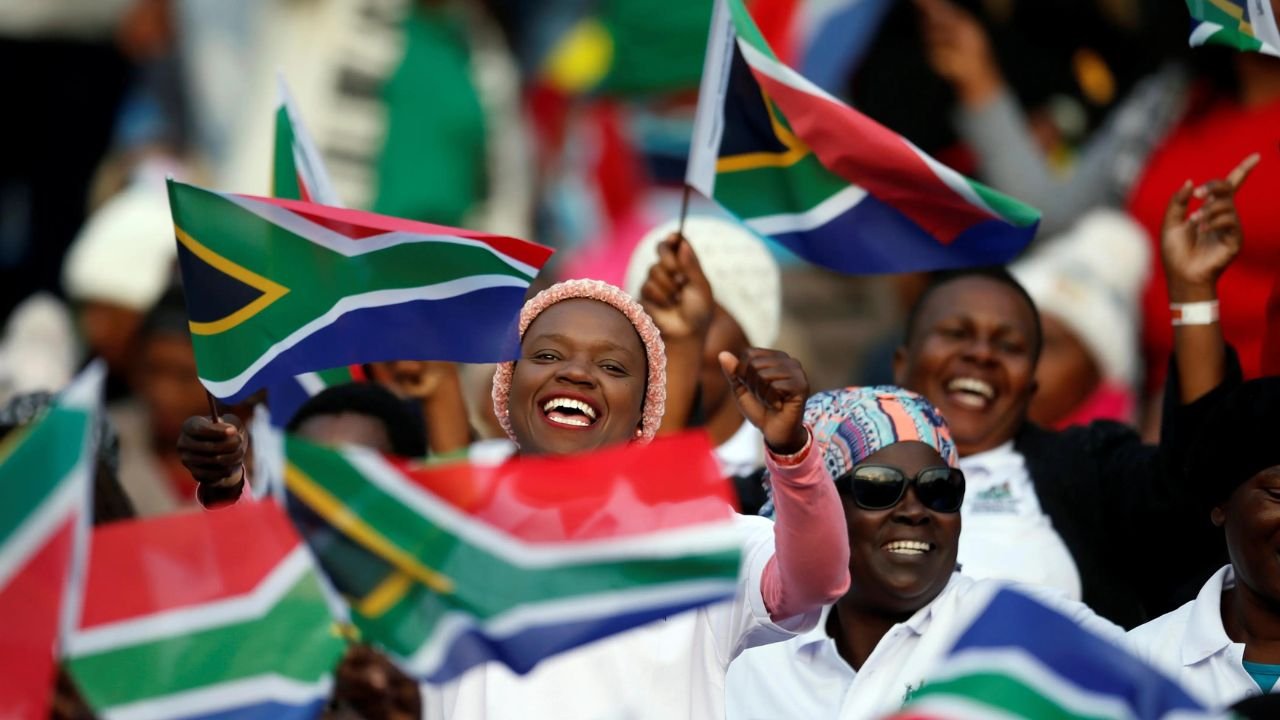
    South Africa has one of the world’s highest rates of female parliamentary representation in the world while boasting one of the most progressive constitutions.

    Yet the country is yet to produce a female president — something upcoming general elections are unlikely to change.

    Of the more than 50 parties in the running on May 29, only a handful are led by a woman. The five largest are all headed by men.

    “It is rare for a woman-owned party to stand, succeed and be sustainable,” said Colleen Makhubele, one of the few female party chiefs, who runs the small South African Rainbow Alliance (SARA).

    The dearth is despite South Africa ranking 11th globally for female representation in parliament, just below Sweden and higher than Finland.

    Women played a major role in the anti-apartheid struggle, and have held important government posts since the advent of democracy in 1994.

    About half the country’s ministries, including the key departments of foreign affairs and defence, are currently run by women.

    Women’s rights activists say the reason partially lies in the disconnect between the liberal views on which democratic South Africa was founded, and what still remains a fairly conservative society.

    The rainbow nation’s constitution lists “non-racialism and non-sexism” as the country’s second founding value after democracy itself.

    Yet many still see women as fit to lead their family — but not the nation.

    About one in five respondents to a 2017 Ipsos survey said that a woman’s place was in the home. Moreover, 22 percent thought men made better political leaders.

    This results in women often being overlooked when parties choose a leading candidate, said Bafana Khumalo, co-director of NGO Sonke Gender Justice.

    “Women are seen as important… but not to be voted into power,” he said.

    Makhubele of SARA, a former Johannesburg council speaker, said she has to work twice as hard as her male colleagues to win votes, funding and media coverage.

    Attitudes are slowly changing.

    A 2020 poll by Women Deliver, a non-profit, found 91 percent of respondents believed gender equality was important.

    Forty-three percent supported the government taking action to achieve equal representation in politics, and 69 percent backed gender quotas.

    The latter are already implemented by the ruling African National Congress (ANC) and the leftist Economic Freedom Fighters (EFF) — the country’s third largest party.

    The second largest party, the liberal Democratic Alliance (DA), had a female leader between 2007 and 2015.

    But that’s not enough, said political analyst and author Susan Booysen.

    “I’m blaming political parties for not systematically nurturing women’s ascendancy in party politics to get them to the top… women don’t see that systemic mentoring and promotion” she said.

    Parties might be missing out.

    Women make up more than 55 percent of registered voters in the upcoming elections and are seen as key drivers of support.

    “They’re the ones who actually make sure the people they live with go and vote on election day,” said Zama Khanyase of the ANC’s youth league.

    The ANC is largely expected to get less than 50 percent of the vote and for the first time lose its absolute majority in parliament when South Africans head to the polls in a month’s time.

    That could force it into a coalition to remain in power.

    After the parliamentary vote national assembly lawmakers then appoint a president.

  • Scotland’s first minister Yousaf quits after a year

    Scotland’s first minister Yousaf quits after a year

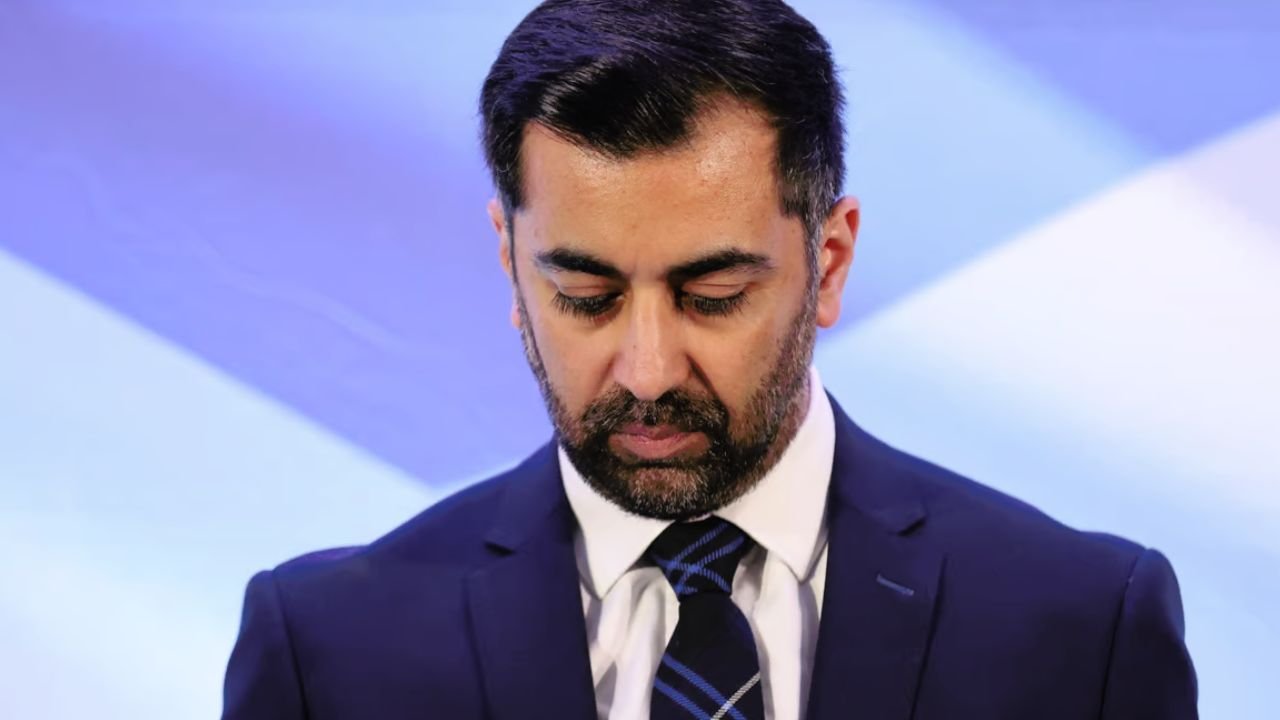
    Edinburgh, United Kingdom – Humza Yousaf announced his resignation as Scotland’s first minister on Monday, before he was due to face two confidence votes this week sparked by his ditching of junior coalition partners in a row over climate policy.

    The 39-year-old quit following a turbulent year as head of the devolved administration, during which support for his pro-independence Scottish National Party (SNP) has fallen.

    Yousaf had been facing growing calls to resign since unceremoniously ending the SNP’s power-sharing deal with the Scottish Greens in the Scottish parliament last week.

    His government had earlier abandoned ambitious targets for the transition to net-zero carbon emissions, angering the Greens.

    The opposition Scottish Conservatives then lodged a vote of no-confidence in Yousaf, which was due to be held as early as Wednesday and which the first minister was at risk of losing.

    Scottish Labour also lodged another no-confidence vote in his government.

    The Tories, Labour, Liberal Democrats and Greens had all said they would vote against him in the personal vote, forcing him to seek the backing of the sole lawmaker from the pro-independence Alba party.

    Alba’s Ash Regan is a former SNP colleague of Yousaf who ran against him in the March 2023 leadership election to succeed Nicola Sturgeon as first minister.

    Yousaf — the first Muslim leader of a major UK political party — said in a statement that he thought winning was “absolutely possible”.

    But he added that he was “not willing to trade in my values or principles or do deals with whomever simply for retaining power”.

    He added: “I have concluded that repairing our relationships across the political divide can only be done with someone else at the helm.”

    Divisions

    Yousaf’s pro-independence SNP has 63 members in the 129-seat parliament — two short of a majority. The presiding officer has a casting vote.

    Yousaf initially said he had no intention of quitting and intended to win the confidence votes.

    But following his announcement, parliament now has 28 days to choose a new first minister.

    He only became Scotland’s leader 13 months ago, after Sturgeon sensationally announced she was quitting, citing tiredness after eight years in charge.

    Yousaf defeated Kate Forbes and Regan in a bruising contest that highlighted divisions in the party between those on the left wing and others closer to the right.

    His leadership was quickly plunged into turmoil when Sturgeon was arrested with her husband, Peter Murrell, over claims of mismanagement of SNP finances.

    Murrell was charged in the case earlier this month. Sturgeon has not been charged.

    Controversies

    Sturgeon had been the figurehead of the Scottish independence movement.

    She oversaw a surge in support for the SNP, particularly after Brexit — in which Scotland opposed leaving the European Union — and during the Covid pandemic.

    But the SNP, which has run the Scottish government since 2007, has suffered a drop in popularity under Yousaf.

    He also came under pressure over controversial new laws which made it an offence to stir up hatred against a number of groups, including transgender people.

    The law has been heavily criticised, including most prominently by “Harry Potter” author J.K. Rowling, who lives in Edinburgh.

    Relations between the SNP and the Greens were also strained by the recent pause in prescribing puberty blockers in Scotland.

    Some within the SNP wanted Yousaf to end the coalition with the Greens because they felt the deal was pulling the party further leftwards.

    The SNP’s slump has also come in the context of a resurgent Labour party, which is tipped to win a UK general election due later this year.

    Scotland voted against independence in a referendum in 2014, with 55 percent of electors choosing “No”.

    The SNP has argued that the UK’s vote to leave the EU in 2016 had put separatism back on the table, because Scotland overwhelmingly voted to remain part of the bloc.

    But the party, in power in Edinburgh for 17 years, has struggled to build momentum for another vote, and the independence movement is at arguably its lowest ebb in recent memory.

    The Scottish Parliament, re-established in 1999, has limited powers to set policy in areas such as health, education, transport and the environment.

    The UK government in London retains powers for countrywide issues such as defence and foreign policy.

    pdh/phz/rlp

    © Agence France-Presse
  • Appeal against Maryam Nawaz for wearing police uniform not heard

    Appeal against Maryam Nawaz for wearing police uniform not heard

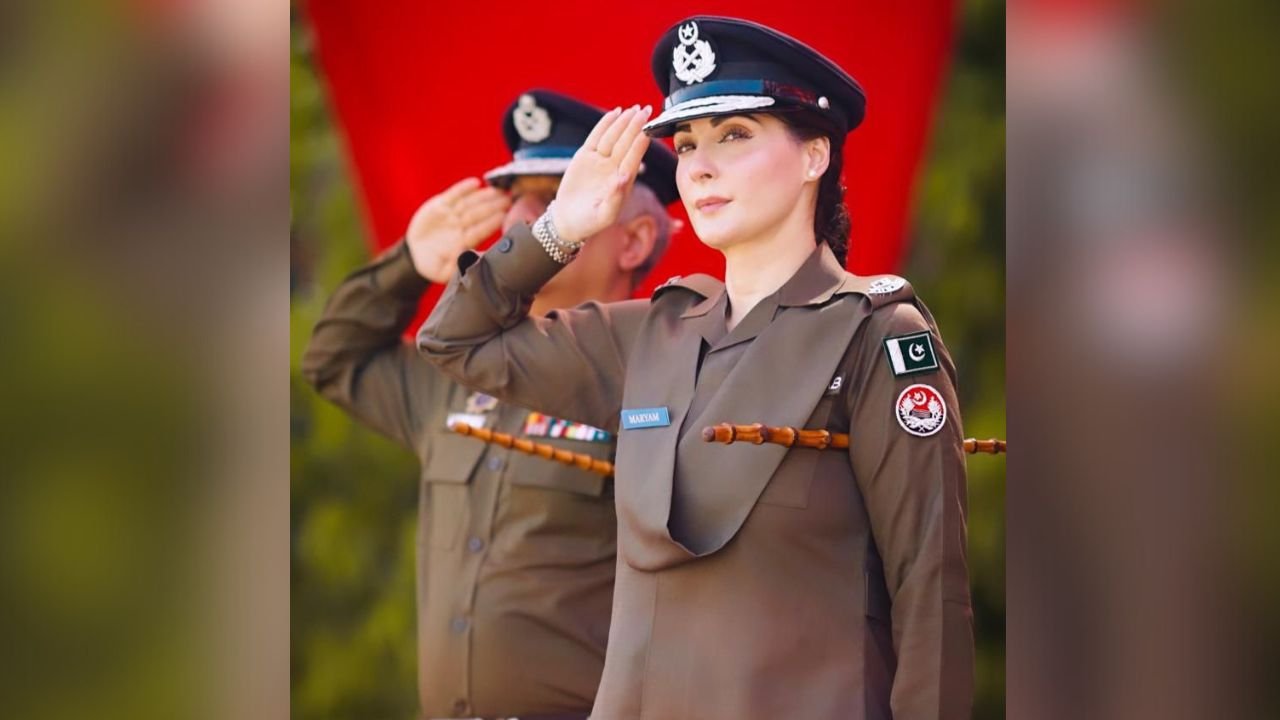
    A sessions court in Lahore has not proceeded with a request to file a case against Punjab Chief Minister Maryam Nawaz for wearing a police uniform.

    The hearing was adjourned till tomorrow as Additional Sessions Judge Muzaffar Nawaz was on leave.

    The court has sought a front desk report from the petitioner.

    Lawyer Waqar Shah had filed a request to register a case against Maryam Nawaz, arguing that the Chief Minister has violated the rules by wearing a police uniform.

    Lawyer Aftab Bajwa has also filed a plea against the CM for similar reasons.

  • Sanaullah says party cannot keep promises to people because ‘they didn’t give us majority’

    Sanaullah says party cannot keep promises to people because ‘they didn’t give us majority’

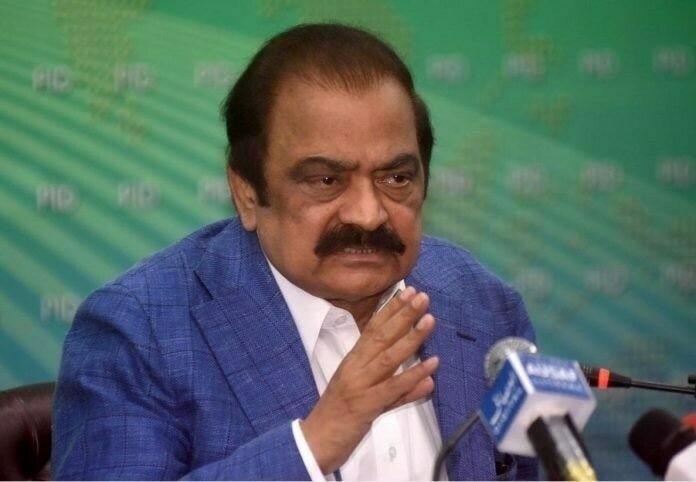
    In a talk show on Public News, anchorperson Iqrah Haris asked former Interior Minister Rana Sanaullah given the promises the Pakistan Muslim League-Nawaz (PML-N) made during its election campaigns, would it be ready to suffer the consequences if the government is unable to deliver.

    Rana Sanaullah remarked that the N-League would not be responsible for any promises made to the public simply because it is a coalition government.

    “We are not making any promises now, the promises we made were dependent on us getting a simple majority and PML-N making its own government under the leadership of Mian Nawaz Sharif.”

    The PML-N’s senior leader asserted that had the government been granted a majority, it would have borne the responsibility of steering the country out of this economic turmoil.

  • More than 50 arrested in crackdown against kite flyers following orders from Maryam Nawaz

    More than 50 arrested in crackdown against kite flyers following orders from Maryam Nawaz

    Chief Minister Punjab Maryam Nawaz ordered a crackdown against people making, selling and buying metal strings in kite flying.

    After the order, local police have arrested more than 40 accused in the crackdown against the kite flyers in Hafizabad, Vehari and Khushab.

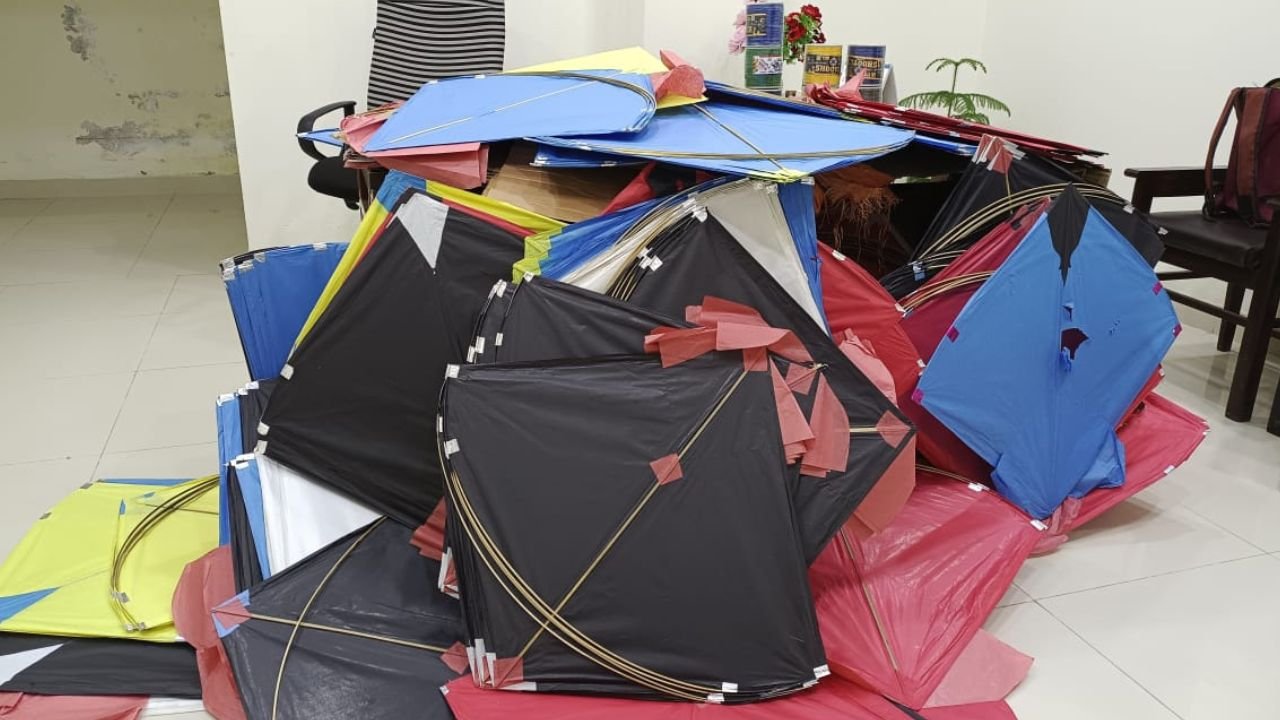
    According to the police, kites, spinning wheels and metal strings were recovered from the possession of the accused.

    Meanwhile, 13 suspects were arrested after recovering 30,000 kites from kite-making factories in Faisalabad, and six kite-making machines and 5,000 spinning wheels were seized.

  • Govt kickstarts privatisation process for PIA

    Govt kickstarts privatisation process for PIA

    The government, as confirmed by sources within the Prime Minister’s Office, has formally commenced the privatisation procedure for Pakistan International Airlines Corp (PIA) by issuing a gazette notification.

    This notification delineates the transition of the national airline into a government holding company.

    Notably, PIA has experienced a persistent surge surpassing its previous peak performances. Despite being a loss-making entity, the airline has encountered fluctuations in recent trading sessions.

    Its stock price has escalated by 2.37 times this month alone and an astounding 7.6 times within the current fiscal year.

    This rally can be attributed to the new government’s endeavors aimed at restructuring and privatising the airline.