Tag: government

  • Talks with Imran Khan only possible if he apologises to the nation: Ishaq Dar

    Talks with Imran Khan only possible if he apologises to the nation: Ishaq Dar

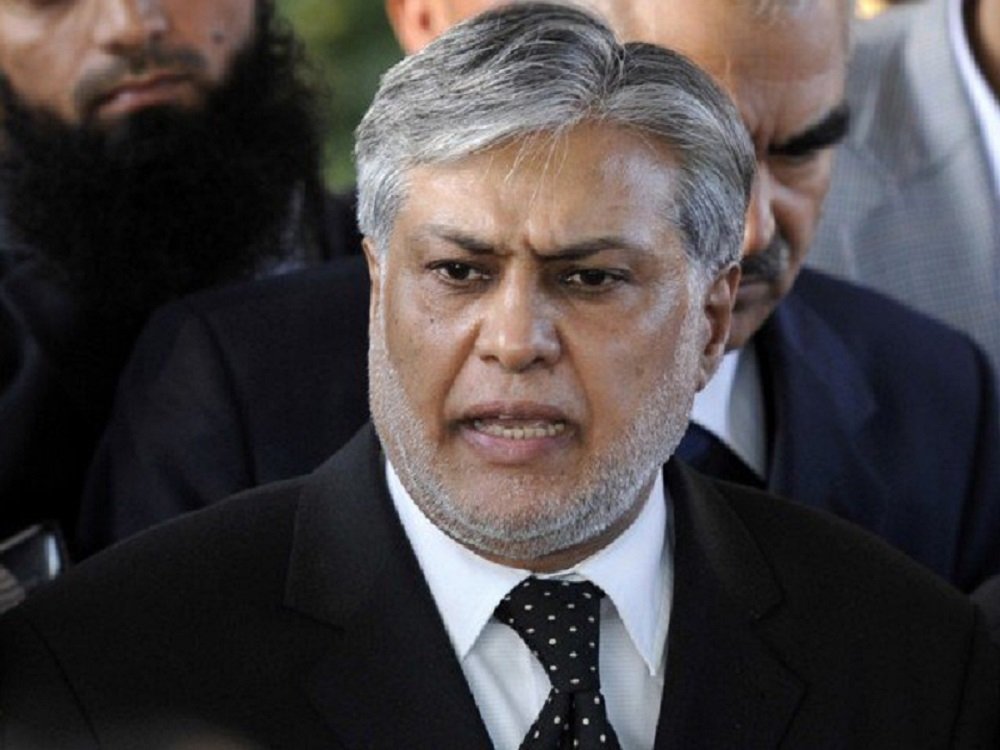
    Finance Minister Ishaq Dar appeared on Geo News programme Jirga on Sunday where he discussed politics and the economy.

    While talking about the possibility of negotiating with Pakistan Tehreek-e-Insaf (PTI), Dar said that negotiations with Imran Khan can be held if he took “corrective measures: apologises to the nation, admits his mistake and promises not to do anything like May 9 in the future.”

    The minister claimed that before May 9, when violent protests broke out, the government had “sincere intentions” when it talked with PTI, with the two parties reaching an agreement on all issues other than the election date.

    Separately, Railways Minister Khawaja Saad Rafique said that there is no space for negotiations with PTI in current circumstances.

    “There used to be an environment and agenda for holding parleys on any issue. But the existing atmosphere is not suitable for talks,” he said while talking to reporters in Lahore.
    Imran Khan on May 27 constituted a seven-member negotiation committee for talks with the incumbent government over elections.

  • No audio leak commission: Supreme Court suspends govt notification

    No audio leak commission: Supreme Court suspends govt notification

    In a significant development, the Supreme Court issued an order on Friday, suspending the operation of the federal government’s notification regarding the constitution of a judicial panel to investigate audio leaks which included alleged calls made to judges or by their families, that have emerged on social media over the past few months.

    The top court also prohibited the commission from conducting further proceedings.

    Last week, the federal government formed the judicial commission to probe leaked audio clips allegedly involving some current and former members of the superior judiciary and their family members to determine their “veracity” and “impact on the independence of the judiciary”.

    The government said the audio leaks raised serious apprehensions about the independence of the judiciary in the public interest.

  • World Bank commits $213 million for Balochistan’s flood recovery and climate resilience

    World Bank commits $213 million for Balochistan’s flood recovery and climate resilience

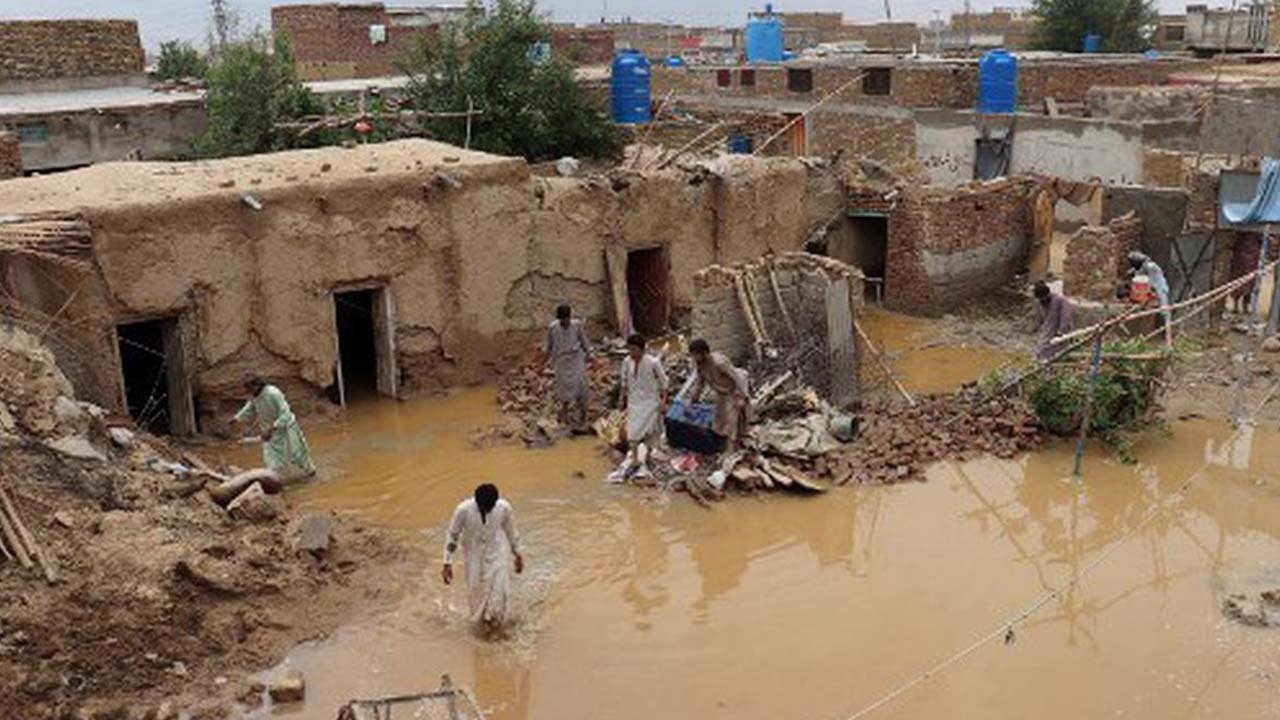
    The Board of Executive Directors of the World Bank has granted $213 million in funding to Balochistan for the purpose of improving livelihoods, essential services, and risk protection in communities that were affected by the devastating floods in 2022.

    This financial assistance is part of a larger program established in collaboration with the government to address the aftermath of the floods and build a climate-resilient Pakistan.

    Najy Benhassine, the World Bank Country Director for Pakistan, expressed the organization’s commitment to closely cooperate with the Government of Balochistan in supporting the affected communities. The World Bank aims to provide livelihood support and rehabilitate irrigation and flood protection infrastructure.

    These efforts will not only restore the livelihoods of the affected population but also enhance their resilience to potential future climate-related disasters and natural hazards. The project aligns with the comprehensive package of post-flood rehabilitation and resilient reconstruction program agreed upon with the authorities.

    The floods of the previous year were a result of record monsoon rains in the southern and southwestern regions of Pakistan, compounded by glacial melt in the northern areas. The calamity affected nearly 33 million people in the country, which has a population of 220 million. Tragically, the floods claimed over 1,700 lives and caused substantial damage to homes, crops, bridges, roads, and livestock.

    The Integrated Flood Resilience and Adaptation Project (IFRAP) outlined by the World Bank will provide housing reconstruction grants to approximately 35,100 homeowners. It will also focus on restoring essential services by rehabilitating damaged community infrastructure and facilities, such as water supply systems, irrigation networks, roads, and community facilities.

    Balochistan, with its geographical location, socioeconomic background, and vulnerability to climate change, faces significant risks from natural disasters. Yoro Sidibe, a Senior Water Specialist at the World Bank, emphasized that the project aims to provide economic opportunities to the affected communities while ensuring social inclusion and participation. Additionally, it will enhance institutional capacity for preparedness and response to future disasters.

    The World Bank expects that the Integrated Flood Resilience and Adaptation Project will benefit approximately 2.7 million people in selected communities across Balochistan’s calamity-declared districts. The project’s objectives include the restoration of degraded watersheds and the strengthening of institutional capacity at both the provincial and local levels.

  • Not all trials related to May 9 will take place in military courts: Rana Sanaullah

    Federal Interior Minister Rana Sanaullah has said that a total of 499 First Information Reports (FIRs) have been filed regarding the 9 May incidents. “Out of these, 88 FIRs were registered under the Terrorist Act, while the remaining 411 FIRs were filed for other offenses,” he stated while addressing a press conference in Islamabad.

    The minister added that 19 people from Punjab and 14 from Khyber-Pakhtunkhwa (KP) will be tried in military courts. “These people trespassed and entered sensitive defence installations, so the question is how did they manage to get there,” he said.

    However, the minister clarified that not all trials will take place in military courts.

    “A rumour is circulating that all trials will take place in military courts but that is not true. The military will investigate the case but not take cognisance of it. They will see whether the Army Act or the Official Secrets Act is applicable or not.”

    While criticising former PM Imran Khan, Sanaullah said, “If Imran is left unchecked, he can lead the nation towards a disaster.”

  • Govt to maintain 18% GST rate in upcoming budget 2023-24

    Govt to maintain 18% GST rate in upcoming budget 2023-24

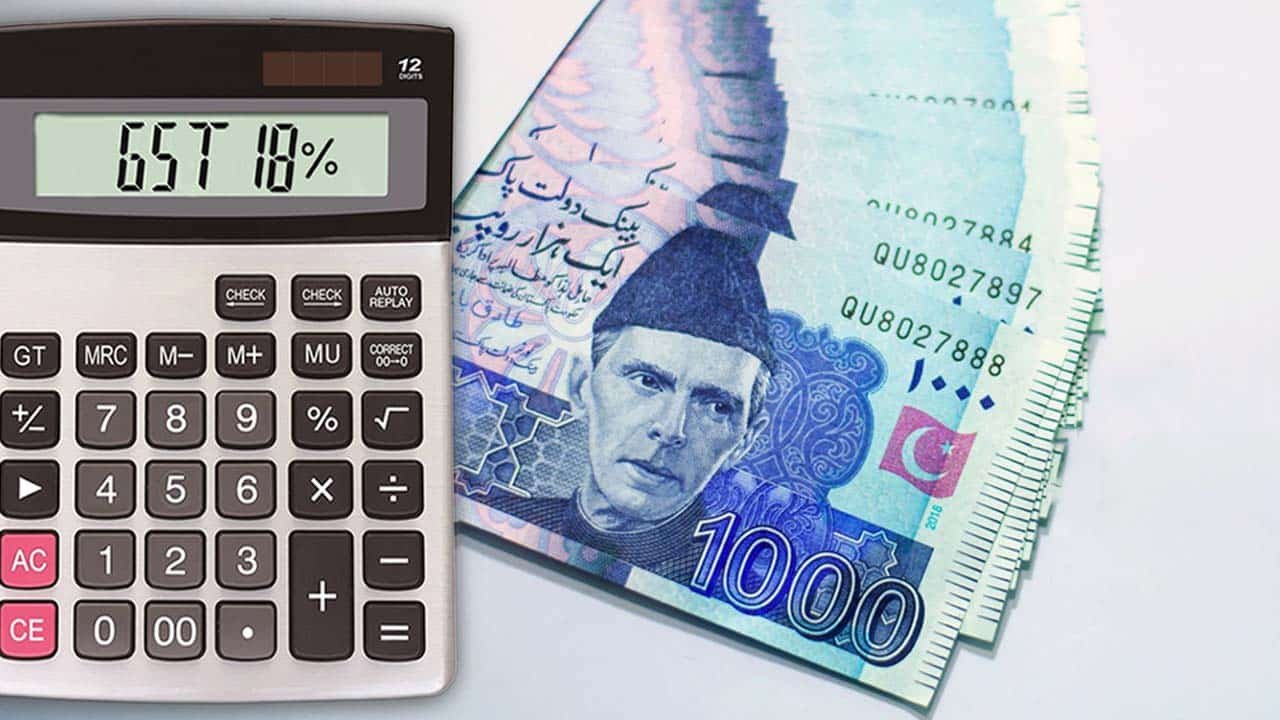
    In the forthcoming budget for 2023-24, it is anticipated that the government will maintain the current standard rate of General Sales Tax (GST) at 18 per cent. Additionally, efforts are being made by the government to increase the rates of withholding taxes, where applicable, with the aim of augmenting tax revenues.

    Another aspect being considered is the implementation of amendments for retailers, with the objective of including a larger number of businesses within the tax bracket. It is worth noting that previous schemes designed to entice retailers into the tax system have proved unsuccessful over the past few decades.

    According to The News, various proposals are currently being deliberated upon for the imposition of Minimum Asset Tax (MAT) on both movable and immovable assets. However, the Federal Board of Revenue (FBR) has been advised to seek constitutional validation for these proposed taxation measures in order to avoid potential legal disputes.

    Moreover, the government is exploring options to enhance documentation within the property sector, as part of its ambitious goal to achieve a tax collection target ranging between Rs9 and Rs9.2 trillion for the upcoming budget.

    These proposals were thoroughly discussed in a meeting chaired by Finance Minister Senator Ishaq Dar, which focused on budgetary considerations within the Finance Division. Present at the meeting were State Minister for Finance Dr Ayesha Ghous Pasha, Special Assistant to the Prime Minister (SAPM) on Finance Tariq Bajwa, SAPM on Revenue Tariq Mehmood Pasha, Chairman of the Reforms and Resource Mobilization Commission (RRMC) Ashfaq Yousuf Tola, the finance secretary, FBR chairman, and other senior officials from the Finance Division and FBR.

    During the meeting, FBR Chairman Asim Ahmad provided a comprehensive presentation on the budgetary proposals for the Federal Budget 2023-24.

  • Health activists urge govt to impose higher taxes on cigarettes for public welfare

    Health activists urge govt to impose higher taxes on cigarettes for public welfare

    Health activists and civil society organizations are calling on the government to impose higher taxes on cigarettes in the upcoming 2023-24 budget, signaling a potential increase in smoking costs for Pakistani consumers.

    Advocates argue that regular tax hikes on tobacco products, in line with the recommendations of the World Health Organization (WHO), are necessary to combat the detrimental effects of smoking in the country.

    Sanaullah Ghumman, representing Pakistan National Heart Association (PANAH), emphasised the importance of consistent taxation on cigarettes, urging the government to align with WHO guidelines. Ghumman’s plea reflects the growing concern over the devastating health consequences associated with tobacco consumption.

    Malik Imran, Country Head of the Campaign for Tobacco-Free Kids (CTFK), highlighted the impact of the government’s recent decision to raise the Federal Excise Duty (FED) on cigarettes in February 2023. This move generated an additional Rs11.3 billion in FED revenue for the fiscal year 2022-23, marking a 9.7 per cent increase from the previous year. Moreover, an extra 4.4 billion in VAT revenue was collected during the same period, representing an 11.5 per cent rise. These figures amount to a substantial boost of 15.7 billion, contributing 0.201 per cent to Pakistan’s struggling economy.

    Imran dismissed the tobacco industry’s claims of illicit trade as a diversion tactic to undermine the benefits of increased taxation. He emphasised that the economic gains resulting from higher prices indicate the viability of this approach, which aids in curbing smoking-related healthcare costs.

  • Pakistan moves forward with budget planning despite delayed IMF programme

    Pakistan moves forward with budget planning despite delayed IMF programme

    The government is expected to present an overall budget deficit of 5.1 per cent of the GDP for the fiscal year 2023-24, as stated in the delayed Budget Strategy Paper (BSP) to be presented before the federal cabinet. A recent report by The News highlighted that the paper will be tabled amid the government’s failure to revive the stalled International Monetary Fund (IMF) programme.

    The budget-making process has already been affected by uncertainty on both the IMF and political fronts. Nonetheless, the government has decided to present the next budget on June 9. Despite failing to reach a staff-level agreement with the IMF, the government will present the BSP for a medium-term period of three years. The proposed federal government budget deficit stands at 6.4 per cent of the GDP, while the overall deficit of the country is estimated to be lowered to 5.1 per cent of the GDP for the next financial year.

    In addition, the BSP for the upcoming fiscal year has proposed an allocation of Rs1.7 trillion for the defence budget compared to Rs1.56 trillion in the outgoing fiscal year. The overall primary surplus of budget deficit is estimated to be 0.3 per cent of the GDP for the next fiscal year, up from the previous projection of 0.2 per cent for the outgoing year.

    The Federal Board of Revenue (FBR) has been set a target of Rs9.2 trillion for the next budget, and the finance ministry suggests this is on the higher side. The FBR estimates that it could collect Rs7.2 trillion in the outgoing fiscal year against the targeted Rs7.64 trillion. In the next budget, the FBR could collect up to Rs8.6 trillion, subject to import restrictions being lifted, which could boost revenue collection. The government is projecting a GDP growth rate of 3.4 per cent for the next fiscal year, while inflation is expected to hover around 21 per cent.

    According to the IMF’s latest press briefing, the country may experience stagflation, which means low growth and higher inflation rates. If stagflation continues, it could lead to rising poverty and unemployment in Pakistan. The current account deficit is estimated to be approximately $8 billion for the next budget, and there is hope that import restrictions will be gradually lifted during the next financial year.

    The BSP has to be approved by the federal government under the Public Finance Management Act, which states that the paper must contain quantified macroeconomic and fiscal projections for the medium-term, be approved by April 15 of each year, and published on the Finance Division’s official website. Upon approval, the Finance Division will issue indicative budget ceilings to ministries and divisions.

    The minister for finance will also discuss the budget strategy paper with the Standing Committees for Finance and Revenue in the Senate and the National Assembly. The government may extend the deadline mentioned in Sub-section (1) of the PFM Act in case of an extreme requirement.

  • Mobile data service suspension to cost Pakistan’s IT industry $3-4 million in daily losses

    Mobile data service suspension to cost Pakistan’s IT industry $3-4 million in daily losses

    The suspension of mobile data services in Pakistan is expected to result in a daily loss of $3-4 million to the country’s IT exports.

    The Pakistan Software Houses Association (P@SHA) has called on the government to restore mobile broadband services, which have been suspended since Tuesday due to the political turmoil that erupted after the arrest of the PTI party’s chairman, Imran Khan.

    The government has blocked 3G/4G mobile broadband services and major social media platforms like Twitter and Facebook, as well as slowing down YouTube services to control the spread of “unwanted information” that could cause disinformation and panic among the masses.

    According to The News, Muhammad Zohaib Khan, the Chairman of P@SHA, warned that the suspension of mobile broadband services could result in significant losses for the IT industry, which relies heavily on internet connectivity.

    The IT industry has come to a standstill since Tuesday evening, and professionals are working from home due to the precarious law and order situation in the entire country. Zohaib urged the government to resume internet services to the IT industry immediately, saying that the sudden blockade of broadband services has completely halted IT operations, and the IT industry is already facing pressure due to poor governmental policies.

    Zohaib requested Prime Minister Shehbaz Sharif to intervene directly and asked for the support of the Ministry of IT and Telecom, Pakistan Software Export Board (PSEB), and Tech Destination Pakistan administrations to request the premier to issue categorical instructions.

    The suspension of mobile broadband services has also affected individuals who rely on digital apps for commuting or ordering/delivering food and other products. However, an official stated that it is difficult to calculate the losses at this stage.

  • Telecom operators, govt suffer major revenue losses due to mobile internet shutdown

    Telecom operators, govt suffer major revenue losses due to mobile internet shutdown

    According to reliable sources, the suspension of mobile broadband services has had a devastating impact on the economy in Pakistan. Telecom operators have incurred a revenue loss of approximately Rs820 million, while the government has lost around Rs287 million in tax revenue.

    The suspension has also caused significant losses for digital app users, such as Careem, InDrive, and FoodPanda, as well as brought digital payments to a halt. The situation has caused widespread inconvenience and hardship for the general public, necessitating the immediate attention of the relevant authorities to resume data services.

    Furthermore, social media platforms like Facebook and Twitter remained partially or fully suspended on the second day. Jazz CEO, Aamir Ibrahim, expressed his dissatisfaction through a tweet, emphasising that shutting down the internet is not a solution to any problem, but instead, it creates more problems than it solves. He stated that the impact on the economy is quantifiable, but the inconvenience to the people is incalculable.

    According to Brecorder, Muhammad Zohaib Khan, the Chairman of Pakistan Software Houses Association (P@SHA), strongly criticised the indiscriminate blockage of internet services in Pakistan due to the emergent political situation. He condemned the mindless and consultation-less decision and highlighted that the IT industry has come to a standstill since Tuesday evening.

  • Pakistan’s history of IMF bailouts: A look at 75 years of economic challenges

    Pakistan’s history of IMF bailouts: A look at 75 years of economic challenges

    Pakistan is currently facing yet another economic crisis, a recurring issue that has caused the country to repeatedly seek help from the International Monetary Fund (IMF) for financial assistance.

    Unfortunately, most of the previous 13 bailouts granted since the late 1980s were left unfinished, as Pakistan failed to implement any meaningful structural changes to rein in government spending or boost revenue.

    The country’s current government, led by Prime Minister Shehbaz Sharif, is currently in talks to revive its latest $6.5 billion loan programme as a result of the ongoing economic downturn, exacerbated by last year’s devastating floods and continued political instability. However, the implementation of the necessary belt-tightening measures may prove to be challenging, given the upcoming national elections planned for later this year.

    Pakistan and the IMF had agreed to a $6 billion bailout program in 2019, but disputes over monetary policies have prevented the release of over $1 billion. Furthermore, donors and lenders have demanded structural reforms before providing any further financial aid to Pakistan.

    Pakistan’s traditional partners have made it clear that their assistance is conditional upon the revival of the IMF program and the successful implementation of reforms, including the expansion of tax collection.

    Based on the prevailing Special Drawing Rights (SDR), also known as XDR, rates, the International Monetary Fund (IMF) has approved loans totaling $31.629 billion for Pakistan.

    It is worth noting, however, that not all of the approved funds have been disbursed, with only one out of 22 loans having been fully transferred to Pakistan. This highlights the complex political and economic dynamics that underlie IMF programs.

    Pakistan’s history of borrowing from the IMF

    Pakistan has a history of borrowing from the International Monetary Fund (IMF), which can be divided into four distinct periods. The early years of borrowing spanned from 1950 to 1988, followed by the Benazir and Nawaz Sharif era from 1988 to 1999. The third period was marked by the Musharraf and Zardari administrations from 2000 to 2013. The current period is led by Nawaz Sharif and Imran Khan.

    During these periods, each government worked with the IMF differently, especially in the past two decades. While the Benazir and Nawaz Sharif administrations alternated in seeking IMF programs in the 1990s, the Musharraf government, despite experiencing substantial foreign currency inflows, also had to turn to Washington for financial assistance.

    The Zardari administration, on the other hand, abandoned the largest-ever IMF program when it deemed it expedient to do so. This trend illustrates how Pakistan’s borrowing from the IMF has been characterised by inconsistency and shifting priorities.

    2013-2022

    Pakistan’s recent history of borrowing from the IMF has been marked by different governments seeking assistance in their own unique ways. While the Imran Khan government initially refused to seek assistance from the IMF, it eventually sought an Extended Fund Facility (EFF) loan worth SDR4.268 billion in July 2019. This was due to the country’s financial deterioration and instability, which had eroded the stability gains made since late 2016.

    Under Imran Khan’s government, the IMF disbursed a total of SDR3,159.5 million to Pakistan in four tranches. However, talks for the fourth tranche proved challenging and the government sought help from the US Assistant Secretary of State Donald Lu. Despite receiving SDR750 million in February 2022, then-Prime Minister Imran Khan announced a subsidy on petrol and diesel, effectively breaking the agreement with the IMF. As a result, the IMF suspended Pakistan’s $6 billion loan programme in March 2022.

    Negotiations for the revival of the fund facility did not commence until May, when Shehbaz Sharif of the PML-N took over the government. Talks on reviving the fund facility were concluded in late June, but only after the government took some harsh decisions, including withdrawing tax relief for salaried individuals. The next tranche will only be released after the IMF Executive Board takes up the combined 7th and 8th reviews.

    2000-2013

    During Pervez Musharraf’s government, Pakistan received significant foreign aid in the form of military and civil assistance, resulting in a low reliance on IMF loans for financial support. However, Pakistan did receive two IMF loans in the first two years of Musharraf’s regime, totaling SDR520 million. The first loan was a stand-by arrangement of SDR465 million, of which SDR150 million were disbursed, and the second was an extended credit facility of SDR1.033 billion, of which only SDR315 million were disbursed. Pakistan did not require IMF assistance from 2001 to 2008, as foreign aid prevented a balance of payment crisis.

    However, the aid failed to boost Pakistan’s forex reserves, which experienced a sharp decline between 2006 and 2008. In 2008, the Pakistan Peoples Party government negotiated with the IMF for the largest-ever loan of SDR7.235 billion, also the largest stand-by arrangement. Only SDR5.2 billion were disbursed between 2008 and 2010 in three tranches. Afterward, the PPP government did not complete the program as it received funds under the Kerry-Lugar program until 2013, when the United States ceased funding. The PPP government was unable to implement tough reforms demanded by the IMF due to impending elections.

    1989-1999

    During the 1990s, Benazir Bhutto and Nawaz Sharif sought eight bailouts from the IMF due to the consequences of the Soviet-Afghan war and political instability in Pakistan. In 1988, Bhutto signed up for two IMF packages, totaling SDR655 million. The IMF made two payments of SDR122.4 million and SDR189.5 million in 1991 and 1992. In 1993, Nawaz Sharif negotiated a loan of SDR265.4 million, with the IMF paying SDR88 million that year.

    Bhutto’s government signed three IMF programs of SDR379 million, SDR606 million, and SDR562 million between 1994 and 1995, with lower disbursements of SDR123 million, SDR133 million, and SDR107 million before being removed in 1996. Sharif then negotiated two loans in 1997 of SDR682.4 million and SDR454.9 million, respectively, with SDR250 million disbursed before his government was toppled in 1999. Bhutto negotiated a total of five programs of SDR2.2 billion, receiving SDR676.26 million, while Sharif signed up for three programs of SDR1.4 billion, with Pakistan receiving only SDR608 million. The instability of the government prevented the implementation of IMF reforms, which often led to increased tariffs and taxes, causing a negative perception of the IMF in the country.

    1958-1988

    The Zia-ul-Haq government received the largest amount of foreign aid from the International Monetary Fund in Pakistan’s history, surpassing the sum of all seven previous programs approved since 1958. In 1980, the IMF granted SDR1.268 billion to the government, followed by another program of SDR919 million in 1981. The Zia-ul-Haq administration received SDR1.079 billion out of the total SDR2.187 billion approved by the IMF.

    Before that, Zulfikar Ali Bhutto signed four loan programs with the IMF between 1972 and 1977 for a total of SDR330 million, of which SDR314 million was withdrawn. In 1958, Ayub Khan initiated Pakistan’s first loan from the IMF, seeking only SDR25 million, and in 1968 and 1969, two more programs of SDR37.5 million and SDR75 million were approved, respectively. The Ayub government received SDR112 million of the total SDR137.5 million approved.

    Pakistan has received a total of SDR23.656 billion in IMF-approved programs, of which SDR14.189 billion was disbursed. Pakistan was offered three long-term Extended Credit Facilities, five medium-term Extended Fund Facilities, at least 12 short-term Standby Arrangement loans, and one Structural Adjustment Facility over 63 years.

    This news story was created by compiling information from various news platforms as well as the IMF website.