Tag: growth rate

  • Pakistan’s GDP likely to decrease to 2% in FY23 as flood damage may cost $30 billion

    Pakistan’s GDP likely to decrease to 2% in FY23 as flood damage may cost $30 billion

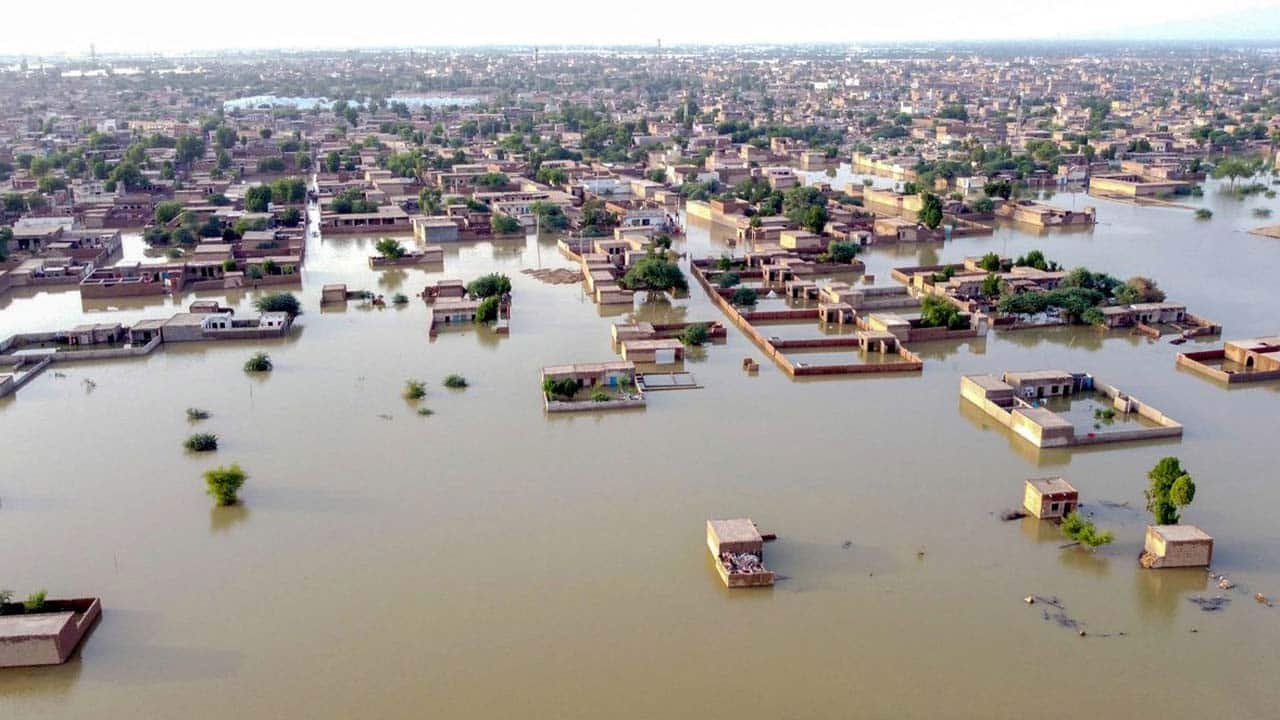
    Syed Zafar Ali Shah, Secretary of the Ministry of Planning, Development, and Special Initiatives, stated on Thursday that a preliminary estimate indicated that the GDP growth rate may remain at two percent in the current fiscal year and that the estimated cost of damage repair, including reconstruction, may be $30 billion as a result of the nation’s floods.

    He stated that we are gathering damage assessment data for a preliminary report and that the preliminary report and verification procedure would both be finished by October 15.

    According to The Nation, teams from the government and ten international development organisations, such as the World Bank (WB), the Asian Development Bank (ADB), the United Nations (UN), and others, are working together to prepare the preliminary report for the damage assessment of the country’s floods.

    In order to prepare early estimates on damage and reconstruction, he claimed that 100 specialists from development partners, such as the World Bank, the ADB, the UN, the EU, Turkey, etc., are currently working in 12 to 17 sectors.

    According to him, the Pakistani government would take the initiative in relief operations, and technical skills will be provided by professionals to evaluate the field damage and the cost of rehabilitation. The administration will solicit donations for reconstruction after making the final determination.

    In relation to the evaluation of the damage to the railways, Zafar Ali stated that it has been initially predicted that $2.3 billion will be needed for the reconstruction of the railroad tracks, bridges, and other associated facilities that have been harmed by floods. In total, 113 districts in Pakistan have been damaged by flooding, but 83 of those areas are catastrophe hit and require complete repair and rehabilitation work, according to him.

    He claimed that the cost to rebuild homes is projected to be $3 billion. However, he said that the provinces are consistently reassessing damage. When the water recedes, he said, the Sindh government will begin work on reassessing those places. He claimed that water covers the majority of Sindh’s railroad rails.

    He claimed that the Sindh flood had a significant negative impact on cotton, rice, and other crops. According to him, three million cotton bales are thought to have been lost. However, it appears that things are improving and the loss may only total 2.7 million bales, the secretary said, adding that it is still too early to provide a precise estimate of the cotton crop’s losses. He predicted that future wheat crop farming in Sindh and Khyber-Pakhtunkhwa would also be impacted.

    He claimed that the nation’s severe flooding has had an impact on 4.3 million families. He stated that more than 0.3 million people in Balochistan had been impacted by the floods. According to him, the ADB has authorised a $3 million grant to boost the Pakistani government’s emergency relief efforts in the wake of massive flooding around the nation.

    The planning secretary also mentioned that a Dutch expert would be working with NESPAK to update the flood prevention strategy for 2017. He said that the administration has so far used $303 million in donor funding that was intended for disaster relief. According to him, this sum consists of $3 million from the ADB and $300 million from the World Bank.

    Despite the $160 million in pledges made so far by the world community, he claimed that much more money will be needed to complete the reconstruction and rehabilitation.

    The planning secretary responded to a question concerning diverting PSDP-2022–23 monies for flood victims by saying that work is still being done on this issue, but no decisions have been made as of yet. He stated that the Benazir Income Support Program is now supporting the flood-affected population with Rs70 billion from the government.
  • ‘No increase in tax rate of mobile phone calls, SMS, internet’: Shaukat Tarin

    ‘No increase in tax rate of mobile phone calls, SMS, internet’: Shaukat Tarin

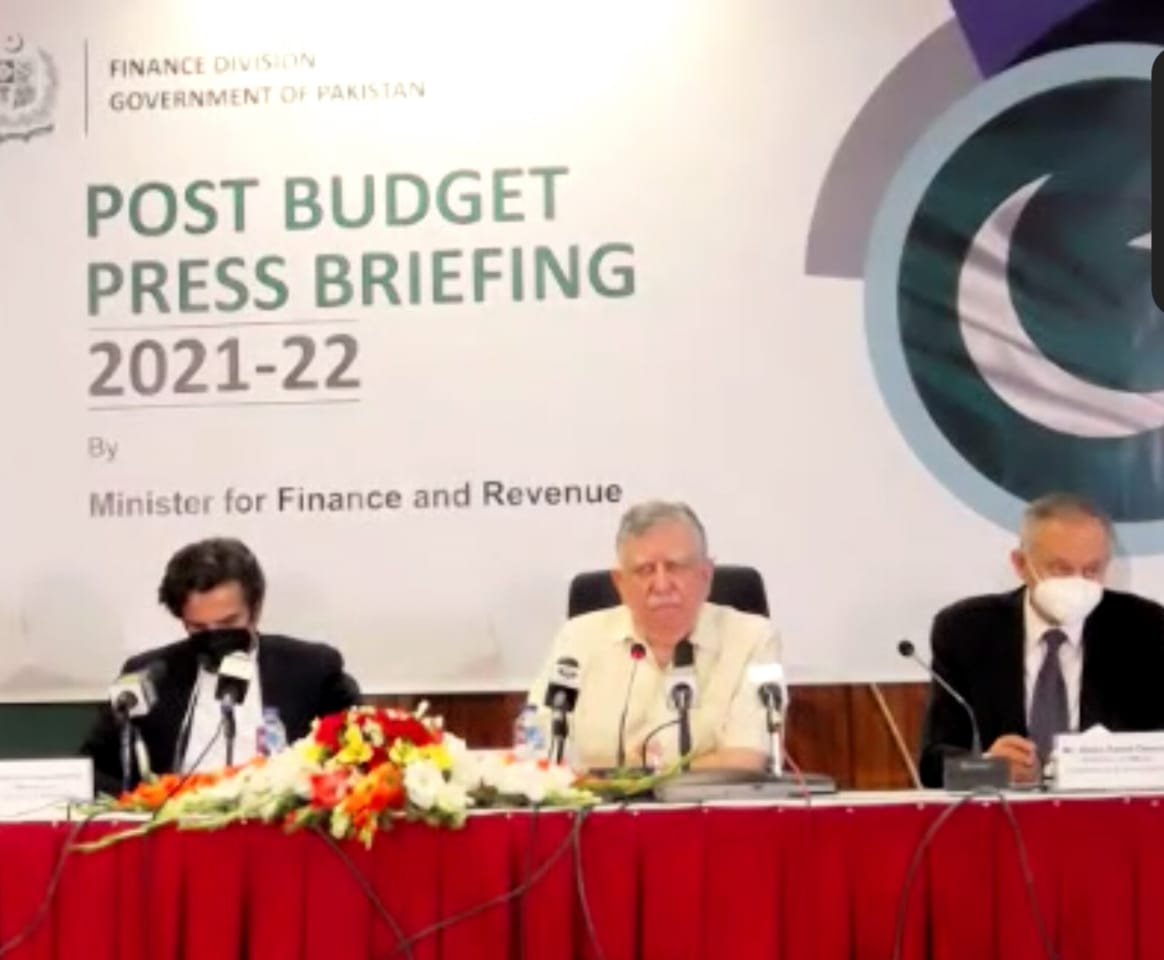
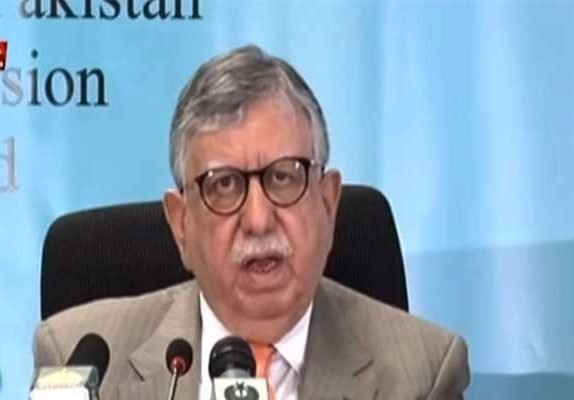
    Addressing a post-budget press conference in Islamabad, Finance Minister Shaukat Tarin said that ” Prime Minister Imran Khan and the cabinet opposed the imposition of tax on mobile phone calls, internet data, and SMS. “Now there will be no increase in the tax rate for all these services.”

    The original decision, if it had been implemented, would have affected over 98 million people.

    Tarin said the government has presented a total growth budget and their challenge is to stabilise growth.

    Tarin said that additional tax of Rs500 billion will be collected in the next financial year. “We have to earn dollars by increasing exports and add an additional tax of Rs500 billion in the next financial year.”

    The finance minister said that Pakistan had to go to the International Monetary Fund (IMF) for help when its position is weak.

    “We need 20 per cent growth in exports. Our savings rate is 15 per cent and our investment rate is up to 16 per cent. If we do not have revenue, how will we achieve growth?”

    Tarin said that the poor in the country have not received loans and training for the last 70 years. Loans up to Rs 2 million will be given to build a roof and loans to poor farmers will go up to Rs 500,000. Pakistan has become a food deficient country and we are now importing what we used to export, Tarin said, adding that the country is importing pulses, wheat, and sugar.

    “We did not pay attention to our crops, but now we will pay attention to it,” he assured.

    “We should not play politics with the poor,” he added.

    Tarin unveiled the Budget 2021-22 yesterday. The total expenditure of the budget had been kept at Rs 8,478 billion and had set the tax collection target at Rs 5,829 billion. 

  • Shaukat Tarin presents the Pakistan Economic Survey 2020-21

    Shaukat Tarin presents the Pakistan Economic Survey 2020-21

    Finance Minister Shaukat Tarin presented the Pakistan Economic Survey 2020-21 at a press conference in Islamabad on Thursday. However, the document did not have the latest figures on poverty and unemployment.

    Tarin revealed that the industrial and services sectors had helped the country post-Gross Domestic Product growth of 3.94 per cent in the first nine months of the fiscal year [FY](July to March), significantly higher than the target of 2.1 per cent.

    “The agriculture and manufacturing sectors helped the economy grow to 4.4%, laying stress on the need for sustainable growth in Pakistan in the years to come,” added Tarin.

    Coronavirus Pandemic

    The minister opened his press briefing by speaking highly of Prime Minister Imran Khan’s policies in combating the coronavirus pandemic.

    “The government itself had set [GDP] growth will be 2.1pc and the IMF predicted even lower. But the decisions by this government such as incentivising manufacturing and textiles, construction, and interventions in agriculture have helped the economy recover,” said Tarin.

    He said many people lost their jobs when the pandemic hit Pakistan, however, due to PM’s visionary policy of not imposing a complete lockdown across the country, millions of people who were unemployed were hired again. 

    “The economy is recovering,” he said. 

    Remittances

    Tarin said Pakistan’s remittances had broken records, adding that they had crossed $26bn. He said that lately imports, especially food in the form of wheat and sugar, were increasing as Pakistan’s economy was growing at the same time. 

    “We were net exporter of food but now, we have become a net importer,” he said. “Our exports registered a growth but our remittances increased manifold,” he added. 

    Ehsaas Programme

    Tarin spoke highly of the Ehsaas programme, adding that the World Bank had described it as “one of the best and the largest” poverty alleviation initiatives across the globe. 

    “Full credit goes to Sania Nishtar,” he said, adding that handing out cash to 15 million people was not a small achievement.

    Growth rate

    Tarin said he had told the prime minister it was time to focus on sustainable growth “until we go to 5-8pc GDP growth”.

    “We will do interventions and take care of the poor. The poor man has been crushed in this stabilisation phase because the dreams we have shown them have been of a trickledown economy. And this can only happen when growth is sustainable and continuous for 20-30 years,” he said.

    “Countries which had sustainable growth, they grew continuously for 20-30 years. What have we done? Every time we grow by borrowing money, which is credit-based growth.”

    Current Account

    According to the survey, during FY 2021, while the world was reeling from the economic impact of the pandemic, Pakistan’s “external sector appeared as a key buffer for resilience.”

     “The main driver of improvement in current account balance was the robust growth in remittances,” it stated.

    Trade Deficit

    “During July-March FY 2021, export of goods grew by 2.3 percent to $18.7 bn as compared to US$ 18.3 bn the same period last year. Import of goods grew by 9.4pc to $37.4 bn as compared to US$ 34.2 bn last year. Consequently, the trade deficit increased by 17.7per cent to $18.7bn as compared to $15.9bn last year,” the survey said.

    Inflation

    The finance minister said the government wanted to control inflation “but prices are still high and affecting the common man”.

    “So the way to solve this is by increasing production and that is why we have focused on agriculture in this budget,” Tarin said.

    Federal Board of Revenue (FBR)

    Speaking about the FBR, Tarin said he would end the practice of people being harassed by the bureau. “FBR will not audit [businesses or persons] but a third-party audit will be conducted,” he said. 

    International Monetary Fund (IMF)

    Tarin said Pakistan’s negotiations with the IMF were ongoing, adding that the international money lender had asked the government to hike tariffs and increase taxes. 

    The finance minister said Pakistan and the IMF want the same thing; sustainable growth, adding that the country cannot afford to increase taxes or hike tariffs so that the poor and the salaried class do not feel additional burden of inflation. 

    “This is a red line for the prime minister,” he said. “We will not further burden the poor,” he added. 

    Energy Sector

    Tarin said Pakistan’s economy was burdened due to the overcapacity in the power sector, saying that “it was a very big challenge and a black hole” for Pakistan. 

    Privitisation

     Tarin said it was fair to ask how he can privatise state-owned enterprises when all others, before him, promised to do the same but failed to. 

    “Nawaz Sharif used to shout the same slogan during the first time [when he was prime minister] and then for a second time [when he again became the prime minister] and then a third, but nothing happened,” he said.