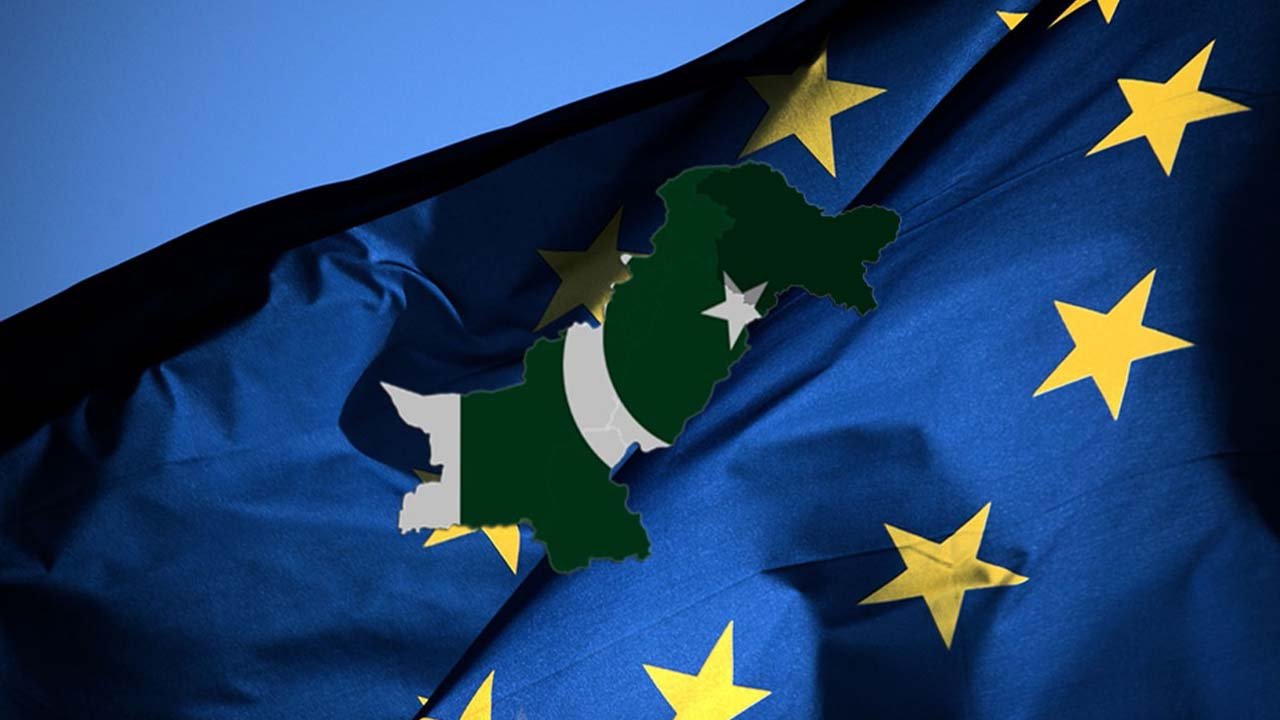
Tag: GSP+ Status

  • Understanding GSP+ status: What it means for Pakistan’s trade relations

    Understanding GSP+ status: What it means for Pakistan’s trade relations

    The Pakistan Tehreek-e-Insaf (PTI) has vehemently dismissed accusations levelled by Federal Information Minister Attaullah Tarar, labelling them as unfounded and baseless.

    In a statement issued today, the PTI refuted claims made by Tarar, asserting that they are nothing but a concoction of falsehoods and rhetoric aimed at maligning the party’s reputation.

    Earlier, Tarar had accused the PTI of plotting to undermine Pakistan’s Generalised Scheme of Preferences Plus (GSP+) status.

    He alleged that the party’s spokespersons were actively engaged in activities detrimental to the country’s interests under the directives issued from confinement.

    Understanding GSP+ and its significance for Pakistan’s economy

    The GSP+ status, a cornerstone of Pakistan’s trade relations with the European Union (EU), holds significant importance for the nation’s economy.

    Under this scheme, selected developing countries, including Pakistan, receive extensive trade concessions aimed at fostering sustainable development and good governance practices.

    The European Union’s GSP+ Scheme is founded on the effective implementation of 27 United Nations conventions covering various aspects such as human rights, labour rights, climate change, narcotics control, and corruption.

    Once granted GSP+ status, beneficiary countries are subject to rigorous monitoring to ensure compliance with the stipulated conventions and reporting requirements.

    The dialogue on GSP+ compliance involves various stakeholders, including international monitoring bodies, civil society, trade unions, and businesses.

    Regular monitoring visits are conducted by the EU to assess the progress of beneficiary countries in addressing the outlined issues.

    The significance of GSP+ for Pakistan’s economy cannot be overstated, particularly for its textile industry and workforce.

    Over the past decade, Pakistan has witnessed a notable increase in exports to the EU, accompanied by a surge in EU imports, owing to the preferential treatment offered under the GSP+ scheme.

  • Govt allows Dubai ruler to export 150 rare falcons despite ban

    In spite of a ban on the trade of falcons under wildlife protection laws, the federal government has granted permission to Sheikh Mohammad bin Rashed Al Maktoum, Vice President of the United Arab Emirates and ruler of Dubai, to export 150 falcons of rare species from Pakistan to the United Arab Emirates.

    According to a report in Dawn, the Dubai ruler needed younger falcons to hunt houbara bustards, and a permission in this regard has been issued by the foreign ministry.

    The permit issued on Sept 15 this year read: “The Ministry of Foreign Affairs…has the honour to inform that the esteemed embassy may export one hundred and fifty (150) falcons from Pakistan to the United Arab Emirate (UAE) for personal use of His Highness Sheikh Mohammad bin Rashed Al Maktoum, vice president of UAE and ruler of Dubai, from Karachi/Bahawalpur/Rahim Yar Khan/Islamabad/Quetta.”

    “In this regard, the concerned authorities have been requested to accord facilitation for the export of one hundred and fifty (150) falcons from Pakistan to UAE,” the notification read.

    The permission, however, will create challenges for Pakistan as it is a member of various wildlife conservation treaties. The newspaper reported that Pakistan is a signatory to treaties that ensure the protection of wildlife, such as the Switzerland-based Conven­tion on International Trade in Endangered Species of Flora and Fauna (CITES).

    Also, due to a ban on the trade of rare falcons, there are no markets in the country that would deal in the ‘legal trade’ of these species, which meant that the Arab exporter will have to seek these birds in the black market. By allowing this trade, the government and the exporter will be guilty of patronising this illegal wildlife trafficking, the news report added.

    In addition, the export of these birds would also hurt Pakistan’s standing in the eyes of the European Union and the country may lose the Generalised System of Preferences (GSP) Plus for violating international conservation treaties, the newspaper quoted sources as saying.

    The GSP+ status facilitates the easy access of Pakistani exports to the highly lucrative market of the European Union.