Tag: Guddu Thermal Power

  • ‘Will not allow anyone to relax’: PM Shehbaz says not to visit China until load-shedding over

    Prime Minister (PM) Shehbaz Sharif has taken notice of the long hours load-shedding across the country following his visit to different areas and departments in Lahore on Sunday, reports Geo News.

    “Immediate steps must be taken to reduce power outages by May. Until we get rid of load-shedding, I will not leave for China, neither will allow anyone to relax,” the premier declared.

    Shehbaz Sharif further said that tangible measures should be taken for the availability of oil and gas resources to operationalise closed thermal power plants.

    In the ongoing holy month of Ramazan, Pakistan has severely been hit by power outrages and various cities of the country are experiencing 10-12 hours power loadshedding.

    PM Shehbaz claimed that the previous government made the nation paid for Rs100 billion due to wrong decisions. “The nation will have to pay Rs500 billion extra this year as such due to the poor planning and incompetence of the previous government,” Shehbaz regretted.

    “Due to the negligence of the previous rulers, one Liquefied Natural Gas (LNG) ship that was available for Rs6 billion is now costing Pakistan a humongous amount of Rs20 billion”, PM Shehbaz revealed. 

    On a weekly-day off, the PM paid a surprise visit to Ramazan bazaar in Johar Town and visited Pakistan Kidney and Liver Institute (PKLI) in the Punjab capital.
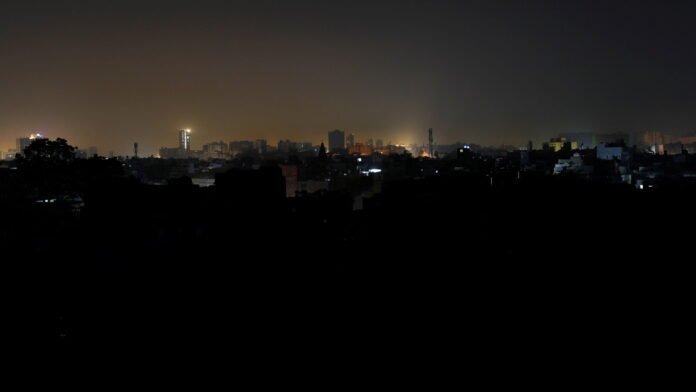
  • Countrywide blackout caused by human error, NA body told

    Countrywide blackout caused by human error, NA body told

    The inquiry committee probing last month’s countrywide blackout has held officials of the Guddu Thermal Power Plant responsible for the nationwide power outage.

    “The problem occurred due to a human error at the Guddu power station. The error led to the tripping of the entire power system. The fault occurred as some officials did not follow standard operating procedures (SOPs) during the maintenance work,” said Secretary Power Ali Raza Bhutta while briefing the members of the National Assembly Standing Committee on Energy.

    “Due to a mistake, the Guddu Thermal Power Plant tripped and there was a complete blackout. At the time of the blackout, the power consumption in the country stood at 10,000 megawatts,” he added.

    The entire country plunged into darkness on January 9 after the National Transmission and Despatch Company (NTDC) power system got hit by a major breakdown due to the tripping around midnight.

    Moreover, Netblocks monitor internet outages had said that internet connectivity in the country collapsed as a result of the blackout.

    The power secretary further said that “the officials of Guddu Thermal Power Plant along with those who have not improved the NTDC system are nominated by the inquiry committee for investigation. The committee has proposed to take measures to ensure that the failure of one plant does not trip the entire system in future”.

    On January 10, the government had blamed the old transmission system for the breakdown. Energy Minister Omar Ayub Khan had said that “during the past tenures, no attention was paid to the improvement of the transmission system on modern lines. Under the government of Pakistan Muslim League-Nawaz (PML-N), the country saw eight major power breakdowns”.

    “When the incumbent government assumed office, no work had been done to upgrade the transmission system. We are now investing in the transmission and distribution system. A $6 billion transmission line has been laid in Matiari,” added the minister at the time.

    So far, nine energy projects have been completed under the China Pakistan Energy Corridor (CPEC), contributing 5340 MW of electricity to the main grid, which would meet the vital needs for industry, agriculture, and domestic consumers.

    Out of 22 projects, another eight are about to be completed and would pump in an additional 4470 MW of electricity to the national grid. Another five projects are in the planning and implementation phase.