Tag: Gulzar Ahmed

  • Harvard University congratulates Ayesha Malik for becoming first female Supreme Court judge

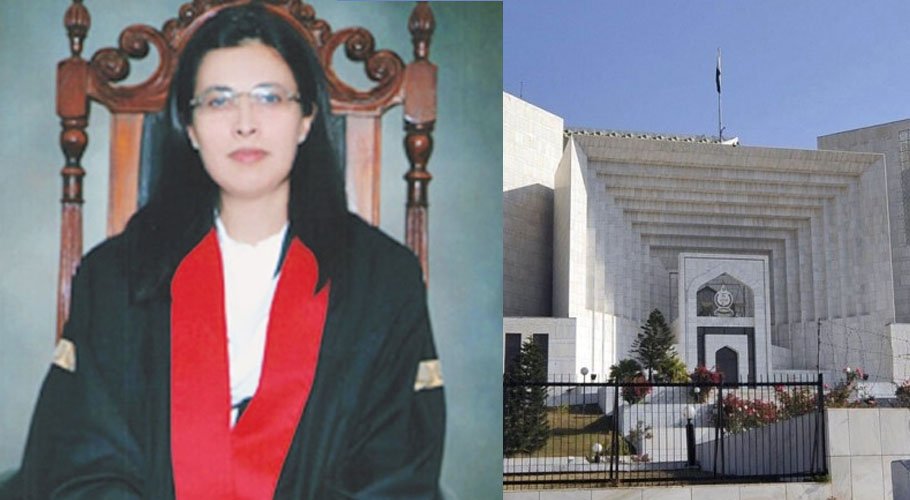
    Harvard University has congratulated its alumnus, Ayesha Malik who is the first woman appointed as a judge of the Supreme Court of Pakistan in 75 years of its history.

    She has studied law and earned a degree of LL.M ( Master of Laws) in 1999 from Harvard Law School where she was named a Landon H. Gammon Fellow for academic excellence. Harvard Alumni Association also published an article on her achievement on its website.

    “Congratulations to @Harvard_Law alum Ayesha Malik LLM’99, who was appointed to the Supreme Court of Pakistan! She is the first woman to serve as a justice of Pakistan’s Supreme Court in the country’s 75-year history,” Harvard Alumni Association tweeted on March 27.

    Justice Ayesha Malik took oath as the Judge of the Supreme Court of Pakistan on January 24, 2022. Chief Justice of Pakistan (CJP) Gulzar Ahmed administered the oath.

  • Justice Umar Ata Bandial becomes 28th Chief Justice of Pakistan, ceremony held in Islamabad

    Justice Umar Ata Bandial becomes 28th Chief Justice of Pakistan, ceremony held in Islamabad

    Justice Umar Ata Bandial took oath as the 28th Chief Justice of Pakistan (CJP) at a ceremony at Aiwan-i-Sadr in Islamabad today (Wednesday). He was administered the oath of office by President Arif Alvi.

    Justice Bandial will serve in the top judicial office until September 16, 2023. He has previously served as chief justice of the Lahore High Court.

    A day earlier, Justice Bandial while speaking at a full-court reference held in honour of the outgoing chief justice, criticised mainstream and social media alike for resorting to attacking judges rather than criticising their judgements.

    “The differences in judges’ opinions in matters of law arise from our individual perceptions and this diversity brings richness to our understanding,” said Justice Bandial.

  • Chief Justice of Pakistan Justice Gulzar Ahmed retires tomorrow

    Chief Justice of Pakistan Justice Gulzar Ahmed retires tomorrow

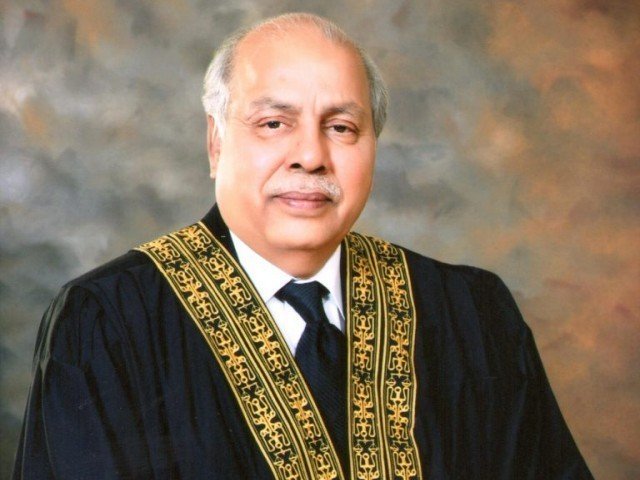
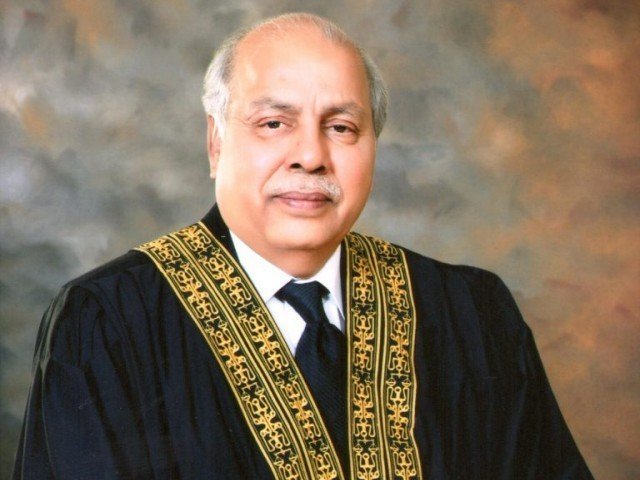
    Chief Justice of Pakistan (CJP) Gulzar Ahmed reties on Tuesday (tomorrow). Justice Gulzar had taken oath as the CJP in December 2019.

    CJP Gulzar mainly focused on removing encroachments in Karachi. He ordered the demolition of Nasla Tower as well as illegal houses built around Gujjar Nullah. In the end, he also ordered the relevant authorities to end commercial activities on military land in Karachi.

    Justice Gulzar further ordered to demolish a mosque and other encroachments built on amenity parks near Tariq Road in Karachi. Despite strong protests, he did not withdraw any order for the removal of encroachments in Karachi.

    CJP Gulzar could not give attention to reforms to improve the criminal justice system like his predecessor former CJP Asif Saeed Khosa.

    A three-judge bench led by him summoned Prime Minister (PM) Imran Khan in a suo motu case on the martyrdom of children in the Army Public School (APS) Peshawar attack.

    The efforts of Justice Gulzar cannot be ignored to end the sense of insecurity among minority communities. He took courageous steps to send a strong message to extremist elements that the judiciary would not spare anyone involved in usurping the rights of minorities.

    Taking to Twitter, federal Minister for Information and Broadcasting Fawad Chaudhary said, “The historic stand CJP Gulzar has taken on minority places of worship has greatly enhanced his prestige, at a time when India’s judiciary seems helpless at the hands of extremists.”

    The outgoing CJP also made history by nominating Lahore High Court’s Justice Ayesha Malik for her appointment as the first female judge of the Supreme Court.

    Justice Umar Ata Bandial will replace Justice Gulzar Ahmed, and will take oath as Pakistan’s 28th Chief Justice of Pakistan on February 2.

  • Judicial history made, Justice Ayesha officially elevated to Supreme Court

    Judicial history made, Justice Ayesha officially elevated to Supreme Court

    President Arif Alvi on Friday gave final approval to the elevation of Lahore High Court Justice Ayesha Malik as a judge of the Supreme Court (SC).

    Justice Ayesha will make history as the first female Supreme Court judge in the judicial history of Pakistan. She will be sworn into office on Monday, January 24, and her tenure will begin immediately. Chief Justice of Pakistan Gulzar Ahmad will administer the oath to Malik.

    Her oath-taking ceremony will be held at the Supreme Court. Judges of the Supreme Court, the attorney-general of Pakistan, and the advocate general will be in attendance.

    The Judicial Commission of Pakistan had on January 7 approved the elevation with a vote of five for and four against after a heated discussion on whether judges should be appointed based on merit or seniority.

    It is pertinent to mention here that Justice Ayesha Malik is ranked fourth in the Lahore High Court in terms of seniority.

    Justice Ayesha Malik’s name came to fame after her landmark judgment against the ‘two-finger test’ or two-finger virginity test of sexual assault survivors.

  • Justice Ayesha Malik confirmed for Supreme Court Judge, needs President’s formal approval

    Justice Ayesha Malik confirmed for Supreme Court Judge, needs President’s formal approval

    The Parliamentary Committee on Wednesday confirmed the nomination of Justice Ayesha Malik to the Supreme Court (SC).

    Justice Malik only requires the president’s formal assent to become the first woman to be elevated to the country’s top court.

    Justice Malik will remain a judge of the Supreme Court until March 2031 and may even have a chance to become the first woman to hold the post of chief justice.

    After a session on January 6, the Judicial Commission of Pakistan (JCP) recommended Justice Malik’s name by a majority of five votes to four.

    Chief Justice Gulzar Ahmed, senior judge Justice Umar Ata Bandial, former judge Sarmad Jalal Osmany, Law Minister Barrister Farogh Naseem, and Attorney General Khalid Jawed Khan had supported Justice Malik’s candidature, while Justice Qazi Faez Isa, Justice Maqbool Baqar, Justice Sardar Tariq Masood and Pakistan Bar Council representative Akhtar Hussain opposed the selection.

  • Four more children die of malnutrition in Tharparkar, death toll at 10

    Four more children die of malnutrition in Tharparkar, death toll at 10

    Four more children are reported to have died due to malnutrition within the last two days in Tharparkar. The death toll of children in January has climbed to ten.

    A report released by the United Nation’s Children Fund (UNCF) in April stated that Pakistan is among the countries with the highest infant mortality rates, with 22 infants dying before turning a month old.

    The number of children who have lost their lives during the current year due to malnutrition and other diseases in Tharparkar has reached 413.

    Earlier this month, Chief Justice of Pakistan Justice Gulzar Ahmed asked for the filing of a petition in the Supreme Court for a resolution of the problems of the Thar region.

    The health department in order to avoid humiliation has directed staffers of concerned hospitals not to talk with the media, reports ARY News.

  • ‘Get out from here’: SC reinstates Murtaza Wahab as Administrator Karachi after unconditional apology

    ‘Get out from here’: SC reinstates Murtaza Wahab as Administrator Karachi after unconditional apology

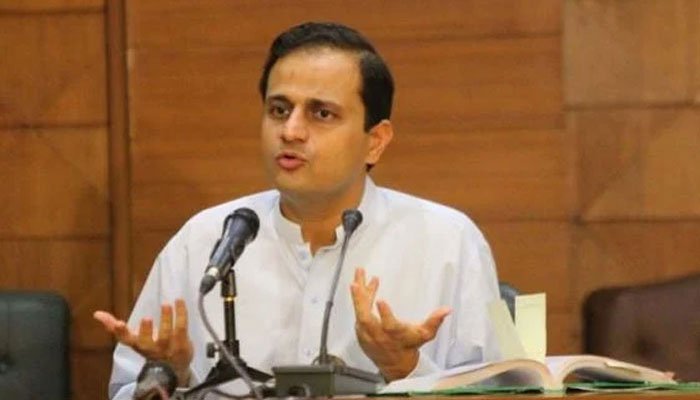
    The Supreme Court (SC) took back its order for the removal of Murtaza Wahab from the post of Administrator Karachi after he tendered an “unconditional apology” during a hearing of the Gutter Baghicha case at the Karachi Registry on Monday.

    The court directed that the post of administrator be “kept away from politics” and instructed Wahab to fulfill his responsibilities while remaining above “political affiliation and pressure”.

    Earlier, a two-member bench comprising Chief Justice Gulzar Ahmed and Justice Qazi Mohammad Amin issued a directive for Wahab’s removal after a heated exchange with him.

    Attorney General of Pakistan Khalid Jawed Khan, Advocate General of Sindh Salman Talib Ud Din, Karachi Commissioner Iqbal Memon, Wahab, and Senior Director of the anti-encroachment department Bashir Siddiqui were present during today’s hearing.

    During the hearing of a matter related to the Gutter Baghicha park, Justice Amin, while addressing Wahab remarked, “These are state lands [and] not your personal property. [You will] have to return them. If we don’t take them [back] then someone else will. You will return the lands.”

    “Should we leave the government?” Wahab questioned, saying that major observations are made about the provincial government by the court.

    “Silence yourself mister, what are you saying? Don’t do politics here,” the chief justice reprimanded Wahab.

    “Get out from here. We will fire you right now. Are you an administrator or a political leader?” Justice Gulzar questioned. 

    “The administrator, prima facie, failed to perform his duties. The administrator’s behaviour is that of political leaders [and] not of serving the citizens,” the chief justice remarked.

    “Go and transfer Bin Qasim park [and] Hill park in your name. Take Frere [Hall] park too. How many parks are there in Karachi? Finish them now. Distribute the few remaining parks among your officers as well,” the chief justice scolded Wahab.

    “Is Karachi your personal property?” he questioned.

    Murtaza Wahab later apologised to the court for using harsh words.

    “I apologise for my behavior,” Wahab said.

    Justice Qazi Amin remarked that they have removed him [Wahab] from office. “You are no longer an administrator. You are not part of the state but the government,” he said.

    Wahab, while speaking to the media during a break in the hearing, said that he accepted whatever the court’s decision would be.

    He said that he has apologised to the court. “I was stating my opinion with great respect,” said Wahab, adding that this court is his own court.

    “[A person] should be heard before issuing a decision against them,” Wahab said as he looked forward to the court’s final decision after the break.

    The court later accepted the apology of Murtaza Wahab after a short break in the proceedings and withdrew the order to remove him from office.

  • SC orders action against officials who issued permits for Nasla Tower construction

    The Supreme Court (SC) has given orders to authorities to take strict action against those officials who issued construction permits to build the illegal 15-storeyed Nasla Tower on Monday.

    A two-judge bench comprising Chief Justice Gulzar Ahmed and Justice Qazi Mohammad Amin ordered the anti-corruption department to register a case against those who are responsible for the issuance of construction permits. They also directed the police to file a separate case against them.

    The Deputy Inspector General (DIG) West has been given instructions to take immediate action against the officials who had approved the Nasla Tower building plan and present a report to the Supreme Court.

    The Supreme court also ordered to seize the 780 square yards of the land the tower was constructed upon and directed the official assignee of Sindh High Court (SHC) to take possession of the land and prohibit its sale.

    The Chief Justice also expressed his anger over the slow pace of the demolition procedure of the Nasla Tower. He asked Karachi Commissioner Iqbal Memon, “Such a building is torn down within one hour in the world. What are you people doing?”

    The Karachi Commissioner replied that five floors have been demolished so far and currently 400 labourers are working on the given task.

  • ‘Law did not allow land meant for defence purposes to be used for commercial gains’: CJP Gulzar

    ‘Law did not allow land meant for defence purposes to be used for commercial gains’: CJP Gulzar

    Chief Justice of Pakistan (CJP) Gulzar Ahmed on Tuesday said that the law did not allow land meant for defence purposes to be used for commercial gains, reports Dawn.

    CJP Gulzar further said that such land should be returned to the government once its strategic use has ended. He said this during the hearing on the issue of military lands being used for commercial purposes.

    Grilling Defence Secretary Lieutenant General (Lt Gen) Mian Mohammad Hilal Hussain, CJP Gulzar said, “The law’s intention is not that defence land is used for any other purpose,” Justice Gulzar reiterated. “If [the land] is not being used for defence then it will go back to the government.”

    “This is government land,” CJP Gulzar said, further taking notice that cinemas, petrol pumps, housing societies, shopping malls and marriage halls were being constructed on land meant for defence.

    “General sahib, these are not defence purposes,” he told the defence secretary, asking the attorney general to explain how the defence ministry would “limit the land’s use to defence”.

    Justice Qazi Mohammad Amin Ahmed, one of the judges present on the bench during the hearing, said, “The army should not compromise on its bigger objectives for petty business.”

    The CJP further said that “allotting houses to senior army officers does not fall under defence purposes”.

    “How can the army carry out commercial activities on state land?” he questioned, emphasising that state land should not be “exploited”.

  • ‘We absolutely do not agree to work under someone’s pressure’: CJP Gulzar rubbishes allegations

    ‘We absolutely do not agree to work under someone’s pressure’: CJP Gulzar rubbishes allegations

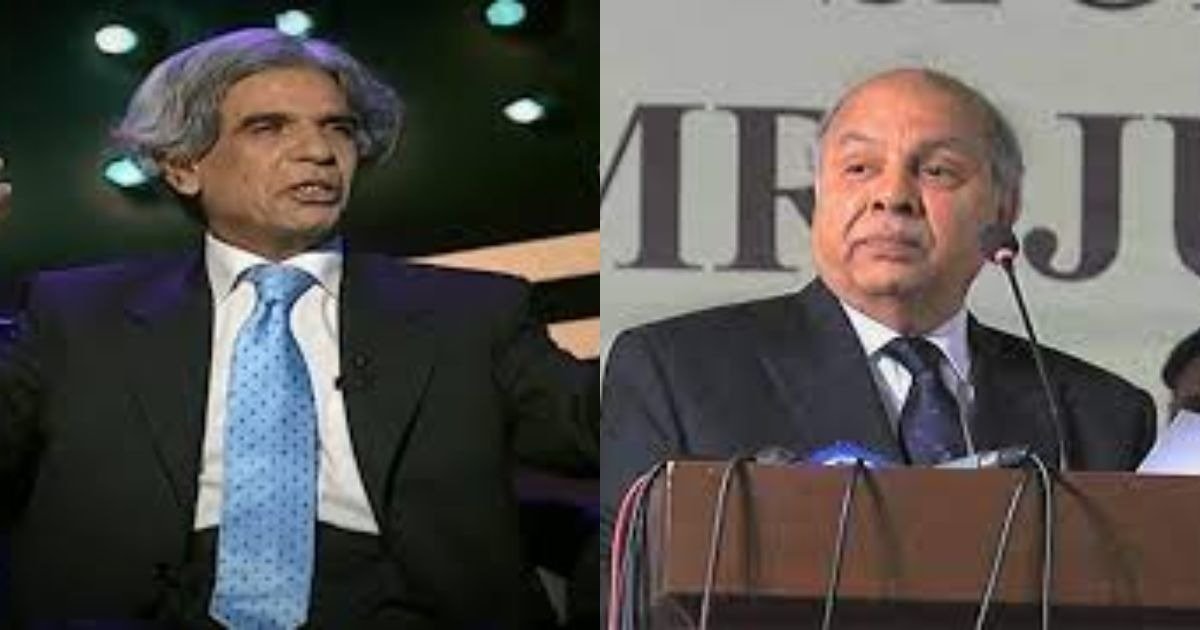
    Chief Justice of Pakistan (CJP) Gulzar Ahmed on Saturday denied that the judiciary was being influenced by or taking dictation from other institutions.

    The CJP was responding to comments made by former president of the Supreme Court Bar Association, Ali Ahmad Kurd, earlier during the Asma Jahangir Conference in Lahore.

    “One general is dominating a country of 220 million people. This same general has sent the judiciary down to number 126 [in rankings],” said Kurd.

    Kurd, in his speech, said that there was a “clear and observable division” within the judiciary, adding that the “country’s intellectual class was finished and because there is no intellectual class, people of small stature are sitting at the top.”

    “I have not taken the pressure of any institution or listened to any institution. No one tells me or guides me on how to write my verdict. I have never made any decision that I did so on someone else’s saying, nor has anyone had the courage to say anything to me,” responded CJP Gulzar to Kurd’s statement.

    “I have never listened, seen, understood, or felt anyone’s dictation to me,” he added.

    “My court gives justice to the people. Come to the court, Ali Ahmad Kurd, and see what is happening. Read the court’s decision and see what is happening. My judges write judgments every day […] see how our court is working with freedom and following the law and implementing the Constitution.”

    Justice Gulzar said the courts were free to decide whatever they wanted to do and did so routinely. “Tell me which case was decided on whose dictation till today,” he said as he advised Kurd to “not tell wrong things to people, create discord and lift the people’s trust from the institutions.”