
Tag: hacking

  • Bangladesh bought phone hacking, intercepting devices from Israel

    Bangladesh bought phone hacking, intercepting devices from Israel

    Bangladesh government spent around $330,000 on phone-hacking equipment made by an Israeli company.

    The two countries have not recognised each other and have no diplomatic relations.

    In an exclusive investigative report by Al Jazeera, a product called UFED is manufactured by Cellebrite security firm in Israel, and Bangladesh has acquired devices from the firm.

    It can access and extract data from a wide range of mobile phones. Civil rights and campaigners are worried about its ability to hack encrypted phone data and breach the privacy of users.

    Bangladesh does not recognise the state of Israel, forbids trade with it and prevents its citizens from travelling there. The Muslim-majority country officially stands in solidarity with the Palestinians due to the denied civil rights and live under Israeli military occupation. It is unclear whether UFED was provided to Bangladesh directly by the Israeli company or any other channel was created for acquiring the devices.

    In February, Al Jazeera revealed how the Bangladesh military in 2018 signed a contract to acquire mobile phone interception equipment from Israeli firm Picsix Ltd. In February 2019, Bangladeshi officers received training by Israeli intelligence experts in the Hungarian capital, Budapest.

    The Ministry of Defence in Bangladesh said the equipment, a passive mobile phone monitoring system called P6 Intercept, was made in Hungary and was purchased on United Nations missions but the claim was rejected by the world body.

    According to the contract, the manufacturer of P6 Intercept as Picsix Ltd Hungary is made in Hungry, but no public record of any such company exists, and all Picsix equipment are manufactured in Isreal.
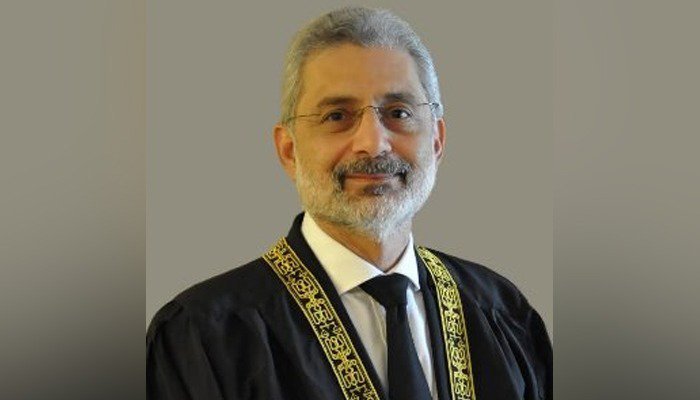

  • FIA to probe hacking of SC Justice Faez Isa’s cell phone

    FIA to probe hacking of SC Justice Faez Isa’s cell phone

    The Federal Investigation Agency (FIA) will trace the suspects responsible for hacking the phone of senior Supreme Court judge Qazi Faez Isa.

    The News reported that the FIA team would comprise forensic and cyber exports who would identify the hackers and their motives for targetting the judge. It will also probe the potential theft of the judge’s phone data, email and messages, during the hacking attempt. It hasn’t been decided as to who would head the FIA team to probe the cyber attack.

    On Tuesday, Supreme Court Registrar Khawaja Daud Ahmad requested FIA Director General Wajid Zia to form a team of experts to probe this phone hacking issue.

    “I am directed to state that the personal cell phone of Justice Qazi Faez Isa, judge of this court, was hacked on Jan 29, 2021 (Saturday) and his lordship learnt of this early Sunday morning. I am therefore directed to request you [Wajid Zia] to depute a technical team to assess his lordship’s cell phone in respect of hacking status and apprise about the same at the earliest,” stated Registrar Supreme Court’s letter quoted by Geo News.

    The SC had also issued an official statement to inform the public that the personal cell phone of Justice Qazi Faez Isa was hacked.

    “There is suspicion that misleading communication can be made from his lordship’s number to anyone with ulterior motives,” read the SCP’s official statement. “Therefore, the communication purportedly made from his lordship’s cell phone, which his lordship had not sent, may be treated as fake and false,” the official statement added.

    IT expert Dr Umar Saif, while talking about the hacking of the judge’s phone, said there were two ways to hack a cell phone: one is to take over other person’s Whatsapp by stealing the confirmation code, while the second, more sophisticated one, is to hack the entire operating system of the cell phone.

    Both techniques are being used to hack phones in Pakistan, he said, adding that an Israeli cybersecurity firm built a software named Pegasus to hack the phones in 2016.

    Pegasus malware is spyware that can hack any device and steal a variety of data from the infected device, including text messages, emails, key logs, audio and information from installed applications, such as Facebook or Instagram. The spyware can record conversations and video as well as snap pictures from the device’s camera.

    The malware was created by NSO Group, an Israeli cybersecurity firm founded in 2010, and has been around since at least the summer of 2016.

  • Mohammad Bin Salman allegedly hacked Jeff Bezos’ cellphone

    Mohammad Bin Salman allegedly hacked Jeff Bezos’ cellphone

    Amazon founder Jeff Bezos phone was reportedly hacked by Saudi Crown Prince Mohammad Bin Salman.

    According to The Guardian report, Bezos’ phone received a ‘malicious file’ from the WhatsApp number of the crown prince. After a few hours, the phone started transmitting a large amount of data to an unknown receiver.

    A few months after the intrusion, MBS was accused in the brutal murder of Jamal Khashoggi. Although, there was no tangible evidence against MBS’ involvement in the murder of Khashoggi, the journalist was working for The Washington Post which is owned by Bezos.

    Furthermore, information about Bezos’ personal life was also breached and provided to a tabloid, owned by American Media Inc (AMI). In consequence, AMI published a story revealing his extramarital affair. AMI insisted that the information was a tip off by the brother of Bezos’ girlfriend, however, the billionaire’s forensic team concluded that Saudis had managed to access his cellphone information.

    Meanwhile, the government of Saudi Arabia has denied these allegations and have asked for an inquiry into them.

    Nonetheless, the allegations will seriously damage the efforts of the Crown Prince in bringing Western culture and economic investments into the Kingdom of Saudi Arabia.