Tag: hair

  • Exclusive: Pakistani scientist on the verge of curing baldness

    Exclusive: Pakistani scientist on the verge of curing baldness

    Unexpected discoveries have long been a catalyst for scientific research, leading to major breakthroughs in fields ranging from medicine to technology.

    Now, in an unexpected development, scientists have discovered a crucial piece of the puzzle: hereditary baldness, also known as androgenic alopecia.

    Dr. Muhammad Yar, a tenured associate professor at COMSATS University Islamabad and a biomaterial researcher, and Sheila MacNeil, an Emeritus Professor of Tissue Engineering at the University of Sheffield in the UK, are the two minds behind this latest development.

    Years ago, Dr. Muhammad Yar was working on the development of biomaterials for advanced wound care i.e. dressings (medical gels) which can help faster healing of chronic wounds, and agents which can support new blood vessels formation known as angiogenesis.

    So, in 2014, during a visit to the University of Sheffield, Dr. Muhammad Yar discussed the angiogenic potential of 2-deoxy-D-ribose with Professor Sheila MacNeil.

    Following their discussion, they decided to test the compound together.

    From chickens to rats

    Initially, when the dressing gel, containing 2-deoxyribose, was tested on chicken fertilised eggs, a lot of new increased blood vessels were seen growing towards tested material.

    “We were really happy and then we went towards patent filing. A company was interested in its commercialization as wound care drafting for diabetic and burn patients,” he recalls.

    The deoxyribose gel was then tested on full-thickness wounds, where it successfully promoted healing. It was, however, also observed that longer and thicker hair grew along the edges of the wounds.

    “We thought that 2-deoxy-D-ribose is doing something else as well. Apart from helping in faster regeneration, it’s helping in faster growth of hair as well,” he says.

    And that is how, after working on the development of wound healing, they dived into the possible baldness treatment.

    They tested the deoxyribose gel on mice with testosterone-driven hair loss and applied a small amount of the gel to their bare areas.

    In weeks time, the fur grew back thicker and longer, showing results comparable to minoxidil, the well-known hair loss treatment sold as Rogaine, which doesn’t actually prevent hair loss and often results in minimal regrowth in some cases.

    “This is working really nicely,” Dr. Muhammad Yar updates on the latest developments.

    Happy news for bald people?

    With ‘impressive results’ in mice, the scientists believe there’s a good chance that 2-deoxyribose will be tested on humans next.

    Dr. Muhammad Yar confirms that while testing on humans is the goal, it will first require further lab work to understand the mechanism of action of 2-deoxyribose and to obtain approvals from regulatory bodies.

    “We are expecting around a year and a half to two years’ time before we test this on humans.”

    If deoxyribose gel proves effective on humans, it could treat alopecia and support hair regrowth after chemotherapy.

    Why does Pakistan lag behind?

    When asked why it’s rare to hear about Pakistani scientists working on groundbreaking research, Dr. Muhammad Yar believes that the key is in translational research.

    “We have to develop something in the lab and put this in the market. This is very, very important for economic uplift in Pakistan as well as for the universities.”

    He also asserts the need for business training programs for faculty and students at Universities.

    “The research which academics are doing at the universities is really important. There is a space in the market evaluation and business knowledge among faculty and students that could help translate these technologies from the lab to the clinic,” he points out.

  • Ducky Bhai’s fan takes an extreme step to show devotion

    Ducky Bhai’s fan takes an extreme step to show devotion

    Ducky Bhai, the popular YouTuber with six million subscribers, recently fulfilled a promise by shaving his head and face after reaching the follower milestone. However, one of his fans, Sakina, took a rather extreme step to express her devotion.

    She uploaded a video on her YouTube channel, showing her trying to cut her hair with kitchen scissors and eventually shaving her head completely with the assistance of a family member.

    The situation didn’t stop there. Sakina’s mother scolded and even physically hit her for shaving her hair.

    The girl, with once beautiful hair, went bald just to grab her favourite YouTuber’s attention. While there are many ways to show love for celebrities, shaving the head seems to be an extreme one.

  • ‘I do brush my hair’: Boris Johnson apologises for messy hair

    ‘I do brush my hair’: Boris Johnson apologises for messy hair

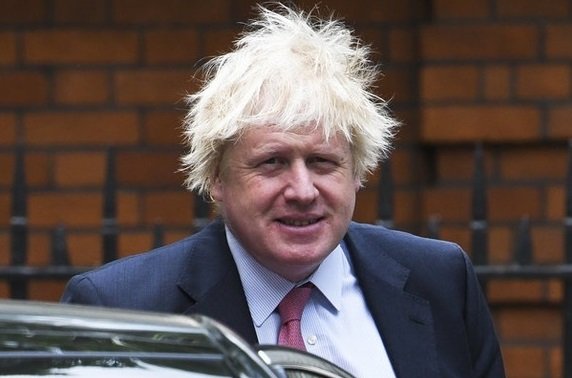
    Boris Johnson has apologised for his unruly hair saying that he tries to do his best with it and keep it tidy.

    Responding to a reporter who asked Johnson on behalf of his mother why he never appeared to brush his hair, the PM said: “I do! It’s something to do with my hair but I can tell you I do brush it – I have a brush in my office.

    “Your hair is always all over the place and she wants to know why,” the journalist had remarked.

    Johnson continued to apologise for his hair, saying: “Anyway, will you give your mother my very best for a very happy Christmas. And my apologies for my hair but I do my best with it.”

    Watch video:

    Read more – Jemima is in love with Princess Diana ‘all over again’ after watching ‘The Crown’

    The British prime minister’s hair has been the subject of many conversations and memes with historian Greg Jenner saying that Johnson had “weaponised his hair as iconic branding”.

    “I’ve seen him deliberately mess it up before giving a speech,” he had said.

    In a report dated July 2019, AFP had written that “to his [Johnson’s] backers, the haircut mirrors his unconventional thinking and personality, which they see as an antidote to a monolithic political order that they blame for economic catastrophe and an erosion of national sovereignty.”

    “To his opponents, it demonstrates a buffoonish temperament that is unsuited to public office, and which makes Britain a laughing stock on the international stage,” they added.

  • Research proves stress speeds up hair greying process

    Research proves stress speeds up hair greying process

    Marie Antoinette’s hair turned white overnight, according to folklore, before she was executed by guillotine in 1793 during the French Revolution. The ill-fated queen embodied an extreme example of the phenomenon of stress-induced graying of the hair. The biological mechanism behind such graying had long remained a mystery.

    But researchers at Harvard University have now figured out how it happens: it is driven by the body’s “fight-or-flight” response to danger.

    The researchers used mouse experiments to look at how stress affects the stem cells in hair follicles that are responsible for making melanocytes, the pigment-producing cells that give hair its colour – black, brown, blonde, red or somewhere in between.

    People generally have around 100,000 hair follicles on their scalp. Researchers initially suspected that a stress-induced immune attack might be targeting the melanocyte stem cells, but that hypothesis did not pan out. They then explored whether the hormone cortisol, elevated under stress, might be the culprit, but also was a dead end.

    Instead, they found that the body’s sympathetic nervous system, which governs the mammalian “fight-or-flight” response to danger, played a central role. It comprises a network of nerves that go everywhere including the skin, in which they are like ribbons wrapping around each hair follicle and are very close to the melanocyte stem cells.

    When mice were subjected to short-term pain or placed in stressful laboratory conditions, these nerves released the chemical norepinephrine, which was then taken up by the stem cells in the hair follicle that serve as a finite reservoir of melanocytes.

    “Normally, when hair regenerates, some of these stem cells convert into pigment-producing cells that colour the hair. But when they are exposed to norepinephrine from the sympathetic nerve, all of the stem cells are activated and convert into pigment-producing cells,” said Ya-Chieh Hsu, associate professor of stem cell and regenerative biology at Harvard University and a Harvard Stem Cell Institute principal investigator.

    “That means there are none left. In just a few days, the reservoir of pigment-regenerating stem cells is depleted. And once they’re gone, you can’t regenerate pigment anymore,” added Hsu, senior author of the research published in the journal Nature.

    Hair graying is one of the many ways that stress exacts a toll on the body. The findings could guide development of treatments for stress-related graying, or potentially other stress-related changes in tissues, though this could take years, she said.

    Stress is not the only reason hair can turn gray. The natural aging process is the leading cause. Genetic mutations and in some cases immune attacks also can contribute to hair losing its colour.

  • Summer care for your hair

    Summer care for your hair

    The hot and humid weather doesn’t only play havoc with our mood but also sends our hair out of control. Which means that we need to be extra careful with them in this weather. The weekend calls for some self-pampering, so here are a few ways to avoid frizzy hair.

    Get a trim

    Trim your hair in summer. Along with getting rid of the split ends, you’ll also get a new hairstyle which is more summer-friendly. Plus you don’t have to worry about your hair not growing back because hair grows faster in the summer due to better blood circulation.

    Avoid fun in the sun

    The sun’s UV rays make your hair dry and can harm the outer layer of your hair. You would hate us for this but spending too much time in the pool can damage your hair. Dust and sweat can cause split ends and dandruff. You can wear a light scarf to shield your head from sun rays and dust when you are out in the sun.

    Tackle the frizz

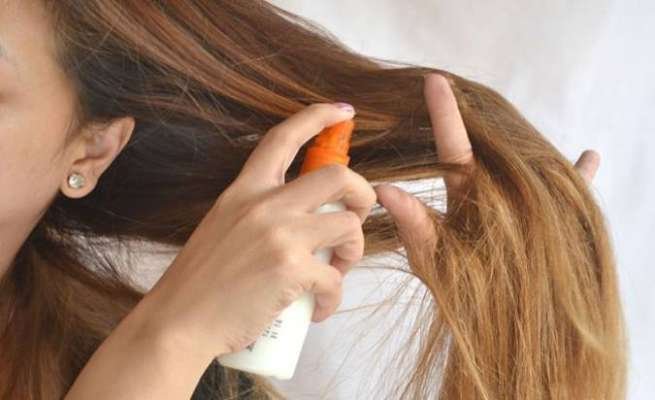
    Use a leave-in conditioner to handle the frizz and if a conditioner doesn’t help, try to apply a hair mask twice a week to restore their luster.

    Avoid hot styling tools

    Straighteners and curlers may give to the perfect glam look but they can also ruin your hair. Heat destroys the protein layer of the hair. Allow your hair to dry them naturally.

    But let’s just face the fact that when the air is so hot and humid, your hair are going to get frizzy. Don’t waste your time trying to fight frizz. Instead, find an easy go-to hairdo like a high ponytail, a messy bun or a side braid for the days high in humidity.