Tag: Hamas

  • Three Arab countries refuse to cut off economic ties with Israel

    Three Arab countries refuse to cut off economic ties with Israel

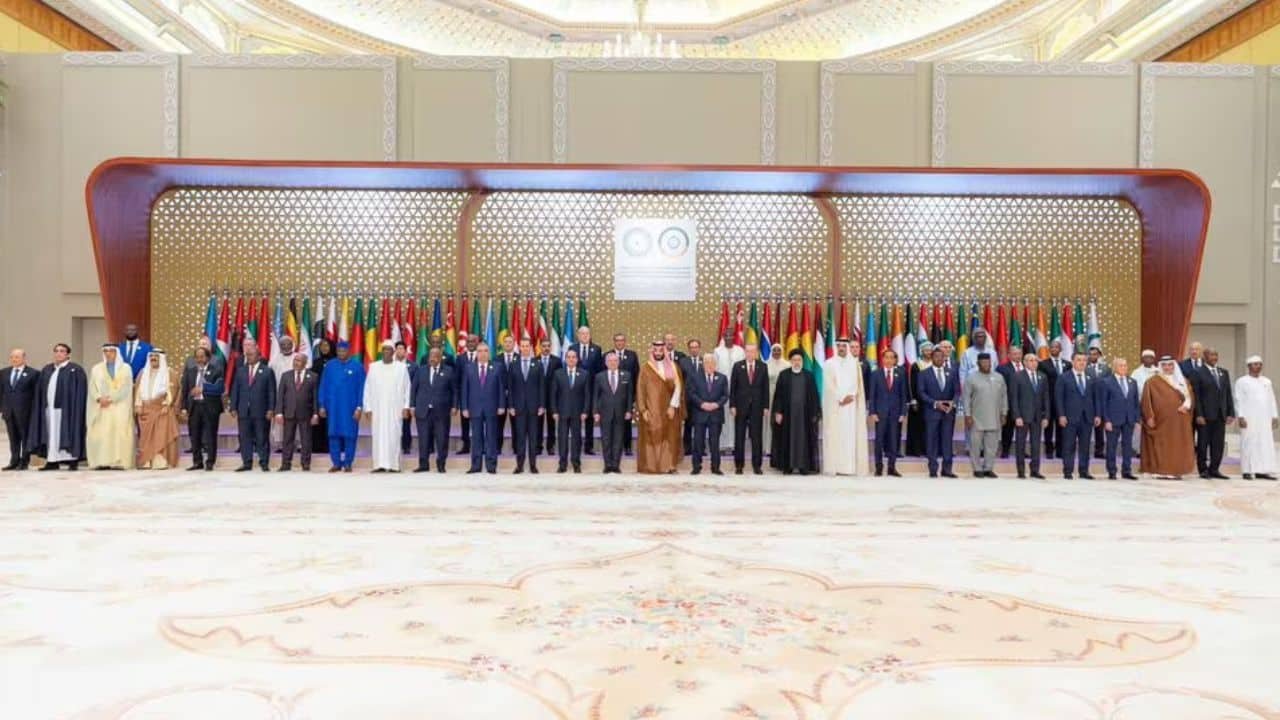
    Saudi Arabia hosted an Arab-Islamic summit on Saturday, calling to end Israeli attacks on Gaza and rejecting the justification of Israel’s actions against Palestinians as self-defence.

    The summit also asserted that Israel end the siege of Gaza and allow humanitarian aid into the enclave, ceasing arms exports to Israel.

    It further insisted that the United Nations Security Council adopt “a decisive and binding resolution” to halt Israel’s “aggression” and demanded that the International Criminal Court probe “war crimes and crimes against humanity that Israel is committing” in the Palestinian territories.

    Crown Prince Mohammed bin Salman stated that Saudi Arabia “confirms that it holds the occupation (Israeli) authorities responsible for the crimes committed against the Palestinian people.”

    “We are certain that the only way to guarantee security, peace and stability in the region is to end the occupation, siege and the settlements,” he added.

    A number of countries, including Algeria and Lebanon, suggested that the attacks on Gaza be responded by disruption of oil supply to Israel and its allies in addition to cutting off economic and diplomatic ties that some Arab League nations have with Israel.

    However, at least three countries rejected the proposal, according to the diplomats who spoke on condition of anonymity, reports Dawn.

    These countries included the United Arab Emirates and Bahrain, both of whom normalised ties with Israel in 2020.

    Syrian President Bashar al-Assad remarked that without any stern measures against Israel, the summit would not be effective.

    “If we do not have real tools for pressure, then any step we take or speech we give will have no meaning,” said Assad, who rejoined the Arab fold this year after a long conflict over civil war in his country.
  • Al-Shifa under attack; several at risk of dying: What we know about day 36

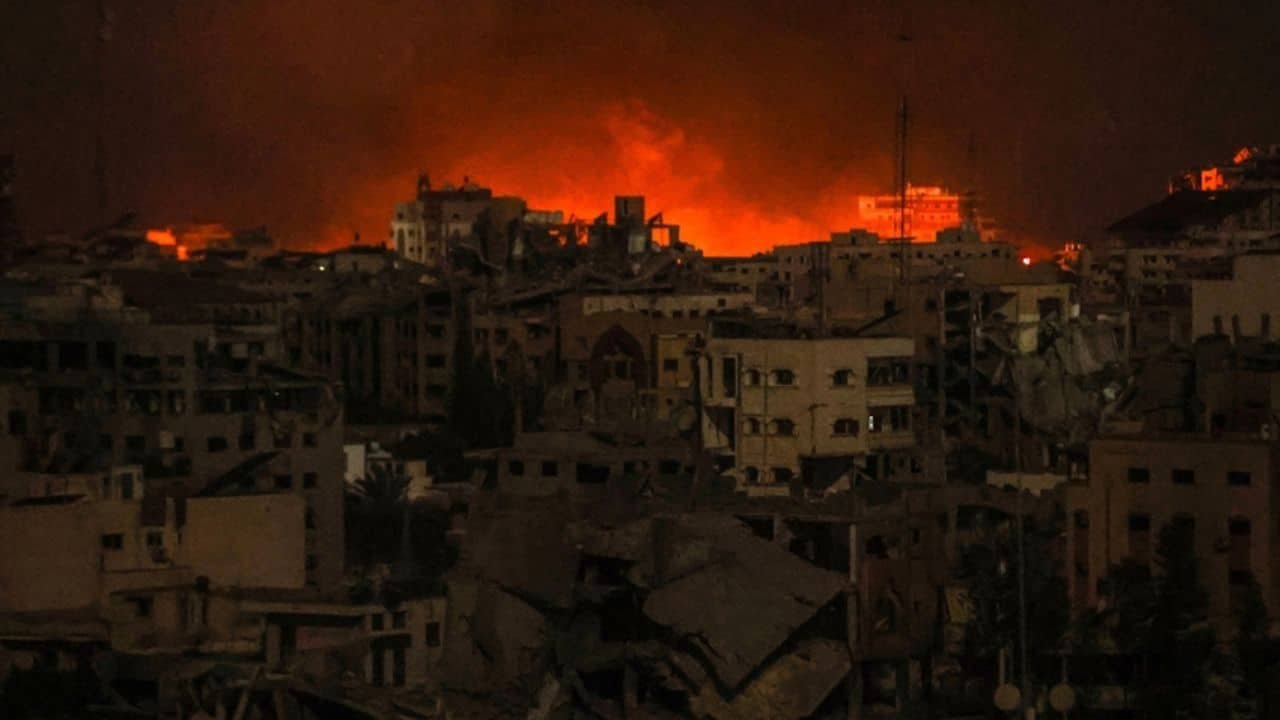
    On Saturday, Palestinian Health Ministry reported that 39 children, including babies in incubators in the ICU of Al-Shifa Hospital, in Gaza are at risk of dying at any moment as there is no oxygen to keep them alive. Simultaneously, hospital premises has been targeted with heavy air and artillery bombardment by Israeli forces.

    Al Jazeera spoke to Gaza Deputy Health Minister Dr. Youssef Abu Alreesh who was inside al-Shifa Hospital while Israeli forces surrounded the facility.

    “No one is able to move around the compound, snipers are stationed all over the place in addition to the drones that target and kill any moving person.

    Part of the hospital was shelled and part of the building caught fire, we fear it will engulf the whole compound,” he said.

    He also said that when some families tried to leave, they were targeted by Israeli forces, resulting in their bodies lying outside the hospital that staff have not been able to retrieve.

    Israeli army used white phosphorus on al-Shifa: Palestine health minister

    Palestinian health minister, Mai al-Kaila, claims that Israel used white phosphorus shelling on Al -Shifa.

    “This is an internationally banned weapon. We are wondering who is responsible for holding Israel to account for shelling al-Shifa Hospital with white phosphorus,” she told a news conference in Ramallah, adding that Israeli forces were committing a “genocide” in Gaza.

    “Inevitable death has become the fate of patients in Gaza hospitals – and we hold Israel, the United Nations and the international community responsible for that.”

    Internally displaced Gazans

    In conversation with Al Jazeera, the communications director of the UN’s Palestine relief agency UNRWA, Juliette Touma, said between 50,000 and 80,000 have left their homes since November 4, fleeing from the north to the south of the Gaza Strip.

  • More than 50 per cent of housing units damaged: What we know about day 35

    More than 50 per cent of housing units damaged: What we know about day 35

    Tens of thousands flee northern Gaza on Thursday

    The UN’s humanitarian office’s (OCHA) reported that more than 50,000 people fled Northern Gaza towards the south whereas in the north, hundreds of thousands are struggling to survive with minimal amounts of water and food.

    The UN agency for Palestinian refugees (UNRWA) has opened two shelters and is now hosting 582,000 displaced Palestinians in 92 facilities in the south amidst overcrowdedness.

    Israel does not ‘seek to govern Gaza’

    Israeli Prime Minister Benjamin Netanyahu gave an interview to Fox News in which he said that the Israeli army will proceed with its offensive in Gaza until Hamas is “eradicated”.

    “Nothing will stop that,” he added.

    He also asserted that there will be no ceasefire unless the hostages held in Gaza are freed. Instead, he announced four-hour “pauses” in fighting in Gaza.

    “The fighting continues against the Hamas enemy,” he said. “But in specific locations, for a given period of a few hours here, a few hours there, we want to facilitate the safe passage of civilians away from the zone of fighting.”

    Human rights groups, however, have asserted that the “pauses” are not enough, and that an immediate ceasefire for humanitarian aid is the need of the hour.

    243 more Palestinians killed in Gaza in 24-hour period

    The UN humanitarian affairs office reported that two Israeli soldiers were killed in Gaza between Wednesday and Thursday afternoon in addition to 243 Palestinians.

    More than 50 per cent of housing units wrecked

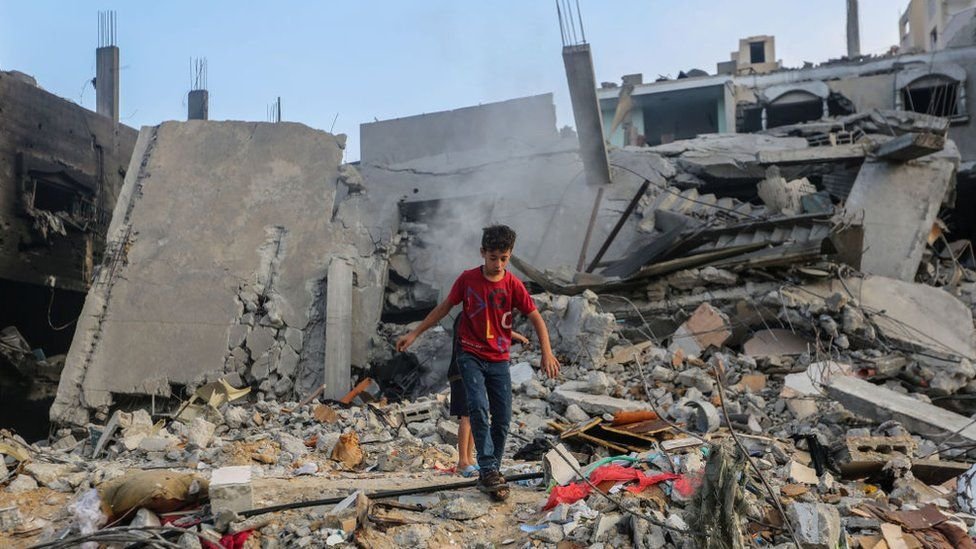
    The media office of Gaza has revealed that Israeli attacks have led to the destruction of more than 50 per cent of housing units across Gaza — around 40,000 housing units.

    Moreover, about 32,000 tons of explosives have dropped since October 7.

    Al Jazeera reports that according to the government media, the “estimated preliminary losses in the housing sector and infrastructure” are approximately $2bn each.

    War’s effect on Palestinian economy

    The UN Development Program has released a report revealing that as a month has passed since Israel began its attacks on Gaza, Palestinian gross domestic product (GDP) was expected to have declined by about 4.2 percent in contrast to pre-war estimates for 2023 — a loss of about $857m.

    It has been estimated that if the war continues for another month, the loss would increase to 8.4 percent of GDP, or $1.7bn whereas in third month it would rise to 12.2 per cent of GDP, or $2.5bn.

    Additionally, around 390,000 jobs have been lost — 182,000 in Gaza and 208,000 in the occupied West Bank.

    Poverty is also expected to rise 20-45 percent, depending on the duration of the war.

    Credits: Al Jazeera

  • G7 backs ‘humanitarian pauses’ in Gaza, reaffirms Ukraine support

    G7 foreign ministers said Wednesday that they supported “humanitarian pauses and corridors” in the Hamas-Israel war but refrained from calling for a ceasefire.

    The group also said after talks in Japan that their support for Ukraine in its war with Russia “will never waver” while calling on China not to support Moscow in the conflict.

    “We stress the need for urgent action to address the deteriorating humanitarian crisis in Gaza… We support humanitarian pauses and corridors to facilitate urgently needed assistance, civilian movement, and the release of hostages,” a joint statement said.

    The ministers also “emphasize Israel’s right to defend itself and its people in accordance with international law as it seeks to prevent a recurrence” of the Hamas attacks on Israel on October 7.

    It added: “We call on Iran to refrain from providing support for Hamas and taking further actions that destabilize the Middle East, including support for Lebanese Hezbollah and other non-state actors, and to use its influence with those groups to de-escalate regional tensions.”

    ‘Overall security’

    The Israeli military has relentlessly bombarded Gaza since October 7, when Hamas militants launched an attack that left 1,400 dead in Israel, most of them civilians, according to Israeli authorities.

    The Hamas-run health ministry says the death toll in Gaza has surpassed 10,300 people.

    Israeli Prime Minister Benjamin Netanyahu said Monday there would be no fuel delivered to Gaza and no ceasefire unless more than 240 hostages seized by Hamas were freed.

    He also said Israel would assume “overall security” in Gaza after the war ended, while allowing for possible “tactical pauses” before then to free captives and deliver aid to the besieged territory.

    However, Washington said Tuesday it opposed a new long-term occupation of Gaza by Israel.

  • One month of Israeli attacks, death toll crosses 10,000 in Gaza: What we know about day 32

    A month has passed since the declaration of war by Israel on Palestine. More than 10,000 people in Gaza have been killed including 4,104 children, while many are still trapped under the debris of destroyed infrastructure. Israeli blockades have led to scarcity of fuel, food and electricity.

    ‘Little pauses’, no ceasefire: Netanyahu

    Israeli Prime Minister Benjamin Netanyahu has asserted that there will be no ceasefire until the hostages being held in Gaza are released, adding that only “tactical little pauses” will be accepted.

    “An hour here, an hour there – we’ve had them before,” Netanyahu said in an interview with ABC News. “I suppose we’ll check the circumstances, in order to enable goods, humanitarian goods, to come in, or our hostages, individual hostages, to leave.”

    While many around the world are calling for a ceasefire, the US has urged for a “humanitarian pause” without specifying the duration of the pauses.

    Considering the casualties and destruction of Gaza, human rights groups and organisations are calling for an immediate ceasefire.

    On the contrary, Hamas has reportedly offered to set hostages free if Palestinian captives are released from Israeli jails.

    Netanyahu also told ABC News that Israel would have “overall security responsibility” after the fighting with Hamas is over “for an indefinite period”, implying a continued occupation of the territory.

    Job losses costing Palestinians $16m a day

    The UN’s labour agency has revealed that job losses in Gaza and the Occupied West Bank are costing Palestinians $16m a day.

    The International Labour Organization (ILO) reported on Monday that 182,000 jobs have been lost in Gaza (61 percent of total employment).

    An additional 208,000 jobs losses have been recorded in the occupied West Bank, (24 percent of total employment).

    Aid into Gaza

    The Palestinian Red Crescent teams received 93 trucks from the Egyptian Red Crescent through the Rafah crossing on Monday.

    The supplies consisted of food, water, relief items, medical equipment and medications.

    Since October 21, a total of 569 trucks have been sent whereas before October 7, 750 to 850 trucks used to enter Gaza daily.

    Israel, however, has still not allowed fuel into Gaza.

  • What is olive harvesting season in Palestine?

    You have probably come across posts about the olive harvest season in Palestine. But do you know what it is?

    A festive season in Palestine, olive harvest falls every year in the months of October and November.

    In 2021, Al Jazeera reported that about 80,000 to 100,000 Palestinian families financially depend upon the olive harvest which includes more than 15 percent women.

    Palestine Trade Center (PalTrade) reported that the olive sector was worth $160m and $191m.

    But over the years, strict Israeli control, settler attacks and a poor capitulation due to harsh climate has affected the festivity.

    ‘The olive season in Palestine is much more than an economic practice, it’s a palpable example of one of Palestine’s many “cultural ecosystem services.”’, writes Dr. Yara Dahdal, projects manager at Nature Palestine Society in a blog post.

    Cultural ecosystem services, as Dr. Dahdal explains, are the “intangible benefits that people gain from ecosystems through recreation, tourism, intellectual development, spiritual enrichment, reflection, and creative and aesthetic experiences”.

    These have “positive impacts on human health and social ties, and solid cultural connections to identity. In this sense, the olive harvesting season in Palestine is an integrated socio-ecological system, extending its benefits beyond the total number of tons of harvested olives each year”, she adds.

    History

    As Palestine has been harvesting olives for thousands of years, olives became a symbol of their resilience against Israeli occupation.

    In 2008, the United Nations revealed that almost half of all cultivated land in the occupied West Bank and Gaza is planted with approximately 10 million olive trees.

    Whereas in 2019, Palestinian Central Bureau of Statistics reported that about 177,000 tonnes of olives were pressed, producing 39,600 tonnes of olive oil – roughly 30,000 litres (7,925 gallons).

    Jenin, Tubas and Northern Valleys produced the highest quantity of olive oil, followed by Tulkarm and Gaza.

    Israeli attacks

    A 2012 study published by The Applied Research Institute Jerusalem (ARIJ) revealed that Israeli authorities have uprooted 800,000 Palestinian olive trees in the West Bank since 1967.

    Data by the International Committee of the Red Cross (ICRC) revealed that in a single year alone (August 2020 – August 2021), more than 9,300 trees were wrecked in the West Bank.

    In addition to the destruction, Palestinian farmers in the West Bank need Israeli permits to access their land in restricted areas near illegal Israeli settlements.

    Israeli settlements are Jewish communities built illegally on Palestinian land. Today, between 600,000 and 750,000 Israeli settlers live in at least 250 illegal settlements in the occupied West Bank and East Jerusalem.

    In most cases, Palestinian farmers are, in fact, prohibited to access most of their land close to settlements.

  • Seven water facilities ‘directly hit’ in Gaza: What we know about day 31

    In the month that has passed since Israel declared war on Gaza following the Hamas attacks in Israel on October 7, almost 9,800 Palestinians have been killed.

    200 people in Gaza killed in a night

    Palestinian Health Ministry revealed that last night’s Israeli air raids killed more than 200 people.

    Palestinian activist Saleh al-Jafarawi shared a video from one of the areas attacked by Israel.

    450 Hamas positions targeted, Israel claims

    Since October 7, Israel has claimed to have hit about 450 Hamas targets which include fighters, military compounds, observation posts, antitank missile launch posts and tunnels.

    According to Al Jazeera, the army has also claimed to have tracked down an opening to Hamas’s tunnels close to the Sheikh Hamad Hospital in Gaza.

    And while schools and hospitals have been targeted by Israel on assertion that Hamas is using these facilities and civilian infrastructure as a means to defend its underground operations, Hamas has, time and again, denied the claims.

    Thousands of civilian casualties have resulted in the attacks on UN-run facilities, refugee camps, schools, mosques and churches, resulting in the killing of civilians.

    Joint statement by humanitarian organisations

    The heads of 18 humanitarian organisations, including the UN, have issued a rare joint statement calling for an “immediate humanitarian ceasefire” in Israel and Palestine.

    “Enough is enough,” the statement said. “This must stop now.”

    The letter signed by the heads of the 18 organisations is known by Inter-Agency Standing Committee.

    175 medical staff killed since October 7

    Palestinian Health Minister Mai al-Kaila has reported that since October 7, 175 medical personnel and 34 civil defence workers have been killed in the Gaza Strip.

    Additionally, 16 out of 36 hospitals and 51 out of 72 clinics are no longer in service after they have either been attacked by Israel or they are out of fuel and medicine to keep the centres running.

    70 Palestinians arrested in occupied West Bank

    At least 70 Palestinians have reportedly been arrested during raids in the occupied West Bank, according to the Palestinian Prisoner’s Commission and the Prisoner’s Society.

    Since October 7, more than 2,000 people have been arrested including 49 women and 17 journalists.

    Water facilities destroyed

    The UN relief agency has revealed that seven water facilities in the Gaza Strip were “directly hit and sustained major damage” on Saturday and Sunday.

    Credits: Al Jazeera

  • Journalists embedded with IDF slammed

    CNN’s Fareed Zakaria has revealed the process journalists have to comply with for coverage while being embedded with the Israeli military in its ground fight with Hamas in Gaza.

    A CNN journalist went into Gaza on an IDF embed. The journalists embedded with the IDF Gaza operate under the observation of Israeli commanders in the field and are not permitted to move unaccompanied within the Gaza Strip.

    “As a condition to enter Gaza under IDF air support, outlets have to submit all materials and footage to the Israeli military for review prior to publication. CNN has agreed to these terms….”

    People slammed the revelation on X (formerly Twitter).

    Some considered it to be the norm in war journalism due to security concerns of the army.

    However, many journalists stated that complete control is avoidable inspite the element of security.

  • Israel attacked 2,500 targets in Gaza since Oct 7: What we know about day 30

    Israel attacked 2,500 targets in Gaza since Oct 7: What we know about day 30

    Blinken meets Abbas

    US Secretary of State Antony Blinken met with Palestinian President Mahmoud Abbas.

    Abbas called for an “immediate ceasefire” and allowing humanitarian aid into the Gaza Strip.

    While Blinken reassured America’s commitment to ensure humanitarian assistance and resuming essential services in the besieged Gaza, he did not call for a ceasefire.

    Arab world versus the US on ceasefireA press conference was held in Amman on Saturday where US Secretary of State Blinken dismissed his Jordanian and Egyptian counterparts, Ayman Safadi and Sameh Shoukry, calling to urge Israel for an immediate ceasefire.

    “We don’t accept that this is self-defence,” Safadi said. “It cannot be justified under any pretext and it will not bring Israel security, it will not bring the region peace.”

    But Blinken believes that a ceasefire would “leave Hamas in place to regroup and repeat attacks”.

    Attack on Maghazi refugee camp

    According to Wafa news, 51 Palestinians have been killed as Israel bombed Gaza’s Maghazi refugee camp.

    Infectious diseases reported in UNRWA shelter

    The UN’ has revealed that overcrowding in UNRWA shelters is leading to diseases.

    “Overcrowding conditions continue to create severe health and protection risks,” the UN stated.

    More than 530,000 Palestinians are said to be seeking refuge.

    A number of cases of acute respiratory infections, diarrhoea and chicken pox have been reported in UNRWA shelters.

    Additionally, due to overcrowdedness in the shelters, people are sleeping in the streets around UNRWA shelters.

    Israel bombs Azhar University in Gaza

    Israel has bombed Al-Azhar University in Gaza.

    A video was posted by Palestine’s Deputy Foreign Minister Amal Jadou on X (formerly Twitter).

    Israeli army attacked 2,500 targets in GazaThe Israeli army has claimed to have attacked more than 2,500 targets inside the Gaza Strip since October 7.

    Chad cuts ties with Israel

    Chad is the latest country to recall its ambassador from Israel in the light of “the unprecedented tide of deadly violence” inside Gaza.

    “In front of such tragedy, Chad condemns the loss of numerous innocent civilians and calls for a ceasefire for a durable solution to the Palestinian issue,” the statement read.

    Thousands take to streets in Washington DC

    On Saturday, tens of thousands of people gathered in Washington DC to protest against US President Joe Biden’s support for Israel’s attacks on Gaza.

    “Biden, Biden, you can’t hide; we charge you with genocide,” the protesters chanted on Saturday.

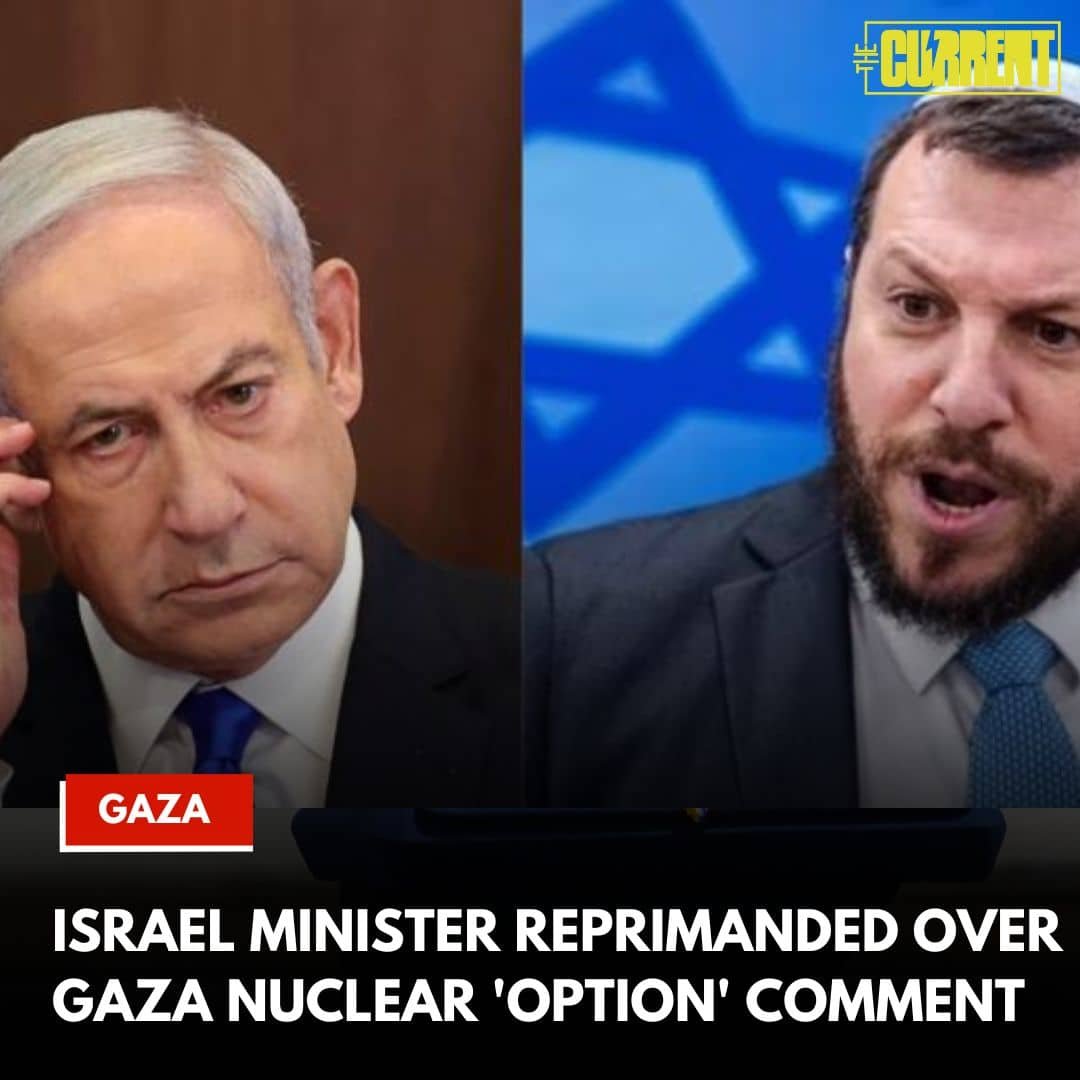
  • Israel Minister Reprimanded Over Gaza Nuclear ‘Option’ Comment

    Israel Minister Reprimanded Over Gaza Nuclear ‘Option’ Comment

    An Israeli minister was suspended from government meetings “until further notice” Sunday, Prime Minister Benjamin Netanyahu’s office said, after suggesting in an interview dropping a nuclear bomb on Gaza.

    The comments by Heritage Minister Amichay Eliyahu advocating a fierce military response to Hamas’s October 7 attacks even at the cost of the lives of hostages believed to be held in Gaza also drew rebuke from families of the captives.

    Eliyahu, an ultranationalist politician part of Netnayahu’s ruling coalition, told Israel’s Kol Barama radio he was not entirely satisfied with the scale of Israel’s retaliation in the Palestinian territory after Hamas fighters carried out their deadly attacks inside southern Israel.

    The attacks killed 1,400 people, mostly civilians, Israeli officials say.

    Israel’s military campaign in Gaza since October 7 has killed 9,488 people, most of them women and children, the Hamas-run health ministry says.

    When the interviewer asked whether the Israeli minister advocated dropping “some kind of atomic bomb” on the Gaza Strip “to kill everyone”, Eliyahu replied: “That’s one option”.

    Prime Minister Benjamin Netanyahu’s office quickly responded in a statement, describing Eliyahu’s remarks as “disconnected from reality” and adding that Israel was trying to spare “non-combatants” in Gaza.

    In a follow-up question about the estimated 240 hostages held in Gaza, Eliyahu said that “in war we pay a price.”

    “Why are the lives of the hostages… more important than the lives of the soldiers?” he said.

    “International law, along with fundamental principles of human morality and common sense, strictly prohibits the use of mass destruction weapons,” it said in a statement, calling for the release of all the hostages.

    Following the outcry over his remarks, Eliyahu said in a post on X, formerly Twitter, that his statement about the atomic bomb was “metaphorical”.

    He also said that Israel was “committed to doing everything possible to return the hostages safe and sound”.

    Israel has never admitted to having a nuclear bomb.

    The Hostages and Missing Persons Families Forum, representing relatives of people snatched to Gaza by Hamas militants, slammed Eliyahu’s “reckless and cruel” statement.