Tag: Hamas

  • Israel weakly counters South Africa’s strong stance in genocide case: What’s next?

    Israel weakly counters South Africa’s strong stance in genocide case: What’s next?

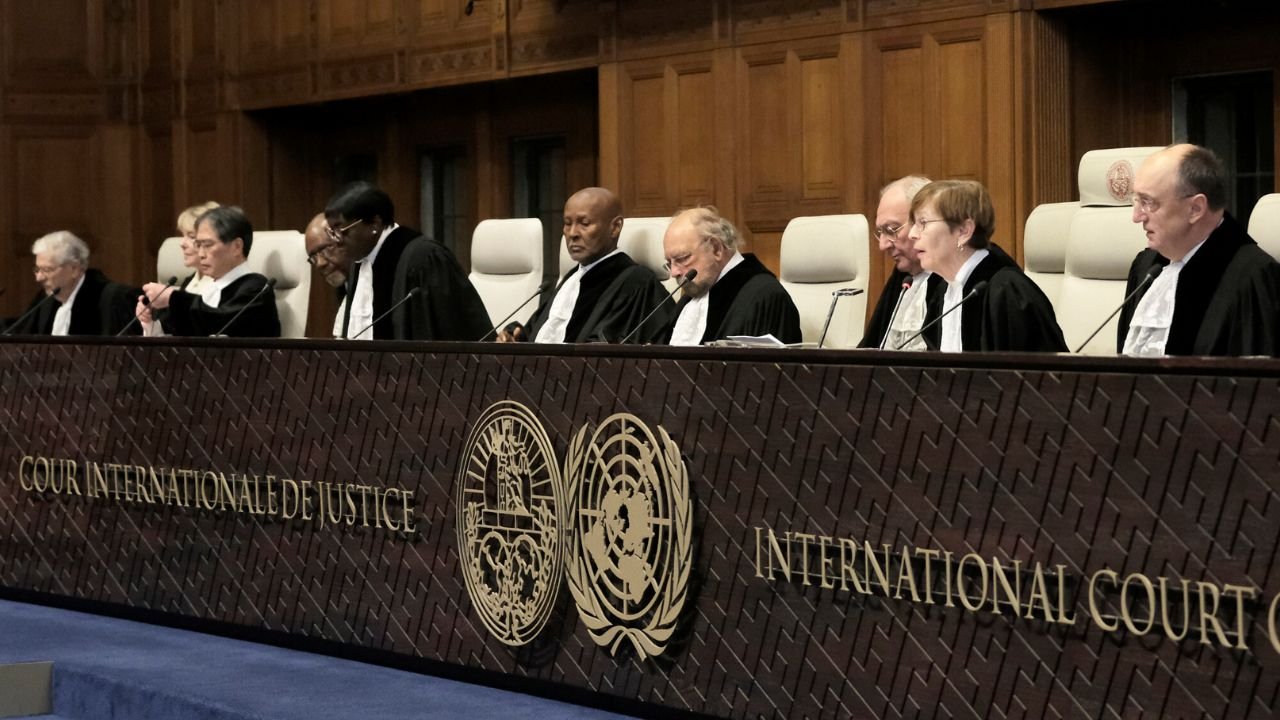
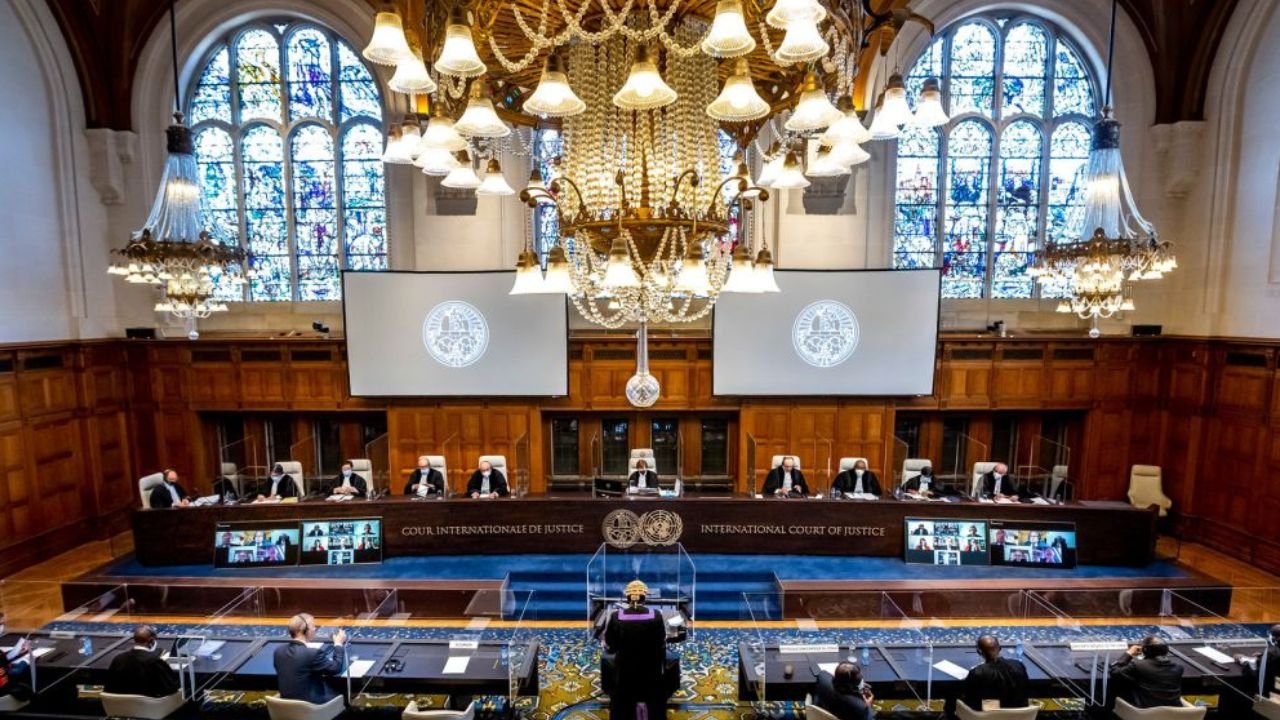
    On January 11-12, the International Court of Justice (ICJ) heard the genocide case filed against Israel by South Africa.

    On Day 1, South Africa’s legal team put forward its case, pointing at the atrocities being committed against Palestinians in Gaza by Israel.

    Israel is accused of committing genocidal acts during their military operations which included mass killings of Palestinians, bodily and mental harm, forced displacement and food blockade, destruction of the healthcare system, and preventing Palestinian births.

    On Day 2, Israel defended itself against the charges, arguing that South Africa “ignored” the incident of October 7 and that Israel had the right to defend itself, adding that the court should put provisional measures against South Africa, accusing it of having ties with Hamas. Israel did not submit any evidence to support its claims that Hamas was the cause of the attacks in Gaza whereas South Africa submitted video evidence of Israeli atrocities in Gaza.

    They also blamed Hamas for the high civilian death toll in Gaza, claiming that Israel did not bomb hospitals and that they enabled humanitarian aid.

    What’s next?

    Al Jazeera explains that even though South Africa’s case against Israel can take years, an “interim measure” intended to halt Israel’s attack in Gaza can be taken “within weeks”.

    If the interim measure is implemented, Israel will be legally obligated to put an end to its offences. And while the “court’s rulings are final”, it has no authority to impose them, nonetheless.

    On the other hand, if the court does not implement an interim measure, “it could still decide it has jurisdiction and proceed with the case”, adds Al Jazeera’s explainer.

  • Defiant Houthis to continue targeting Israel-linked ships despite US, UK airstrikes

    Defiant Houthis to continue targeting Israel-linked ships despite US, UK airstrikes

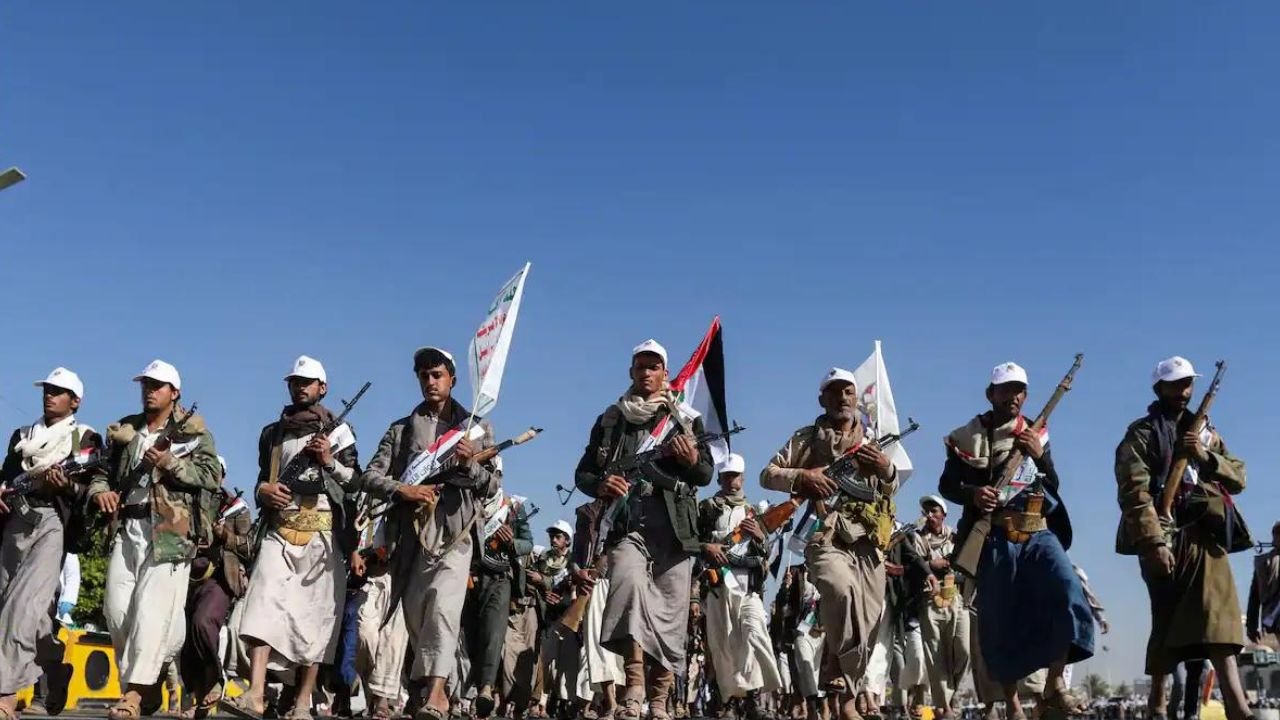
    Heavy US and British air strikes pounded targets in Yemen early on Friday after weeks of attacks on Red Sea shipping by Houthi forces acting in solidarity with Gaza.

    Yemen’s Houthi, however, have vowed to continue targeting Israel-linked ships in the Red Sea despite overnight air strikes by the US and Britain, their spokesman said on Friday.

    “We affirm that there is absolutely no justification for this aggression against Yemen, as there was no threat to international navigation in the Red and Arabian Seas, and the targeting was and will continue to affect Israeli ships or those heading to the ports of occupied Palestine,” Mohammed Abdulsalam posted on X, formerly Twitter.

    The Houthis have carried out a growing number of attacks Israel-linked shipping in the key international trade route since the intensified attacks on Gaza since October 7.

    Friday’s strikes targeted an airbase, airports and a military camp, the Houthi rebels’ Al-Masirah TV station said.

    “Our country was subjected to a massive aggressive attack by American and British ships, submarines and warplanes,” Huthi Deputy Foreign Minister Hussein Al-Ezzi said, according to official media.

    “America and Britain will have to prepare to pay a heavy price and bear all the dire consequences of this blatant aggression,” he said.

    A joint statement by the United States, Britain, Australia, Bahrain, Canada, Denmark, Germany, the Netherlands, New Zealand and South Korea said the “aim remains to de-escalate tensions and restore stability in the Red Sea”.

    “But let our message be clear: we will not hesitate to defend lives and protect the free flow of commerce in one of the world’s most critical waterways in the face of continued threats,” it said.

    The Huthis said there was “no justification” for the air strikes and warned that attacks on Israel-linked shipping would continue.

    Yemen’s neighbour Saudi Arabia, which is trying to end its involvement in a nine-year war with the Houthis, urged against escalation.

    “The Kingdom of Saudi Arabia is following with great concern the military operations,” a foreign ministry statement said, calling for “self-restraint and avoiding escalation”.

  • Israel accused at UN court of Gaza ‘genocide’

    Israel accused at UN court of Gaza ‘genocide’

    South Africa on Thursday accused Israel of breaching the UN Genocide Convention, arguing that even the deadly October 7 Hamas attack could not justify such alleged actions, as it launched a landmark case at the top UN court.

    Pretoria has lodged an urgent appeal at the International Court of Justice (ICJ) to force Israel to “immediately suspend” its military operations in Gaza.

    Israel has dismissed the case as “atrocious” and “preposterous” and vowed to set out a robust defence on Friday.

    “No armed attack on a state territory, no matter how serious… can provide justification for or defend breaches of the convention,” said Pretoria’s Justice Minister Ronald Lamola.

    “Israel’s response to the October 7 attack has crossed this line and given rise to the breaches of the convention,” he added.

    The Gaza war erupted when Hamas launched its unprecedented attack, which resulted in about 1,140 people killed in Israel, mostly civilians, according to an AFP tally based on official figures.

    Israel has responded with a relentless military campaign that has killed at least 23,357 people, mostly women and children, according to Gaza’s health ministry.

    A world away from the death and destruction in Gaza and Israel, robed lawyers battled it out over technical legal arguments in the Peace Palace in The Hague.

    South Africa argues Israel is breaking its commitments under the UN Genocide Convention, a treaty signed in 1948 in the wake of the Holocaust.

    Top lawyer for South Africa Adila Hassim said Israel’s bombing campaign aimed at the “destruction of Palestinian life” and had pushed Palestinians “to the brink of famine”.

    “Genocides are never declared in advance, but this court has the benefit of the past 13 weeks of evidence that shows incontrovertibly a pattern of conduct and related intention that justifies a plausible claim of genocidal acts,” she said.

    As a fellow signatory to the treaty, South Africa can take Israel to the ICJ, which rules on disputes between countries and is often described as the “World Court”.

    The ruling African National Congress (ANC) has long been a firm supporter of the Palestinian cause, often linking it to its own historic struggle against the white-minority government, which had cooperative relations with Israel.

    South Africa has acknowledged the “particular weight of responsibility” of accusing Israel of genocide. It “unequivocally” condemned the Hamas attacks that sparked off the war in Gaza.

    ‘Atrocious and preposterous’

    Israel President Isaac Herzog has already hinted at his country’s likely defence against what he called an “atrocious and preposterous… claim”.

    “We will present proudly our case of using self defence… under international humanitarian law,” he said.

    Herzog said the Israeli army was “doing its utmost under extremely complicated circumstances on the ground to make sure that there will be no unintended consequences and no civilian casualties”.

    The United States is backing its ally Israel, with the State Department describing the charges as “unfounded”.

    “In fact, it is those who are violently attacking Israel who continue to openly call for the annihilation of Israel and the mass murder of Jews,” said State Department spokesman Matthew Miller.

    As it is an urgent procedure, the ICJ could rule in a matter of weeks.

    Its rulings are final and cannot be appealed. However, countries do not always follow the court’s verdicts — the ICJ has ordered Russia to stop its invasion of Ukraine, for example.

    But a court ruling against Israel would certainly increase political pressure on the country, with many speculating it could serve as a pretext for sanctions.

    Cecily Rose, assistant professor of public international law at Leiden University, noted the court did not have to rule on the fundamentals of the case at this stage — that issue will likely take years.

    “Instead, the court would only be evaluating whether there is a risk of irreparable prejudice to rights held under the Genocide Convention, in particular the right of the Palestinians in Gaza to be protected from acts that threaten their existence as a group,” Rose told AFP.

    Dutch police kept rival demonstrations apart in The Hague. Hundreds of pro-Israeli protesters waving flags marched through the streets while a smaller group of pro-Palestinian supporters brandished placards saying: “End Israel apartheid.”

    Pro-Israeli protester Ada Deyl, an 80-year-old pensioner, said: “I think it’s a shame that Israel — who is doing all the right things and is attacked by Hamas — is now facing a lawsuit.”

    On the other side, Zohar Janovitch, 40, alleged that Israeli leaders had “explicitly expressed their disregard for the lives of Palestinian civilians.”

  • All you need to know about South Africa’s genocide case against Israel at ICJ

    All you need to know about South Africa’s genocide case against Israel at ICJ

    A case in the International Court of Justice (ICJ) has been put in motion by South Africa in The Hague, Netherlands, asking the court to look into the genocide being committed by Israel against Palestinians.

    The imposition of charges do not only pertain to the crimes perpetrated during the last few months since October 7 that have killed more than 23,000 people till now, but also the 75-year long apartheid, 56-year hostile occupation, and 16-year blockade on Gaza.

    The hearing will take place on January 11th and 12th in which a 15-judge panel will hear and deliberate the case.

    South Africa filed an 84-page suit with the court on December 29, quoting proofs and references of atrocities being committed by Israel in Gaza, asking the Court – a United Nations body established for settling interstate discords – to pronounce Israeli breaches of responsibilities under international law since October 7.

    “No armed attack on a State’s territory no matter how serious — even an attack involving atrocity crimes — can, however, provide any possible justification for, or defence to, breaches of the 1948 Convention on the Prevention and Punishment of the Crime of Genocide (‘Genocide Convention’ or ‘Convention’), whether as a matter of law or morality.”, read an excerpt from the suit.

    While the rulings are intended to be “binding”, a number of countries do not recognise its results. To give an example, the previous ICJ rulings of Russia invasion of Ukraine, and China’s claims in the South China Sea, were disregarded by China and Russia, consequently affecting ICJ’s credibility.

    Additionally, an NGO called Protect Palestine, an Action Guide, writes that according to experts, while South Africa “will make a strong case, it still may not be enough to rule against Israel. Israel will likely continue claims that “Hamas is embedded with civilians”, and that they “try to warn civilians”.

    The votes for and against, however, can pave the way to additional challenges for Israel and further affect the legal global standing of the country.

    Who is supporting South Africa’s ICJ case against Israel?

    The 57-member bloc known as the Organization of Islamic Countries (OIC) which includes Saudi Arabia, Iran, Pakistan and Morocco; Malaysia; Turkey; Jordan; Bolivia; The Maldives; and Namibia.

    A number of advocacy groups and civil society groups across the world including Terreiro Pindorama in Brazil, Asociación Nacional de Amistad Italia-Cuba in Italy, and Collectif Judeo Arabe et Citoyen pour la Palestine in France.

    Previously, Bolivia had filed a request to International Criminal Court (ICC) Prosecutor Karim Khan alongside South Africa, Bangladesh, Comoros, and Djibouti to probe into the matter in Palestine.

    Read more: Can South Africa’s ICJ case against Israel stop war in Gaza?

  • Palestinian Journalist Freed From Israeli Custody Abused: Report

    Palestinian Journalist Freed From Israeli Custody Abused: Report

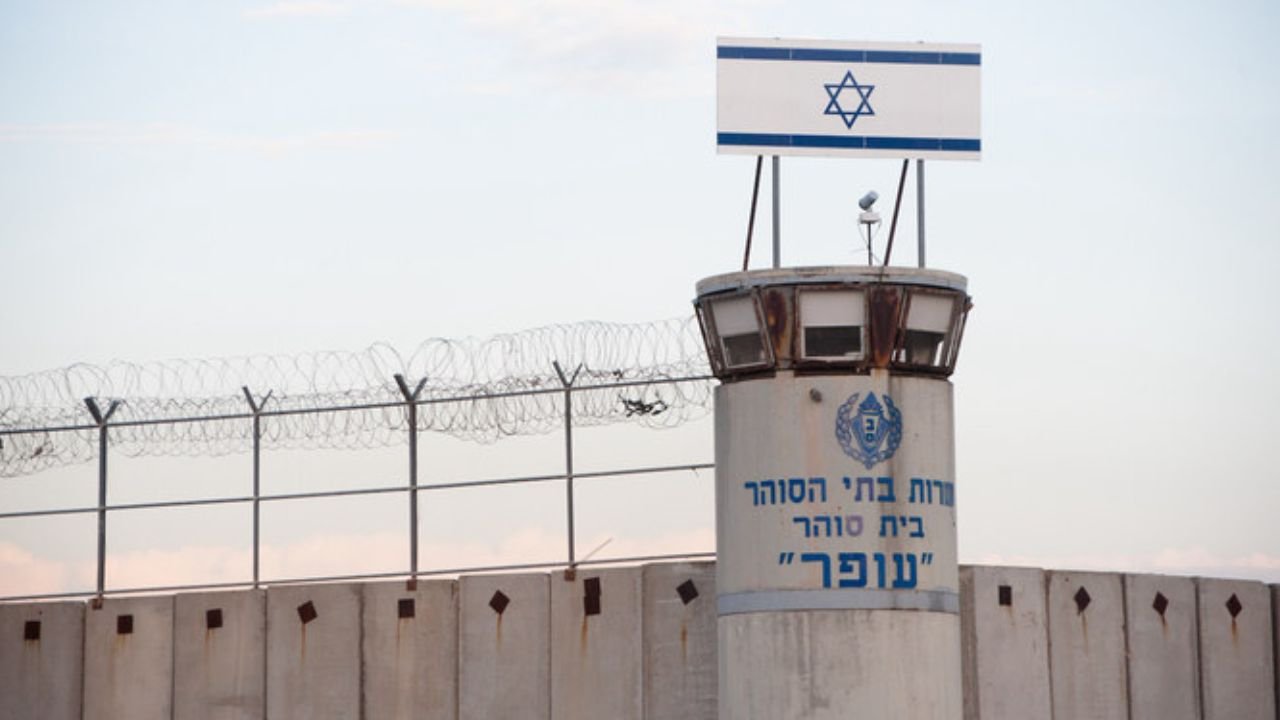
    London-based media outlet The New Arab announced on Tuesday the release of one of its Palestinian journalists from Israeli custody, alleging he faced torture during more than a month in detention.

    Diaa al-Kahlout, who was among dozens of Palestinians shown detained by Israeli troops and stripped to their underwear in north Gaza last month, had been released back into the Palestinian territory, the Qatari-owned outlet said.

    In an report on its website, Kahlout told The New Arab he had faced “indescribably tough and difficult” conditions following his arrest.

    The 37-year-old said he had been beaten and tortured.

    “The moment I was detained, Israeli soldiers crowded round me… before they gagged me with tape so I couldn’t speak.”

    Paris-based media watchdog Reporters Without Borders (RSF) has said following his arrest the journalist was briefly held in Eshel prison in Israel and was subjected to torture, according to several of the organisation’s sources.

    The bloodiest ever Gaza war broke out after Hamas gunmen launched their October 7 attack that resulted in about 1,140 deaths in Israel, mostly civilians, according to an AFP tally based on official figures.

  • Legendary singer Eric Clapton plans special concert for children of Gaza

    Legendary singer Eric Clapton plans special concert for children of Gaza

    In a heartfelt initiative to make a difference in the lives of the children of Gaza, legendary musician Eric Clapton is set to deliver a powerful message through the broadcast of his intimate concert, which took place in London in December 2023.

    Scheduled for airing on January 17th, the exclusive performance is not only a musical treat for fans but also a beacon of hope for a cause that has gone global.

    Eric Clapton’s concert, performed in front of a small, intimate audience, showcased the artist’s iconic songs such as Tears In Heaven, Got To Get Better In A Little While, and a poignant rendition of George Harrison’s Give Me Love (Give Me Peace On Earth) featuring Dhani Harrison.

    The carefully curated setlist not only resonates with Clapton’s musical prowess but also reflects the spirit of empathy and compassion that underscores the purpose of this unique broadcast.

    By choosing Gaza as the beneficiary, Clapton not only spotlights the urgent need for support but also invites viewers to contribute to a cause that transcends borders, fostering a collective effort to bring hope and relief to the young lives affected.

  • Israeli Minister Lays Out Post-war Gaza Plan As Fighting Rages

    Israeli Minister Lays Out Post-war Gaza Plan As Fighting Rages

    Israel’s defence minister has publicly presented for the first time proposals for the post-war administration of Gaza, where officials said Friday unrelenting bombardment has killed dozens over 24 hours.

    Defence Minister Yoav Gallant’s plan for the “day after”, shared with the media late Thursday but not yet adopted by Israel’s war cabinet, says that neither Israel nor Hamas will govern Gaza and rejects future Jewish settlements there.

    The minister’s broad outline was unveiled on the eve of US Secretary of State Antony Blinken’s fourth trip to the region since October 7.

    Questions over the future of the besieged Palestinian territory have multiplied as Israel insists it will continue with its military operations despite international calls for a ceasefire.

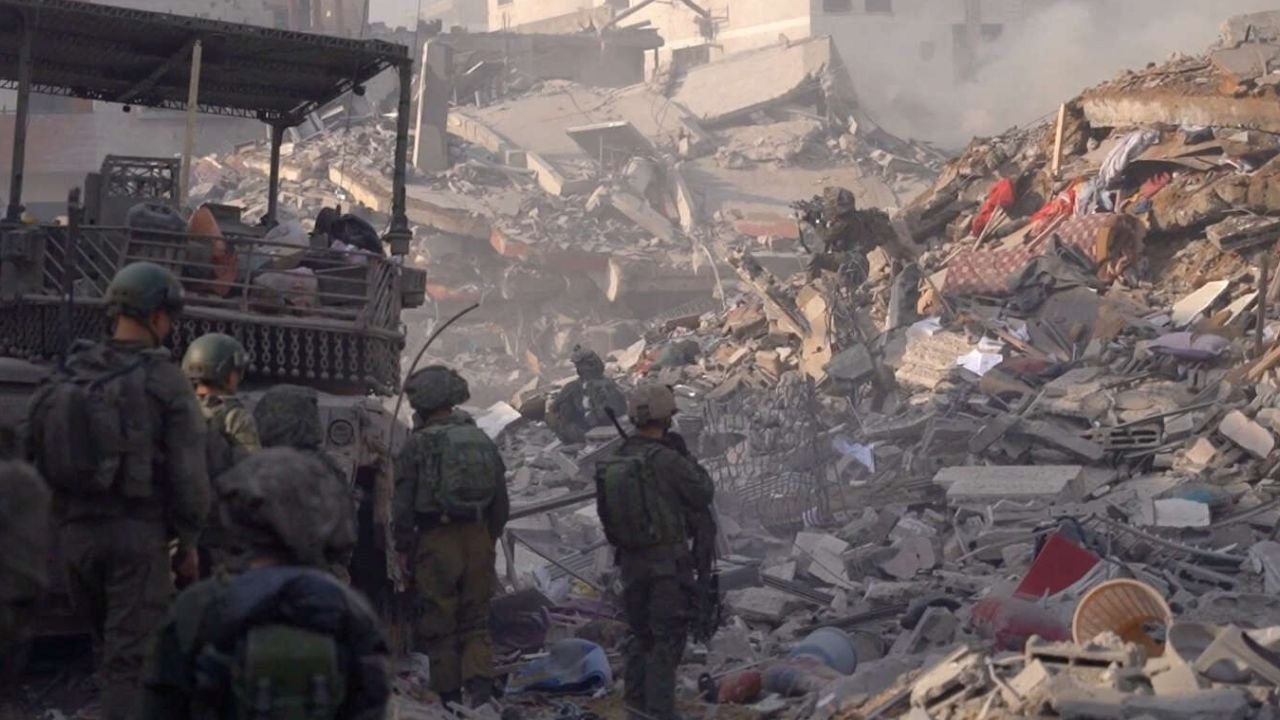
    Much of the Gaza Strip has been reduced to rubble, while civilian deaths have soared and the UN has warned of a humanitarian crisis that has left hundreds of thousands displaced, facing famine and disease.

    Bombing continued through the night in the southern areas of Khan Yunis and Rafah as well as parts of central Gaza, according to AFP correspondents.

    The Israeli army said its forces had “struck over 100 targets” across Gaza over the past 24 hours, including military positions, rocket launch sites and weapons depots.

    The health ministry said it had recorded 162 deaths also over the past 24 hours.

    A fighter jet hit the central area of Bureij overnight, killing “an armed terrorist cell”, the army said, after what it described in a statement as an attempted attack on an Israeli tank.

    And “a number” of Palestinian militants were killed in clashes in Khan Yunis, a major city in southern Gaza that has become the focus of the fighting, the army said.

    According to Gallant’s proposed outline, the war will continue until Israel has dismantled Hamas’s “military and governing capabilities” and secured the return of hostages.

    After Israel achieves its objectives — for which the proposal sets no timeline — Palestinian “civil committees” will begin assuming control of the territory’s governance, it said.

    “Hamas will not govern Gaza, (and) Israel will not govern Gaza’s civilians,” the plan said, while offering little concrete detail.

    “Palestinian bodies will be in charge, with the condition that there will be no hostile actions or threats against the State of Israel.”

    Israel launched its campaign against Hamas after the militant group’s October 7 attack, which resulted in the deaths of around 1,140 people, most of them civilians, according to an AFP tally based on official Israeli figures.

    The militants also took around 250 hostages, 132 of whom remain in captivity, according to Israel, including at least 24 believed to have been killed.

    Israel’s relentless bombardment and ground invasion have killed at least 22,600 people, most of them women and children, according to the Gaza health ministry.

    Conditions for Gaza’s civilians are precarious, with the United Nations estimating 1.9 million people are displaced.

    AFPTV footage showed entire families, seeking safety from the violence, arriving in the southern border city of Rafah in overloaded cars and on foot, pushing handcarts stacked with possessions.

    “We fled Jabalia camp to Maan (in Khan Yunis) and now we are fleeing from Maan to Rafah,” said one woman who declined to give her name. “(We have) no water, no electricity and no food.”

    A spokesman for the UN agency for Palestinian refugees, UNRWA, told AFP that Rafah is overwhelmed by the influx.

    “The city is usually home to only 250,000 persons. And now, it’s more than 1.3 million,” said Adnan Abu Hasna.

    “We have recently noticed a major collapse in health conditions” and a “significant spread” of disease, he added.

    Ahmad al-Sufi, head of the Rafah emergency committee said there was an urgent need for 50,000 tents to house the refugees.

    At Al-Amal hospital in Khan Yunis, one of Gaza’s few medical facilities still operating, the Palestinian Red Crescent Society said seven displaced people, including a five-day-old baby, were killed while sheltering in the compound.

    Dozens more were killed in nearby strikes during three days of bombardment, the Red Crescent said, reporting renewed artillery shelling and drone fire in the area on Friday.

    During his visit, Blinken plans to discuss with Israeli leaders “immediate measures to increase substantially humanitarian assistance to Gaza”, State Department spokesman Matthew Miller said.

    Germany’s top diplomat Annalena Baerbock will also travel to the region, foreign ministry spokesman said, beginning Sunday in Israel and also meeting with Palestinian leaders.

    She plans to discuss “the dramatic humanitarian situation in Gaza” and tensions on the Israel-Lebanon border, spokesman Sebastian Fischer said.

    Aid entering the besieged territory has slowed to a trickle during the war.

    The UN’s humanitarian office OCHA said on Thursday that it had been unable to deliver “urgently needed life-saving” aid north of Wadi Gaza — an area including Gaza City — for four days “due to access delays and denials” and active fighting.

    The war in Gaza and almost daily exchanges of fire across the border since October 7 have threatened to draw Israel’s northern neighbour into a regional conflagration.

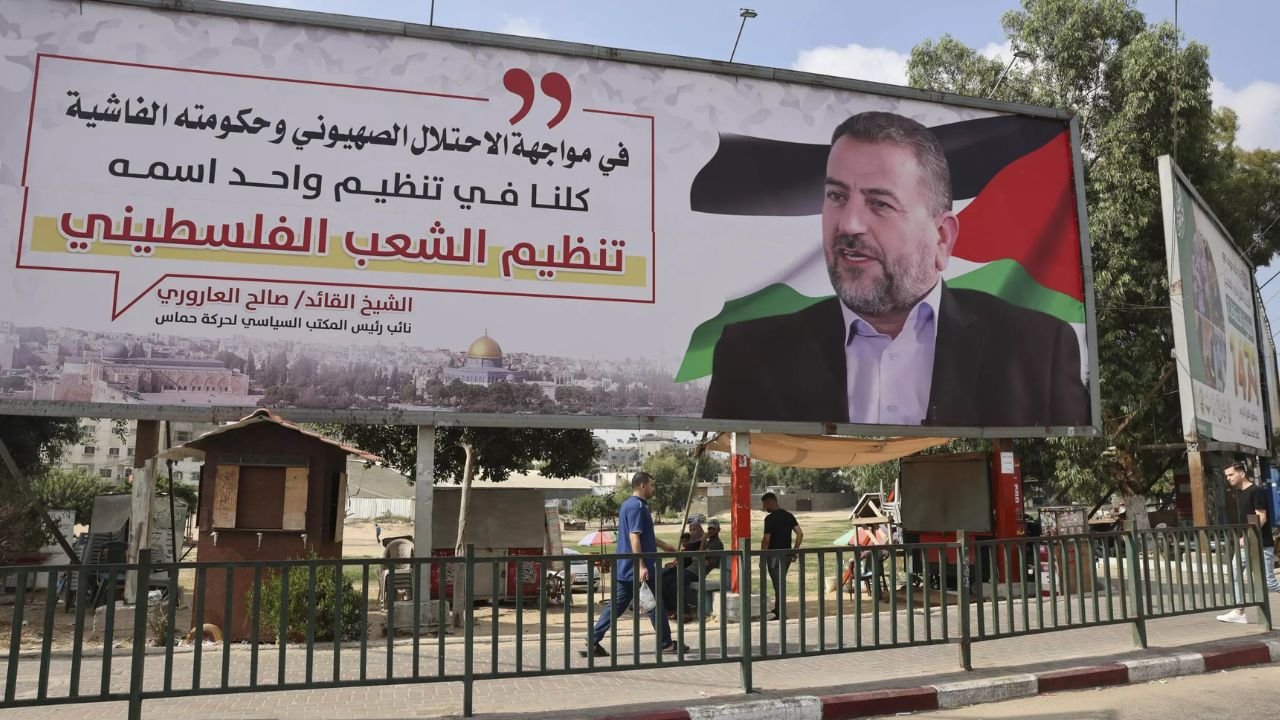
    A strike on Tuesday in Lebanon, widely assumed to have been carried out by Israel, killed Hamas deputy leader Saleh al-Aruri.

    It hit the south Beirut stronghold of the powerful Iran-backed Hezbollah movement.

    Hezbollah has vowed that the killing on its home turf will not go unpunished, while Israeli army chief Herzi Halevi said troops on the border were “in very high readiness”.

    Israel’s military said on Friday its fighter jets had conducted fresh strikes against Hezbollah targets just across the border in Lebanon.

    The frequent bombardments has driven 76,000 people from their homes on the Lebanese side of the border, the UN’s migration agency said on Thursday. Israel evacuated thousands of its civilians from the border area in the early weeks of the war.

  • Turkey detains 34 suspected of spying for Israel

    Turkey detains 34 suspected of spying for Israel

    Istanbul (AFP) – Turkey announced on Tuesday it had detained 34 people suspected of planning abductions and spying on behalf of Israel’s Mossad intelligence service.

    The raids came just weeks after President Recep Tayyip Erdogan warned of “serious consequences” should Israel try to target figures from Hamas living or working in Turkey.

    Unlike Israel, Turkey does not view Hamas as a terrorist organisation and has hosted the Islamic group’s political leaders for much of the past decade.

    A Turkish security source told AFP that most of the 34 people detained were foreign nationals whom Mossad recruited for “operations targeting Palestinians and their family members”.

    “We are determined to ensure that absolutely no foreign intelligence agency can operate on Turkish soil without proper authorisation,” the security source said.

    Turkish government released video footage showing armed security service agents breaking down doors and handcuffing suspects in their homes.

    The Istanbul public prosecutor’s office said 12 additional suspects remained at large.

    “There is an insidious operation and sabotage attempts being made against Turkey and its interests,” Erdogan said after the raids were announced.

    Breakdown in ties

    Relations between Turkey and Israel imploded following the outbreak of the war in Gaza nearly three months ago.

    Erdogan has turned into one of the world’s harshest critics of Israeli Prime Minister Benjamin Netanyahu.

    The Turkish leader last week compared Netanyahu to Adolf Hitler and demanded that Israel’s Western allies drop their support for the “terrorism” being conducted by Israeli troops in Gaza.

    Erdogan has also recalled Ankara’s envoy to Tel Aviv, and pushed for the trial of Israeli commanders and political leaders at the International Criminal Court in The Hague.

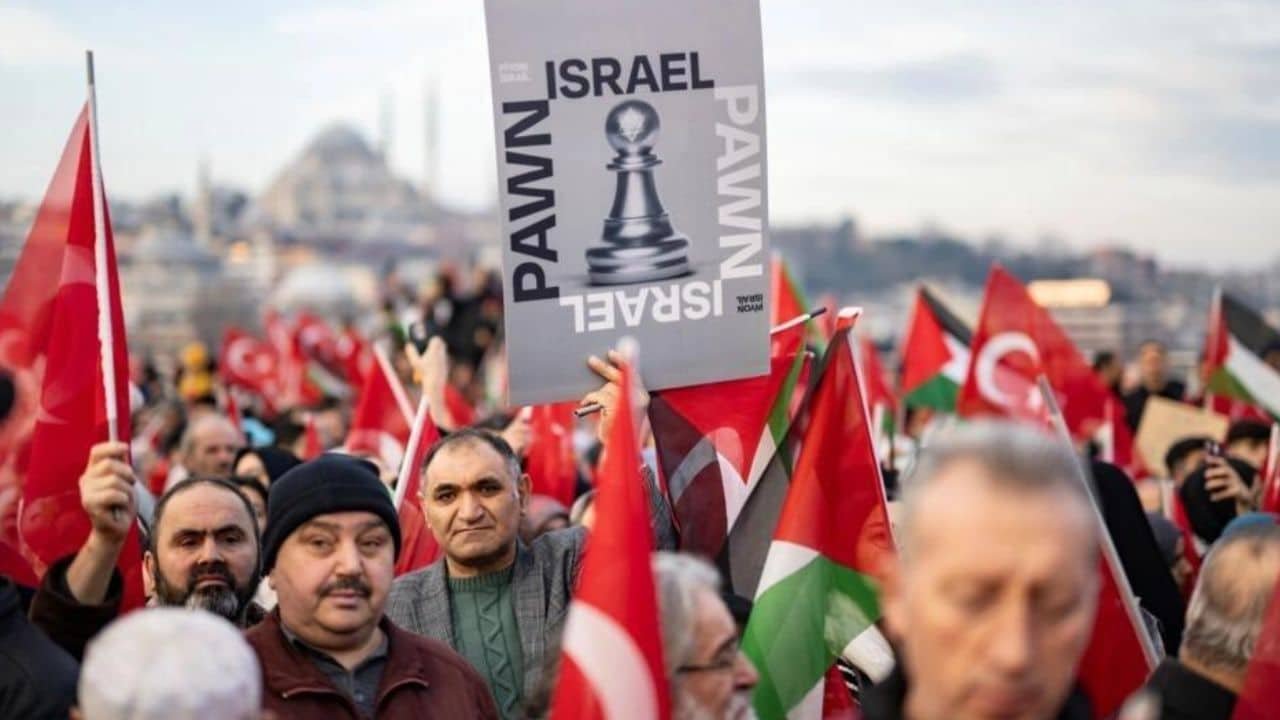
    The president’s ruling Islamic, conservative AKP party also led tens of thousands of protesters out on the streets of Istanbul on Monday for one of Turkey’s biggest rallies against the Israeli government of the entire war.

    The war in Gaza has put an end to a gradual thawing in Turkish-Israeli relations that culminated with the reappointment of ambassadors in 2022.

    Israel and Turkey resumed long-stalled talks about a major Mediterranean Sea natural gas pipeline project that could have reshaped geopolitical alliances across parts of the Middle East.

    Turkey won words of gratitude from Israel in 2022 for detaining a group of Turkish and Iranian nationals were allegedly planning to murder and kidnap Israeli tourists in Istanbul.

    Erdogan and Netanyahu met briefly on the sidelines of a United Nations meeting in New York in September and were discussing holding a formal summit this year.

    Periodic raids

    The Turkish MIT intelligence service conducts periodic raids against suspected Israel operatives working in major cities such as Ankara and Istanbul.

    Most are accused of conducting surveillance work on Palestinians living in Turkey.

    Istanbul served as one of Hamas’s foreign political offices until the outbreak of the Gaza war.

    Turkey informally asked Hamas leaders to leave, days after militants conducted raids into southern Israel on October 7.

    The Gaza health ministry says Israel’s relentless military campaign targeting Hamas has killed around 22,000 people in Gaza since October 7 – mostly women and children.

    UN agencies have voiced alarm over a spiralling humanitarian crisis facing Gaza’s 2.4 million people.

    Most have seen their homes destroyed and now face dire shortages of food, water, fuel and medicine, and are surviving in tents and shelters amid the rubble.

  • Israel ready ‘for any scenario’ after strike kills Hamas deputy in Lebanon

    Israel ready ‘for any scenario’ after strike kills Hamas deputy in Lebanon

    Jerusalem (AFP) – The Israeli army has said it is “prepared for any scenario” after a strike in Beirut that killed Hamas’s deputy chief, stoking fears that it could boil over into wider regional conflict.

    A high-level security official in Lebanon told AFP that Saleh al-Aruri was killed along with his bodyguards in a strike by Israel.

    A second security official confirmed the information, while Hamas TV also reported Israel had killed Aruri in Lebanon.

    Israeli army spokesman Daniel Hagari did not directly comment on the killing, but said afterwards that the military was in “very high state of readiness in all arenas, in defence and offence. We are highly prepared for any scenario.”

    Israel has previously announced the deaths in Gaza of Hamas commanders and officials during the war, but Aruri is the most high-profile figure to be killed, and his death came in the first strike on the Lebanese capital since hostilities began.

    The strike adds to widespread fears that it could lead to a wider regional conflagration.

    Hamas said Aruri’s death would not lead to its defeat, while its Lebanon-based ally Hezbollah vowed the killing would not go unpunished, calling it “a serious assault on Lebanon… and a dangerous development”.

    Lebanese Prime Minister Najib Mikati condemned the killing and said it “aims to draw Lebanon” further into the war.

    Aruri, who lived in exile, is accused by Israel of masterminding numerous attacks.

    Following his death, Hamas chief Ismail Haniyeh said that a movement “whose leaders fall as martyrs for the dignity of our people and our nation will never be defeated”.

  • ‘They believe women are queens’, Israeli hostage on Hamas

    ‘They believe women are queens’, Israeli hostage on Hamas

    A mother-daughter duo held hostage by Hamas for 52 days have opened up about their experience in captivity, detailing the “queen-like” treatment they received.

    Hin and Ajam, mother and daughter respectively, detail their experience during the time of their captivity in an interview. From keeping them together and not separating them, to the smallest details of daily life, they explain how Hamas militants were respectful to them as women and took every precaution to make them comfortable.

    Ajam recounts how she arm-wrestled with the fighters, stressing that they maintained distance and avoided physical contact by wrapping a towel around their arms.

    Upon asking why was that, they instantly replied it was forbidden for them to touch women.
    “For them women are sacred. Women are like queens,” she asserted.

    Moreover, Ajam shared how they sweetly named her “Salsabeel” which means “water” in Arabic and it is mentioned in the Quran. It was synonymous to her original name Ajam which means “lake” in Hebrew.

    The two of them were kept in an apartment along with two children and were given best possible facilities.