Tag: Haseena Moin

  • Want to know how to talk about domestic violence? Tere Bin has nothing on 1990’s Aahat

    Want to know how to talk about domestic violence? Tere Bin has nothing on 1990’s Aahat

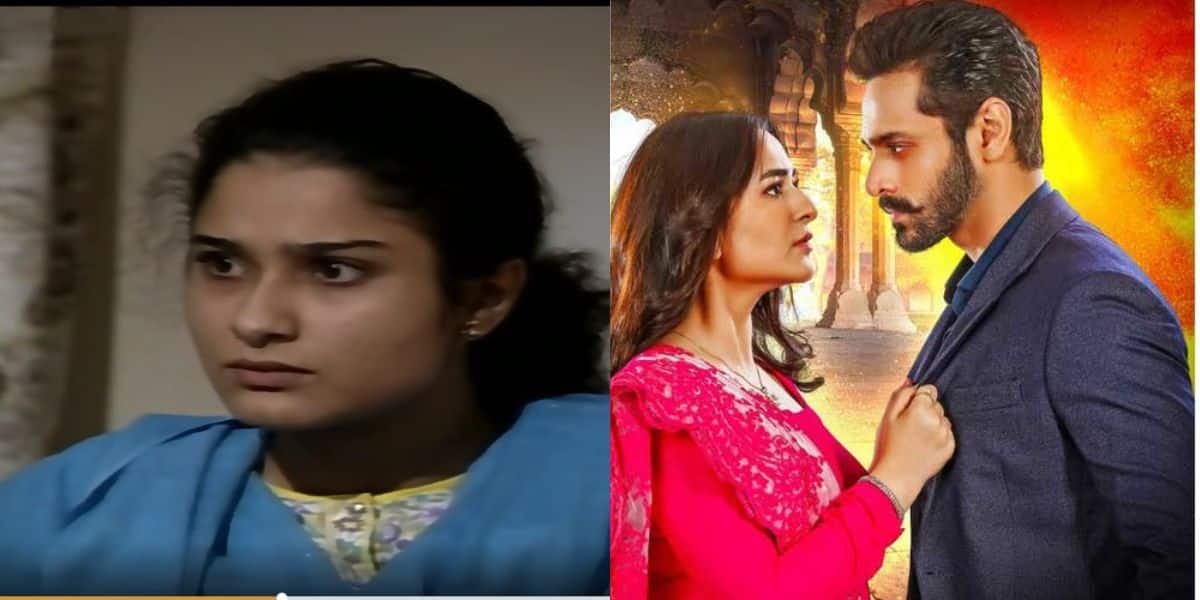
    In a triggering scene, a house helper is seen violently beaten, dragged across the floor by her hair as her husband screams at her to give him more money. The woman keeps refusing, since the man is a drunkard who steals all their money to gamble it away. When the house help begins crying for help, another woman steps outside from her apartment and stands between them to protect her. The drunkard orders her to leave, as its a personal matter between a husband and his wife. But the woman refuses to do so, threatening to call the police. She takes the beaten woman inside her house.

    Did this scene come from a recent hit drama like ‘Tere Bin’, or from a forgotten, classical drama from the 90’s which talked about post- partum depression, pressure to give birth to sons and struggles of a working class family to make a living for their three daughters? Haseena Moin’s ‘Aahat’ was decades ahead of its time when it came to discussing sensitive topics, giving women the catharsis they need that decades later, ‘Tere Bin’ glorified with toxic relationships.

    In several ways, Aahat was ahead of its time when it pulled back the curtain to reveal the struggles Pakistani women underwent, talking about the things that today’s television dramas would have been called ‘vulgar’. It explores the struggles of Rabiya, who gave birth to a fourth daughter, and is being pressurised by her mother-in-law to give her a son, or her husband must marry another woman. Rabiya’s pain is nothing new for Pakistani women, who bear the brunt of family problems, and the drama never shies away from being blunt about the pain: like a scene where Rabiya is made to isolate herself from her children in a room until she is able to give birth to a healthy son, under the orders of a peerni. Or the taunts for only giving birth to daughters which puts pressure on her health as she toils around the house, regardless of the warnings of her doctor and friend.

    But most importantly, what makes ‘Aahat’ the exemplary drama that proved Haseena Moin knew what Pakistani women yearned for, better than the writers today, was how she crafted female friendships that rose from the pains women shared with each other. Rabiya’s friendship with the brilliant and witty Naheed (played by Talat Naseer) is what guides her to take a stand for herself and eventually for her children. Naheed’s boldness and selfless love for Rabiya rescues her in moments when her post-partum depression make the worst of her, like in the first episode, she immediately begins working around the house after undergoing a critical surgery, because her mother-in-law refuses to take care of her three daughters, calling them a burden. Or the humiliation Rabiya endures because of the limited money her husband makes, that eventually push her into making shocking decisions. It was Naheed who offered her safety, and eventually proved that the drama was a love letter to the magic of female friendships.

    In an episode when Rabiya has to make a critical decision, Naheed reminds her that she will never be granted a place on the table, but she needs to keep raising her voice to make it happen.

    “Hum aurtoon kay pass koi jagah nahi hoti’ she urges. “Mein isliee har dafa chala rahi hoti hoon kyun kay mujhay pata hai kay istarhaan meri awaaz koi sunay ga. Islie apni awaaz uthaya karo ta ke log tumhein sunien.”

    Would this message remain evergreen in the years ahead ? Tere Bin, currently rated as a critical hit drama on Pakistani screens, proved that the enduring message of friendships and female empowerment has been lost forever. For 58 episodes, the drama stomped out any effort Moin made to give Pakistani women the space they needed to find their voice; instead glorifying the opposite with a clueless storyline featuring two toxic characters, and an even toxic slutty savitri who plotted to break them apart. From the first five episodes, Meerub was slapped for refusing to marry Murtasim, lead a toxic storyline of stalking, abuse, harassment, and even marital rape to a point. What was once a space crafted by the gentle and clever writing of Haseena, is now bombarded with 45 minutes of Haya plotting to make sure Murtasim catches Meerab in a scene that makes him slap her and then divorce her so Haya could become his wife.

    The wound left behind by the passing of Haseena bleeds anew when we come to realise that what television dramas show on our screens is what even female drama writers today staunchly believe is what the audience needs. When the writer of Tere Bin Nooran Mahkdoom, had been questioned about the controversial marital rape episode, she defended it as ‘a demand of a serial’, a complete 180 from the time when a decades old drama written in the times of Zia had not only condemned domestic abuse and rape, but even made sure that the message that abusers should be punished is given to the audience.

    The problem never was just about Tere Bin, but the complete decline in the quality of our dramas, pushed by an industry that now considers that any show featuring one of out the following: domestic violence, wailing women, a satti savitri desperately wanting a man’s attention. Pick one of them and you have a hit on your hands, even get a Pride of Pakistan award ready. Take a stand and make a drama like ‘Udaari’ that talks about child abuse and sexual assault, PEMRA is at your doorstep ready to call you a traitor for going against the Islamic Republic of Pakistan.

    In a time even Pakistani women can’t find a place to be still, with the economy ravaging, human rights violations growing even worse by the day, public spots becoming hunting grounds for rapists and harassers, the grief we carry in our bodies is understood by no one better than Haseena Moin, and the prevailing message that becomes relevant as currently a hit drama featuring two cousins falling in love features a scene accusing women for falsifying rape accusations for the sake of attention. It’s no surprise that more women are turning to classical dramas because the gentleness and sharp writing of Moin will keep outshining whatever dumpster bin dramas we’re fed in the name of ‘hit dramas’.
  • 41 years later, ‘Ankahi’ is still more progressive than current drama serials

    41 years later, ‘Ankahi’ is still more progressive than current drama serials

    If we were to tell you that a drama is on air on Pakistani screens, showcasing a feisty, independent woman who stands up against forced marriages, is living with her single mother and uncle but never laments about not being married or plots 24/7 to entrap a man? You would say petrol is mulk mein sasta hojaye ga, but Pakistani dramas kabhi itnay achay nahi thay.

    We’re sorry to tell you that there was a time when Pakistani dramas were progressive and revolved around empowered women who never waited for a man, but were powerful and independent. Despite airing decades ago, more and more Pakistani women are watching classical dramas from PTV, and expressing their shock at the kind of empowering, witty women in these shows who never tolerated abuse, or the horrifying kind of things Pakistani dramas today think that all women want.

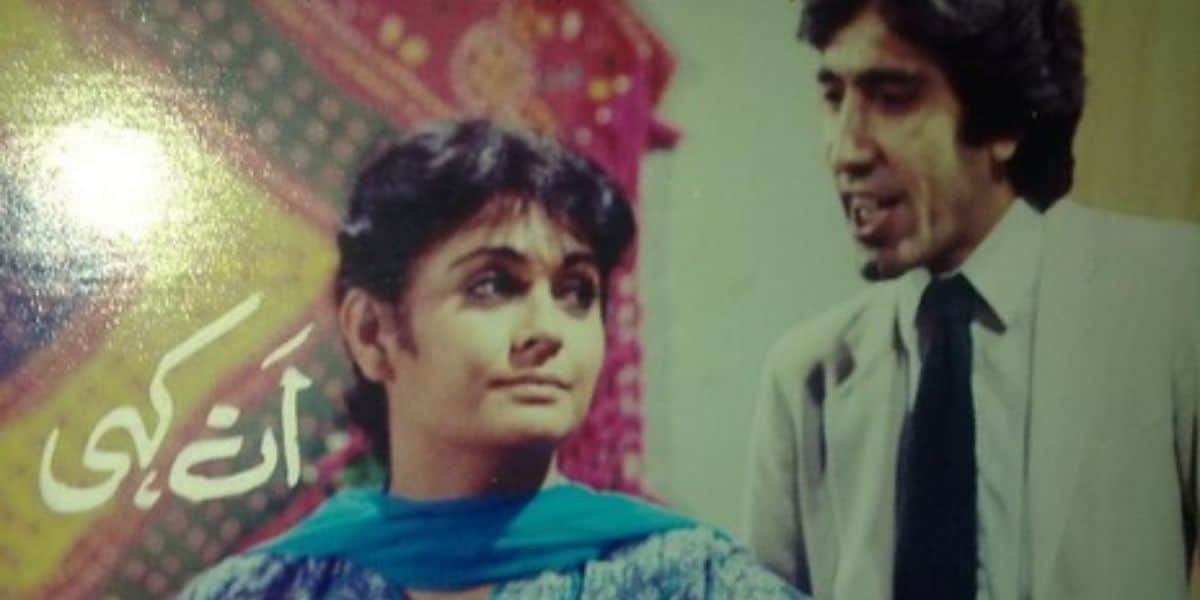
    Take ‘Ankahi’ penned by the brilliant Haseena Moin in 1982, decades ago and yet appealing to a mass audience with its main lead, Sana (played by Shehnaz Sheikh) who dreams of being rich, is clumsy yet endearing, outspoken about standing up for her rights, takes on the task to become financially independent and starts working despite the opposition she faces from her relatives.

    Did we imagine that what would pave the way after the women of Haseena Moin like Sana, Sunia, and the countless women from her drama’s- would be Umera Ahmed’s Khirad? A woman who set romantic standards that despite being neglected, kicked out of her home while pregnant, you forgive the man and every thing is good in the end.

    There is certain charm in the way PTV classical dramas from the minds of writers like Syed Mohammad Ahmed, Moin and Anwar Maqsood still appeal to audiences. They wrote over a variety of topics, covering a variety of issues like domestic violence (Sitara Aur Mehru Nisa), family planning (Aahat) and even light hearted rom-coms about women trying to pursue the men they love (Tum Se Kehna Tha). These dramas were upfront about bringing stories about women, and the issues they face to the spotlight, regardless of how absurd it may seem. Aahat discussed how women in Pakistan are pressurised to give birth to sons, are taunted when they have families full of girl children, and even didn’t shy away from depicting what post partum depression looks like, when the mother (played by Sania Saeed) is quickly returning home after giving birth, despite being forbidden by her doctor, and how she is made to endure the separation from her daughter because of the pressure her family puts on her. And as Moin put it herself, more rebellious women challenging the patriarchy was the onus:

    “I created the bold woman character as a counterpoint to all male writers who were showing women as a miserable victim, crushed by the system, eternally self-sacrificing, nurturing, serving her husband even though he visited prostitutes. Oh, it was so degrading! I like writing rebellious characters, and I keep repeating them so that there is an impact. The only thing is, my mode is comic and my words are never harsh. During many interviews, I have been asked why I show strong women characters. It annoys me. Do they ask male writers, why they show strong male characters?”

    Fast forward to the year 2023, censorship is at an all time high, and it was the implication of consensual sex that set PEMRA after ‘Tere Bin’ after a string of scenes depicted domestic violence, stalking, slapping, attempted suicide- too long of a list to get into.

    A few days ago, during an appearance at Mazaak Raat, Syed Mohammad Ahmed spoke about how writer’s today are more munshi than writers. They lack the creative freedom they had in the past to write about topics of their choice, and how the fixed formulae of creating a hit drama involved women being battered and abused, rather than rebelling against the patriarchy.

    Listening to this and watching as one of the currently hit dramas in Pakistan revolves around two cousins getting married, and the woman being demonised because she wanted to marry rich, there’s no way to stop the despair from hitting in. The hole left by Haseena Moin will be difficult to fill, as the entertainment industry keeps its head buried in the sand.

  • When Haseena Moin wrote dramas for India’s ‘Star Plus’ and ‘Doordarshan’ starring transnational actors

    When Haseena Moin wrote dramas for India’s ‘Star Plus’ and ‘Doordarshan’ starring transnational actors

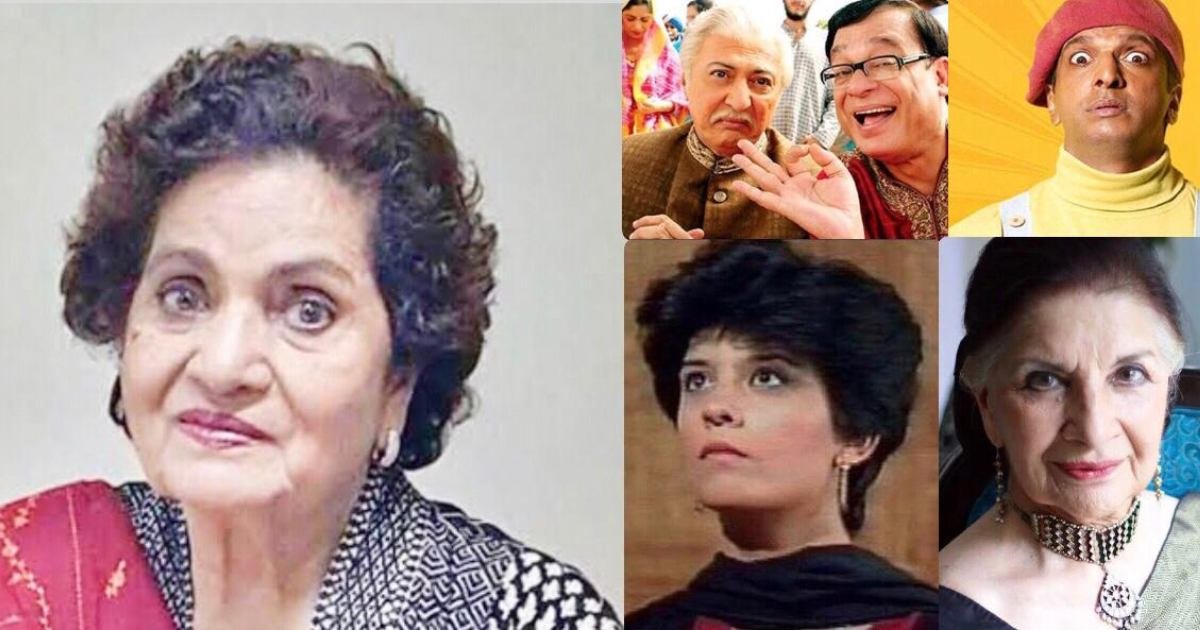
    Veteran Pakistani writer Haseena Moin, who passed away in March 2021 has innumerable literary contributions to the Pakistani drama industry. Be it the cult classic Tanhaiyan or Dhoop Kinaray, her small screen marvels have broken popularity records.

    In 1997, when the sociopolitical terms of Indo-Pak were better, the countries collaborated for a joint production drama serial. Haseena wrote the script of the hit seriel Tanha starring Marina Khan and Sajid Hassan who went to India for the drama’s shoot that aired on Star Plus.

    Tanha did exceptionally well commercially and the Indian audiences enjoyed the realistic execution and inspiring storytelling on television. The title track of the project was written and composed by renowned lyricist Javed Akhtar.

    Read More – IN PICTURES: Twelve Lesser known Bollywood debuts of Pakistani stars

    As per details, the cast of the project includes veterans Marina Khan and Sajid Hassan, among several Indian artists namely Aasif Sheikh, Anang Desai, Milind Soman, and Tanaaz Irani. Unlike regular dramas, Tanha was shot in multiple cities of India including Aligarh and Lucknow. The forty episodes family drama had a successful run of two years on Star Plus from 1997 to 1999.

    The veteran writer also wrote a play for Doordarshan called Kash-m-kash, Arshad Mahmood composed its OST and Tina Sani sang it. The series starred Javed Jaffery ad Aly Khan in key roles.

  • Nadia Jamil gets emotional after she finds an old post of Haseena Moin on her

    An old post by Haseena Moin addressed to Nadia Jamil, in which the late writer talked about her experience of getting diagnosed with breast cancer and sent love and prayers to Nadia, also a breast cancer survivor has made the actor emotional. The celebrated playwright passed away on Friday at the age of 79.

    Sharing Moin’s letter, Nadia said: “I had not read this post before. I sit here crying, reading it now and it’s as if you are speaking to me from wherever you are. I’m shaken to the core today.”

    “Thank you for this and all the words of love and encouragement you gave me since I’ve been sick,” said Nadia further.

    The actor continued: “You said you were working on a script for me. You really wanted me to work again and kept encouraging me to get back to work. I promise you, I will. And I will make you smile with pride, wherever you are.”

    “Thank you for being such a strong, inspirational, dignified woman,” said Nadia. “But most of all Haseena Apa, thank you for being Haseena Moin. The most amazing, legendary TV writer this country has ever known. You were empowering women with your stories years before we were empowered. You were such a down to earth woman, yet your heart full of romance and feeling.”

    Thanking the late writer, Nadia further said: “Thank you for introducing me to TV with Jaane Ajnaane and for writing Raana Shaikh Khalas [and] Dua, so beautifully.”

    “You have always been a quiet voice of strength and encouragement in my life. You will always be that. I only wish in these last months I’d spoken more to you. Heard more of your incredible journey through life,” added Jamil. “I will always be eternally grateful to you, for all this and so much more.”

    Nadia also shared the words of Albert Schweitzer to remember Haseena.

    “At times our own light goes out and is rekindled by a spark from another person. Each of us has cause to think with deep gratitude of those who have lighted the flame within us.”

    “Haseena Apa thank you for lighting the flame in so many millions of hearts with your writing. You will forever shine on through it after the rest of us are long gone,” she concluded.

    Earlier, other celebrities including Adnan Siddiqui and Mahira Khan also paid rich tributes to Haseena Moin.

  • Adnan Siddiqui, Mahira Khan pay rich tributes to Haseena Moin

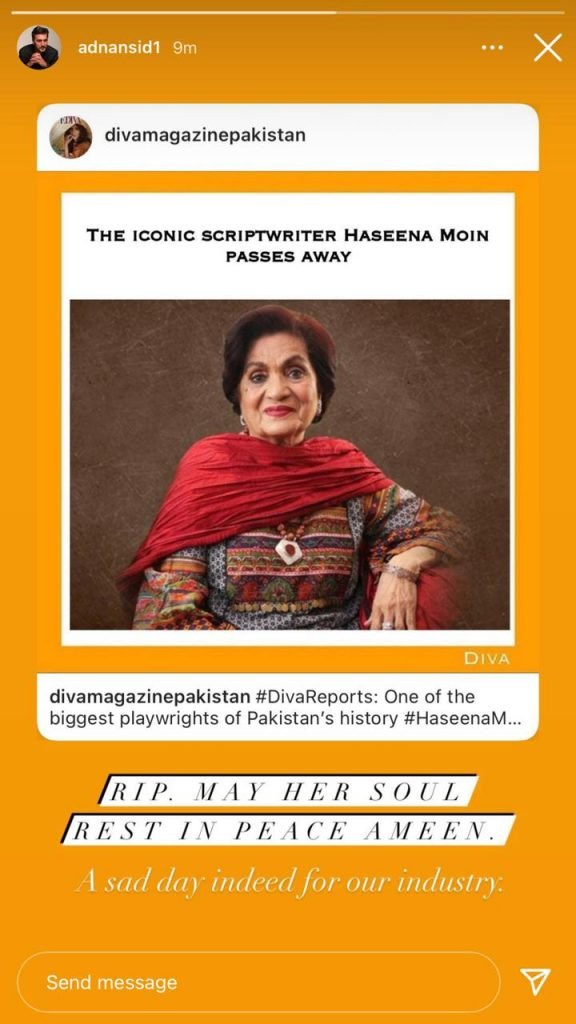
    Adnan Siddiqui and Mahira Khan have paid rich tributes to Haseena Moin who passed away this morning at the age of 79.

    Remembering Moin, Siddiqui said: “No amount of adjectives would do justice to the immense talent of Haseena Moin or Haseena Apa as she was lovingly called. Her acclaimed writings brought a refreshing angle to dramas and plays, positioning women as independent and empowered.”

    “That was the time when hashtags didn’t drive feminism, real work did,” continued Adnan. “Her characters – be it the sisters in Tanhaiyaan, Dr Zoya in Dhoop Kinare [or] Shehzori’s Tara – broke glass ceilings in a conservative Pakistan of the time.”

    Praising Moin’s heroine’s, the actor further said: “Young women who were not afraid to speak their minds, believed in equality of genders and typecast emancipation in the truest sense of the word. They were never a second fiddle in any of Apa’s stories. Instead, they emerged stronger than the men.”

    Adnan also said that he felt “privileged to have worked in one of her dramas serial, Pal Do Pal and a long play Chup Daria.

    “Though my favourite memories of Haseena apa would always be tuning into PTV to watch Zara and Sanya manoeuvre through life courageously and independently,” he concluded.

    Similarly, Mahira also remembered Haseena fondly, admiring her strong work.

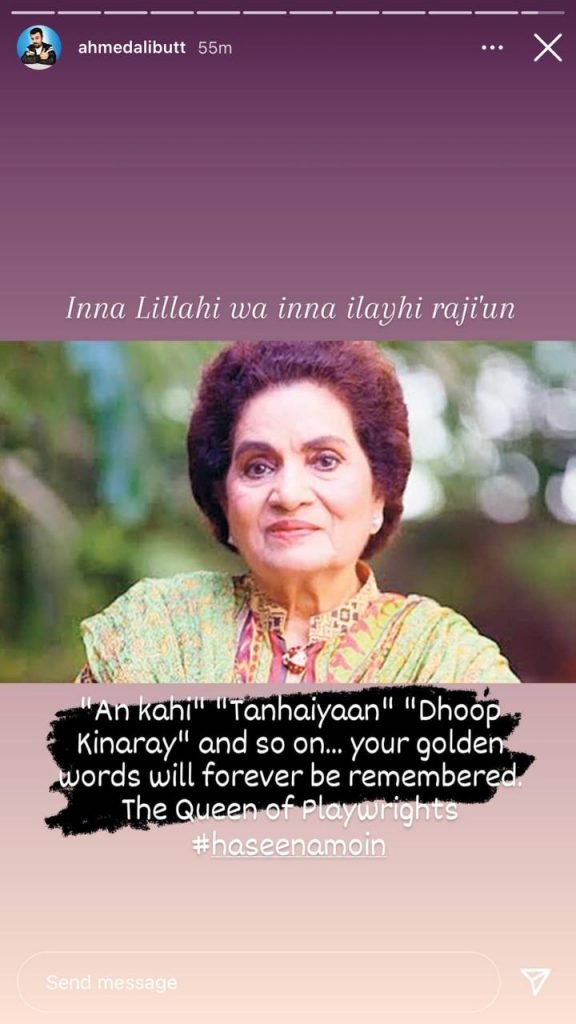
    “There will never be another like Haseena Moin Sahiba,” said Mahira. “You shall live for generations to come.. through your service to this nation and our industry.”

    Other celebrities who remembered Moin include Faysal Quraishi, Imran Abbas, Sanam Saeed, Usman Mukhtar and Fahad Mustafa.

  • Haseena Moin passes away at 79

    Haseena Moin passes away at 79

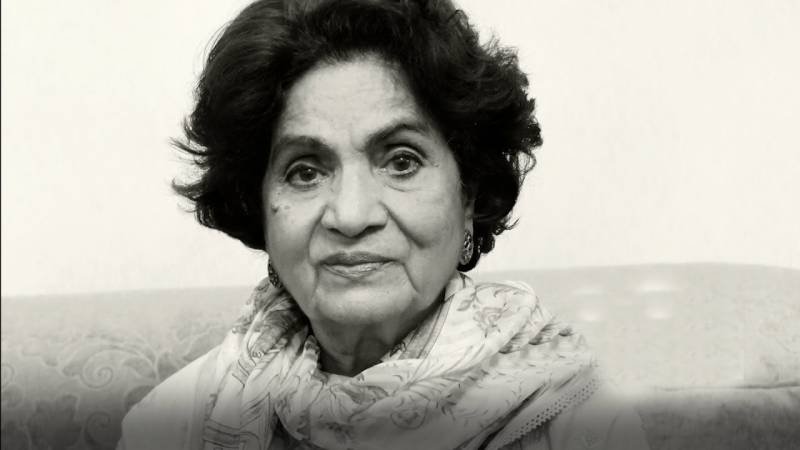
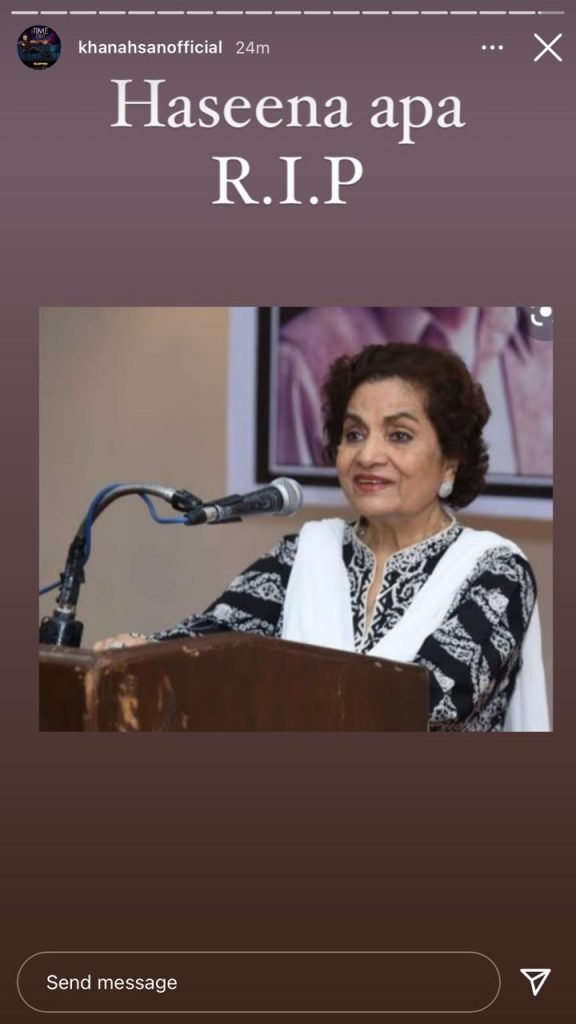
    Celebrated dramatist and playwright Haseena Moin has passed away at the age of 79, her family has confirmed. While the exact reason behind her death is still not known, the writer was a breast cancer survivor and had also penned a web-series on the topic, which is expected to release soon. Moin’s funeral prayers will be held in Karachi.

    One of Pakistan’s most renowned writers, Moin was born in 1941 in Kanpur, present-day India. She earned a Master of Arts in History from Karachi University in 1963. Over a career spanning more than 40 years, Moin delivered a plethora of hits.

    In 1987, she was awarded the Pride of Performance award. Some of her most notable works include Tanhaiyaan, Anakhi and Dhoop Kinare. She also penned dialogues for the Bollywood film Heena which featured Zeba Bakhtiar and the late Rishi Kapoor.

    Moin was last seen at Karachi Art Council’s 23rd March celebrations. She also got vaccinated for the novel coronavirus just a few days before her death.

    Moin’s death has left fans shattered, who took to social media to express their grief.