Tag: health hazard

  • JN.1 : New Covid variant spreading in Pakistan

    JN.1 : New Covid variant spreading in Pakistan

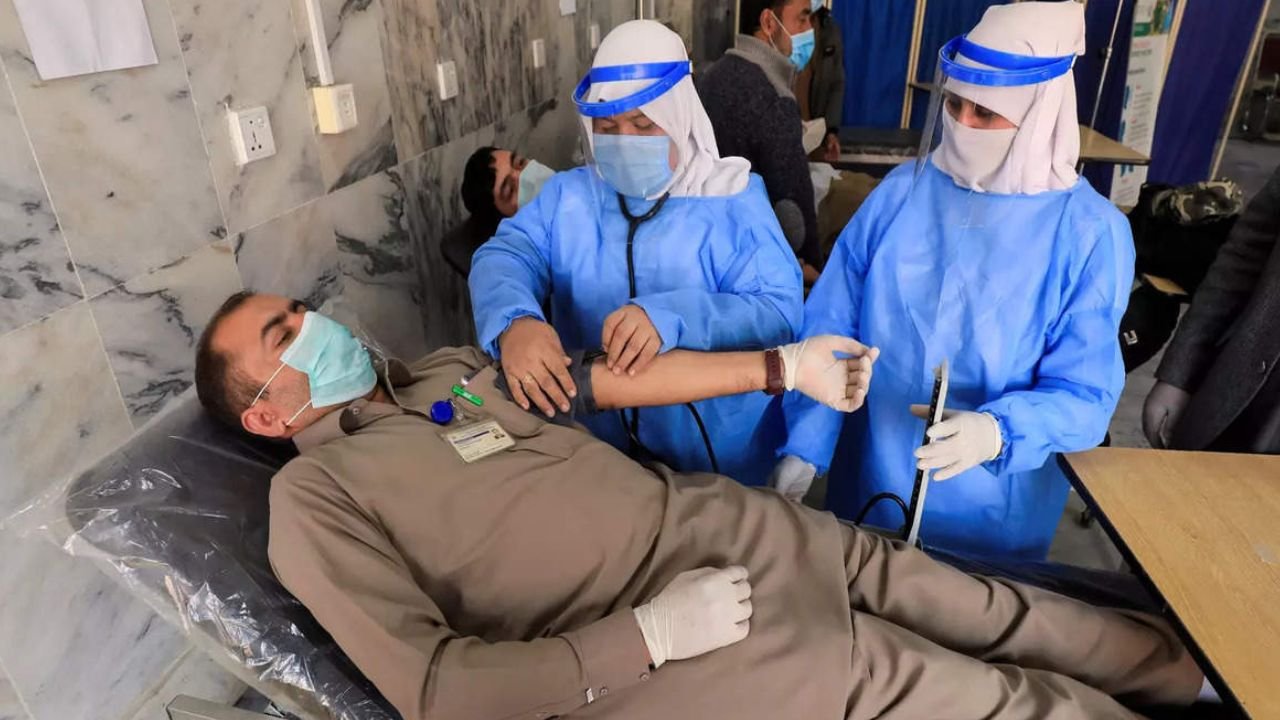
    The emergence of a new coronavirus variant, JN1, a subvariant of Omicron, has raised concerns as four cases were confirmed on Sunday in Pakistan.

    A spokesperson for the Ministry of Health confirmed that all four patients had recovered without encountering any complications, reports the Express Tribune.

    Amid global attention on the new strain, the World Health Organization (WHO) has classified JN1 as a “variant of interest.” Presently, WHO assesses the risk to public health from this strain as low based on existing evidence.

    Dr Nadeem Jan, the caretaker health minister, has said that authorities are closely monitoring the situation, adding that approximately 90 per cent of Pakistan’s population has received vaccination against Covid-19, a critical measure in combatting the spread of such variants.

    As winter brings its challenges, Dr Jan reiterated the importance of preventive measures, urging the public to continue wearing masks, maintaining social distancing, and following health guidelines to curb the spread of COVID-19 and other infectious diseases.

    A few days ago, the federal government decided to secure 500,000 doses of a COVID-19 vaccine in response to the potential resurgence of the new variant observed in multiple countries.

    The procurement strategy for Pfizer vaccines from the US was devised based on recommendations from the Emergency Operation Centre’s (EOC) technical advisory group.

    Previously, the Sindh Health Department confirmed the presence of a new variant of COVID-19 in two passengers arriving from overseas at Karachi Airport. However, it had clarified that no cases of the variant have been reported within the Sindh province.

  • ‘Brain-eating’ amoeba causes two deaths in a week in Karachi

    ‘Brain-eating’ amoeba causes two deaths in a week in Karachi

    Sindh Health Authorities have reported two deaths within a week from Naegleria Fowleri, also known as brain-eating amoeba, in Karachi. The death toll has reached 10 victims this year.

    The latest victim is a 22-years-old student of North Karachi. Earlier in the week, a 45-year-old succumbed to the amoeba in the same locality. The two deaths have raised alarm bells both in the locality and the city.

    The student fell ill with high fever, headache and vomitting. His condition rapidly deteriorated, leading to hospitalisation in ICU. He tested positive for Naegleria, dying within four days on October 29.

    The symptoms of the two patients were similar but both had no history of swimming to suggest that they contracted the germs via nasal passage, as reported by the health department. The surveillance coordinator of the town has asked to collect samples from the area to detect the presence of the amoeba.
    Health Services Karachi Director Dr Abdul Hamid Jumani has however stressed the importance of chlorination at different levels in the water supply system. Not just that, the seepage in the pipelines should be corrected at once to avoid contamination of water.

    Water tanks at home need to be cleaned regularly and hygiene should be maintained. Experts suggest that water tanks should be cleaned once a year and a 20-gramme tablet is enough for a 100-gallon tank for 15 days.

    The infection caused by Naeglaria Fowleri is fatal in 98 per cent of cases. Contaminated water is its natural habitat. The medical term used for the disease is Primary Amoebic Meningoencephalitis. Among the 100 cases reported in 11, years only two survived; one for three months and the other is alive till date.

  • Health emergency declared in Delhi following toxic smog

    Health emergency declared in Delhi following toxic smog

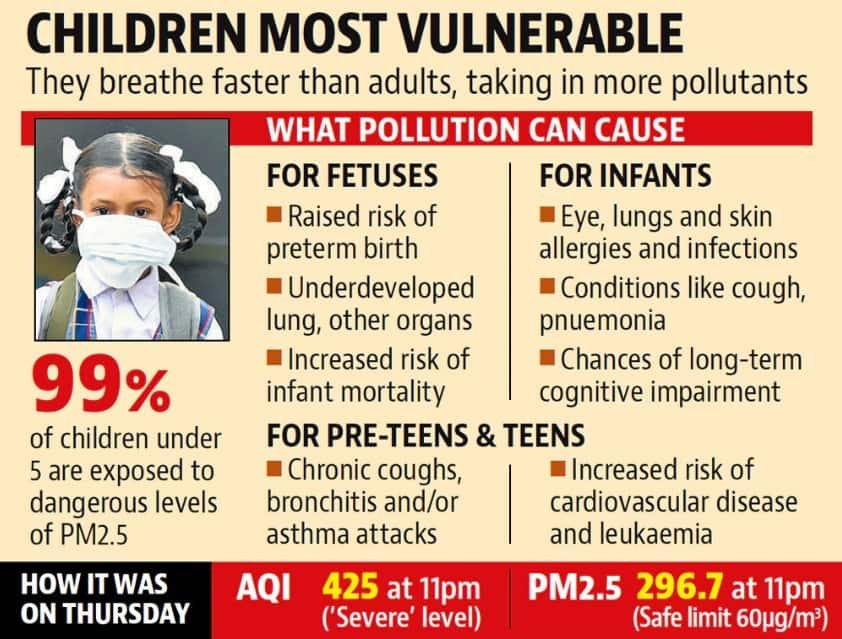
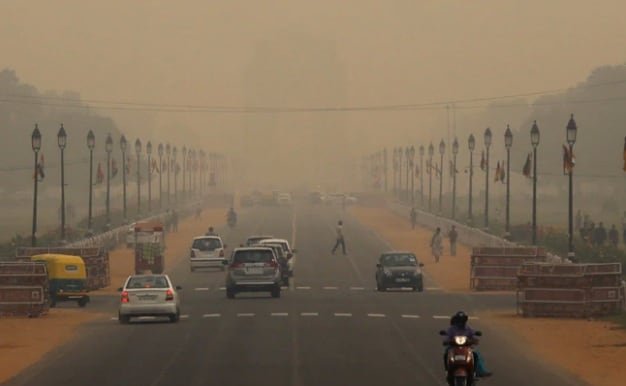
    The Delhi government on Friday announced a public health emergency in the city following the deterioration in air quality in the city. The local government also directed the closure of all schools till November 5 in the interest of the health and safety of children.

    According to a report in the Hindustan Times, air quality in the capital has deteriorated breaching ‘severe plus’ level and the city remained shrouded in a thick, toxic layer of smoke and haze. Many environmentalists began to refer to Delhi as an open gas chamber.

    Read more: Tips to beat the toxic smog this winter

    The Air Quality Index (AQI) value in Delhi was at approximately 459 at 8 am Friday morning and this is the first time that the air quality has dipped to emergency levels in the national capital this season. Such a situation was last seen in January 2019. Meanwhile, Lahore’s AQI stands at 343 according to Air Visual.

    This prompted the Environment Pollution (Prevention and Control) Authority (EPA), a Supreme Court-mandated body, to declare a public health emergency. It stated that the air quality in Delhi NCR has become “hazardous” and will have adverse health impacts on all particularly the children.

    Effects of smog on children

    The EPA also suspended all construction activity in Delhi-NCR till November 5.

    Delhi witnessed a spike in pollution after Diwali and the air quality quickly dipped in the following week with the share of stubble burning in Delhi’s pollution rising to 35 percent.

    Chief Minister Kejriwal described the city as a “gas chamber” while distributing masks to schoolchildren. He also blamed the neighbouring states of Haryana and Punjab, where thousands of farmers at this time of year burn crop stubble, sending vast clouds of smoke drifting across northern India and Pakistan.

    Read more: Air purifiers that are effective and available

    Experts have previously predicted that more crop residues are burnt around the time of Diwali since farmers can show them as incidental fires. They use the method to quickly and cheaply ready their fields for the next round of sowing.