Tag: health

  • Are Pakistanis sleeping well?

    Are Pakistanis sleeping well?

    Another survey by Gallup Pakistan evaluates the sleep patterns of Pakistanis.

    The results reveal that Pakistanis appear to have good sleep quality.

    An impressive 85 per cent of respondents rated their sleep as excellent, while only 15 per cent reported poor sleep or insufficient rest.

    Comparatively, in global polls, Pakistanis stand out, with 68 per cent of people worldwide rating their sleep as good and 31 per cent as poor.

    Do you sleep well too?

  • From donkey meat to dead chicken, authorities shut down another ‘meat’ shop

    From donkey meat to dead chicken, authorities shut down another ‘meat’ shop

    The Lahore High Court has ordered the permanent sealing of shops selling dead chickens in Tollington Market.

    Justice Shahid Karim of Lahore High Court issued a written order in the smog case, pointing out that the food authority’s report stated that a large number of dead chickens were destroyed in the Tollington market.

    It has been ordered that areas where the market’s waste is disposed off should be investigated and reported on, while the court has also called for an evaluation on cleanliness in the market.

    The court also ordered the PHA to submit a report on the maintenance of government parks along with the local committees.

  • Dead patient decomposes, locked and forgotten in hospital store

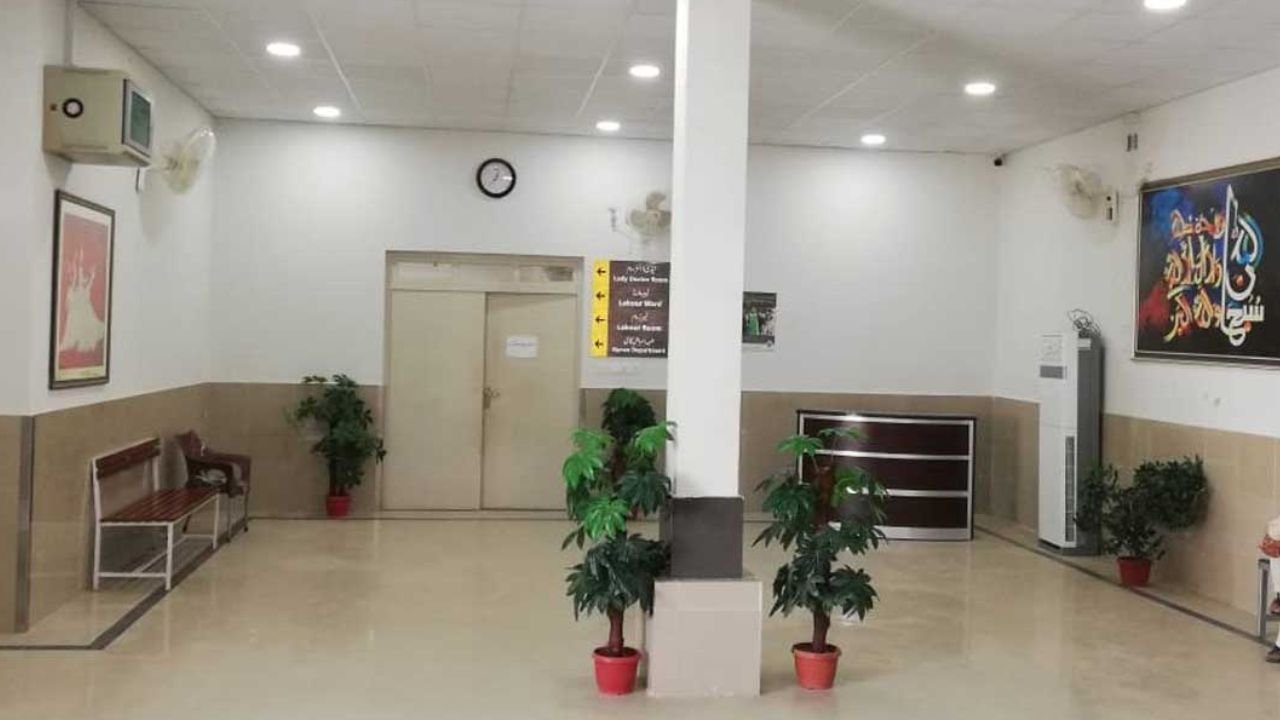
    Dead patient decomposes, locked and forgotten in hospital store

    The locked store of the District Headquarter Hospital in Isakhel tehsil had been harbouring the decomposed body of an elderly patient, DAWN has reported.

    According to reports, Mohammad Ali, son of Mohammad Asif, was an injured elderly man who was brought to the hospital in February by Rescue 1122 after an accident. He was admitted and treated for a fracture but no relatives paid him a visit.

    Ali was said to be mentally ill and grappling with speech. The patients in his ward complained about him after which he was shifted to another room.

    When the Punjab health secretary visited the hospital a few days back, Ali was taken to an empty store and locked in for the duration of the visit to avoid any “objectionable” behaviour from him.

    He remained locked since the hospital staff reportedly “forgot” to take him out after the visit. Days later, when a revolting smell began spreading through the hospital, the staff began interrogating only to find Ali’s decomposed body in the store room.

    Upon receiving the news, Mianwali Deputy Commissioner Khalid Javed Gorayia went to the DHQ Hospital and called for an investigation into the incident.

    He established an inquiry committee, led by DHO (HR) Dr. Rafiqe Khan.

    An autopsy report will be provided to determine the cause of death.

    The hospital administration has reportedly buried the body as an unknown person.

  • Watermelon growers send notice of damages to Dr. Affan

    Watermelon growers send notice of damages to Dr. Affan

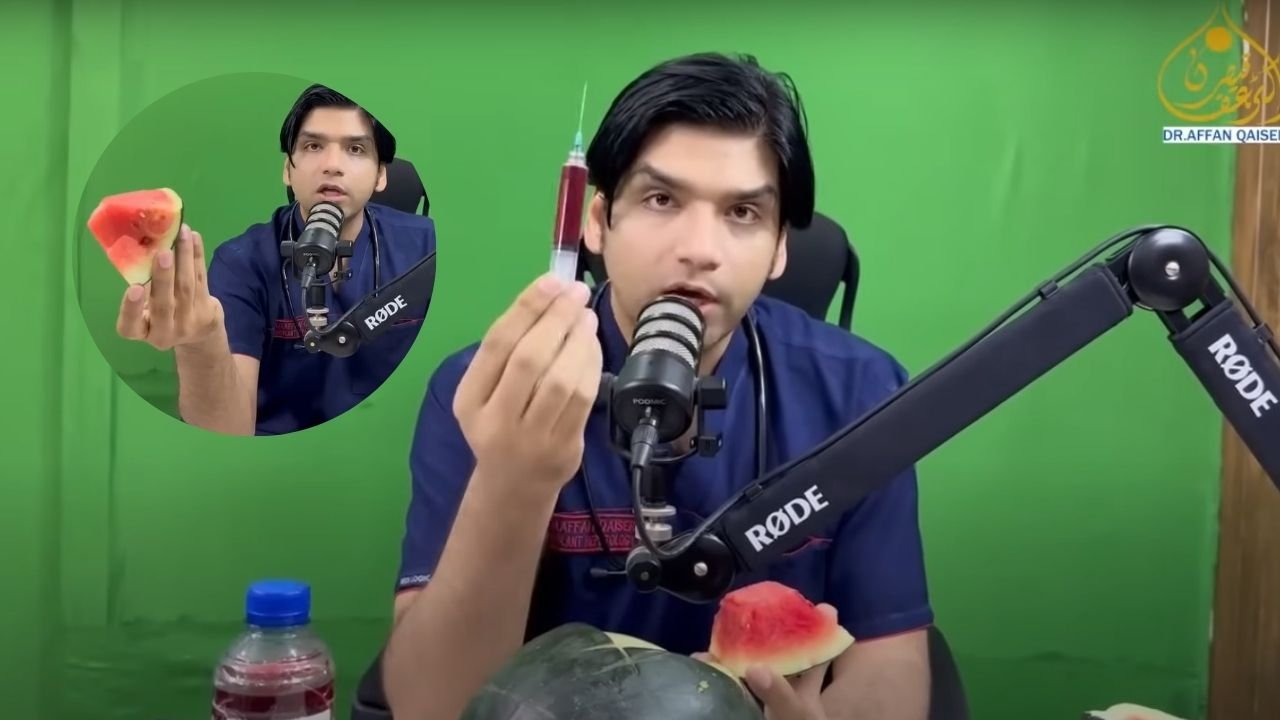
    Businessmen from Faisalabad have sent a notice of 10 billion rupees to Dr. Affan Qaiser against his statement about injecting watermelons.

    A request has also been made by Faisalabad engine traders to register a case against Dr. Affan in Ghulam Muhammad police station.

    According to the petition, Dr. Affan’s statement spread fear and panic and caused billions of rupees loss to businessmen and landlords.

    The YouTuber doctor was also sent a legal notice for damages of ten billion rupees.

    Background:

    In one of his latest videos, he raised the issue of “adulterated watermelons” i.e. injecting watermelons with chemicals in order to give them the red colour that consumers accept as a sign of the fruit being sweet.

    A couple days later, Dr. Qaiser released another video, justifying his claims with online articles while also pointing that he never put the blame on farmers.

  • PIMS Hospital lays off more than 100 nursing staff on verbal order

    PIMS Hospital lays off more than 100 nursing staff on verbal order

    More than 100 nursing staff recruited under the Federal Medical Teaching Institutes (FMTI) Act from Islamabad’s largest hospital, PIMS, were dismissed and ordered to leave the hostel on verbal orders.

    The nursing staff protested against the dismissal, saying they are being fired on just a single day’s notice in an unprofessional manner. They have been working without pay for four months on the oral promises of the hospital management to extend their contracts. Now, preparations are being made to recruit untrained individuals in their place.

    PIMS Executive Director Rana Imran Sikander says that the contracts have expired and now the matter is between the Establishment Division and the Health Department.

    During the PTI regime, nursing staff was recruited on a two-year contract. Under the PDM regime, the tenure of the nursing staff was further extended, which expired in December 2023.

  • More than 50 per cent Pakistani women suffer from PCOS

    More than 50 per cent Pakistani women suffer from PCOS

    More than 50 per cent of Pakistani women suffer from Polycystic Ovary Syndrome (PCOS) after hitting their reproductive years.

    PCOS is a hormonal condition that disrupts the process of ovulation, disturbing the menstrual cycle which consequently makes it difficult to conceive.

    Gynaecologists from across the country participated in Pakistan’s First International PCOS Summit 2024, asserting on the importance of spreading awareness about the condition among girls at school and colleges since an estimated 70 per cent of women of reproductive age live with it without getting diagnosed due to lack of knowledge.

    Dawn News reports that Prof. Dr. Rizwana Chaudhry pointed out that there is no remedy for PCOS, and its treatment is dependent on controlling symptoms and tackling possible complications. These include, as highlighted, “a healthy diet, regular exercise, and weight management”.

    The doctors cautioned that PCOS is a major health concern in Pakistan women, and that lack of diagnosis can result in emotional suffering because of “irregular periods, weight gain, infertility, and other symptoms”.

    According to gynaecologist Prof. Saqib Siddiq, while there isn’t any conclusive cause behind PCOS, apart from genetic susceptibility, there are agents that can contribute to the condition which include “increased sugar intake, refined carbohydrates, and a lack of physical activity”.

  • Woman keeping babies in freezer not charged

    Woman keeping babies in freezer not charged

    A 69-year-old woman from Boston, whose apartment was found to have frozen infants in the freezer in 2022, will not be charged.

    A probe into the case started back in 2022 — which was deemed as “one of the most complex, unusual and perplexing” investigations by District Attorney Kevin Hayden.

    It has been said in the statement that it has not been concluded if the four babies were born alive or not, and that is why no criminal charge has been filed against the woman.

    Additionally, the attorney stated that according to the medical examiner, there have been no signs of trauma.

    The father of the babies reportedly died in 2011, while the mother is said to be in a healthcare facility.

    When she was questioned with regards to what was found, she “appeared confused and demonstrated a lack of understanding about where she was and who she was speaking to,” Hayden said.

    The mother is said to have five children and one of them was put up for adoption and had a birth record.

    It is still a mystery as to whether the children were born dead, killed, or did something else happen; and moreover, why the mother did not disclose her pregnancy.

    Background:

    Back in 2022, four babies were found in a freezer – two boys, two girls — in South Boston. The DNA proved that all four were siblings.

  • Indian donor saves Pakistani girl with heart transplant

    Indian donor saves Pakistani girl with heart transplant

    A 19-year-old girl from Karachi has received a heart transplant from a donor who is from Chennai, India, on January 31.

    Ayesha Rashid, suffering from a heart condition, had a cardiac arrest in 2019. She travelled to Chennai for a medical evaluation. But in the years that followed, her condition became worse and so, she made her way to India once again in 2023.

    Adding to the complications were financial hindrances. Ayesha is the daughter of a single mother. But Dr KR Balakrishnan, renowned Chief of Heart Transplant at MGM Healthcare in Chennai, took up the case in collaboration with Aishwaryam, a healthcare trust based in Chennai.

    The heart donated to Ayesha was airlifted from Delhi to Chennai and the procedure was then performed.

    “This child first came to us in 2019, soon after she came her heart stopped. We had to do CPR and put an artificial heart pump. With that she recovered and went back to Pakistan, then she became sick again, her heart failure worsened and she required repeated hospitalisation and in that country (Pakistan), it’s not easy, because the equipment required is not there and they had no money,” said Dr KR Balakrishnan, chairman of Institute of Heart and Lung transplant and Mechanical Circulatory support.

    Co-directer, Dr Suresh Rao, also explains that the institute is the largest heart transplant centre — with around 100 transplants a year. And in times when Indians do not require the transplant, foreigners are given a chance at it as well.

    Ayesha Rashid was discharged from the hospital on April 17.

  • Use of alcohol and e-cigarettes among youth ‘alarming’: WHO

    Use of alcohol and e-cigarettes among youth ‘alarming’: WHO

    The widespread use of alcohol and e-cigarettes among adolescents is “alarming”, according to a report released on Thursday by the World Health Organization’s (WHO) European branch, which recommended measures to limit access.

    Based on survey data from 280,000 young people aged 11, 13 and 15 in Europe, Central Asia and Canada, the WHO said it showed a “concerning picture” of substance use among young people.

    “The long-term consequences of these trends are significant, and policy-makers cannot afford to ignore these alarming findings,” the health body said.

    The report found that 57 percent of 15-year-olds had drunk alcohol at least once, for girls the figure was 59 percent, compared to 56 percent of boys.

    The WHO noted that overall drinking had decreased for boys, while it had increased for girls.

    When it came to current use — defined as having drunk at least once in the last 30 days — eight percent of 11-year-old boys reported having done so, compared to five percent of girls.

    But by age 15, girls had overtaken boys, with 38 percent of girls saying they had drunk at least once in the last 30 days, while only 36 percent of boys had.

    “These findings highlight how available and normalised alcohol is, showing the urgent need for better policy measures to protect children and young people from harms caused by alcohol,” said WHO Europe — which gathers 53 countries including several in Central Asia.

    In addition, nine percent of teenagers reported having experienced “significant drunkenness” — having been drunk at least twice.

    The WHO said this rate climbed from five percent among 13-year-olds to 20 percent for 15-year-olds, “demonstrating an escalating trend in alcohol abuse among youth”.

    The report also highlighted the increased use of e-cigarettes — often called vapes — among teenagers.

    While smoking is declining, with 13 percent of 11-15 year-olds having smoked in 2022, two percentage points less than four years earlier, the report noted that many of them have instead adopted e-cigarettes — which have overtaken cigarettes among adolescents.

    Around 32 percent of 15-year-olds have used an e-cigarette, and 20 percent reported having used one in the last 30 days.

    “The widespread use of harmful substances among children in many countries across the European Region -– and beyond -– is a serious public health threat,” WHO Regional Director for Europe Hans Kluge said in a statement.

    Kluge called for higher taxes, restrictions in availability and advertising, as well as a ban on flavouring agents.

    “Engaging in high-risk behaviours during the adolescent years can shape adult behaviour, with substance use at an early age being linked to a higher risk of addiction,” the report said.

    “The consequences are costly for them and society,” it added.

    Cannabis use, meanwhile, was down slightly with 12 percent of 15-year-olds having ever used it, down four percentage points in as many years.

    Conducted every four years by the WHO, the HBSC (Health Behaviour in School-aged Children) survey examines the health behaviour of 11, 13 and 15-year-olds, and includes a section on substance use.

  • Why unprotected eclipse gazing will leave you seeing stars

    Why unprotected eclipse gazing will leave you seeing stars

    Just a single, unguarded glance at a solar eclipse can result in a lifetime of vision loss, eye health experts warn.

    On Monday, tens of millions of spectators across Mexico, the United States and Canada will witness the Moon completely obscure the Sun’s light, a rare celestial spectacle that won’t be visible for most of North America again until 2044.

    Medical literature is teeming with examples of people who suffered damage to their retinas — the layer of light-sensitive tissue at the back of the eye — and health professionals are offering advice on how to avoid becoming the next cautionary tale.

    Aaron Zimmerman, a clinical professor of optometry at the Ohio State University, told AFP that the dangers of sungazing during eclipses were discussed by the ancient Greek philosopher Socrates, but it wasn’t until recently that science really caught up with how eye injury happened.

    When it comes to eclipses, he explained, the main damage comes from “photochemical toxicity,” where short, high-energy wavelengths of light — blues, violets and non-visible ultraviolets — trigger chemical reactions that damage the rods and cones of the retina.

    Cue visits to the emergency department by people with complaints of blurry vision, changes in color perception, and blind spots, with the outlook for recovery far from certain.

    Human beings inherently look away from the Sun because of the discomfort it causes, but during eclipses “you can psychologically override” that instinct, explained Zimmerman.

    A famous journal report about the 2017 US solar eclipse involved a woman in her twenties who presented to the New York Eye and Ear Infirmary after looking at the solar rim “several times for approximately 6 seconds without protective glasses” and then later with eclipse glasses.

    Hours later, objects started to look fuzzy and out of shape, colors became distorted, and she developed a central black spot in her left eye.

    An advanced imaging technique was able to show the damage at the cellular level which persisted on her follow up six weeks later.

    Young adults might be more susceptible, the authors of the paper said, because of larger pupils, clearer eye structure, or “poorer recognition of the dangers” of viewing eclipses with improper eyewear.

    “In some cases, it’s just partially damaged and it may resolve so that you don’t notice it anymore,” Neil Bressler, a professor of ophthalmology at Johns Hopkins University and editor-in-chief of JAMA Ophthalmology told AFP. If recovery happens, it’s normally within the first six months.

    “But in other cases, it can leave a permanent blank spot… and we don’t have a treatment to reverse that. It’s like brain tissue, once you lose it, it won’t grow back,” added Bressler.

    The best way to view the eclipse is with eclipse sunglasses, which block out 99.999 percent of light. Always go for genuine products. To test if your glasses are up to standard, “find the brightest light bulb in your home — and then look at that from up close and you should barely be able to see the light,” said Zimmerman.

    If it’s too late to procure specialist eyewear, then there are indirect methods, such as punching a pinhole into a cardboard and letting the light shine onto another surface, or even using the humble kitchen colander to the same effect. NASA’s webcast is another option.

    Those fortunate enough to be in the “path of totality,” under which the Moon will fully block out the Sun, can look up without glasses and admire the Sun’s outer atmosphere, or corona, glowing from behind the silhouette of the Moon.

    But, said Bressler, the danger is not having protection before and after those precious moments, which can last anywhere from seconds to a few minutes, depending on your location.

    “You must know when it begins and use protection before that, and you may be enamored by looking at all this, but you must have some alarm to tell you it’s about to end,” he warned.