Tag: health

  • World’s most powerful MRI scans first images of human brain

    World’s most powerful MRI scans first images of human brain

    The world’s most powerful MRI scanner has delivered its first images of human brains, reaching a new level of precision that is hoped will shed more light on our mysterious minds — and the illnesses that haunt them.
    Researchers at France’s Atomic Energy Commission (CEA) first used the machine to scan a pumpkin back in 2021. But health authorities recently gave them the green light to scan humans.

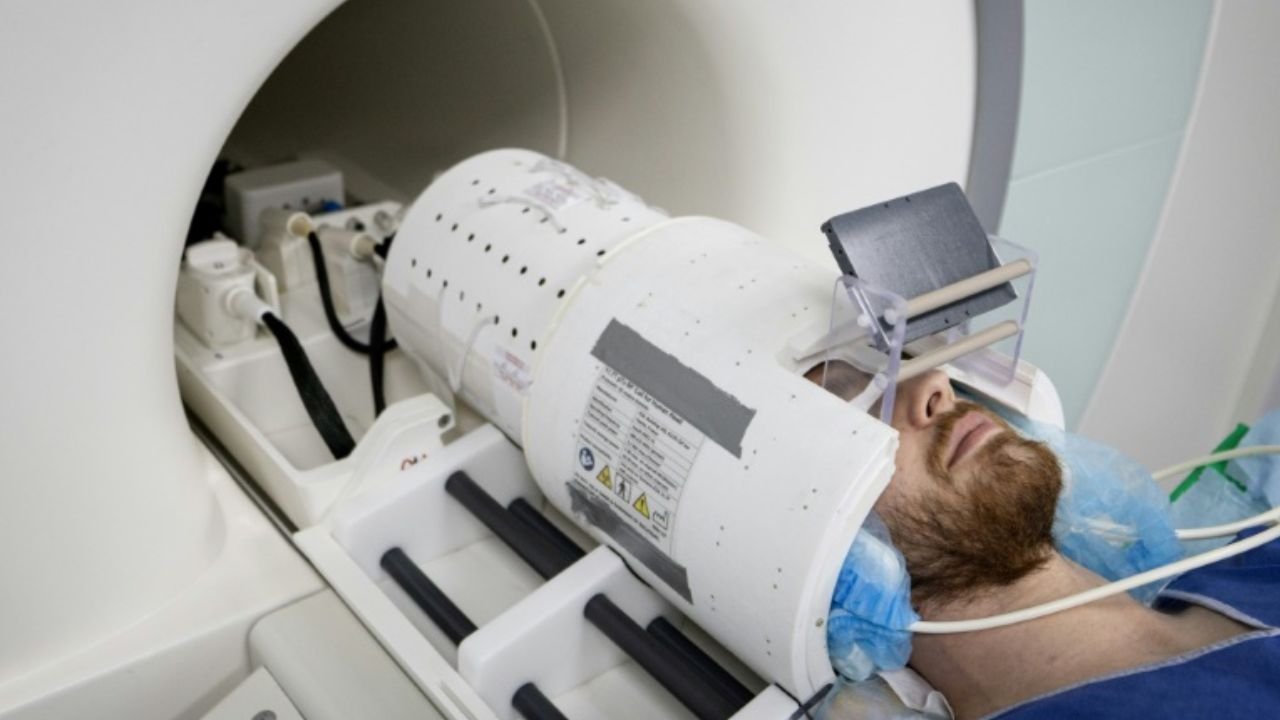
    Over the past few months, around 20 healthy volunteers have become the first to enter the maw of the magnetic resonance imaging (MRI) machine, which is located in the Plateau de Saclay area south of Paris, home to many technology companies and universities.

    “We have seen a level of precision never reached before at CEA,” said Alexandre Vignaud, a physicist working on the project.

    The magnetic field created by the scanner is a whopping 11.7 teslas, a unit of measurement named after inventor Nikola Tesla.

    This power allows the machine to scan images with 10 times more precision than the MRIs commonly used in hospitals, whose power does not normally exceed three teslas.

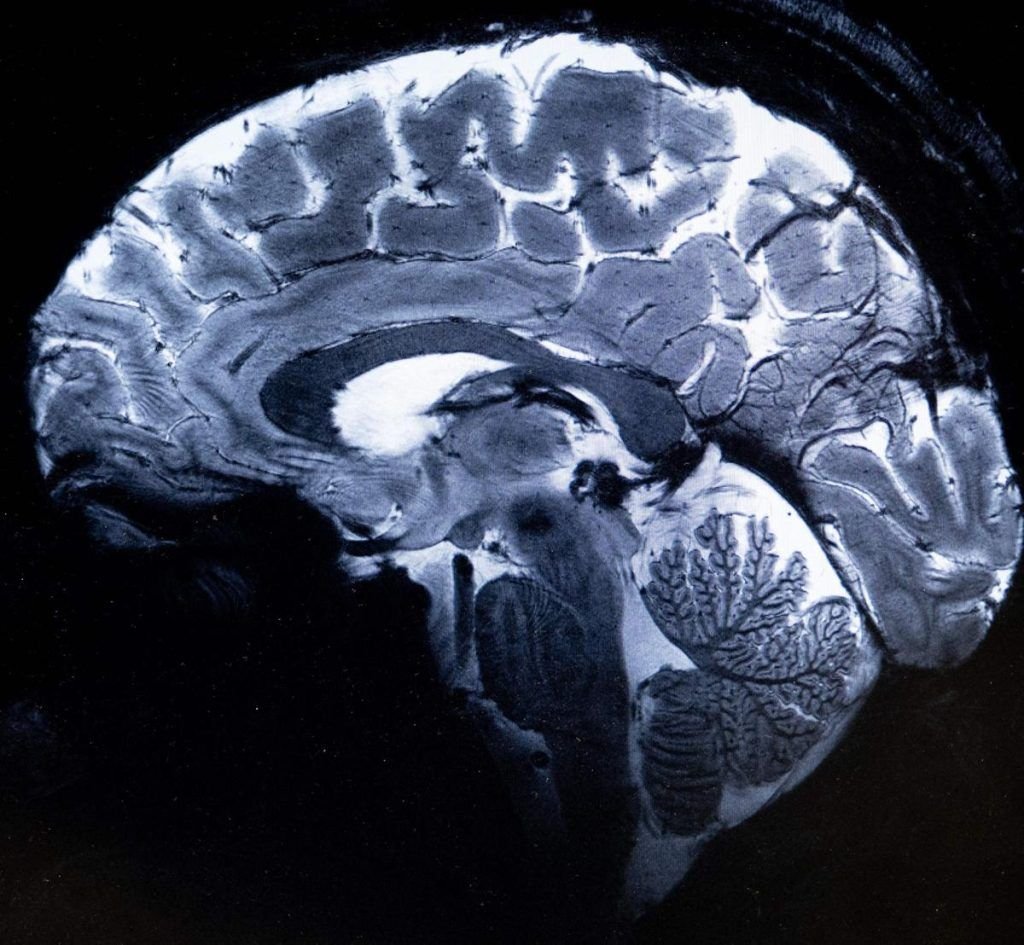
    On a computer screen, Vignaud compared images taken by this mighty scanner, dubbed Iseult, with those from a normal MRI.

    “With this machine, we can see the tiny vessels which feed the cerebral cortex, or details of the cerebellum which were almost invisible until now,” he said.

    France’s research minister Sylvie Retailleau, herself a physicist, said “the precision is hardly believable!”

    “This world-first will allow better detection and treatment for pathologies of the brain,” she said in a statement to AFP.

    Lighting up the brain’s regions

    Inside a cylinder that is fives metres (16 feet) long and tall, the machine houses a 132-tonne magnet powered by a coil carrying a current of 1,500 amps.

    There is a 90-centimetre (three-foot) opening for humans to slide into.

    The design is the result of two decades of research by a partnership between French and German engineers.

    The United States and South Korea are working on similarly powerful MRI machines, but have not yet started scanning images of humans.

    One of the main goals of such a powerful scanner is to refine our understanding of the anatomy of the brain and which areas are activated when it carries out particular tasks.

    Scientists have already used MRIs to show that when the brain recognises particular things — such as faces, places or words — distinct regions of the cerebral cortex kick into gear.

    Harnessing the power of 11.7 teslas will help Iseult to “better understand the relationship between the brain’s structure and cognitive functions, for example when we read a book or carry out a mental calculation,” said Nicolas Boulant, the project’s scientific director.

    On the trail of Alzheimer’s

    The researchers hope that the scanner’s power could also shed light on the elusive mechanisms behind neurodegenerative diseases such as Parkinson’s or Alzheimer’s — or psychological conditions like depression or schizophrenia.

    “For example, we know that a particular area of the brain — the hippocampus — is implicated in Alzheimer’s disease, so we hope to be able to find out how the cells work in this part of the cerebral cortex,” said CEA researcher Anne-Isabelle Etienvre.

    The scientists also hope to map out how certain drugs used to treat bipolar disorder, such as lithium, distribute through the brain.

    The strong magnetic field created by the MRI will give a clearer image of which parts of the brain are targeted by lithium. This could help identify which patients will respond better or worse to the drug.

    “If we can better understand these very harmful diseases, we should be able to diagnose them earlier — and therefore treat them better,” Etienvre said.

    For the foreseeable future, regular patients will not be able to use Iseult’s mighty power to see inside their own brains.

    Boulant said the machine “is not intended to become a clinical diagnostic tool, but we hope the knowledge learned can then be used in hospitals”.

    In the coming months, a new crop of healthy patients will be recruited to get their brains scanned.

    The machine will not be used on patients with conditions for several years.
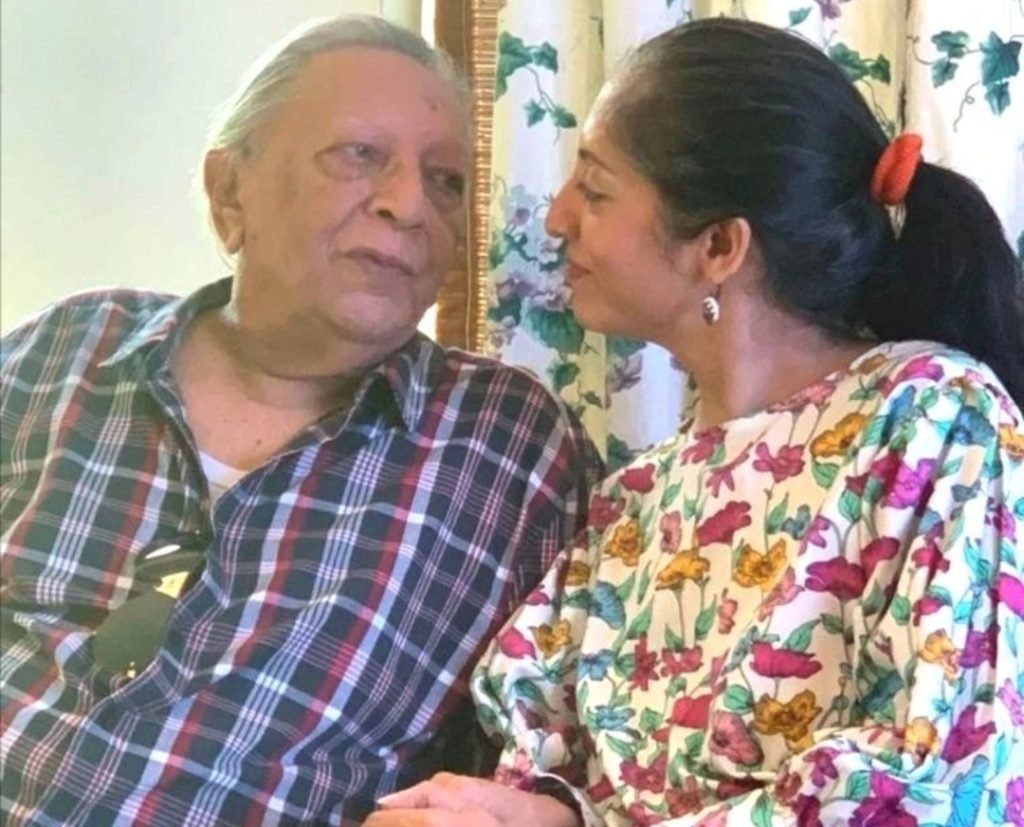
  • Tazeen Hussain opens up about father Talat Hussain’s Health

    Tazeen Hussain opens up about father Talat Hussain’s Health

    Actor and educator Tazeen Hussain recently appeared on Good Morning Pakistan where she talked about her special bond with her father, the famous Talat Hussain. Tazeen shared heartfelt stories about her father’s role in their family and gave updates on his health, remembering his kind nature. She said that she and her siblings often found comfort in being around their father.

    Talking about her father’s significant influence, Tazeen highlighted his cultured upbringing and his dedication to teaching valuable lessons to his children. She said, “My dad was artistic and open-minded, like most artists are. He never stopped us from doing what we wanted. We were scared of Mom, not Dad. He never scolded us. He took care of us when we were hurt. He would kindly give us medicine even when we didn’t want to take it.” Tazeen continued, “We received a lot of love from Dad.” She also mentioned, “With my father, I grew up as a girl and as a woman. There was never any distinction between boys and girls in our house. We were all treated equally. My father always respected women.”

    However, among the happy memories, Tazeen talked about her father’s current health problems. “He’s getting older now,” Tazeen began. “With age come a few illnesses. Dad has dementia, your memory starts to decline.” Although he still knows who she is, Tazeen shared, “He recognizes us, so it’s not too bad. Some days are slower, and remembering people is a bit harder. But on other days, he can recognize them. Some days, he doesn’t want too much mental activity. But otherwise, he walks around, wants to go for a drive, eats, and drinks, thank God.”

    The veteran actor got a chest infection, which made his health worse and he had to go to the hospital. “Recently, he got really sick,” she said. “He had a chest infection, so he had to stay in the hospital. But thanks to all the prayers from his fans and well-wishers, it was like a miracle. He came back home from the hospital, walking on his own feet.”

    Even though the icon is still dealing with health issues, Tazeen wants fans to know he’s doing okay for now. She admitted that sometimes he has slower days, but his strength and determination keep everyone hopeful and positive.

  • Gaza cancer patients fear Israel move to force them back ‘to hell’

    Gaza cancer patients fear Israel move to force them back ‘to hell’

    JERUSALEM: In a small hotel near the Augusta Victoria Hospital in Israeli-annexed East Jerusalem, where she received radiation therapy for breast cancer, Palestinian Rim Abu Obeida waits anxiously.

    She is among a group of Palestinian patients living in limbo while a top Israeli court weighs whether they can be sent back to war-torn Gaza now that their treatment is completed.

    Like dozens of Gazans before Israel began its intensive military operations after October 7, she was granted permission to leave the territory for care because hospitals in the Gaza Strip did not have the necessary equipment.

    “This week, we were suddenly told we had to return to Gaza. This is sending us to hell, to death!” Abu Obeida said.

    If she is forced to leave, she will not have much to return to — her house in southern Gaza’s Khan Younis has been destroyed in Israeli’s offensive.

    The roughly 20 patients from Gaza, most of them battling cancer, have been receiving treatment in Tel Aviv and East Jerusalem for the past six months.

    COGAT, the Israeli Defense Ministry body that governs civilian affairs in the occupied Palestinian territories, said this week that because the patients “don’t need any continued medical treatment, they are being returned to the Gaza Strip.”

    But at the last minute, the Israeli Supreme Court, responding to a petition by the NGO Physicians for Human Rights, suspended COGAT’s order.

    The court is expected to rule on the case, though the timeline is unclear. The government has until April 21 to file its arguments.

    In the next room, along with Abu Obeida, Manal Abu Shaaban was busy stashing food into her bags.

    “I have rice, sugar, everything they are deprived of there. I hope they won’t stop me from bringing them in,” she said.
    Abu Shaaban, a breast cancer patient like Abu Obeida, said she was not opposed to returning.

    Still, she knew the security situation meant she would be unable to reach her home in Gaza City, in the besieged territory’s north.

    “I want to go back. But to my home, in my house! Not in Rafah, in the south, where they want us to go, I don’t know anyone there,” she said.

    Large swaths of the north have been flattened by Israeli bombardment, and a UN-backed assessment said the area faces famine by May unless substantially more aid reaches it.

    Meanwhile, in Gaza’s south, up to 1.5 million displaced Palestinians are crammed into Rafah and live under the threat of a full-scale Israeli ground offensive.

    Asked about the fate of the patients who face being returned to Gaza, Augusta Victoria Hospital director Fadi Mizyed paused for a few seconds.

    “I don’t know. They will go back in a war zone, they will be at risk, they will be living in catastrophic conditions,” he said.

    “The situation in Gaza is beyond description, with no guaranteed healthcare services that can do what is needed for any cancer patients.”

    “We said we don’t think it’s the right thing to do but at the end of the day it’s not our call,” he added.

  • Do you know what were the top three most polluted countries in 2023?

    Do you know what were the top three most polluted countries in 2023?

    IQAir, a Swiss air monitoring organisation, published its World Air Quality Report on Tuesday revealing troubling details of the world’s most polluted countries, territories, and regions in 2023.

    “IQAir’s annual report illustrates the international nature and inequitable consequences of the enduring air pollution crisis. Local, national, and international effort is urgently needed to monitor air quality in under-resourced places, manage the causes of transboundary haze, and cut our reliance on combustion as an energy source,” states Aidan Farrow, Sr. Air Quality Scientist, Greenpeace International.

    “In 2023, air pollution remained a global health catastrophe. IQAir’s global data set provides an important reminder of the resulting injustices and the need to implement the many solutions that exist to this problem.”

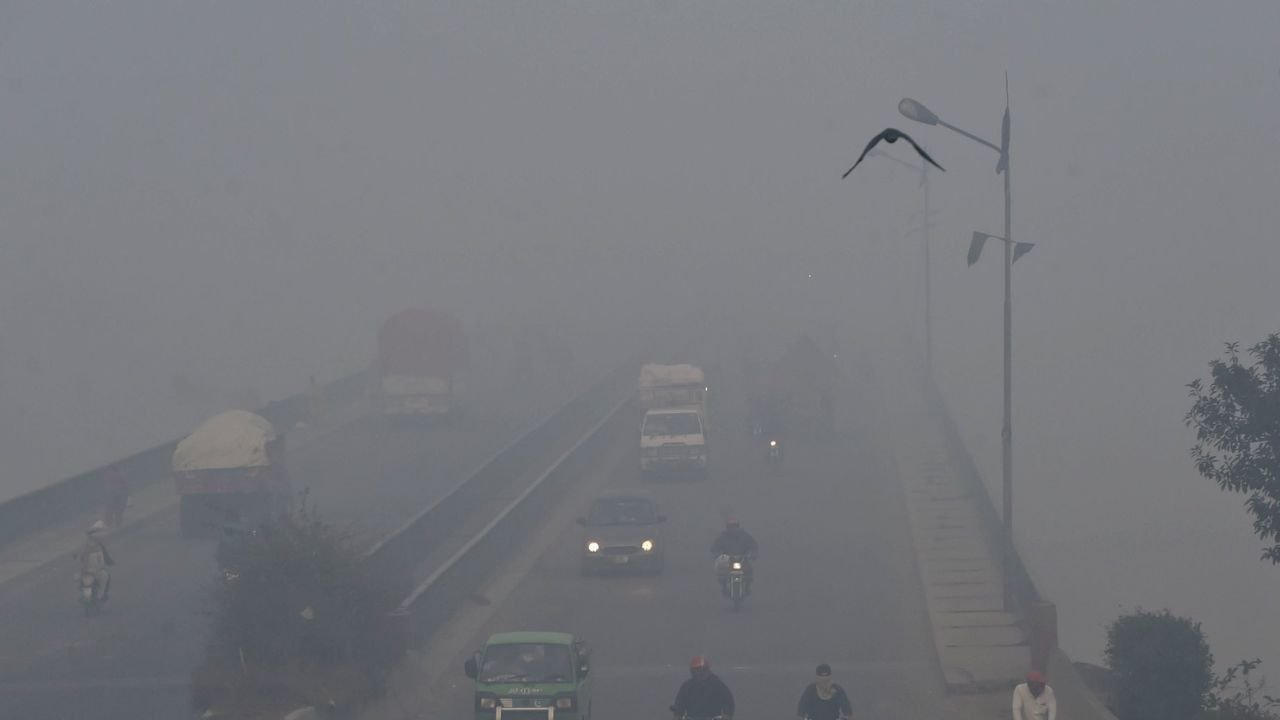
    The report revealed that Pakistan, alongside Bangladesh and India, remained among the top three countries with the highest levels of air pollution, particularly concerning particulate matter, in 2023.

    The concentrations of PM2.5, harmful airborne particles detrimental to respiratory health, surpassed recommended levels by a staggering margin, as indicated by the World Health Organization (WHO).

    In Bangladesh, the average concentration of PM2.5 reached 79.9 micrograms per cubic meter, while in Pakistan, it stood at 73.7 micrograms per cubic meter. These figures starkly contrast with the WHO’s guideline of no more than 5 micrograms per cubic meter.

    “Because of the climate conditions and the geography (in South Asia), you get this streak of PM2.5 concentrations that just skyrocket because the pollution has nowhere to go,” said Christi Chester Schroeder, air quality science manager at IQAir.

    “On top of that are factors such as agricultural practices, industry and population density,” she added. “Unfortunately, it really does look like it will get worse before it gets better.”

    In 2022, Bangladesh was ranked fifth for its air quality, with India in the eighth position. Approximately 20% of premature deaths in Bangladesh are attributed to air pollution, with related healthcare costs accounting for a substantial portion of the country’s GDP, according to Md Firoz Khan, an air pollution expert at Dhaka’s North South University.

    India also witnessed an escalation in pollution levels in 2023, with PM2.5 levels exceeding the WHO standard by about 11 times. Notably, New Delhi emerged as the worst-performing capital city, recording a PM2.5 level of 92.7 micrograms.

    China experienced a 6.3% increase in PM2.5 levels in 2023, marking a departure from five consecutive years of decline. Conversely, only a handful of countries, including Australia, Estonia, Finland, Grenada, Iceland, Mauritius, and New Zealand, met the WHO standards for air quality.

    The IQAir report, based on data from over 30,000 monitoring stations across 134 countries and regions, highlighted significant gaps in air quality monitoring, particularly in countries where the health impacts of pollution are most severe.

    Christa Hasenkopf, director of the Air Quality Life Index at the University of Chicago’s Energy Policy Institute, said 39pc of countries have no public air quality monitoring.

    “Considering the large potential benefits and relatively low cost, it’s stunning that we don’t have an organised global effort to deploy resources to close these data gaps, especially in places where the health burden of air pollution has been largest,” she said.

  • European Countries That Allow Assisted Dying

    European Countries That Allow Assisted Dying

    France could become the next European country to legalise assisted dying for the terminally ill under a proposal set out by President Emmanuel Macron.

    In an interview with two French newspapers he suggested that adults with full control of their judgement, suffering an incurable and life-threatening illness in the short-to-medium term and whose pain cannot be relieved should be able to “ask to be helped to die”.

    Several other European countries already allow the terminally ill to receive help to end their lives.

    Here is a round-up of the situation:

    In April 2002, the Netherlands became the first country in the world to legalise active euthanasia, whereby doctors administer lethal doses of drugs to patients suffering from an incurable condition.

    It also legalised assisted suicide, where patients can receive help to voluntarily take their own life.

    The Dutch law said the patient must have “unbearable suffering with no prospect of improvement” and must have requested to die in a way that is “voluntary, well considered and with full conviction”.

    In 2012, the Netherlands expanded the law to authorise euthanasia for over-12s in great suffering, provided they have parental consent, and in 2020 to patients with severe dementia, if the patient had requested the procedure while still mentally competent.

    The Dutch government in April 2023 also approved euthanasia for children under 12 after years of debate, permitting mercy deaths for young minors suffering “unbearably and without hope”.

    Belgium was the second country to adopt euthanasia and assisted suicide in May 2002, and with similar caveats to the Dutch.

    In 2014 it went further than the Netherlands by allowing terminally ill children of all ages to also request the procedure, with the consent of their parents.

    Fellow Benelux country Luxembourg decriminalised euthanasia and assisted dying in 2009, followed by Spain in June 2021, which legalised both practices.

    Portugal in May 2023 adopted a bill decriminalising euthanasia, despite strong opposition from President Marcelo Rebelo de Sousa, a devout churchgoer.

    The law legalised euthanasia for people in great suffering and with incurable diseases.

    Switzerland, which prohibits euthanasia, has for decades allowed assisted suicide, making it the go-to destination for patients from around Europe looking for assistance to end their suffering.

    The growth of so-called “suicide tourism” has caused much soul-searching in Switzerland but the authorities decided in 2011 against restricting the practice.

    Neighbouring Austria, a staunchly Catholic nation, also legalised assisted suicide in 2022 after its constitutional court ruled the country was violating citizens’ fundamental rights in making it illegal.

    Italy’s constitutional court by contrast in February 2022 rejected a bid to hold a referendum on decriminalising assisted dying, judging that such a vote would fail to protect the weakest.

    But the court ruled that it should not always be punishable to help someone with “intolerable” physical or psychological suffering to commit suicide.

    The issue is also the subject of renewed public interest in Britain. In 2015, MPs voted overwhelmingly against allowing assisted dying but over 150,000 people have signed a petition calling for a new debate and vote.

  • S. Korea starts procedures to suspend licences of 4,900 striking doctors

    S. Korea starts procedures to suspend licences of 4,900 striking doctors

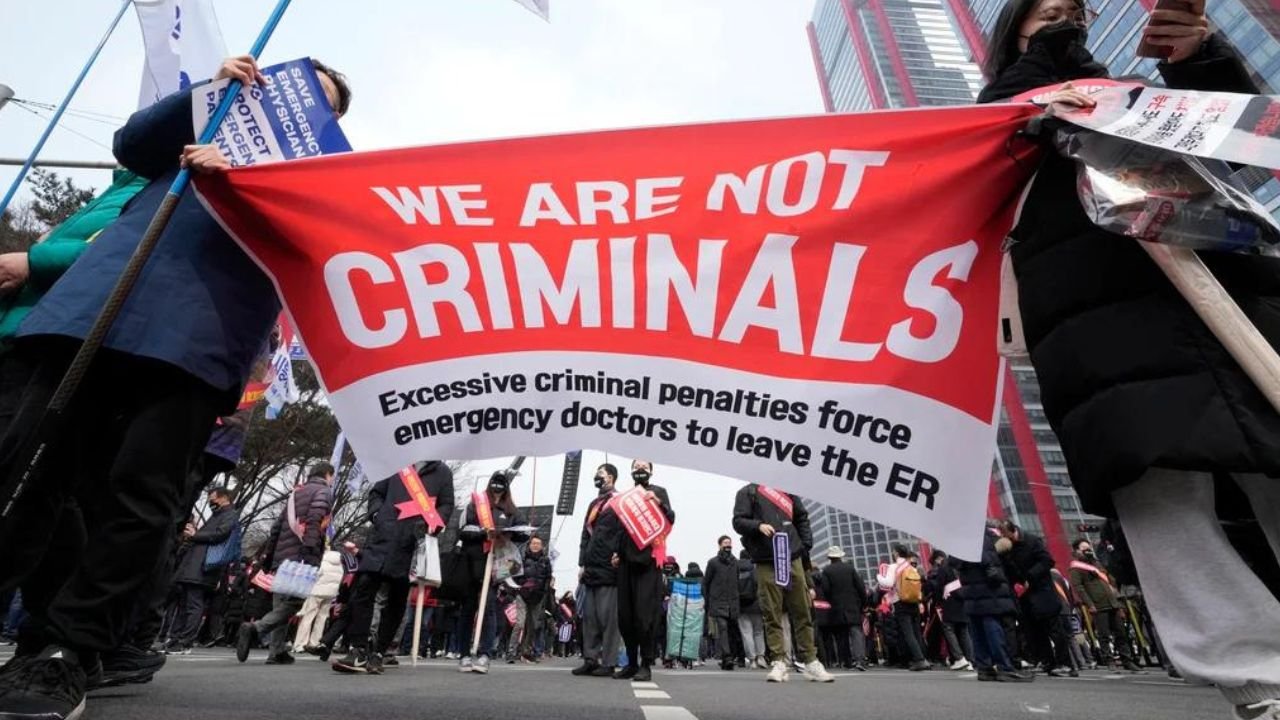
    South Korea said Monday it had started procedures to suspend the medical licenses of 4,900 junior doctors who have resigned and stopped working to protest government medical training reforms, causing health care chaos.

    The walkout, which started February 20, is over government plans to sharply increase the number of doctors, which it says is essential to combat shortages and South Korea’s rapidly aging population, while the medics argue it will erode service quality.

    Nearly 12,000 junior doctors — 93 percent of the trainee workforce — were not in their hospitals at the last count, despite government back to work orders and threats of legal action, forcing Seoul to mobilize military medics and millions of dollars in state reserves to help.

    The Health Ministry on Monday said it had sent administrative notifications — the first step to suspending the doctors’ medical licenses — to thousands of trainee doctors after they defied specific orders telling them to return to their hospitals.

    “As of March 8 (notifications) have been sent to more than 4,900 trainee doctors,” Chun Byung-wang, director of the health and medical policy division at the health ministry, told reporters.

    The government has previously warned striking doctors they face a three month suspension of their licenses, a punishment which, it says, will delay by at least a year their ability to qualify as specialists.

    Chun urged the striking medics to return to their patients.

    “The government will take into account the circumstance and protect trainee doctors if they return to work before the administrative measure is complete,” he said, indicating doctors who come back to work now could avoid the punishment.

    “The government will not give up dialogue. The door for dialogue is always open … The government will respect and listen to opinions of the medical community as a companion for the medical reforms,” he added.

    The government last week announced new measures to improve pay and conditions for trainee medics, plus a review of the continuous 36-hour work period, which is a major gripe of junior doctors.

    The strikes have led to surgery cancelations, long wait times and delayed treatments at major hospitals.

    Seoul has mobilized military doctors and earmarked millions of dollars of state reserves to ease service shortfalls, but has denied that there is a full-blown health care crisis.

    Military doctors will start working in civilian hospitals from Wednesday this week, Chun said.

    Under South Korean law, doctors are restricted from striking, and the health ministry has asked police to investigate people connected to the work stoppage.

    The government is pushing to admit 2,000 more students to medical schools annually from next year to address what it calls one of the lowest doctor-to-population ratios among developed nations.

    Doctors say they fear the reform will erode the quality of service and medical education, but proponents accuse medics of trying to safeguard their salaries and social status.

  • Man vaccinated for Covid 217 times reports no Side effects: scientists

    A German man who deliberately got vaccinated for Covid-19 a whopping 217 times did not report any side effects from his many jabs, according to researchers studying possibly the “most vaccinated person in history”.

    The immune system of the 62-year-old man from the central German city of Magdeburg — who has not been named — is still firing on all cylinders, the researchers said in The Lancet Infectious Diseases journal.

    They said the man voluntarily received so many shots against all medical advice, and warned against jumping to far-reaching conclusions from this single case.

    The man first came to the attention of the German-led researchers due to news reports in 2022, when he had only received 90 jabs.

    Media reports at the time said the man was suspected of getting so many doses to collect the completed vaccination cards, which could then be forged and sold to people who did not want to be vaccinated.

    A public prosecutor in Magdeburg opened an investigation into allegations of fraud over the case but no criminal charges were filed, according to the scientific paper published earlier this week.

    The prosecutor collected evidence of 130 vaccinations over nine months, it added.

    But the man claims to have received 217 vaccine doses of eight different Covid vaccines — including all mRNA versions — over 29 months.

    Kilian Schober, a virologist at Germany’s University of Erlangen-Nuremberg and study co-author, said in a statement that when they contacted the man, he was “very interested” in undergoing a range of tests to examine the effect of so many vaccinations.

    The case allowed the researchers an extremely rare chance to study what is known as “hyper-vaccination”.

    Some scientists have theorised that after being hit by so many vaccinations, a body’s immune cells would become less effective as they became accustomed to the antigens.

    But that was not the case for the German man, the researchers found.

    In fact, he had “considerably higher concentrations” of immune cells and antibodies for the Covid virus than a control group of three people who received the recommended three vaccinations, the study said.

    His body also showed no sign of fatigue from all those vaccinations — his 217th jab still boosted his number of antibodies against Covid, the researchers found.

    The man reported that he never had any vaccine-related side effects from any of the 217 jabs. He also never tested positive for Covid and showed no signs of past infection, the researchers said.

    But they warned against taking away any wider lessons from the man’s experience.

    “It should go without saying that we do not endorse hypervaccination,” Schober wrote on X, formerly Twitter.

    Caitjan Gainty, an expert in the history of vaccines at King’s College London not involved in the study, told AFP she had “never come across a historical discussion of someone who received more vaccinations than this”.

    It is “relatively unlikely” that anyone has ever had more vaccinations than the man, she added.

    Spyros Lytras, a virologist at the University of Tokyo, said it was a “comically large number of vaccinations”.

    “Whether this is the most vaccinated person in history, I cannot know, but they are certainly the most vaccinated person reported to date” by some margin, he told AFP.

    “And I doubt that we’re going to see another such report any time soon.”

  • Thailand To Offer Medical Coverage For Tourists

    Thailand To Offer Medical Coverage For Tourists

    Thailand has launched a scheme to offer visitors up to $14,000 in medical coverage in the event of an accident, the tourism minister said Thursday, as the kingdom seeks to lure travelers back after the pandemic.

    The government will cover expenses up to 500,000 baht ($14,000) and pay compensation of up to one million baht in case of death under the new scheme.

    Travel restrictions during the Covid-19 pandemic hammered the kingdom’s vital tourism sector and arrivals have not bounced back as quickly as officials hoped.

    Tourism minister Sudawan Wangsuphakijkosol told AFP the new Thailand Traveller Safety scheme began on January 1 and will run until August 31.

    “The campaign aims to assure foreign tourists that Thailand is safe and everyone will be under good care,” she said.

    The kingdom has long been popular with young backpackers from around the world seeking sun, sand and adrenalin.

    But accidents are not uncommon and there have been numerous reports in recent months of young Europeans finding themselves facing big medical bills with inadequate insurance.

    The Thai government stresses that the scheme will not cover accidents caused by “negligence, intent, illegal acts” or risky behaviour.

    Tourists can register for the scheme through the Thailand Traveller Safety website at tts.go.th.

    Some 28 million people visited Thailand in 2023, up from 11 million the year before, but still well down from the 40 million who came in 2019, the last year before the pandemic.

    Officials are hoping to hit 35 million visitors in 2024, with a target of $55 billion in revenue.

  • Women’s Health Gap Costs $1 Trillion Worldwide: Report

    Women’s Health Gap Costs $1 Trillion Worldwide: Report

    The huge gap between how women and men’s health are treated costs $1 trillion a year worldwide, the World Economic Forum said on Wednesday.

    Women spend a quarter more of their lives suffering from poor health than men, a disparity that includes an unequal focus on men across medical research, diagnosis and treatment, the report said.

    Closing this gap would boost the global economy by $1 trillion annually by 2040 — a 1.7 percent increase in per capita GDP driven by women, it added.

    The report was released as the WEF hosts its 54th annual conference in Davos, Switzerland.

    The Swiss firm Ferring Pharmaceuticals and McKinsey Health Institute also contributed to the 42-page report.

    Every US dollar invested in women’s health would return three dollars in projected economic growth, the report said.

    A large part of this growth would come from sick women getting back into the workforce.

    The gender health gap causes around 75 million years of life lost due to poor health annually, equating to a week per woman every year, the report said.

    For example, addressing the inequities related to endometriosis and menopause — which only affect women and have long been considered under-studied — could contribute $130 billion to global GDP by 2040, it estimated.

    Research also suggests that fewer than half the women living with endometriosis have been properly diagnosed, the report added.

    The study also looked at how treatment and diagnosis has benefitted men more than women.

    Asthma inhalers, for example, have been found to be significantly less effective for women than men.

    Women are diagnosed later than men for 700 different diseases, previous research has shown. It also takes women two and a half years longer to be diagnosed with cancer.

    WEF healthcare head Shyam Bishen said the analysis demonstrates that “investing in women’s health must be a priority for every country”.

    “Beyond improving women’s quality of life, ensuring women have access to innovations in healthcare is one of the best investments that countries can make for their societies and their economies,” he said in a statement.

    The WEF announced it was launching the Global Alliance for Women’s Health, with $55 million pledged for women’s health.

  • ‘I was dead’; Shreyas Talpade on harrowing health scare

    ‘I was dead’; Shreyas Talpade on harrowing health scare

    Indian actor Shreyas Talpade has opened up about the harrowing health scare he recently went through.

    The actor had a heart attack after which he was shifted to the hospital where he had an angioplasty. He says that for a short time, he was clinically dead, but he has recovered now.

    “I was short of breath and pain started in my left hand. I hurriedly walked to the vanity van and changed my clothes,” he said, adding that initially, he thought he had strained a muscle during an action scene.
    “I have never faced such a dangerous situation, however as I was sitting I thought that I should go to the hospital immediately, but then I thought that I should go home first.”

    When his wife Deepti saw him in this condition, they left for the hospital within 10 minutes.

    The actor said that he collapsed as soon as he reached the hospital gate, suffering a heart attack.

    “I was clinically dead for a few minutes,” Shreyas Talpade said.
    Clinical death means the cessation of blood flow and respiration when the heart stops beating normally.

    Shreyas said, “I have never entered the hospital, I have never seen this situation.”
    He advised fans not to take their health for granted.

    “Jaan hai toh jahan hai. Such an experience changes your outlook on life,” he firmly stated.