Tag: healthcare

  • Lahore-based startup invents affordable, country’s first bloodless dialysis machine

    Lahore-based startup invents affordable, country’s first bloodless dialysis machine

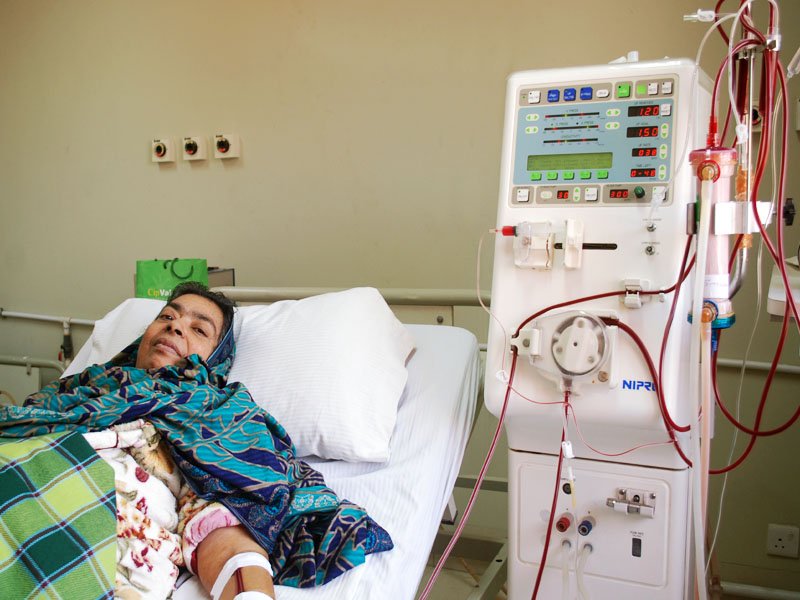
    An American startup based in Lahore has successfully invented Pakistan’s first dialysis machine that would allow kidney patients to receive affordable dialysis treatment at their homes.

    The company has named the machines and it is called “Robo-Kidney,” which will go into mass production after receiving from the healthcare regulators.

    The company has consulted Pakistan’s leading Nephrologists and healthcare professional before making the machine.

    It will not only let the patients get treated at home but will also minimise the risk of contracting hepatitis-C during the traditional dialysis procedure.

    According to the official statement by Byonyks, about 72% of kidney patients in Pakistan get infected with Hepatitis-C that spreads during the conventional dialysis treatment.

    “Robo-Kidney is an affordable and bloodless machine that will allow kidney patients to receive dialysis treatment at their homes”

    The founder of Byonyks, Farrukh Usman

    He added that Robo-Kidney will also ease the burden on national healthcare resources. It will also contribute to Pakistan’s economy through export to international markets.

  • Employment opportunities for Pakistani doctors, nurses and paramedics in Kuwait under new agreement

    Kuwait has signed a government-to-government bilateral framework agreement with Pakistan to hire its healthcare professionals on a regular basis, Special Assistant to the Prime Minister (SAPM) on Overseas Pakistanis and Human Resource Development (OP&HRD) Sayed Zulfikar Abbas Bukhari has said.

    “We [have] signed an agreement with the government of Kuwait to send an increased number of Pakistani doctors, nurses and paramedics to work there,” Bukhari tweeted.

    He also expressed gratitude to the government of Kuwait for recruiting Pakistani medical professionals on a priority basis. “I thank our Kuwaiti brothers for preferring Pakistani healthcare professionals. This is a big step towards bringing our two great countries further closer,” the SAPM said.

    He also shared the news release of Pakistan’s Embassy in Kuwait, which confirmed the development.

    According to the release, the agreement was signed by Kuwaiti Undersecretary Ministry of Health Dr Mustafa Ridha and Pakistani Ambassador Syed Sajjad Haider on behalf of Overseas Employment Corporation (OEC) at the Ministry of Health of Kuwait.

    The cooperation agreement would institutionalise the recruitment of healthcare professionals from Pakistan for Kuwait on a regular basis as per the requirements of Kuwait’s Ministry of Health.

    Meanwhile, Kuwait’s International Health Relations Department Director Dr Rehab Al Watyan was quoted by Kuwait’s state news agency as saying that the agreement would enhance cooperation between the medical community of Pakistan and Kuwait and “would provide an opportunity to benefit from their experiences in dealing with disasters and epidemics, and to address the COVID-19 epidemic”.

  • France accuses Apple of not helping it with COVID-19 app

    France accuses Apple of not helping it with COVID-19 app

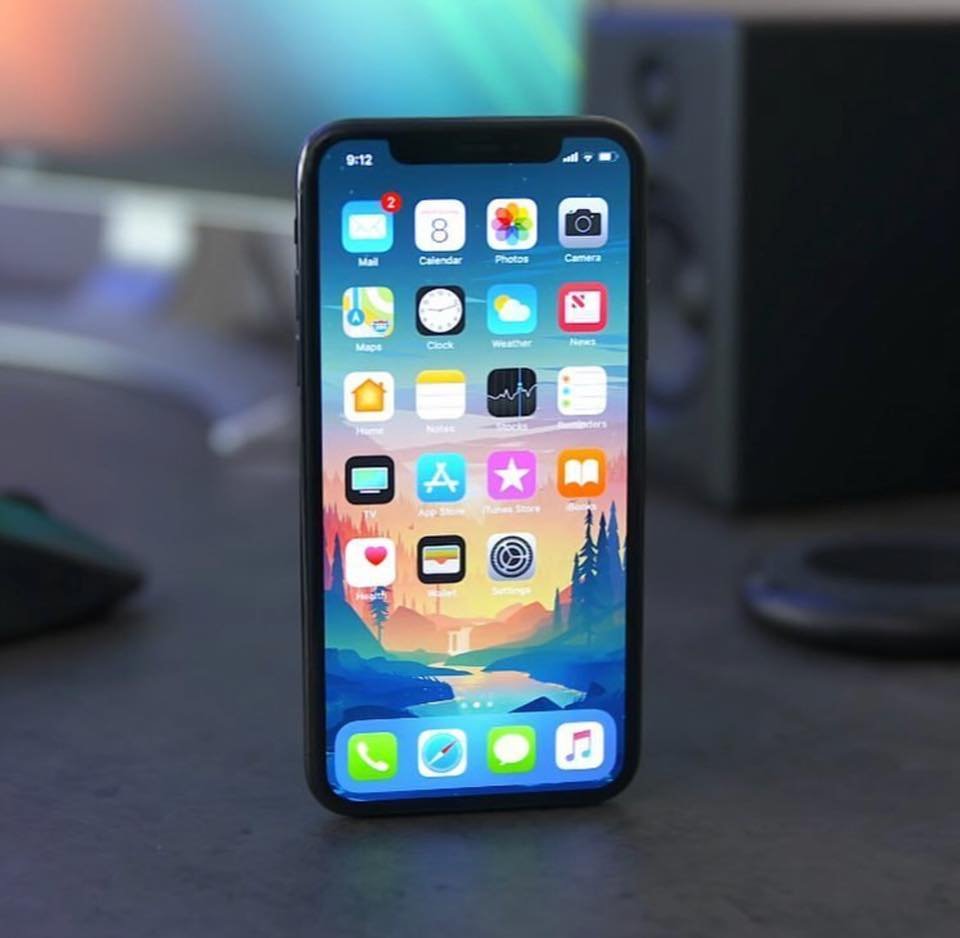
    Tech giant Apple Inc. allegedly refused to help France in its efforts to fight the new coronavirus — COVID-19 — by refusing to make iPhones compatible with a contact-tracing app called “StopCovid”.

    Countries are increasingly developing smartphone apps and taking technical measures to keep the global pandemic in check while reopening the hard-hit economy.

    These dedicated apps use Bluetooth to allow phones to interact with nearby devices and detect when users, who are potential carriers of the deadly virus, come into contact.

    Usually, Apple’s iPhone blocks access to Bluetooth in background running apps, unless the users allow it themselves.

    According to reports, French officials want Apple to change the settings to let their app access Bluetooth in the background, however, the company refused to make the said modifications.

    “Apple could have helped us make the application work even better on the iPhone. They have not wished to do so. I regret this, given that we are in a period where everyone is mobilised to fight against the epidemic, and given that a large company that is doing so well economically is not helping out the government in crisis,” said French minister for digital technology in an official statement.

    A spokesperson for Apple in France, on the other hand, declined to comment on the matter.

    Certain speculations are, however, being made.

    Companies like Apple and Google — who are responsible for managing the data of almost all smartphones — want the data of phones to stay in the device, rather placing it in central databases that are managed by governments around the world.

    However, France and other countries want to keep contact data in the central database, which can trigger security breaches and pose threats to users.

    The French minister thinks that “oversight of the healthcare system, fighting the coronavirus, is a matter for governments and not necessarily for big American companies.”

    “The app should be ready to be deployed by June 2 regardless of Apple’s stance, and would enter a testing phase by May 11, when the country starts to unwind its lockdown,” he reportedly said.

    It merits a mention that In France, Apple’s mobile operating system accounted for 21.1 per cent of the market in the first quarter, while Google’s Android accounted for 78.8%. Britain, which is using the same centralised approach as France to store data, will start testing its COVID-19 tracing app on the Isle of Wight from Tuesday (today).

  • Mahira Khan, Mansha Pasha applaud healthcare workers fighting on the frontlines

    While most of us remain isolated in our homes, healthcare workers and doctors across the world are putting their lives at risk and are fighting on the frontlines against the pandemic. Mahira Khan and Mansha Pasha recently paid homage to those by sharing personal stories.

    Mahira shared that her baby cousin, Mehek is “fighting every day to save lives.”

    “Meko, I’m saluting you, thanking you and hugging you. I love you,” wrote the actor, adding, “Also a big big thank you to all the healthcare workers in Pakistan and around the world for standing on the frontlines of this pandemic.”

    https://www.instagram.com/p/B_P6BZsB_xc/?utm_source=ig_embed

    Meanwhile, Mansha said that she will share stories of frontline heroes.

    Here are some of the stories she shared:

    Earlier, Mansha had also revealed that her sister was a doctor in the United Kingdom and in a live session with The Current shared how tough it can for the workers as well as their families who are worried about their safety and health. She also said that the UK also lacks proper protective gear. But despite all the odds, her sister and other healthcare workers continue to fight against the virus which has killed thousands across the world.

    https://www.instagram.com/p/B-m_Vt1lEic/
  • Strange how nuclear-capable Pakistan can’t make its own ventilators: PM Imran

    As the entire world wages war on the new coronavirus — COVID-19 — pandemic while struggling to meet medical equipment needs, Prime Minister (PM) Imran Khan has said that it was strange how nuclear-capable Pakistan could not make its own ventilators and test kits and had to import them.

    In a private channel’s telethon to raise funds for Prime Minister’s COVID-19 Relief Fund, the premier urged the nation to adopt as much precautions as possible to help the authorities contain the virus that is continuing to spread rapidly.

    He said besides using its own resources, the government was raising funds because the impact of COVID-19 could further worsen and only those practicing social distancing would be safe.

    “If we do not take necessary measures on both government and individual levels, the pandemic would continue to spread. In such a case, the healthcare system could collapse as hospitals won’t be able to take all the pressure,” PM Imran said, adding that there were not enough ventilators to cater to the masses in the worst-case scenario.

    He pointed out that the situation in Pakistan was entirely different from the one in Europe or the United States (US), and noted that once the virus spread, even the most advanced cities in the world, including New York, could not do much.

    The premier, however, expressed confidence that Pakistan would emerge victorious in the fight against coronavirus through coordinating efforts of all stakeholders concerned, including the people.

    He said in spite of limited resources, Pakistan announced a historic package to provide relief to the corona-hit population, covering various segments and sectors of life. PM Imran also reiterated his government’s commitment to providing every possible facility to doctors, nurses and the paramedical staff fighting the global pandemic on the frontline.

  • ‘They made it harder to breathe’: Coronavirus patient from Lahore shares horrifying experience

    ‘They made it harder to breathe’: Coronavirus patient from Lahore shares horrifying experience

    With the country struggling to contain the outbreak of the new coronavirus, horrifying experiences of both suspected and confirmed patients of the COVID-19 have started pouring in as people narrate their ordeals amid the global health crisis.

    In this regard, I reached out to a “recovered” coronavirus patient, who remained admitted to Lahore’s Mayo Hospital for three long weeks.

    Not only did I ask them what it was like to stay away from their family at such a critical time, fearing never getting to see them again, but also about their experience at a rather infamous government facility.

    “Nothing you have heard is untrue. The deplorable condition of the hospital, the initial inattention of the government and slackness of the hospital staff… all these things made headlines because they were true,” said the patient, who asked not to be named.

    They said they had travelled from Abbottabad to Islamabad in the last week of February and later to Lahore following a two-week stay in the federal capital. “I fell sick two days after arriving in Lahore, my hometown. At first, I ignored the symptoms… a mild fever, after all, is quite common when you’ve been travelling back and forth.”

    “But then I started developing other symptoms. I couldn’t stop coughing and [my] fever just didn’t go away,” the patient said, adding that they had already isolated themself as a precautionary measure after returning from Islamabad where the virus was rumoured to be spreading.

    They said they got themself tested from a government facility but the results turned out to be negative and a second test from a different facility proved that they actually had contracted the virus.

    “One suspected patient, two different facilities, two different tests, two different results in two days. Doesn’t make sense, does it?”

    It merits a mention here that the patient hasn’t been the only one to receive two different test results from two different facilities in Lahore. Last month, the wife of a political bigwig had reportedly tested positive at a private facility and later negative at a government facility. Fashion designer Maria B’s cook had also tested negative for coronavirus on March 26, a few days after testing positive at a private laboratory and being admitted to a Lahore hospital.

    According to reports, the federal government is also sceptical of Punjab’s coronavirus testing data. “So far, 13,380 people have been tested for [COVID-19] in Punjab,” Chief Minister (CM) Usman Buzdar tweeted on March 28.

    While according to statistics of the provincial government, the figure jumped to 14,890 on March 30 in Punjab, it doesn’t tally with the data maintained by the National Institute of Health (NIH) that coordinates with all provinces to update it on a daily basis. According to NIH data, only 13,321 tests had been conducted in Punjab till March 28.

    “Mayo [Hospital] was not an option for me, owing to the poor condition it is known to be in for the past several decades. But I had to go there because a doctor in the family advised me to seek treatment at Mayo,” the patient said.

    They added that they had no other option but to listen to their “doctor-friend” since the government had been keeping people in the dark. “I had no idea where else to go or what else to do.”

    The patient then started narrating their experiences from the hospital and shared what their family had to go through due to the Punjab government’s policy of “criminalising patients”.

    “Not only was I admitted after a group of men in hazmat suits picked me up from my residence, but my house was also guarded by police as other family members were home-quarantined.”

    Although Punjab government officials say that such policing is required to arrest the pandemic, many believe such dealings have led to creating panic among citizens.

    “At the hospital, nobody came to check my temperature within the first 24 hours. Hygienic conditions were pathetic at the hospital, there were bloodstains on the floor and walls, clean drinking water was not available and the bedsheets we were being forced to lie on were pitiful.”

    They said given how disgusting the washroom was, going there was like a punishment and it felt like they would get sicker if they stayed at that hospital any more.

    “While things did start getting better with the number of cases in Punjab increasing and media bringing patients’ ordeal to the notice of authorities concerned, there still was a long way to go. Those around me at the hospital and no escape from my dreadful reality made it harder to breathe with infected lungs,” they said.

    “Every passing second added to my anticipation to recover and get back home, or just lose my battle against coronavirus instead of being forced to live in that depressing environment.”

    Internet, they added, “is always a sweet relief”, but the ages-old structure of the hospital with limited access made it nearly impossible to get any signals.

    “I thought things would get better for me and nothing could be as hard as the first week, but it only got worse when people I had seen being brought in, started to get very sick. One of them, a really old patient, even passed due to the staffers’ [alleged] negligence.”

    The patient in question was a 73-year-old, who was seen tied helplessly to his bed in a video on social media. In the hospital’s isolation ward, the patient could be heard asking for medical staff to tend to him, but his hands and feet were tied to the bed.

    The patient was allegedly not given medication, oxygen or adequate attention by the staff, following which he reportedly passed away. Subsequently, Punjab CM Buzdar ordered an investigation into his death.

    “But you cannot put the blame entirely on doctors and other staff members. They too are humans who are being forced to work under extremely poor conditions. Until my second-last day at the hospital, which was last Friday, I had not seen all staffers in the coronavirus ward with proper protective equipment.”

    To a question, the patient said they were extremely grateful to the doctors performing their duties on the frontline in the war on the pandemic, “and to Allah for finally making the provincial government authorities take the matter seriously”.

    “I don’t know how I survived both the infection and my stay at Mayo Hospital. But what matters is that I did,” the patient said while also urging people to stay at home “if not for themselves, for their loved ones who might not be able to survive such an ordeal”.

    At least 2,079 people had contracted the illness by the time this report was filed on Wednesday. The number of infections in Punjab stood at 748 with Sindh trailing behind at 676 cases, 253 infections in Khyber Pakhtunkhwa (KP), 184 in Gilgit-Baltistan (GB), 158 in Balochistan, 54 in Islamabad and six in Azad Jammu & Kashmir (AJK).

    The number of fatalities stood at 27 while 82 recoveries had been reported.