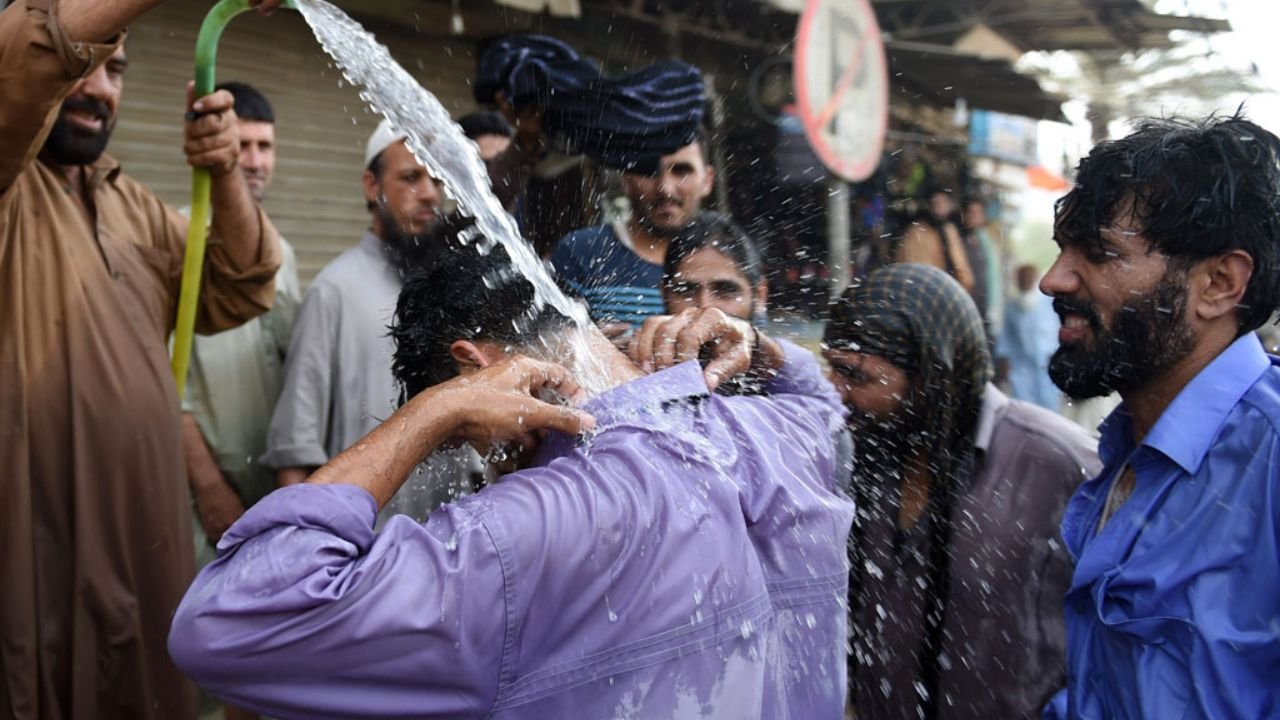
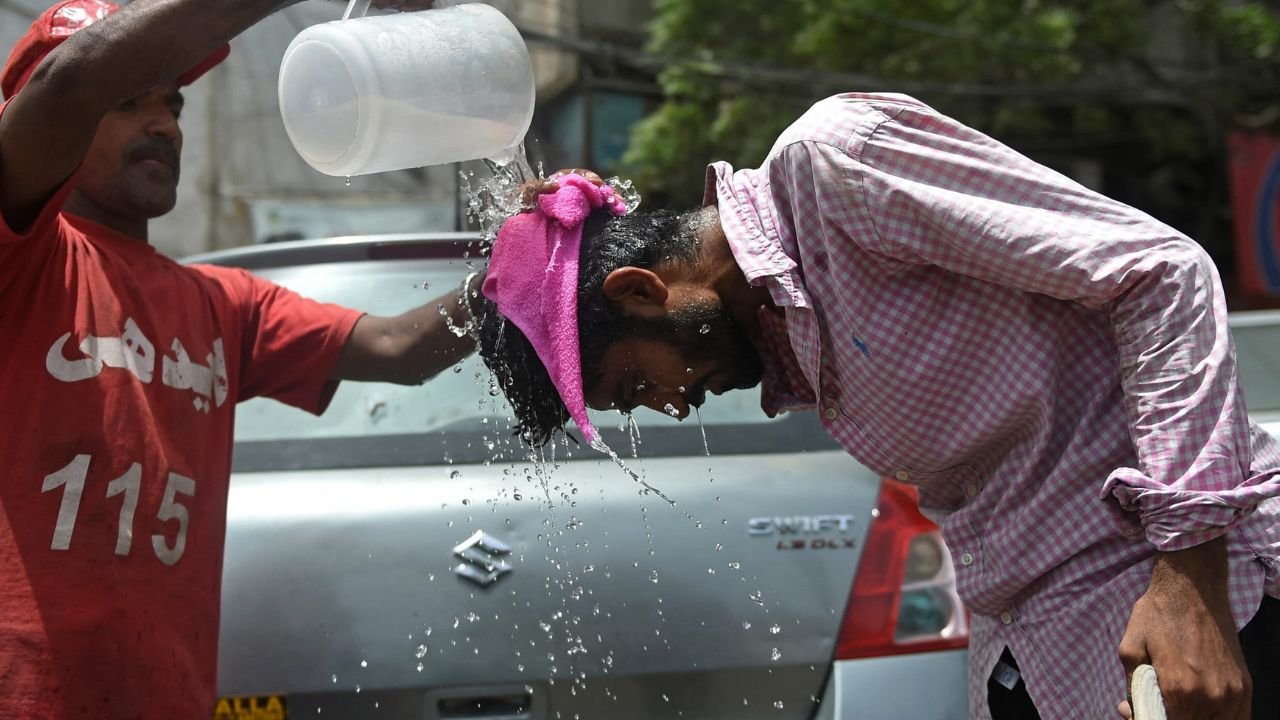
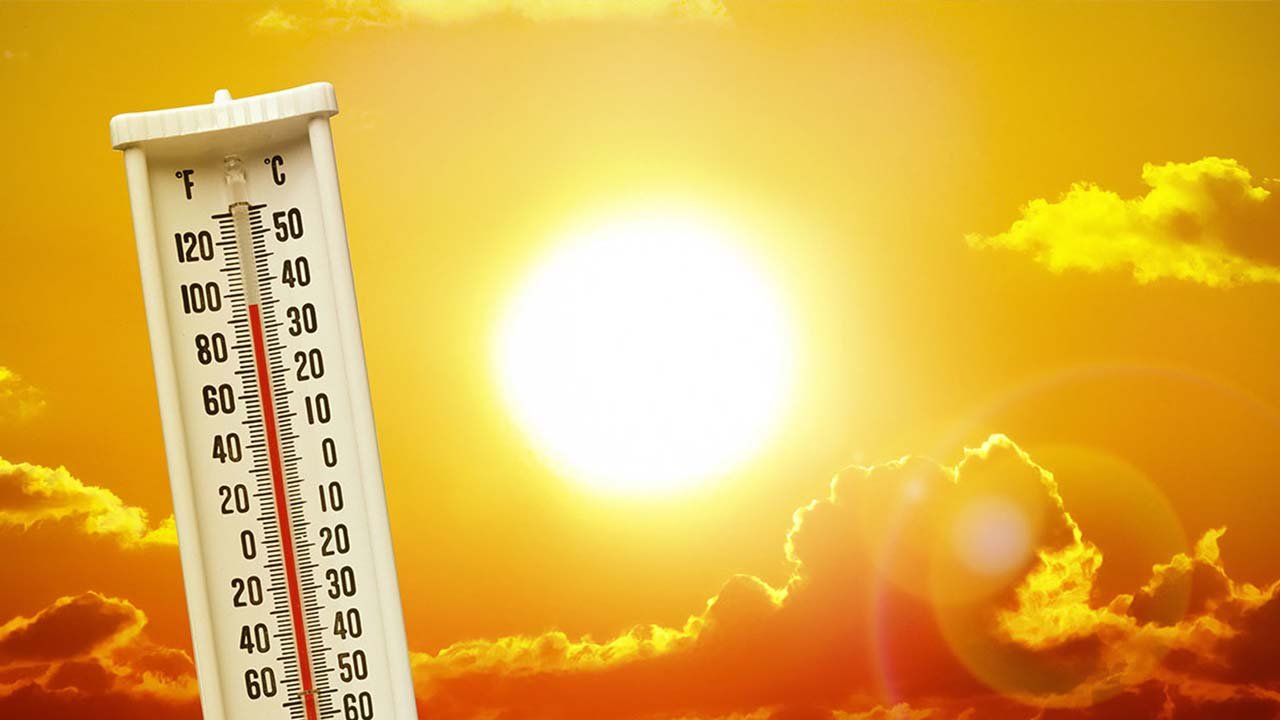
The Meteorological Department has warned that with a heatwave taking over, temperatures are likely to increase across Pakistan.
The weather will be hot and dry in most parts of the country this week, while it will be even hotter in the southern regions.
The heat intensity has not yet peaked due to rains in April and May in Islamabad, but the coming days are going to be very hot.
Geo reports that the Director General of the Department of Meteorology Mehr Sahibzad Khan stated that more-than-normal rains will be recorded in Pakistan this year, which is likely to affect Sindh and Balochistan the most.
Meteorologists have also advised citizens to cover their heads and drink plenty of water to avoid heat waves.
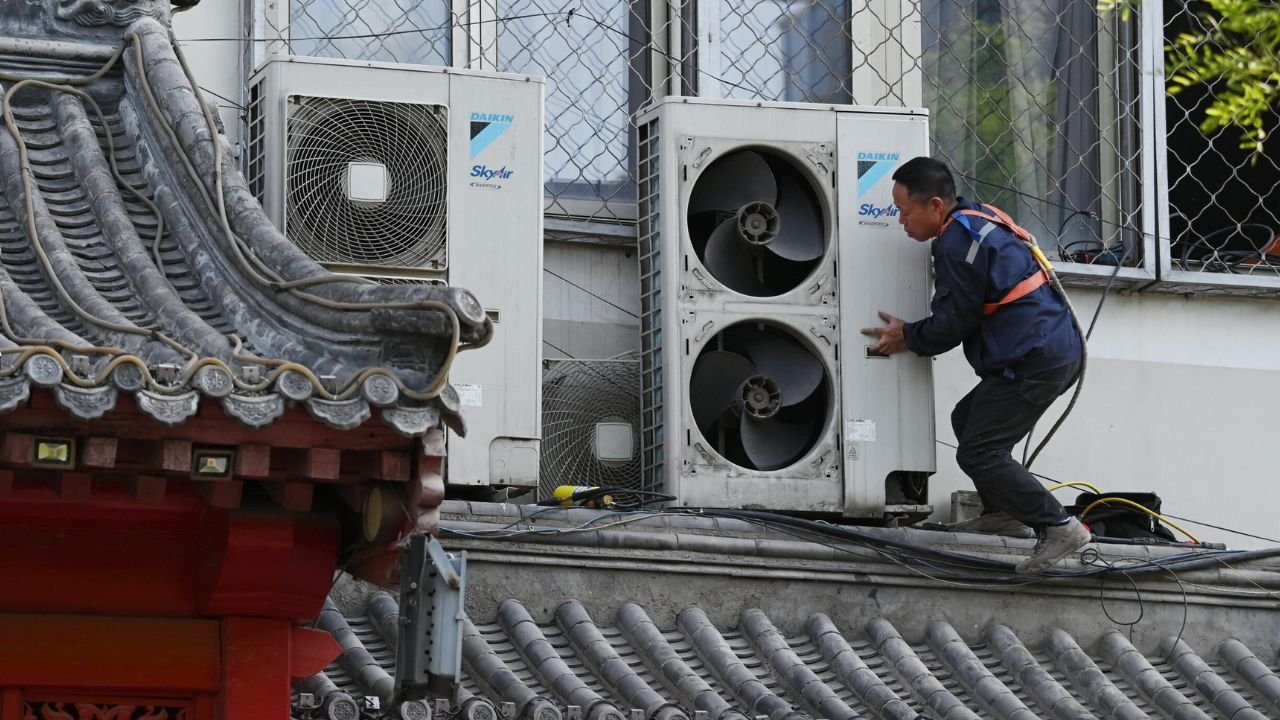
Hong Kong (AFP) – A record-breaking heatwave is broiling parts of Asia, helping drive surging demand for cooling options, including air-conditioning.
AC exhaust units are a common feature of urban landscapes in many parts of Asia, clinging like limpets to towering apartment blocks in Hong Kong or tucked in a cross formation between the windows of a building in Cambodia.
They offer relief from temperatures that have toppled records in recent weeks, with many countries in the region hitting 40 degrees Celsius (104 Fahrenheit) or higher.
Scientists have long warned that human-induced climate change will produce more frequent, longer and more intense heatwaves.
Only 15 percent of homes in Southeast Asia have air-conditioning, according to a 2019 report by the International Energy Agency (IEA).
But that figure obscures vast variations: ranging from around 80 percent installation in Singapore and Malaysia, to less than 10 percent in Indonesia and Vietnam, the IEA said.
Forecasts suggest that higher temperatures and better wages could see the number of air-conditioning units in Southeast Asia jump from 40 million in 2017 to 300 million by 2040.
That would stretch local electricity capacity, which is already struggling under current conditions.
Myanmar is producing only about half the electricity it needs each day, with the junta blaming weak hydropower because of scant rains, low natural gas yields and attacks by its opponents on infrastructure.
Thailand has seen record power demand in recent weeks, as people retreat indoors to cooled homes or businesses.
Air-conditioning is already responsible for the emission of approximately one billion metric tons of carbon dioxide per year, according to the IEA, out of a total of 37 billion emitted worldwide.
Still, cooling options like air-conditioning are a key way to protect human health, especially for those who are most vulnerable to the effects of extreme heat: children, the elderly and those with certain disabilities.
With demand surging, dozens of countries last year signed up to the United Nations’ Global Cooling Pledge, a commitment to improve the efficiency of air conditioners and reduce emissions from all forms of cooling.
Some countries have been trying to reduce the impact of cooling for years.
Since 2005, Japan has encouraged office workers to ditch ties and jackets so air conditioners can be kept at 28 degrees Celsius.
The annual “Cool Biz” programme took on new significance during power shortages in 2011 following the shutdown of nuclear plants after the Fukushima disaster.
The Meteorological Department has predicted that Punjab is likely to be hit by a heatwave from May 12 onwards, with temperatures expected to surge past 40 degrees.
Dr Zulfiqar told Geo News that like Sindh, a heatwave is expected in Punjab from the second week of the ongoing month.
The expert advised people to avoid stepping outdoors unnecessarily and stay indoors to avoid heatstroke.
El-Nino effect
Pakistan Meteorological Department (PMD) in its monthly outlook for May stated that the neutral phase of the El Niño Southern Oscillation (ENSO) is expected to persist during the forecast of this month.
Considering the climatic outlook, the PMD added, overall a tendency for near-normal rainfall is expected in most parts of the country, however, Khyber Pakhtunkhwa, northern Balochistan, northern Punjab, and Azad Kashmir may get slightly above normal rainfall.
Daytime maximum temperatures are expected to remain slightly above normal over northern and southern parts of the country, however, the central parts comprising most parts of Punjab and southern Khyber Pakhtunkhwa may experience normal to slightly below normal maximum temperature.
Above-normal precipitation in May is expected to benefit agriculture in Pakistan but precautions should be taken to prevent damage to standing wheat crops during the harvesting stage from hailstorms and windstorms in Upper Khyber Pakhtunkhwa, Photohar region and Gilgit-Baltistan.
Anticipated higher temperatures in high-altitude regions are expected to accelerate snowmelt in the northern areas, offering opportunities for irrigation and power generation, it concluded.
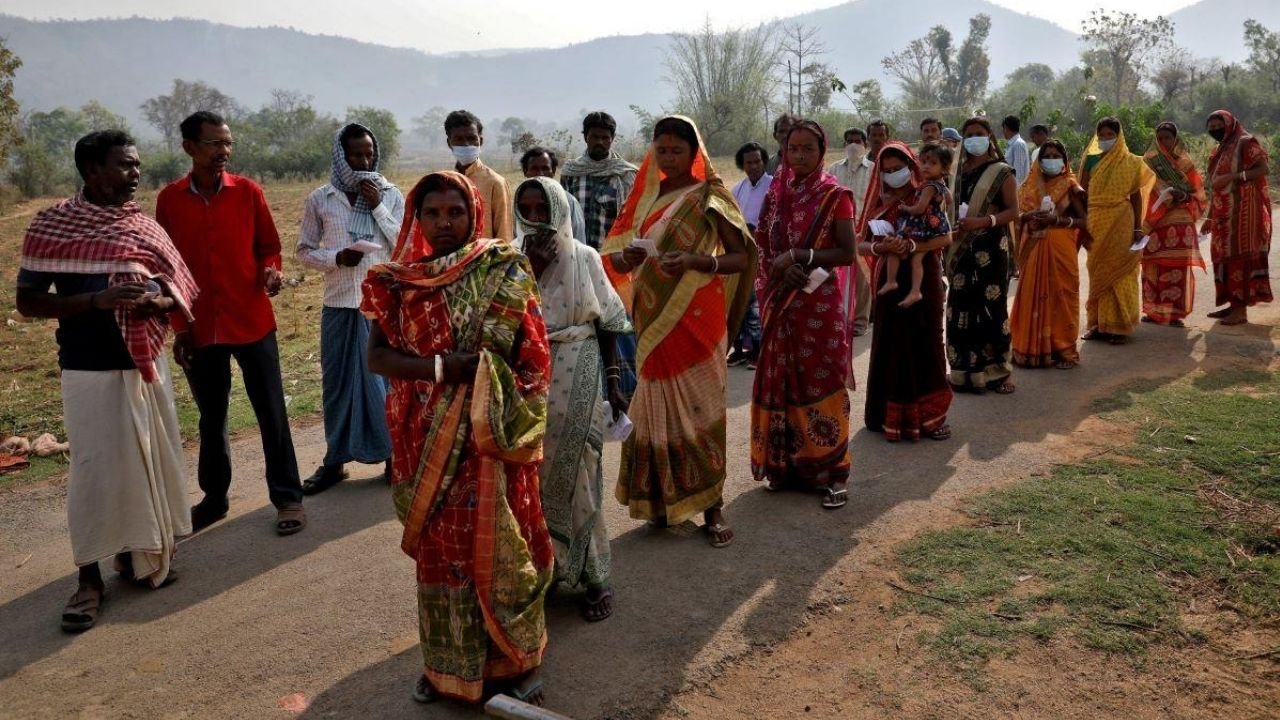
India’s six-week election juggernaut resumed Friday with millions of people lining up outside polling stations in parts of the country hit by a scorching heatwave.
Prime Minister Narendra Modi is widely expected to win a third term in the election, which concludes in early June.
But turnout in the first round of voting last week dropped nearly four points to 66 percent from the last election in 2019, with speculation in Indian media outlets that higher-than-average temperatures were to blame.
Modi took to social media shortly before polls re-opened to urge those voting to turn out in “record numbers” despite the heat.
“A high voter turnout strengthens our democracy,” he wrote on social media platform X. “Your vote is your voice!”
The second round of the poll — conducted in phases to ease the immense logistical burden of staging an election in the world’s most populous country — includes districts that have this week seen temperatures above 40 degrees Celsius (104 degrees Fahrenheit).
AFP – MOHAMMED
India’s weather bureau said Thursday that severe heatwave conditions would continue in several states through the weekend.
That includes parts of the eastern state of Bihar, where five districts are voting Friday and where temperatures more than 5.1 degrees Celsius above the seasonal average were recorded this week.
Karnataka state in the south and parts of Uttar Pradesh, India’s most populous state and heartland of the Hindu faith, are also scheduled to vote while facing heatwave conditions.
Earlier this week, India’s election commission said it had formed a task force to review the impact of heatwaves and humidity before each round of voting.
The Hindu newspaper suggested the decision could have been taken out of concerns that the intense heat “might have resulted in a dip in voter turnout”.
In a Monday statement, the commission said it had “no major concern” about the impact of hot temperatures on Friday’s vote.
AFP – SHARMA
But it added that it had been closely monitoring weather reports and would ensure “the comfort and well-being of voters along with polling personnel”.
A wave of exceptionally hot weather has blasted South and Southeast Asia, prompting thousands of schools across the Philippines and Bangladesh to suspend in-person classes.
The heat disrupted campaigning in India on Wednesday when roads minister Nitin Gadkari fainted at a rally for Modi in Maharashtra state.
Footage of the speech showed Gadkari falling unconscious and being carried off the stage by handlers. He later blamed the incident on discomfort “due to the heat”.
Years of scientific research have found climate change is causing heatwaves to become longer, more frequent and more intense.
AFP – SHARMA
Friday will also see voting in the constituency of India’s most prominent opposition leader — Rahul Gandhi of the once-dominate Congress party.
The 53-year-old is fighting to retain his seat in the southern state of Kerala, a stronghold for opponents of Modi’s Hindu-nationalist Bharatiya Janata Party (BJP).
“It is the duty of every citizen to become a soldier of the constitution, step out of their homes today and vote to protect democracy,” he wrote on X.
Gandhi is the son, grandson and great-grandson of former prime ministers, but his Congress party has suffered two landslide defeats against Modi in the last two general elections.
Gandhi has been hamstrung by several criminal cases lodged against him by BJP members, including a conviction for criminal libel that saw him briefly disqualified from parliament last year.
The opposition alliance has accused Modi’s government of using law enforcement agencies to selectively target its leaders and undermine its campaign.
More than 968 million people are eligible to take part in India’s election, with the final round of voting on June 1 and results expected three days later.
Massive heatwaves across East Asia and the Pacific could place millions of children at risk, the UN warned Thursday, calling for action to protect vulnerable people from the soaring temperatures.
Global monitors have warned that 2024 is shaping up to be the hottest year on record, marked by climate extremes and rising greenhouse gas emissions.
The UNICEF data showed over 243 million children across the Pacific and East Asia were estimated to be affected by heatwaves, putting them at risk of heat-related illnesses and death.
Several countries in the region are currently smouldering in the summer heat, with temperatures nearing record levels as they regularly hit over 40 degrees Celsius (104 degrees Fahrenheit).
Local forecasters are predicting steeper rises in the coming weeks.
Some Philippine schools suspended in-person classes in April, with the state weather forecaster saying temperatures could reach a “danger” level of 42 or 43 degrees Celsius in parts of the country.
In Thailand, a temperature of 43.5 degrees Celsius was recorded in the northern province of Mae Hong Son earlier this week — just a few degrees shy of the record 44.6 degrees Celsius.
Around 40 people die from heat-related illnesses annually, according to the Thai Ministry of Health.
And in February, neighbouring Vietnam endured a monster heatwave in its southern “rice bowl” when temperatures reached up to 38 degrees Celsius — an “abnormal” high for the period.
According to the UNICEF report, children are more at risk than adults as they are less able to regulate their body temperature.
“Children are more vulnerable than adults to the effects of climate change, and excess heat is a potentially lethal threat to them,” said Debora Comini, Director of UNICEF Regional Office for East Asia and the Pacific.
The report said heatwaves and high humidity levels — commonly experienced in the region — can have a deadly effect as the heat will “hinder the body’s natural cooling mechanisms.”
“We must be on high alert this summer to protect children and vulnerable communities from worsening heatwaves and other climate shocks,” Comini said.
The UN projected that over two billion children are expected to be exposed to heatwaves by 2050.
As temperatures surge to unprecedented levels year after year, July 2023 is on track to become the hottest month ever recorded on Earth, surpassing previous records by a significant margin, CNN has reported.
Scientific reports from both the European Union’s Copernicus Climate Change Service and the World Meteorological Organization have confirmed that this month’s scorching heat is virtually certain to break global climate records.
Till the first 23 days of July, the average air temperature across the entire world reached a staggering 16.95 degrees Celsius (62.51 Fahrenheit), well above the previous record of 16.63 degrees Celsius (61.93 Fahrenheit) set in July 2019.
Scientists warn that these extreme temperatures are the hottest witnessed in human history, with estimates suggesting they are the warmest the planet has experienced in over 120,000 years
According to a study published by JAMA Psychiatry on Wednesday, the rising temperatures in South Asia caused by climate change has led to a rise in domestic violence inflicted upon women and girls.
Researchers completed the study by gathering data of physical, emotional and sexual abuse from 194,871 girls and women between the ages of 15 to 49 from countries like India, Pakistan and Nepal between the years 2010 and 2018.
Their results have shown that with every one degree rise in temperature, there was an eight per cent hike in physical violence, a 7.3 per cent rise in sexual violence, and a 4.9% increase in domestic violence.
The study has warned that domestic violence is likely to rise by 21 per cent by the end of the century because of the “unlimited emissions scenario”, with India likely to see a 23.5 per cent increase, 14.8 per cent in Nepal and 5.9 per cent in Pakistan.
A report by Amnesty International has called for global leaders to take action against rising heatwaves in Pakistan, stating that the country was on the “frontlines of the climate crisis” despite producing less than one per cent of planet-warming gases.
“Despite their small contribution to climate change, its people face disproportionately severe consequences which are often life threatening. Tackling a climate crisis of this scale requires global attention and action. Wealthier countries must make no mistake about the important role they play,” said Dinushika Dissanayake, Amnesty’s deputy regional director in South Asia.
The report revealed that after speaking to 45 people in the summers of 2021 and 2022 from Lahore and Jacobabad, where temperatures had reached 52C, the human rights organisation revealed that people complained about heatstroke, shortness of breathe and dizziness, with some needing hospital care.
People who were interviewed for the study belonged to professions at a higher risk of exposure to heat, such as working in agriculture, brick kilns, factories or delivery men.
The organisation also shared that 40 million Pakistanis suffer from constant power outrages, while others receive erratic power supplies due to lengthy outrages.
“People living in poverty do not have access to, or are unable to afford, electricity for fans or air conditioning units and neither can they afford to buy solar panels,” the report said.
Amidst a severe heatwave sweeping across the nation, the persistent electricity crisis shows no signs of relenting, with a power shortfall of 6,000 megawatts being recorded. The demand for electricity stands at 28,500 megawatts, while the actual production amounts to 22,500 megawatts.
Reports indicate that cities are currently enduring load shedding periods lasting from three to five hours. In rural areas, outages are even more prolonged, stretching from eight to 10 hours, whereas urban regions experience load shedding for approximately two to four hours, according to officials from the power division.
These officials further emphasise that the duration of load shedding is extended on feeders where there are reports of theft and outstanding recovery of line losses.
As reported by the power division officials, the electricity production breakdown is as follows: 6,900 megawatts from hydroelectric sources, 10,800 megawatts from private power plants, 1,500 megawatts from thermal sources, and 2,300 megawatts from wind, solar, and nuclear plants.
A tragic accident took place at the Government Degree College in Khairpur, Sindh, when a student, Mehtab Ali, passed away during Grade XI intermediate board examinations due to load shedding in extreme heat.
According to The Nation, Ali fainted during his exam and was rushed to the hospital where he passed away despite attempts to revive him.
While students are giving their final examinations, the ongoing power outrage has exposed them to the heatwave, putting many at risk of suffering from heat strokes or nose bleeds. The Sindh Minister for Board and Education, Ismail Rahoo, has encouraged authorities to ensure that examination halls have uninterrupted power supply so that such fatal incidents can be avoided.
Keeping in view the meteorological department’s prognosis of a heatwave for the coming week, the Punjab government issued an advisory on Friday, requesting that all relevant ministries in the province take steps to mitigate the effects of the heat.
The provincial and district crisis management agencies have been activated across the province to avert health-related occurrences, according to Punjab Chief Secretary Kamran Ali Afzal, who issued an advisory to several ministries.
Hospitals and the emergency service Rescue 1122 have also been placed on high alert, he said. For sensitive areas, temporary water-drinking sites and early reaction centers, according to the chief secretary, should be erected. He urged individuals to take all necessary precautions to protect themselves from the heatwave and to heed the health department’s advice.
The Provincial Disaster Management Authority (PDMA) has already issued a warning for severe heatwave conditions in upper, central, and southern Punjab during the next week.
From May 15, a high-pressure system is expected to hold the upper atmosphere, according to the Met Office.
Day temperatures are expected to rise to 7-9 degrees Celsius above normal owing to the high pressure in upper Punjab, and 6-8 degrees Celsius beyond average in the central and south Punjab, during the heatwave.