
Tag: heatwaves

  • Heatwave in India kills 33, including election officials

    Heatwave in India kills 33, including election officials

    Thirty-three people, including election officials on duty, died of suspected heatstroke in three major Indian states on Friday, including Bihar, Uttar Pradesh, and Odisha.

    Fourteen people died in Bihar on Thursday, including 10 people involved in organising the seven-phase national elections that are currently underway. Many election officials are usually required to stand on duty all day, many times outdoors.

    Parts of Bihar are voting in the final round of polling on Saturday as well.

    In Uttar Pradesh, nine election personnel, including security persons, died on Friday, government officials said.

    Ten deaths were reported from the government hospital in Odisha on Thursday, authorities said, prompting government to advise against outdoor activities between 11:00 am and 3:00 pm local time when temperatures heighten.

    Three people died of suspected heatstroke in Jharkhand state, neighbouring Bihar.

    India has been experiencing a record hot summer. A locality of the capital Delhi recorded the country’s highest-ever temperature at 52.9°C this week.

    While temperatures in north-western and central India are expected to fall in the coming days, the prevailing heatwave over eastern India is likely to continue for two days, according to India’s Meteorological Department (IMD), which declares a heatwave when the temperature is 4.5°C to 6.4°C higher than normal.

    The last phase of voting is scheduled to be held on Saturday and votes will be in counted on Tuesday.

    However, the deadly heatwave in the South Asian region is expected to continue until Saturday.
  • Heatwaves to last longer amidst climate change

    Climate change is causing heat waves to slow to a crawl, exposing humans to extreme temperatures for longer than ever before, a study published in Science Advances said Friday.

    While previous research has found climate change is causing heat waves to become longer, more frequent and more intense, the new paper differed by treating heat waves as distinct weather patterns that move along air currents, just as storms do.

    For every decade between 1979 to 2020,  researchers found heat waves slowed down by an average of five miles (eight kilometers) an hour per day.

    “If a heatwave is moving slower, that means heat can stay in a region longer, so that has effects on communities,” senior author Wei Zhang of Utah State University told AFP.

    The researchers divided the world into three dimensional-grid cells and defined heat waves as a million square kilometer zones where temperatures reached at least the 95th percentile of the local historical maximum temperature. They then measured their movement over time in order to determine how fast the hot air was moving.

    They also used climate models to determine what the results would have looked like absent human-caused climate change, and found manmade factors loomed large.

    “It’s pretty clear to us that a dominant factor here to explain this trend is anthropogenic forcing, the greenhouse gas,” said Zhang.

    The changes have accelerated in particular since 1997 and in addition to human causes, weakening upper atmospheric air circulation may play a part, the paper said.

    The duration of heat waves also increased, from an average of eight days at the start, to 12 days during the last five years of the study period.

    “The results suggest that longer-traveling and slower-moving large contiguous heat waves will cause more devastating impacts on natural and societal systems in the future if GHG keep rising, and no effective mitigation measures are taken,” the authors wrote.

    Zhang said he was worried by the disproportionate impacts on less-developed regions.

    “In particular, cities that don’t have enough green infrastructure or not many cooling centers for some folks, in particular for the disadvantaged population, will be very dangerous,” he warned.

    la-ia/mdl

    © Agence France-Presse

  • Heatwave woes: Rising temperatures pose new threats to air travel

    Heatwave woes: Rising temperatures pose new threats to air travel

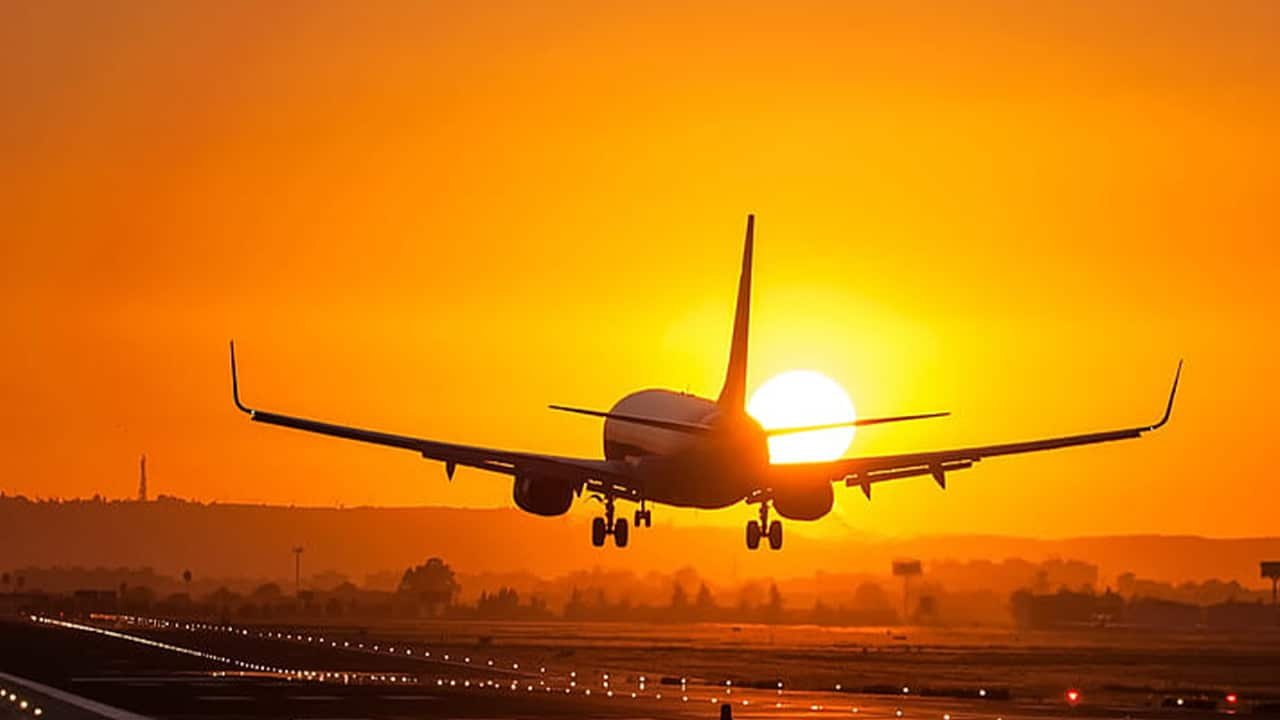
    In a twist of fate, climate change is exacerbating the challenges of air travel, creating a new layer of misery for passengers and airlines alike. As temperatures soar due to global warming, the very air that planes need to lift off becomes less cooperative.

    When the mercury climbs, hot air’s reduced density causes planes to struggle for lift, complicating takeoffs and in-flight stability. Airlines often resort to delaying flights or unloading cargo and passengers to mitigate the issue, leading to a cascade of disruptions across the aviation system. Stranded on runways, passengers endure stifling conditions within grounded aircraft.

    Experts warn that this problem is set to intensify as the planet heats up further and the frequent occurrence of extreme heat becomes the norm. A Columbia University study projected that by mid-century, up to 30 per cent of all US flights could be subject to weight restrictions during periods of high heat.

    Regrettably, there’s no silver bullet to overcome this challenge. Ethan Coffel, an assistant professor at Syracuse University, explains that it’s a physical limitation tied to air density, leaving limited room for technological solutions.

    Heat-related delays are emerging as a more substantial issue than snow or ice. Last summer, Chicago’s O’Hare International Airport faced twice the number of weather-related delays compared to the previous winter. The impact is especially pronounced at airports with shorter runways, like New York’s LaGuardia Airport, which struggles to handle the volume of traffic it receives.

    Airports in high-altitude regions and warm climates are hit particularly hard by this heat-induced predicament. Denver and the Sun Belt cities face additional hurdles, with workers on scorching runways at risk due to the “heat island” effect. Despite efforts to make aircraft lighter and more efficient, progress is incremental, leaving airports to rely on conventional solutions like rescheduling flights and strengthening runways.

    The compounding effects of climate change on air travel are undeniable. Turbulence grows riskier, flights lengthen due to shifting wind patterns, and extreme weather spawns more delays. To truly address this issue, a holistic approach is required, including a concerted effort to reduce fossil fuel emissions, a primary driver of climate change. Amidst these challenges, the future of air travel remains uncertain, prompting travellers to brace for increasingly tumultuous skies.