Tag: HEC

  • Students panic as HEC’s degree verification system malfunctions

    Students panic as HEC’s degree verification system malfunctions

    The Higher Education Commission’s (HEC) degree verification system in Lahore has been faulty since the past 10 days.

    According to HEC sources, the malfunction has resulted in the suspension of degree verification for hundreds of students, causing serious issues for those intending to pursue higher education abroad.

    Students have expressed frustration over their futile visits to the HEC office and lack of response. Despite submitting online applications, they have yet to receive the issued challans.

    In response, the HEC administration has indicated that the system’s malfunction originated in Islamabad. They have stated that once the system is repaired, students will receive their challans and appointment dates.

  • List of illegal, unrecognised universities across Pakistan made public

    List of illegal, unrecognised universities across Pakistan made public

    The Higher Education Commission (HEC) of Pakistan recently released a list of illegal and ‘fake’ campuses of universities and higher education institutions across the country. According to the HEC, degrees obtained from these institutions will not be recognised by the commission. To ensure students across the country obtain valid degrees, the HEC has urged students to avoid seeking admission to these institutions.

    Colleges on the list range from local sounding institutions (for instance, the Quaid-e-Azam College of Information Technology), while others seem to present themselves as branches of international universities, such as the American University of London. Though funnily enough, no such university actually exists in London.

    The HEC is responsible for recognising degrees from both private and public chartered universities and higher education institutions in Pakistan. HEC also extends recognition to affiliated campuses. 

    The general public are advised to exercise caution and refrain from enrolling in any fake, illegal, or unrecognised universities/colleges. The HEC has published, and regularly updates, its list of accredited institutions, so if the institution you are enrolling for is not mentioned on the website, you will likely acquire an invalid degree by the end of it. 

    View the entire list of illegal universities and colleges on HEC’s website.

  • FIA report reveals fake LLB students

    FIA report reveals fake LLB students

    Nearly 4000 students from affiliated law colleges of Bahauddin Zakariya University (BZU) in Multan are suspected of being “non-genuine”, according to a  Federal Investigation Agency (FIA) report.

    The FIA submitted the report to the Supreme Court on Monday, which disclosed that 3,997 individuals allegedly attempted to sit the LLB exam without ever attending classes.

    According to Dawn, the FIA, along with officials from the Pakistan Bar Council (PBC) and the Higher Education Commission (HEC), constituted a joint investigation team (JIT) to question BZU officials and law college owners as ordered by the Supreme Court.

    The team examined BZU’s records and found that 3,997 students were suspected of being non-genuine. An additional 2,230 students are currently under investigation, but no adverse findings have been reported thus far.

    The JIT recommended taking legal action against the BZU officials and law colleges involved in the alleged fraud. It also called for improvements in the system of affiliating law colleges, registering students, collecting fees, and monitoring attendance to prevent future scams.

  • HEC withdraws notification banning Holi

    The Higher Education Commission (HEC) has withdrawn a controversial ban on Holi celebrations in universities.

    A notification issued by HEC on Thursday stated that the commission is respectful of faith, religions, beliefs and the festivals associated with them.

    “Considering that the message inferred from the communication has regrettably led to misinterpretation, HEC is pleased to inform the same,” the notification added.

    On Tuesday, the Commission caused outrage when it banned Holi celebrations in educational institutes throughout the country, citing a deviation from the sociocultural values and Islamic identity of Pakistan.

    The notification read that students are prohibited from observing the festival to uphold sociocultural values.

    On Wednesday night, Salman Sufi, the head of Prime Minister’s Strategic Reform Unit, said in a tweet that HEC has been asked to withdraw the notification about banning Holi in universities.

    He wrote that he had spoken to Rana Tanveer Hussain, adding that he has asked HEC them to withdraw it.

    The decision came a few days after Holi celebrations were held on June 12 by students at Quaid-i-Azam University.

  • No Holi festival in universities anymore

    The Higher Education Commission (HEC) has banned Holi celebrations in educational institutes throughout the country, citing a deviation from the sociocultural values and Islamic identity of Pakistan. The notification regarding the ban was issued by HEC on Tuesday.

    According to the notification, students are prohibited from observing the festival to uphold sociocultural values.

    “While there is no denying the fact that cultural, ethnic, and religious diversity leads towards an inclusive and tolerant society, that profoundly respects all faiths and creeds; albeit it needs to be done so in a measured manner without going overboard. The students need to be apprised to be aware of the self-serving vested interests who use them for their own ends far from the altruistic critical thinking paradigm.”

    The decision comes a few days after Holi celebrations were held on June 12 by students at Quaid-i-Azam University. The notification, while referring to the event, said that “it has caused concern and has disadvantageously affected the country’s image.

  • Govt allocates only Rs97 billion for education affairs and services in budget 2023-24

    Govt allocates only Rs97 billion for education affairs and services in budget 2023-24

    The federal government has designated a budget of only Rs97.098 billion for education affairs and services in the fiscal year 2023-24. This allocation reflects a 5.5 per cent increase compared to the revised allocation of Rs91.777 billion for the current fiscal year.

    Pakistan’s public expenditure on education, as a per centage of GDP, is estimated to be 1.7 per cent in the fiscal year 2022-23, a slight increase from 1.4 per cent in the previous year. However, this figure remains the lowest in the region.

    Of the total allocation, the bulk of expenditure amounting to Rs76.589 billion has been allocated for Tertiary Education Affairs and Services in the budget for 2023-24, accounting for 79 per cent of the total allocation under this category.

    Furthermore, the government has designated Rs4.468 billion for pre-primary and primary education affairs in the upcoming fiscal year, compared to Rs3.786 billion in 2022-23. Additionally, Rs10.778 billion has been earmarked for Secondary Education Affairs and Services in 2023-24, as opposed to Rs8.863 billion in the previous year.

    The budget for administration has also increased, with Rs3.698 billion allocated compared to the revised figure of Rs2.010 billion for 2022-23, which was later revised to Rs2.430 billion.

    Since the implementation of the 18th Constitutional Amendment, education has been devolved to the provinces, making the federal government primarily responsible for financing higher education.

    According to budget documents, the Higher Education Commission (HEC) has been allocated Rs59.71 billion under the Public Sector Development Programme (PSDP) for 2023-24, a significant increase from the previous year’s allocation of Rs44.718 billion.

  • HEC to relaunch PM’s Laptop Scheme soon

    HEC to relaunch PM’s Laptop Scheme soon

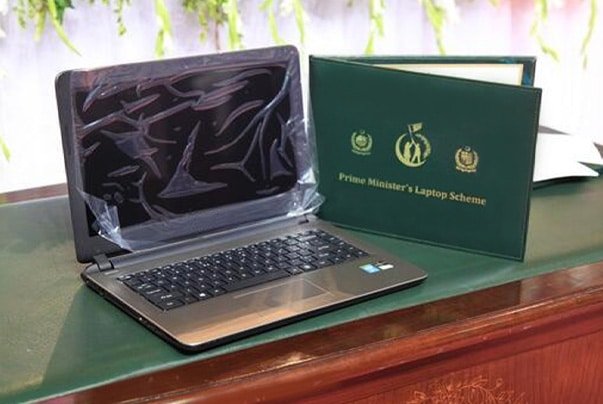
    The Prime Minister’s Laptop Scheme would be relaunched under the Youth Development Initiative, according to Higher Education Commission (HEC) Chairman Dr Mukhtar Ahmed, within the next few days.

    Speaking to the media, he further stated that HEC would launch a programme for online courses for students in Pakistan’s institutions with assistance from Microsoft and other international organisations.

    The declaration follows the historic Prime Minister (PM) Laptop Scheme’s restoration by the Federal Government, which is governed by the Pakistan Muslim League-Nawaz (PML-N).

    Details indicate that the programme, which has a budget of Rs 10 billion, will distribute laptops to students pursuing BS, Masters, M Phil, PhD, and undergraduate degrees.

    A committee headed by Dr Mukhtar Ahmed, the chairman of the Higher Education Commission (HEC), has been formed by the government to complete all issues, including the requirements for students to be eligible for laptops.

    According to Academia Mag, the 14-member committee comprises the Executive Director of HEC, Additional Finance Secretary (Budget) of the Government of Pakistan, a member from Planning and Development Division, Science and Technology, Secretary Higher Education Department Punjab, Secretary Higher Education Department Sindh, Secretary Higher Education Department Balochistan, Secretary Higher Education Department Khyber Pakhtunkhwa, a representative from the National Information Technology Board (NITB), Secretary Higher Education Department Azad Jammu and Kashmir, a representative from Punjab Information Technology Board (PITB) and others.

    The procedure for verifying degrees and issuing certificates of equivalency is likewise being shifted entirely online.

    A growing number of educational institutions were causing financial problems for HEC, he continued, and public universities would henceforth be given funding according on how well they performed.

    “We would request the federal and provincial governments to not establish more public universities until the country’s financial issues are resolved,” he said.

  • Here’s how Pakistani students can apply for Moroccan Government Scholarships

    Here’s how Pakistani students can apply for Moroccan Government Scholarships

    The Moroccan Agency of International Cooperation (AMCI) has offered scholarships to Pakistani students who want to enroll in public higher education, technical, and vocational institutions in Morocco for the academic year 2022–2023.

    The deadline for Higher Education Commission (HEC) to receive nominations is set for September 20, 2022.

    How to apply for the scholarship:

    Candidates should choose “Learning Opportunities Abroad” after registering and filling out their profiles.

    All applicants should note that all nominations from Pakistan will be routed via HEC. Applicants should send two sets of AMCI application (French form) along with required documents as mentioned on page-2 of the AMCI application form, in spiral binding and one copy of HEC application form with documents separately in spiral binding on or before, September 20, 2022.

    Read more: Cheapest new cars to buy in Pakistan

    On the basis of the greatest academic merit, HEC will narrow down the list of qualified candidates. Moroccan authorities or universities may test or interview selected Pakistani nominees.

    It is worth noting that French is the primary language of instruction, and only students who have demonstrated proficiency in the language will be allowed to study in Morocco.

  • Govt unveils Rs9.5 trillion budget 2022-23, focused on sustainable growth

    Govt unveils Rs9.5 trillion budget 2022-23, focused on sustainable growth

    The federal budget for 2022-23 has been revealed with a total outlay of Rs9,502 billion. It includes measures for sustainable economic growth, industrial and agricultural development, and aid for the poor ones.

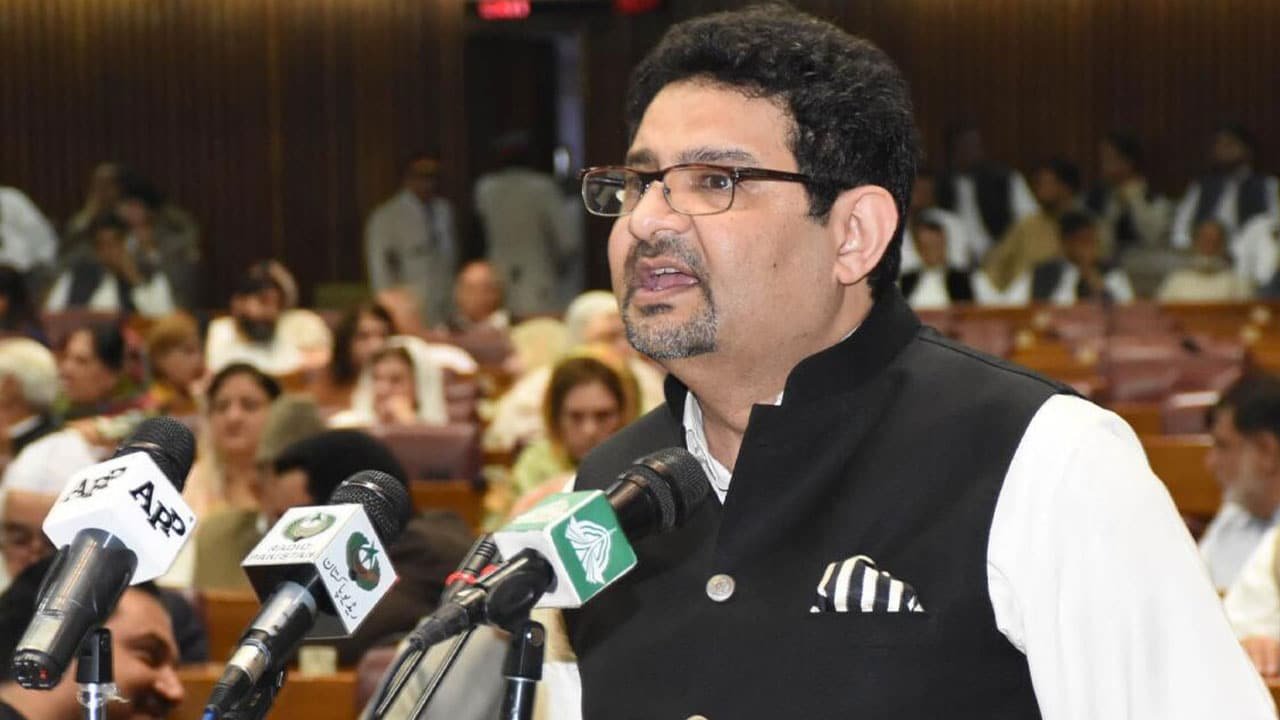
    Finance Minister, Miftah Ismail began his address by claiming that the PTI administration had left Pakistan’s economy in shambles and harmed investor confidence by often switching finance ministers and monetary policies.

    He slammed former Prime Minister Imran Khan, claiming that he never cared about the poor, claiming that “keeping an eye on potato and tomato prices is not a PM’s duty”.

    He claims that the governing party took control of the country despite the fact that it will have to make difficult decisions to save the economy, which will affect their individual parties’ appeal, but they chose to put the country’s interests ahead of their own.

    Relief for working class and the poor

    He claimed that the budget is geared at providing greater relief to the working class and the poor, as opposed to the wealthy, because the working class prefers to buy local products over foreign ones, boosting the economy.

    Budget 2022-23, according to Miftah Ismail, will concentrate on offering facilities to farmers planting crops that supply cooking oil, such as corn and sunflower, so that the country does not need to import palm oil, which is at an all-time high in the worldwide market.

    Slashing furniture, stationary expenses in govt offices

    Considering the current economic downturn, the administration has decided to restrict operational expenditures to the absolute minimum, and that new furniture and stationary for government offices will be completely prohibited. Other than obligatory diplomatic visits, all government-sponsored foreign trips will be prohibited.

    Education

    The government has set aside Rs65 billion for the Higher Education Commission (HEC) in the current budget. In addition, the HEC has been granted Rs44 billion for development programmes, which is 67 per cent more than the previous year.

    Miftah Ismail said that this is a demonstration of our commitment to the youth. We are encouraging provinces to completely fulfill their obligations in terms of higher education promotion in the coming years, he said. The HEC budget includes 5,000 scholarships for Balochistan and tribal district students. He added that a unique scholarship programme has been introduced for Balochistan’s coastal communities.

    The Finance Minister said that 100,000 laptops would be provided to students around the country on affordable instalments. Funds have also been set aside for the purchase of cutting-edge equipment to improve engineering and technology education.

    15 per cent Increase in govt employees’ salaries

    In Budget 2022-23, Miftah Ismail announced a 15 per cent increase in government employee salaries, as well as the merger of adhoc allowances.

    He said that the tax on savings certificates, pensioners’ benefit accounts, and martyrs’ family assistance accounts had been reduced from 10 per cent to 5 per cent.

    Small merchants will be subject to a new fixed income and sales tax regime, according to the Minister. Electricity bills would be used to collect taxes ranging from Rs3,000 to Rs10,000 under this method. This will be a final agreement, and FBR will have no right to inquire about the tax.

    According to Miftah Ismail, a proposal has been made to increase initial depreciation rates for industries and other businesses from 50 per cent to 100 per cent in the first year.

    Furthermore, he stated that any tariffs imposed on industrial units during the import of raw materials will be considered adjustable in order to protect the business community’s working capital.

    New industrial policy

    He stated that an industrial policy is being implemented in partnership with the Asian Development Bank in order to boost the country’s industrial base. He stated that the Prime Minister has directed that all exporter claims be resolved as soon as possible.

    A sum of Rs40.5 billion is due to them right now, and we will pay it as soon as possible. Regardless of financial challenges, sales tax refunds are issued swiftly. Industrial feeders have been spared from load-shedding, according to him, in order to ensure that the industrial sector has uninterrupted power supply.

    A new strategy for promoting investment in the country is being developed which aims to provide an enabling atmosphere for investors by eliminating the lengthy procedure. The government will overhaul the dispute settlement structure to make it easier for domestic and foreign investors.

    Boosting agriculture sector

    Talking about the agriculture sector, Finance Minister stated that Rs21 billion had been set aside to boost agriculture and livestock productivity. He stated that the Ministry of Food Security, in consultation with the Planning Commission and the provinces, has developed a three-year growth strategy. This plan aims to increase agri-production, increase farmer prosperity, and promote smart agriculture and self-sufficiency.

    National Youth Commission

    The Finance Minister also announced the development of a National Youth Commission to help youth realise their full potential. Various plans for the youth, he noted, have been offered. He stated that a coordinated strategy is being implemented to strengthen the role of educated youth in the growth of the country. According to him, the youth employment initiative will create over two million job chances.

    He added that a scheme to foster youth entrepreneurship will be launched, under which interest-free loans of up to Rs500,000 and loans of up to Rs25 million will be made available on easy payments. He stated that in this lending arrangement, a 25 per cent quota has been been aside for women. He stated that women will be given precedence in hi-tech training in order to achieve economic empowerment. Youth development centres would be set up over the country, he said.

    A green youth movement would be launched to involve young people in environmental initiatives. Funds will be set aside to distribute laptops on a merit-based and instalment basis, as well as the construction of 250 mini-sports stadiums across the country. Miftah Ismail stated that an innovation league would be established in order to improve the youth’s potential. He said that a talent quest and sports drive programme will be developed for youngsters between the ages of eleven and twenty-five.

    Reduction in govt spending

    According to the Finance Minister, the current government’s top focus is austerity. This budget includes a reduction in government spending, and we are taking meaningful moves in that direction. He stated that automobile purchases will be completely prohibited. Apart from development initiatives, procurement of furniture and other products would be prohibited. Cabinet members and government officials will have their gasoline quotas lowered by 40 per cent. There will also be a ban on international tours paid for by the government, with the exception of the most important ones.

    A medium-term macroeconomic framework has been established to put the economy on a road of development, according to the Finance Minister. He emphasised his belief that by implementing this framework, we will be able to steer the economy in the right way. Our biggest problem, he remarked, is to expand without a current account deficit. As a result, a minimum of 5 per cent will be obtained without disrupting the balance.

    Improved fiscal and monetary policy

    He said that the GDP will increase from Rs67 trillion to Rs78.3 trillion in the coming fiscal year and the government is attempting to lower inflation through improved fiscal and monetary policy. During the next fiscal year, inflation will be decreased by 11.5 per cent.

    He predicted that the tax-to-GDP ratio will rise to 9.2 per cent in the coming fiscal year, up from 8.6 per cent now. He noted that in 2017-18, we had kept this ratio at 11.1 per cent. He stated that the overall deficit, which is currently at 8.6 per cent, will be steadily reduced. In the coming fiscal year, this will be reduced to 4.9 per cent. Similarly, the overall primary balance, which presently stands at -2.4 per cent of GDP, will be reduced to 0.19 per cent.

    Import and export

    Imports, which are estimated to be $76 billion this fiscal year, would be lowered to $70 billion the following fiscal year, according to the Finance Minister. Exports are currently $31.3 billion, but will increase to $35 billion in the coming fiscal year. The current account deficit will be decreased from -4.1 per cent of GDP to -2.2 per cent of GDP.

    Remittances, which are predicted to continue at $31.1 billion this fiscal year, are expected to grow to $33.2 billion next fiscal year.

    Key allocations in Budget 2022-23

    Rs1,523 billion allocated for defence

    Rs800 billion allocated for Public Sector Development Program (PSDP)

    Rs699 billion allocated for targeted subsidy

    Rs364 billion allocated for Benazir Income Support Program (BISP)

    Rs64 billion allocated for Higher Education Program

    Rs25.99 billion allocated for Atomic Energy Commission

    Rs24 billion allocated for Health

    Rs21 billion allocated for Benazir Nashunuma Program

    Rs11 billion allocated for Agriculture

    Rs10.12 allocated billion for food security 

    Rs9.60 billion allocated for Climate Change

    Rs530 billion allocated for pension funds

    Rs3.46 billion allocated for Maritime Affairs

    Key announcements

    The GDP growth target has been set at 5 per cent.

    Remittances are expected to total $33.2 billion.

    Inflation will be held at 11.5 per cent.

    FBR has set a revenue target of Rs7,004 billion.

    Non-tax revenue objective is set at $2 billion.

    The goal set for imports is $70 billion.

    The target for exports is $35 billion.

    Government employees will have a 15 per cent raise in pay.

    Under a new employment scheme, youngsters will be eligible for interest-free loans up to Rs500,000.

    Distributors and manufacturers will no longer be subject to an 8 per cent withholding tax.

    On national saving systems, the profit rate dropped from 10 per cent to 5 per cent.

    Cinema owners and film makers are exempt from income tax.

    On cars with engines larger than 1600cc, the advance tax will be raised.

    Pharmaceutical materials are exempted from any customs duties.

    This is a developing story..
  • PM says ‘no question of cut in HEC budget’, two days after educationist raises issue in Op-ed

    PM says ‘no question of cut in HEC budget’, two days after educationist raises issue in Op-ed

    Prime Minister Shehbaz Sharif has said there is no question of a cut in the budget of the Higher Education Commission (HEC).

    “There is no question of a cut in the budget of Higher Education Commission. I am aware of the negative effect that cuts have had on higher education during the past four years. I have given clear directions to Planning Commission & Ministry of Finance in this regard,” he wrote in a tweet.

    Two days before PM’s statement, an opinion piece was published in The News titled ‘Abandoning higher education‘ by Dr Ayesha Razzaque.

    “For the next fiscal year, the HEC requested a recurrent budget of Rs104 billion. However, a few days ago an official letter (dated May 23, 2022) from the Finance Division regarding the 2022-23 budget emerged. It directs the HEC to prepare a new budget for next year that fits into Rs30 billion, – less than a third of what was requested and less than half of this year’s Rs65.25 billion. Here I would like to acknowledge that Federal Minister for Planning and Development Dr Ahsan Iqbal has voiced his opposition to this news.”

    Dr Ayesha Razzaque took to Twitter to share PM’s statement.

    A thread by Dr Razzaque on the issue of HEC budget can be accessed here.