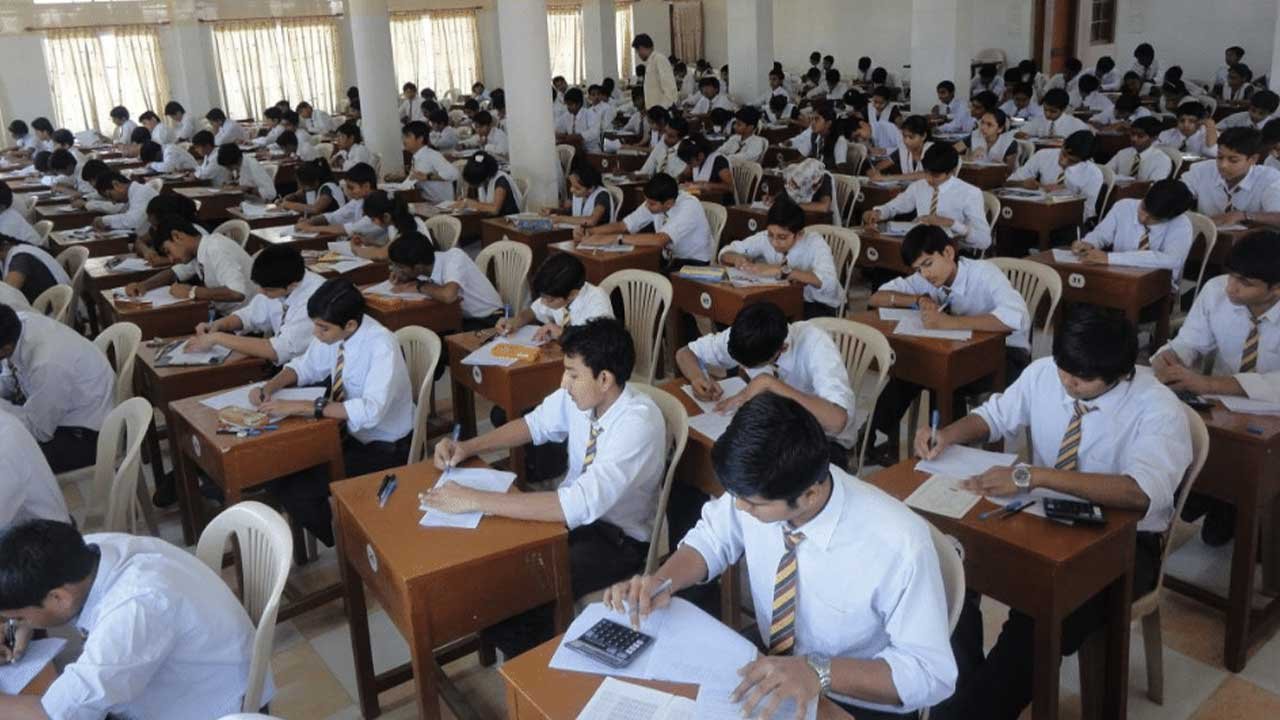
The Board of Intermediate & Secondary Education (BISE) Lahore will begin Matric (10th Class) examinations on Tuesday (today), with over 250,000 students expected to take part. According to a BISE Lahore official, the Lahore Board has set up 759 examination centers for the exam.
The 9th Class exams will begin on May 26 and will attract nearly 270,000 students. He noted that Intermediate exams would begin the second week of June 2022, following Matric exams.
BISE Lahore Chairman Mirza Habib Ali stated that these exams will cover the entire course. He also asked the concerned officials to make watertight arrangements for conducting the tests in a transparent and supervised manner.
Punjab’s Higher Education Department (HED) has decided to make another alteration to the intermediate test guidelines to facilitate private students in the province.
Private students will now be eligible to sit at the FSc yearly examinations, according to reports, with the latest modification due to take effect in the academic year 2023.
However, the students will be required to submit certificates to confirm their appearance in practical exams before taking the annual exams.
The students will be able to obtain these certificates from any college affiliated with any of the eight boards of secondary and intermediate education.
This change is undoubtedly great news for private candidates who wanted to enroll in sciences. Previously, private students were bound to choose between humanities and commerce.
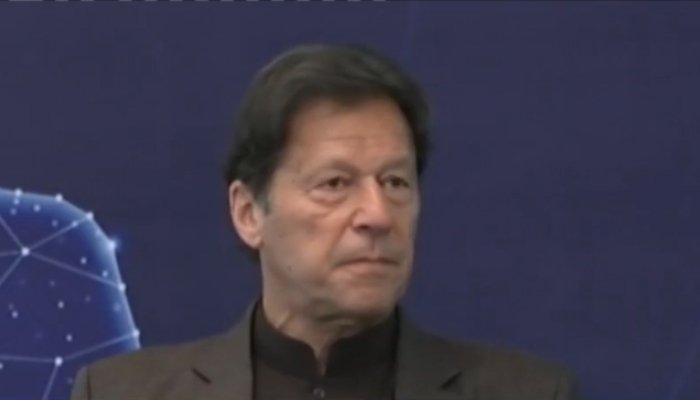
Prime Minister Imran Khan launched the Scholarship Complaint Portal for students across the country today. The core purpose of the newly launched portal is to help students with their problems as quickly as possible. The portal will also ensure transparency and merit in the award of scholarships.
At the launching ceremony of the portal in Islamabad, PM Khan said that a panel of academics will monitor the portal and new subjects and disciplines will be added for scholarships as per market demand, Radio Pakistan reported.
The portal will be linked to the Prime Minister’s Citizen Portal and the Prime Minister’s Office will ensure that concerns of students are resolved in a timely manner.
Minister for Federal Education Shafqat Mahmood also addressed the ceremony. He said the government has increased the number of scholarships for postgraduate and undergraduate students, which is unprecedented in the history of Pakistan.
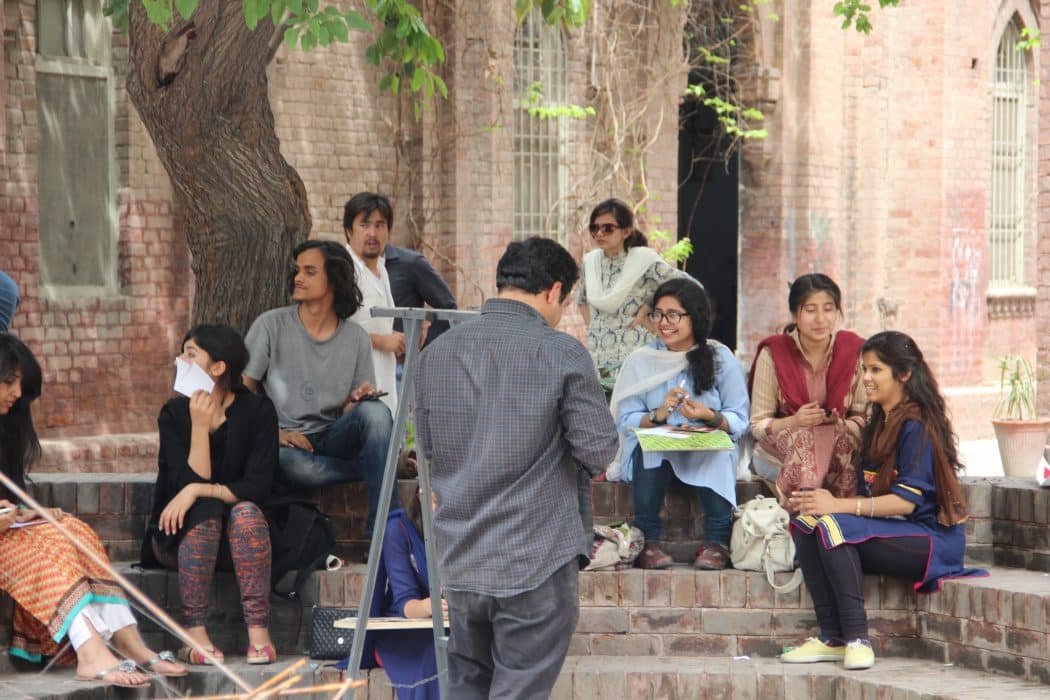
News reports of the Punjab Higher Education Commission (PHEC) banning co-education in private colleges for the BS (Hons) programmes have been circulating on social media since Wednesday night.
However, Azhar Mashwani, the Punjab chief minister’s focal person for digital media has said that the news reports are fake, and no such decision has been made. He also shared the screenshots of the “false” news.
Journalist Benzair Shah while talking to The Current said that the news is “not accurate.” She added that the director of public instruction colleges Punjab also confirmed that the notification circulating is from 2010.
However, a checklist for BS Four year degree programme is available on the website of the Higher Education Department and serial number 25 of the document says, “Affidavit for No Co-Education.”
In addition, serial number 28 of a document available with The Current regarding the checklist of ADP ( Associate Degree Programme) states, “Separate Boys and Girls Block. Affidavit for no Co-Education according to sample available in the booklet on stamp paper duly attested by Oath commissioner.”
Serial number 19 of the document says only male staff members are allowed to teach in male colleges and only female staff members are allowed to teach in female colleges. As per our sources, the document is “apparently new”.
As per sources of The Current, the government will issue a clarification on the matter and the checklist has always been there since 2008.
A notification issued by the Directorate of Public Instruction (Coleges) says, “It is to inform that there is no condition of submitting an Affidavit of NO CO-EDUCATION from private colleges to launch BS4YDP, AFP, DPT, Pharma-D and LLB Programs.”
The notification further says, “The information may be conveyed to all the Private Colleges to submit an application according to New Updated proforma (which is available on HEC website.)”
مخلوط تعلیم پر عائد پاپندی ختم، پنجاب کے پرائیویٹ کالجوں میں Co-education کی اجازت دے دی گئی pic.twitter.com/jis1nTaaYk
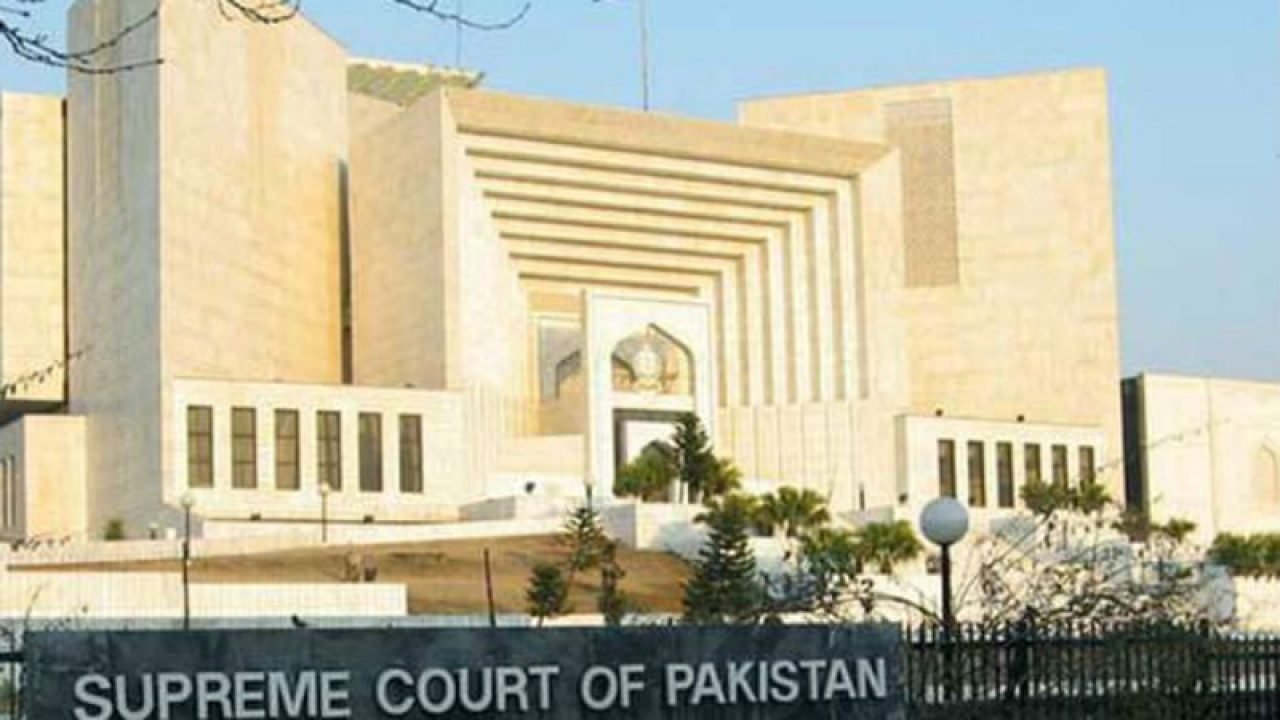
The Supreme Court of Pakistan (SC) on Wednesday ordered the Higher Education Commission (HEC) to close down campuses of private universities all over the country that are running illegally.
The SC remarked campuses of Preston University and Al Khair University have been set up illegally in Lahore and Karachi. Students sought help from the court about the HEC not issuing degrees to those who have studied from these universities.
The case was heard by a three-member bench headed by Justice Umar Ata Bandial.
The court gave directions to HEC to make special arrangements to award degrees to the students who had graduated from these illegal campuses. It also said that policies of HEC should be implemented with uniformity all over the country.
The bench gave remarks that there should be no compromise on the provision of higher education to all young students. Provincial and Federal governments need to work closely and cooperate to maintain the standards of HEC.
The SC noted that the issue was whether private universities are allowed to open sub-campuses outside their territorial limits or not. It added that HEC already made it very clear that they could set any sub-campuses and they issued many alerts as well.
Counsel for students, Ali Zafar said that the session court had ordered the National Accountability Bureau (NAB) to take action against these universities. However, Justice Bandial replied, “The HEC has the powers. There is no need for NAB to investigate the matter.”
The court said that the federal government would be ordered to change the laws if HEC is weak.
“The students had approached the Lahore High Court (LHC) for their degrees. The LHC declared the [sub-]campuses of private universities illegal,” the counsel added.
Justice Bandial acknowledged the high court verdict and emphasised pursuing the shut down of illegal campuses at the earliest.
A day after several students were injured as a result of a violent protest against on-campus examination outside the University of Central Punjab in Lahore, the Higher Education Commission (HEC) has allowed universities across Pakistan to conduct online examinations with “adequate safeguards”.
In a statement, the HEC said it “already allowed universities to use their discretion to conduct exams, either on-campus or online as long as the chosen mode provides a fair assessment of students’ performance”.
“Online exams either can be used if the universities administer ‘Open Book Exams’ or establish an invigilation system in a supervised environment. In this mode, universities will also have to use Turnitin software to detect plagiarism. Further, viva/oral exam may be integrated with the assessment where necessary, the statement added.
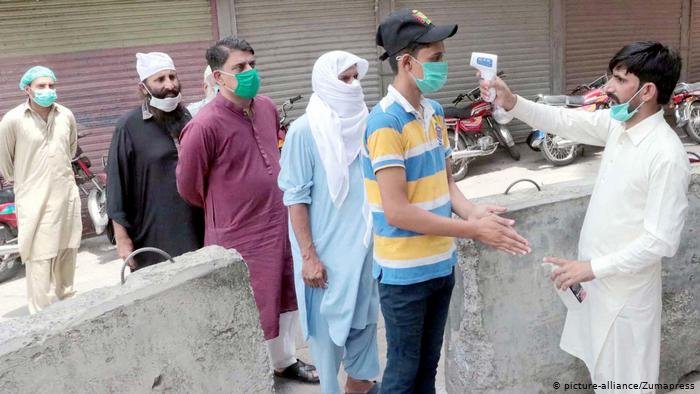
The HEC said the universities can hold “on-campus exams under strict compliance” of coronavirus SOPs.
“Universities may also have to organize make-up classes for two weeks in case students consider the course coverage to be deficient,” it said, adding that assessment of all “courses requiring psychomotor skills, such as medicine, engineering, subjects involving lab/studio work must be held on campus”.
Education Minister Shafqat Mahmood also shared the HEC decision on his Twitter. He said he was “happy to note that HEC has formally allowed the universities to conduct online exams with adequate safeguards”.
Sharing a picture of the HEC notification, Mahmood said that the decision would “pave the way for [universities] to devise the right procedures to quickly” hold online exams, adding that “education standards must be kept up.”
I am happy to note that HEC has formally allowed the universities to conduct online exams with adequate safeguards. This paves the way for them to devise right procedures quickly to do so. Education standards must be kept up. Work hard students and wish you the best pic.twitter.com/8jgLKedivp
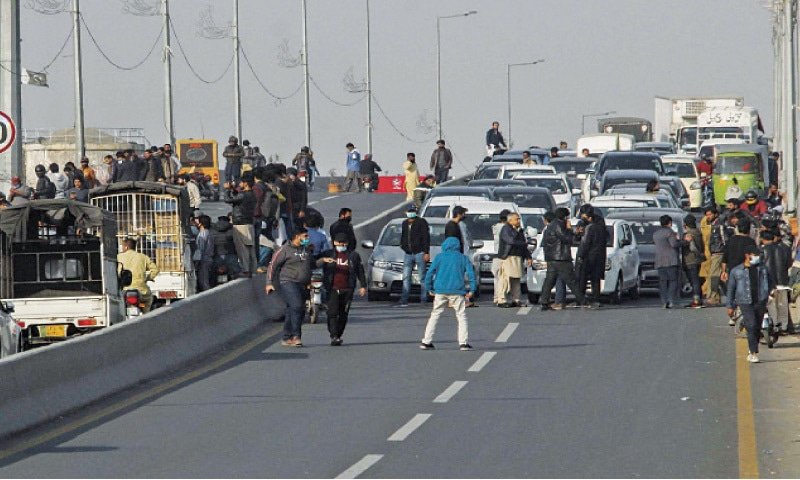
On Tuesday, a student protest outside turned ugly when security guards of a private university baton-charged students after they tried to enter the university and march towards the vice chancellor office. Five of them received injuries, with two in critical condition.
A day before, the police also used force to disperse the students who had gathered to record their protest against the on-campus examination despite the second wave of coronavirus.
The Higher Education Commission (HEC) has reportedly revised its policy for PhD admissions on January 1, 2021.
According to reports, under the revised policy, students can also apply for PhD directly after four-year BS programs. The policy states that the minimum duration of a PhD degree will be three years while the maximum duration of the degree will be eight years.
It has also abolished the requirement of having a previous qualification in the same discipline in order to apply for a specific PhD program.
In case of non-implementation or violation of the policy, HEC would take action against universities ranging from warnings, suspension or revocation of NOC for admissions, and non-verification of credentials.
Meanwhile, the Federation of All Pakistan Universities Academic Staff Association (FAPUASA) has expressed serious concerns and rejected the revised policy by the HEC.
It is pertinent to add that the HEC has not yet officially announced the new policy.
The Higher Education Commission (HEC) has introduced online degree attestation. As per details, all students seeking degree attestation should apply on their website via http://eservices.hec.gov.pk.
In a statement, the HEC HEC informed that the attestation process would no longer function on the previous link, adding that the old applicants would use their formerly verified username and password to log-in to the ‘e-services’.
This online verification and attestation service is Pakistan’s first electronic verification service. Students can go to the website and upload the relevant documents to get their degrees attested.
Earlier in an interview with The Current, Federal Minister for Education, Shafqat Mahmood had said that HEC was working to facilitate students and make life easier for them.
Lahore’s Punjab University (PU) is going to set up a climate research laboratory to look into accelerating climatic changes in the country, for which the Higher Education Commission (HEC) has approved Rs100 million funding.
As per the details, the lab will run under the supervision of Department of Space Science Director Ziaul Haq while Sahida Adeela Batool will act as the co-principal investigator along with faculty members such as Khalid Mehmood and Salman Tariq.
Ziaul Haq explained that “climatic change can trigger social inequalities and also increase social factors that lead to conflicts, displacement, changes in migration pattern and instability in the country”.
“If proper measures aren’t taken in time, extreme weather events like temperature rise, flooding, drought, yield reduction, the spread of infectious diseases, deforestation and water scarcity will hit Pakistan.”
He further explained that “the purpose of establishing the lab is because Pakistan does not possess high technical, professional and financial capacity to adapt, prevent or lessen the adverse impacts of climate change”.
Satellite data and GIS analysis can provide cheap easy to adopt alternatives for the locals to adapt so that climatic changes can be prevented in due time.
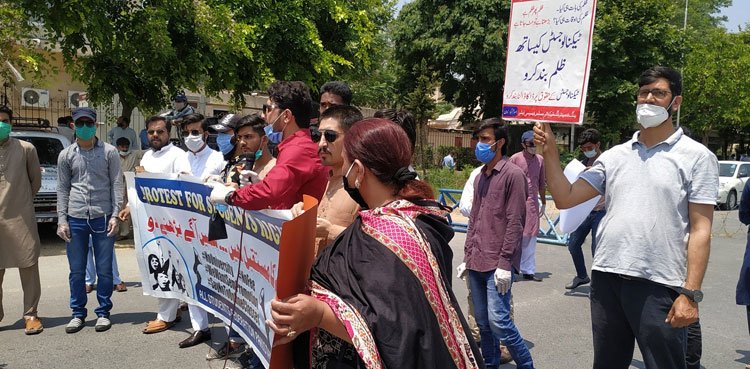
Several university students from across the country protested outside the Higher Education Commission (HEC) office in Islamabad demanding the board to waive their full semester fee, suspended online classes and promote all students to the next semester without examinations.
Blocking Islamabad’s Service Road, the students had placards in their hands and raised slogans against the HEC.
They called out universities for charging full semester fees despite the coronavirus pandemic.
Many students also took to social media to voice their concerns.
Universities are demanding a full semester fee which is completely unfair and immoral. It is not just a piece of cake for everyone to bear the financial burden of their academics as some do part-time jobs/ home tuitions/more than one job at a time to pay off their expenses. pic.twitter.com/K0bBg36XAk
Economy is suffering due to which a lot of families are only surviving hand to mouth. Universities should not be charging complete tuition fees when they’re saving up on so much of their own expenses. #WAIVINGSTUDENTFEES#HEC#GIVERELAXATIONTOSTUDENTS
Earlier, on May 12, Chairman Higher Education Commission (HEC) Dr Tariq Banuri had chaired a meeting with university vice-chancellors and discussed possible ways to conduct annual examinations.
Suggestions were given to conduct examinations based on an open book, multiple-choice questions, assignments and viva-voce methods. The vice-chancellors put forth complaints made by students regarding internet connectivity issues and asked HEC to help in this regard.