Tag: Hezbollah

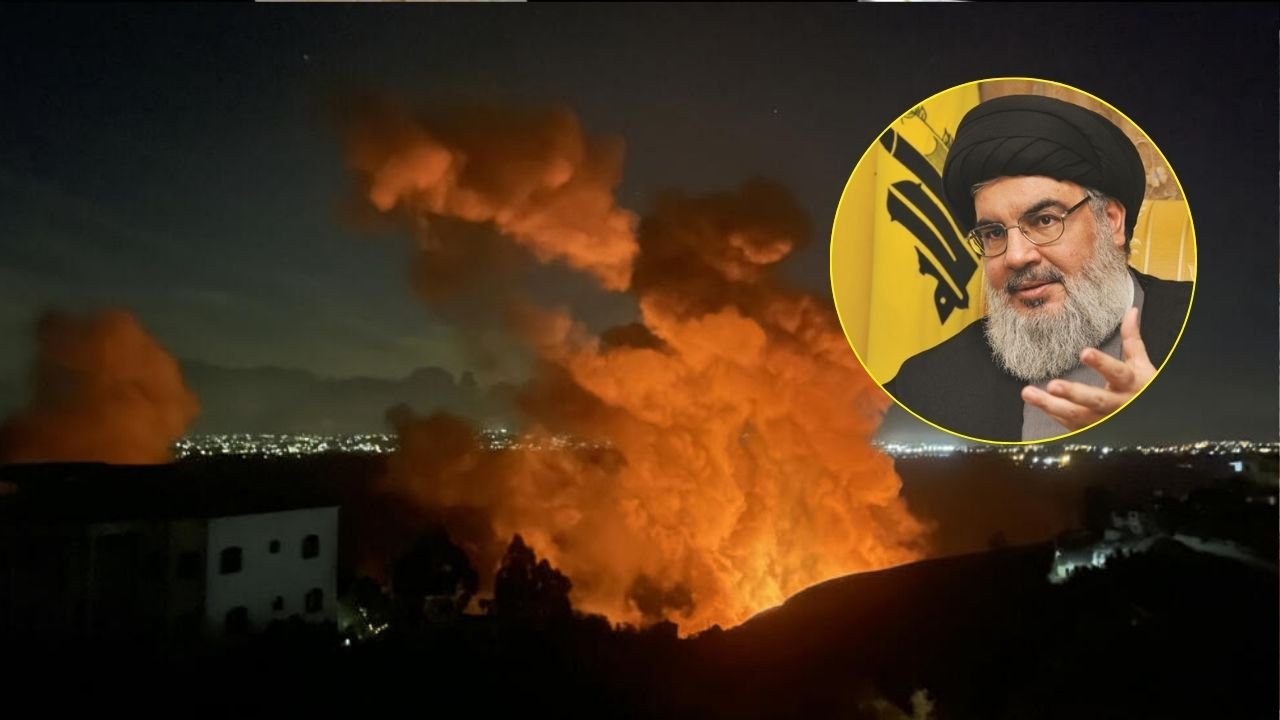
  • Israeli airstrike kill over 700 in Lebanon; claims Hezbollah Hassan Nasrullah dead

    Israeli airstrike kill over 700 in Lebanon; claims Hezbollah Hassan Nasrullah dead

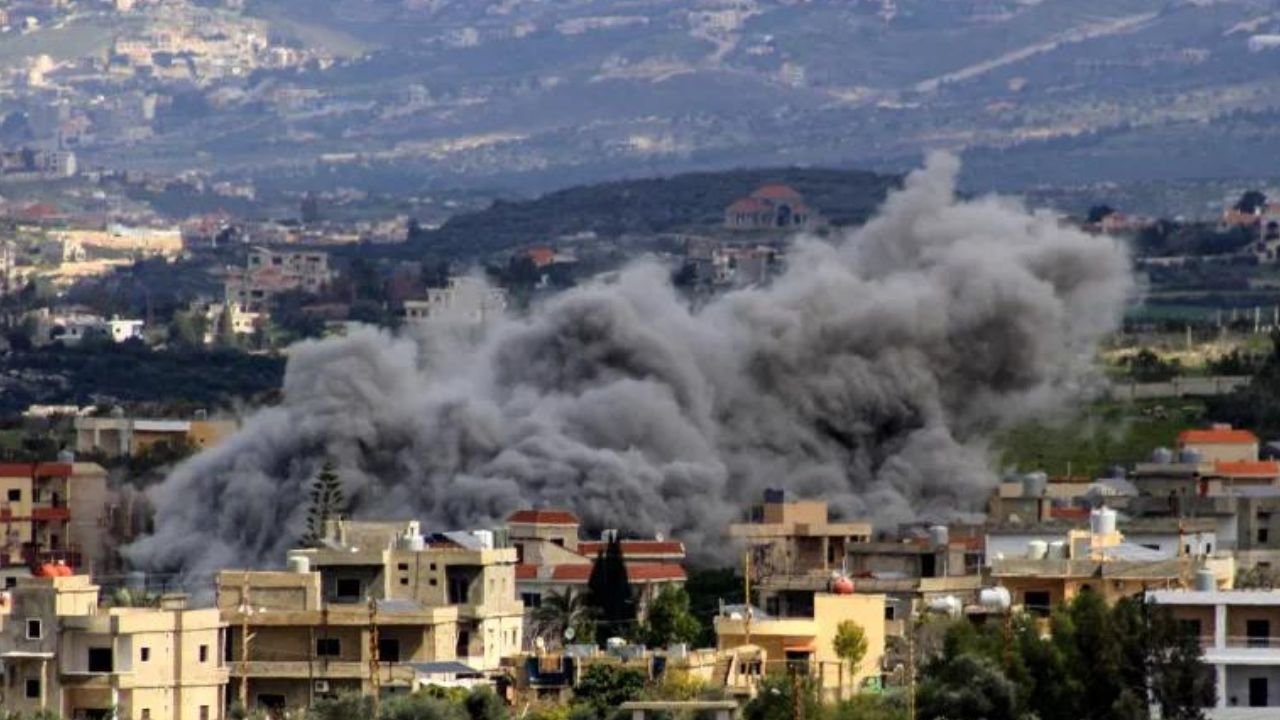
    Israel has shifted the focus of its aggression from Gaza to Lebanon, where heavy bombing has killed more than 700 people and displaced around 118,000 over the past few days.

    Israeli military announced on Saturday that Hezbollah chief Hassan Nasrallah was killed in a massive strike on Beirut the previous night.

    “Hassan Nasrallah is dead,” military spokesman Lieutenant Colonel Nadav Shoshani announced on X (formerly Twitter).

    Captain David Avraham, another military spokesman, also confirmed to AFP that the Hezbollah chief had been “eliminated” following strikes on Friday on the Lebanese capital.

    A source close to the Lebanese group meanwhile told AFP on condition of anonymity that contact with Nasrallah had been lost since Friday evening.

    Contact with the group leader had been lost for two days and he had been rumoured killed during Israel’s last war with Hezbollah in 2006, the source said, adding that he later re-emerged unscathed.

    Death of Zainab Nasrullah
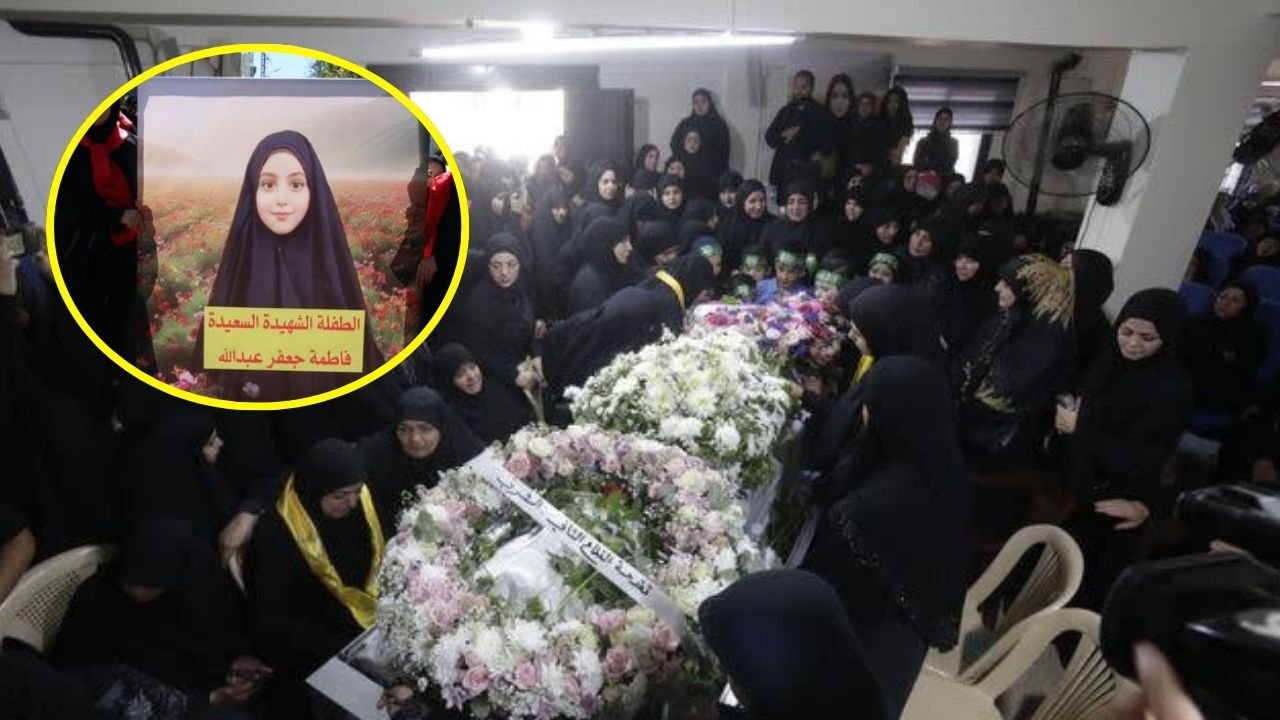
    Israeli media has also claimed that Zainab Nasrallah, the daughter of Hezbollah leader Hassan Nasrallah, has been martyred in the latest attack on Lebanon.

    A report by Israeli new channel claimed the martyrdom of Zainab Nasrallah in an Israeli attack on Hezbollah’s headquarters in Beirut but this news has not yet been confirmed by Hezbollah or the Lebanese authorities.

    Zainab Hassan Nasrallah was recognized as a strong voice in Lebanon for supporting Hezbollah and for her family’s sacrifices.

    In an interview to Al-Manar TV in 2022, while discussing the reaction of her parents to the martyrdom of her brother Hadi, Zainab Hassan Nasrallah said that not one tear fell from her parents’ eyes upon the martyrdom of her brother.

    As per Israeli military statement, the strikes also killed Ali Karake, commander of Hezbollah’s southern front, and an unspecified number of other Hezbollah commanders.

    Who will replace Nasrullah?

    Adviser to Iranian Supreme Leader Ayatollah Khamenei, Ali Larijani has said that Hezbollah is ready to launch an alternative leadership movement if Nasrallah is dead.
    Talking about other commander and leaders in line, Ali Larijani said that Israel has crossed the “red line”, the situation has become very serious.

    In case of the martyrdom of the Hezbollah leader, alternative leadership is ready to run the movement, said Larijani in a recent presser.
    On the other hand, the Iranian news agency Tasnim News Agency claimed that the head of Hezbollah, Hassan Nasrallah, was safe in the Israeli attack.

    Thousands sleep on the streets as Israel strikes Beirut

    Thousands of residents in Beirut’s densely-packed southern suburbs camped out overnight in streets, public squares and makeshift shelters after Israel ordered them out before its jets attacked the so-called Hezbollah stronghold.

    “I expected the war to expand, but I thought it would be limited to (military) targets, not civilians, homes, and children,” said south Beirut resident Rihab Naseef, 56, who spent the night in a church yard.

    AFP photographers saw families spend the night in the open, scenes unheard of in Lebanon’s capital since the Hezbollah and Israel last went to war in 2006.

    “I didn’t even pack any clothes, I never thought we would leave like this and suddenly find ourselves on the streets,” Naseef said.

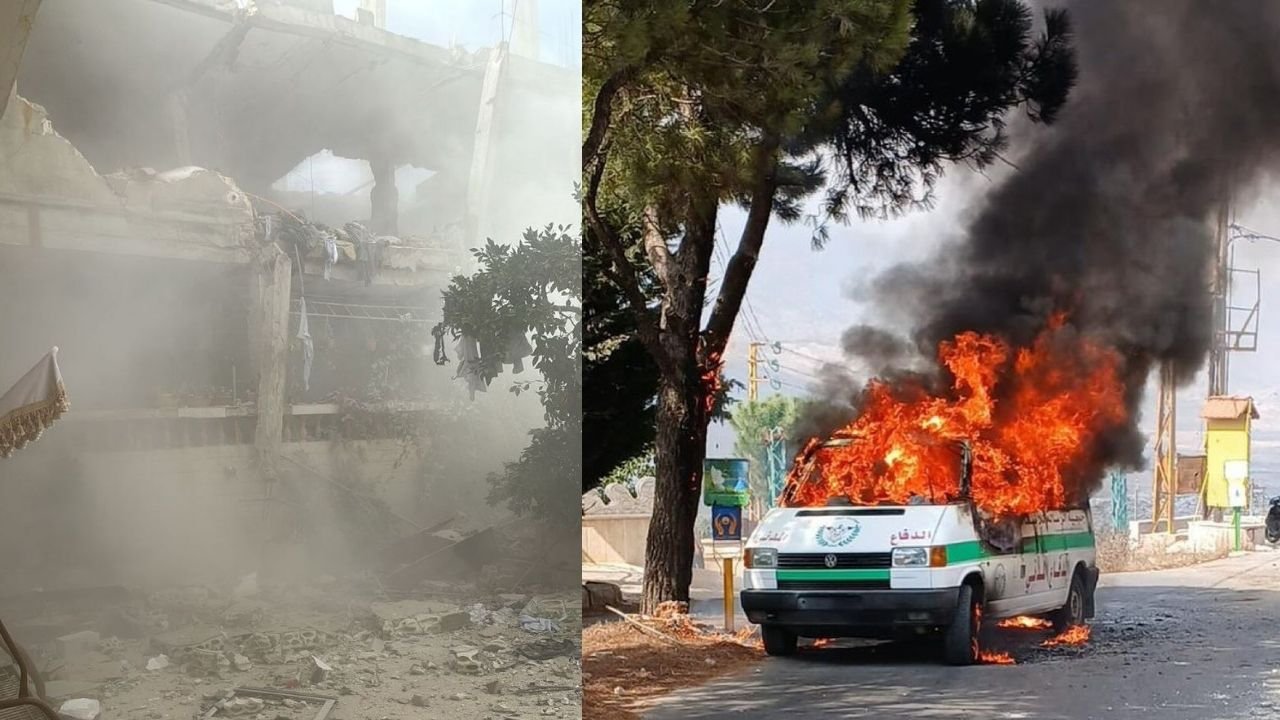
    Israeli jets pounded Beirut’s south and its outskirts throughout the night, and Beirut woke up to the aftermath of a night at war, smoke billowing from blazes in several places.

    ‘What will happen?’

    “I’m anxious and afraid of what may happen. I left my home without knowing where I’m going, what will happen to me, and whether I will return,” Naseef said.
    Despite a night of intense strikes, the extent of the devastation and the casualty toll was still unclear early Saturday.

    Hezbollah’s Al-Manar television broadcast footage from southern Beirut that showed flattened buildings, streets filled with rubble and clouds of smoke and dust above the area known as Dahiyeh.
  • Nearly 500 dead in Israeli strikes on Lebanon

    Nearly 500 dead in Israeli strikes on Lebanon

    Israeli air strikes on Lebanon killed at least 492 people on Monday, including 35 children, the health ministry said, marking the deadliest day of cross-border violence since the Gaza genocide began.

    Arab states strongly condemned Israel for the escalating hostilities with Hezbollah, which have intensified to levels unseen in nearly a year.

    Israel said it killed a “large number” of Hezbollah fighters when it hit about 1,600 sites in southern and eastern Lebanon, including a “targeted strike” in Beirut in what the Israeli military called “Operation Northern Arrows”.

    Hezbollah said Ali Karake, its third-in-command, was alive and had moved to safety after a source said the strike on the capital targeted him.

    The group said early Tuesday it had launched “volleys” of missiles at Israeli military sites after state media reported new raids in eastern Lebanon.

    People in Israel’s coastal city of Haifa were seen running for cover on Monday when air raid sirens sounded.

    Lebanon’s health ministry said the strikes killed 492 people, including 35 children and 58 women, and wounded 1,645 others. Health Minister Firass Abiad said “thousands of families” had been displaced.

    Explosions near the ancient city of Baalbek in eastern Lebanon sent smoke billowing into the sky.

    “We sleep and wake up to bombardment… that’s what our life has become,” said Wafaa Ismail, 60, a housewife from the southern village of Zawtar.

    ‘Most difficult week for Hezbollah’

    Global powers urged Israel and Hezbollah to step back from the brink of all-out war as the violence shifted from Israel’s southern border with Gaza to its northern frontier with Lebanon.

    France and Egypt called on the United Nations Security Council to intervene, while Iraq requested an urgent meeting of Arab states on the sidelines of the UN General Assembly in New York.

    Israeli army chief Herzi Halevi said the strikes hit combat infrastructure Hezbollah had been building for two decades.

    Israeli Defence Minister Yoav Gallant called Monday “a significant peak” in the operation.

    “This is the most difficult week for Hezbollah since its establishment –- the results speak for themselves,” he said.

    “Entire units were taken out of battle as a result of the activities conducted at the beginning of the week in which numerous terrorists were injured.”

    Prime Minister Benjamin Netanyahu said Israel was acting to change the “security balance” in the north.

    Hezbollah wave of rockets

    Hezbollah, which has been trading near-daily fire with Israel in support of Hamas, said it was in a “new phase” of confrontation.

    The group said it launched rockets at Israeli military sites near Haifa and two bases in retaliation for Israeli strikes on the south and the Bekaa.

    The attack came after an Israeli strike on southern Beirut on Friday killed its elite Radwan Force commander, Ibrahim Aqil, and coordinated communications device blasts that Hezbollah blamed on Israel killed 39 people and wounded almost 3,000 on Tuesday and Wednesday.

    Since the cross-border exchanges between Israel and Hezbollah began in October, tens of thousands of people on both sides have fled their homes.

    An Israeli military official, who cannot be further identified under military rules, said the operation seeks to “degrade threats” from Hezbollah, push them back from the border, and then to destroy infrastructure.

    Lebanese Prime Minister Najib Mikati urged the United Nations and world powers to deter what he called Israel’s “plan that aims to destroy Lebanese villages and towns”.

    ‘Full-fledged war’ nearing

    US President Joe Biden, whose country is Israel’s main ally and weapons supplier, said Washington was “working to de-escalate in a way that allows people to return home safely”.

    The Pentagon said it was sending a small number of additional US military personnel to the Middle East after thousands were deployed earlier alongside warships, fighter jets and air defence systems.

    A US official, speaking on condition of anonymity at the UN General Assembly, said that Washington opposed an Israeli ground invasion targeting Hezbollah and had “concrete ideas” on how to de-escalate the crisis.

    G7 foreign ministers said in a joint statement that “no country stands to gain” from escalating conflict, warning of “unimaginable consequences” if a regional war broke out.

    EU foreign affairs chief Josep Borrell warned that Israel and Hezbollah were “almost in full-fledged war”, ahead of a gathering of world leaders at the United Nations.

    UN chief Antonio Guterres was “gravely alarmed” by civilian casualties in Lebanon, his spokesman said.

    The United Nations peacekeeping force in south Lebanon warned “any further escalation of this dangerous situation could have far-reaching and devastating consequences”.

    Qatar, a mediator in Gaza ceasefire talks, said Israel’s bombardment of Lebanon “puts the region on the brink of the abyss”, while Turkey said the strikes threatened “chaos” and Jordan urged an immediate end to the escalation “before it is too late”.

    The Palestinian foreign ministry condemned the strikes and ordered Palestinian medical staff in Lebanon to provide support for the wounded.

    Iran’s newly elected president, Masoud Pezeshkian, accused Israel of seeking “to create this wider conflict”.

    Hamas’s October 7 attack on Israel resulted in the deaths of 1,205 people, mostly civilians, according to an AFP tally based on Israeli official figures that include hostages killed in captivity.

    Of the 251 hostages also seized by militants, 97 are still held in Gaza, including 33 the Israeli military says are dead.

    Israel’s retaliatory military offensive has massacred at least 41,455 people in Gaza, most of them civilians, according to figures provided by Gaza’s health ministry. The UN has described the figures as reliable.

  • Lebanon’s Hezbollah in disarray as 20 killed, 450 injured in second wave of device blasts

    Lebanon’s Hezbollah in disarray as 20 killed, 450 injured in second wave of device blasts

    A second deadly wave of unprecedented explosions in the strongholds of Lebanon’s Hezbollah left it in disarray on Thursday, hours before a major speech by its beleaguered leader, Hassan Nasrallah.

    The latest batch of device explosions killed 20 people and wounded more than 450 others on Wednesday, officials said, stoking fears of a full-blown war with Israel.

    The blasts came a day after the simultaneous detonation of pagers used by Hezbollah killed 12 people, including two children, and wounded up to 2,800 others across Lebanon in an unprecedented attack blamed on Israel.

    Walkie-talkies used by its members exploded in the latest blasts at Hezbollah’s Beirut stronghold, a source close to the group said, with state media reporting similar detonations in south and east Lebanon.

    AFPTV footage showed people running for cover when an explosion went off during a funeral for Hezbollah fighters in south Beirut in the afternoon.

    “The wave of enemy explosions that targeted walkie talkies… killed 20 people and wounded more than 450,” Lebanon’s health ministry said in a statement.

    There was no comment from Israel, which only hours before Tuesday’s explosions had announced it was broadening the aims of its offensive in Gaza to include its fight against Hamas’s ally Hezbollah.

    “The centre of gravity is moving northward,” Israeli Defence Minister Yoav Gallant said during a visit to an air base on Wednesday, adding, “We are at the start of a new phase in the war.”

    Amos Harel of the left-leaning Haaretz newspaper said the pager and walkie-talkie blasts had put “Israel and Hezbollah on the brink of all-out war”.

    Out of this world

    With tensions in the Middle East spiralling, senior diplomats from the United States, Britain, Germany, France and Italy will meet on Thursday in Paris, sources said, ahead of a UN Security Council meeting planned for Friday.

    US Secretary of State Antony Blinken will join his counterparts in the French capital after discussing the possibility of a Gaza truce in Cairo.

    The White House warned all sides against “an escalation of any kind”.

    “We don’t believe that the way to solve where we’re at in this crisis is by additional military operations at all,” US National Security Council spokesman John Kirby told reporters.

    Hezbollah has traded near-daily cross-border fire with Israel since Hamas’s October 7 attacks sparked the conflict in Gaza.

    Lebanese Foreign Minister Abdallah Bou Habib warned that the “blatant assault on Lebanon’s sovereignty and security” was a dangerous development that could “signal a wider war”.

    Hezbollah said Israel was “fully responsible for this criminal aggression” and vowed revenge.

    Iran’s envoy to the UN said the country “reserves the right to take retaliatory measures” after its ambassador in Beirut was wounded.

    The influx of so many casualties all at once overwhelmed medics.

    At a Beirut hospital, doctor Joelle Khadra said the “injuries were mainly to the eyes and hands, with finger amputations, shrapnel in the eyes — some people lost their sight”.

    A doctor at another hospital in the Lebanese capital said he had worked through the night and that the injuries were “out of this world — never seen anything like it”.

    Among the dead was the 10-year-old daughter of a Hezbollah member, killed in east Lebanon’s Bekaa Valley when her father’s pager exploded, the family and a source close to the group said.

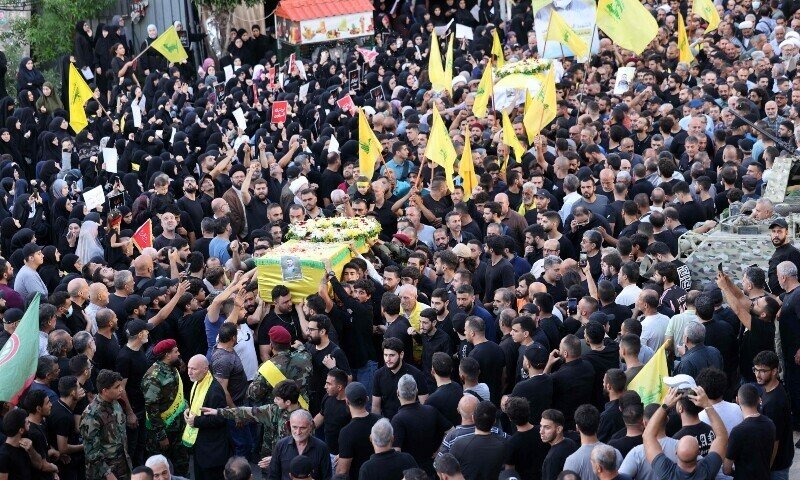
    Hezbollah fighters carry the coffins of people killed after hundreds of paging devices exploded in a deadly wave across Lebanon the previous day, during their funeral procession in Beirut’s southern suburbs on September 18, 2024. — AFP

    Heavy blow

    Analysts said operatives had likely planted explosives on the pagers before they were delivered to Hezbollah.

    “A small plastic explosive was almost certainly concealed alongside the battery, for remote detonation via a call or page,” said Charles Lister of the Middle East Institute.

    The preliminary findings of a Lebanese investigation into the blasts found the pagers had been booby-trapped, a security official said.

    “Data indicates the devices were pre-programmed to detonate and contained explosive materials planted next to the battery,” the official said, requesting anonymity to discuss sensitive matters.

    A source close to Hezbollah, asking not to be identified, said the pagers were “recently imported” and appeared to have been “sabotaged at source”.

    After The New York Times reported that the pagers had been ordered from Taiwanese manufacturer Gold Apollo, the company said they had been produced by its Hungarian partner BAC Consulting KFT.

    A government spokesman in Budapest said the company was “a trading intermediary, with no manufacturing or operational site in Hungary”.

    The attack dealt a heavy blow to Hezbollah, which already had concerns about the security of its communications after losing several commanders to targeted strikes in recent months.

    As fears surged of a regional conflagration nearly a year into the Gaza conflict, Lufthansa and Air France announced the suspension of flights to Tel Aviv, Tehran and Beirut until Thursday.

    ‘Extremely volatile’

    Since October, the exchanges of fire between Israeli troops and Hezbollah have killed hundreds of people, mostly fighters, in Lebanon, and dozens including soldiers on the Israeli side.

    They have also forced tens of thousands of people on both sides to flee their homes.

    United Nations rights chief Volker Turk said Tuesday’s attack had come at an “extremely volatile time”, calling the blasts “shocking” and their impact on civilians “unacceptable”.

    UN chief Antonio Guterres urged governments “not to weaponise civilian objects”.

    The October 7 attacks that sparked the genocide in Gaza resulted in the deaths of 1,205 people, mostly civilians, on the Israeli side, according to an AFP tally based on official Israeli figures that include hostages killed in captivity.

    Out of 251 hostages seized by fighters, 97 are still held in Gaza, including 33 the Israeli military says are dead.

    Israel’s military offensive and strikes has killed at least 41,272 people in Gaza, most of them civilians, according to data provided by the territory’s health ministry. The UN has acknowledged these figures as reliable.

    In Gaza on Wednesday, the civil defence agency said an Israeli strike on a school-turned-shelter killed five people, while the Israeli military said it targeted Hamas.

  • Hezbollah says fired ‘dozens’ of rockets at north Israel

    Hezbollah says fired ‘dozens’ of rockets at north Israel

    Hezbollah said it launched rockets at northern Israel Thursday “in response” to a deadly Israeli strike in south Lebanon — the group’s first attack after Israel killed a top commander earlier this week.

    Thegroup said in a statement that it “launched dozens of Katyusha rockets… in response to the Israeli enemy’s attack on… (the southern village of Shama) that killed a number of civilians.”

    The Israeli military said that shortly after the rocket fire, the air force “struck the Hezbollah launcher from which the projectiles were launched.”

    Earlier Thursday, the Lebanese health ministry said four Syrians were killed in an Israeli strike on the south, where Hezbollah and Israel have exchanged near-daily fire since the Gaza war began in October.

    “The health ministry announces… four Syrian nationals were martyred” in an “Israeli strike” on the southern village of Shama, it said in a statement.

    The ministry said the toll might rise once DNA tests had been carried out.

    The strike also wounded five Lebanese nationals, it added.

    Emergency services told AFP that the dead were farmer workers and part of the same family.

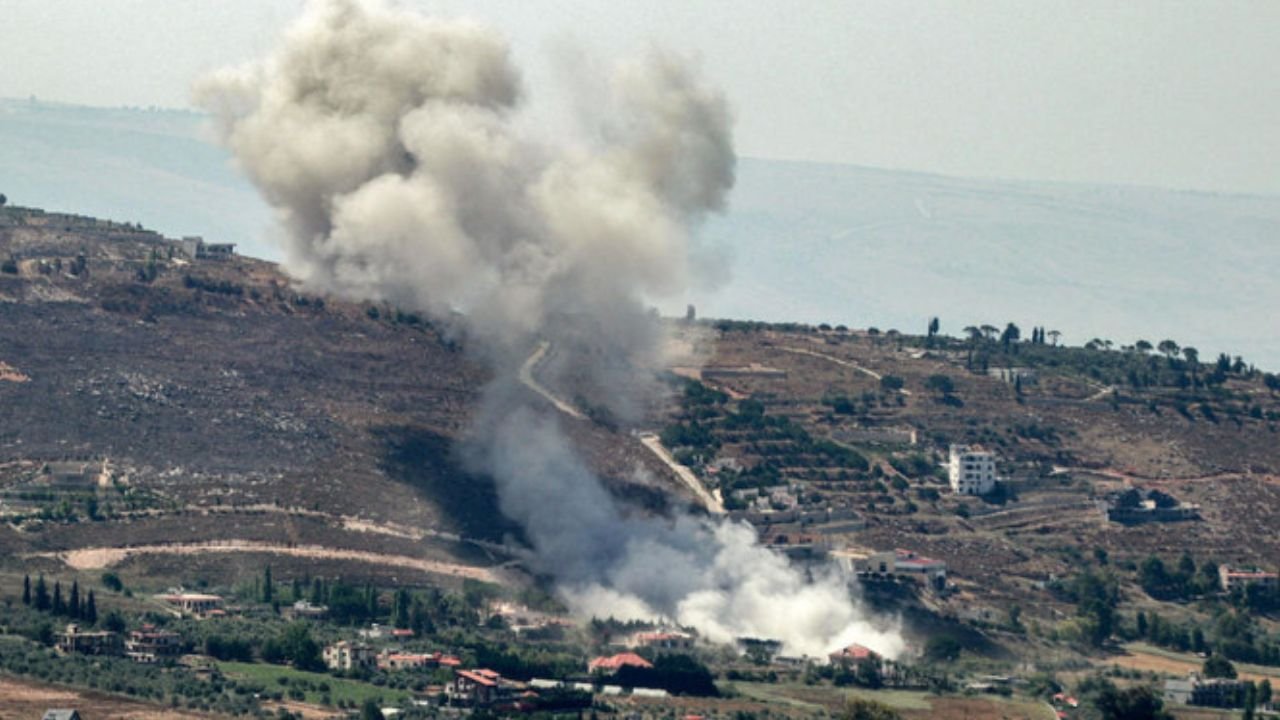
    Plumes of smoke billowed from the site of the strike, which heavily damaged two nearby buildings and burnt a vehicle to a crisp, a photographer contributing to AFP reported.

    The attack was Hezbollah’s first since an Israeli air strike killed its top commander Fuad Shukr on Tuesday evening, with leader Hassan Nasrallah saying operations would resume on Friday morning.

    Nasrallah warned his group was bound to respond to the killing of Shukr.

    His death was followed hours later Wednesday, by the killing of Hezbollah ally Hamas’s chief Ismail Haniyeh in a strike in Tehran, which Iran and Hamas have blamed on Israel. Israel has declined to comment on his killing.

    The genocide in Gaza since October has killed at least 542 people on the Lebanese side, most of them fighters but also including 114 civilians, according to an AFP tally.

    At least 22 soldiers and 25 civilians have been killed on the Israeli side, including in the annexed Golan Heights, according to army figures.

  • Wildfires in south Lebanon after Israeli bombardment: media, rescuer

    Wildfires in south Lebanon after Israeli bombardment: media, rescuer

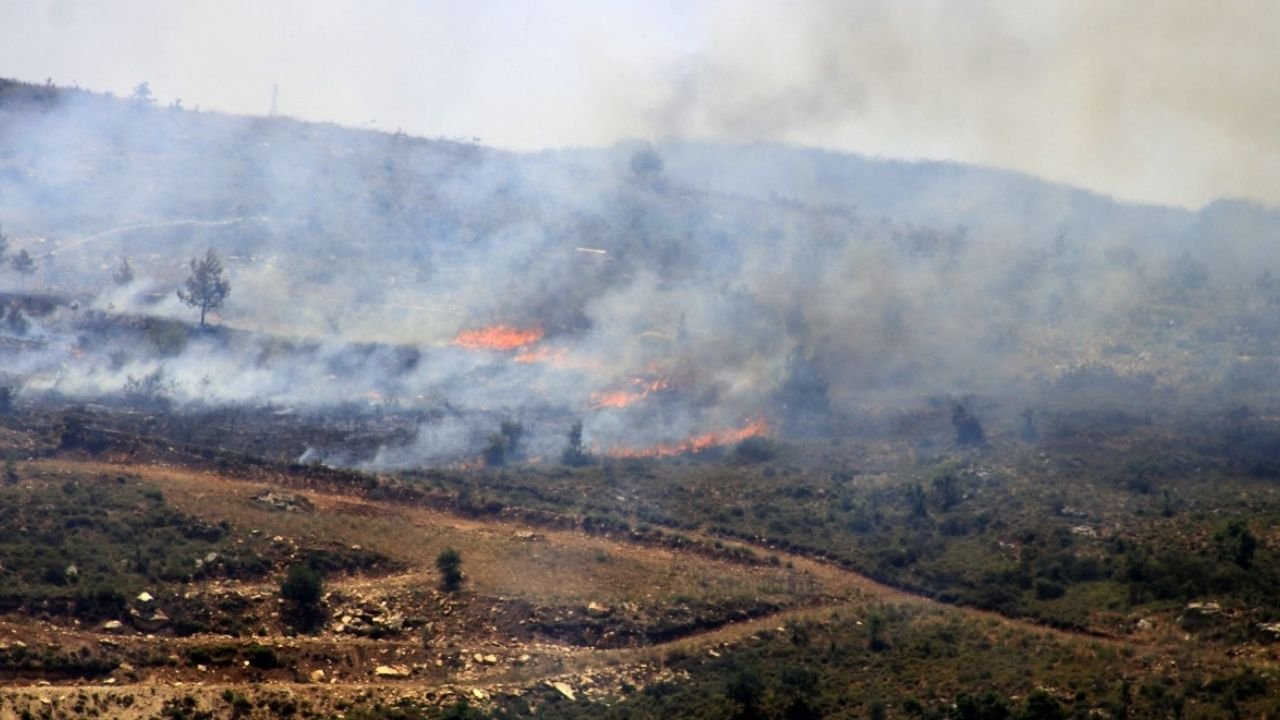
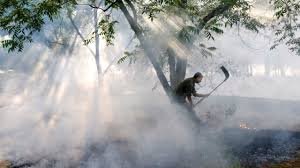
    Beirut, Lebanon: Israeli strikes Saturday on southern Lebanon sparked massive wildfires, state media and a first responder said, the latest fallout from escalating cross-border violence involving Hezbollah.

    Hezbollah has traded near-daily fire with Israeli forces in the nine months since the Gaza genocide began.

    Lebanon’s official National News Agency (NNA) said on Saturday that “Israeli artillery bombarded today the outskirts of the town of Alma al-Shaab with incendiary phosphorus shells, causing fires in the forests that spread to the vicinity of some homes”.

    Fire sweeps over fields targeted by Israeli artillery on the outskirts of the southern Lebanese village of Rmeish on June 4, 2024, amid ongoing cross-border clashes between Israeli troops and Hezbollah fighters. Photo by Kawnat HAJU / AFP.

    It added that the fire had reached “large areas of olive trees”.

    Lebanese authorities and several international rights groups have accused Israel of using white phosphorus rounds in its strikes on its northern neighbour.

    White phosphorus, a substance that ignites in contact with oxygen, can be used as an incendiary weapon.

    Its use as a chemical weapon is prohibited under international law, but it is allowed for illuminating battlefields and can be used as a smokescreen.

    Rescuer Ali Abbas of the Risala Scout association, affiliated with Hezbollah ally the Amal movement, told AFP that “Israel deliberately bombs forested areas with phosphorus with the aim of starting fires.”

    According to him, rescuers on the grounds have been struggling to extinguish the flames, while the Lebanese military avoids sending helicopters to assist for fear of more Israeli attacks.

    Further east, the NNA reported that “a large fire broke out at positions belonging to the Lebanese army and UNIFIL”, the UN peacekeeping mission, in the area of the border village of Mais al-Jabal.

    It is located near the UN-demarcated Blue Line between Lebanon and Israel.

    A security source told AFP on condition of anonymity that fires broke out near military positions but have not reached them or caused any casualties.

    The UN peacekeepers in a statement reported a “bushfire near one of their positions in Hula”, which was put out with help from Lebanese troops and civil defence forces.

    “The fire didn’t cause any damage to UNIFIL assets or personnel,” it said.

    The NNA said, “Several landmines exploded, and firefighting operations are still continuing” in the area.

    The border violence, which began on October 8, has killed 456 people in Lebanon, primarily fighters but including about 90 civilians, according to an AFP tally.

    On the Israeli side of the border, at least 15 soldiers and 11 civilians have been killed, according to the army.

  • Pakistani news channel’s hilarious mistake skewered on social media

    Pakistani news channel’s hilarious mistake skewered on social media

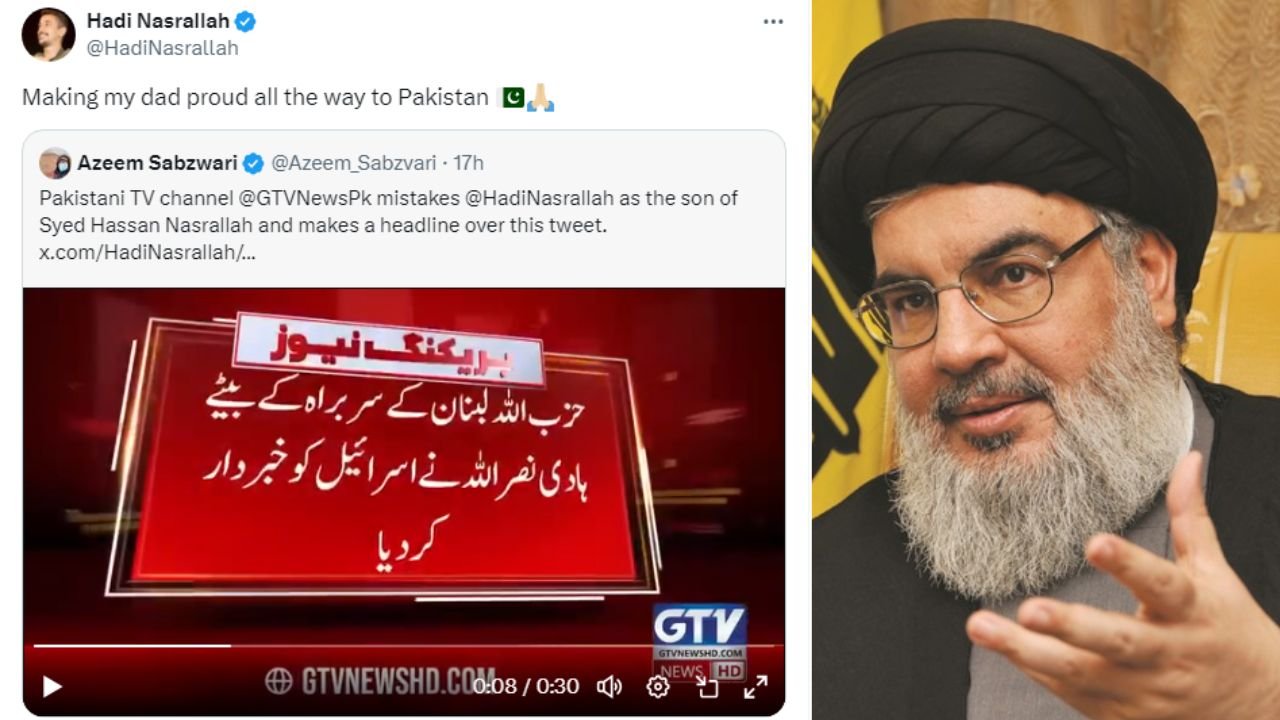
    Private news channel GTV made a hilarious mistake as they shared a tweet as a statement from a Hezbollah leader’s son; whereas the tweet was actually from a common netizen on Twitter.

    GTV mistook netizen Hadi Nasrallah as the son of Hezbollah leader Syed Hassan Narallah and this has unleashed a laughing riot on Twitter.

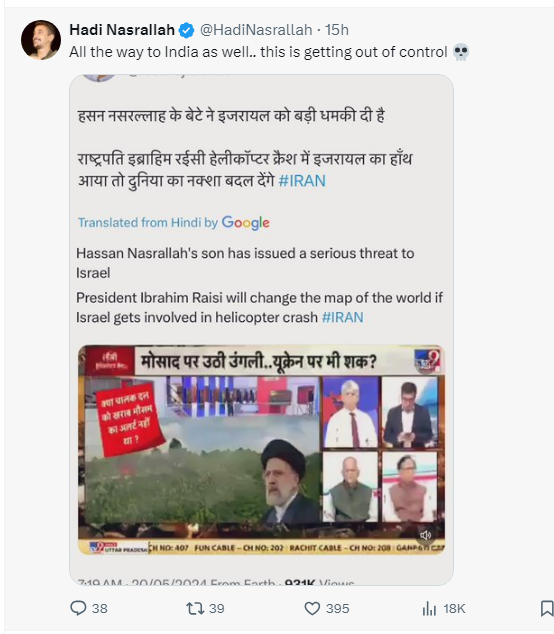
    It was even retweeted by Indians.

    Azeem Sabzwari tweeted the video to which Hadi replied, “Making my dad proud all the way to Pakistan.”

    People quipped if he really is the son and he jokingly replied, “I mean…no point to hide it now.”

  • Hezbollah Launched Over 100 Rockets At Israeli Positions

    Hezbollah Launched Over 100 Rockets At Israeli Positions

    Lebanon’s Hezbollah said Tuesday it launched over 100 rockets at Israeli military positions in retaliation for a strike on the country’s east that killed one person the day before.

    Hezbollah and Israel have exchanged near-daily cross-border fire since the genocide in Gaza erupted in October, but several Israeli strikes have recently hit Hezbollah positions further north, raising fears of a full-blown conflict.

    Hezbollah launched “more than a hundred katyusha rockets” Tuesday morning at two military bases in the occupied Golan Heights, the group said in a statement.

    This was “in response to the Israeli attacks on our people, villages and cities, most recently near the city of Baalbek and the killing of a citizen”, it added.

    On Monday, Israeli air strikes near Lebanon’s eastern city of Baalbek killed one person, in the second raid on the Hezbollah stronghold since cross-border hostilities began.

    The Israeli military confirmed its jets had hit two sites belonging to “Hezbollah’s aerial forces” in retaliation for strikes on the occupied Golan Heights over several days.

    On February 26, Israeli strikes targeted Baalbek, some 100 kilometres (60 miles) from the border, killing two Hezbollah members.

    Earlier on Tuesday, Hezbollah said its chief Hassan Nasrallah met with Khalil al-Hayya, a leading member of Hamas’s political bureau.

    They discussed ceasefire talks for the Gaza war, as well as attacks by Hamas’s regional allies to support its war efforts, the Hezbollah statement said.

    Nasrallah is due to give a televised speech on Wednesday.

    Hezbollah has repeatedly said it will only stop its attacks on Israel with a ceasefire in Gaza.

    But Israeli Defence Minister Yoav Gallant recently said any truce in Gaza would not change Israel’s goal of pushing Hezbollah out of southern Lebanon, by force or diplomacy.

    Since the increased Israeli attacks on Gaza following October 7, at least 317 people, mainly Hezbollah fighters but also 54 civilians, have been killed in Lebanon, according to an AFP tally.

    In Israel, at least 10 soldiers and seven civilians have been killed in the cross-border hostilities.

  • ‘If you harm an American, we will respond,’ says Biden after launching airstrikes in Syria and Iraq

    ‘If you harm an American, we will respond,’ says Biden after launching airstrikes in Syria and Iraq

    The President of the United States of America, Joe Biden, has cautioned, “If you harm an American, we will respond,” as US forces attacked more than 80 targets in Iraq and Syria in a wide-ranging air assault on sites belonging to Iran-linked fighter groups and Tehran’s Revolutionary Guard.

    The US president said the strikes had been launched in retaliation for the drone strike that killed three US troops in Jordan earlier in the week, adding: “Our response began today. It will continue at times and places of our choosing,” reports The Guardian.

    The US military’s Central Command said it had struck with more than 125 bombs in an attack that took place around midnight local time in what was described as the first of multiple attacks against the groups.

    “US military forces struck more than 85 targets, with numerous aircraft to include long-range bombers flown from the United States,” Centcom said in a statement. The raids were aimed at facilities believed to be controlled by Iran’s Islamic Revolutionary Guards Corps (IRGC) Quds Force and affiliated militia groups.

    John Kirby, the White House national security spokesman, said the strikes lasted about 30 minutes. “These responses began tonight. They’re not going to end tonight. So there will be additional responses. There will be additional action that we will take, all designed to put an end to these attacks and to take away capability by the IRGC.”

    The 85 targets were grouped in seven different locations: four in Syria and three in Iraq, according to US officials. Lt Gen Douglas Sims, director for operations on the joint staff, said the timing of the strikes was determined by the weather.

    “The initial indications are that we hit exactly what we meant to hit with a number of secondary explosions associated with the ammunition and logistics locations,” Sims said, although this could not be verified.

    On Thursday, the US said it blamed Islamic Resistance in Iraq, a coalition of Iran-linked militias, for the deadly drone attack last weekend on the remote Tower 22 logistics base in Jordan, near the border with Syria and Iraq. Three US army reservists were killed after living quarters were struck at night and more than 80 wounded.

  • 1,200 children still buried under rubble: What we know about day 28

    1,200 children still buried under rubble: What we know about day 28

    Israel disconnects with Gaza

    The Israeli Prime Minister’s Office has announced that Israel has cut off all contact with Gaza, and that Palestinian workers will no longer be employed in the country.

    “Those workers from Gaza who were in Israel on the day of the outbreak of the war will be returned to Gaza,” it stated in a post on X.

    The Security Cabinet has also planned on cutting down all funds for the besieged enclave from the Palestinian Authority funds.

    US drones fly over Gaza to track captives

    According to Al Jazeera, two US officials told the Reuters news agency that surveillance US drones have been flying over Gaza to search for hostages taken by Hamas on October 7.

    The surveillance has reportedly been going on since more than a week now.

    US officials believe the 10 Americans who remain “unaccounted” may be among the 200 plus hostages in Gaza.

    Gaza workers in Israel

    Gisha, an Israeli NGO, published a statement on the Israeli cabinet’s decision on Friday to return Palestinian workers in Israel since October 7 back to Gaza.

    Gisha, HaMoked and other human rights groups had submitted “Letters, petitions and individual inquiries to Israeli authorities regarding hundreds of Gaza residents, including both workers and people who had entered Israel with permits to receive medical treatment, who were present in Israel on October 7 and had since been unlawfully, secretly detained by Israeli authorities”.

    They are reportedly detained in Israeli military bases in the occupied West Bank, disconnected from the world and without access to legal representation.

    “Israel refused to disclose the names and whereabouts of all the people it was holding, as well as the legal grounds for their detention. We have reason to believe that the holding conditions in these facilities were extremely dire, and that detainees were subjected to extensive physical violence and psychological abuse, as well as being held in inhumane conditions,” the statement said.

    1,200 children still buried under rubble

    Gaza Ministry of Health spokesperson Ashraf al-Qudra reported on the latest statistics: 1,200 children are still buried under the rubble of destroyed buildings, 136 paramedics have been killed, 25 ambulance vehicles have been completely destroyed, and 126 hospitals and another 50 medical centres have been targeted.

    Tear gas aimed at worshippers in Al-Aqsa

    Al Jazeera correspondents have reported that Israeli forces have used tear gas against Palestinians in occupied East Jerusalem’s Wadi al-Joz neighbourhood after stopping them from Friday prayers in Al-Aqsa Mosque.

    Cross-border fire between Israel-Lebanon border continue

    The Israeli army claims to have killed a group of Hezbollah fighters on Thursday in Lebanon and targeted one of their sites.

    The army reportedly struck in response to an attack from Lebanese territory towards a military position in northern Israel near the border.

    Credits: Al Jazeera

  • Donald Trump thinks Hezbollah is ‘very smart’

    Donald Trump thinks Hezbollah is ‘very smart’

    While lambasting Joe Biden and Benjamin Netanyahu, former President of the United States of America, Donald Trump appreciated Hezbollah for being “very smart”. While speaking to a rally of supporters in Florida, Trump did not hold back and even called the Israeli Defence Minister a “jerk” for stating on national TV that he hopes they don’t attack from the North because they did the following morning. He said that these “statements are passed when you’re doing a con-job and fully prepared but in actual you were not. Israel was not prepared.”

    Earlier he claimed to have read Biden’s security papers where it was mentioned that he hopes Hezbolllah does not attack from the North because that is the most vulnerable spot. He praises the group’s intelligence that they (Hezbollah) are all very smart and they know the weak-spots.

    He carried on by accusing Iran of being a potentially big, vicious force that Israel is fighting and he advised the latter to straighten themselves up.

    He reminisced about the time he was disappointed by Israel when Netanyahu let them (USA) down while countering Iran-hinting at the target killing of General Qasim Sulemani-he still wants Israel to get it right this time.

    Trump’s criticism of Biden is not a surprise but in his interview to Fox News he asserted that, “We have to protect Israel, there’s no choice.” He goes on by saying “He(Netanyahu) is hurt very badly, he was not prepared and Israel was not prepared. And under Trump they wouldn’t have to be prepared…”

    His statements have invited a lot of criticism from various fronts. “[I]t is absurd that anyone, much less someone running for President, would choose now to attack our friend and ally, Israel, much less praise Hezbollah terrorists as ‘very smart,’” Florida Gov. Ron DeSantis said in a post on X, formerly known as Twitter.

    White House called these statements as “dangerous and unhinged.”

    Former New Jersey governor Chris Christie called Trump “a fool” for his remarks on Hezbollah and Netanyahu.

    This has infuriated people and Trump knows it when he said that the media comes at him for calling President XI of China “smart” too but he remarks nonchalantly, that he “gotta say” what he has to say.