Tag: Hi octane

  • Pakistan has sufficient petrol and diesel to meet domestic demand: Petroleum Division

    Pakistan has sufficient petrol and diesel to meet domestic demand: Petroleum Division

    The Petroleum Division said on Tuesday that the country has sufficient petrol and High-Speed Diesel (HSD) in stock to meet domestic demand after allowing Oil Marketing Companies (OMCs) to recover Rs10 per litre on HSD for the next two months (November-December 2022) by raising the premium limit to $15 per barrel.

    The OCAC had cautioned the federal government about a likely shortage of petrol and HSD in the coming days due to limited imports and limited local availability.

    According to the OCAC’s letter to the Oil and Gas Regulatory Authority (Ogra), the gap is due to limited supply and excessive premiums on fuel stocks on the international market.

    The Economic Coordination Committee (ECC), led by Finance Minister Ishaq Dar, approved the summary proposed by the Ministry of Energy on Friday (Petroleum Division).

    The ministry aimed to secure sustainable HSD imports for November-December 2022 by loading the country’s risk factors of $6 bbl, with an upper limit premium of $15 to the OMCs for pricing computation.

  • Shell Pakistan posts after-tax profit of Rs7.4 billion in first half of 2022

    Shell Pakistan posts after-tax profit of Rs7.4 billion in first half of 2022

    The results for the first half of the year are announced by Shell Pakistan Limited’s (SPL) Board of Directors. In comparison to the profit of Rs2,153 million recorded during the same period last year, the company reported an after-tax profit of Rs7,469 million in 2022.

    The significant rebound is a result of increased company performance with a strategic focus, a positive shift in the government’s pricing methodology for the S&P Global Platts indexes, and safe and effective fuel operations.

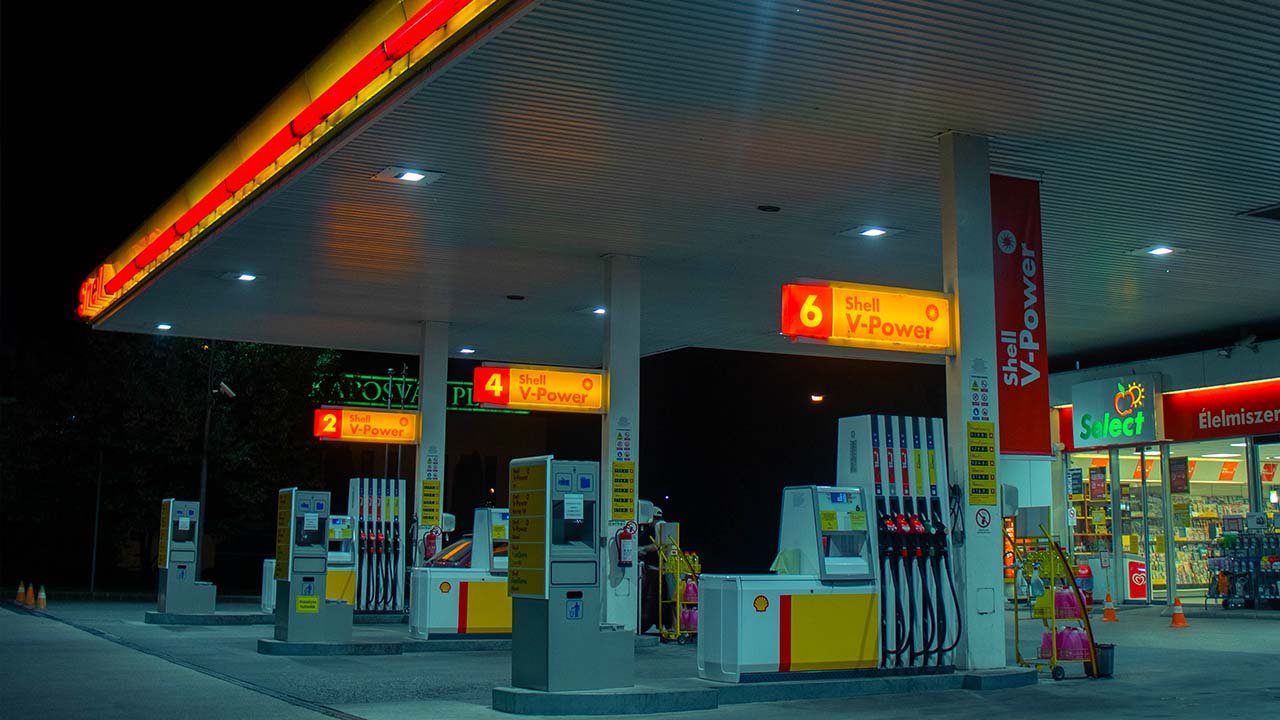
    According to Brecoder, the petroleum business added 13 new retail locations during this span, that will contribute to increased volume. In the market for premium fuels, Shell V-Power continues to be the market leader.

    In order to ensure that the business plays a significant part in the development of Pakistan’s energy future, the company will actively work to curtail the impact of present impediments and strive to grasp opportunities.

    Earlier, the business also confirmed its decision to cease its aviation operations in Pakistan. Currently, SPL operates its aviation-related business out of four locations.

    Including Nawabshah Airport, Begum Nusrat Bhutto Airport in Sukkur, Quetta International Airport, and Jinnah Airport in Karachi. SPL has concluded that it is no longer commercially viable to continue with its aviation operations in the country after careful consideration.

    In order to promote practices that will make Pakistani roads safer, the business also wrote the road safety book “Once Upon a Road.” The book will be covered in Pakistan’s sixth-grade curriculum developed by the Care Foundation.

  • Oil sales fell by 11 per cent as prices rose to highest levels

    Oil sales fell by 11 per cent as prices rose to highest levels

    In June 2022, overall sales of petroleum and lubricants were 1.93 million tonnes, down 11 per cent from the previous month but unchanged from the previous year.

    Petrol and high-speed diesel (HSD) sales both experienced significant monthly declines, falling by 12 and 16 per cent, respectively.

    Sales of all oil products rose by 16 per cent YoY to 22.595 million tonnes during FY22 from 19.45 million tonnes during the same period in FY21.

    Analyzing the data demonstrates that expansion was seen in all categories, with offtake increasing to 8.95 million tonnes, 8.87 million tonnes, and 4.04 million tonnes, respectively, up by 9 per cent, 15 per cent, and 35 per cent on YoY compared to the same period last year.

    Ismail Iqbal Securities analyst Abdullah Umer stated, “We believe that significant rise in both diesel and petrol prices are the main reason behind the decline in retail sales.”

    According to the brokerage house, “Healthy economic activity, robust agricultural activity, upbeat automobile sales, and curb of HSD smuggling remained major drivers behind such stupendous growth.”

    Although the current government has chosen to manage petroleum product prices by levying a Petroleum Development Levy (PDL) and sales tax even if international oil prices decline, the brokerage house anticipated a further slowdown in diesel and gasoline sales going forward.

    In the coming months, retail fuel demand is likely to be further impacted by an increase in carpooling, increased use of public transportation, a change in consumer behaviour (moving from passenger cars to two-wheelers), high inflation, and a general slowdown in economic activity.

    “We expect RFO sales to remain intact due to a likely decline in RLNG & imported coal-based power generation.”

    The government announced a late-night price increase for petroleum products on Thursday, raising the ex-depot price of gasoline to Rs248.74 per liter (after an increase of Rs14.85) and diesel to Rs276.54 (after a hike of Rs13.23).

    Diesel was previously priced at Rs263.31 per litre and petrol at Rs233.89.

    The pricing structure included a Rs10 petroleum levy on gasoline. The cost of high-speed diesel, kerosene, and light diesel oil has also increased by Rs5 per litre.

    Finance Minister Miftah Ismail announced the government’s decision, stating that these prices would go into effect at midnight in order to make up for the Rs-230 billion loss experienced during the fiscal year that ended on June 30th, 2022.

    According to him, the country’s budget deficit, which reached a historic high of Rs5 trillion, made the increase in these prices inevitable.
  • PM Shehbaz rejects OGRA’s proposal, petrol price to remain unchanged till April 30

    PM Shehbaz rejects OGRA’s proposal, petrol price to remain unchanged till April 30

    Pakistan’s new Prime Minister (PM) Shehbaz Sharif on Friday dismissed the proposal from the Oil and Gas Regulatory Authority (OGRA) to raise the price of petroleum products for the fortnight. The recent decision is aimed at providing relief to the public affected by inflation.

    It is worth noting that the present government’s choice to maintain the same prices will oblige it to provide another substantial subsidy till the end of April 2022.

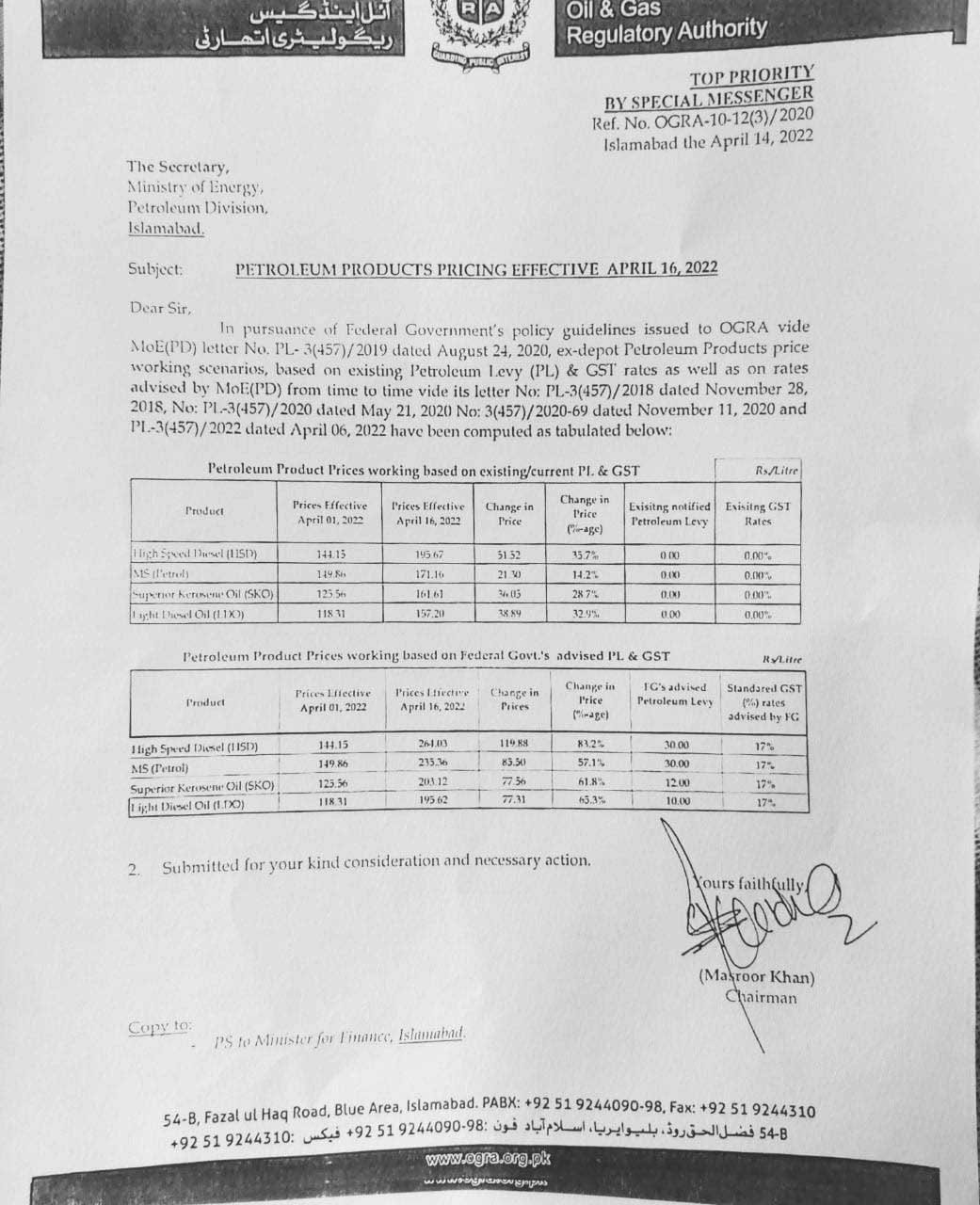
    Earlier, OGRA suggested to the Finance Division that the price of petrol be increased by Rs21.50 and that of diesel be hiked by Rs51.30 in view of the current petroleum levy and general sales tax (GST).

    Read more: Massive hike of Rs83.5 for petrol, Rs119 for diesel proposed by OGRA

    The authority also proposed a hike of Rs83.50 per liter of petrol and Rs119.88 per liter of diesel considering the federal government’s recommended petroleum levy of Rs30 and 17 per cent GST, as per the official statement.

  • International oil prices declined by 4%, crashing below $100 per barrel

    International oil prices declined by 4%, crashing below $100 per barrel

    Brent crude slid below $100 for the first time since March 16 amid plans to release huge amounts of petroleum and oil products from strategic storage, and also China’s prolonged coronavirus closure.

    Crude oil was down $4.1, or 3.99 per cent, at $98.68 per barrel. The price of US West Texas Intermediate (WTI) crude fell $4.28 a barrel, or 4.28 per cent, to $94.07 per barrel.

    The International Energy Agency (IEA) recently announced that member countries will release 60 million barrels over the next six months, with the United States matching that amount as part of its 180-million-barrel release announced in March.

    The actions are meant to make up for a shortfall of Russian crude after Moscow was extensively sanctioned for what it claims was a “special military operation” in Ukraine.

    As per JP Morgan analysts, the release of Strategic Petroleum Reserve (SPR) volumes will amount to 1.3 million barrels per day (BPD) over the next six months, enough to cover a 1 million BPD shortfall in Russian oil supplies.

    The release of strategic government oil reserves is projected to relieve some market tightness in the coming months, reducing the likelihood of oil prices rising and re-enforcing near-term supply constraints.

    While this is the largest release since the IEA stockpile was established in 1980, market participants believe it will fail to affect the principles of the oil market and will just delay further increases in production from crucial suppliers.