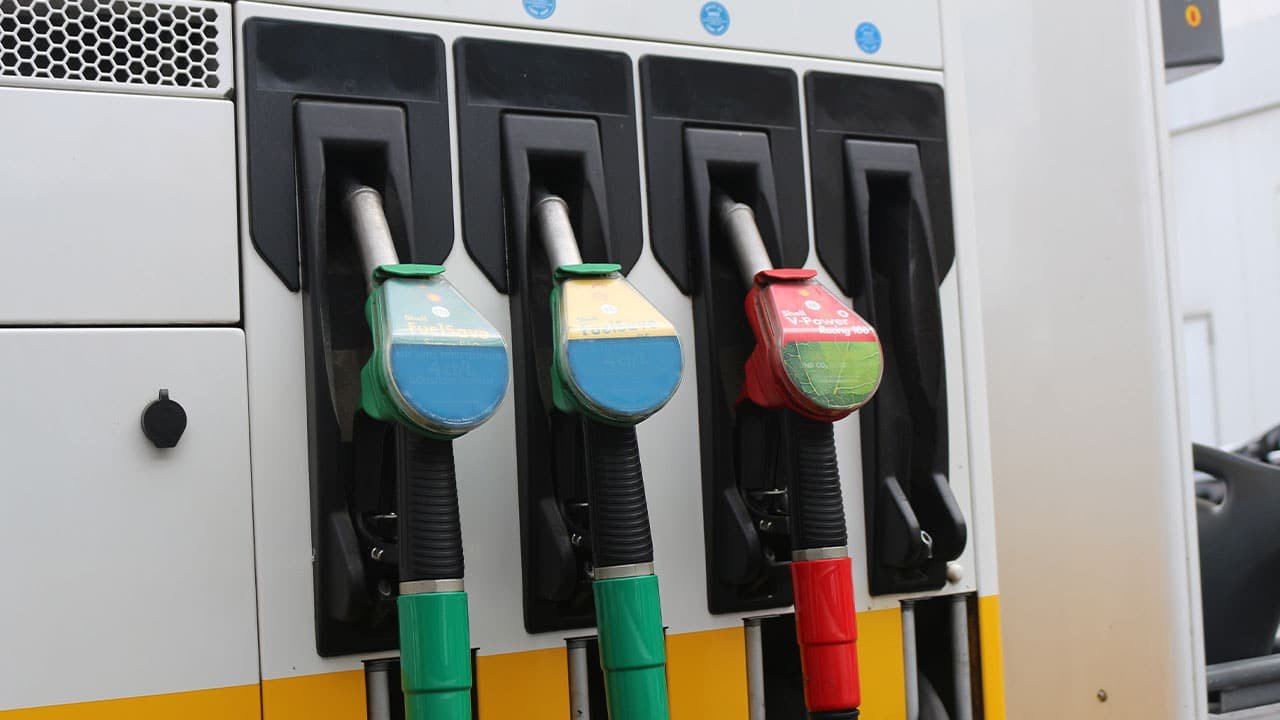
Tag: high-speed diesel

  • Oil marketing companies in Pakistan report 26% increase in sales

    Oil marketing companies in Pakistan report 26% increase in sales

    The sales of oil marketing companies (OMCs) rose by 7 per cent year-on-year (YoY) in May 2024, reaching a nine-month high of 1.39 million tonnes (MTs), compared to 1.30 MTs in May 2023, according to data released by the Oil Companies Advisory Council (OCAC).

    On a month-on-month (MoM) basis, oil sales surged by 26 per cent from April 2024, where sales were recorded at 1.10 MTs.

    In the ongoing fiscal year (11MFY24), cumulative sales stood at 13.83 MTs, a 9 per cent decline from 15.26 MTs recorded during the same period in the previous fiscal year (11MFY23).

    In May 2024, sales of Motor Spirit (MS) and High-Speed Diesel (HSD) increased by 1 per cent and 18 per cent YoY, amounting to 0.61 MTs and 0.64 MTs, respectively. Conversely, sales of Furnace Oil (FO) dropped by 24 per cent YoY to 0.07 MTs.

    On a MoM basis, the sales of MS, HSD, and FO rose by 14 per cent, 37 per cent, and 131 per cent, respectively.

    Attock Petroleum Limited experienced the highest increase in total oil sales, reaching 0.14 MTs, a 14 per cent YoY growth. Shell Pakistan Limited (PSX: SHEL) followed with a 13 per cent YoY increase to 0.10 MTs. 

    Pakistan State Oil (PSO) recorded an 11 per cent rise, reaching 0.67 MTs. In contrast, Hascol Petroleum Limited (HACOL) saw a 39 per cent YoY decline to 0.04 MTs.

    Compared to the previous month, the sales of PSO, APL, SHEL, and HASCOL increased by 19 per cent, 42 per cent, 23 per cent, and 51 per cent MoM, respectively.

    In 11MFY24, all OMCs reported a decline in sales.

    In May 2024, PSO maintained its dominance in the OMC industry with a market share of 47.9 per cent. APL and SHEL held market shares of 10.1 per cent and 7.2 per cent, respectively, during the review period.
  • Govt expected to increase petrol price by Rs3.5 for first half of March

    Govt expected to increase petrol price by Rs3.5 for first half of March

    In a possible move that could impact consumers, the government is considering a hike in petrol prices by Rs3.5 per litre for the initial half of March 2024.

    As of the latest estimates until February 27, 2024, the ex-refinery price of petroleum has seen a noticeable rise, reaching Rs195.75 per litre. This reflects an increase of approximately Rs3.58 compared to the preceding fortnight’s price of Rs192.17 per litre.

    Contrary to petrol, there might be no significant adjustment in the price of high-speed diesel (HSD), with the government likely to maintain the current rate due to marginal changes in its pricing structure.

    The national currency has experienced a modest appreciation against the USD since the previous fortnight’s decision, settling at a weighted average rate of approximately PKR 279.37 per USD.

    It is crucial to highlight that, with two more sessions pending before the next pricing update, the final prices will be subject to global market fluctuations and exchange rate variations.

    The official announcement revealing the new prices is scheduled for midnight on February 29, 2024. If approved, these adjustments will remain effective for the first half of March. 

  • Govt reduces petrol price by Rs8 to Rs259.34 per litre for next fortnight

    Govt reduces petrol price by Rs8 to Rs259.34 per litre for next fortnight

    In a significant move, the caretaker government announced a substantial reduction in the price of petrol by Rs8 per litre for the upcoming fortnight, effective January 16.

    This decision, as conveyed in a notification issued today by the Finance Division, aligns with the recommendations put forth by the Oil and Gas Regulatory Authority (OGRA).

    The adjusted ex-depot price of petrol now stands at Rs259.34 per litre, reflecting a notable decrease from the previous rate of Rs267.34 per litre.

    However, it is important to note that there have been no alterations in the prices of high-speed diesel, light-diesel oil, or kerosene oil.

    The government has already reached the maximum permissible limit under the law, with a Rs60 per litre petroleum levy imposed on both petrol and high-speed diesel (HSD).

    This levy is in line with the commitments made to the International Monetary Fund (IMF), aiming to collect Rs869 billion during the current fiscal year.

    Optimistically, the government anticipates surpassing this target, with the collection expected to exceed Rs950 billion by the end of June.

    Petroleum and electricity prices have been identified as key contributors to inflation, which surged to 29.7 per cent in December, as indicated by the Consumer Price Index.

    Presently, the government imposes a tax of approximately Rs82 per litre on both petrol and HSD.

    This adjustment in petrol prices not only provides relief to consumers but also marks a strategic step by the caretaker government to manage fiscal targets while considering the economic impact on the general population.

    The move is anticipated to have ripple effects on inflation rates, offering a temporary respite from the cost of living for the common citizen.

  • Govt hikes petrol price by Rs5 to Rs272 per litre to match global market changes

    Govt hikes petrol price by Rs5 to Rs272 per litre to match global market changes

    As per a press release from the Finance Division, the government has decided to raise the price of petrol by Rs5 per litre to Rs272 per litre for the next two weeks, effective from March 16 (Thursday).

    The statement noted that the increase was due to the rise in Platts Singapore prices over the past two weeks and the depreciation of the Pak Rupee, resulting in a hike in petroleum, oil, and lubricant (POL) products in Pakistan.

    The notification further disclosed that the price of high-speed diesel has been increased by Rs13 per litre to Rs293 per litre, and kerosene has been raised by Rs2.56 per litre to Rs190.29 per litre by reducing government dues on them. However, the price of light diesel oil has been kept constant at Rs184.68 per litre by adjusting government dues.

    It’s worth mentioning that Finance Minister Ishaq Dar had previously announced a reduction in petrol prices by Rs5 per litre on February 28.

  • Govt raises petrol price by Rs2.07 to Rs235.98 per litre

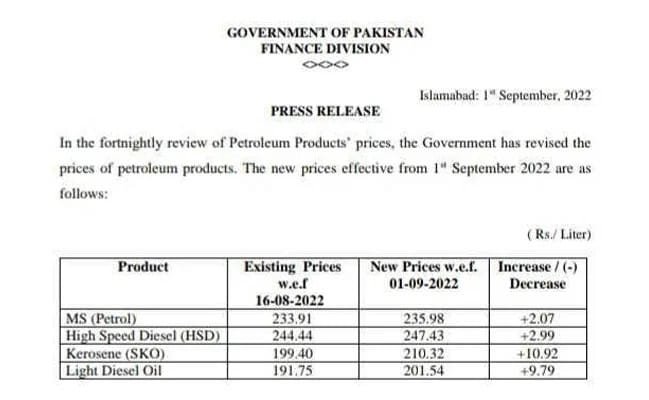
    Govt raises petrol price by Rs2.07 to Rs235.98 per litre

    The price of petrol was raised by the government on Wednesday by Rs2.07 per litre, making it Rs235.98 for the upcoming two weeks.

    Additionally, it announced a hike in the costs of kerosene oil by Rs9.79 per litre to Rs201.54, high-speed diesel by Rs2.99 per litre to Rs247.43, and light diesel oil by Rs10.92 per litre to Rs210.32.

    Contrary to what the market anticipated, the decision to raise gasoline prices, even more, was finally made. In the first half of September 2022, the market anticipated a price drop of up to Rs 20 per litre for the two main petroleum products—petrol and high-speed diesel.

    Expectations were sparked by a decline in the average exchange rate for the purchase of Pakistan State Oil (PSO), which fell from Rs227 in the first half of August to Rs217 in the next15 days.

    Similar to this, the premium paid on gasoline and HSD in the first half of August had decreased from $17 and $8.5 per barrel, respectively.

  • ‘Petroleum products prices in Pak are still lower than other countries’: Shaukat Tarin

    ‘Petroleum products prices in Pak are still lower than other countries’: Shaukat Tarin

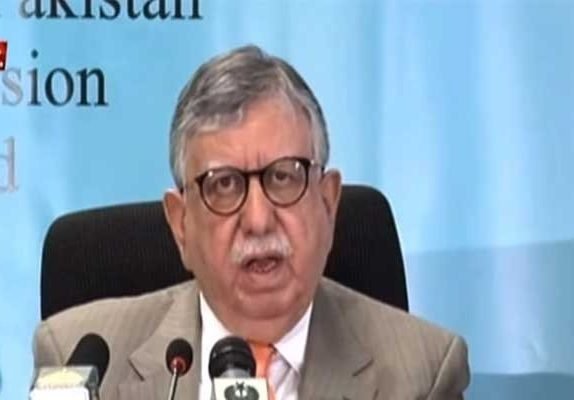
    Finance Minister Shaukat Tarin on Friday said the rates of petroleum products in Pakistan are still lower when compared to several regional countries.

    Tarin said Pakistan ranks 17th in the region when it comes to petrol prices.

    “There are only 16 other countries that have lower petrol prices than ours. They are oil producers and have their own oil,” said Tarin.

    “Prices in the international market have increased recently forcing the government to hike local prices,” he said after petrol prices were increased by Rs4 per litre and that of high-speed diesel (HSD) by Rs2 per litre.

    Shaukat Tarin said Prime Minister Imran Khan stopped the ministry from increasing the levy as he wanted to lessen the burden on the masses. “This is the reason we want to give direct subsidy to the lower-income group.”

    “We are not even charging [petroleum] levy even though we have kept a target of Rs600 billion for it in the budget. But we and the prime minister didn’t care for it.”

    Meanwhile, Pakistan People’s Party (PPP) Senator Sherry Rehman has criticised the government for dropping a “petrol bomb” on the masses in times of extreme inflation.