Tag: High treason case

  • Lahore High Court gave Pervez Musharraf relief which he didn’t even ask for

    Lahore High Court gave Pervez Musharraf relief which he didn’t even ask for

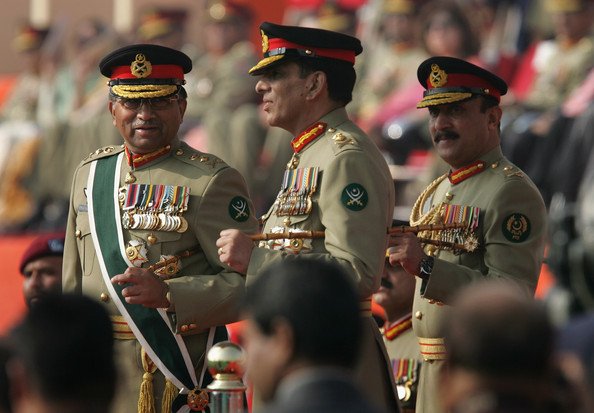
    The Supreme Court of Pakistan has questioned the Lahore High Court’s (LHC) decision to overturn the death sentence of former military dictator Pervez Musharraf.

    The initial death sentence was imposed by a special court in December 2019 on charges of high treason.

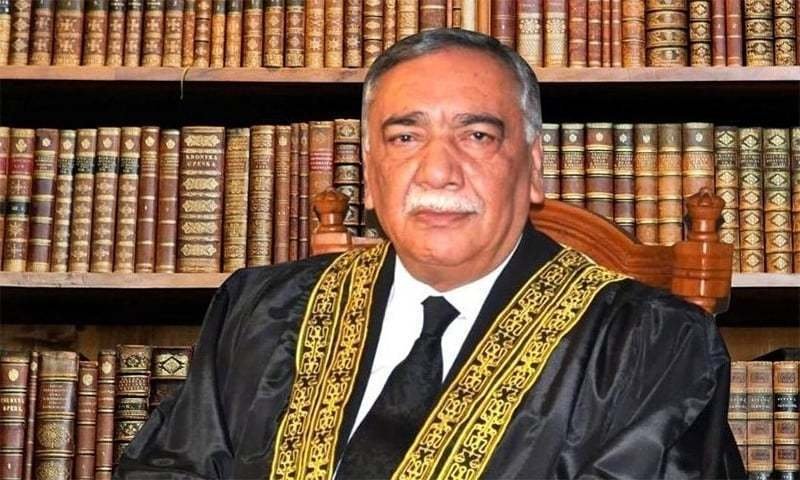
    The Chief Justice of Pakistan, Qazi Faez Isa, leading a four-judge bench, expressed astonishment at the approach taken by LHC, suggesting that it may have exceeded its jurisdiction in the matter.

    “At best, the LHC could do was to allow the prayers sought in the petition, but what the court did was uprooting the special court itself,” Justice Isa said.

    The special court had originally adjudicated the high treason charges against Musharraf.

    A four-member bench, headed by Chief Justice of Pakistan Justice Qazi Faez Isa and comprising Justice Syed Mansoor Ali Shah, Justice Athar Minallah, and Justice Amin-ud-Din Khan conducted the hearing of the appeals of Bar Councils and others against the judgment of a three-member bench of the LHC.

    The Supreme Court’s scrutiny focused on the LHC January 2020 order, which not only declared the special court’s ruling unconstitutional but also entertained Musharraf’s appeal against his death conviction.

    A three-member bench of the LHC, headed by Justice Syed Mazahar Ali Akbar Naqvi, and comprising Justice Muhammad Masood Jahangir and Justice Ameer Bhatti on January 13, 2020, had declared; “The Special Court was established without an iota of doubt that very basis of initiation of proceedings against the petitioner/ General (R) Pervez Musharraf, since its inception to the culmination are beyond the constitutional mandate, ultra vires, coram-non-judice, unlawful, hence, any superstructure raised over it shall fall to ground.”

    It further said; “Trial in absentia is declared as illegal, unconstitutional being repugnant to injunctions of Islam, as well as, Article 2-A, 8 and 10-A of the Constitution.”

    Pervez Musharraf passed away earlier this year, on February 5, after a prolonged illness.

    The Supreme Court’s review also brought attention to concerns about the LHC’s territorial jurisdiction.

    Justice Syed Mansoor Ali Shah noted that the constitution of the special court was never directly challenged.

    The Chief Justice cautioned against labeling Musharraf as an absconder during the hearing, as it could prejudice the ongoing appeal.

    The hearing is set to continue next Tuesday.

    The Supreme Court has asked the petitioner’s counsel to conclude arguments on Musharraf’s petition against the Special Court judgment.

  • He’s gone, but Supreme Court to decide death penalty case against Musharraf

    He’s gone, but Supreme Court to decide death penalty case against Musharraf

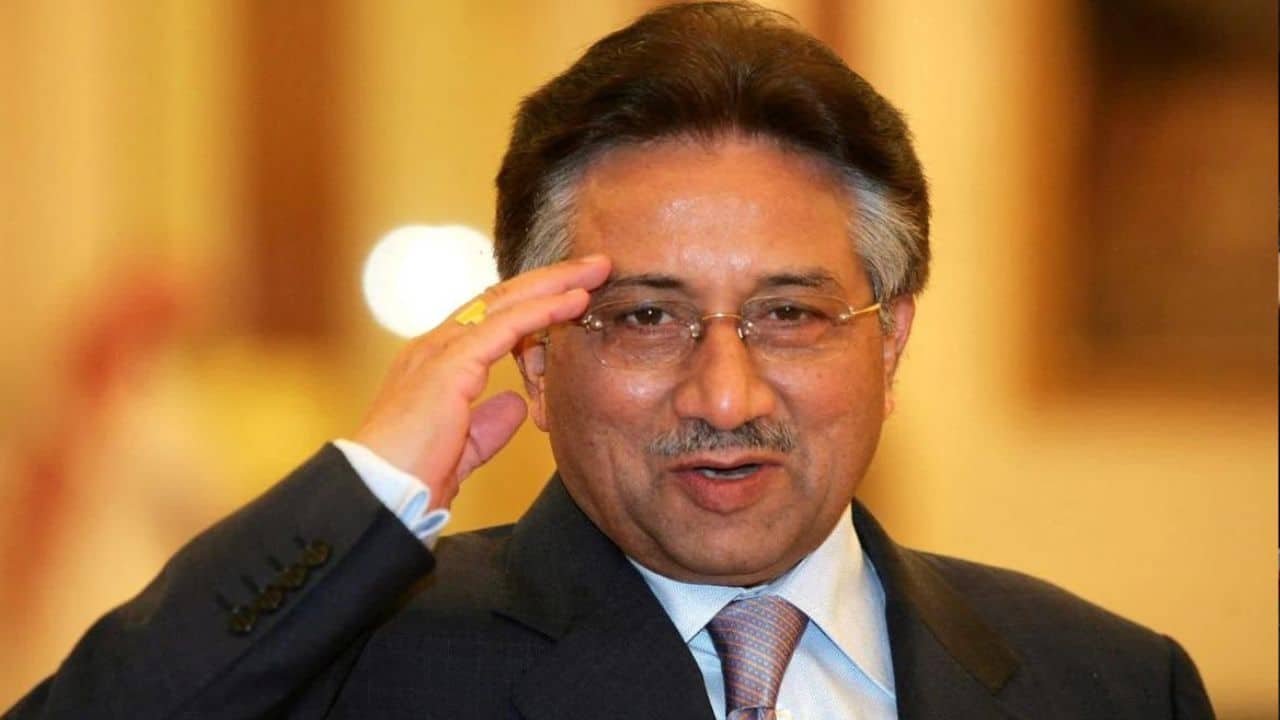
    The Supreme Court of Pakistan is set to begin hearing a series of appeals on November 10, including those filed by the late former President, retired General Pervez Musharraf, in an attempt to overturn his death sentence, as per Dawn.

    A four-judge bench, headed by Chief Justice of Pakistan (CJP) Qazi Faez Isa, along with Justice Syed Mansoor Ali Shah, Justice Aminud Din Khan, and Justice Athar Minallah, will preside over the hearings.

    Represented by his counsel Salman Safdar, the late General filed an appeal requesting the annulment of the conviction, citing a trial process that was conducted in violation of the Constitution and the Code of Criminal Procedure (CrPC) 1898.

    The appeal seeks a suspension of the judgment in the interest of justice and fair play.

    The petition highlights Musharraf’s military career and claims that the trial for a constitutional crime was conducted in an unconstitutional manner.

    In a separate development, the Sindh High Court Bar Association contested the Lahore High Court’s decision on January 13, 2020, which deemed the Special Court’s decision unconstitutional.

    The association has appealed to the Supreme Court to reinstate the conviction for subverting the Constitution.

    Presented by counsel Rasheed A. Razvi, the appeal argues that the high court’s verdict is legally flawed, alleging a misinterpretation of evidence and failure to appreciate the material presented by the prosecution during the trial.

    Additionally, the appeal asserts that the high court neglected to acknowledge that the material presented by the prosecution before the Special Court was not denied by Gen Musharraf at any stage of the case.

    It further argues that the verdict contradicts established principles of the Qanoon-e-Shahadat Order, stating that unchallenged facts are deemed admitted by the parties and do not require further proof.

    The petition asserts that the high court’s decision contradicts the precedent set by superior courts and the Supreme Court, referencing the 2019 Lahore High Court Bar Association case.

    A special court in Islamabad found former military ruler retired Gen Pervez Musharraf guilty of high treason and handed him a death sentence under Article 6 of the Constitution on December 17, 2019.

    This was the first time in Pakistan’s history that a military chief has been declared guilty of high treason and handed a death sentence. The verdict was split 2-1.

    Article 6 of the Constitution says: “Any person who abrogates or subverts or suspends or hold in abeyance, or attempts or conspires to abrogate or subvert or suspend or hold in abeyance the Constitution by use of force or show force or by any other unconstitutional means shall be guilty of high treason.”

    The three-member bench of the special court was headed by Peshawar High Court Chief Justice Waqar Ahmad Seth and comprising Justice Nazar Akbar of the Sindh High Court (SHC) and Justice Shahid Karim of the Lahore High Court (LHC).

  • Govt to file high treason case against PTI leaders

    Govt to file high treason case against PTI leaders

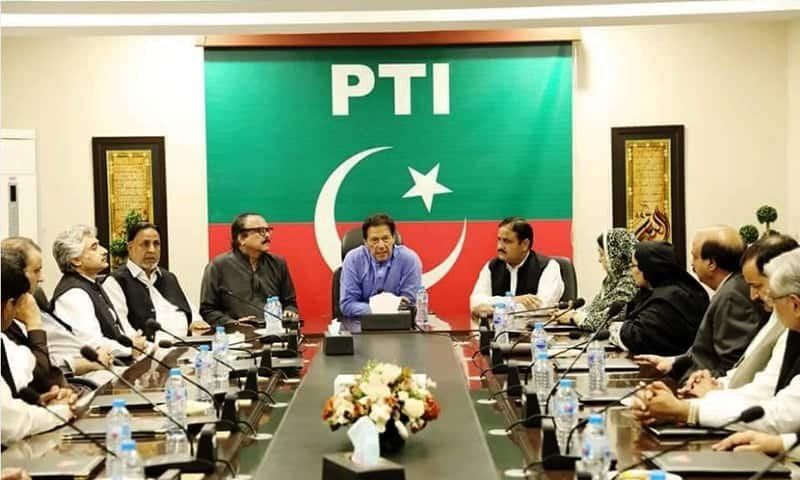
    The government has started preparing a high treason case against the former and the current PTI government officials on the basis of Article 6 for violating the Constitution, confirmed Deputy Secretary General PML-N Attaullah Tarar.

    According to Geo News’ sources, the people who are being named are President of Pakistan Dr Arif Alvi, Former Prime Minister (PM) Imran Khan, Former National Assembly (NA) Deputy Speaker Qasim Suri and Punjab Governor Omar Sarfraz Cheema.

    As per the news outlet, currently, the government is consulting legal experts. The current ministries of interior and law have started gathering evidence related to the case.

    Article 6 of Constitution of Pakistan, says any person who “abrogates or subverts or suspends or holds in abeyance the Constitution shall be guilty of high treason”.

    On April 3rd, Deputy Speaker Suri “dismissed” the no-confidence motion against Imran Khan, terming it against Article 5 of the Constitution. Then, Khan addressed the nation, saying he had advised President Alvi to dissolve NA, which the President approved.

    Later, the Supreme Court of Pakistan (SCP) declared the act unconstitutional, restored the assemblies and directed to hold the no-confidence motion in the House, which resulted in the removal of Khan’s government.

    A couple of weeks ago, PML-N Hamza Shehbaz was elected as the new CM of Punjab. However, his oath-taking ceremony is still hanging as the Governor of Punjab Omar Sarfraz Cheema declined to administer the ceremony multiple times. Despite Lahore High Court’s (LHC) order to do the ceremony, it is yet to take place.

    Many legal experts have argued that Punjab’s governor cannot decline to administer the oath to the chief minister-elect under any circumstances and termed it illegal.

  • Imran wants treason case against Fazl ‘for trying to topple PTI govt’

    Imran wants treason case against Fazl ‘for trying to topple PTI govt’

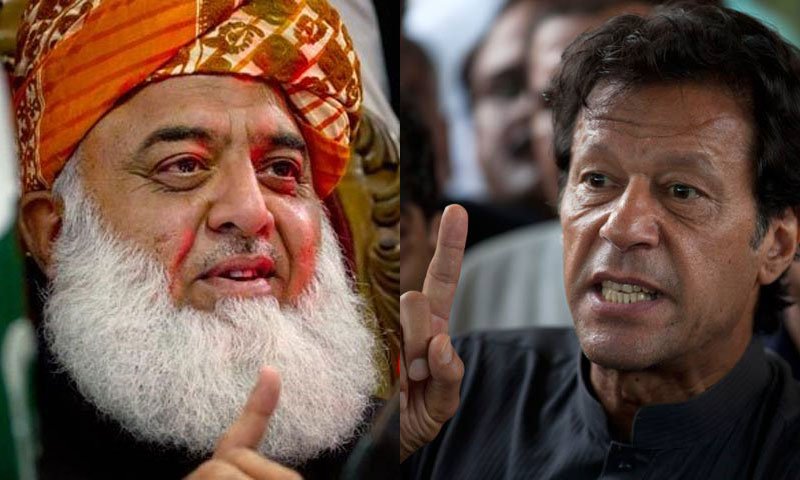
    Prime Minister (PM) Imran Khan reportedly wants Jamiat Ulema-e-Islam-Fazl (JUI-F) chief Maulana Fazlur Rehman tried under Article 6 of the Constitution “for trying to topple the government” back in November last year.

    According to media reports as well as some senior journalists, including Kamran Yousaf and Arshad Waheed Chaudhry, the premier wants Fazl tried under Article 6 — high treason — for the anti-government rally, dubbed by the JUI-F as ‘Azadi March’, towards Islamabad.

    While the rather disappointing finale of the Azadi March came just 18 days after it was launched, and without any of Fazl’s principal demands met, reports claim that PM Imran wants the leader of the religiopolitical party tried for trying to destabilise the country by ousting his government.

    Meanwhile, Twitterati are reminding Imran about his own infamous 126-day sit-in from 2014, when the Pakistan Tehreek-e-Insaf (PTI) had locked down Islamabad to oust the government of then PM Nawaz Sharif.

    JUI-F’S AZADI MARCH:

    Fazl had in June 2019 announced that his party would hold a long march towards Islamabad in the month of October. Four months later, the JUI-F chief had set October 27 as the date of the Azadi march but later deferred it to October 31.

    The JUI-F chief had demanded PM Imran’s resignation, blaming the premier for the country’s economic woes and other troubles. The PM, on the other hand, had said that Fazl’s march had a “special agenda”.

    Initially, other opposition parties had objected to the unilateral announcement about the Azadi March, but later extended their support to Fazl when he had taken them into confidence. The government had warned the opposition that anyone who tried to take the law into their hands would be dealt with strictly.

    ARTICLE 6:

    Article 6 of the Constitution of Pakistan, under which former military ruler Gen (r) Pervez Musharraf has also been found guilty, states: 

    “Any person who abrogates or subverts or suspends or holds in abeyance, or attempts or conspires to abrogate or subvert or suspend or hold in abeyance, the Constitution by use of force or show of force or by any other unconstitutional means shall be guilty of high treason.”

    The second clause adds that any person aiding, abetting or collaborating in the acts will also be considered guilty of high treason, while clause 2A says that an act of high treason cannot be validated by any court, including the Supreme Court (SC) and a high court.

  • VIDEO: Masked men on unregistered vehicle seek dismissal of judges who sentenced Musharraf

    VIDEO: Masked men on unregistered vehicle seek dismissal of judges who sentenced Musharraf

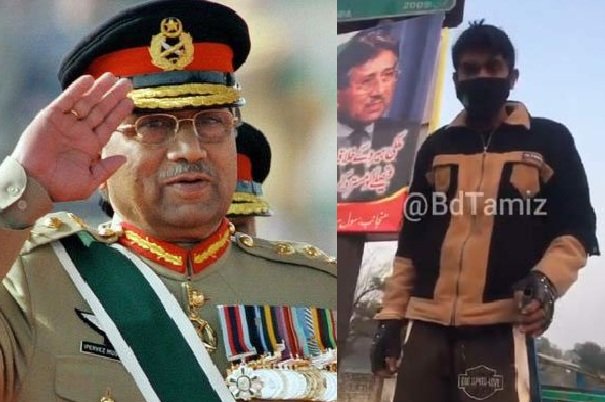
    At least two masked men on an unregistered vehicle have been spotted in Sialkot, putting up banners seeking dismissal of judges who convicted former military ruler Gen (r) Pervez Musharraf last week.

    A special court trying the ex-preisdent had last week sentenced him to death for treason. While analysts had hinted at a possible rift among institutions over the death penalty for former army chief Musharraf, the detailed verdict of the case had drawn ire of many after one of the judges proposed public hanging.

    A week later, a video going viral over the internet has shown masked men putting up on Sialkot’s Khawaja Safdar Road some banners demanding dismissal of the judges who sentenced Musharraf.

    WATCH VIDEO:

    https://twitter.com/BdTamiz/status/1208788091454054401

    “We’ve been told to do so,” they can be heard as saying when asked about the person or organisation behind the banners, and do not specify who were the orders from.

  • VIDEO: Musharraf terms death penalty verdict as ‘personal vendetta’

    VIDEO: Musharraf terms death penalty verdict as ‘personal vendetta’

    Former military ruler General (r) Pervez Musharraf has said that the special court’s death sentence verdict against him was based on “personal vendetta”.

    Musharraf in a recent video message released on Wednesday said, “I heard the special court’s verdict against me on television,” adding that “There is no example of such a verdict in the past where neither the defendant nor his lawyers were given permission to speak in his defence.”

    Former dictator said that he had earlier offered to give his statement to a special commission if they visit him in Dubai, where Musharraf is currently undergoing medical treatment adding that “his request was ignored”.

    Musharraf said that he respected the Pakistani judiciary and that, similar to Chief Justice Asif Saeed Khosa, he also believed that everyone was equal before the law.

    “I call this verdict suspicious because supremacy of the law was ignored from the start to the end during the hearings of this case,” he added.

    Musharraf said, “However, in my opinion, CJ Khosa showed his intentions and his determination to the public himself by saying that he ensured a speedy verdict in this case. How can the judges who gained personal benefits during my tenure issue a judgement against me?”

    He thanked the Pakistani citizens and the country’s Armed Forces for remembering his services for the country.

    “This is the biggest honour for me, which I will take to my grave,” he said, adding that he will announce his plan of action regarding the case after consulting his legal team.

  • ‘CJP Khosa’s statements about Musharraf’s case are fake,’ clarifies SC

    ‘CJP Khosa’s statements about Musharraf’s case are fake,’ clarifies SC

    The Supreme Court (SC) of Pakistan has said that the statements of Chief Justice of Pakistan (CJP) Asif Saeed Khosa being aired and published by differnent news channels regarding former army cheif Gen (r) Pervez Musharraf’s high treason case are baseless and concocted.

    In a press release, the top court clarified that the fake news items have created an impression that CJP Khosa was personally involved in the progress of the case and he was giving directions to other judges.

    “Different benches of the supreme court of Pakistan had been hearing different aspects of the case of Gen (r) Pervez Musharraf and had passed various orders for the early disposition of the said case”

    “The Hon’ble Chief Justice had not issued any direction of any sort to the Special Court other than the judicial directions issued by the relevant benches of the Supreme Court in the above mentioned case,” the statement said.

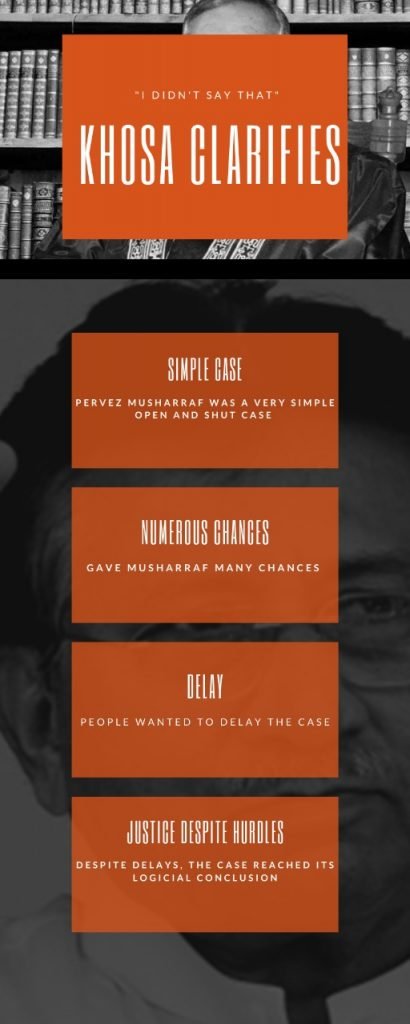
    A few news channels and newspaper had earlier published statements of CJP Khosa saying that the treason case was clear and that Mushrraf was given many chances to present his views.

    On Tuesday, a special court awarded death sentence to former military dictator Musharraf in absentia for suspending the constitution on November 3, 2007.

  • Was offered bribes, lucrative positions to drop Musharraf’s case: CJP Khosa

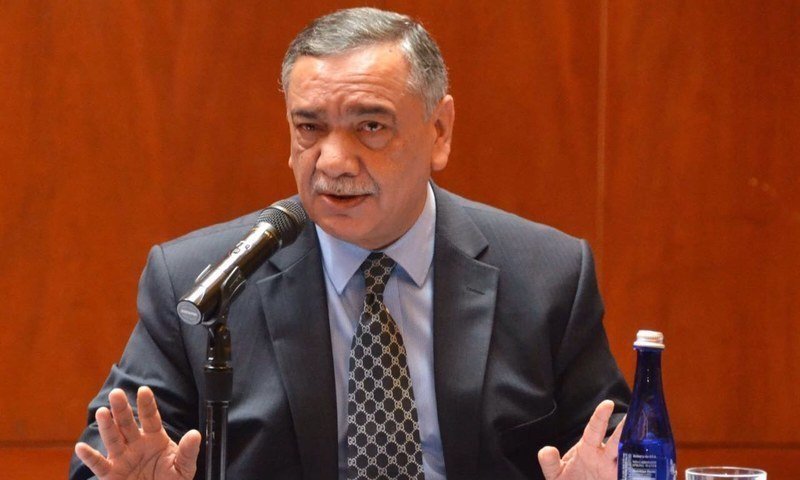
    Chief Justice of Pakistan (CJP) Asif Saeed Khan Khosa has reportedly said that he was “offered lucrative positions and bribes multiple times to drop former military ruler Gen (r) Pervez Musharraf’s case”, but he refused to accept any.

    According to Geo News, the top judge, during an informal discussion with journalists, said that the Supreme Court (SC) had already declared the former president’s case as “open and shut” and the judges feared nothing for as long as they were providing justice to the masses.

    CJP Khosa was also quoted as saying that the decision regarding the extension of Chief of Army Staff (COAS) General Qamar Javed Bajwa “would have long term effects that the people would realise later”.

    “I have already accepted a fellowship offer at Harvard to pursue following my retirement,” the CJP said.

    On Tuesday, a special court awarded death sentence to former military dictator Musharraf in absentia for suspending the constitution on November 3, 2007.

    While the counsel for the convict and the armed forces’ media wing in separate statements strongly criticised the decision that they said was taken “in haste”, opposition parties maintained that “justice had prevailed”.

    According to The Express Tribune, the outgoing CJP is said to have played a key role in making sure the six-year-old treason trial against the former president was concluded before he retired.

  • Death Penalty: Timeline of Musharraf’s high treason case

    Death Penalty: Timeline of Musharraf’s high treason case

    The special court on Tuesday handed over the death sentence to the former military dictator General (r) Pervez Musharraf after analysing the complaints, records, arguments and facts in the case for three months.

    The court ruled that it found Musharraf guilty of high treason according to Article 6 of the constitution.

    The special bench hearing the high treason comprised of Peshawar High Court (PHC) Chief Justice (CJ) Waqar Ahmad Seth Akbar and Justice Shahid Karim of the Lahore High Court (LHC). The bench was formed on the orders of the Supreme Court (SC).

    EXPLAINED: MUSHARRAF’S CRIMES, PUNISHMENT

    The Pakistan Muslim League-Nawaz (PML-N) government had in 2013 filed the treason case against Musharraf over the president’s imposition of extra-constitutional emergency in November 2007.

    Here is the timeline of the high treason case

    • July 22, 2009: The Supreme Court (SC) in an unprecedented move, calls Gen (r) Musharraf to defend his actions on November 3, 2007, following the president’s resignation after a nine-year rule on the country.
    • July 31, 2009: The SC rules that Musharraf’s decision to impose an emergency on November 3, 2007, as well as his PCO [Provisional Constitutional Order] were illegal and unconstitutional. The court gives him seven days to respond.
    • August 6, 2009: Musharraf refuses to answer the charges against him and leaves Pakistan for the United Kingdom (UK).
    • March 22, 2013: Musharraf plans to return to Pakistan after exile and gets a protective bail for 10 days in three high-profile cases against him.
    • March 27, 2013: Senior counsel A.K. Dogar, during a hearing pertaining to strict adherence to articles 62 and 63 during elections, refers to SC’s ruling on Musharraf’s actions on November 3, 2007. A.K Dogar argues that in overthrowing the constitution, Musharraf had committed the offence of high treason.
    • March 29, 2013: Sindh High Court (HC) grants an extension in bail for Musharraf, but rules that he cannot leave Pakistan without permission.
    • April 5, 2013: SC agrees to hear a petition seeking to prosecute the former military dictator under sections 2 and 3 of the High Treason (Punishment) Act 1973.
    • April 7, 2013: Chief Justice (CJ) Iftikhar Mohammad Chaudhry withdraws himself from the three-member bench formed to hear the treason case against Musharraf.
    • April 8, 2013: Supreme Court summons Musharraf in the treason case against him. The court also instructs the interior ministry to add his name to the Exit Control List (ECL).
    • April 18, 2013: Musharraf after the cancellation of his bail application flees from the premises of the Islamabad High Court (IHC).
    • April 19, 2013: The former president surrenders in a magistrate’s court in the judges’ detention case and his farmhouse residence at Chak Shahzad, Islamabad, is declared a sub-jail.
    • April 30, 2013: Peshawar High Court (PHC) bars Musharraf from ever contesting elections for either the National Assembly (NA) or the Senate.
    • June 5, 2013: IHC judge Shaukat Aziz Siddiqui recuses himself from hearing former president’s post-arrest bail plea in the judges’ detention case.
    • June 14, 2013: Minister for Law and Justice Zahid Hamid distances himself from the 2007 emergency. Zahid says there was no question of him having allegedly abetted Musharraf as the proclamation of emergency came from the former dictator’s person. The minister also denies having had any contact with Musharraf.
    • June 24, 2013: Prime Minister (PM) Nawaz Sharif tells the NA that his government will request the SC to try Musharraf under Article 6 of the Constitution.
    • November 18, 2013: SC, headed by CJP Iftikhar Chaudhry, agrees to set up a special board to try Musharraf for high treason.
    • November 19, 2013: The PML-N government submits five charges of high treason against the former military ruler in a special court. A three-member bench to hear the treason case is also formed.
    • December 12, 2013: Special bench summons Musharraf to face treason charges.
    • December 20, 2013: Musharraf, in an interview, seeks “forgiveness” for any wrongs he may have committed during his rule on the country for nine-years.
    • January 2, 2014: Musharraf is shifted to hospital after suffering a “heart problem” while on his way to a special court hearing of the treason case. His arrest warrant is not issued on medical grounds.
    • January 7, 2014: The Armed Forces Institute of Cardiology (AFIC) submits former army chief’s medical report to special court, detailing that Musharraf is suffering from “triple-vessel coronary artery disease and eight other diseases”.
    • January 16, 2014: Special court orders AFIC to constitute a medical board to assess Musharraf’s health and to submit a detailed report. The medical board subsequently declares Musharraf to be in a “critical state” and recommends his treatment at a place of his choice.
    • January 28, 2014: Prosecution expresses lack of confidence in former army chief’s medical report and requests court to summon the AFIC head for cross-examination.
    • February 7, 2014: Special court once again orders Musharraf to appear in the treason case.
    • February 18, 2014: Musharraf after avoiding 22 consecutive hearings, finally appears in special court, but no charges are framed against him as the defence argues that the case should be heard in a military court.
    • February 21, 2014: Special court rules that Musharraf is not to be tried in a military court.
    • March 30, 2014: The former army chief is indicted for treason and pleads not guilty to all charges.
    • April 1, 2014: The PML-N government offers to fly former president’s ailing mother to Pakistan from Sharjah.
    • April 2, 2014: The PML-N government rejects Musharraf’s petition seeking the removal of his name from the no-fly list.
    • April 3, 2014: Musharraf petitions SC for the removal of his name from the ECL so he may travel abroad to visit his ailing mother.
    • May 14, 2014: Federal Investigation Agency (FIA) declares it has “irrefutable proof” that former army chief illegally imposed emergency in 2007.
    • June 12, 2014: SHC strikes down the government’s order barring Musharraf from overseas travel, ruling that “not a single ground was mentioned in the memorandum placing the former president’s name on the ECL”.
    • June 13, 2014: Special court rejects former president’s plea for details of “abettors” who had suggested, endorsed or implemented the 2007 emergency.
    • June 14, 2014: The government moves SC against the SHC ruling allowing Musharraf to travel abroad.
    • June 23, 2014: The apex court suspends the SHC judgment allowing former military ruler to travel abroad until it decides the pending appeal.
    • September 8, 2014: Musharraf’s legal team gets hold of crucial evidence pointing towards then prime minister (PM) Shaukat Aziz’s role in the imposition of the November 3 emergency.
    • October 15, 2014: Musharraf’s defence team asks the special court for a collective trial of all his accomplices.
    • November 21, 2014: Special court directs the federal government to resubmit its complaint in the high treason case, this time including the names of former PM Shaukat Aziz, former law minister Zahid Hamid and former CJ Abdul Hameed Dogar to the charge-sheet.
    • December 22, 2015: The former president says he invoked emergency after consulting Gen Ashfaq Parvez Kayani among other civilian and military leaders.
    • March 14, 2016: Musharraf seeks one-time permission to go abroad on medical grounds.
    • March 16, 2016: SC orders the fovernemnt to remove Musharraf’s name from the no-fly list, allowing him to travel abroad on medical grounds.
    • March 18, 2016: The former president leaves for Dubai to seek medical treatment, promising to come back to his “beloved homeland” in a few weeks.
    • May 11, 2016: Special bench declares former army chief an absconder in the treason case.
    • March 29, 2018: Special court dissolves after Justice Yahya Afridi recuses himself from hearing the high treason case against Musharraf.
    • April 7, 2018: CJ Mian Saqib Nisar reconstitutes special bench hearing Musharraf high treason case.
    • May 31, 2018: Interior ministry, complying with the special court’s orders, asks the National Database and Registration Authority (NADRA) and the Directorate General of Immigration & Passports to suspend former army chief’s national identity card and passport.
    • June 7, 2018: SC allows Musharraf to run for polls on the condition that he appear in person before the court.
    • June 20, 2018: Former president says he was set to return to the country but SC’s orders barring authorities from arresting him made him change his mind.
    • July 30, 2018: Prosecution head in the high treason case against Musharraf quits.
    • August 3, 2018: Special court decides to resume the trial which was delayed due to Musharraf’s departure from Pakistan — beginning August 20.
    • August 20, 2018: Musharraf citing threats to his life, seeks presidential security to appear before the special court in the high treason case.
    • August 29, 2018: Special court is told that Interpol refuses to issue red warrants for former army chief’s repatriation from the United Arab Emirates (UAE) where he has been living since 2016.
    • October 2, 2018: CJ Saqib Nisar grills Musharraf’s councel on the “brave commando’s” overdue return to the country.
    • October 24, 2018: APML discloses that former president is suffering from amyloidosis and has difficulty standing and walking.
    • November 19, 2018: Court tells Musharraf’s lawyer to convince former president to return and provide his itinerary so the high treason case could proceed.
    • March 31, 2019: Supreme Court orders Musharraf to appear before the special court in the treason case on May 2 or lose his right of defence.
    • April 1, 2019: SC, under CJ Asif Saeed Khosa, issues a decree telling the special bench to proceed in the high treason case without Musharraf’s statement if he fails to appear the following month.
    • June 11, 2019: SC orders NADRA to unblock former dictators’s CNIC and passport.
    • July 30, 2019: Prosecution head in high treason case against Musharraf quits.
    • October 8, 2019: Special court decides to hear the high treason trial on a daily basis from October 24.
    • October 24, 2019: The Pakistan Terhreeke Insaf (PTI) government sacks the prosecution team in the high treason case.
    • November 19, 2019: The special court concludes its proceedings in the treason case against Musharraf, saying that a verdict will be pronounced on November 28.
    • November 23, 2019: Former army chief petitions the Lahore High Court (LHC) to challenge the reservation of the judgment in the treason case.
    • November 25, 2019: The case takes a new turn as interior ministry files a petition in the IHC requesting it to set aside the special court’s decision to reserve a judgement in the case without hearing from the prosecution.
    • November 26, 2019: LHC accepts for hearing former president’s petition challenging the special court’s decision.
    • November 27, 2019: IHC stops special court from announcing verdict in Musharraf high treason case.
    • December 2019: Special court says it will announce the verdict in the case on Dec 17. Former army chief moves the LHC to stay the trial at the special court until his earlier petition pending adjudication by the high court is decided.
    • December 17, 2019: Special court hands Musharraf death sentence in the long-drawn high treason case against him.
  • Law ministry refuses to share details of lawyers, fee paid for Musharraf trial

    The law ministry has rejected an application seeking details of the legal team hired to prosecute former army ruler General (retd) Pervez Musharraf on treason charges, and the fees paid to them by saying that its a classified matter, thus can’t be held answerable by common citizens Geo News reported.

    According to the details, Mukhtar Ahmed Ali, the applicant, had sought the details under the Right of Access to Information Act 2017, commonly known as RTI law. Mukhtar wanted to know how judiciously the money contributed by public through their taxes is being used by the ministry.

    Mukhtar Ali said, the ministry declared him ineligible to post such inquiries. The ministry in its reply referred to a Cabinet Division notification’s issued in 1993, but it did not explain or share the contents of the notification. The reply also stated that the ministry has claimed exemption by saying it has been declared “classified, therefore, your request is hereby declined on this aspect”.

    Ali had earlier sought answers to four questions, asking for the list of the members of the prosecution team, and relevant law firms engaged for Pervaiz Musharraf’s trial under Article 6 of the Constitution and the fees paid to them.

    He further sought details of out-of-pocket expenses (e.g. travel, lodging, meal) reimbursed to them and asked for the fee break-up paid to each member of the legal team.

    After the ministry’s refusal, Mukhtar has approached Pakistan Information Commission (PIC), an appellant body set up under the RTI law for dealing with the complaints lodged by the applicants against the government.

    In a rejoinder sent to the law ministry, Mukhtar said his application has been rejected without being given due consideration as the authorities “has not even bothered to consider Article 19A and the (Right of Access to Information) Act in the course of deciding my application.”