Tag: Higher Education Commision

  • HEC to relaunch PM’s Laptop Scheme soon

    HEC to relaunch PM’s Laptop Scheme soon

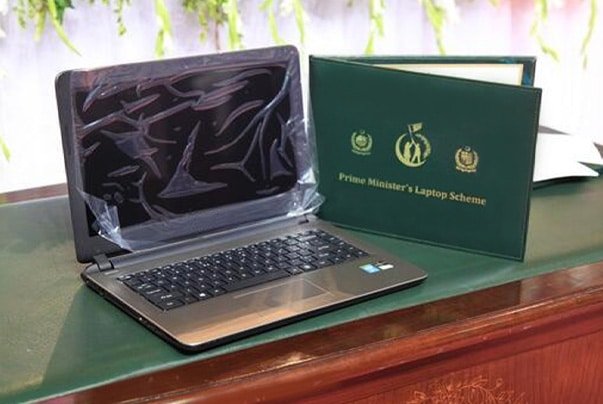
    The Prime Minister’s Laptop Scheme would be relaunched under the Youth Development Initiative, according to Higher Education Commission (HEC) Chairman Dr Mukhtar Ahmed, within the next few days.

    Speaking to the media, he further stated that HEC would launch a programme for online courses for students in Pakistan’s institutions with assistance from Microsoft and other international organisations.

    The declaration follows the historic Prime Minister (PM) Laptop Scheme’s restoration by the Federal Government, which is governed by the Pakistan Muslim League-Nawaz (PML-N).

    Details indicate that the programme, which has a budget of Rs 10 billion, will distribute laptops to students pursuing BS, Masters, M Phil, PhD, and undergraduate degrees.

    A committee headed by Dr Mukhtar Ahmed, the chairman of the Higher Education Commission (HEC), has been formed by the government to complete all issues, including the requirements for students to be eligible for laptops.

    According to Academia Mag, the 14-member committee comprises the Executive Director of HEC, Additional Finance Secretary (Budget) of the Government of Pakistan, a member from Planning and Development Division, Science and Technology, Secretary Higher Education Department Punjab, Secretary Higher Education Department Sindh, Secretary Higher Education Department Balochistan, Secretary Higher Education Department Khyber Pakhtunkhwa, a representative from the National Information Technology Board (NITB), Secretary Higher Education Department Azad Jammu and Kashmir, a representative from Punjab Information Technology Board (PITB) and others.

    The procedure for verifying degrees and issuing certificates of equivalency is likewise being shifted entirely online.

    A growing number of educational institutions were causing financial problems for HEC, he continued, and public universities would henceforth be given funding according on how well they performed.

    “We would request the federal and provincial governments to not establish more public universities until the country’s financial issues are resolved,” he said.

  • Here’s how Pakistani students can apply for Moroccan Government Scholarships

    Here’s how Pakistani students can apply for Moroccan Government Scholarships

    The Moroccan Agency of International Cooperation (AMCI) has offered scholarships to Pakistani students who want to enroll in public higher education, technical, and vocational institutions in Morocco for the academic year 2022–2023.

    The deadline for Higher Education Commission (HEC) to receive nominations is set for September 20, 2022.

    How to apply for the scholarship:

    Candidates should choose “Learning Opportunities Abroad” after registering and filling out their profiles.

    All applicants should note that all nominations from Pakistan will be routed via HEC. Applicants should send two sets of AMCI application (French form) along with required documents as mentioned on page-2 of the AMCI application form, in spiral binding and one copy of HEC application form with documents separately in spiral binding on or before, September 20, 2022.

    Read more: Cheapest new cars to buy in Pakistan

    On the basis of the greatest academic merit, HEC will narrow down the list of qualified candidates. Moroccan authorities or universities may test or interview selected Pakistani nominees.

    It is worth noting that French is the primary language of instruction, and only students who have demonstrated proficiency in the language will be allowed to study in Morocco.

  • Supreme Court orders Education Commission to close illegal private universities

    Supreme Court orders Education Commission to close illegal private universities

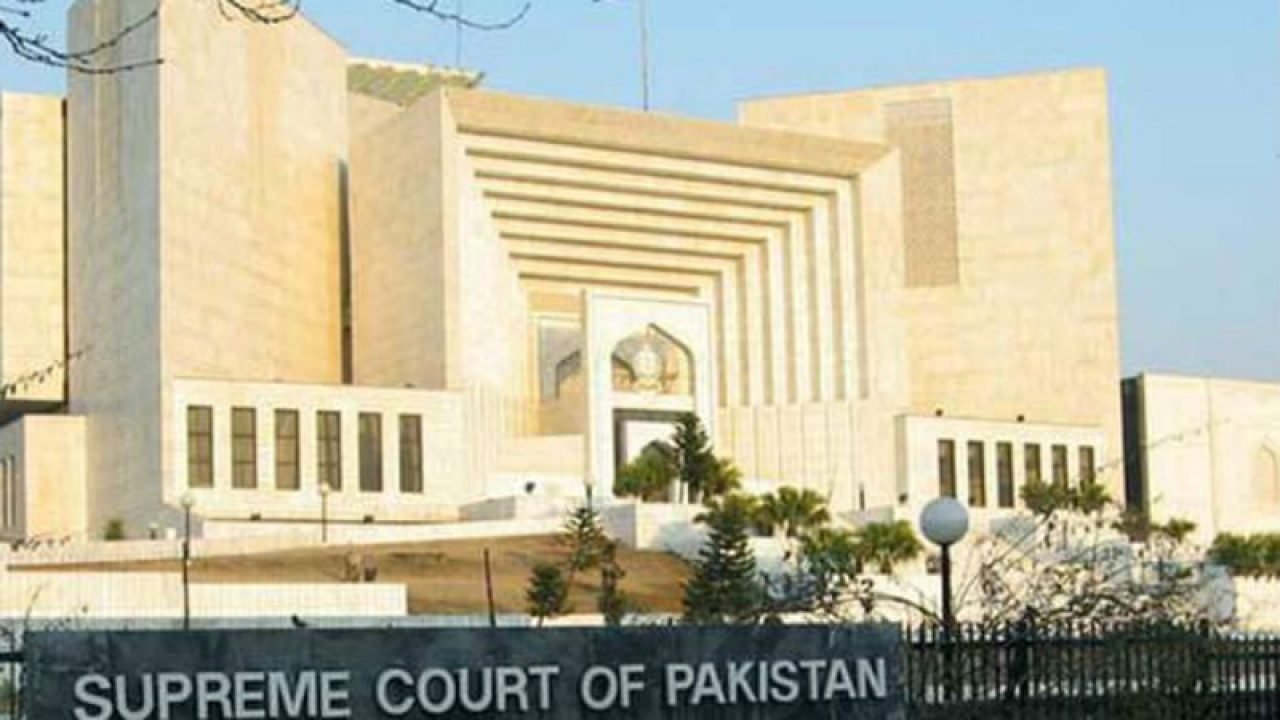
    The Supreme Court of Pakistan (SC) on Wednesday ordered the Higher Education Commission (HEC) to close down campuses of private universities all over the country that are running illegally.

    The SC remarked campuses of Preston University and Al Khair University have been set up illegally in Lahore and Karachi. Students sought help from the court about the HEC not issuing degrees to those who have studied from these universities.

    The case was heard by a three-member bench headed by Justice Umar Ata Bandial.

    The court gave directions to HEC to make special arrangements to award degrees to the students who had graduated from these illegal campuses. It also said that policies of HEC should be implemented with uniformity all over the country.

    The bench gave remarks that there should be no compromise on the provision of higher education to all young students. Provincial and Federal governments need to work closely and cooperate to maintain the standards of HEC.

    The SC noted that the issue was whether private universities are allowed to open sub-campuses outside their territorial limits or not. It added that HEC already made it very clear that they could set any sub-campuses and they issued many alerts as well.

    Counsel for students, Ali Zafar said that the session court had ordered the National Accountability Bureau (NAB) to take action against these universities. However, Justice Bandial replied, “The HEC has the powers. There is no need for NAB to investigate the matter.”

    The court said that the federal government would be ordered to change the laws if HEC is weak.

    “The students had approached the Lahore High Court (LHC) for their degrees. The LHC declared the [sub-]campuses of private universities illegal,” the counsel added.

    Justice Bandial acknowledged the high court verdict and emphasised pursuing the shut down of illegal campuses at the earliest.

  • Fact Check: Islamia University Bahawalpur is not in the top 1000 international universities

    Fact Check: Islamia University Bahawalpur is not in the top 1000 international universities

    Claim: Islamia University Bahawalpur is in the top 1000 international universities

    Fact: Islamia University Bahawalpur is not in the top 1000 international universities

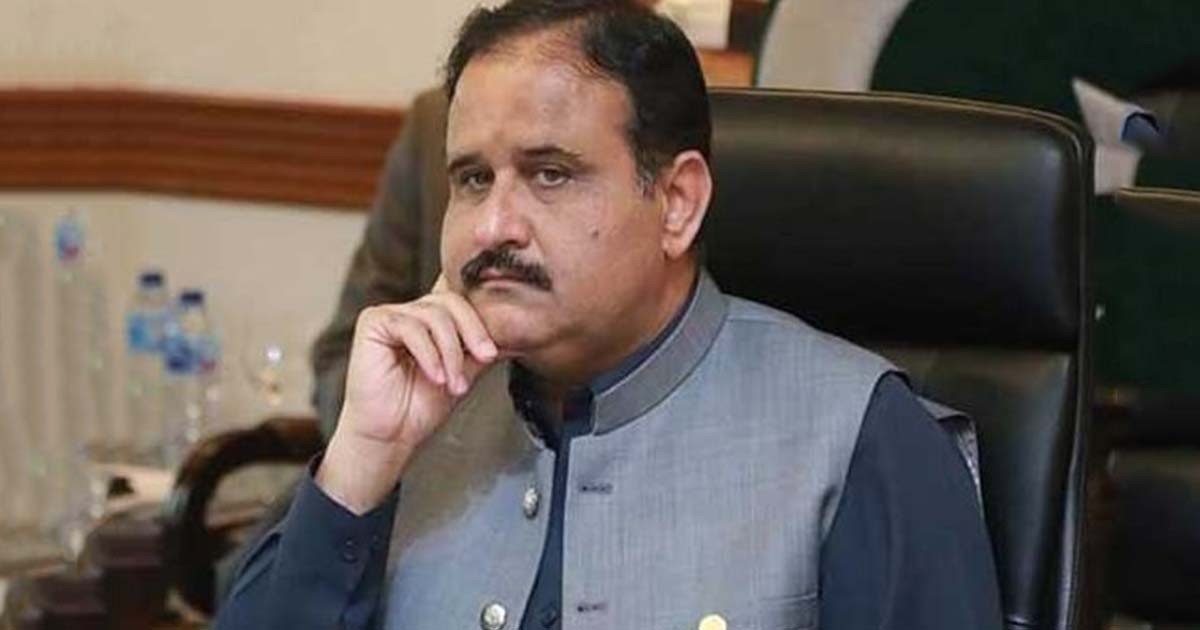
    Chief Minister (CM) Usman Buzdar on Wednesday, in his speech at the Kissan Convention in Bhawalpur, said, “As per the Times Higher Education World Ranking of Universities, Islamia University of Bahawalpur is amongst the world best 1000 universities.”

    According to the World University Ranking, Islamia University of Bahawalpur is not in the top 1000 universities but is in the list of 1001+ universities.

    Screengrab from the Times Higher Education World University Ranking official website

    Furthermore, CM Buzdar said that the Islamia University of Bahawalpur is among the top nine universities in Pakistan.

    Checking the Higher Education Commission’s (HEC) official website which was last updated in 2015, the Islamia University of Bhawalpur is not included in the list.

    Screengrab from the Higher Education Commission’s official website.

    VERDICT: FALSE

  • Rs93bn on education, Rs25bn on health, Rs1,289bn on defence: How govt is spending in ‘Naya Pakistan’

    Rs93bn on education, Rs25bn on health, Rs1,289bn on defence: How govt is spending in ‘Naya Pakistan’

    Public sector universities are facing a financial crunch due to budget cuts and the coronavirus pandemic. Despite tall claims, the Pakistan Tehreek-e-Insaf (PTI) government didn’t allocate much for the higher education and the budget for the Higher Education Commission (HEC) remains nominal.

    Pakistan has at least 135 public-sector higher education institutions that cater to at least 1.8 million students, says a report in The News. But how much the country spends on its education? Not a lot when compared to other expenditures, such as defence and development.

    Education:

    The government had allocated Rs93 billion — Rs29.4bn is development budget — for the HEC for 2020-21 for development and non-development expenditures in the education sector. The HEC, however, had asked the government for a budget of Rs104bn, reported Dawn at the time.

    The decision to keep the education budget static amid a pandemic has proved expensive, as a number of universities are struggling to make ends meet. According to The News, the University of Engineering and Technology (UET) Lahore, the University of Peshawar, Shah Abdul Latif University Khairpur, Quaid-e-Azam University (QAU) Islamabad and others are facing issues regarding finances.

    Health:

    Pakistan is one of the countries that do not spend a lot on health. In 2019-20, the federal government had budgeted Rs11 billion for the current expenditure on health, reported Express Tribune. However, the government funneled Rs1bn more into the budget to counter the coronavirus threat. In the current financial year, Pakistan more than doubled the health budget to Rs25.5 billion due to COVID-19.

    However, the decision was still criticised as the country’s healthcare needed more than that to battle the deadly pandemic.

    Defence:

    The government spends a major chunk of its money on defence-related expenditures. In financial year 20-21, the allocations to the defence sector saw an 11 per cent increase from the previous year. Rs1,289 billion was allocated to the military.

    According to Ayesha Siddiqa, the author of Military Inc., “major acquisitions by the armed forces, spending on the public sector development programme (PSDP), expenditure on the nuclear programme and para-military forces, payments for military pensions, a newly set-up national security division and a few other military expenditures are not reflected in the budget. If these were to be added to it, Pakistan’s defence spending would be even higher — at around $11bn”.

     Development budget:

    Due to the COVID-19 pandemic and a lull in economic activity, the government could increase its public-sector development spending. It had been budgeted at Rs1,324bn, 18pc below than last year’s budget.

    Of this, federal PSDP had been allocated Rs650 billion, while Rs676 billion had been allocated to provinces, as per Dawn.

  • HEC reportedly revises policy for PhD admissions

    HEC reportedly revises policy for PhD admissions

    The Higher Education Commission (HEC) has reportedly revised its policy for PhD admissions on January 1, 2021.

    According to reports, under the revised policy, students can also apply for PhD directly after four-year BS programs. The policy states that the minimum duration of a PhD degree will be three years while the maximum duration of the degree will be eight years.

    It has also abolished the requirement of having a previous qualification in the same discipline in order to apply for a specific PhD program.

    In case of non-implementation or violation of the policy, HEC would take action against universities ranging from warnings, suspension or revocation of NOC for admissions, and non-verification of credentials.

    Meanwhile, the Federation of All Pakistan Universities Academic Staff Association (FAPUASA) has expressed serious concerns and rejected the revised policy by the HEC.

    It is pertinent to add that the HEC has not yet officially announced the new policy.

  • HEC introduces e-services for online degree attestation

    HEC introduces e-services for online degree attestation

    The Higher Education Commission (HEC) has introduced online degree attestation.  As per details, all students seeking degree attestation should apply on their website via http://eservices.hec.gov.pk.

    In a statement, the HEC HEC informed that the attestation process would no longer function on the previous link, adding that the old applicants would use their formerly verified username and password to log-in to the ‘e-services’.

    This online verification and attestation service is Pakistan’s first electronic verification service. Students can go to the website and upload the relevant documents to get their degrees attested.

    Earlier in an interview with The Current, Federal Minister for Education, Shafqat Mahmood had said that HEC was working to facilitate students and make life easier for them.

  • University student expelled for protesting against online classes

    University student expelled for protesting against online classes

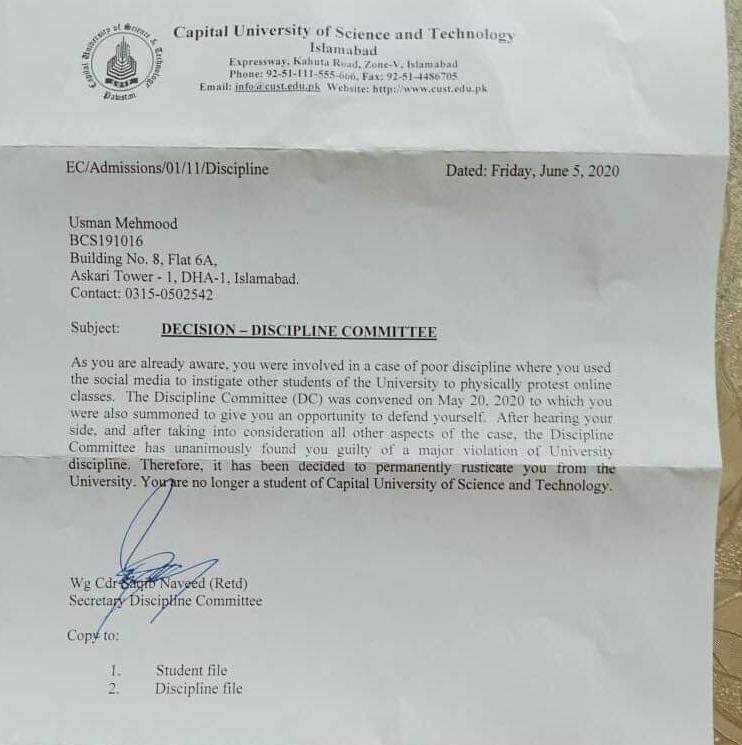
    Students in Islamabad gathered outside the Higher Education Commission (HEC) to protest against online classes conducted by the universities. Later, one student from the Capital University of Science and Technology, Usman Mehmood, got expelled for raising his voice on social media platforms.

    Mehmood voiced the concerns of many university students. The Capital University of Science and Technology student had been sharing the demands of students on social media.

    Usman received the letter from his university, deeming him ‘in violation of university discipline.’  

    Mustafa Nawaz Khokhar, who chairs the Senate Committee on Human Rights, responded to Usman’s tweet saying he was within his constitutional rights while protesting peacefully and said that the VC of the university will be called to the committee to explain why a student was expelled for exercising his rights.

    In an earlier post, Mustafa Nawaz had addressed the issue of students getting expelled for raising their voices.

  • Students protest outside HEC Islamabad demanding to waive of semester fees

    Students protest outside HEC Islamabad demanding to waive of semester fees

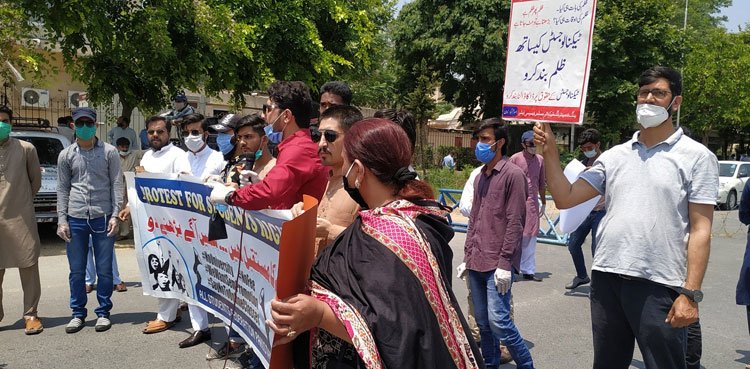
    Several university students from across the country protested outside the Higher Education Commission (HEC) office in Islamabad demanding the board to waive their full semester fee, suspended online classes and promote all students to the next semester without examinations.

    Blocking Islamabad’s Service Road, the students had placards in their hands and raised slogans against the HEC.

    They called out universities for charging full semester fees despite the coronavirus pandemic.

    Many students also took to social media to voice their concerns.

    Earlier, on May 12, Chairman Higher Education Commission (HEC) Dr Tariq Banuri had chaired a meeting with university vice-chancellors and discussed possible ways to conduct annual examinations.

    Suggestions were given to conduct examinations based on an open book, multiple-choice questions, assignments and viva-voce methods. The vice-chancellors put forth complaints made by students regarding internet connectivity issues and asked HEC to help in this regard.

    .