Tag: hijab

  • Pakistani AI robot in hijab upsets Faryal Mehmood

    Pakistani AI robot in hijab upsets Faryal Mehmood


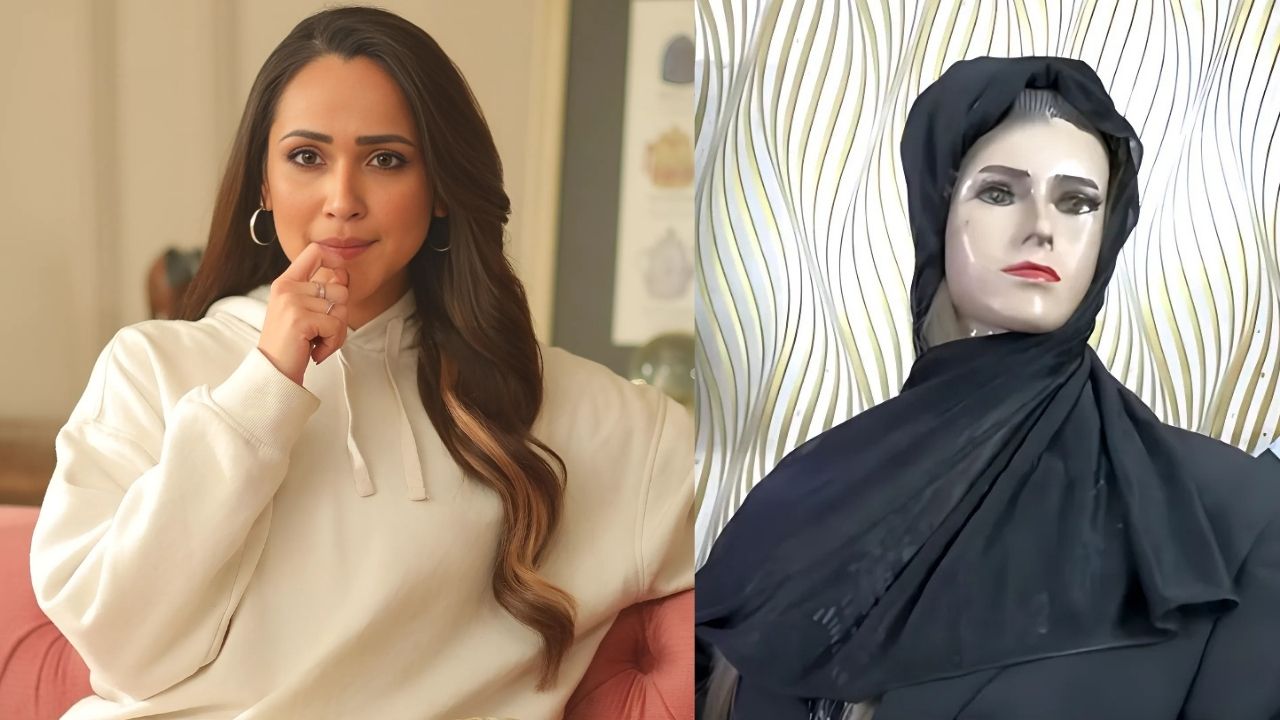
     Actress Faryal Mehmood, who is known for speaking her mind, seems to be upset over Pakistan’s new AI robot that wears a hijab.

    Taking to Instagram to share her thoughts, Wakhri actress posted a news piece featuring the robot and wrote, “Okay but the hijab on the [expletive] robot?”


    Here is the story shared of Faryal Mehmood on her Instagram.
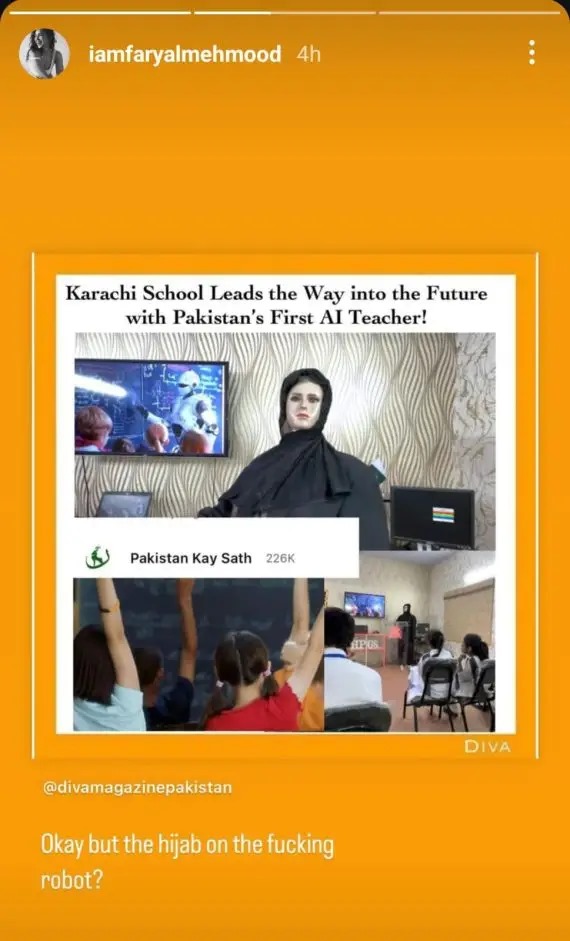


    The robot has been created by Abul Hassan Isphani, head of the AI Department at Happy Palace School.

    “The purpose of creating this [robot] was that I have been in the education field for the past 13 years. One common problem that all teachers face is that sometimes the answer doesn’t come to mind when put on the spot,” said Isphani, who has been an academician for over 13 years, while sharing the rationale behind creating the robot.


    Other than the need for it to wear a hijab, the robot has also been receiving mixed reactions over its functionality.

    Here are the comments:


    Artificial intelligence has become a global trendy hot topic, thanks to platforms like ChatGPT, an innovative AI tool that has been able to make talking to machines feel natural and interactive, therefore rewriting the way people see and use AI.


    ChatGPT, developed by OpenAI, is highly valued for its ability to provide responses in a human-like manner. Whether it’s answering questions, producing an essay, creating a story, or helping complete technical tasks, ChatGPT has demonstrated the enormous scope of AI in various areas. The ease with which access to it can be gained through laptops and mobile devices has encouraged individuals, students, and businesses to pursue AI for learning, productivity, and creative projects.

    One key reason for the AI popularity boom is the simplification of complex task tasks that use tools like ChatGPT to save precious time and effort in such mundane activities as composing emails, brainstorming ideas, or even researching.
    Its role in supporting professionals, writers, and developer further establishes AI as a reliable workplace companion.
    AI platforms have also triggered interest and excitement about the future, as ChatGPT introduced millions to the concept of generative AI: machines that create content based on user inputs.


    This approach to AI opens doors for innovations, education, entertainment, and technology, although there are greater challenges in the rise of AI, such as the potential ethical implications and impacts on jobs, tools like ChatGPT could still showcase the prospect for revolutionizing industries and making technology more approachable.


     

  • Hijab is not just about covering the head; I salute Zarnish’s decision: Nimra Khan

    Hijab is not just about covering the head; I salute Zarnish’s decision: Nimra Khan

    Famous actress Nimra Khan praised the hijab of former actress Zarnish Khan, who left the entertainment industry, and said that people should learn from her what the true meaning of hijab is.

    Recently, Khan was invited to a podcast discussing various topics, including her kidnapping.

    “Veil and hijab mean to cover the body and face completely. The purpose of hijab is not only to cover the hair and part of the face. Whether right or wrong, it is between me and Allah,” she said.

    “When one wears hijab, it means covering everything. If I stand before you (a man), nothing from head to toe should attract you. So, it covers not only the head but everything, including the eyes,” she added.

    Citing the example of former actress Zarnish Khan, Nimra said that her career was on the rise, but Zarnish left everything and started veiling. “She is not even sharing reels (short videos) while wearing hijab.”

    She added, “It is often seen that women and young girls wear hijab as a fashion statement. They wear hijab over jeans, pants, and shirts; some even wear makeup. They don’t understand the true meaning of hijab, which should not be done that way,” she said.

    “I understand that some people earn their livelihood through social media, but Zarnish gave up everything completely. I salute and respect her decision because few people have that courage,” she praised Khan.

  • Apple plans OLED displays for MacBook Pro models in 2026

    Apple plans OLED displays for MacBook Pro models in 2026

    Apple is expected to introduce new MacBook Pro models featuring OLED displays in 2026, according to market research firm Omdia. This anticipated shift is predicted to significantly increase the demand for OLED technology in the notebook market, potentially reaching over 60 million units by 2031.

    OLED, or organic light-emitting diode, panels offer several advantages over traditional display technologies. Each pixel in an OLED screen can be individually controlled, allowing for more precise colour reproduction and deeper blacks. OLED displays also boast superior contrast, faster response times, better viewing angles, and greater design flexibility.

    In addition to the MacBook Pro, Apple plans to implement OLED displays in its iPad Pro lineup starting in 2024. This move is expected to triple the demand for OLED tablets compared to the previous year. Apple’s strategy includes extending OLED technology to other iPad models, such as the iPad mini and iPad Air. This transition is likely to influence competitors and could drive the demand for OLED tablets to exceed 30 million units by 2029.

    Recent reports indicate that Samsung has begun developing an 8-inch OLED display panel for the iPad mini, with predictions that Apple will update both the iPad mini and iPad Air with OLED technology by 2026. Additionally, last year, Samsung was rumoured to be investing $3.14 billion into its Asan, South Korea, facility to produce OLED panels for forthcoming 14-inch and 16-inch MacBook Pro models.

    Apple’s adoption of OLED displays across its product lines marks a significant evolution in display technology, promising enhanced user experiences through improved visual quality and device performance.

  • ‘Hijab a choice, not a compulsion’; Drama Umm-e-Ayesha earns applause for hijab discussion

    ‘Hijab a choice, not a compulsion’; Drama Umm-e-Ayesha earns applause for hijab discussion

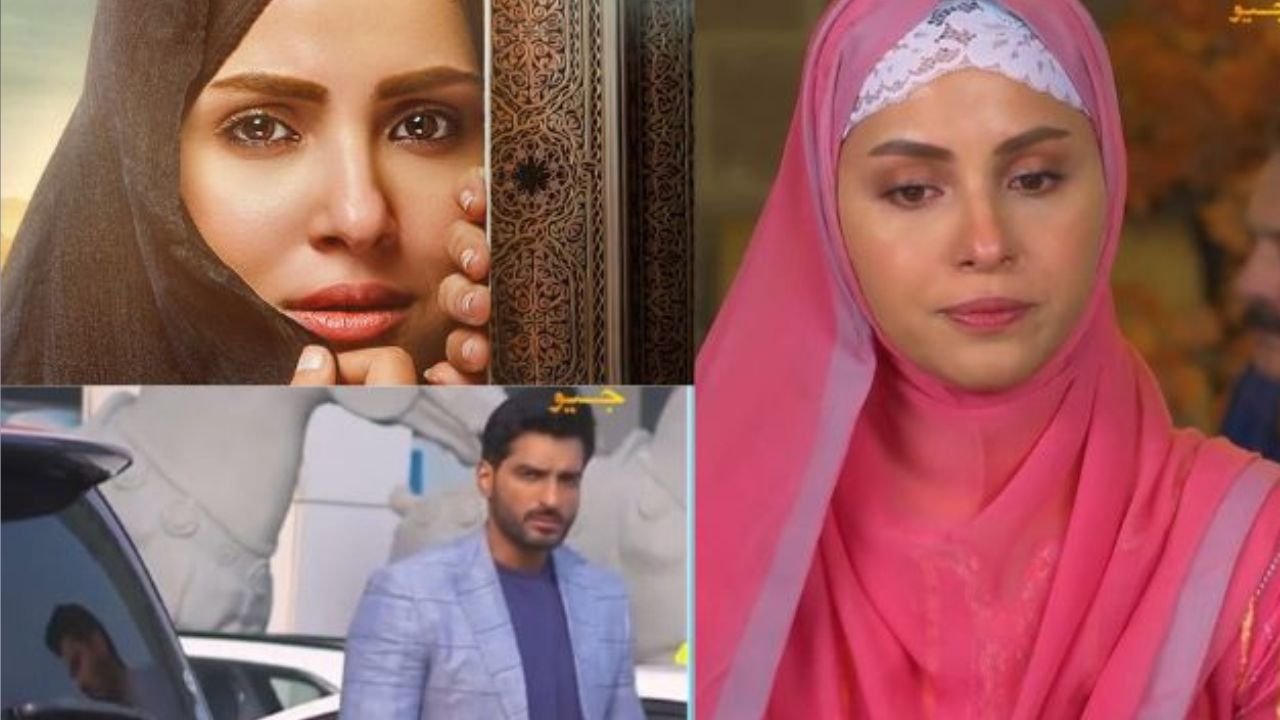
    ‘Umm-e-Ayesha’, a Ramadan drama series on Geo Television, has been receiving praise since its premiere on the first day of Ramadan. The show, airing daily at 6 PM, follows the story of Ayesha, portrayed by Nimra Khan.
    In a particular scene that has gone viral on Facebook, Ayesha chooses to prioritize her hijab over a job opportunity. Fans appreciated the well-executed scene, praising Nimra Khan’s acting alongside Mohsin Ali Gillani.

    Many are commending the drama makers for delivering a meaningful message during Ramadan. Fans admire Ayesha’s courage in standing firm on her principles and not compromising on wearing the hijab.
    Some social media users argue that in Pakistan, an Islamic country, wearing the hijab should not be controversial. However, others note that not all girls may feel comfortable wearing the hijab.
    Overall, the drama has sparked discussions about the importance of respecting individual choices and has garnered praise for its portrayal of hijab values.

  • ‘I think your clothes don’t define you as a good or a bad person’; Ushna Shah on wearing hijab

    ‘I think your clothes don’t define you as a good or a bad person’; Ushna Shah on wearing hijab

    Actress and model Ushna Shah shared her thoughts on wearing a hijab in a recent interview. The superstar pointed out that some people believe that wearing a hijab automatically makes someone a good person. However, she emphasized that one’s clothing choices do not determine whether they are a good or bad person.

    Ushna Shah highlighted that wearing a hijab is a personal choice, and during the interview.

    Reminiscing about her Umrah experience two years ago, during the COVID-19 pandemic, she explained that there’s a misconception in society that if you wear a hijab or cover yourself, you are automatically considered a good person. She presented these views to highlight the contrasting perspectives that exist in society: “If you wear lehenga choli or sleeveless in your marriage then you are the opposite of good.”

    “I know many of those who cover themselves but I don’t believe them as good human beings. I think your clothes don’t define you as a good or a bad person,” she said.

    Ushna Shah shared that choosing to wear a hijab is a personal decision, and it’s something between an individual and God, so others shouldn’t interfere.

    She also expressed her belief that modest clothing is both comfortable and stylish. According to her, opting for modest clothes has its advantages, such as freeing us from worries about weight gain and complicated hairstyling.
    She added: “I enjoy wearing hijab and I understand why so many women enjoy this. It freed us from so many problems and in such clothing, you represent your religion.”

  • Ban on abayas in state-run schools in France

    The French education minister has imposed a ban on students, prohibiting them from wearing abayas in state-run schools. The ban will be imposed from the next academic year starting September 4.

    France has always prohibited religious manifestations in state schools and government spaces as they “violate secular laws”.

    Ban on abayas has been implemented after months of debate over the attire worn in schools.

    Education Minister Gabriel Attal, while talking to France’s TF1 TV, said: “When you walk into a classroom, you shouldn’t be able to identify the pupils’ religion just by looking at them,

    “I have decided that the abaya could no longer be worn in schools.”

    With an increasing number of students wearing abayas, the political divide has widened as the right-wing parties are pressing for a ban while the left-wing is advocating for the rights of Muslim women and girls.

    “Secularism means the freedom to emancipate oneself through school,” added Attal. He believes that abaya is “a religious gesture, aimed at testing the resistance of the republic toward the secular sanctuary that school must constitute.”

    France implemented a strict ban on religious signs in schools back in the 19th Century which included Christian symbols like large crosses. The purpose was to eliminate any Catholic influence on public education. Now that people from other religions have a significant presence in French society, the laws have been updated and are targeted at the Muslim headscarf and Jewish kippa.

    France first imposed a ban on headscarf in state-run schools in 2004 while full face veils were banned in public in 2010.

  • Iran to install cameras in public places to catch, punish women not wearing Hijab

    Iran to install cameras in public places to catch, punish women not wearing Hijab

    The police in Iran have announced a new measure to enforce the country’s mandatory dress code for women. Cameras will be installed in public areas and streets to identify and punish women who do not wear veils. Those who violate the dress code will be sent warning messages about the consequences of their actions. This move is an attempt to control the growing number of women who are choosing to not follow the compulsory dress code.
    The violators will receive “warning text messages as to the consequences”, said the police statement. The move is aimed at “preventing resistance against the hijab law”, it said.

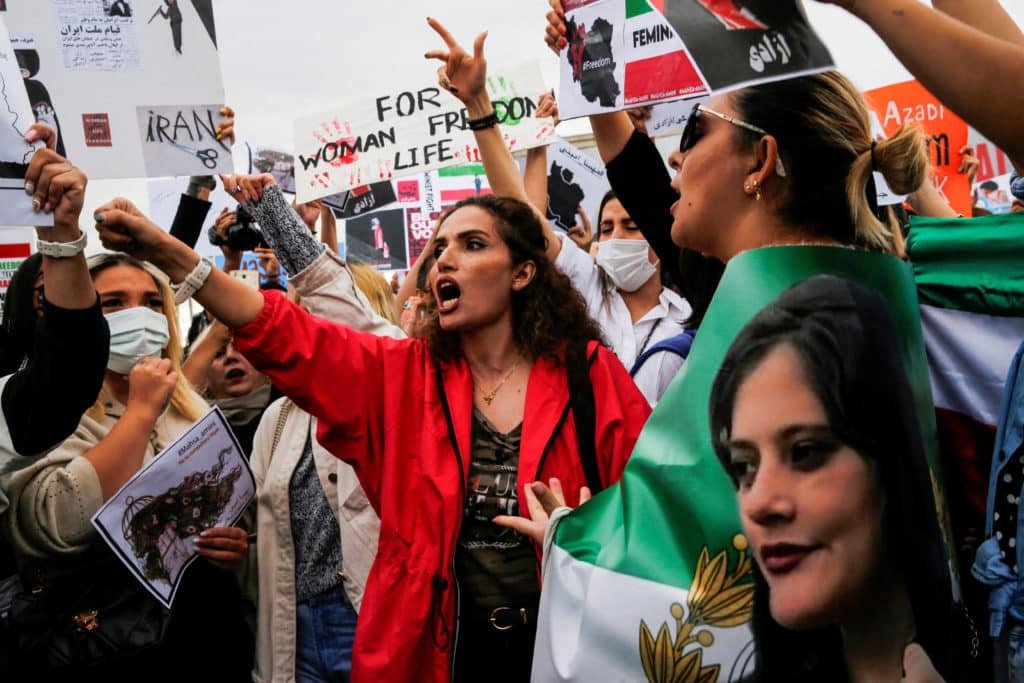
    Iran has seen widespread demonstrations since the September 16, 2022, death of 22-year old Mahsa Amini after she was arrested in Tehran. She was taken into custody for not wearing the hijab, thus, breaching Iran’s strict dress code for women.

    Iran has an official law that requires females, including girls as young as seven years old, to wear a hijab. The law was introduced after the year 1979 and has resulted in approximately 40 million women and girls being under continuous observation.

  • Male Iranian pharmaceutical employees start wearing hijabs to protest against sexist govt policy

    Iranian-American journalist Masih Alinejad has shared a clip of male pharmaceutical workers actively resisting a sexist policy introduced by the Iranian Drug & Food Administration which had ordered women to start wearing black veils at their workplaces. Alinejad wrote in a tweet:

    “Iran’s Food & Drug Administration has ordered pharmacies to force their female staff to wear black veils at workplace. Iranian men are mocking this order and supporting their female colleagues by wearing hijab. Compulsory hijab is the main pillar of a religious relationship. Together we will bring this wall down.”

    Alinejad called for international pharmacists to support their Iranian colleagues in their fight for gender equality, as many women have lost their jobs because they protested against compulsory hijab laws:

    “I call on international pharmacists to support their Iranian colleagues. Many women lost their job for the crime of resisting compulsory hijab laws. Forcing women to wear hijab is an insult to all women and men across the globe. Human rights is a global matter. Show your solidarity.”

    Compulsory hijab has been in the eye of the storm in Iran, leading to strikes and demonstrations across Iran after the death of 22 year old Mahsa Amini, who died under custody of the morality police after refusing to abide by the strict hijab rules. Many women continue to remove their hijab in order to protest against the compulsory law, stating that it denies them social and political freedom.

    Speaking to RFE, an unnamed psychologist said: “Women see it as their absolute right, a right they have been denied for years. I’m protesting the status quo.”

  • ‘Not my-self’; wearing Hijab discomforts me, says Iranian chess player

    ‘Not my-self’; wearing Hijab discomforts me, says Iranian chess player

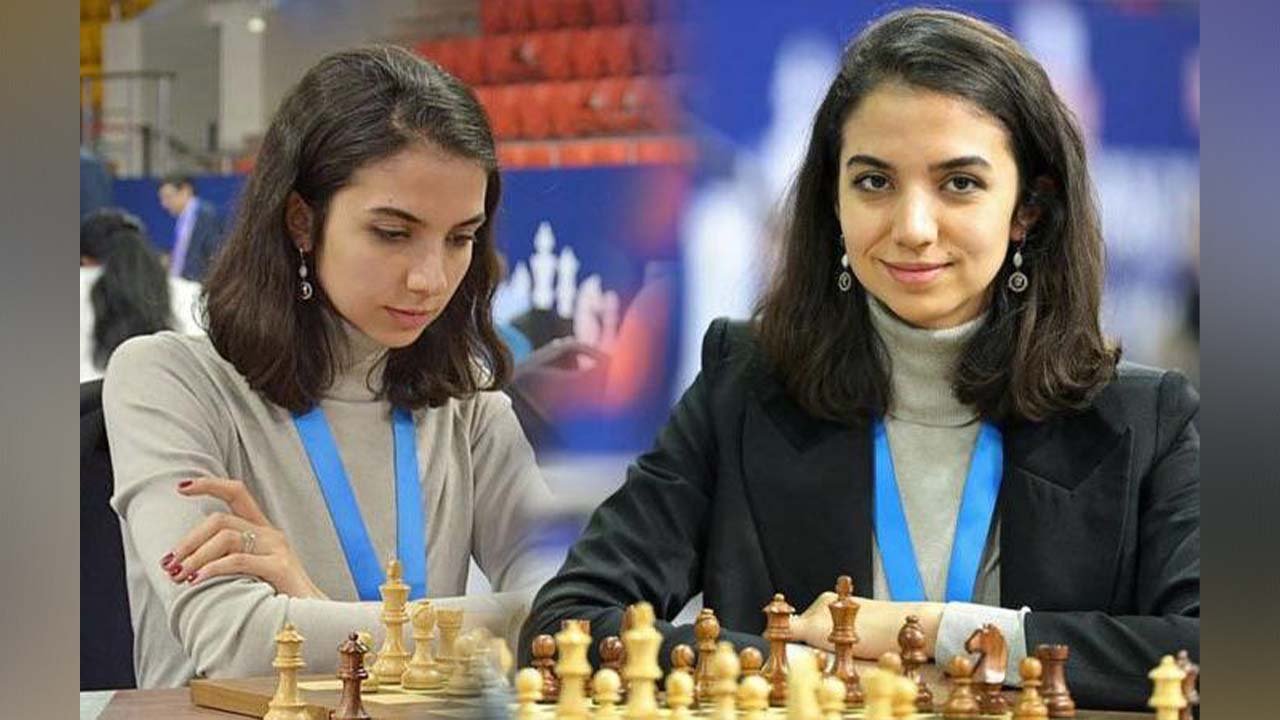
    Iranian chess player Sara Khadem has taken part in an international chess tournament without wearing the hijab.

     As per Iranian Law, it is compulsory for women to wear hijab or cover their head while competing in international tournaments. Sara Khadem has said that she still hopes she will continue representing her homeland in international competitions.

    On September 13 last year in Tehran, Iran, the moral police arrested a 22-years-old woman named Masha Amini from Kurdistan Province for not wearing hijab properly.

    Masha Amini went into a coma when the police assaulted her while she was under arrest. Masha died in the hospital on September 16.

    Sara Khadem’s action is also being seen as support for the protests which have gripped Iran since Amini’s death. Iranian moral police planned to arrest Sara Khadem upon her arrival in the country but the chess player fled to Spain with her husband and 10-month-old son.

    While talking to a Spanish newspaper Sara Khadem said that she is, “not my-self while wearing hijab.” She said that planned to leave Iran after the birth of her son Sam. “I want my son to move freely on roads and play without bothering us. Spain is the only place that pops up in my head and I took refuge here,” she stated.

    Khadem also clarified that she will only wear hijab if there are cameras before an international chess match in Kazakhstan.

    “But I’m not me when I wear hijab. I don’t feel well. So, I decided to put an end to that situation. Because of this, I have decided not to wear the hijab anymore,” she said.

  • Musician ‘Iranian sisters’ sing Bella Ciao in solidarity with Masha Amini

    Musician ‘Iranian sisters’ sing Bella Ciao in solidarity with Masha Amini

    Two Iranian sisters have sung a Persian version of revolutionary Italian folk song “Bella Ciao” in response to Mahsa Amini’s death in Iran.

    The two Iranian sisters, Samin and Behin Bolouri, recorded the Persian version of Bella Ciao and uploaded it on Instagram.

    The translated version of the caption read: “We are not awake until tomorrow.”

    The video has garnered over five million views.

    Amini, a 22-year-old Iranian woman breathed her last days after being arrested by a police unit responsible for forcing Iran’s strict dress code for women. She was taken into custody for not complying with hijab rules.

    Mahsa Amini was beaten while inside a police van when she was picked up in Tehran on Tuesday. Photographs of Mahsa lying in a hospital bed have gone viral, showing the young woman in a coma with her head wrapped in bandages and breathing through tubes.

    #MahsaAmini became one of the top hashtags on Persian-language Twitter as Iranians fumed over the death of Amini. Later, women in Iran protested against the death of Amini by setting their hijabs on fire. Her death has sparked widespread protests in Iran.

    At least 70 people have died in protests and over 1,200 have been arrested following Amini’s death.