Tag: hijab

  • Iran President declines interview by CNN anchor who refuses to wear hijab

    Iran President declines interview by CNN anchor who refuses to wear hijab

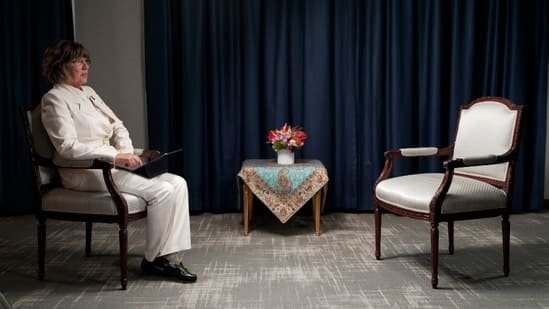
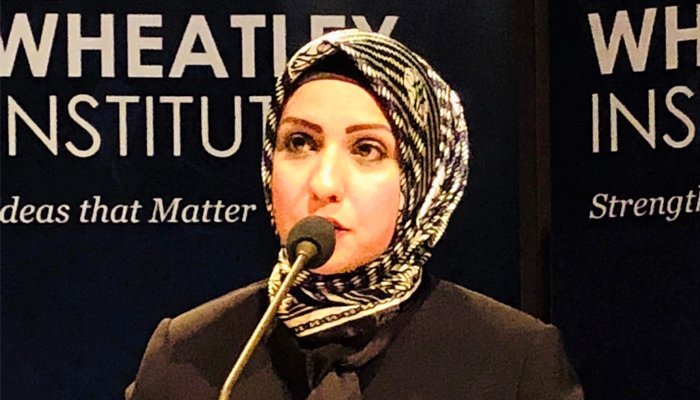
    Iranian President Ebrahim Raisi didn’t turn up for a CNN interview when the interviewer, Christiane Amanpour, refused to wear a hijab during the taping.

    Amanpour took to Twitter to explain the incident, stating that the interview was long planned and this would have been President Raisi’s first-ever interview on US soil. However, things didn’t go as planned.

    “An aide came over and said that the President is suggesting that I wear a headscarf because it’s the holy months of Muharram and Safar”, she said while adding that the aide made it clear that the “Interview would not happen if Amanpour did not wear a headscarf”.

    She said that she “politely declined”, stressing that she was in New York, where there is no law or tradition regarding headscarves. “I pointed out that no previous Iranian president has required this when I interviewed them outside Iran,” she pointed out.

    The journalist concluded by saying that because of the situation going on in Iran, it would have been an “important moment” to speak with President Raisi

    “And so we walked away. The interview didn’t happen. As protests continue in Iran and people are being killed, it would have been an important moment to speak with President Raisi.”

    Anti-government protests erupted across Iran last week over the death of 22-year-old Mahsa Amini while in custody, after having been arrested by Iran’s morality police on an accusation of violating the law on head scarves.

    However, Iranian officials have claimed that Amini died after suffering a “heart attack” and falling into a coma, but her family has said she had no pre-existing heart condition.

    Following the incident, thousands of people have taken to the streets. In the videos which are circulating on social media, women can be seen cutting their hair and burning their hijabs as a protest. According to media outlets, at least eight people have been killed in the demonstrations.

    It is pertinent to mention that since the 1979 Islamic Revolution, it has been compulsory for women to wear the hijab in Iran.
  • “Hijab is not essential part of Islam”, India’s Karnataka High Court supports hijab ban

    “Hijab is not essential part of Islam”, India’s Karnataka High Court supports hijab ban

    The Karnataka High Court on Tuesday upheld the government’s decision to ban hijab in educational institutes in the Indian state. The court ruled that the hijab is not an essential part of Islam.

    The hearing was headed by three judges who agreed that the “prescription of uniform is a reasonable restriction on fundamental rights.”

    The state government during the hearing told the court that a ban on hijab does not violate fundamental rights to practice and profess a religion under Article 25 of the Constitution.

    The court also added that religious symbols should not be involved in the uniforms of educational institutes.

    A group of Muslim female students from Udupi government college had filed a petition to allow them to wear hijab which, according to them, is a fundamental right to practice religion. However, the Karnataka High court rejected their plea and ruled in favour of banning the hijab by the state government.

    Anas Tanwir, a lawyer who is now representing the girls is planning to appeal to the Supreme Court. He termed the Karnataka court’s ruling “disappointing” and “erroneous”.

    “I believe it is a wrong interpretation of the law,” he said while talking to Al Jazeera.

    “As far as an essential religious practice is concerned, [that] should not have been the question. The question should have been whether the [authorities] had the power to pass such orders.”

    The tension arose in January when a section of the Hindu right-wing group appeared wearing saffron scarves and threatened female Muslim class fellows not to wear the hijab during classes, which made state government college in Chikkamagaluru district, Karnataka, ban the hijab and saffron scarves over fears of rising tension.

  • Indian state bans religious clothes over hijab and saffron scarves controversy

    Indian state bans religious clothes over hijab and saffron scarves controversy

    The Indian state, Karnataka, banned religious clothes in government schools and colleges on Saturday amid a controversy over the hijab and saffron scarves.

    The situation escalated when a group of Hindu students marched wearing saffron scarves and chanted ‘Jai Shri Ram’ while going to college, which made the state government ban such clothing.

    Another group of Hindu female students wearing saffron scarves marched in the market while chanting ‘Jai Shri Ram’ on their way to college.

    The government order stated, “Invoking 133 (2) of the Karnataka Education Act-1983, which says a uniform style of clothes has to be worn compulsorily. The private school administration can choose a uniform of their choice.”

    The dress code has to be followed by every student given by the educational institutes’ authorities.

    The order also included, “In the event of the administrative committee not selecting a uniform, clothes which disturb equality, integrity and public law and order should not be worn.”

    The tension arose last month when a section of the Hindu right-wing group appeared wearing saffron scarves and threatened their Muslim female class fellows not to wear the hijab during classes, which made state government college in Chikkamagaluru district, Karnataka, ban the hijab and saffron scarves over fears of rising tension.

    On February 3, the principal of the government college in Kundapura closed the gate for students wearing hijab. This incident happened after some Hindu students in saffron scarves were stopped at the gate as well. They were raising slogans of ‘Jai Shri Ram’.

    While a group of Dalit students came in support of hijab-clad students at another government college, IDSG in Karnataka.

  • Indian college bans hijab and Hindu saffron scarves over tension concerns

    Indian college bans hijab and Hindu saffron scarves over tension concerns

    A Karnataka state government college in India has banned the hijab and saffron scarves over rising tension fears.

    Last month, a section of the Hindu right-wing group appeared wearing saffron scarves and threatened their Muslim female class fellows not to wear the hijab during classes.

    The college principal said, “The officials were part of the meeting and it was decided that Hindu students will not sport saffron scarves and Muslim girl students will not wear hijabs but they can wear a shawl to cover their heads. If anyone violates the rule, they would be dismissed from the college.”

    Muslim students make a quarter of the total of 850 students enrolled in the degree college.

    The state secretary of Campus Front of India student group, Syed Sarfaraz Gangavathi appreciated the decision which took by the college authorities by saying, “The Constitution allows the wearing of hijab or saffron shawls but it should not be instigated by anyone or politically motivated.”

    According to the principal, the same issue rose up in 2018 as well when the authorities had barred Muslim female students from wearing hijab though for the past few days they started wearing the hijab again.

    In recent times, hatred has been fueling around in educational institutions over the religious freedom of the minorities under the current ruling government in India.

  • ‘Women cover up’: Taliban order new ban on Afghan women

    ‘Women cover up’: Taliban order new ban on Afghan women

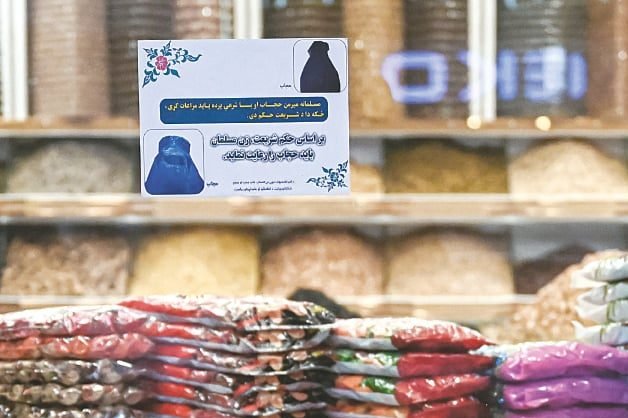
    The Taliban’s religious police have put up posters around the capital Kabul ordering Afghan women to cover up, an official said on Friday, reports Dawn.

    The poster, which includes an image of the face-covering burqa, was slapped on cafes and shops this week by the Ministry for the Promotion of Virtue and Prevention of Vice.

    “According to Sharia law, Muslim women must wear the hijab,” the poster reads, referring to the practice of covering up. A spokesman for the ministry, responsible for enforcing the Taliban’s interpretation of Islamic law, confirmed on Friday that it was behind the orders.

    “If someone does not follow it, it does not mean she will be punished or beaten, it’s just encouragement for Muslim women to follow Sharia law,” Sadeq Akif Muhajir said.

    “What they’re trying to do is to spread fear among the people,” a university student and women’s rights advocate, who did not want to be identified, said.

    “The first time I saw the posters I was really petrified, I thought maybe (the Taliban) will start beating me. They want me to wear a burqa and look like nothing, I would never do that.”

  • Meet Abtaha Maqsood, Britain’s first hijab-wearing cricketer

    Meet Abtaha Maqsood, Britain’s first hijab-wearing cricketer

    Abtaha Maqsood is Britain’s first hijab-wearing Muslim female to play international cricket, reports Geo News. She wants other young British Muslim girls to not hold back if they are thinking about cultural and religious obstacles and take up cricket as a profession.

    Abtaha’s parents are from Lahore, Pakistan. She was born in Glasgow, Scotland, on June 11, 1999 — the day Pakistan won from Zimbabwe to qualify for the semi-finals of the Cricket World Cup played in England and Scotland.

    The 22-year-old cricketer is currently playing for Birmingham Phoenix in the new short format 200-ball cricket tournament “The Hundred” in England. Since her childhood, she used to play cricket in the garden of her house with her father and brothers.

    Abtaha joined her local cricket club “Poloc” at the age of 11. Only four months after joining the club, she was selected to represent Scotland’s under-17 squad against Ireland in a T20 tournament.

    Speaking to Geo, Abtaha said that her family supported her to join cricket as a profession. Abtaha said that her father is her top supporter throughout the journey.

    “My dad and my mom are both massive cricket lovers. But my dad, in particular, says all sports are important,” she said.
    Abtaha Maqsood also holds a black belt in Taekwondo that she acquired at the age of 11. She has participated in British and Scottish Taekwondo championships as well.

    The young cricketer said she never thought of taking cricket as a career at that time. But the experience of playing cricket so far has been wonderful for her.
    Talking about her choice to wear the hijab, Abtaha said that she started it at the age of 11 after she saw her mother doing the same. She, however, said that her decision to wear one was completely her choice.

    “Wearing a hijab was my own choice. I went to perform Umrah with my family when I was 11, and on our way back to the UK, I saw my mum started wearing hijab. So I asked her why was she wearing that and then she told me [how it was a religious obligation], so I decided to wear one as well,” said Abtaha.

    “It was really important for me at that time as it is now and I’m going to keep wearing that”, she added.

    Responding to a question of whether people should focus more on her cricketing skills rather than her hijab, Abtaha said that she thinks talking about her hijab is equally important as it is the representation that matters.

    “This is the first time people have really seen a woman wearing the hijab and playing cricket at the highest level, so I think it’s still important to be talked about,” she said.

    “I never really had a role model who looked like me when I was growing up. I think that would have really helped me and given me a sense of belonging. So, hopefully, I can be that person for young girls now”, she added.

    She told Geo that although she never came across any cultural barriers herself, she is aware that there are hurdles out there for other young Muslim girls. She, therefore, wants to be a role model for those girls.

    “I really hope that people, when seeing me, could realise that it is possible to play cricket and wear hijab at the same time. And there are people out there who can support young girls through it if they really want to play cricket at a high level or any other professional sport for that matter”.

    xplaining her experience in playing “The Hundred”, she said that representing Birmingham Phoenix in the tournament is the most amazing experience of her life.

    Talking about her experience in the tournament so far, Abtaha said that she still can’t believe that she’s playing with some of the best cricketers in the world — a chance she never had before.

    Abtaha Maqsood has represented Scotland’s national team 17 times in international T20 matches, claiming 23 wickets so far in her career at an impressive average of 12.28.

  • Hijab can now be banned at workplaces in EU, rules court

    Companies in the European Union can now ban employees from wearing a headscarf under certain conditions, including the need to project an image of neutrality to customers, the EU’s top court on Thursday, Reuters reports.

    “A prohibition on wearing any visible form of expression of political, philosophical or religious beliefs in the workplace may be justified by the employer’s need to present a neutral image towards customers or to prevent social disputes,” the court said.

    “However, that justification must correspond to a genuine need on the part of the employer and, in reconciling the rights and interests at issue, the national courts may take into account the specific context of their Member State and, in particular, more favourable national provisions on the protection of freedom of religion.”

    The cases were brought by two German Muslim women, a special needs childcare worker and a sales assistant in a chemist. Both were told to remove their headscarves after deciding to wear the hijab when they returned to work after maternity leave.

    Naz Shah, Member of Parliament for Bradford West, England has, in a tweet, said that she will raise concerns against the ruling, terming it as “Islamophobic, ignorant and a blatant attack on religious freedoms.”

  • British company introduces special hijabs for Muslim lawyers

    A British company Ivy & Normanton has launched a range of hijabs designed specifically for female advocates to wear in court. The initiative has been welcomed by Muslim women across the United Kingdom because no specific brand made hijabs for female advocates.

    Speaking to Arab News, the designers said they hoped to inspire more young Muslim women to join the legal profession.

    Barrister and founder of Ivy & Normanton Karlia Lykourgou, while talking to the publication, said: “I think people aspire to be what they can see.”

    “To keep encouraging diversity at the bar, we have to make sure that those who don’t fit the white, male stereotype have the tools they need so other young people can see them and believe they have a place in the profession too,” she said further, adding: “The Ivy & Normanton hijab was developed so other women could easily find a piece of clothing that expresses their identity as a Muslim and an advocate and get on with the job.”

    According to the brand’s website: “I&N hijab was created in collaboration with hijab wearing members of the legal profession to be perfectly designed for court.”

    “Made of 100% organic bamboo silk, it’s moisture-wicking and hypoallergenic to keep you cool in the summer and comfortable in winter, and is a perfect size and shape for tucking into a suit jacket or into a collarette, so you can express your identity as a person and a professional.”

  • Noor Bukhari apologises to Zoya Nasir for criticising bride’s dress

    Noor Bukhari recently expressed her reservations over a local bride’s outfit.

    “Where are we heading? Is this our tradition?,” said Noor while talking about the bride’s dress.

    Noor’s comments irked Zoya Nasir who jumped in to defend the bride.

    “It’s her wedding day. It’s her dream day,” said the actor. “The bride is not enforcing her beliefs or lifestyle on anyone and no one has the right to publicly disgrace her very personal choice with their own two cents.”

    “Lest no forget what the person in objection has done in the past,” she continued. “She had pretty good role to play where we are headed. If Ms Noor was free to do what she did, same goes for everyone else.”

    “It’s good that she had a calling and is following her faith but that doesn’t give her the authority to name and shame,” she added.

    Responding to Zoya’s outrage, Noor apologised to her.

    “I apologise Ma’am Zoya Nasir. I did very wrong in past and I regret what I did,” said the former actor.

    “It concerns me because there use to be a time dulhan looked so pretty in haya,” said Noor. “But still I realised my mistake and took down the post.”

    “Where is the freedom of speech? Why [does] it [have] to become news whenever I post anything on my post or page?” questioned Noor.

    “Still I apologise for my mistake. Ab me chup hi rahun gi,” she added.

    Bukhari turned to religion to seek contentment after her fourth divorce. She has often used social media to share her religious experiences and spread spiritual awareness. In January 2020, she reportedly remarried ex-husband and Pakistan Tehreek-e-Insaf leader Awn Chaudhry. The couple has two daughters together.

  • Humaima Malick prays for the strength to ‘carry hijab’

    Humaima Malick prays for the strength to ‘carry hijab’

    Humaima Malick has shared that she wishes she could ‘carry [the] hijab’ all her life.

    Sharing a picture of herself with Noor Bukhari, Malick praised the former actor for her guidance and penned down words of appreciation for her.

    “There are very few people in life who expect nothing from you but your own good,” Humaima captioned the picture. “Noor you are so noorani meri pyaari Noori. May Allah bless you always and forever.”

    She then thanked Noor for the scarf, saying a little prayer of motivation for herself and asking fans to do the same.

    “Thank you for this beautiful gift, I loved wearing this scarf. May Allah add me in His loved ones and give me [the] strength to carry hijab all my life,” said Malick.

    Earlier, Malick’s brother Feroze Khan also quit the entertainment industry to pursue his religious calling.

    Later, the actor said that he will not be quitting after his “Sheikh” Sultan Muhammad Ali ordered him not to quit.

    “He believes the industry is a source of spreading the message from one place to another,” said Feroze. “He also told me that I needed to be at this place. I have to do something out of this, I have to make something out of this. So I’m reading into a lot of scripts, looking into a lot of scripts — I may act, I may produce, but I’m here.”