Tag: Hike

  • Honda raises car prices by up to Rs1.45 million

    Honda raises car prices by up to Rs1.45 million

    Following the footsteps of Toyota and KIA, Honda Atlas Cars Limited (HACL) has increased the price of its vehicles. The automaker has attributed the biggest increase to growing raw material prices and the weakening of the local currency against US dollar.

    The revised pricing go into effect on July 30, 2022. They apply to all orders placed beginning on July 30, 2022, and further forward.

    All orders that are due by August 2022 or for which full payment was received by July 29, 2022, will be subject to the previous pricing.

    Here are the new prices for all variants from Honda:

    Variant Old Invoice (Rs) New Prices (Rs) Difference (Rs)
    City 1.2L MT 3,264,000 4,049,000 785,000
    City 1.2L CVT 3,389,000 4,199,000 810,000
    City 1.5L CVT 3,589,000 4,439,000 850,000
    1.5 L Aspire MT 3,729,000 4,609,000 880,000
    1.5 L Aspire CVT 3,899,000 4,799,000 900,000
    Civic 1.5T M-CVT 5,549,000 6,799,000 1,250,000
    Civic Oriel 1.5T M-CVT 5,799,000 7,099,000 1,300,000
    Civic 1.5T RS LL-CVT 6,649,000 8,099,000 1,450,000
    BR-V 1.5 iVTEC S 4,249,000 5,299,000 1,050,000
    Latest Honda Car Prices in Pakistan

    It is worth noting that these hikes from Toyota and Honda are the biggest price increase in the auto market’s history. Honda’s premium sedan Honda Civic is now priced as high as Rs8.1 million.

    Additionally, the base trim of the Honda City now starts at more than Rs4 million, which has the general public in disbelief.

    Experts predict that the Pakistani rupee will most likely decline even further, which suggests that the price of cars may witness more revisions in the coming months.
  • Petroleum prices may increase by Rs28.44 on Monday

    Petroleum prices may increase by Rs28.44 on Monday

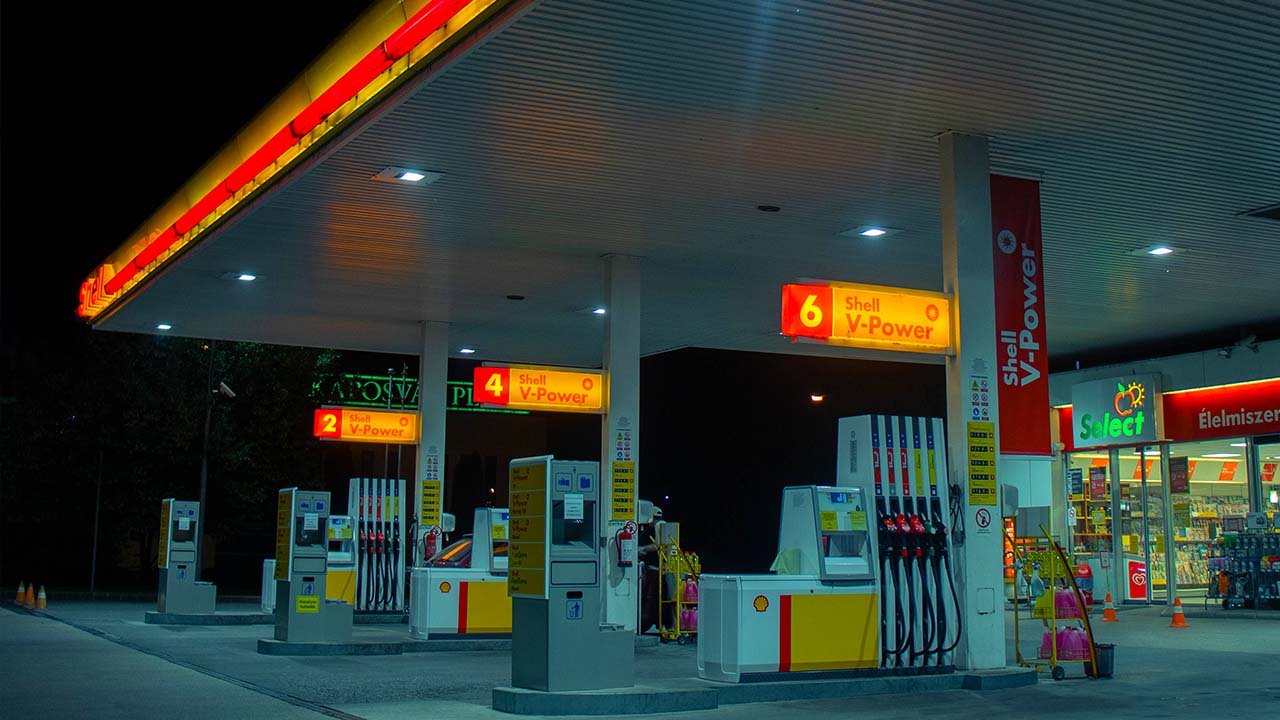
    The Oil and Gas Regulatory Authority (OGRA) has calculated a price increase for petroleum products of up to Rs28.44 per litre that could go into effect on August 1.

    According to regulatory agency sources, the estimated ex-depot price of gasoline may increase by Rs6.53, high-speed diesel (HSD) by Rs28.44, kerosene oil (SKO) by Rs11.02, and light diesel oil (LDO) by Rs5.64 per litre based on the current rate of petroleum levy (PL).

    On Saturday (today), the Finance Division will move a summary calling for an increase in gasoline prices of up to approximately 11 per cent beginning August 1. The prime minister will, as usual, make the final choice in this matter.

    The cost of gasoline and HSD will also increase if the government decides to include the Rs7 per litre petroleum dealer’s per centage in the pricing structure. The Economic Coordination Committee (ECC) had earlier that day approved the petroleum dealers’ increased margin.

    The Petroleum Division had given the dealers assurances that the government would implement the margin as of August 1, 2022.

    According to these projected prices, the price of gasoline would increase from Rs230.24 to Rs236.77 per litre, the price of HSD from Rs236.00 to Rs264.44 per litre, the price of SKO from Rs196.45 to Rs207.47 per litre, and the price of LDO from Rs191.68 to Rs197.32 per litre.

    Presently, the PL on gasoline is Rs10 per litre, the PL on HSD, SKO, and LDO are each Rs5, and there is no sales tax.

    In order to reach the budgetary goal of Rs750 billion set in the Finance Bill 2022–23, the National Assembly has approved a rise in the maximum limit of PL from Rs30 per litre to Rs50 per litre.

    Read more: Petrol, diesel prices may increase by Rs10-17 per litre

    However, sources in the Petroleum Division believed that, at the current rate, the government was unlikely to collect Rs750 billion from PL in the current fiscal year, as that would only amount to a maximum of Rs14 billion per month.

    In addition, if the 17.5 per cent general sales tax (GST) is not imposed on these goods, a revenue shortfall of Rs45 billion per month is likely.

  • Petrol, diesel prices may increase by Rs10-17 per litre

    Petrol, diesel prices may increase by Rs10-17 per litre

    Despite the fact that the prices for petroleum products and crude oil have remained largely stable, the price of petrol and diesel may increase by Rs10 to Rs17 per litre as of August 1, 2022. The depreciation of the Pakistani rupee is anticipated to be the cause of the upcoming increase.

    According to The News, sources claim that without taking into account the petroleum levy (PL), a price increase of Rs10 for petrol and Rs16–17 for diesel has been estimated. Additionally, Mogas prices have been forecasted at Rs15 per litre and diesel at Rs23 per litre if the government increases the petroleum levy of Rs5 per litre on gasoline.

    The anticipated increase in POL prices has also been calculated without taking into account the ECC’s Thursday approval of an increase in dealers’ margins (DMs) on POL prices of Rs2.10 per litre for gasoline and Rs2.87 per litre for diesel to Rs7 per litre. Petrol’s price could increase by Rs2.10 to Rs17.10 per litre, and diesel’s price could increase by Rs2.87 to Rs25.87 per litre.

    The increase in dealers’ margin will take effect on August 1, 2022, if the federal cabinet approves this decision in the next two days. Industrial sources reported that the US dollar has increased in value by Rs40 so far this month.

    The current exchange rate against the US dollar is Rs239.9427, and the open market price is Rs246.15. However, they did say that the exact price of gasoline and diesel will depend on the exchange rate in force as of today (Friday).

    Since the price of crude oil as of Thursday settled at $99.4 per barrel, according to independent experts, Pakistani consumers won’t be able to benefit from the decrease in price of POL as a result of the rising exchange rate. The government seems more inclined to impose PL on both gasoline and diesel by Rs5 per litre each.

    Liquefied petroleum gas (LPG) costs also rose by Rs10 per kilogramme on Wednesday without an Oil and Gas Regulatory Authority notification (OGRA).

    The chairman of the LPG Distribution Association (LDAP), Irfan Khokhar, told Profit that a household cylinder now costs Rs2,750 after an increase of Rs150, while the cost of a commercial cylinder has increased by Rs450 to Rs10,438 as a result of the unannounced price increase.

  • Nepra approves price increase of Rs9.66 per unit for Karachi

    Nepra approves price increase of Rs9.66 per unit for Karachi

    On account of the fuel cost adjustment (FCA) for May 2022, the National Electric Electricity Regulatory Authority (Nepra) allowed K-Electric to increase its power rate by Rs9.66 per unit on Monday.

    According to Aaj News, Nepra will make the announcement following careful consideration.

    In order to transfer the financial burden of Rs22.65 billion to consumers for May 2022, K-Electric requested an increase of Rs11.34 per unit.

    Officials from Nepra questioned K-Electric during a hearing about why it wasn’t buying less expensive electricity and offered to help K-Electric establish a connection with the provincial and federal governments for this reason.

    The power distributor also questioned K-Electric’s decision not to use the inexpensive oil it had acquired for power production.

    Nepra’s representatives responded that the company was using peak hours, which are from 6:30 PM to 10:30 PM, to provide electricity and that the cost of power is much greater at these times.

    The FCA estimate for May 2022, according to K-Electric, was based on the requested rate for the month from CPPA-G and is subject to change based on a decision to be made by Nepra.

    In its FCA adjustment request, the power utility informed the regulator that it imports from outside sources and dispatches power from its own generating units (with the available fuel resources) in accordance with economic merit orders (EMOs).

  • Pakistan’s inflation hits 21.32 per cent in June 2022

    Pakistan’s inflation hits 21.32 per cent in June 2022

    In June 2022, Pakistan’s yearly inflation rate reached a 13-year high of 21.3 per cent, up from 9.7 per cent in June 2021 and 13.8 per cent in May 2022, according to the most recent data made public recently by the Pakistan Bureau of Statistics (PBS).

    According to PBS, monthly CPI-based inflation rose by 6.3 per cent in June 2022 as opposed to a 0.4 per cent increase the month before and a 0.3 per cent decrease in June 2021.

    Compared to increases of 14.1 per cent a month prior and 17.6 per cent a year prior, the Sensitive Price Index (SPI) inflation on a YoY basis increased by 21.7 per cent in June 2022. On a month-over-month basis, it increased by 6.2 per cent in June 2022 compared to a 0.6 per cent increase the previous month and a (-)0.4 per cent decrease in June 2021.

    The Consumer Price Index (CPI) reached 21.3 per cent on a year-over-year (YoY) basis as Pakistan’s economy battles a widening current account deficit brought on by a high import bill, rising inflation has become a major concern.

    In an effort to combat economic headwinds, the State Bank of Pakistan (SBP) increased the key interest rate by 150 basis points to 13.75 per cent earlier in May. At the time, the central bank predicted that as electricity and fuel subsidies are eliminated, inflation is likely to spike briefly, remain high through FY23, and then drop precipitously in FY24, according to Brecorder.

    The SBP is currently scheduled to decide the key interest rate at its upcoming Monetary Policy Committee meeting on July 7.

    On the other hand, the current administration increased the price of petroleum products in an effort to resurrect the International Monetary Fund (IMF) programme, which is anticipated to drive up inflation even further.

    The government announced a late-night price increase for petroleum products on Thursday, raising the ex-depot price of gasoline to Rs248.74 per liter (after an increase of Rs14.85) and diesel to Rs276.54 (after a hike of Rs13.23).

    CPI inflation in urban areas

    In contrast, year-over-year CPI inflation in urban areas increased by 19.8 per cent in June 2022 as opposed to increases of 12.4 per cent in May 2022 and 9.6 per cent in June 2021.

    In June 2022, it increased by 6.2 per cent month over month, compared to a 0.3 per cent increase the month before and a 0.4 per cent decline in June 2021.

    CPI inflation in rural areas

    In contrast to the previous month’s increase of 15.9 per cent and the increase of 9.7 per cent in June 2021, the CPI inflation rate in rural areas increased by 23.6 per cent on an annual basis in June 2022.

    Comparing June 2022 to June 2021, it increased by 6.6 per cent month over month, compared to increases of 0.6 per cent and 0.1 per cent, respectively.

  • Govt increases petrol price by Rs14.85 to Rs248.74 per liter

    Govt increases petrol price by Rs14.85 to Rs248.74 per liter

    The price of petroleum products has been increased by the federal government on Thursday for the upcoming two weeks, costing the general public nearly Rs15–18 per liter.

    Finance Minister Miftah Ismail said that he was “not supposed” to appear on national television to announce an increase in the cost of petroleum products, but that he did so in response to a directive from Prime Minister Shehbaz Sharif.

    According to the Finance Division’s formal notice, the government has concluded to partially adopt a petroleum levy and revise the current prices of petroleum products “as agreed with the development partners” due to the price fluctuation of oil on the global market and changes in exchange rates.

    As of today (July 1), the cost of gasoline will be Rs248.74 per liter, diesel will be Rs276.54 per liter, kerosene will cost Rs230.26 per liter, and light diesel oil will cost Rs226.15 per liter.

    Starting from July 1, 2022, the new prices will be in effect.

    Product Old prices New prices Increase
    Petrol  Rs233.89 Rs248.74 Rs14.85
    Diesel  Rs263.31 Rs276.54 Rs13.23
    Kerosene oil Rs211.43 Rs230.26 Rs18.83
    Light diesel oil Rs207.47 Rs226.15 Rs18.68
    Latest prices
  • NEPRA announces increase of Rs7.90 per unit in power tariff

    NEPRA announces increase of Rs7.90 per unit in power tariff

    An additional increase in the price of power of Rs7.90 per unit was announced by the National Electric Power Regulatory Authority (NEPRA) on Monday.

    After hearing the Central Power Purchasing Agency’s (CCPA) argument today, the power regulatory authority made the final hike announcement, according to ARY News.

    It is worth noting that life consumers and K-Electric are protected from the tariff increase and that the amount would be paid in July’s bills.

    In response to a request from CPPAG for a raise of Rs7.96 per unit, the increase was granted under fuel adjustment costs (FAC) for the month of May 2022, according to a notification released by the power regulating authority.

    Additionally, after a substantial increase of Rs7.91 per unit, the National Electric Power Regulatory Authority has just set the power rate at Rs24.82 per unit for the fiscal year 2022–23.

    The authority approved a Rs5.27 per unit increase in electricity rates for K-electric customers on June 24.

    According to a handout provided by NEPRA, K-Electric requested an increase in the electricity rate of Rs5.25 to account for fuel adjustment charges for April.

    Earlier, The Economic Coordination Committee (ECC) of the cabinet approved an increase in power costs for K-Electric customers of 57 paisa per unit.

    However, ECC deferred making a decision on a different proposal that called for charging K-Electric customers a surcharge of Rs1.45 per unit in order to recover Rs113.1 billion in past-due amounts related to quarterly rate increases. 

  • Plan under consideration to increase govt officials’ salaries by 5 to 15 per cent

    Plan under consideration to increase govt officials’ salaries by 5 to 15 per cent

    In an attempt to lessen the impact of inflation, the government is considering raising salaries by 5 to 15 per cent in the upcoming fiscal year’s budget, according to The News, following the Pay and Pension Commission’s inability to submit a report ahead of the next budget, which led to the prime minister’s decision to grant another extension.

    The deadline for submitting the Commission’s recommendation is being extended to June 30, 2022, as per a statement released by the Finance Division.

    According to top official sources, the former PTI-led government gave a 15 per cent allowance to officials in grades 1 to 19, effective March 1, 2022.

    The new Shehbaz Sharif-led administration, on the other hand, pledged a 10 per cent rise in the pension and a 25,000-per-month minimum wage.

    A Finance Ministry official stated that in the future budget, pay for grades 1 to 19 may be boosted by another 5-10 per cent as an adhoc allowance. Employees in grades 20 to 22 could see a pay raise of 10 per cent to 15 per cent.

    In addition, due to increased inflationary pressures, the government may boost pensions by 5-10 per cent. The Regulation Wing of the Ministry of Finance has completed its internal work in this regard. It was also resolved to form a Pay and Pension Commission, which would make recommendations.

    The commission was established by the PTI-led government in April 2020, and its chairman was former Secretary of Finance Abdul Wajid Rana. He resigned, however, and former bureaucrat Nargis Sethi was named Chairperson of the Pay and Pension Commission. She later quit as well.

    The Pay and Pension Commission was then chaired by Zafar Ahmed Khan, who was chosen by the government. So far, the commission has requested two extensions but has yet to present its recommendations.

    The text box was included in the Pay and Pension Commission’s terms of reference, which included studying the adequacy of the existing basic pay scale system and evaluating the current salaries of government employees.

    Read more: Petrol quota for ministers, govt officials in Sindh lowered by 40 per cent

    It also includes making recommendations for streamlining existing classification from BPS 1-22, studying the separation of existing basic pay scales for dedicated departments, occupations/cadres, reviewing special scales such as management grades, management position scales (MP Scales), special professional pay scales (SPPS); project pay scales, and proposing measures for uniformity and improvement, reviewing admissible regular allowances, special incentives, and all other supplementary pay scales.

    The panel was tasked with identifying current shortcomings in the Pension Scheme and making recommendations for a corrective revision along with ensuring the current model’s long-term viability and recommending a system with clear timelines that is more efficient and sustainable given the available resources.  

  • 40-50 per cent hike expected in gas tariff

    40-50 per cent hike expected in gas tariff

    The government plans to hike the system gas tariff by up to 50 per cent as part of its efforts to gain access to the International Monetary Fund (IMF) bailout.

    The Ministry of Energy anticipates the Oil and Gas Regulatory Authority (OGRA) determining the revenue requirement for the coming fiscal year in June. As per The News, which cited sources, the tariff increase will take effect on July 1, 2022.

    Sui Southern Gas Company Limited (SSGC) and Sui Northern Gas Pipelines Limited (SNGPL), according to an Energy Ministry official, have suffered massive combined losses of Rs550 billion in recent years.

    Both are losing money since the system gas rate has not been raised in a long time. SNGPL is expected to lose Rs350 billion, while SSGC is expected to lose roughly Rs200 billion.

    OGRA will now calculate the system gas tariff under the modified OGRA statute. The IMF has encouraged the government to ensure that gas firms do not lose money as a result of the gas tariff’s stagnation, as well as to follow the modified OGRA law in its entirety.

    It’s worth noting that the government raised the price of petroleum goods by Rs30 per liter last week after the IMF stated that the bailout package would not be resumed unless the country ended petroleum product subsidies.

  • Toyota Camry after a hike of Rs2 million, priced at Rs23.3 million

    Toyota Camry after a hike of Rs2 million, priced at Rs23.3 million

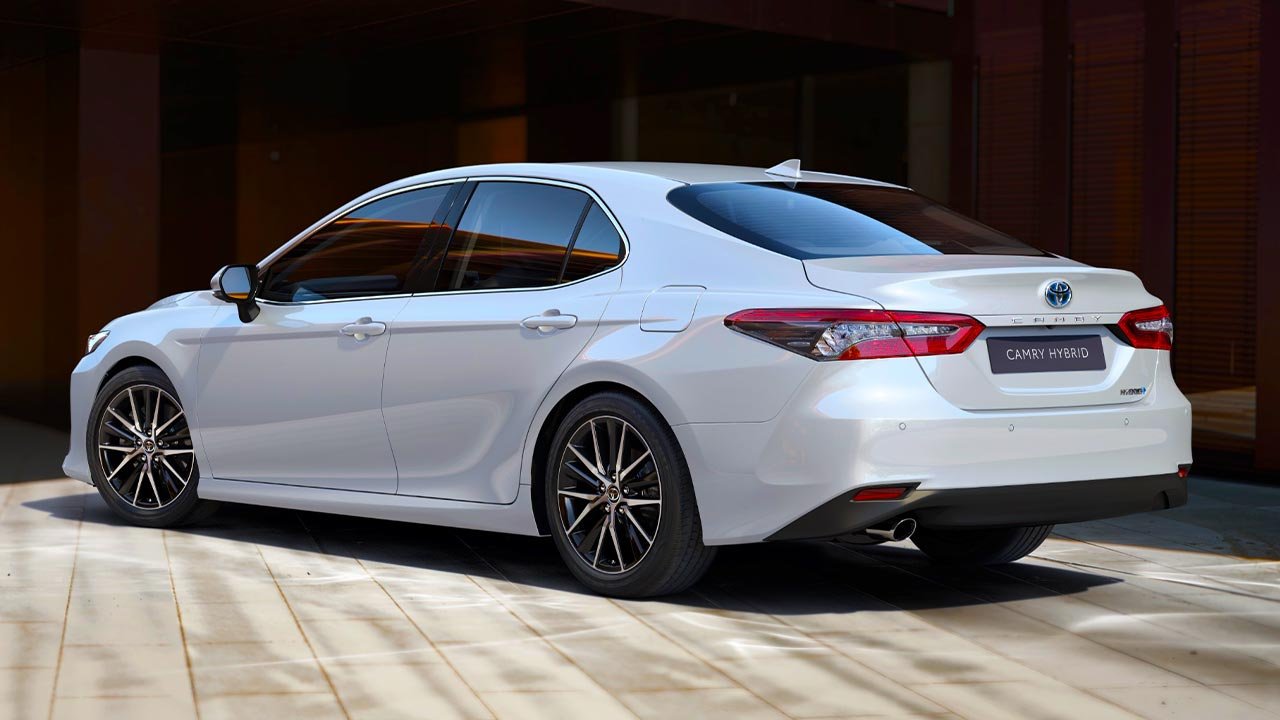
    Toyota Indus Motor Company (IMC) has announced a massive price hike for all completely built-up (CBU) units offered by the Japanese automaker in Pakistan. The price of Toyota Camry is upped by Rs2 million and will now cost Rs23.3 million

    The only variant of the popular hybrid model, Toyota Prius received a hike of Rs1.26 million and will be sold for Rs14.65 million. Toyota’s crossover SUV, Corolla Cross (top trim) is now priced at Rs13.4 million after a hefty increase of Rs1.17 million in its earlier price.

    Finally, the automatic version of Toyota Rush will now be offered at Rs8.33 million following an increase of Rs710,000.

    Read more: Hyundai Sonata 2.5 will now cost Rs7.85 million

    Toyota IMC’s CBU models, in particular, have become nearly unobtainable following the recent price jump. The government’s main purpose in the auto sector, however, is to discourage CBU imports and increase sales of locally produced vehicles. This means that all other CBUs are on the verge of suffering the same fate as Toyota.