Tag: Hike

  • Pakistani rupee crashes to historic low of Rs194 against US dollar

    Pakistani rupee crashes to historic low of Rs194 against US dollar

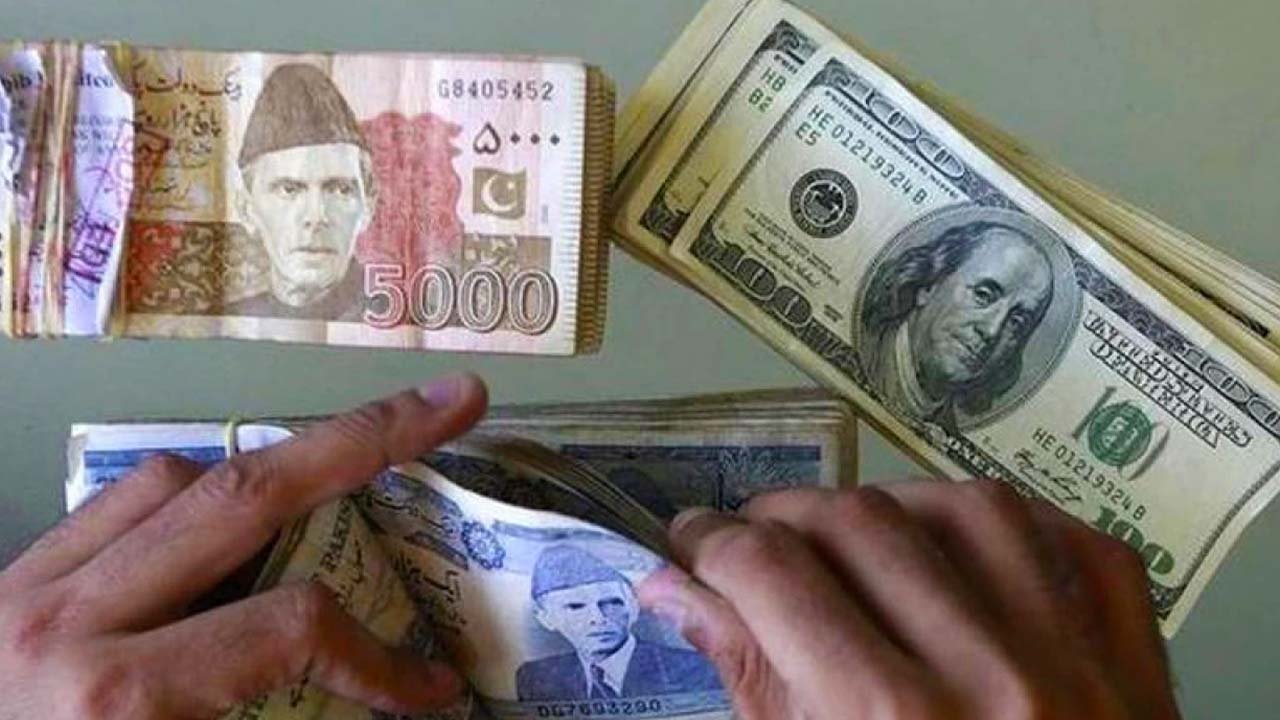
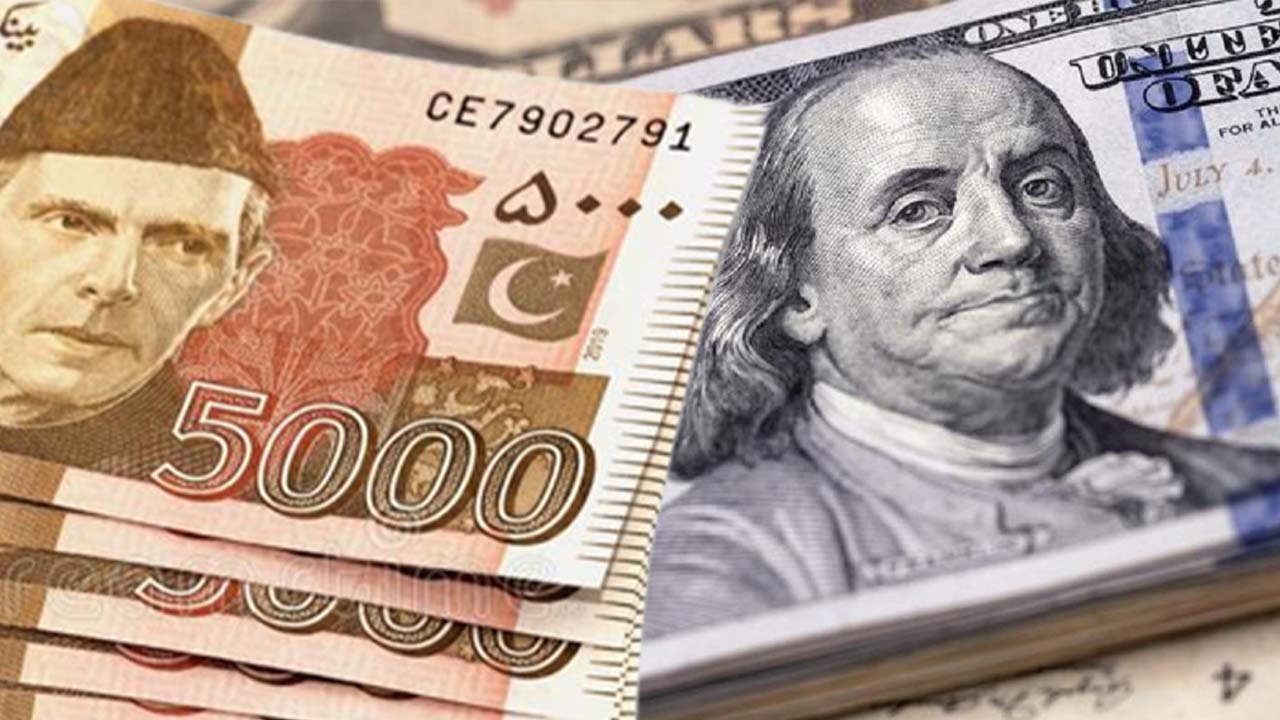
    During the trading session on Monday, the Pakistani rupee (PKR) maintained its declining trend, touching Rs194, its worst rate versus the US dollar. At the interbank, the greenback strengthened by Rs1.47 during the trading hours.

    The General Secretary of the Exchange Companies Association of Pakistan, Zafar Paracha said that the greenback climbed by Rs11.07 since the new government took government, while debt has increased by Rs1,400 billion due to the disparity.

    Pakistani currency lost 3.1 per cent of its value against the US dollar in the previous week in the interbank market, with Pakistan’s currency hitting new record lows to end the week at Rs192.53, its worst closing in history.

    Read more: Pakistani Rupee crashes to a record low against US dollar 

    The local currency fell in value across the board as concerns about the economy, declining foreign currency reserves, and worsening trade imbalance intensified. Concerns over the International Monetary Fund (IMF) programme have also caused fear and speculation in the market.

  • Open market: Lemon being sold at Rs1,100 per kg in Lahore

    Open market: Lemon being sold at Rs1,100 per kg in Lahore

    The local price of lemon increased by Rs105 per kg, to Rs770 to 775 per kg, and was sold at an unbelievable price of Rs1,100 per kg in open markets and a few online stores with available stock.

    Due to the district administration’s inability to impose official rates at Ramazan bazaars, consumers are unable to get relief from overbilling and skyrocketing rates of fruits and vegetables in Lahore. 

    High prices of perishable commodities are massively affecting the urban population due to rising production costs and transportation costs from rural production centers to urban areas.

    Read more: Shopkeepers fined in Islamabad for not adhering to DC rates

    Senior administrators and Prime Minister Shehbaz Sharif paid surprise visits to Ramazan bazaars, but shoppers were not relieved. Containing volatility and successfully administering official rate lists to bring inflation relief to the public is a task for the new government.

  • Pakistan’s foreign currency reserves down by $328 million

    Pakistan’s foreign currency reserves down by $328 million

    State Bank of Pakistan (SBP) on April 28, revealed that the central bank’s foreign exchange reserves fell by 3 per cent on a weekly basis.

    The central bank’s foreign currency reserves were $10,558.2 million on April 23, a $328 million decrease from the previous day’s total of $10,885.7 million. according to the SBP, this decline was caused by external debt and other payments.

    Pakistan’s total liquid foreign currency reserves, comprising net reserves held by banks other than the SBP, were $16,668.2 million. Banks held a total of $6,110 million in net reserves.

    SBP’s foreign exchange reserves reached an all-time high of $20.15 billion in the week ending August 27, 2021, after Pakistan received a general allocation of Special Drawing Rights (SDRs) worth $2,751.8 million from the IMF on August 24.

    Pakistan bought $2.5 billion using Eurobonds on March 30, 2021, by offering attractive interest rates to lenders in order to enhance foreign exchange reserves.

    Read more: All banks to remain open this Saturday

    On July 9, 2019, it received the first loan amount of $991.4 million from the IMF, which helped to boost reserves. The IMF released the second loan tranche of approximately $454 million in late December 2019.

  • Global oil prices climb to highest in three weeks

    Oil prices increased on Monday as fears of limited global supply intensified, with the developing crisis in Ukraine raising the risk of more penalties from the West against Russia, the world’s leading exporter.

    Brent futures were up $1.50, or 1.3 per cent, at $113.20 a barrel, while US West Texas Intermediate futures were up 98 cents, or 0.9 per cent, at $107.93 per barrel. Both contracts surged more than 2.5 per cent on April 14, ahead of the Easter weekend holidays, on news that the European Union would phase in a ban on Russian oil imports.

    Last week, EU governments said that the bloc’s executive was working on ideas to ban Russian oil, but officials said Germany was not actively backing an immediate ban.

    Those remarks came before the Ukraine situation escalated over the weekend, with the Ukrainian military defying a Russian demand to lay down arms in the pulverised port of Mariupol on Sunday. Moscow, which refers to its efforts in Ukraine as a “special operation,” said its soldiers had nearly entirely captured the city, with no sign of a truce in sight.

    Read more: Oil prices jump following Russia’s biggest production decline

    Due to sanctions or importers voluntarily rejecting Russian shipments, the International Energy Agency has warned that around 3 million barrels per day (BPD) of Russian oil might be shut in from May onwards.

  • Another hike of Rs4.9 per unit approved in power tariff

    Another hike of Rs4.9 per unit approved in power tariff

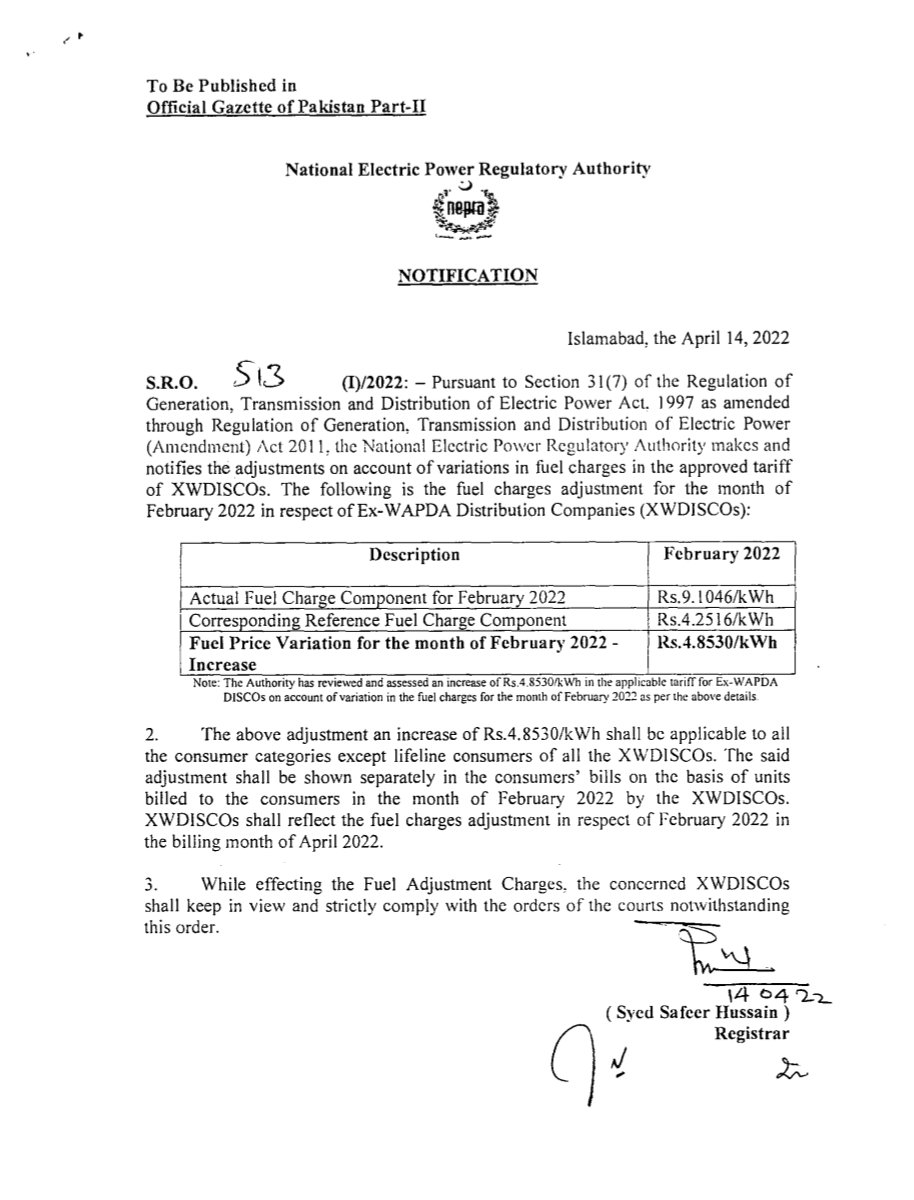
    Owing to the monthly Fuel Cost Adjustment (FCA) for February, the National Electric Power Regulatory Authority (NEPRA) on April 15 increased the price of electricity by Rs4.85 per unit.

    It has also announced an increase in the price of power, stating that the power output in February was more expensive than the previously set fuel price.

    According to the notice, the power distribution companies (DISCOs) will collect the amount from electricity consumers in the April bill. In addition, consumers will be hit with a charge of Rs37.7 billion, excluding general sales tax (GST). However, K-Electric and lifeline customers will be exempt from the hike.

    On March 31, the NEPRA held a hearing to determine the FCA but did not make a decision. The Central Power Purchasing Agency (CPPA) requested that the cost per unit be increased to Rs4.94 by the NEPRA.

    Following the monthly FCA, which only operates for one month, the administration had already hiked the power price to Rs5.95 per unit for the month of January.

    As per NEPRA’s data, the most expensive energy production sources, including High-Speed Diesel (HSD) and Residual Fuel Oil (RFO), were used more than average in the prior months, raising the overall cost of production.

  • PM Shehbaz rejects OGRA’s proposal, petrol price to remain unchanged till April 30

    PM Shehbaz rejects OGRA’s proposal, petrol price to remain unchanged till April 30

    Pakistan’s new Prime Minister (PM) Shehbaz Sharif on Friday dismissed the proposal from the Oil and Gas Regulatory Authority (OGRA) to raise the price of petroleum products for the fortnight. The recent decision is aimed at providing relief to the public affected by inflation.

    It is worth noting that the present government’s choice to maintain the same prices will oblige it to provide another substantial subsidy till the end of April 2022.

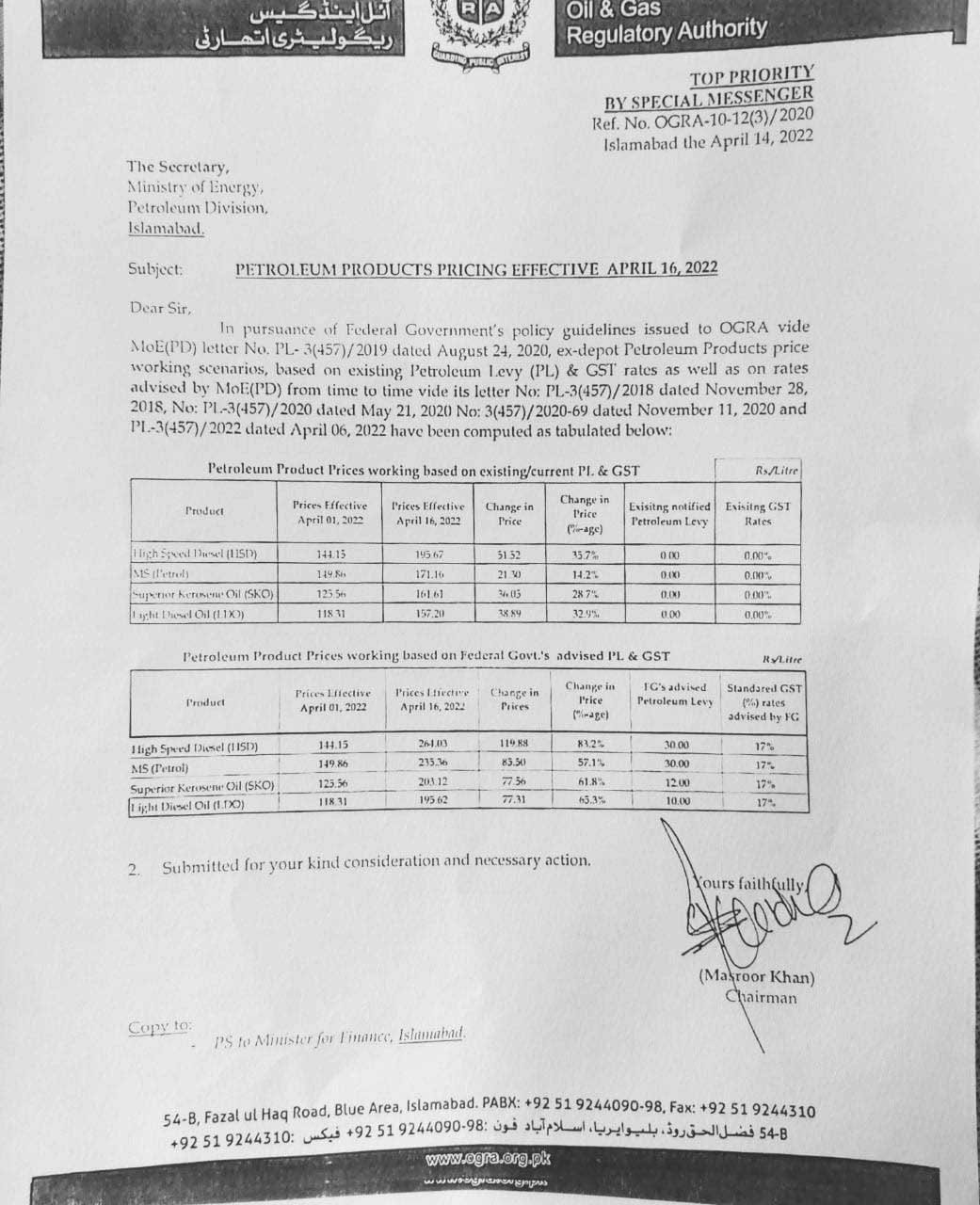
    Earlier, OGRA suggested to the Finance Division that the price of petrol be increased by Rs21.50 and that of diesel be hiked by Rs51.30 in view of the current petroleum levy and general sales tax (GST).

    Read more: Massive hike of Rs83.5 for petrol, Rs119 for diesel proposed by OGRA

    The authority also proposed a hike of Rs83.50 per liter of petrol and Rs119.88 per liter of diesel considering the federal government’s recommended petroleum levy of Rs30 and 17 per cent GST, as per the official statement.

  • Pakistani rupee records impressive gains against US Dollar, highest single-day gain

    Pakistani rupee records impressive gains against US Dollar, highest single-day gain

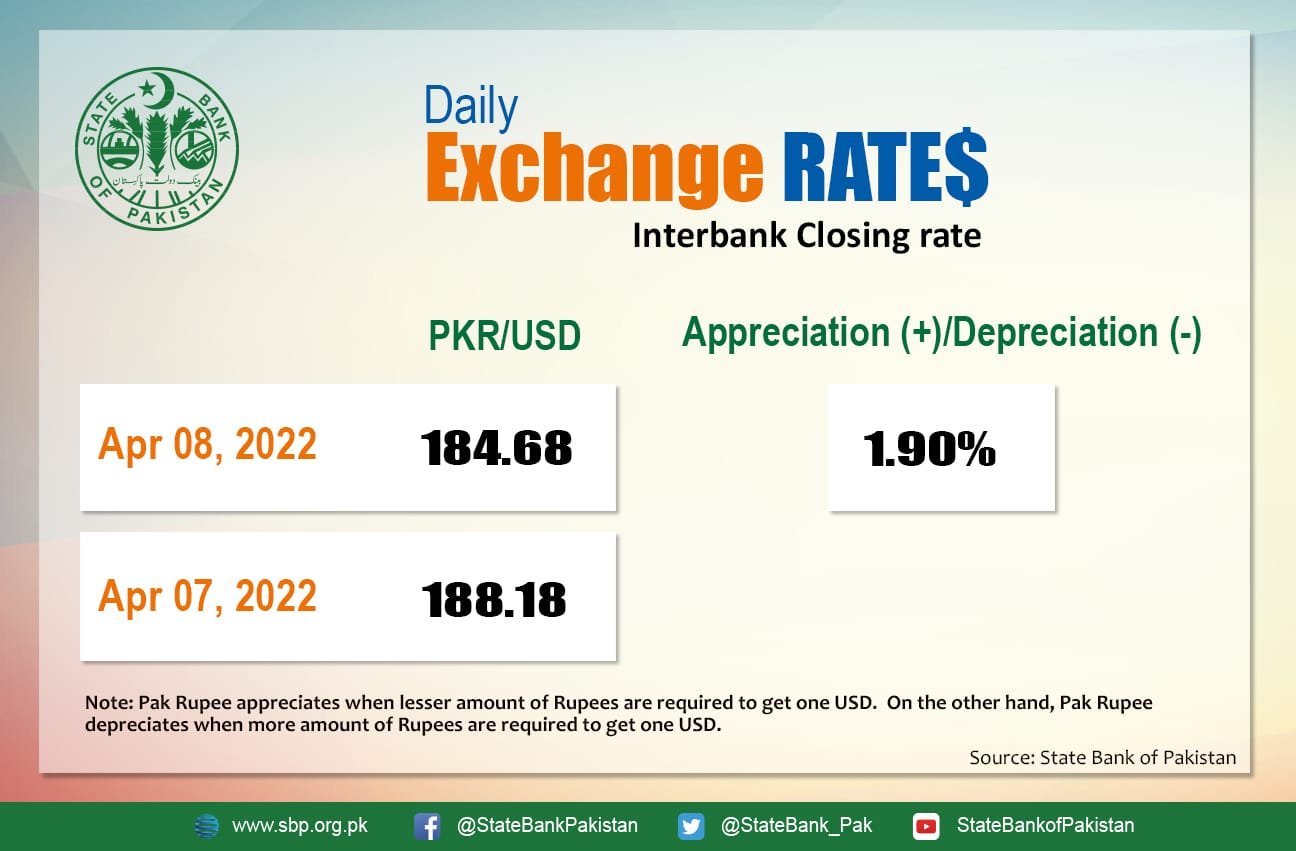
    In the intra-day trade on Friday, the Pakistani rupee (PKR) gained an impressive Rs3.5 against the US dollar, the highest single-day gain in two years after the Supreme Court (SC) pronounced the National Assembly (NA) deputy speaker order unconstitutional and restored the NA.

    The US dollar is currently trading at Rs185, as per foreign currency dealers, after weakening Rs3.5 versus the local currency in early trade. The USD is currently trading for above Rs186 on the open market.

    On Thursday, the rupee concluded at Rs188.18 against the USD in the interbank market.

    Consequently, the Pakistan Stock Exchange’s (PSX) benchmark KSE-100 index, reversed its downtrend shortly after starting on Friday and surpassed the 44,000 mark, a day after the Supreme Court of Pakistan annulled the deputy speaker’s decision against a no-confidence motion.

    Considering the trading which continued at 44, 198 on the Pakistan Stock Exchange, the KSE-100 benchmark index gained 411 points.

    The stock market has been under pressure since April 4, when it crumbled, losing over 900 points amid Pakistan’s ongoing political crisis, which arose after the National Assembly deputy speaker declared Prime Minister Imran Khan’s no-confidence resolution unconstitutional.

    SBP’s rate increase of 250 basis points and establishment of cash margins on 177 commodities is a marker that the economic system is in a slump and that prior initiatives were inadequate. This protective approach will aid in limiting the import of certain products, consequently bolstering the balance of payments.

  • Fruit and Vegetable prices getting out of control in Quetta

    Fruit and Vegetable prices getting out of control in Quetta

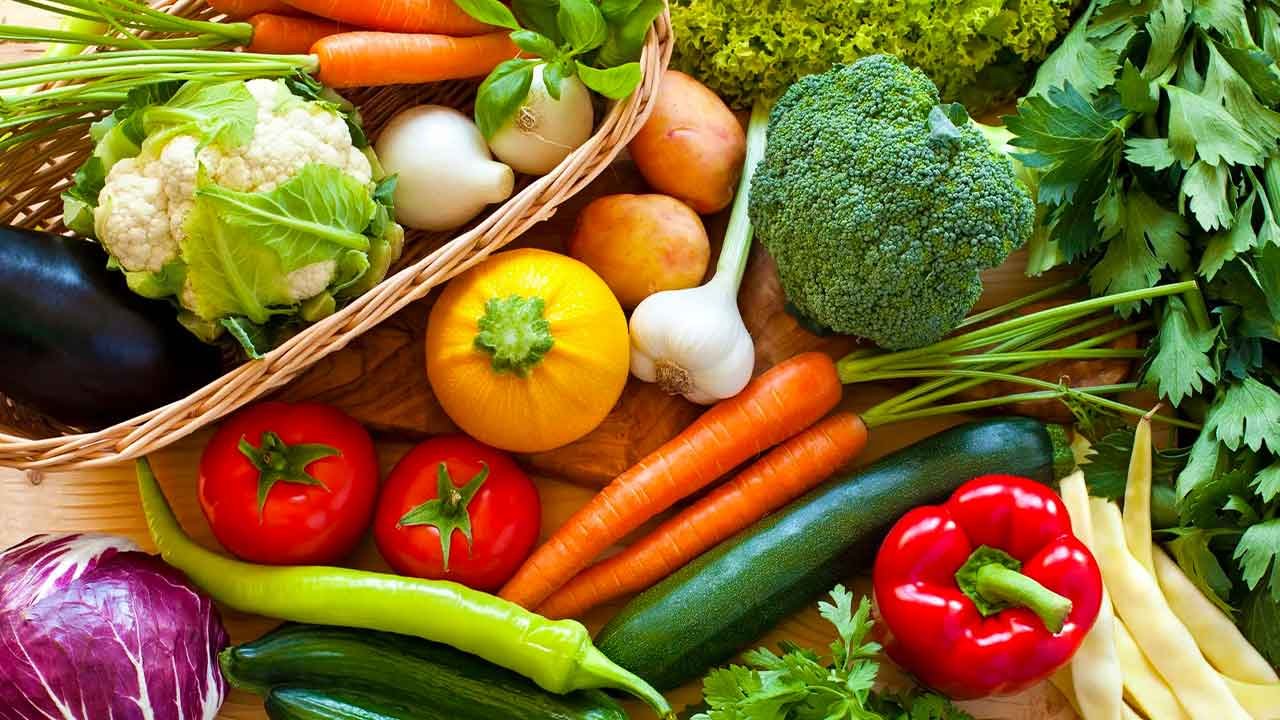
    During the holy month of Ramzan, the price of vegetables and fruits in Quetta rocketed instead of decreasing. Tomatoes, which were previously selling for Rs120 per kilogramme in the vegetable market are now being sold at Rs160.

    Some other reports even suggest that a few shopkeepers were selling tomatoes for up to Rs190, minting money directly in front of the district administration’s eyes.

    Ladyfinger which was sold at Rs240, is now available for Rs280, potatoes, and onions after getting a hike of Rs10 are being sold at Rs50 and Rs60, respectively. Ginger, lemon, and garlic are now priced between Rs300 to Rs320.

    The government of Balochistan has not set up any Ramzan or ‘Sasta bazaar’ this year to facilitate citizens during the holy month of fasting. Formerly, district governments held Ramazan bazaars on the orders of provincial governments to assist the people.

    Previously, the Quetta administration had issued shops with a detailed list of commodities and their pricing. The shop owners, on the other hand, are not obeying the administration’s directives and selling items at their desired rate. These artificial rates have multiplied the problems of the common man.

  • Nepra approves Rs1.29 hike in cost per unit for Karachi residents

    On account of monthly Fuel Cost Adjustments (FCA), the National Electric Power Regulatory Authority (NEPRA) raised the cost per unit of power for Karachi residents by Rs1.29.

    It held a public hearing at its headquarters on Karachi Electric’s (KE) request to hike the power tariff under the FCA by Rs3.45 per unit for February. Chairman Tauseef H. Farooqi chaired the public meeting, which was also attended by officials Rafiq Ahmed Sheikh and Engineer Maqsood Anwar Khan.

    According to the officials, KE’s monthly FCA is decided at Rs1.29 per unit based on data analysis.

    The Chairman inquired about Karachi’s load-shedding status and if KE has a gas procurement deal with the Sui Southern Gas Company (SSGC) to address the fuel crisis.

    Load management is only done on feeders with a low recovery rate, according to the latter’s officials, and consumers only have to experience one to one-and-a-half hours of load shedding every day.

    Chairman Farooqui stated that KE’s technology needs to be modernised, and that there should be no load-shedding for bill-paying customers and locations where billing is timely.

    He also mentioned that the NEPRA has posted phone numbers on its website for inhabitants of the city to report any forced load-shedding by any power utility.

    According to the briefing delivered at the meeting, KE’s customers were charged Rs3.28 per unit in January under the FCA. Similarly, the FCA for February was decided to be Rs1.99 lesser than the January billing.

    Muhamad Tanveer, who is a representative of the Karachi Chamber of Commerce (KCCI), denied the FCA, citing that customers are already paying for the January hike and that the FCA should not be transferred to them.

    After reviewing the facts, the NEPRA issued a thorough judgment declaring that the FCA is only levied and set for the month in concern and that it is variable with each hearing depending on the fuel costs for that month.

  • Petroleum sales increase by 23% in March, despite hefty oil prices

    Petroleum product sales rebounded in the last month after a dismal February with Oil marketing companies (OMC) witnessing an increase of 23 per cent in sales of petroleum products on a year-over-year (YoY) basis in March 2022.

    Overall petroleum sales in March 2022, increased to 1.82 million tonnes compared to 1.54 million tonnes in March 2021, as per the data released by Arif Habib Limited.

    The stability comeback shows a 19 per cent increase in overall OMC sales on a month-over-month (MoM) basis.

    OMC volume growth was driven by furnace oil, which climbed by 34 per cent on a YoY basis, followed by HSD volume growth of 29 per cent and MS volume growth of 13 per cent. MoM growth in OMC volumes followed a similar pattern, with FO taking the lead.

    Although the increase in furnace oil volumes was driven by increased furnace oil usage in the power sector due to low gas and Re-Gasified Liquefied Natural Gas (RLNG) availability.

    The increase in HSD volumes was driven by increased demand from the transportation and agriculture sectors and increased usage in generators and the power sector.

    Moreover, the government’s price caps and the additional number of days in March compared to February were the main contributors to MoM growth in diesel and gasoline sales.

    Consequently, petroleum sales increased by 19 per cent on a YOY basis in 9MFY22, with double-digit increases for petroleum products.

    Diesel sales grew by 17 per cent, followed by 16 per cent increase for furnace oil and a 10 per cent growth for motor oil.

    While some are expecting a drop in petroleum sales due to the political turmoil and rising commodity prices, others say that higher oil consumption cannot be overturned as the summer is already here and people are likely to consume more electricity, also that the power sector may switch to furnace oil due to RLNG commitment defaults.