Tag: Hindu

  • Pakistani stars gather for Diwali celebration

    Pakistani stars gather for Diwali celebration

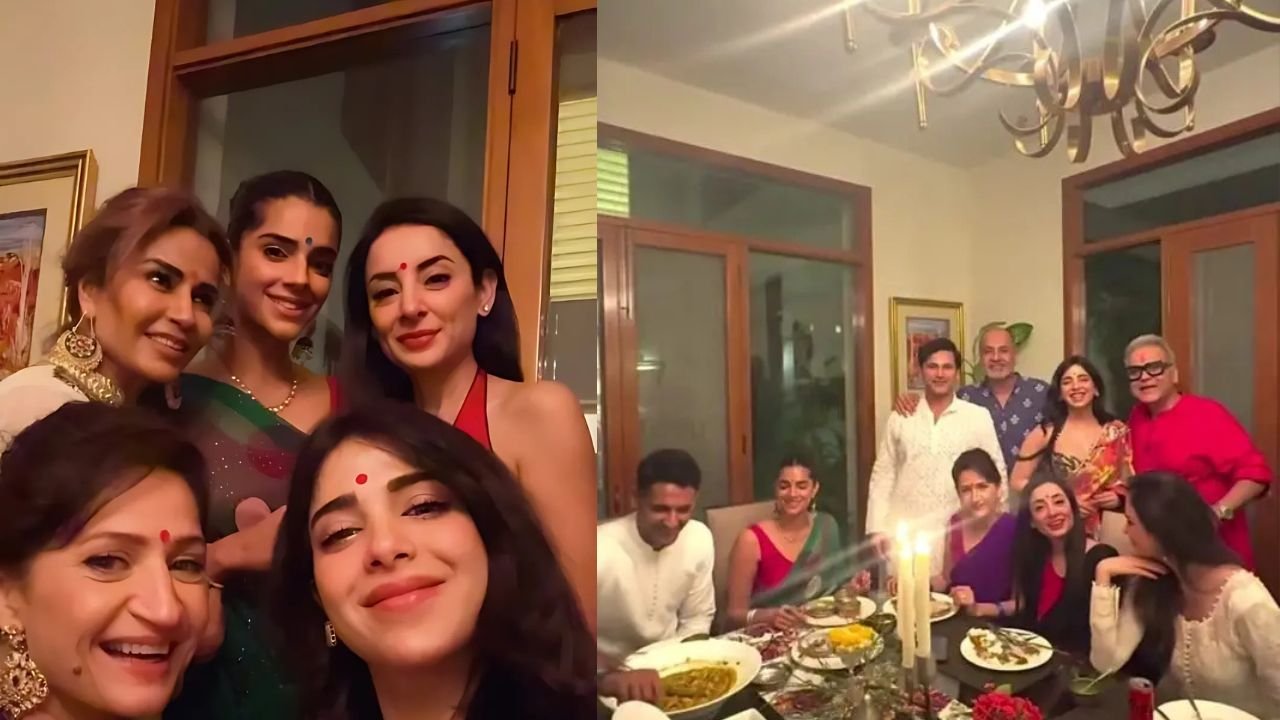
    Diwali, one of the biggest festival for the Hindu community, is celebrated not only in India but also by the Pakistani Hindu community with great enthusiasm. Celebrities from the entertainment world come tighter to celebrate Diwali. Yesterday fashion designer and actor Deepak Perwani hosted an event at his home inviting friends and colleagues to join the celebration.

    Many well-known stars attended, including Shehryar Munawar, Maheen Siddiqui, Sanam Saeed, Mohib Mirza, Sarwat Gilani, Fahad Mirza, Sonya Hussyn and Tara Mehmood.

    Actress Sonya Hussyn took to Instagram to share some lovely pictures from the Diwali party. She looked stunning in a saree, surrounded by friends and colleagues celebrating the festival.

    In her post she said: “Pakistan is a beautiful mosaic of cultures and beliefs, and we must celebrate our minorities as vital parts of this nation.
    As Muhammad Ali Jinnah said,
    ‘You are free, you are free to go to your temples… You may belong to any religion, caste, or creed—that has nothing to do with the business of the State.’”

    She also emphasizes how crucial it is to honor the contribution of each community to our society.
    They actively celebrate their rich heritage, ensuring it remains an important part of Sindh identify.
    “This quote reminds us that every community enriches our society. Let’s honor the rights and freedoms of all our citizens, ensuring that everyone feels at home in Pakistan. It’s their country too, and we embrace all cultures with open hearts and together we can create a future filled with respect, unity, and love. .”

    Actress and telvesion host Sarwat Gilani also share a picture of herself with a bindi, captioning it, “Let’s celebrate the white in our flag, celebrate an inclusive Pakistan. Happy Diwali to our Pakistani brothers and sisters who live and love Pakistan.”


    Events like these help everyone feel included and promote respect among all citizens, no matter their background. The Diwali party was more than just a fun gathering, it was a celebration of unity in diversity, showing that every community plays a vital role in the nation’s success.


    As the celebration went on, people from Hindu community felt hopeful for a future where all cultures are accepted. Pakistan celebrities show they care about unity and peace, making a better tomorrow.

    Hinduism is the second largest religion in Sindh, with about 4.9 million followers. The lively plays a key role in shaping the culture of the province through their festivals and traditions. Hindus in Sindh contribute greatly to local customs and the economy, making their presence vital to the region. They actively celebrate their rich heritage, ensuring it remains an important part of Sindh identify.


    Here are the pictures below:
  • How many registered religious minority voters are in Pakistan?

    How many registered religious minority voters are in Pakistan?

    As per the recent province-wise religion report of the Election Commission of Pakistan (ECP), there are 30 lac, 78 thousand, 3 hundred and 6 voters from religious minorities in Pakistan.

    Out of 40 thousand 781 minority voters in Khyber Pakhtunkhwa 3516 are Bahai, 220 Buddist, 28080 Christian, 4209 Hindu, 723 Parsi, 1149 Ahmadi, and 2884 Sikh.

    In former Federally Administered Tribal Areas (FATA) there are 3539 religious minority voters out of which 400 are Bahai, 41 Buddist, 1446 Christian, 669 Hindu, 16 Parsi, 23 Ahmadi, and 944 Sikh.

    For 12 lac 59 thousand 303 minority voters in Punjab, 18102 are Bahai, 786 Buddist, 1057071 Christian, 73456 Hindu, 262 Parsi, 108538 Ahmadi, and 1088 Sikh.

    In Sindh, there are 16 lac 80 thousand 582 minority voters, out of which 7269 are Bahai, 495 Buddist, 228552 Christian, 1423276 Hindu, 2787 Parsi, 16668 Ahmadi, and 1535 Sikh.

    Balochistan has 44 thousand 930 minority voters, out of which 1387 are Bahai, 1387 Buddist, 18702 Christian, 18702 Hindu, 265 Parsi, 549 Ahmadi, and 272 Sikh.

    In the Federal Capital, there are 44 thousand 783 minority voters, out of which 242 are Bahai, 41 Buddist, 40518 Christian, 276 Hindu, 16 Parsi, 3677 Ahmadi, and 13 Sikh.

    Although elections are not happening in Gilgit Baltistan and Azad Jammu and Kashmir in February 2024, ECP did share detailed data of these areas too.

    Out of 653 minority voters in Gilgit Baltistan, 472 are Bahai, 5 Buddist, 147 Christian, 8 Hindu, 16 Ahmadi, 5 Sikh, and none from the Parsi community.

    Azad Jammu and Kashmir has 3735 minority voters out of which 1083 are Bahai, 23 Buddist, 987 Christian, 45 Hindu, 13 Parsi, 1580 Ahmadi, and 4 Sikh.

    As Pakistan gears up for nationwide parliamentary elections in February 2024, a significant portion of the population, the Ahmadiyya community, faces disenfranchisement due to discriminatory provisions in the electoral law.

    Current electoral regulations in Pakistan effectively exclude Ahmadis from the voting process based on their religious beliefs.

    To register as voters, members of the Ahmadiyya community are compelled to either renounce their faith or accept placement in a distinct electoral list categorizing them as “non-Muslim.”

    However, self-identification as Muslim is a fundamental tenet of Ahmadiyya religious belief.

    This exclusionary practice has resulted in the denial of voting rights for Ahmadis, who comprise over 500,000 individuals in Pakistan.

    Despite their significant numbers, Ahmadis find themselves unable to participate in local, provincial, and national elections.

    It is noteworthy that in 2002, Pakistan discontinued an electoral system that segregated Muslims and non-Muslims into separate categories for registration and voting.

    However, discriminatory measures persist, particularly affecting the Ahmadiyya community’s ability to exercise their

    The government also created a separate category for Ahmadis. Since then, all Pakistani citizens have voted according to a single electoral list except the Ahmadis, who vote on a separate list.

  • ‘Anti-Muslim hate speech increases in India around elections’: Hindutva Watch

    ‘Anti-Muslim hate speech increases in India around elections’: Hindutva Watch

    A recent report on Hindutva Watch by Raqib Hameed Naik, Aarushi Srivastava and Abhyudaya Tayagi titled ‘2023 Half-Yearly Report: Anti-Muslim Hate Speech Events in India’ reveals that there have been 255 documented incidents of hate speech in gatherings targeting Muslims in the first half of 2023.

    The watchdog used the definition of hate speech by the United Nations which states, “any form of communication, whether oral, written, or behavioral, that employs prejudiced or discriminatory language towards an individual or group based on attributes such as religion, ethnicity, nationality, race, color, descent, gender, or other identity factors.” This definition includes all forms of expression, including speech, writing or behavior, and specifically focuses on any language that is either discriminatory (biased, bigoted, or intolerant) or “pejorative” (prejudiced, contemptuous or demeaning) of an individual or group.

    It also notes that overwhelmingly, 205 (80 per cent) of these hate speech events occurred in BJP-ruled states and union territories. Maharashtra, Karnataka, Madhya Pradesh, Rajasthan, and Gujarat witnessed the highest number of hate speech gatherings, with Maharashtra alone accounting for 29 per cent of such incidents.

    Strikingly, seven out of the top eight states with the highest hate speech events are governed by the BJP and its coalition partners. Around 52 per cent of hate speech gatherings in BJP-ruled states and union territories were orchestrated by entities affiliated with the Rashtriya Swayamsevak Sangh (RSS), including the Vishwa Hindu Parishad (VHP), the Bajrang Dal, the Sakal Hindu Samaj, and the Bharatiya Janata Party. Overall, 42 per cebt of all hate speech gatherings in 17 states which includes two centrally controlled territories were organized by groups affiliated with the RSS.

    The report finds that approximately 64 per cent of the events in BJP-ruled states and union territories incorporated references to popular Hindu far-right anti-Muslim conspiracy theories. Overall, 51 per cent of all the hate speech gatherings in 17 states which includes two centrally controlled territories featured anti-Muslim conspiracy theories.

    A concerning 33 per cent of all the gatherings explicitly called for violence against Muslims and about 11 per cent of events included explicit calls for Hindus to boycott Muslims. Disturbingly, 4 per cent of all the events featured hate-filled and sexist speeches explicitly targeting Muslim women.

    Nearly 12 per cent of events featured calls to arms. Notably, 33 per cent of hate speech events took place in states that have already conducted or are set to conduct state legislative elections in 2023. Furthermore, over 36 per cent of these events occurred in states slated to hold legislative elections in 2024. In total, nearly 70 per cent of these events were reported in states with legislative elections either in 2023 or 2024.

    Hindutva Watch tracks the activity of Hindu far-right organizations and their members on social media, scraping data from X (formerly known as Twitter), Facebook, Instagram, Youtube and Telegram to find verifiable videos of hate speech events. They also employ data scraping techniques to identify verifiable videos of hate speech events, followed by in-depth research conducted by a team of dedicated journalists and researchers. Additionally, they draw upon credible reporting from established news organizations to compile comprehensive data. To ensure the accuracy of their findings, they conduct verification processes, confirming the authenticity of the videos, their precise location, and the date on which they were recorded.

  • Muslim man shoots Hindu girl before killing himself after families don’t give marriage permission

    Muslim man shoots Hindu girl before killing himself after families don’t give marriage permission

    Trigger warning: murder, death

    Muhammad Asif Brohi, a Muslim resident of Hyderabad, has reportedly killed himself after firing at Gauri Kohli, a Hindu girl he wanted to marry.

    The attempted murder- suicide took place after the families of both the boy and the girl objected to their desire to marry.

    According to Tribune, the woman is currently in critical condition in the hospital after surviving a bullet injury. Brohi killed himself by firing a bullet through his head, police have confirmed.

    Officials stated that Brohi’s body had been handed to his family after post-mortem, while Kohli has been shifted to Liaqat University Hospital.

  • Sindh announces bus service for Hindu pilgrimage 

    Sindh announces bus service for Hindu pilgrimage 

    Sindh Minority Affairs Department, under the direction of Pakistan People’s Party (PPP) chairman Bilawal Bhutto Zardari, has announced a bus service to facilitate Pakistani Hindus who cannot afford the travel expenses of the pilgrimage to Shri Hinglaj Mata.

    This was announced by Sindh Minister for Minority Affairs Giyan Chand Esrani at Swami Narayan Mandir while inaugurating the construction work of the development scheme for Guru Nanak Durbar in Karachi.

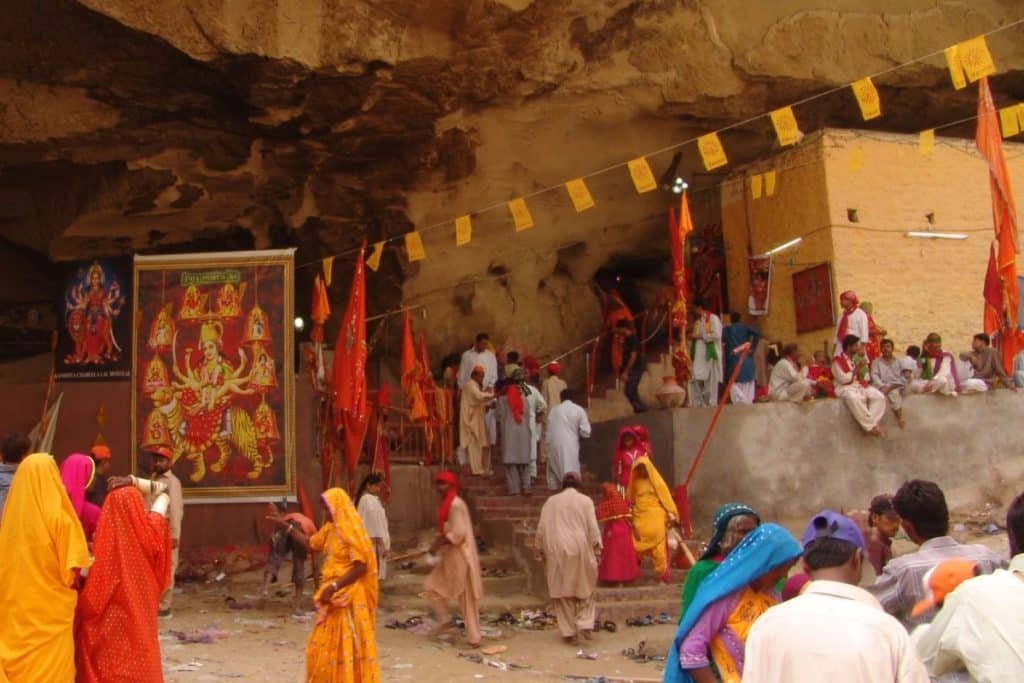
    Hinglaj Yatra is the pilgrimage to the cave temple of Hindu Devi – Shri Hinglaj Mata – on the Makran coast in the Lasbela district of Balochistan. More than 250,000 people take part in the Hinglaj Yathra every year. 

    Sindh Minority Affairs Department stated that the bus service will begin on July 15. Gyan Chand Esrani said that lunch will be provided to the pilgrims during the journey, while those pilgrims who want to stay there for a couple of days during the pilgrimage will be provided with resting facilities by the department.

    He said that the application for the pilgrimage would be sent to the Director of Minority Affairs through District Panchayat. He also announced the construction of a hostel for poor girl students at Swami Narayan Mandir.

    Hinglaj Mata is one of the three Shakti Peethas in Pakistan, the other two being Shivaharkaray and Sharada Peeth. Over the last three decades, the place has gained popularity and become a unifying point for Pakistan’s Hindu community.

    The temple Shri Hinglaj Mata is in a small natural cave, in a narrow gorge in the hilly area of Lyari Tehsil in Balochistan. It lies within the domain of the Hingol National Park, lying on the west bank of the Hingol River.

  • City in Sindh goes viral for being ‘super-clean’, where Muslim, Hindu residents clean up together

    A few days ago, Mithi, a city in Sindh, went viral on Twitter for its clean roads and responsible citizens who have kept their surroundings neat.

    “Zero litter or garbage This is one of the streets within Mithi City. The picture is captured at 4:00 PM, after the rush hours. The usual cleaning happens once a day, early in the morning. Now compare it to urban cities Diff in civic sense between Jahil log & parhe likhe log”

    Soon, other residents of the city spoke up and confirmed that the people of this area ensure that Mithi remains clean.

    https://twitter.com/Smahaseghani/status/1631571150458216449?s=20

    Activist and painter Zulkfiqar Bhutto commented that he had also visited Mithi and regarded it as ‘the cleanest city I’ve ever seen in Pakistan’.

    Mithi is a small town located near Tharparker, Sindh, and is also known as the only place where 80% of the population comprises of Hindus.

    The area is known for the strong interfaith harmony between Muslims and Hindus, as Dawn writer Hassan Raza noted that in this town, Muslims will not slaughter cows out of respect for Hindus, and Hindus will not hold any marriage ceremonies or celebrations during the month of Muharram.

    “In our village, Hindus and Muslims have been living together for decades and there has not been a single day, when I have seen a religious conflict. No loud speaker is used for Azaan at the time when Hindus are worshiping in their temple, and no bells are rung when it is time for namaz. Nobody eats in public when it is Ramazan and Holi is played by every member of the village.”

    BBC Urdu also ran a story in 2021 about how in Mithi, both Hindus and Muslims come together to celebrate the Holi festival.

  • ‘Today’s India is changed’: Bilawal on getting no flood aid from India

    ‘Today’s India is changed’: Bilawal on getting no flood aid from India

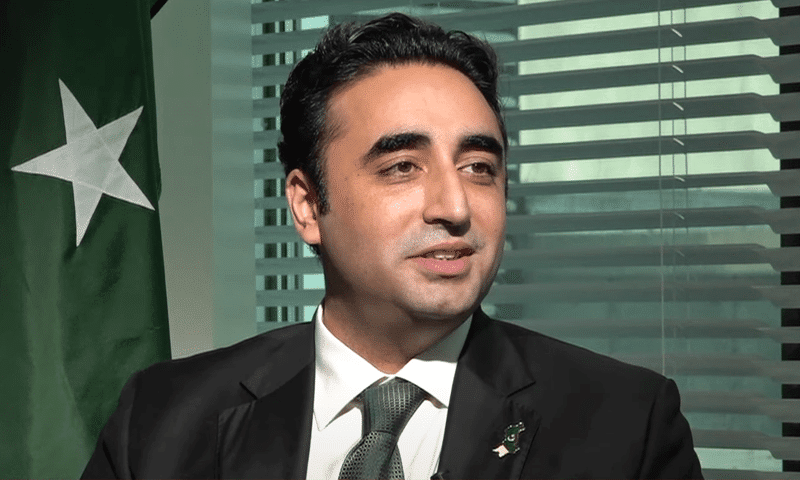
    Foreign Minister (FM) Bilawal Bhutto-Zardari, in an interview with France 24, said that Pakistan is grateful for the global assistance it has received however the country does not want aid, it wants justice.

    He said, “Our message is that we don’t want to beg, we don’t want aid, we want justice. This is a global catastrophe as a result of global action and it requires a global situation.”

    When asked if India had offered any help and whether Pakistan had asked for any, the minister termed Pakistan-India relations as “complicated”.

    “We have a long and complicated history. unfortunately, India today is a changed India and is no longer the secular country promised by its founding fathers for all its citizens,” he said.

    He, further added that the country “is increasingly becoming a Hindu-supremacist India at the expense of its Christian and Muslim minorities not only within India but unfortunately in the disputed region of Indian Illegally Occupied Jammu and Kashmir (IIOJK).”

    He said Pakistan is seeing multiple challenges in the future such as health catastrophe, disease epidemics, crop shortage, livestock loss, food security, and more. However, he expressed hope saying, “Every crisis creates an opportunity and in this crisis, the opportunity is that we must build back in a more resilient way and greener way.”

    On Afghanistan and its tough rules and regulations on women, Bilawal said Pakistan had still not officially recognised the Afghan government.

    He said it would be in the Afghan government’s favour to fulfil its promises to the international community and its nation to gain legitimacy and a path to international recognition.

    When asked about the recent protest happening in Iran over a young woman’s death allegedly because of the morality police, Bilawal said he had seen the Iranian foreign minister’s response on the issue and said he trusted the neighbour to “keep to their word” for an incident inquiry despite “living in extremely difficult circumstances”.

  • Pakistan strongly condemns another BJP official’s remarks against Holy Prophet (PBUH)

    Pakistan strongly condemns another BJP official’s remarks against Holy Prophet (PBUH)

    Pakistan has strongly condemned the highly provocative and sacrilegious remarks against the Holy Prophet (PBUH) by another official of India’s ruling Bharatiya Janata Party (BJP).

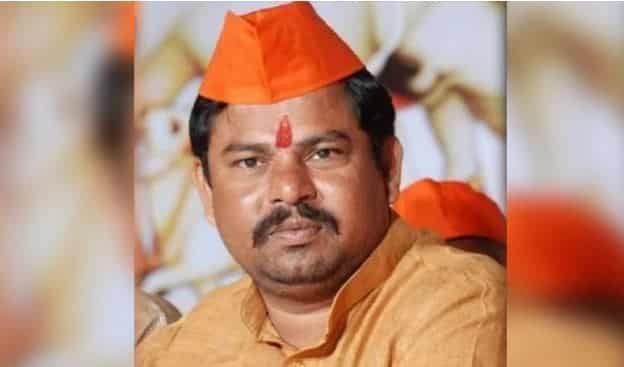
    Indian police had on Tuesday detained BJP leader T. Raja Singh, a lawmaker in the southern state of Telangana, on suspicion of “promoting enmity in the name of religion” after Muslim groups demanded his arrest for his comments about the Holy Prophet (PBUH), reports Dawn.

    “Pakistan condemns, in the strongest possible terms, the highly provocative and sacrilegious remarks made against the Holy Prophet (PBUH), by Raja Singh, a BJP official and a member of the state legislative assembly of the Indian state of Telangana,” a statement issued by the Foreign Office (FO) read.

    “These highly derogatory remarks have gravely hurt the feelings of the people of Pakistan and billions of Muslims around the world.”

    Pakistan demands the Indian government to take immediate and decisive action against the BJP members habitually involved in attacking Islam and targeting the dignity of beloved Prophet (PBUH),” the statement added.

    “The fact is that India is nothing more than an undeclared ‘Hindu Rashtra’ where Muslims are routinely denigrated, dispossessed and marginalised and their religious beliefs are trampled under majoritarian hegemonism.”

    The FO also called out the “deafening silence” of the top BJP leadership on the abhorrent incident, saying it manifestly reflected their approval and complete support to the radical Hindu zealots within and beyond the BJP.

    In June, BJP spokespersons Nupur Sharma and Naveen Kumar Jindal, also passed derogatory remarks against Prophet Muhammad (PBUH).

  • Twitterati praise Police, Rangers for saving blasphemy-accused from charged mob

    Twitterati praise Police, Rangers for saving blasphemy-accused from charged mob

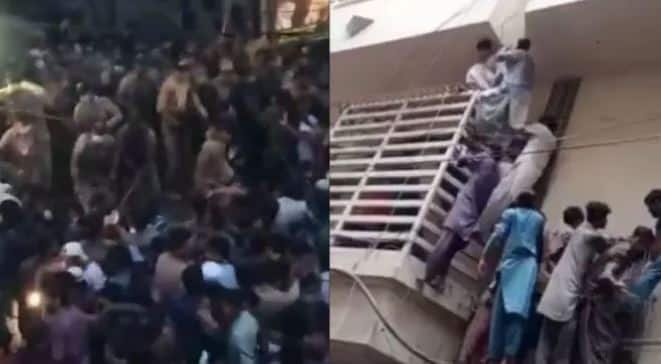
    The Sindh Police and Rangers dispersed a mob that had gathered outside the home of a Hindu sanitary worker accused of alleged blasphemy on Sunday. The incident took place in Hyderabad, Sindh.

    People on social media are praising the role of the law enforcement agencies for saving the accused from the charged mob.

    Have a look at some reactions:

    https://twitter.com/alysalmaan/status/1561453107803979776

    https://twitter.com/Natsecjeff/status/1561386456739971073
    What happened?

    According to the police, a Hindu sanitary worker was targeted as a result of a personal dispute with a local resident. The accused man has been identified as Ashok Kumar, and he was charged with blasphemy under Section 295-B for allegedly desecrating the Quran.

    The case was registered on the complaint of Bilal, son of Bundo Khan Abbasi.

    After the news spread, a charged mob gathered around an apartment building and demanded that he should be handed over.

    Police then dispersed the violent mob.

  • Tensions rise in India’s Udaipur after murder of Hindu tailor

    Tensions rise in India’s Udaipur after murder of Hindu tailor

    A Hindu tailor was murdered by two Muslim men in Udaipur, India, on June 28. The two men entered the tailor’s shop as customers and then murdered him.

    The man was allegedly killed after he shared a social media post in support of the derogatory remarks made about Prophet Muhammad (PBUH) by the Bharatiya Janata Party (BJP) spokesperson Nupur Sharma.

    The derogatory comments by Nupur Sharma caused a stir in the Muslim world, inviting condemnation and protest from over 20 Muslim states. There were widespread protests and demonstrations in India, which turned violent in some parts of the country.

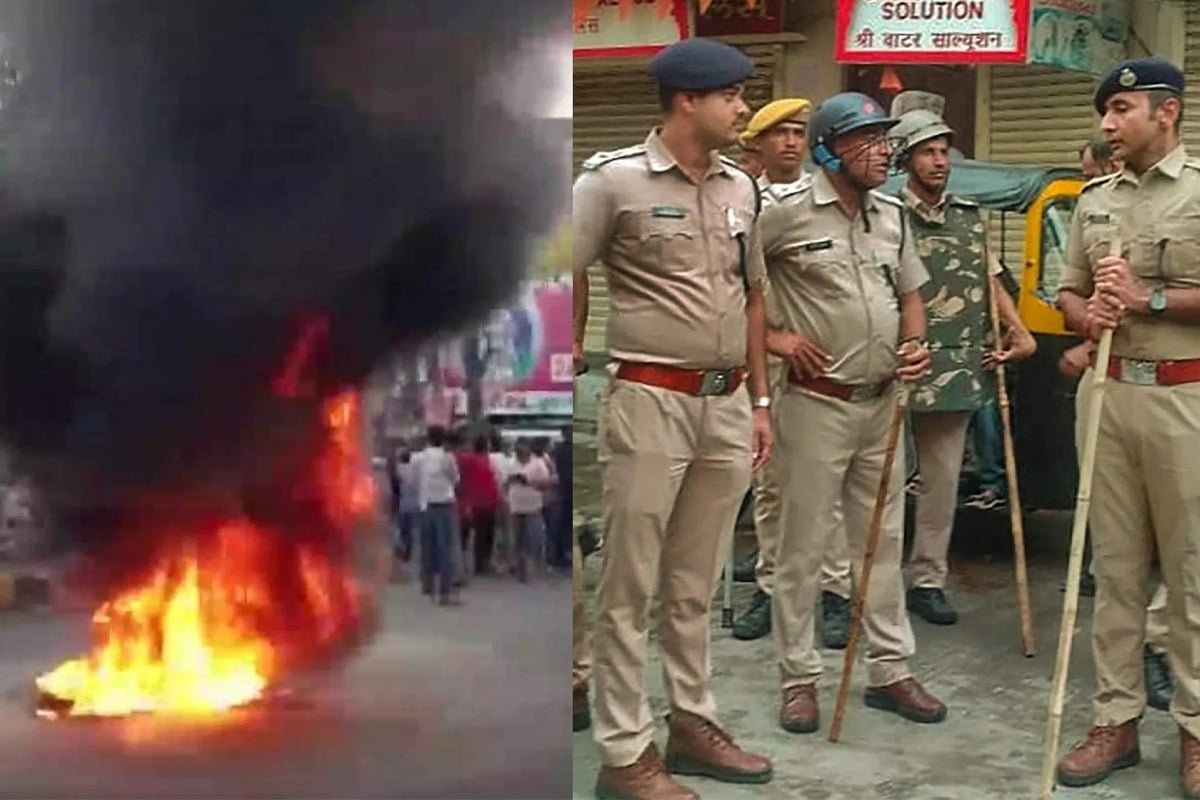
    After the murder of the tailor, hundreds of police officials were deployed, and mobile internet was cut off in Udaipur. A partial curfew was also imposed to curb any potential uproar after a video of the attempted beheading of the Hindu tailor went viral.

    Other parts of the Rajasthan state also had their mobile internet access cut off and local authorities issued a month-long ban on four or more people gathering in the state.

    “Both the accused in the killing have been arrested and we will ensure strict punishment and speedy justice,” said Rajashtan Chief Minister Ashok Gehlot.