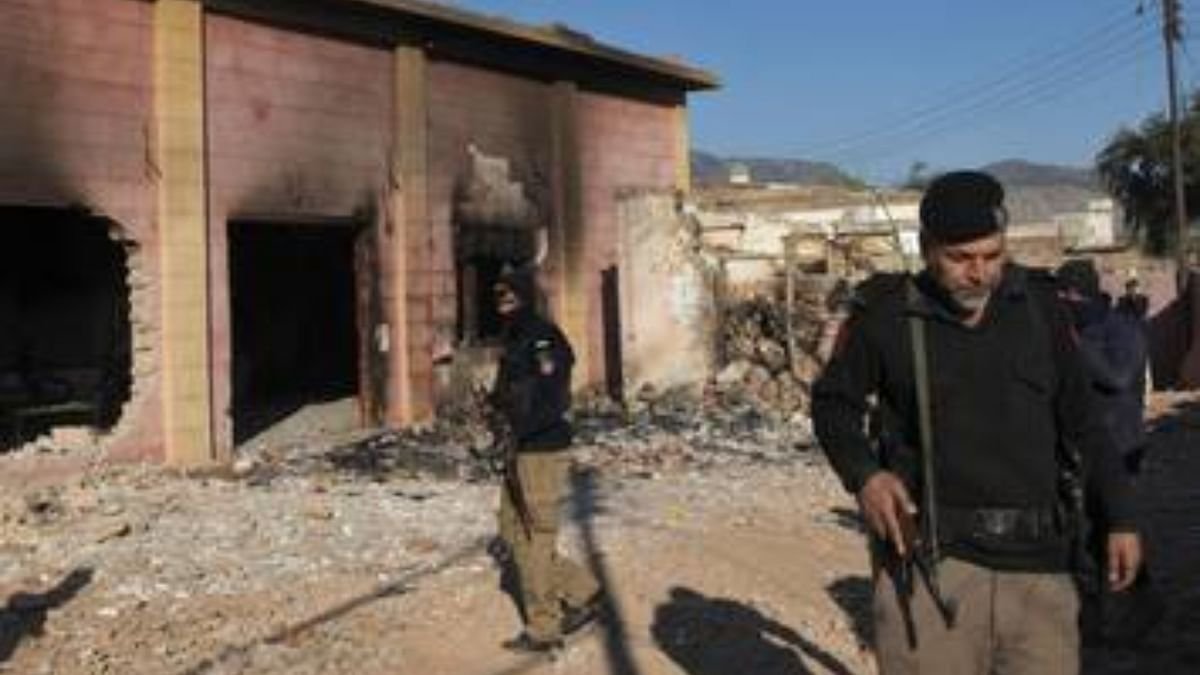
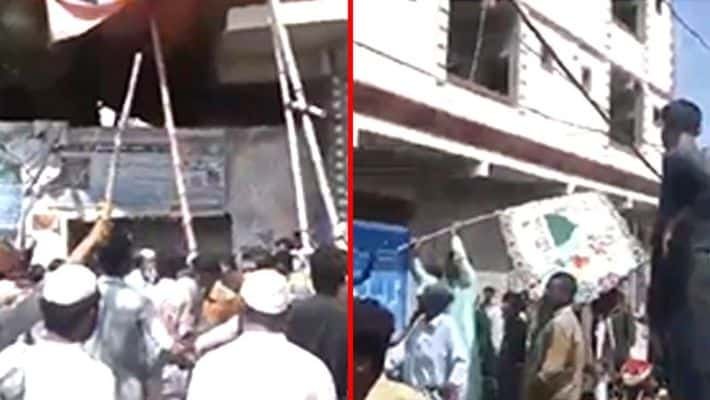
The incident took place in Rawalpindi’s Purana Qila area on Saturday when 10 to 15 people attacked the temple damaging the main door and another door in the upper storey as well as the staircase, according to a complaint registered with the police.
As per reports, the encroachment mafia had occupied the surroundings of the temple for a long time by setting up stalls and shops there. The district administration had earlier removed all encroachments with help of the police.
The security officer of the Evacuee Trust Property Board Northern Zone Syed Raza Abbas Zaidi filed the FIR at Pindi’s Banni police station stating that the renovation work on the temple was underway for the last one month.
He said there were some encroachments in front of the temple which were removed on March 24.
However, religious rites have not been initiated in the temple nor were there any idol or any other religious item.
Khyber Pakhtunkhwa police chief Sanaullah Abbasi criticised the police officials over their failure to confront the mob that demolished a Hindu temple in Karak last week, saying the extremists were able to destroy the religious site due to the “cowardice and negligence” of the policemen.
IG Abbasi told reporters outside the Supreme Court on Tuesday that at least 92 policemen were present at the site but they failed to control the mob. “I have suspended 12 police officials,” he said after a hearing of the temple demolition case at the top court.
According to the IG, the protestors remained peaceful until an inflammatory speech by cleric Molvi Sharif — who also led a mob in a previous demolition of the temple in 1997, reported AFP.
During the hearing, the chief justice of Pakistan directed the KP government for the immediate reconstruction of the temple. “You have to recover money from the people who did this, from Molvi Sharif and his followers,” Chief Justice Gulzar Ahmed said.
He said the mob destroyed the temple with impunity, while ordering the authorities to submit a separate report on the attack.
While no Hindus live in Karak, devotees often visit the temple and its shrine to pay homage to the Hindu saint Shri Paramhans Mahaaraj, who died there before the 1947 partition of the Sub-continent. It is the fourth holiest Hindu worship site in Pakistan.
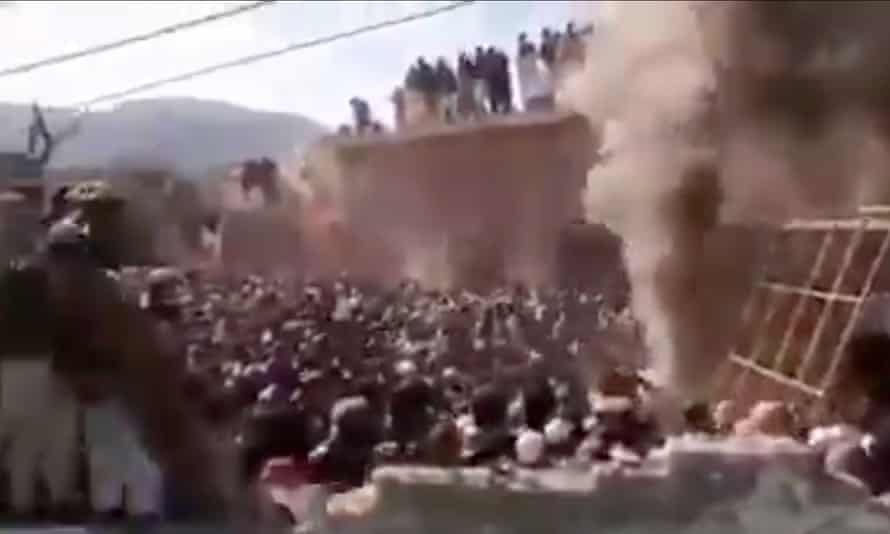
After a mob provoked by local clerics destroyed a Hindu temple in Karak, Khyber Pakhtunkhwa, on Wednesday, police have detained nine suspects in the case.
Videos making rounds on social media showed thick smoke billowing from the site as men used hammers to damage the walls of the building. They also set it on fire.
Local clerics had told authorities that they would be organising a peaceful protest against the alleged expansion of the 100-year-old temple, Rahmatullah Wazir, a police officer told news agency, Reuters. But the clerics started giving “provocative speeches,” prompting the mob to set the temple ablaze.
Human Rights Minister Shireen Mazari condemned the attack and urged the provincial government to “ensure culprits [are] brought to justice.”
District police chief Irfanullah Khan told Reuters nine suspects had been arrested following the attack.
The temple, first built in the early 1900s as a shrine, was vandalised in 1997. In 2015, the Supreme Court ordered it be reconstructed.
“We will stage a protest in front of the Supreme Court against the attack on our temple which is one of the four largest holy sites of the Hindu community in Pakistan,” Ramesh Kumar Vankwani, head of the Pakistan Hindu Council and a ruling party lawmaker, told Germany’s dpa news agency.
“This is not the first incident of its kind, unfortunately intolerance towards religious minorities has been growing in Pakistan for the last five years, with more frequent attacks on places of worship,” said Hindu rights activist Kapil Dev.
In July, a mob attacked the construction site of the first Hindu temple in the capital, Islamabad.
2020 has pretty much been all about COVID-19 and the pandemic. The year has perhaps been one of the most challenging ones in recent times and has been difficult for everyone. As the year nears its end, The Current decided to look back and reflect upon some happy moments which brought a smile to our faces.
Kaavan’s Relocation to Cambodia
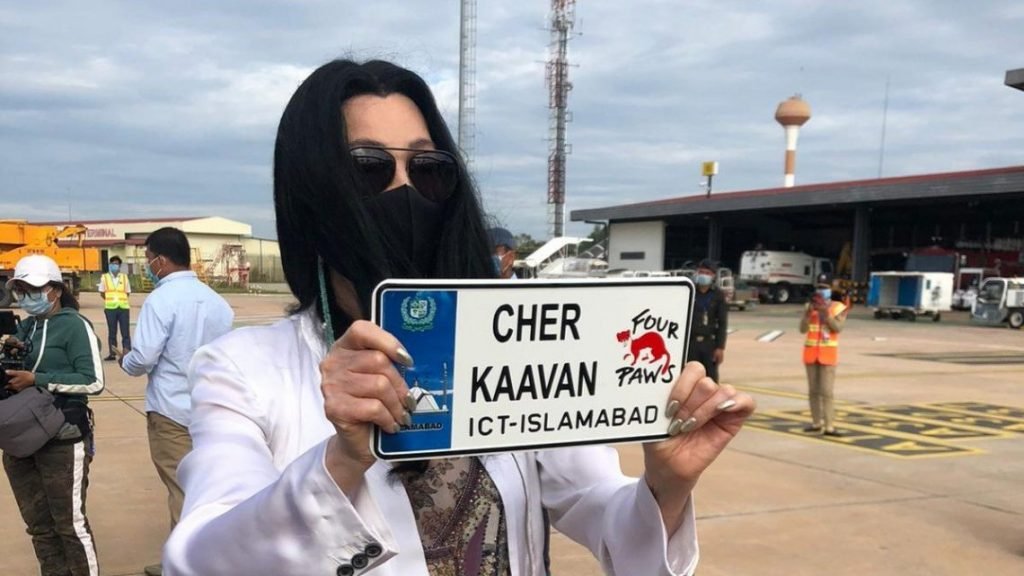
After spending years chained in Islamabad Zoo, the world’s former ‘loneliest elephant’ Kaavan was relocated to a local sanctuary in Cambodia where he will spend the rest of his days in the open and among his own. Kaavan’s freedom was assisted by American singer Cher, who came to Pakistan to personally see Kaavan off. She also welcomed the elephant in Cambodia with a very cute nameplate.
As per the latest details, Kaavan has found new friends in Cambodia and has been spotted enjoying himself at his new home.
Kavaan’s case and relocation also paved the way for other animals to be relieved of their plight. A few weeks after he left, two brown Himalayan bears at the Islamabad Zoo Suzie and Babloo were sent to a sanctuary in Jordan where they will be rehabilitated and nursed to health. Following their departure, the Islamabad Zoo was shut down.
Tough anti-rape law
The federal cabinet approved tough new anti-rape law under which special courts will be established to speed up rape trials and convicted rapists and perpetrators will be chemically castrated. It also prohibits the disclosure of the identity of rape victims and will create a national sex offenders’ register.
Increased exports
Pakistan’s exports for the month of November passed the $2 billionmark amid a resurgence of economic activity after the coronavirus lockdown. As per reports, Pakistan’s move to loosen pandemic restrictions early has helped the nation’s exports emerge stronger than its South Asian peers including India and Bangladesh.
Construction of Hindu Temple
The Council of Islamic Ideology (CII) approved the construction of a new temple for minority Hindus, ruling that Islamic law allows minorities a place of worship. The CII also allowed the government to hand over the temple site as well as its adjoining Dharamshala (community centre) in Saidpur village of Islamabad to the Hindu community “so that it can offer religious rites as per their beliefs”. Many people including celebrities like Hamza Ali Abbasi lauded the initiative.
Mahira Khan, Dr Sania Nishtar among BBC’s ‘100 women of 2020’
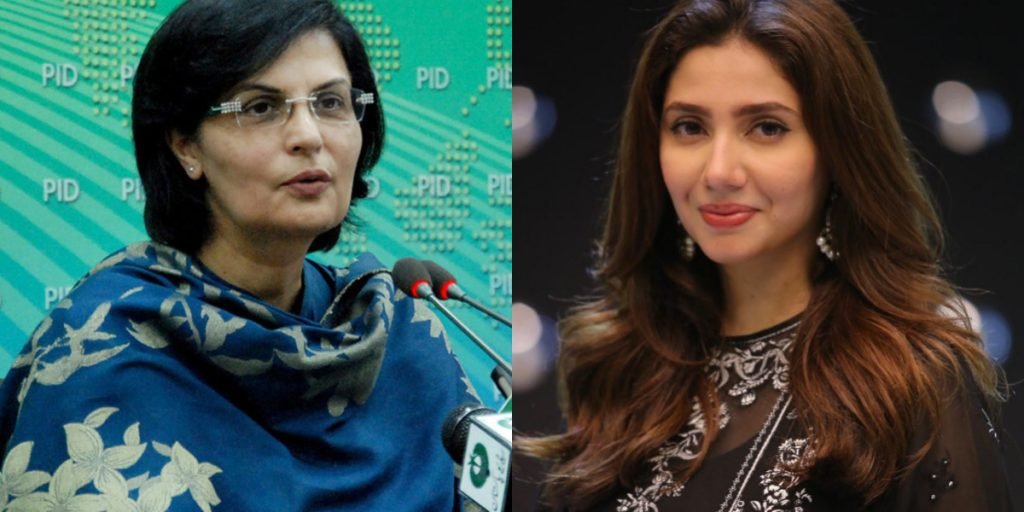
Special Assistant to the Prime Minister (SAPM) on Poverty Alleviation and Social Protection Dr Sania Nishtar and Mahira Khan were listed among BBC’s ‘100 women of 2020‘. According to the publication, the list included “100 inspiring and influential women from around the world for 2020”.
“This year 100 Women is highlighting those who are leading change and making a difference during these turbulent times,” said the publication.
While Mahira was lauded for her outspoken views against sexual violence, refusal to endorse skin-lightening creams and supporting the fight against racism, Dr Nishtar was honoured for “spearheading the transformative Ehsaas Poverty Alleviation programme, which has improved the livelihoods of millions of Pakistanis by providing mobile banking and savings accounts, and other basic resources.”
It is pertinent to add here that Mahira was also part of the inaugural Forbes Asia’s 100 Digital Stars list, along with Aiman Khan and Atif Aslam. The list highlighted celebrities from across the Asia Pacific region who have taken the digital world by storm.
Have more good news to share? Let us know in the comments.
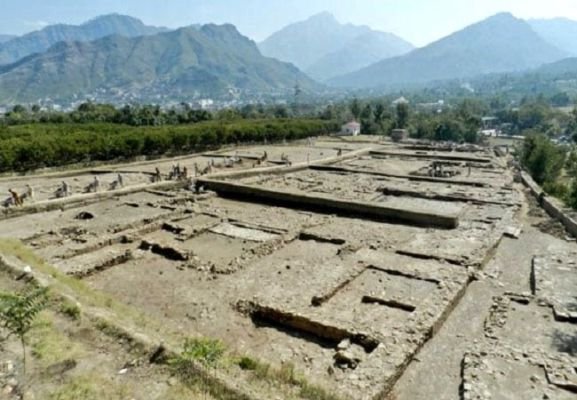
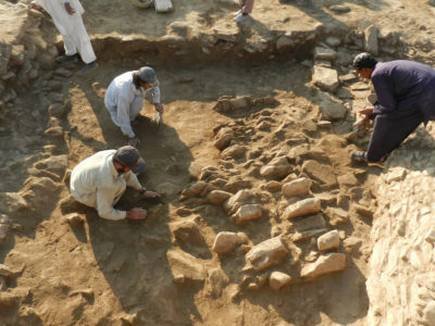
A Hindu temple, believed to be 1,300 years ago, has been discovered by Pakistani and Italian archaeological experts at a mountain in Swat district. The discovery was reportedly made during an excavation at Barikot Ghundai.
According to Fazle Khaliq of Khyber Pakhtunkhwa Department of Archaeology, the temple discovered is of Lord Vishnu. It was built by the Hindus 1,300 years ago during the Hindu Shahi period, he said.
The Hindu Shahis or Kabul Shahis (850-1026 CE) was a Hindu dynasty that ruled the Kabul Valley (eastern Afghanistan), Gandhara (modern-day Pakistan), and present-day northwestern India.
During their excavation, archaeologists also found traces of a cantonment and watchtowers near the temple site. Experts also found a water tank near the temple site which they assume was used by the Hindus for bathing before worship.
Khaliq said that the Swat district is home to numerous ancient archaeological sites, some of which are thousands of years old, but traces of the Hindu Shahi period have been found for the first time in the area.
Dr Luka, the head of the Italian archaeological mission, said this was the first temple of the Ghandhara Civilisation discovered in Swat district.
Swat district is among the top 20 sites in Pakistan which is home to every kind of tourism such as natural beauty, religious tourism, cultural tourism and archaeological sites.
Several places of worship of Buddhism are also situated in Swat district.
Last year in October, archaeologists and historians discovered another temple, reportedly built in the 7th century, during the Turki Shahi period, on the top of Ghwandai mount at Bazira in Barikot Swat.
Hamza Ali Abbasi has said the Council of Islamic Ideology (CII) approving the construction of the Hindu temple in Islamabad is a sign of hope. Sharing the news on Twitter, the actor said: “Shukar Allah…hope”.
When a social media user commented that he should go and worship there, Hamza said: “It’s a temple for our Hindu Pakistani brothers and sisters who are equal human beings and equal citizens of Pakistan.”
No brother, its a temple for our Hindu Pakistani brothers and sisters who are equal human beings and equal citizens of Pak..why would I go and worship thr..i am Muslim and so is Ghamidi saab
The CII, a top constitutional body responsible for giving legal advice on Islamic issues to the government, has ruled that there are no constitutional or shariah constraints against constructing a Hindu temple in Islamabad or any other place in the country.
The CII, in a meeting on Wednesday, also allowed the government to hand over the temple site as well as its adjoining Dharamshala (community centre) in Saidpur village of Islamabad to the Hindu community “so that it can offer religious rites as per their beliefs”.
However, briefing media about the recommendations of the three-day CII meeting, council chairman Dr Qibla Ayaz said that there was no tradition of constructing places of worship with public money so the Hindu temple could not be constructed with public money.
The CII recommended to the government to establish a ‘special welfare fund’ for minorities which they can utilise without any outside hindrance.
Meanwhile, the actor also put to rest rumours that he has left the country and settled abroad. Hamza said that since he is “contributing to the Ghamidi Centre”, he will be frequently visiting the United States. The Ghamidi Center of Islamic Learning is located in Carrollton, Texas.
Not permanently, but since i am contributing to Ghamidi center ill be very frequently coming here
Earlier, the actor had also condemned blasphemous caricatures of Prophet Muhammad (PBUH), which have been republished by the Charlie Hebdo magazine in France.
The Council of Islamic Ideology, a top constitutional body responsible for giving legal advice on Islamic issues to the government, has ruled that there were no constitutional or sharia constraints against constructing a Hindu temple in Islamabad or any other place in the country.
The CII, in a meeting on Wednesday, also allowed the government to hand over the temple site as well as its adjoining Dharamshala (community centre) in Saidpur village of Islamabad to the Hindu community “so that it can offer religious rites as per their beliefs”.
However, briefing media about the recommendations of the three-day CII meeting, council chairman Dr Qibla Ayaz said that there was no tradition of constructing places of worship with public money so the Hindu temple could not be constructed with public money.
The CII recommended to the government to establish a ‘special welfare fund’ for minorities which they can utilise without any outside hindrance.
The constitution provides right to all citizens to practice their religion freely and perform last rituals of members of their community in accordance with their religious belief, it said.
The Hindu community was allowed to perform last rituals of a deceased person in shamshan ghat (a mortuary where corpses are cremated).
The CII contended that the Hindu community was allowed to construct a community centre to perform their religious rituals and marriage ceremonies and there was no harm in it as per the sharia.
Last month, Prime Minister (PM) Imran Khan approved a grant of Rs100 million for the construction of Islamabad’s first Hindu temple, which Minister for Religious Affairs Pir Noorul Haq Qadri had requested. Plan of the Sri Krishna Mandir complex was approved under the government of PML-N but the construction was delayed due to protests by religious groups and some administrative hurdles. Once again, there has been an uproar by religious groups who petitioned the Islamabad High Court (IHC) to stop its construction. The IHC disposed of three petitions filed against the construction of the temple and observed that it required the approval of the regulator, which in this case, is the Capital Development Authority (CDA).
Religious affairs minister has said there was no need to debate on the rights of minorities as they were protected by the PTI government. “The party’s manifesto calls for removing all obstructions in the implementation of constitutional provisions regarding the rights of minorities.” Qadri insists that the construction of the Hindu temple has been stopped due to technical reasons and some issues with the CDA. Minister for Human Rights Shireen Mazari also asked “if we don’t protect and defend our own minorities then how will we fight the case of other Muslims across the world.”
Islamabad has about 3,000 Hindus and due to there being no temple within the capital, they face many issues on religious festivals. We have had several prominent Hindu members of parliament, a former Hindu chief justice and military officers as well. Hindus make a large number of our minority population. We must not give in to reactionary forces.
Pakistan’s founder Quaid-e-Azam Muhammad Ali Jinnah in his August 11 speech made it clear that there will be no discrimination in Pakistan on the basis of religion. “You are free; you are free to go to your temples, you are free to go to your mosques or to any other place or worship in this state of Pakistan. You may belong to any religion or caste or creed – that has nothing to do with the business of the state,” he said and all of us know, but still we fall short of respecting those who are equal citizens of the state.
Unfortunately, Pakistan’s track record of protecting its religious minorities is not too good. Forced conversions of Hindu girls has become a norm in the country, mobs have burned down minorities’ places of worship in the past, religious minorities face discrimination quite regularly – incidents of such discrimination were recently shared by some cricketers as well.
It is unfortunate that Muslim majority countries sometimes do exactly what is happening to Muslim minorities in other countries. The recent example of changing the status of Hagia Sophia in Turkey is an example – whether it is a politically calculated move or not, the religious connotations are quite obvious. We hope that the PTI government will go ahead with the construction of the temple in Islamabad. The premier has been quite committed to protecting the rights of religious minorities. We are hopeful that he will not disappoint the minorities, who are equal citizens of Pakistan.
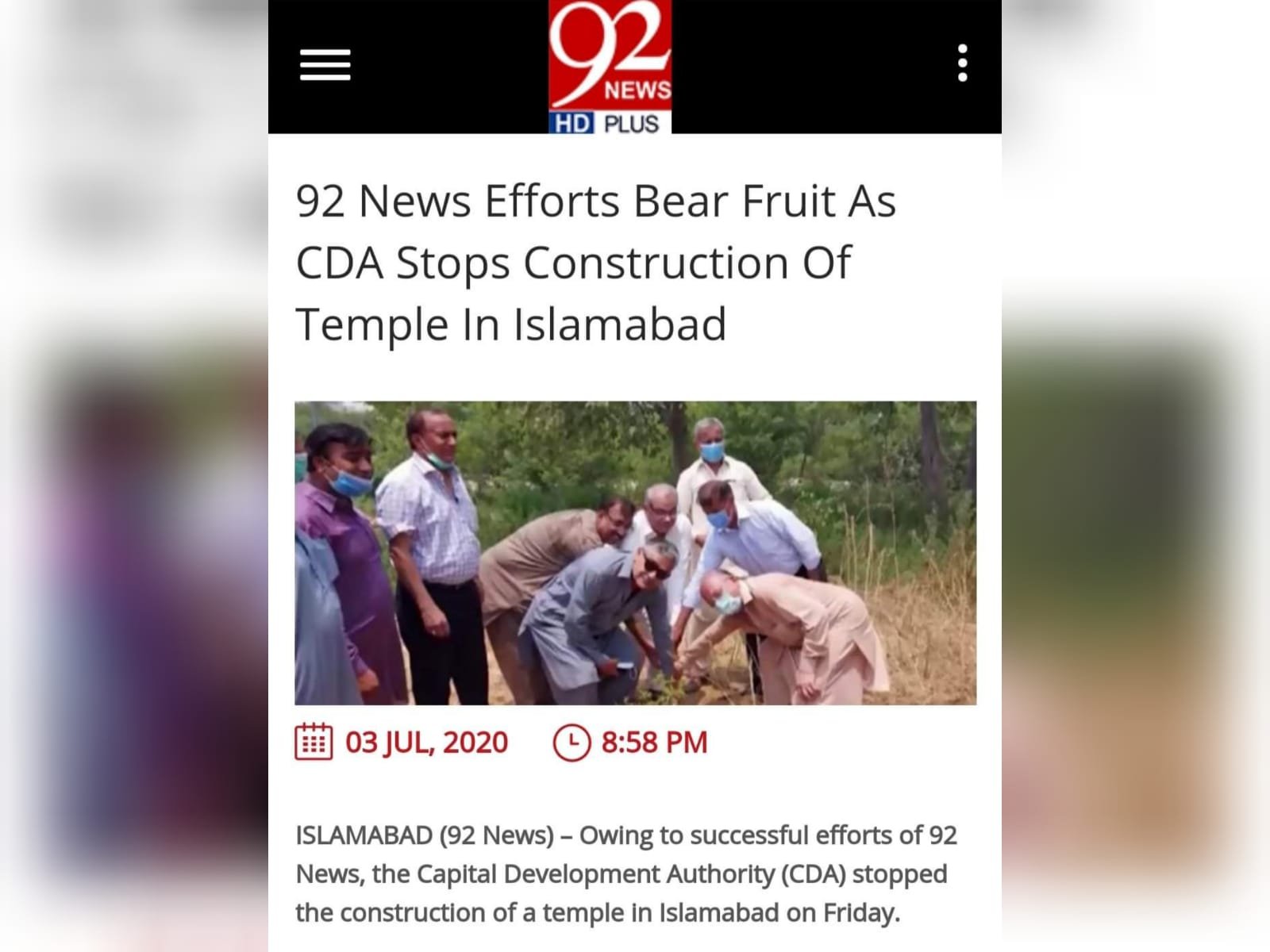
A private media outlet that had claimed credit for getting stopped the construction of Islamabad’s first Hindu temple later retracted its story amid severe backlash.
As per the details, the construction of the first Hindu temple in the federal capital has been stopped by the authorities after fierce opposition from religious hardliners as well as an ally of the ruling party, Chaudhrys of Gujrat’s Pakistan Muslim League (PML).
The Capital Development Authority (CDA) on Friday stopped construction of the boundary wall on the plot meant for the temple citing legal reasons.
A joint team of the CDA’s enforcement and building control departments reached the site of the temple in Sector H-9/2 and directed workers to stop constructing the boundary wall.
According to reports, a CDA official said that the building control laws of the civic authority clearly stated that no activity could take place on a plot until the building plan was approved.
However, according to another CDA official, it was possibly the first time that this clause had been enforced as all owners were allowed to construct boundary walls and ensure possession of their plot while formalities regarding approval of the map continue.
Earlier, the construction of the temple had been opposed by religio-political among other right-wing organisations.
A leading religious school had issued a fatwa against construction of the temple, calling it “un-Islamic”, while parties like Jamiat Ulemae Islam-Fazl (JUI-F) had voiced their concerns over the same for they said it was “against Pakistan’s ideology”.
PML leader and Punjab Assembly Speaker Pervaiz Elahi had also said that Pakistan was created in the name of Islam and construction of a temple on its soil “was against the very spirit of Islam”.
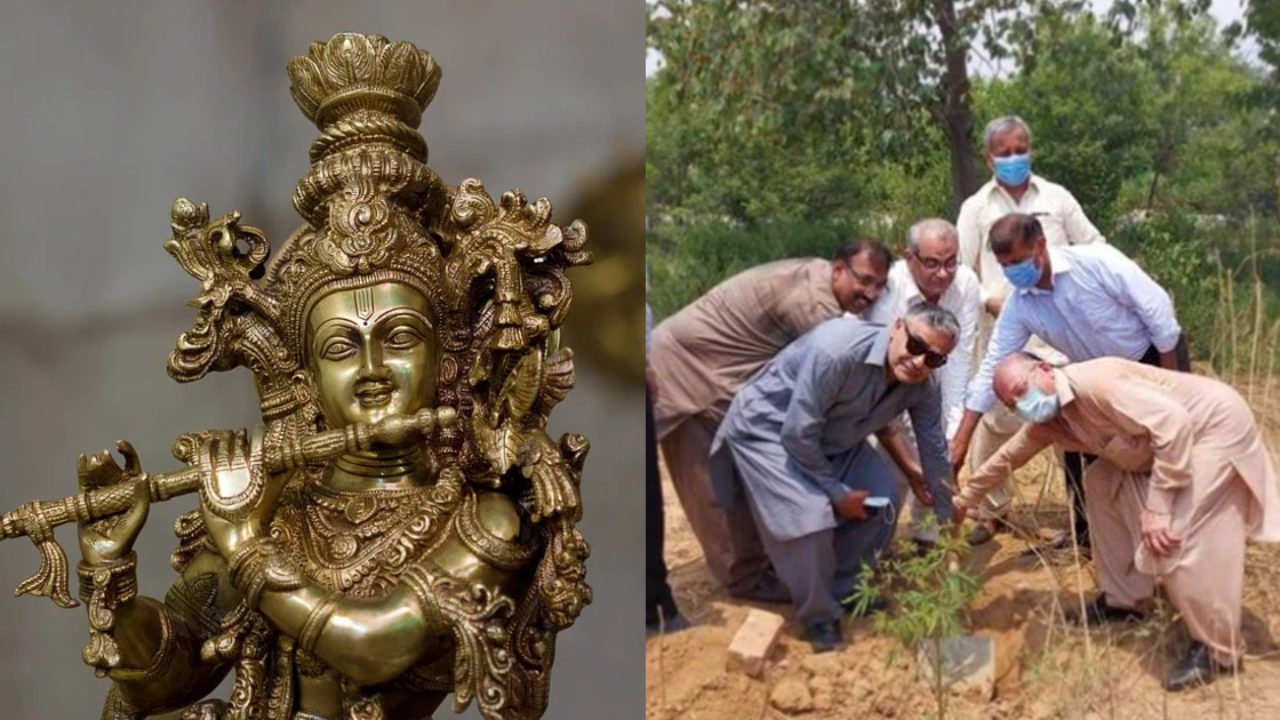
In a first, a ceremony was held to start construction of a Hindu temple in the federal capital, Dawn reported.
According to reports, a crematorium will also be built in Islamabad for the Hindu community, members of which earlier had to travel out of the city to perform religious rituals.
The Krishna temple will be constructed on a 20,000 sq ft plot in the H-9 sector, and has been named Shri Krishna Mandir by the Islamabad Hindu Panchayat.
According to Religious Affairs Minister Pir Noorul Haq Qadri, the government will bear the construction cost, presently estimated to be Rs100,000,000.
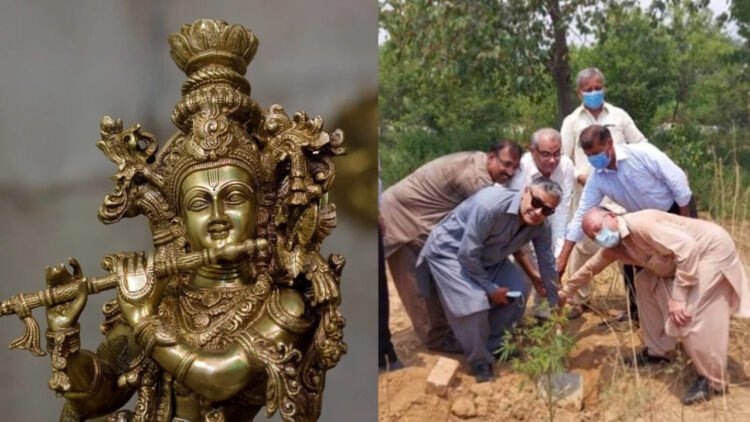
Parliamentary Secretary on Human Rights Lal Chand Malhi had on Tuesday performed the groundbreaking ceremony for the temple.
While addressing the gathering at the ceremony, Malhi mentioned the presence of pre-1947 era temple structures in the capital and its adjoining areas, including one in Saidpur Village and at the hill point overlooking the Korang River near Rawal Lake. However, they have been abandoned and not used.
“Besides, there is no crematorium in Islamabad,” he said, adding the Hindu population in Islamabad had increased significantly in two decades, therefore, the temple was necessary.
“The Hindu community in Islamabad has been demanding a temple for a long time now. The population has also increased while many Hindu temple structures in the capital have been abandoned,” he said. “Besides, there is no crematorium in Islamabad.”
The plot on which the temple is being built was allotted to the Hindu Panchayat by the Capital Development Authority (CDA) in 2017. However, the construction work could not begin on time because of some formalities, like the site map’s approval by the CDA and other authorities.