Tag: Hindutva

  • ‘Hindu nation’: Religion trumps caste in India vote

    ‘Hindu nation’: Religion trumps caste in India vote

    Agra, India – Born at the bottom of the Hindu faith’s rigid caste system, voters like Anil Sonkar will determine whether Indian Prime Minister Narendra Modi returns to power next month.

    More than two-thirds of India’s 1.4 billion people are estimated to be on the lower rungs of a millennia-old social hierarchy that divides Hindus by function and social standing.

    Politicians of all stripes have courted lower caste Indians with affirmative action programmes, job guarantees and special subsidies to mitigate long-standing discrimination and disadvantage.

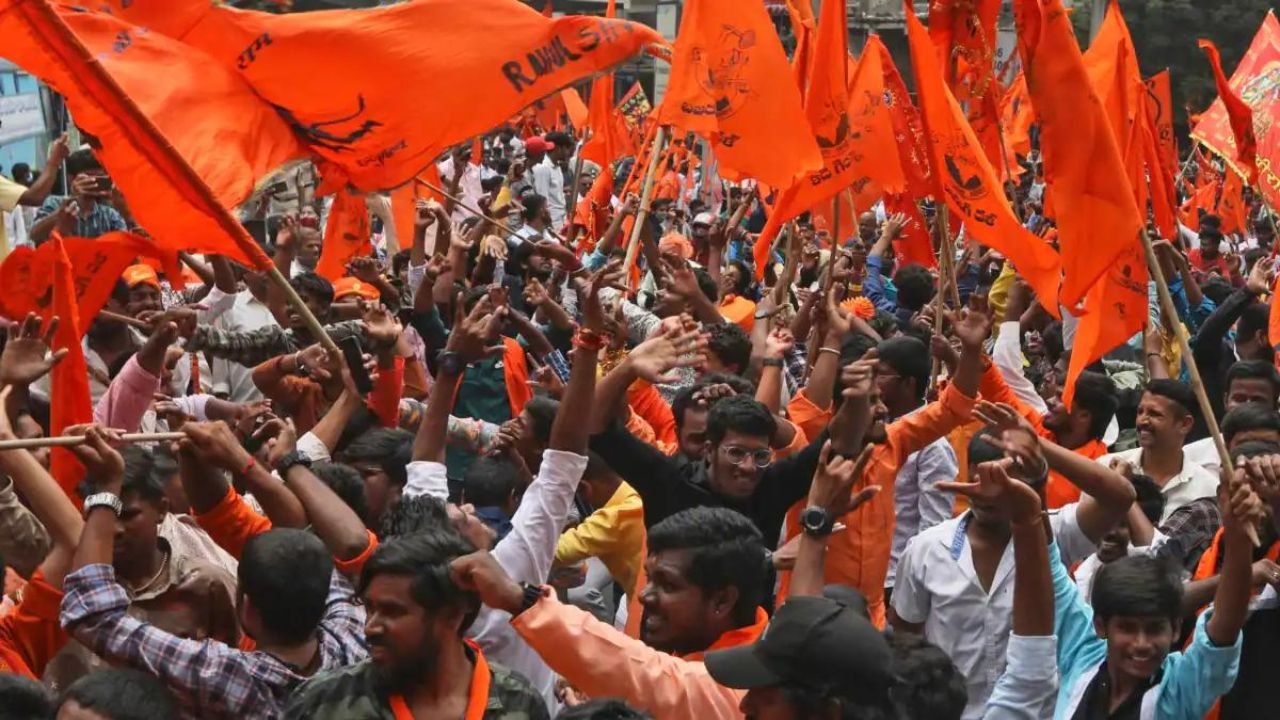
    But Modi’s Hindu-nationalist Bharatiya Janata Party (BJP) has established itself as India’s dominant political force with a different pitch: think of your religion first, and caste second.

    “There are no economic opportunities and business has never been so bad for me,” said Sonkar, a 55-year-old fishmonger and a member of the Dalit castes, once disparagingly known as “untouchables”.

    “But under this government, we feel safe and proud as Hindus,” he told AFP in the tourist city of Agra, home of the Taj Mahal. “That is why, despite everything, I voted for Modi.”

    Modi’s party is expected to easily win this year’s national election once it concludes in June, in large part due to his government’s positioning of the Hindu faith at the centre of its politics.

    His government has been accused in turn of marginalising the country’s 200-million-plus Muslims, leaving many among them fearful for their futures in India.

    But its strategy of appealing to pan-Hindu unity, and directing the faith’s internal frictions outwards, has reaped political dividends.

    “The BJP’s base among the marginalised has grown over every election since 2014,” political scientist and author Sudha Pai told AFP.

    The party, she added, had successfully forged a new pan-Hindu political coalition by showing respect to the “cultural symbols, icons and history” of low-caste voters, and in the process furthering its goal of building a “Hindu nation”.

    Station in life

    Caste remains a crucial determinant of one’s station in life at birth, with higher castes the beneficiaries of ingrained cultural privileges, lower castes suffering entrenched discrimination, and a rigid divide between both.

    Modi himself belongs to a low caste, but the elite worlds of politics, business and culture are largely dominated by high-caste Indians.

    Less than six percent of Indians married outside their caste, according to the country’s most recent census in 2011.

    Modi’s political coalition has managed to bridge this internal divide by trumpeting a vision of a resurgent and assertive Hindu faith.

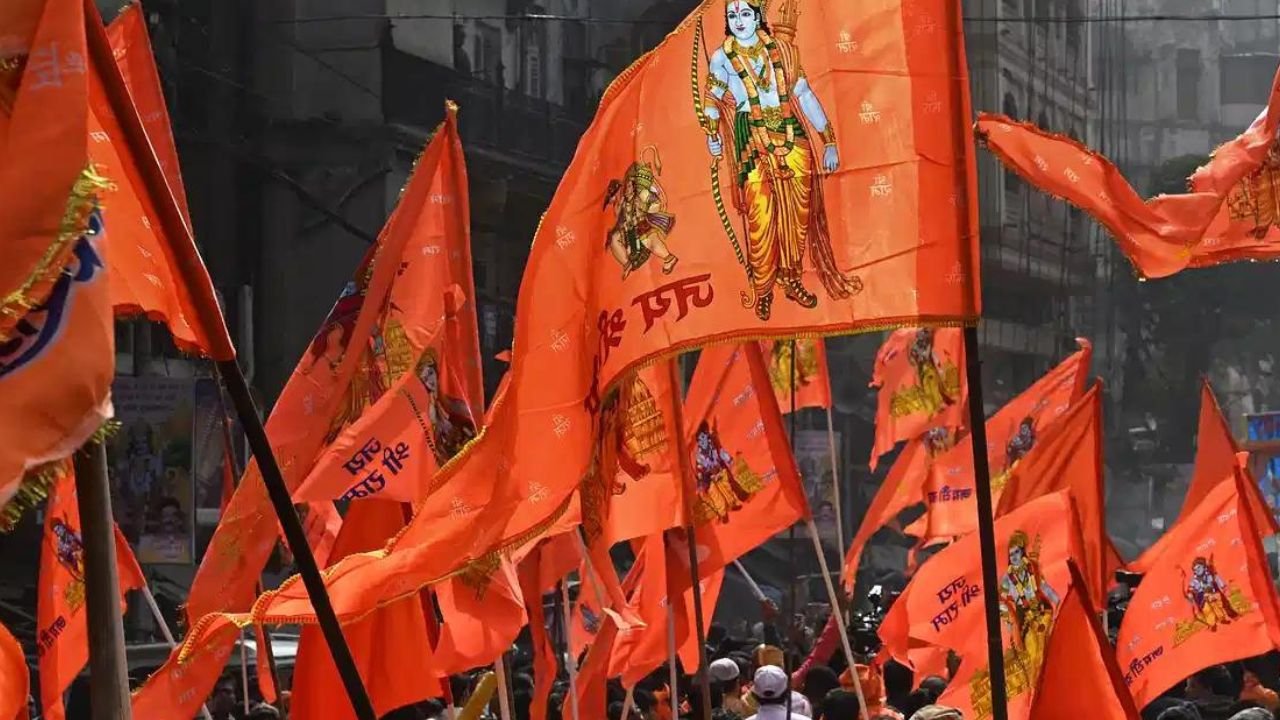
    The prime minister began the year by inaugurating a grand temple to the Hindu deity Ram, built on the site of a centuries-old mosque razed by Hindu zealots decades earlier.

    Construction of the temple fulfilled a long-standing demand of Hindu activists and was widely celebrated by Hindu voters, whatever their caste group.

    Modi’s rise also coincided with the declining fortunes of caste-based political parties that had dominated politics for decades in Uttar Pradesh, India’s most populous state with more people than Nigeria and its most important electoral battleground.

    Many in the state accused these parties of directing welfare programmes and other benefits of political power to their own caste groups, a situation they say changed when Modi came to power and made them available for all disadvantaged voters.

    “The soles of my slippers wore off as I ran around trying to get a card for free rations,” homemaker Munni Devi, 62, told AFP at a BJP campaign rally over the din of frenzied drum beats and music.

    “But Modi gave me one immediately after coming to power,” she told AFP.

    ‘Demons of those contradictions’

    The BJP has been able to unite a broad array of caste groups into a single bloc of support, but caste discrimination remains a fact of life both in politics and society at large.

    Despite Modi’s own low-caste origins, the senior ranks of his ministry, party and civil service remain overwhelmingly dominated by upper-caste functionaries.

    “Our lawmaker is from our caste and from the BJP,” said farmer Patiram Kushwaha, a Modi supporter reconsidering his allegiance.

    “He cannot do anything for us because those sitting at the top don’t listen to him.”

    More than two dozen opposition parties in this year’s poll have campaigned on a joint pledge to address the structural causes of discrimination by staging a caste-based national census and redirecting resources to the most disadvantaged.

    Analysts nonetheless expect Modi to triumph convincingly over the opposition bloc, but Neelanjan Sircar, of the Centre for Policy Research think-tank in New Delhi, said the BJP faced a monumental challenge in holding its coalition together over the long term.

    “This balancing act of keeping together groups which don’t really get along with each other is extremely tough in the long run,” he told AFP.

    “At some point, you have to face the demons of those contradictions.”

    sai/gle/sco

    © Agence France-Presse
  • Online hate sows Muslim fears as India votes

    Online hate sows Muslim fears as India votes

    Haldwani (India) (AFP) – After his brother was murdered in anti-Muslim riots, Pervez Qureshi watched the videos he believes incited the killers, part of a wave of hatred being fomented on social media ahead of India’s elections.

    India has a long and grim history of sectarian clashes between the Hindu majority and its biggest minority faith, but analysts warn increasingly available modern technology is being used to deliberately exploit divisions.

    “Videos and messages were shared on Facebook and WhatsApp which contained inflammatory language and incitement to violence,” Qureshi told AFP, recalling the attack on his brother Faheem in February in the northern city of Haldwani in Uttarakhand state.

    “It poisoned the atmosphere.”

    Nearly 550 million more Indians have access to the internet than when Prime Minister Narendra Modi came to power a decade ago, according to figures from the Internet and Mobile Association of India.

    Modi’s Hindu-nationalist Bharatiya Janata Party (BJP) is widely expected to win a third term in elections that begin on April 19.

    Part of his popularity can be attributed to his party’s masterful online campaign team, staffed by thousands of volunteers who champion his good deeds and achievements.

    Modi’s use of social media “awakens nationalism and patriotism among the youth in every corner of the country”, said Manish Saini, a youth leader of a BJP “IT Cell” in Uttarakhand state, who works online to reach voters.

    ‘Atmosphere of hatred’

    Critics however accuse the BJP’s sophisticated social media apparatus of also fanning the flames of division.

    Haldwani community leader Islam Hussain said tensions were already high before February’s violence, after months of incendiary social media posts calling Muslims “outsiders”.

    “It was said that due to the increasing population of Muslims, the social demography of Uttarakhand is changing”, Hussein said.

    “Right-wing social media cells have a big role in creating an atmosphere of hatred against Muslims.”

    Clashes erupted after the authorities said a mosque had been built illegally, and a Muslim group gathered to prevent its demolition.

    Some hurled stones at police officers, who beat them back with batons and tear gas.

    Hindu residents gathered to cheer on the police clampdown, chanting religious slogans and throwing rocks at the crowd.

    Footage of the riots spread swiftly on social media.

    Egged on by online calls to mobilise, Hindu mobs rampaged through the streets.

    “It’s time to teach them a lesson,” read the caption to one of dozens of inflammatory posts, many of which remain online.

    “The time has come to beat Muslims.”

    Qureshi said his brother Faheem, 32, was killed by Hindu neighbours after they first torched his car.

    ‘Triggers an incident’

    But Saini, coordinator for the BJP’s youth wing, said the online team he leads does not encourage violence — and is under strict instruction not to “write anything against anyone’s religion”.

    He said his colleagues had mobilised quickly on the day riots broke out to provide information, not to stir up trouble.

    “When we got the news, we immediately started preparing graphics, videos and text messages to reach people with the correct and accurate information related to the incident,” he said.

    He said the initial violence was clashes between police and a Muslim group — and blamed Modi’s opponents for instigating riots to tarnish the government’s image.

    Critics disagree.

    Raqib Hameed Naik, from research group Hindutva Watch, said that the BJP’s IT Cell had generated anger towards minorities, by promoting the government’s Hindu-nationalist agenda.

    Naik, who documents hate speech against religious minorities, said the social media messages spreading during the Haldwani violence followed a pattern seen in previous riots.

    “First, hate speech against Muslims by a Hindu activist or politician creates an atmosphere… then the hate speech triggers an incident,” Naik said.

    Afterwards, online Hindu-nationalist campaigners “hold Muslims responsible” for the violence, he added.

  • Muslim family attacked by Hindutva extremists during Holi in India

    Muslim family attacked by Hindutva extremists during Holi in India

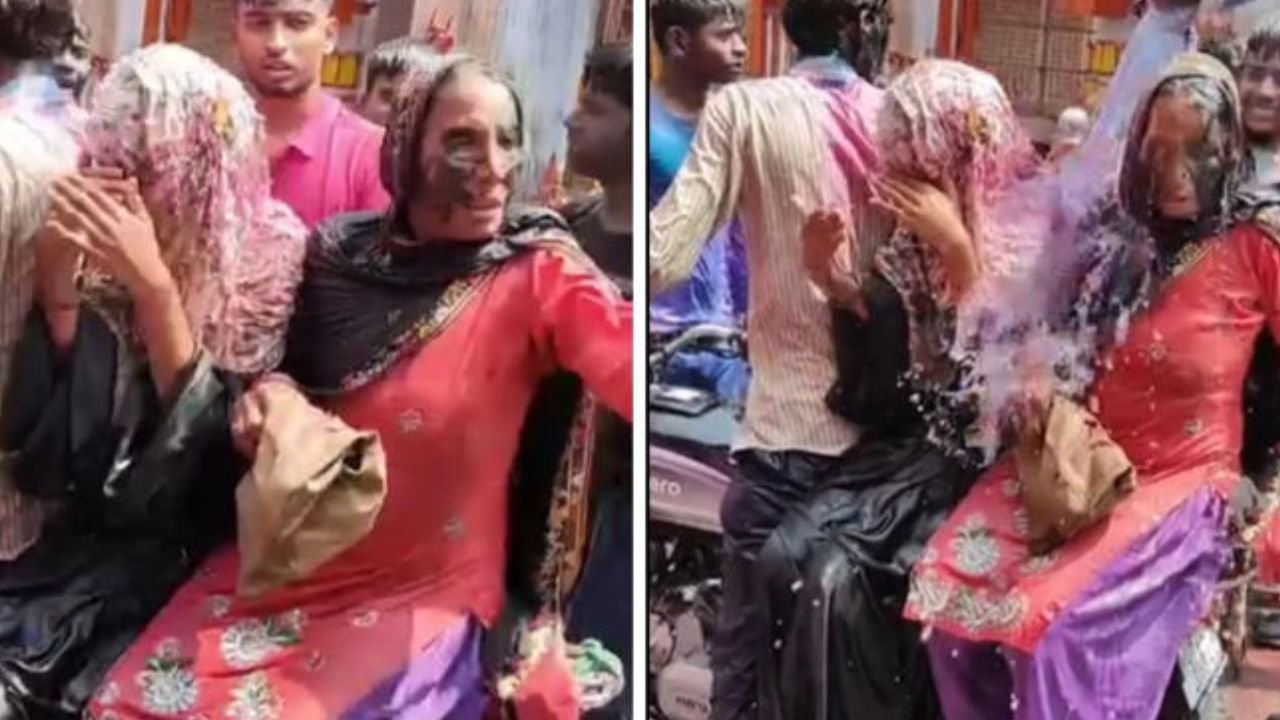
    A Muslim family in India was targeted by a group of young men and boys who sprayed water and Holi colors on them without their consent.

    The incident, captured on video, shows the group forcibly applying colors to the family while chanting religious slogans, ‘Jai Shri Ram’ and ‘Har Har Mahadev’.

    Despite the family’s protests, the harassment persisted, with the perpetrators seen laughing as they continue.

    The Bijnor police arrested one individual and detained three juveniles. Authorities have intervened, emphasizing the necessity of obtaining consent before putting colors on people during the holy festival.

  • Indian court allows Hindus to pray inside disputed mosque

    Indian court allows Hindus to pray inside disputed mosque

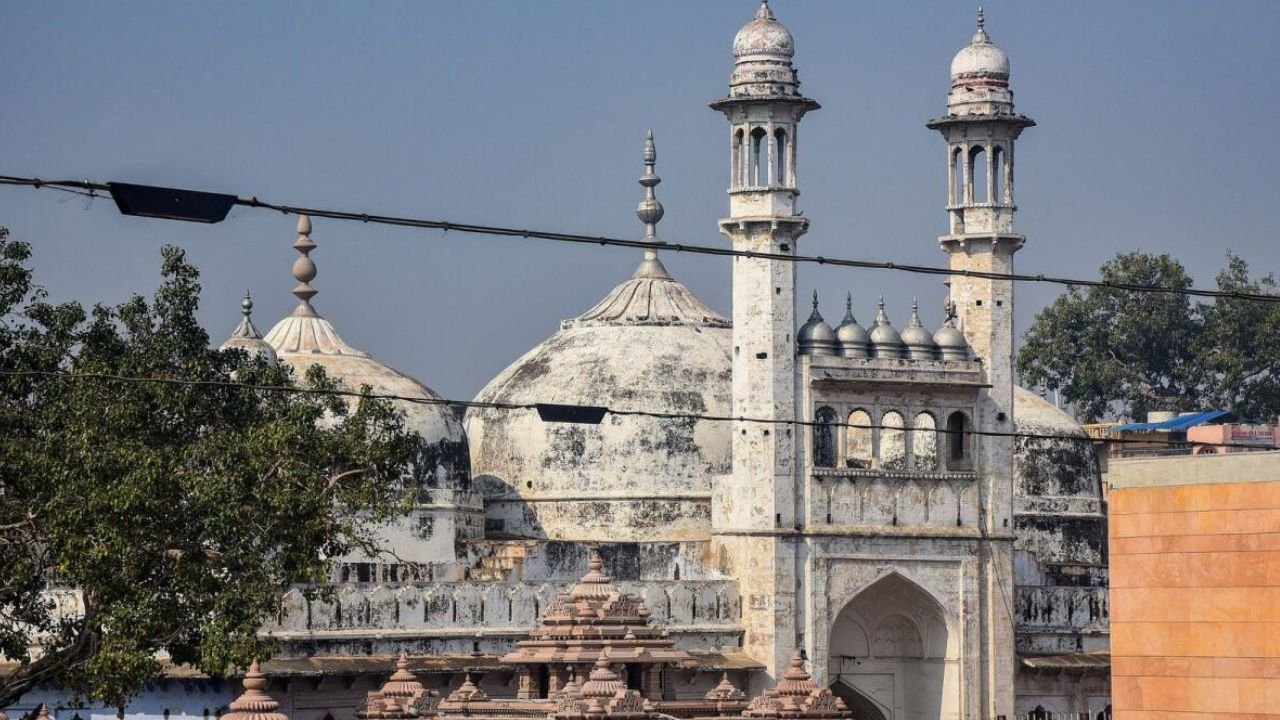
    An Indian court weighed in on one of the country’s most sensitive religious disputes Wednesday by permitting Hindu worshippers to pray inside a mosque in the city of Varanasi.

    The Gyanvapi mosque is one of several Islamic houses of worship that Hindu activists, backed by Prime Minister Narendra Modi’s party, have sought for decades to reclaim for their religion.

    It was built in the 17th century by the Mughal empire in a city where Hindu faithful from across the country cremate their loved ones by the Ganges river.

    The court in Varanasi ruled that Hindu worshippers — who believe the mosque replaced a destroyed temple to the deity Shiva — could pray in the building’s basement.

    Its verdict ordered district authorities to “make proper arrangements within the next seven days” to facilitate worshippers.

    The decision is the latest in a long-running legal saga over Gyanvapi’s future.

    This month, India’s official archaeological agency said a survey of the site appeared to corroborate the belief that it was originally home to a temple, according to local news reports.

    Emboldened right-wing Hindu groups have laid claim to several Muslim sites of worship they say were built atop ancient temples during Mughal rule.

    Last week, Modi presided over a grand inauguration ceremony in the nearby city of Ayodhya for a Hindu temple built on grounds once home to the centuries-old Babri mosque.

    Hindu zealots had torn down that mosque in 1992 in a campaign spearheaded by members of Modi’s party, sparking sectarian riots that killed 2,000 people nationwide, most of them Muslims.

    The decades-long court battle that ensued over the future of the Babri site ended in 2019 when India’s top court permitted the construction of a temple to the deity Ram, who according to Hindu scripture was born in the city.

    Members of Modi’s party routinely refer to India’s history of Muslim rule under the Mughal emperors as a time of “slavery”.

    The prime minister described last week’s opening of the temple as “the advent of a new era”.

    Calls for India to enshrine Hindu supremacy have rapidly grown louder since Modi took office in 2014, making its roughly 210-million-strong Muslim minority increasingly anxious about their future.

  • After Ayodhya, Hindutva leaders now targeting muslim dargah in Mumbai

    After Ayodhya, Hindutva leaders now targeting muslim dargah in Mumbai

    Maharashtra Chief Minister Eknath Shinde has ignited controversy by announcing his intent to “liberate” the 700-year-old Haji Malang dargah, a historic Muslim shrine situated on the outskirts of Mumbai, exclusively for Hindus. The shrine, known for its Sufi heritage and cultural significance, has become the focal point of a heated religious dispute.

    After the inauguration of Ram Mandir in Ayodhya, Prime Minister Narendra Modi has invoked a significant amount of “divine” support from his followers for upcoming elections. The next target to double the effect is the Sufi shrine. This is aimed to polarize the voters even more.

    CM Shinde while speaking at the annual Malang-gad Harinam Mahotsav in Thane distinct, broke away from the late Bal Thackeray’s Shiv Sena to lead a BJP-backed coalition, said he is “committed to liberate Malang-gad”, adding he would not rest till he has fulfilled the promise.

    Malang-gad (’gad’ means a fort in Marathi) is famous for its 12th-century shrine of Sufi saint Haji Abdul Rahman, popularly known as ‘Haji Malang’. According to Kashmir Media Service, Haji Malang dargah, atop a hill, is believed to house the tomb of an Arab missionary who arrived in India over seven centuries ago. On the contrary, Hindus believe the place holds the samadhi of Machindranath, a revered deity in the Nathpanthi sect, which was later converted into a dargah.

    An article published in The Times of India on Feb 14, 1993 reveals the arrest of Thane’s top Shiv Sena leader late Anand Dighe while leading an agitation demanding the renaming of Malang-gad as Shri Malang. Dighe was Mr Shinde’s mentor and the promise to liberate Malang-gad is a logical political move on the chief minister’s part to claim his master’s legacy, quotes Dawn.

    Nasir Khan, chairman of the Peer Haji Malang Saheb Trust, refers to the Gazetteer of Bombay Presidency which mentions the structure as the shrine built in honour of Arab missionary Haji Abd-ul-Rahman. “It is only in the 1980s that the Shiv Sena began making claims of it being a Hindu temple. If it was a Hindu temple, why did the Peshwa kings send gifts to the shrine?” asks Mr Khan.
    According to the chairman of the Trust, Haji Malang is equally revered by Hindu and Muslims. He says that even Christians and Parsis visit the shrine to seek blessings.

  • India continues becoming unsafe for Muslims as Ram Mandir consecration emboldens extremists

    India continues becoming unsafe for Muslims as Ram Mandir consecration emboldens extremists

    A number of violent incidents have been reported in at least six states after the consecration of Ram Temple in Ayodhya, India.

    A report published by the Indian outlet The Quint says that from a graveyard in Bihar to a mosque in Telangana, India saw multiple attacks and violent incidents on 22 January. The incidents were of varying scales, ranging from sandals allegedly thrown inside a mosque and a shop being burnt in Telangana to a graveyard set on fire in Bihar, to violent skirmishes in different parts of Maharashtra.

    In the capital of Uttar Pradesh, Lucknow, a video of a hateful song being played in Narhi, Hazratganj, surfaced on social media. The song was allegedly played by a procession celebrating the consecration of Ram Temple.

    Journalist Rana Ayyub shared the video with a caption stating, “Trigger warning for abusive, misogynistic language. Do listen to this song. To go to a Muslim locality and celebrate Ram Mandir’s inauguration with this song. And you still think this is about faith? Is this how you want to raise your kids? Is this the culture you want to normalise? Why send your kids to Ivy League, why give them quality education, let them be a part of this crass revelry.”

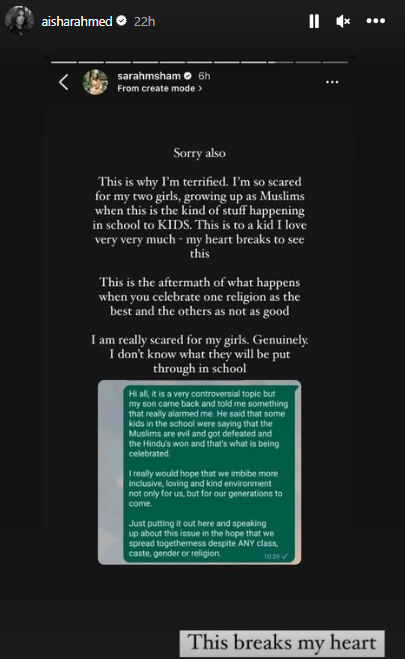
    Famous Indian actor Aisha Ahmed, popular for her roles in web-series ‘Adulting’, shared her experience via an Instagram story of Sarah Sham, the influencer and wife of Indian Tennis player, Mustafa Ghouse who shared her heartbreaking experience of getting a message from a fellow parent about their kid being harassed in school for being Muslim.

    Sarah said it had taken a lot of effort to share her experience of feeling like a second-grade citizen in her country. She went on to explain that the persecution has exacerbated after the establishment of Ram Mandir.

    Indian publication The Wire posted two days ago that activist and journalist Umar Khalid’s bail plea got adjourned yet again. He has been detained since September 2020. Commenting upon this, Professor of Peace Studies at Uppsala University Dr. Ashok Swain said, “If you are a Muslim in India, you have no one, I repeat no one to save you from the wrath of Modi!”

    He even shared a video of a Hindu supremacist mob attacking Muslims and their properties in Mumbai, screaming “Jai Sri Ram”.

    Extremist Hindus in Pune University beat up students of the Film and Television Institute of India for putting up banners that read “Remember Babri, death of constitution.”

    Mob beating or lynching Muslims in India has become a frequent sight in India lately.

    One of the Khans of Bollywood, Aamir Khan, once slammed fellow countrymen for their growing intolerance. He later redeemed himself to the extremists by praising Prime Minister Narendra Modi.

    Yusra Hussain, a freelance journalist from Lucknow told Al-Jazeera, “After Ayodhya, there might be a snowballing effect on other disputed places like Mathura and Kashi,”.

    Mathura and Varanasi – Modi’s parliamentary constituency also known locally as Kashi – are also home to historic mosques that the prime minister’s Bharatiya Janata Party (BJP) and its Hindu majoritarian allies say were built on demolished temples.

  • Inauguration of Ram Mandir- Modi’s Hindutva in full force

    Inauguration of Ram Mandir- Modi’s Hindutva in full force

    Ram Mandir in India is being inaugurated today (Monday) by Prime Minister Narendra Modi with state-sponsored fanfare.

    “This will be our Vatican City, the holiest site for Hindus across the world,” said Sharad Sharma, spokesperson for Vishva Hindu Parishad (VHP), a rightwing Hindu group, and member of the Hindu trust building the temple. “After 500 years of Hindu oppression, Lord Ram will finally be returned to Ayodhya,” The Guardian cites him as saying.

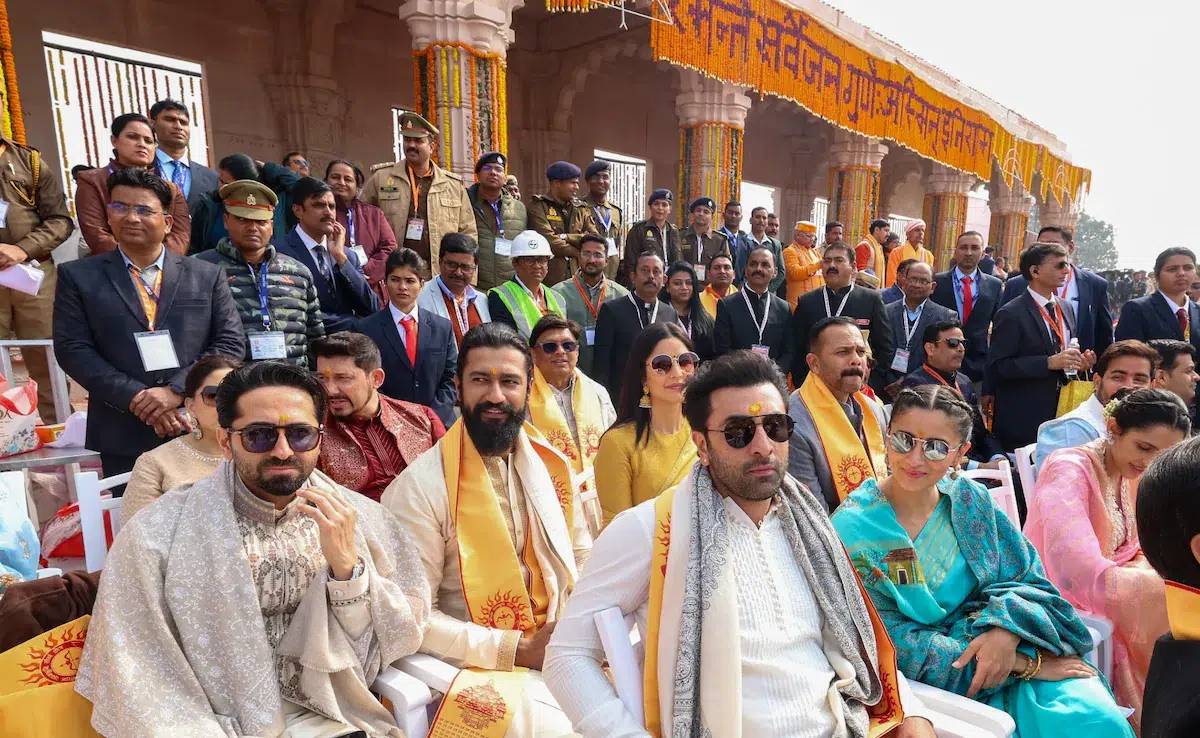
    Considering the importance the event holds, the ceremony is going to be attended by a huge number of Bollywood celebrities, cricketers, politicians and leading businessmen of the country. A newly commissioned airport in Ayodhya is also in the works. Security has been tightened, while the fear of violence has prompted Muslim residents of Ayodhya to send their children and women to relatives in neighbouring towns.

    Bollywood celebrities at the inauguration of Ram Mandir

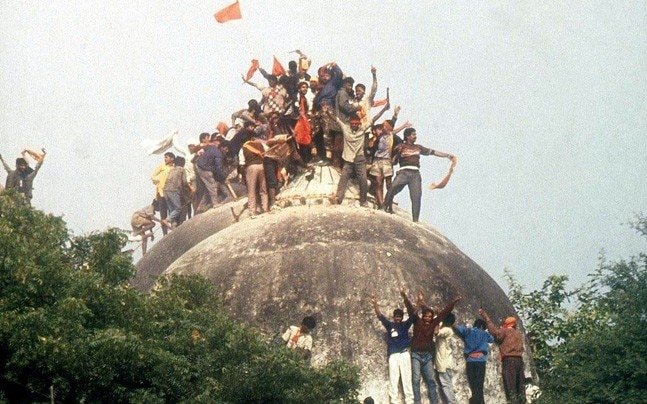
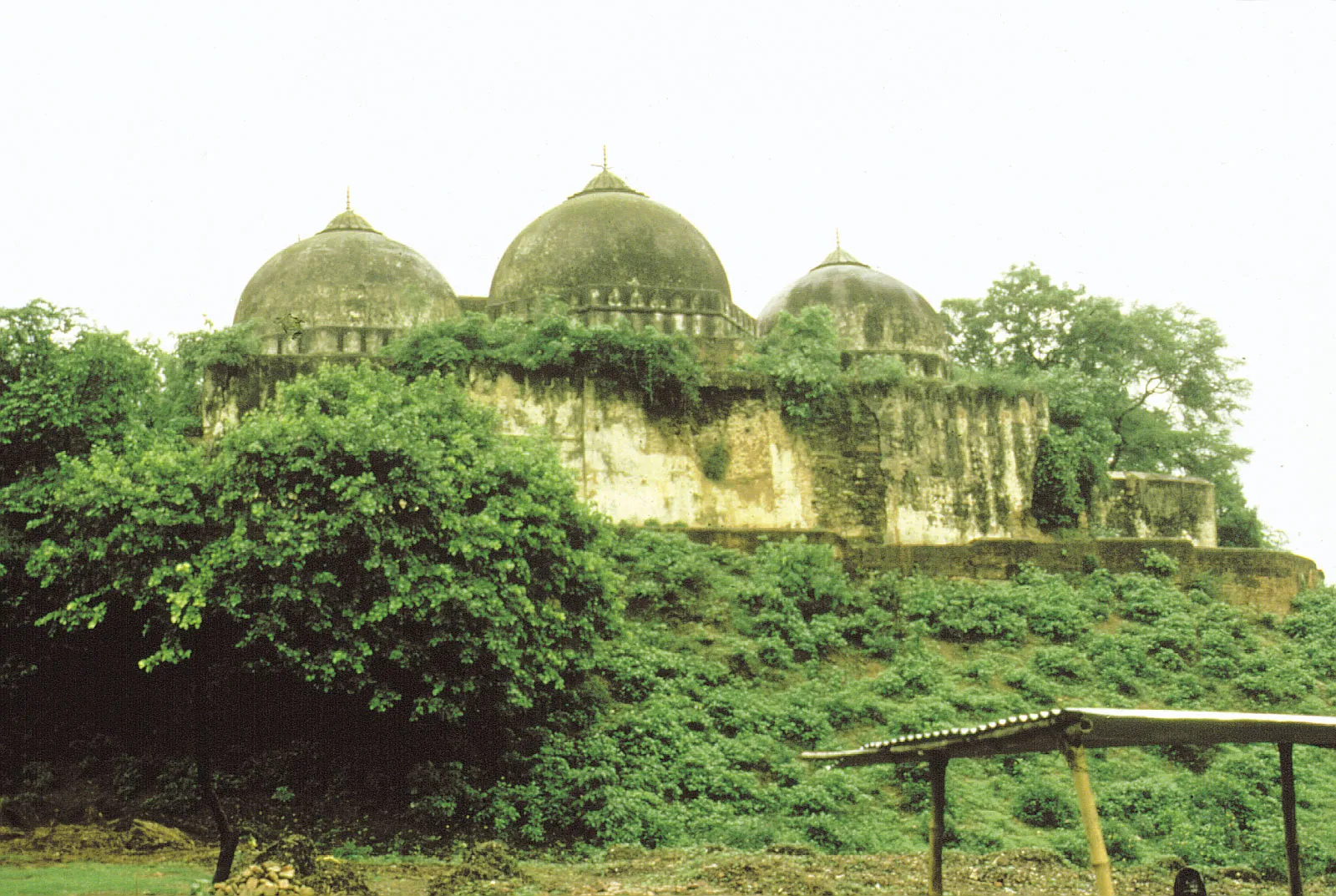
    The temple is a reminder of the very inception of this controversy built on the ruins of 16th-century Babri Masjid. It was demolished by a Hindutva-infused right-wing mob in 1992 after decades of disputes. The riots that happened following the demolition killed more than three thousand Muslims.

    The mosque was built in 1527 by Mughal Emperor Babur and was a rare surviving example of the architecture of the early Mughal Empire, which ruled India from 16th to 19th centuries. Muslims worshipped in the mosque for more than 300 years.

    Summarising the history of the site, Dr. Audrey Truschke wrote in Time: “In the 1850s, when India was largely under British colonial rule, the first signs of trouble arose as the Babri Masjid emerged as a key site of Hindu nationalist attempts to rectify perceived historical wrongs by Muslims, an idea inherited from British colonialists. Hindus claimed that Lord Ram, a major god and mythological hero, had been born at the very spot on which the mosque stood. Competing claims of Ram’s birthplace were once attached to many sites in Ayodhya, but the Babri Masjid drew particular fervor because it was a mosque. Some imagined further historical wrongs associated with the Babri Masjid, including claiming that the mosque was built after Babur’s general destroyed a Hindu temple at that location. None of these claims stand up to historical scrutiny. But in the 1980s, Hindu nationalist groups began tapping into these claims to argue that the mosque needed to be destroyed to clear the way for a new Hindu temple, declaring Mandir wahi banayenge (‘The temple will be built right there!’). After years of agitation, their efforts resulted in an explosion of Islamophobic violence on December 6, 1992, when a Hindu mob numbering at least 75,000 descended on Ayodhya and dismantled the Babri Masjid, brick-by-brick.

    Modi’s BJP benefitted from the situation and came to power in 2014. After the second victory in BJP in 2019, India’s Supreme Court—laden with judges affiliated with BJP- the court called the mosque’s destruction ‘an egregious violation of the rule of law,’ but nonetheless ruled that a Hindu temple could be built on the mosque’s ruins.”

    Modi laid the foundation stone at a groundbreaking ceremony in August 2020.

    Posed as a divine moment this is interpreted as a political gimmick by The Guardian because general elections are going to be held in April in India and by invoking the religious sentiments of the 80 per cent majority of the country, Modi is seeking a third term in power. Prime Minister Modi has also declared that God had chosen him as an instrument to be “representative of all Indians” and he had begun 11 days of “strict vows and sacrifice” to prepare for the event.

    Even though many Indians have given in to the political gimmickry, most are reminded that this Vatican City is nothing but a monument built after demolishing Babri Masjid by force with the help of brute majority.

    Dr. Audrey posted, “Today is a dark day for India”. She was then hugely criticised by Hindu extremists over her tweet and the article she shared.

    A Twitter user commented that this is the win of Jinnah’s two-nation theory.

    Pratesh from India shared a clip from ANI where a teacher was teaching dance steps on bhajans in schools to celebrate the inauguration. He commented, “Now what happened to no religion in school? Was it only applicable for hijab?”

    Someone sarcastically trolled Narendra Modi’s poster by writing, “Very hard to say at this point whose temple is being inaugurated.”

    A user named Sabah counted the Bollywood actors that are attending the event just to appease the government.

    Writer and Educationist Raju Parulekar lamented the state of India has lost its secular spirit in a tweet.

    The most viral is that of a kid schooling the government that a Mandir can’t educate and enable people only a school can.

  • ‘Will die here but not go back’: Indians seek asylum in Pakistan

    ‘Will die here but not go back’: Indians seek asylum in Pakistan

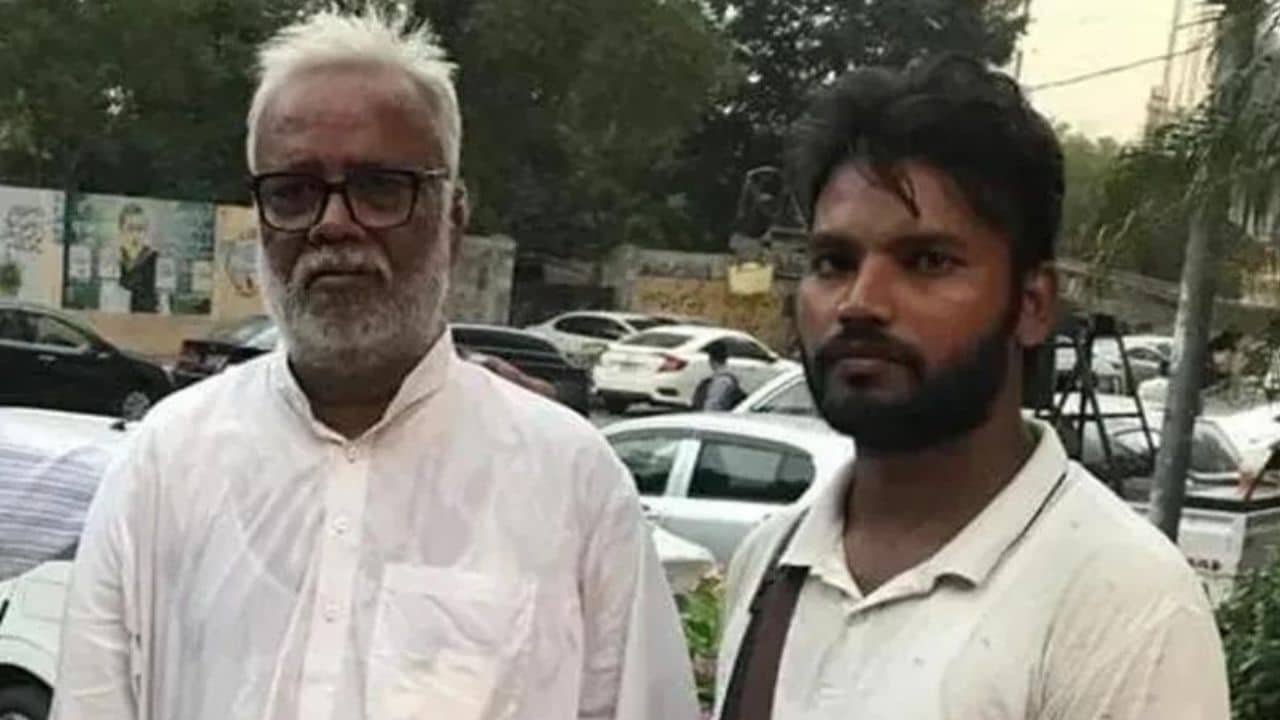
    Two Indian citizens who illegally travelled to Karachi last week have asserted that they would rather go to jail in Pakistan than go back to their own country.

    Identified as Mohammad Hasnain and Ishaq Ameer, the father and son want to seek asylum as their lives are threatened in India with increased religious extremism and Islamophobia, Karachi police have said.

    Dawn spoke with Karachi Deputy Inspector General of Police (South) Asad Raza who stated that the two are not suspected spies, “but were considered victims of religious bias and persecution in India”.

    For now, both the Indians have been sent to an Edhi Shelter home. According to IGP Raza, they seem to want to seek asylum here.

    The duo also protested outside Karachi Press Club on September 25 against the Indian government and its persecution of Muslims.

    “We are ready to go to jail but not back to India,” the police quoted them in a statement. “We will be killed as soon as we step on Indian land if we are deported.

    “If you want to kill us, kill us in Pakistan. At least we will get some land (for burial). In India, we won’t even get that,”

    The father-son also spoke with the media.

    The two left New Delhi on September 5 for the UAE and approached Afghanistan embassy for a visa. They then travelled to Kabul followed by air travel to Kandahar where they spent a night.

    Shedding light on the atrocities committed in India against Muslims and the lack of media coverage, Hasnain states that they are not the first ones to flee the country, stressing that many others have left before them but they could afford foreign citizenship in Europe, America, Britain, Germany, or Canada.

    “Those who are well off migrated to Turkey, Azerbaijan, or Malaysia. I did not have that stature. I had less money,” he added.
    They were not allowed to check in a hotel room in Karachi since they did not possess an identification card.

    Hasnain’s son Ameer said that they directly went to the office of IG Sindh on reaching Orangi Town, Karachi.

    “As soon as we reached there, we kept our baggage on the side, raised our hands, and said we are here to surrender.”

  • ‘Anti-Muslim hate speech increases in India around elections’: Hindutva Watch

    ‘Anti-Muslim hate speech increases in India around elections’: Hindutva Watch

    A recent report on Hindutva Watch by Raqib Hameed Naik, Aarushi Srivastava and Abhyudaya Tayagi titled ‘2023 Half-Yearly Report: Anti-Muslim Hate Speech Events in India’ reveals that there have been 255 documented incidents of hate speech in gatherings targeting Muslims in the first half of 2023.

    The watchdog used the definition of hate speech by the United Nations which states, “any form of communication, whether oral, written, or behavioral, that employs prejudiced or discriminatory language towards an individual or group based on attributes such as religion, ethnicity, nationality, race, color, descent, gender, or other identity factors.” This definition includes all forms of expression, including speech, writing or behavior, and specifically focuses on any language that is either discriminatory (biased, bigoted, or intolerant) or “pejorative” (prejudiced, contemptuous or demeaning) of an individual or group.

    It also notes that overwhelmingly, 205 (80 per cent) of these hate speech events occurred in BJP-ruled states and union territories. Maharashtra, Karnataka, Madhya Pradesh, Rajasthan, and Gujarat witnessed the highest number of hate speech gatherings, with Maharashtra alone accounting for 29 per cent of such incidents.

    Strikingly, seven out of the top eight states with the highest hate speech events are governed by the BJP and its coalition partners. Around 52 per cent of hate speech gatherings in BJP-ruled states and union territories were orchestrated by entities affiliated with the Rashtriya Swayamsevak Sangh (RSS), including the Vishwa Hindu Parishad (VHP), the Bajrang Dal, the Sakal Hindu Samaj, and the Bharatiya Janata Party. Overall, 42 per cebt of all hate speech gatherings in 17 states which includes two centrally controlled territories were organized by groups affiliated with the RSS.

    The report finds that approximately 64 per cent of the events in BJP-ruled states and union territories incorporated references to popular Hindu far-right anti-Muslim conspiracy theories. Overall, 51 per cent of all the hate speech gatherings in 17 states which includes two centrally controlled territories featured anti-Muslim conspiracy theories.

    A concerning 33 per cent of all the gatherings explicitly called for violence against Muslims and about 11 per cent of events included explicit calls for Hindus to boycott Muslims. Disturbingly, 4 per cent of all the events featured hate-filled and sexist speeches explicitly targeting Muslim women.

    Nearly 12 per cent of events featured calls to arms. Notably, 33 per cent of hate speech events took place in states that have already conducted or are set to conduct state legislative elections in 2023. Furthermore, over 36 per cent of these events occurred in states slated to hold legislative elections in 2024. In total, nearly 70 per cent of these events were reported in states with legislative elections either in 2023 or 2024.

    Hindutva Watch tracks the activity of Hindu far-right organizations and their members on social media, scraping data from X (formerly known as Twitter), Facebook, Instagram, Youtube and Telegram to find verifiable videos of hate speech events. They also employ data scraping techniques to identify verifiable videos of hate speech events, followed by in-depth research conducted by a team of dedicated journalists and researchers. Additionally, they draw upon credible reporting from established news organizations to compile comprehensive data. To ensure the accuracy of their findings, they conduct verification processes, confirming the authenticity of the videos, their precise location, and the date on which they were recorded.

  • ‘Foreign minister’s views interpreted out of context’: FO says no change in Pakistan’s policy on India

    ‘Foreign minister’s views interpreted out of context’: FO says no change in Pakistan’s policy on India

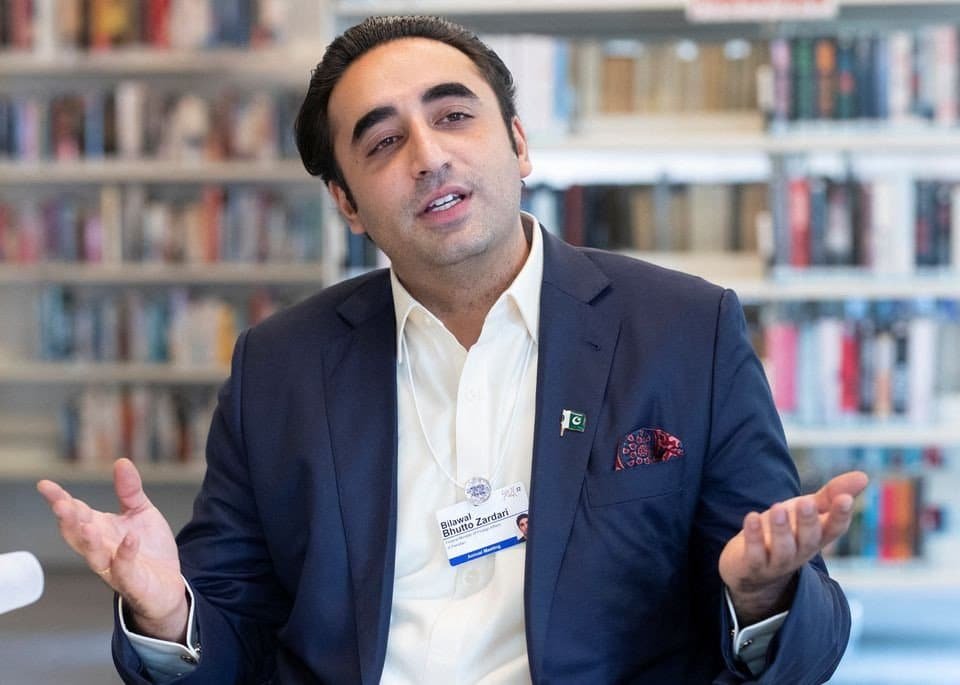
    Pakistan’s Foreign Office (FO) spokesperson has said in a statement that Foreign Minister (FM) Bilawal Bhutto-Zardari’s remarks on India were being “interpreted out of context and portrayed incorrectly”.

    “There is no change in Pakistan’s policy on India on which there is a national consensus. Pakistan has always desired cooperative relations with all its neighbours, including India. We have consistently advocated constructive engagement and result-oriented dialogue to resolve all outstanding issues, including the core Jammu and Kashmir dispute,” the statement said.

    “India’s unabated hostility and retrogressive steps, however, have vitiated the environment and impeded the prospects of peace and cooperation. The onus, therefore, remains on India to take the necessary steps to create an enabling environment conducive to meaningful and result-oriented dialogue,” the FO statement said.

    Bilawal clearly articulated this perspective, “referring to India’s illegal and unilateral actions in the Indian Occupied Jammu & Kashmir (IOJK) since 5 August 2019, describing them as an assault on the rights of the Kashmiri people, as well as rising Islamophobia in India, that created an environment unconducive for meaningful engagement,” it added.

    “The foreign minister’s remarks are better understood in the overall context of his key message of conflict resolution that he emphasised in his address at the think-tank event,” the FO statement concluded.

    ‘Does it serve our objective that we have practically cut off all engagements with India?’: Bilawal Bhutto

    Bilawal advocated for re-engagement with India asking whether cutting ties with India served the country’s interests.

    “Does it serve our interests, do we achieve our objectives whatever they may be, be it Kashmir, be it rising Islamophobia, the Hindutva supremacist nature of the new regimes and the governments in India? Does it serve our objective that we have practically cut off all engagements,” asked Bilawal while speaking at the Institute of Strategic Studies in Islamabad.

    Bilawal identified India and the United States (US) as countries with which Pakistan’s relations were problematic.

    The foreign minister contended that if Pakistan had achieved economic engagement with India in the past, it would have been in a better position to influence Delhi’s policy and prevented both countries from taking extreme positions.

    In May, US Secretary of State Antony Blinken reached out to Bilawal soon after he took the foreign minister’s office and invited him to a food security conference. The two also met in New York on the sidelines of the forum.