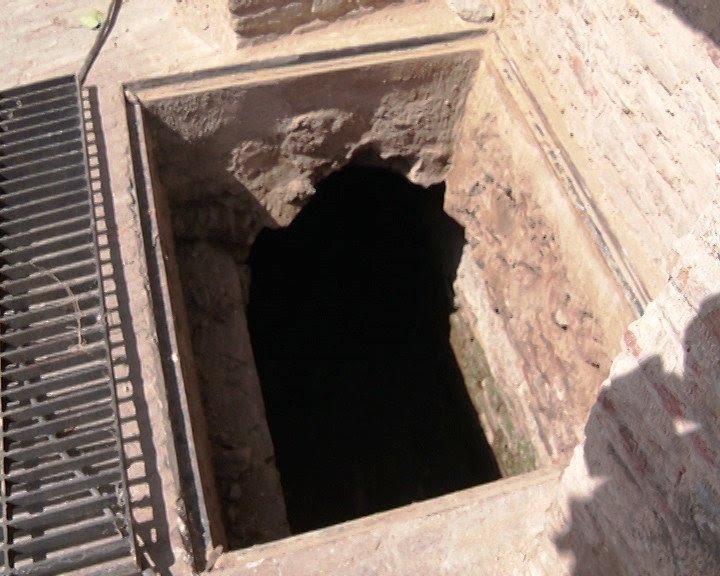
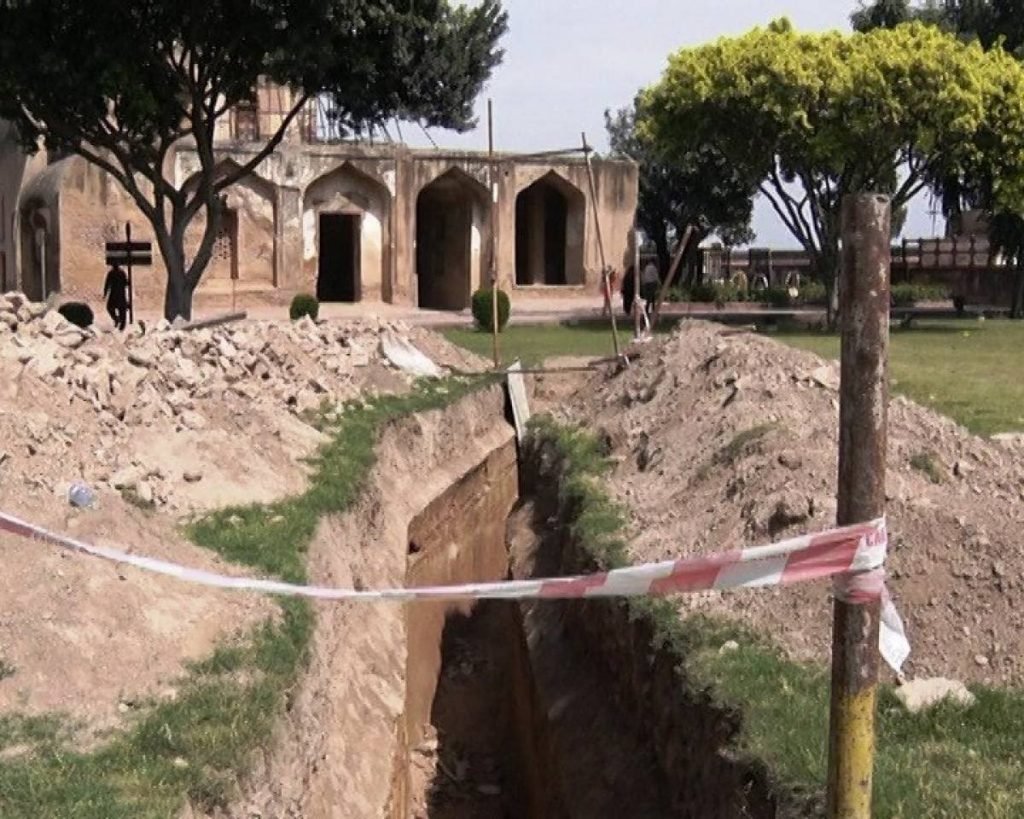
According to The Express Tribune, the tunnel discovered at the opulently designed Mughal fort — that already houses over 20 key monuments — is still firmly in place.
The 625-feet tunnel is well ventilated and lighted, and consists of niches that have been made for lighting lamps.
The excavation of the tunnel
As per the opinion of experts, the tunnel was used as drainage and secret passage.
While modern machinery and equipment are used for the restoration of historical monuments, the archaeology team has done it successfully in the traditional fashion.
“Snakes and scorpions were also found during the excavation,” experts said, adding that traces of it were found during excavation on another restoration project.
Intact murals dating back to the 1st century have been discovered from a Buddhist site in Swat, Dawn News has reported.
Saqib Raza, who was leading the team of archaeologists on the site, while speaking about the murals said: “We have discovered some rare fresco paintings belonging to the first century from the Abbasahib-China Buddhist site in Barikot during our recent exactions. The paintings are in different poses including namaskar pose. Six of them are visible and intact.”
Director of Archaeology and Museums Dr Abdul Samad while speaking to the publication referred to the discovery of the murals as a landmark achievement, adding “there is no other example here in Gandhara of finding intact paintings”.
He further shared that rare Kharosthi script inscriptions and coins were also discovered by the archaeologists in the area.
According to Director of Italian Archaeological Mission Prof Luca M Olivieri, the discovery is really important because it provides evidence of a painting school at Swat and Gandhara “whose traces have unfortunately faded away”.
Earlier, a Hindu temple, believed to be 1,300 years ago, was discovered at a mountain in Swat district. Researchers from Shah Abdul Latif University’s Department of Archaeology also found traces of a third-century settlement in Brahmanabad, Sindh.
Researchers from Shah Abdul Latif University’s Department of Archeology have found traces of a third-century settlement in Brahmanabad, Sindh. Brahmanabad is believed to have been set up in the eighth-century by Muhammad Bin Qasim. The area was the historical capital of the Muslim Caliphate in Sindh during the eighth century, under the Umayyad Caliphate and then under the Abbasid Caliphate from the year 750 AD to 1006 AD.
According to a report in Arab News, a team of around 20 archaeologists started excavation on the site in December as part of a joint project of the Sindh culture department and Shah Abdul Latif University in Khairpur. The supervision was led by Dr Ghulam Muhiuddin Veesar.
Speaking to the publication, Veesar said: “Through [the] material we got, we can say that this settlement of Brahmanabad also existed in the third century AD and people lived here, proving that the settlement is of a pre-Islamic era.”
“We have done both vertical and horizontal excavations so that we may know its cultural phases to determine when the settlement started, how long people were living there,” said Dr Veesar, adding: “Another important feature we found is that the whole settlement is established on a riverbed. They formed the settlement on mounds of natural silt sand dunes of river bed.”
Sindh Minister for Culture, Syed Sardar Ali Shah referred to the findings as of “high importance”.
“It is a great achievement,” he said. “The detailed report is awaited, but in the future, these findings can be helpful in connecting the linkage with other archaeological sites like Mohenjo Daro.”
This is the third such excavation on the archaeological site in the last 180 years. The first one took place in 1854 during British rule and the second one was in 1962 by a government of Pakistan team.
Mohammad Naseem’s eyes shine while he shares the legend of a remote, alpine lake nestled among snow-capped Himalayan peaks as a rare crowd of onlookers hears one of Pakistan’s last ‘storytellers’.
The story of Saif-ul-Malook — the winding saga of a brave prince who falls in love with a fairy — is just one of the 50 tall tales passed down to Naseem by his father.
“Usually people tell me I’m crazy when I tell these stories,” says Naseem, whose long white beard and traditional cloak give him the timeless appearance of a storyteller of old.
The 65-year-old shopkeeper says it would take days to recite all the stories he learned by heart that are imbued with “the history, the culture” of the land.
But few are still listening.
Naseem says he hasn’t bothered sharing the stories with his six children, and friends are no longer interested in hearing them as social media, video games, and soap operas have all but eclipsed his ancient art.
Video platform TikTok is now a major source of entertainment for the country’s youth, wildly popular in part because it is accessible to illiterate users in rural areas — just as the legends of old once were.
“When I die, these stories will die with me,” sighs Naseem outside his shop in northern Pakistan’s Shogran, where winter snows have blanketed the mountains.
Storytellers Bazaar
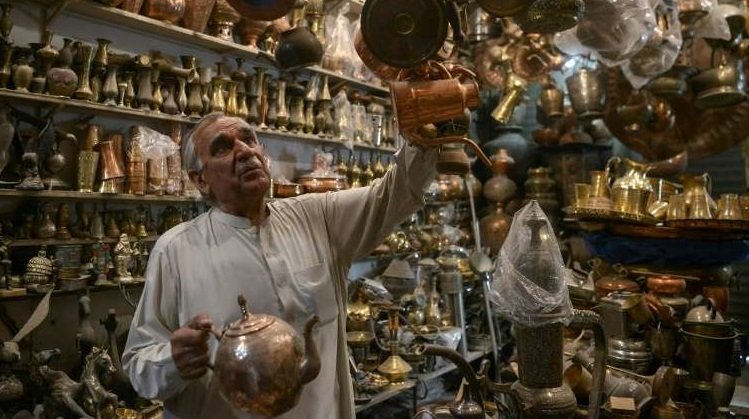
The city of Peshawar has long been the country’s stronghold of oral history, its Qissa Khawani or “storytellers bazaar” a Silk Road hub where travellers and locals alike congregated to hear a well-spun yarn.
The bustling frontier capital was once “the Times Square of the region” because of “the excellence of its storytellers,” explains Naeem Safi — a consultant at an Islamabad-based institute dedicated to Pakistani folk heritage, where cassettes of stories told at the bazaar have been archived.
“Writing was not very popular. The transfer of knowledge was verbal. Storytelling was fundamental — people considered themselves educated if they had heard enough stories,” says Safi.
Before tuk-tuks and buses clogged its narrow lanes the market was littered with Silk Road caravans of wandering traders who often stayed the night after the city’s sixteen gates were sealed at dusk.
In the evenings, the merchants would hear the city’s famed storytellers — who shared tales about the perils of the road, news of wars and local lore.
Bollywood legend Dilip Kumar, who grew up in the area recalled: “I have lovely memories of Qissa Khwani Bazaar, where I received my first lessons in storytelling, which later provided the impetus to choose meaty stories and scripts for my work. Every day as the trading closed in the market of Qissa Khwani Bazaar, a storyteller would sit in the centre of the square narrating stories of valour and victory, deceit and retribution which I would listen to with wide-eyed attention, seated next to my father and uncles.”
Kumar’s house has recently been acquired by the KP Government for restoration. Authorities say that the heritage sites will be converted into museums and tourist spots.
Similar, long-time Peshawar resident Khwaja Safar Ali, 75, remembers his youth in the city when the arrival of caravans was met with excitement.
During the day, “we used to run between the camels’ legs,” he recalls. And when evening came, “we would all sit together and listen to the storytellers”.
“They would tell us about Kabul, the USSR, Uzbekistan. We learned about these countries through them.”
Modern transportation eventually killed off the caravans, which even by the 1960s had become an increasingly rare sight in the area. While storytellers continued to perform for smaller circles, they were gradually replaced by radios and then televisions slowly fading away the art of storytelling.
Pakistan’s young and talented paceman Shaheen Afridi has scripted history by claiming four wickets in four balls.
During Sunday’s Vitality Blast — professional Twenty20 cricket competition for English and Welsh first-class counties — fixture between Hampshire and Middlesex, the left-arm pacer took a wicket with each of his last four balls as he finished with figures of 6-19 from his four overs.
It’s just the sixth time in T20 history that a bowler has taken four wickets in four balls, which is known as a double hat-trick, and Afridi’s figures are the best ever by a Hampshire bowler and the equal-third best by a Pakistani.
Chasing 142 to win, Middlesex were in with a chance of victory when Afridi started his fourth and final over, with the visitors needing 23 to win from 18 balls with four wickets in hand and No.5 John Simpson on 47 not out.
But having conceded a single from each of his first two balls of the over, Afridi shattered Simpson’s stumps with an in-swinger from over the wicket before he set his sights on the Middlesex tail.
Switching to around the wicket, he cleaned up Steve Finn first ball with a nearly unplayable yorker before he secured the hat-trick as No 10 Thilan Walallawita had a swipe across the line and was also bowled.
Afridi then produced another full delivery that knocked over Tim Murtagh’s middle stump to finish the match and ensure his final act in his stint with Hampshire was a memorable one.
German poet Heinrich Heine once warned, “Where they burn books, they will in the end also burn people.”
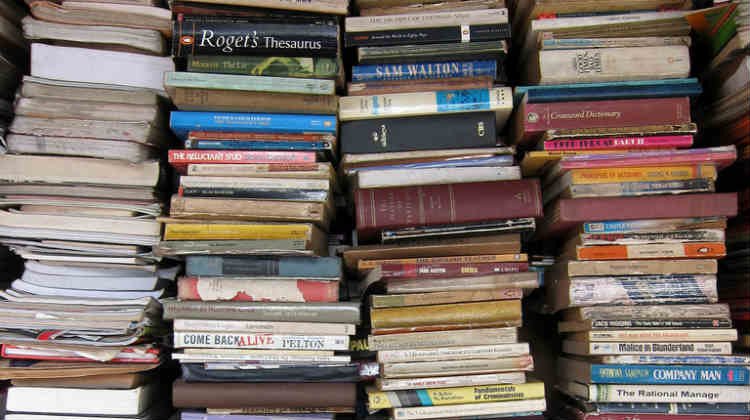
In Pakistan’s case, we may not be burning books, but we are banning them. From banning online apps to games, from media censorship to censoring books, Pakistan is on a downward spiral. According to Geo, the Punjab Curriculum and Textbook Board (PCTB) banned a hundred school books in a single day for containing content deemed “anti-national” and “blasphemous”.
“We are currently examining over 10,000 books being taught in private schools,” said PCTB Managing Director Rai Manzoor Hussain Nasir. “So the banned textbooks could be in thousands once we are done.”
Rai is taking these steps under the Punjab Curriculum and Textbook Board Act, 2015, which was passed by the Pakistan Muslim League-Nawaz (PML-N) government. It seems that both the Pakistan Tehreek-e-Insaf (PTI) and the PML-N do not value critical thinking and fundamental freedom.
This policy is a complete disaster. We saw what happened under the Zia regime back in the 1980s when our curriculum was infused with extremist ideology. It changed our society and led to intolerance. Now we are seeing a repetition of something along the same lines. Rai Manzoor has a problem with a book of mathematics where counting concepts were explained to the young students showing pictures of pigs. He also has a problem with Gandhi’s quotes being taught in another book. Gandhi was India’s founding father but he fought for the rights of Muslims in India and was consequently killed by an RSS extremist for propagating peaceful co-existence with the Muslim minority. Are we demonising someone just because we want to see him from the prism of animosity towards India?
If we want to keep our children isolated in a globalised world by teaching them only about ourselves, and not any non-Pakistanis, the solution was not to ban books with Gandhi’s quotes but probably to add more quotes from Pakistani historical figures. Do we not want to teach our children about the struggles of Nelson Mandela, who is quite often quoted by Prime Minister Imran Khan? Banning books or taking out quotes of non-Pakistanis is ridiculous at best and dangerous in the long term. The path we are taking today will impact our coming generations.
The power of deciding curriculum and books is a grave power. For it to be in the hands of someone who is no Chomsky or any other learned figure, we must raise our voice at this grave injustice that is being inflicted upon our future generations. Our national interests are not so weak that they will be endangered by some quotes from non-Pakistanis. But it seems that we want to ban critical thinking. We want to ban the foundation of learning, i.e. asking questions and being inquisitive. We want to produce robots instead of intelligent human beings. We must resist this type of indoctrination. Closed minds cannot lead this country to progress. Stifling freedom of expression and censoring books will push Pakistan back by decades. Let us not go down this dark path.
At least 97 people have been killed after an Airbus A320 passenger airliner crashed into a residential neighbourhood while on approach to the airport in Karachi.
Only two male passengers of Pakistan International Airlines (PIA) flight PK8303 from Lahore to Karachi survived the crash that wasn’t the first in Pakistan’s history, and, unfortunately, might not be the last.
The country has a chequered aviation safety record, and here is a timeline of the air crash tragedies that shook Pakistan.
May 20, 1965
PIA Boeing 707 crashes during inaugural flight while attempting to land at Cairo airport, killing 124 passengers.
August 6, 1970
PIA Fokker F27 aircraft crashes while attempting to take off from Islamabad in a thunderstorm, killing 30 on board.
December 8,1972
Another PIA Fokker F27 crashes in Rawalpindi, leaving all 26 passengers dead.
November 26, 1979
A PIA Boeing 707 bringing home Pakistani Hajj pilgrims from Saudi Arabia crashes shortly after take off from Jeddah airport, killing 156 people.
October 23, 1986
PIA Fokker F27 crashes in Peshawar, leaving 13 out of 54 passengers dead.
August 25, 1989
Another PIA Fokker crashes in Gilgit with 54 people on board. The wreckage was never found.
September 28, 1992
A PIA Airbus A300 crashes while approaching Kathmandu after the plane descended too early, killing 167 people.
July 10, 2006
PIA Fokker F27 crashes in Multan shortly after take off, killing 45 people.
July 28, 2010
Airblue Airbus 321 from Karachi crashes in Margalla Hills outside Islamabad, leaving all 152 passengers dead.
April 20, 2012
A Bhoja Air Airbus 737 from Karachi crashes in Islamabad due to bad weather, killing all 127 passengers.
December 7, 2016
PIA ATR-42 aircraft flying from Chitral to Islamabad, crashes near Abbottabad. 48 people died in the incident, including singer-turned-preacher Junaid Jamshed.
Friday’s tragic episode was the first commercial airliner crash since 2016. There have, however, been a number of chartered and military jet crashes.