Tag: HOBC

  • International petrol, diesel prices drop, but no relief for Pakistanis

    The government has decided not to reduce the prices of diesel and petrol for local consumers, despite a significant decrease in their international prices. This decision is intended to offset previous exchange losses and raise taxation.

    On February 28, 2023, the average fortnightly prices of petrol and diesel in the global market will be used for the next price revision. According to industry sources, the average price of diesel for the next fortnightly review has dropped by $7 per barrel, which equates to a reduction of Rs30 per litre for domestic diesel prices.

    The global average price of diesel has fallen to approximately $100 per barrel compared to $107 per barrel in the previous fortnight. Similarly, the average price of petrol has dropped to $90 per barrel for the next review of prices compared to $93 per barrel in the last fortnightly review, which translates into a reduction of Rs10 per litre for consumers in the local market.

    According to Geo, the appreciation of the Pakistani rupee against the dollar in the last two weeks has also contributed to the reduction in import prices of diesel and petrol. However, industry sources do not expect any significant reduction in the prices of diesel and petrol for domestic consumers.

    The government is expected to adjust the exchange losses, which were not passed on fully to the oil sector in the last several reviews. For example, an exchange loss adjustment of Rs88 per litre was due on diesel, but the government only transferred Rs12 per litre on this head, leaving the remaining amount to be adjusted. The same is true for petrol, with an exchange loss adjustment of Rs34 per litre due, but only Rs12 per litre being given to the oil industry.

    Under the conditions set by the International Monetary Fund (IMF), the government may increase the petroleum levy (PL) on diesel to Rs50 per litre, as it now has room to do so. Currently, the PL on diesel is Rs40 per litre.

    If the government does not impose GST, sources expect a cut of Rs10 per litre in diesel prices, which would otherwise deprive local consumers of the drop in diesel prices in the global market.

    However, official industry sources do not anticipate any reduction in the price of petrol for local consumers, which would otherwise have been down by Rs10, as per the trends of its price in the global market.
  • Petrol price likely to rise by Rs20 per litre in upcoming review

    Petrol price likely to rise by Rs20 per litre in upcoming review

    Oil industry sources report that there may be a Rs20 per litre increase in petrol prices at the upcoming review on February 15, 2023. The increase is based on calculations of the international price of petrol, specifically on a free on board (FOB) basis.

    During the previous fortnightly review of fuel prices, the government implemented a substantial increase of Rs35 per litre. Currently, the government imposes a petroleum levy (PL) of Rs50 per litre, while the general sales tax (GST) has not yet been levied.

    Sources suggest that the price of petrol could increase further if the foreign exchange rate is adjusted at the next review. They noted that the exchange rate is currently unfavorable, negating any potential benefits or reductions for local consumers.

    Despite a decrease in international petrol prices, the sharp depreciation of the rupee against the dollar has offset gains, adversely affecting domestic consumers. Additionally, the sources warned that the government may implement a Rs20 per litre adjustment to account for the exchange rate, which could result in an overall increase of up to Rs40 per litre.

    The price of diesel, as reported by sources, has not seen any increase on FOB without exchange rate adjustments. However, they stated that diesel prices could potentially increase in the next review if the exchange rate is adjusted. The government previously adjusted Rs14 per litre on diesel due to the exchange rate, but the recent appreciation of the dollar has effectively negated this adjustment from the last review.

    While global diesel prices have reportedly decreased by five to six dollars per barrel, the depreciation of the rupee prevents the government from passing on the reduction to local consumers.

    The most recent price adjustment of petroleum products was made on January 29, 2021, by the federal government. Following the review, petrol was priced at Rs249.80 per litre, high-speed diesel at Rs262.80 per litre, kerosene oil at Rs189.83 per litre, and light-speed diesel at Rs187 per litre.

    The government implemented an increase in petrol and high-speed diesel prices by Rs35 per litre each, and raised the rates of kerosene oil and light diesel oil by Rs18 per litre each on January 29, 2023.

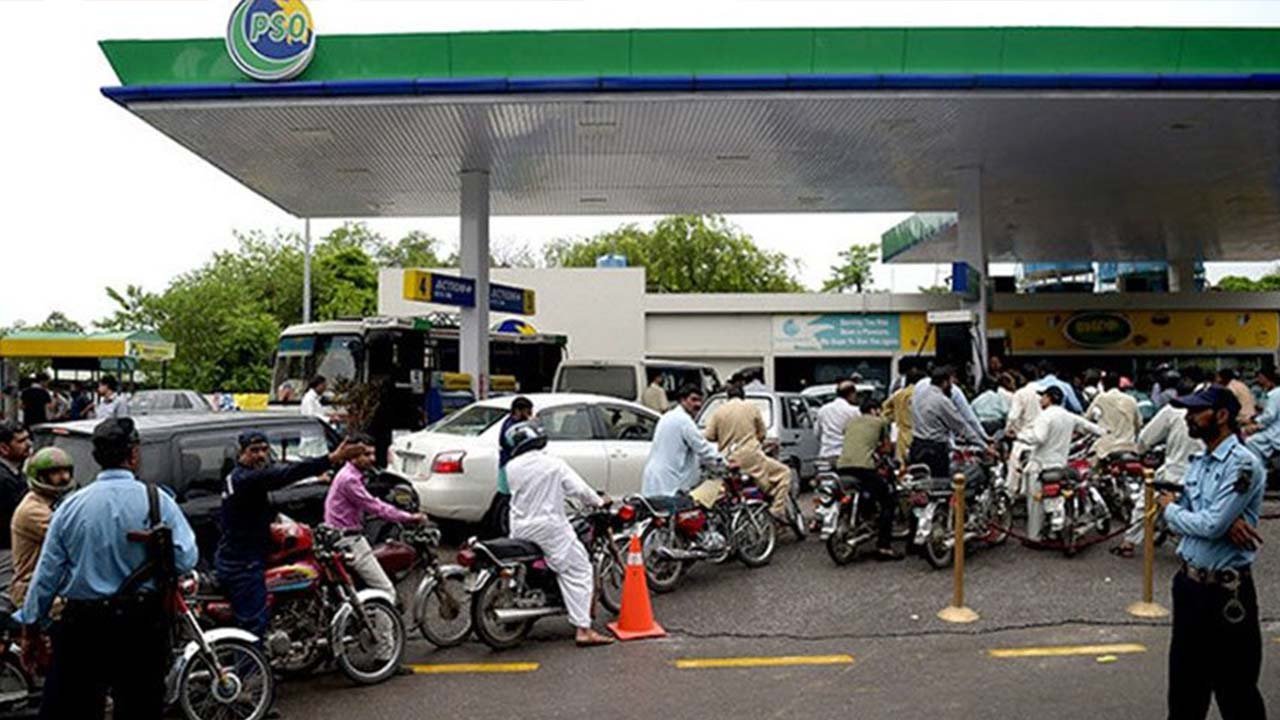
    Pakistan is currently experiencing a shortage of petrol, with its most populous province, Punjab, being hit the hardest. The crisis has affected major and minor cities, towns, and villages in Punjab, with the shortage being attributed to petroleum dealers.

    Sources previously reported that in addition to a low import of petrol by most Oil Marketing Companies (OMCs), petroleum dealers were also involved in hoarding petrol in anticipation of an expected price increase in mid-February.

  • Pakistan has enough petrol for 20 days: Musadik Malik refutes fuel shortage rumours

    Pakistan has enough petrol for 20 days: Musadik Malik refutes fuel shortage rumours

    On Tuesday, many petrol stations in the cities of Punjab were closed, causing inconvenience for commuters searching for fuel. However, State Minister for Petroleum, Musadik Malik, refuted reports of a nationwide fuel shortage.

    Despite a recent increase of Rs35 per litre in petrol and diesel prices, consumers are still facing difficulties due to limited supply.

    This situation mirrors a similar occurrence earlier this month prior to the price hike. On January 29, the government raised the prices of petrol and diesel by Rs35 per litre in response to the significant devaluation of the rupee against the dollar.

    The devaluation of the local currency against the dollar reached historic lows after the unofficial cap on the greenback was removed. Consumers in cities such as Faisalabad, Gujranwala, Sargodha, Shakargarh, Khushab, Mandi Bahauddin, and Gojra have encountered difficulties obtaining fuel. Petrol stations that remained operational have experienced long lines of vehicles, with reports of owners rationing the commodity by only providing limited amounts to customers.

    According to Geo, the State Minister for Petroleum has issued a warning against hoarding, as the fuel supply is already precarious. The minister stated that hoarders should be prepared for the possibility of having their licenses revoked.

    He said that there is a 20-day supply of petrol and a 25-day supply of diesel in the country. He urged the public to report any petrol stations that may be restricting supply for profit.

    Malik emphasized that there is no shortage of petrol in the country and confirmed that there will be no increase in the prices of petroleum products before February 15.

  • ‘Misleading and incorrect’: OGRA rejects speculations about massive petrol price hike

    ‘Misleading and incorrect’: OGRA rejects speculations about massive petrol price hike

    The Oil and Gas Regulatory Authority (OGRA) on Saturday rubbished rumours about a whooping increase of Rs80 per litre in petrol price.

    “It has been observed that speculative prices of gasoline and diesel are being reported in the print and electronic media since last evening, which is misleading and incorrect,” an OGRA spokesman said in a press statement.

    He advised the elements to avoid disseminating speculative prices of petroleum products in the “public interest” by spreading misleading and incorrect information.

    Earlier, OGRA also denied reports of a shortage of diesel and gasoline in the country, saying that sufficient stocks were available. However, in line with the government’s aim to convince the International Monetary Fund (IMF), the Ministry of Finance is expected to increase the price of petroleum in the upcoming fortnightly review.

    The massive depreciation of the local currency against the US dollar in the last two days would not reflect greatly in the review due on January 31 (Tuesday) as the average exchange rate would clock in at Rs240, information gathered from the country’s oil sector showed.

    However, the fortnightly review due on February 15 may reflect a significant increase in domestic petroleum prices on account of rupee depreciation.

    Free on board (FOB) pricing will result in a significant increase in the price of fuel and gasoline in the subsequent weekly review the following week, according to The News.

    According to sources with knowledge of the situation, using FOB would likely result in an increase of Rs25 in the price of fuel. “The exchange rate would create some hike, but not so much”, they said, attributing the hike to FOB as diesel price in the international market went up to $117 per barrel compared to $114 per barrel.

  • Govt expected to increase petroleum levy on diesel

    Govt expected to increase petroleum levy on diesel

    The government is expected to raise the petroleum levy beginning tomorrow, implying that diesel customers are unlikely to receive any relief. 

    Finance Minister Ishaq Dar is also anticipated to maintain the oil prices for the first two weeks of December.

    The government now has the flexibility to raise the rate of PL on diesel, a crucial good that is extensively utilised in the transportation and agricultural sectors, thanks to the recent rise in PL on gasoline and High-Octane Blending Component (HOBC) to the budgeted level of Rs50 per litre.

    However, this change will directly affect how the majority of people live. High-speed diesel (HSD) is currently priced per litre at Rs12.59. However, according to sources, the price of diesel had decreased by Rs11.95 per litre during the past two weeks. Diesel prices could decrease to Rs223.35 per litre from Rs235.3 per litre if the government decides to pass along the savings.

    Despite the rupee losing Rs1.81 to reach Rs223.62, the cost of diesel, kerosene, and light diesel oil (LDO) fell significantly. The current rate of PL and GST is the basis for the variation in oil prices.

    The Inland Freight Equalization Margin has been set at Rs1.90 for HSD and Rs6.69 for gasoline per litre. The exchange loss for Pakistan State Oil was Rs3.01 for gasoline and Rs2.10 for HSD per litre.

    PSO imports goods, therefore it may experience exchange gains or losses depending on how much the local currency is worth. Kerosene oil prices also decreased by Rs9.91 per litre, and LDO prices decreased by Rs13.39 per litre.

    In isolated locations without access to LPG, kerosene oil is used for cooking. Kerosene oil’s price could decrease from Rs191.83 to Rs181.92 per litre and LDO’s price from Rs186.50 to Rs173.11 per litre if the government grants relief.

    Petrol prices have increased by Rs2.62 per litre, with a potential increase to Rs227.42 per litre from the current level of Rs224.80 per litre.

  • Mazeed mehnga petrol: Oil prices may go up by Rs4 per litre

    Mazeed mehnga petrol: Oil prices may go up by Rs4 per litre

    The government is expected to marginally increase the price of petroleum products for the next two weeks in order to collect revenue from local consumers.

    According to an official of the Petroleum Division, price increases for petroleum products may range from Rs3 to Rs4 per litre.

    He noted that in order to fulfill its promise to the International Monetary Fund, the government was anticipated to adjust tariffs on petroleum goods (IMF). In an effort to increase revenue, it has already increased the petroleum duty on petrol and high-octane blending component (HOBC) to Rs50 per litre.

    The petroleum charge on Super and HOBC is at an all-time high, yet there is no general sales tax on petroleum goods.

    According to sources in the petroleum industry, oil products’ ex-refinery prices could decrease marginally during the next two weeks. According to them, the price of gasoline might drop by about Rs1.6 per litre and the price of high-speed diesel (HSD) by Rs3, although they said that these figures did not account for exchange rate loss adjustments. As a result, given that the government skipped it the last time, there might be an addition of around Rs 4 to the price of HSD per litre.

    Additionally, they noted that the previous oil price revision had resulted in a negative Inland Freight Equalisation Margin (IFEM) of roughly Rs 5 per litre for HSD consumers; however, it was anticipated that this would change in the new price announcement.

    In addition to this, changes in the petroleum levy on HSD and the imposition of general sales tax on both gasoline and HSD also affect price revision.

    Oil prices had previously been held steady for the seven days of November 1–15.

    For the first week of November, it was anticipated that the price of gasoline would decrease by Rs2.86 per litre and the price of HSD would increase by Rs3.70 per litre in accordance with the Platts trading platform and exchange rate movement. The government, however, refused to lower the price of petrol for the public.

    HSD currently costs Rs235.30 per litre, while a litre of petrol costs Rs224.80. Light diesel oil costs Rs186.50 per litre, while kerosene costs Rs191.83 per litre.

  • Pakistan has sufficient petrol and diesel to meet domestic demand: Petroleum Division

    Pakistan has sufficient petrol and diesel to meet domestic demand: Petroleum Division

    The Petroleum Division said on Tuesday that the country has sufficient petrol and High-Speed Diesel (HSD) in stock to meet domestic demand after allowing Oil Marketing Companies (OMCs) to recover Rs10 per litre on HSD for the next two months (November-December 2022) by raising the premium limit to $15 per barrel.

    The OCAC had cautioned the federal government about a likely shortage of petrol and HSD in the coming days due to limited imports and limited local availability.

    According to the OCAC’s letter to the Oil and Gas Regulatory Authority (Ogra), the gap is due to limited supply and excessive premiums on fuel stocks on the international market.

    The Economic Coordination Committee (ECC), led by Finance Minister Ishaq Dar, approved the summary proposed by the Ministry of Energy on Friday (Petroleum Division).

    The ministry aimed to secure sustainable HSD imports for November-December 2022 by loading the country’s risk factors of $6 bbl, with an upper limit premium of $15 to the OMCs for pricing computation.

  • Oil industry warns OGRA of looming petrol, diesel shortage

    Oil industry warns OGRA of looming petrol, diesel shortage

    Due to limited imports and constrained domestic supplies, the oil industry has warned the government that the country may witness a shortage of petrol and high-speed diesel (HSD) in the upcoming days.

    The Oil & Gas Regulatory Authority (OGRA) has been written about the shortfall by the Oil Companies Advisory Council (OCAC), an organisation that represents the oil industry.

    The Oil Marketing Companies (OMCs) were given permission to import motor spirit/petrol and HSD in accordance with their demand in the product availability review of products for the month of November 2022, the OCAC stated. This decision followed considerable consideration.

    A shortage of 210,000 MT of HSD and 147,000 MT of gasoline was calculated during the product review. Due to restricted supply on the global market and extremely expensive premiums, it was noted at the meeting that HSD imports in November would be difficult. As a result, only PSO has so far reserved supplies from Flow Petroleum of 220,000 MT and 10,000 MT.

    Alarmingly, though, fuel import that corresponds to the expected sales volume and the stock cover has also not been scheduled. According to the OCAC letter, the importers were supposed to finalise the import plan, but as of now, there is a gap in the import plan.

    The conference with representatives from the industry held on November 1 also brought up this crucial issue, but no clear guarantees have been obtained in writing from the importing OMCs, it stated.

    According to Geo, the OMCs, who were expected to bring imports for use in October, got their shipments in the final week of the month; hence, the product wasn’t ready for usage during the month it was intended for. Similar to how OMCs who were permitted to import goods the month before for usage the following month had already used the shipments, the letter observed.

  • Govt increases petroleum levy by Rs14.84 to Rs47.26

    Govt increases petroleum levy by Rs14.84 to Rs47.26

    The government has increased the Petroleum Levy (PL) on petrol by Rs14.84 to Rs47.26 per litre, while decreasing it on diesel, with immediate effect from October 16, 2022, maintaining the prices at Rs224.80 and Rs235.30 per litre, respectively. From October 1, 2022, the PL for petrol was Rs32.42.

    The rise in the petroleum levy on Mogas was enforced in response to the IMF’s concerns after the finance ministry lowered the levy on petrol by Rs5 to Rs32.42 per litre on October 1, 2022, from Rs37.42.

    According to Geo, Pakistan has to raise Rs850 billion in income during the current fiscal year by increasing the Petroleum Levy to Rs50 per litre on petrol and diesel.

    However, it has lowered the diesel levy by Rs5.44 to Rs7.14 per litre beginning October 16, 2022. From October 1, 2022, the petroleum levy on diesel was Rs12.58 per litre.

    Currently, the petroleum duty on HOBC is Rs30 per litre, kerosene oil is Rs8.90 per litre, light diesel oil is Rs1.59, and E-10 gasoline is Rs23.21 per litre.

    The inland freight equalisation margin (IFEM) on gasoline was cut by Re0.52 to Rs2 per litre from Rs2.53.

    The district margin, which includes the extra margin on petrol, is Rs3.68 per litre, while the dealer margin is Rs7 per litre.

    IFEM on diesel has risen by Re0.07 per litre to Rs1.83 from Rs1.76 per litre. The dealer margin on diesel is similarly Rs7 per litre, while the district margin, including extra margin, is Rs3.68 per litre.

  • Petroleum sales increase by 23% in March, despite hefty oil prices

    Petroleum product sales rebounded in the last month after a dismal February with Oil marketing companies (OMC) witnessing an increase of 23 per cent in sales of petroleum products on a year-over-year (YoY) basis in March 2022.

    Overall petroleum sales in March 2022, increased to 1.82 million tonnes compared to 1.54 million tonnes in March 2021, as per the data released by Arif Habib Limited.

    The stability comeback shows a 19 per cent increase in overall OMC sales on a month-over-month (MoM) basis.

    OMC volume growth was driven by furnace oil, which climbed by 34 per cent on a YoY basis, followed by HSD volume growth of 29 per cent and MS volume growth of 13 per cent. MoM growth in OMC volumes followed a similar pattern, with FO taking the lead.

    Although the increase in furnace oil volumes was driven by increased furnace oil usage in the power sector due to low gas and Re-Gasified Liquefied Natural Gas (RLNG) availability.

    The increase in HSD volumes was driven by increased demand from the transportation and agriculture sectors and increased usage in generators and the power sector.

    Moreover, the government’s price caps and the additional number of days in March compared to February were the main contributors to MoM growth in diesel and gasoline sales.

    Consequently, petroleum sales increased by 19 per cent on a YOY basis in 9MFY22, with double-digit increases for petroleum products.

    Diesel sales grew by 17 per cent, followed by 16 per cent increase for furnace oil and a 10 per cent growth for motor oil.

    While some are expecting a drop in petroleum sales due to the political turmoil and rising commodity prices, others say that higher oil consumption cannot be overturned as the summer is already here and people are likely to consume more electricity, also that the power sector may switch to furnace oil due to RLNG commitment defaults.