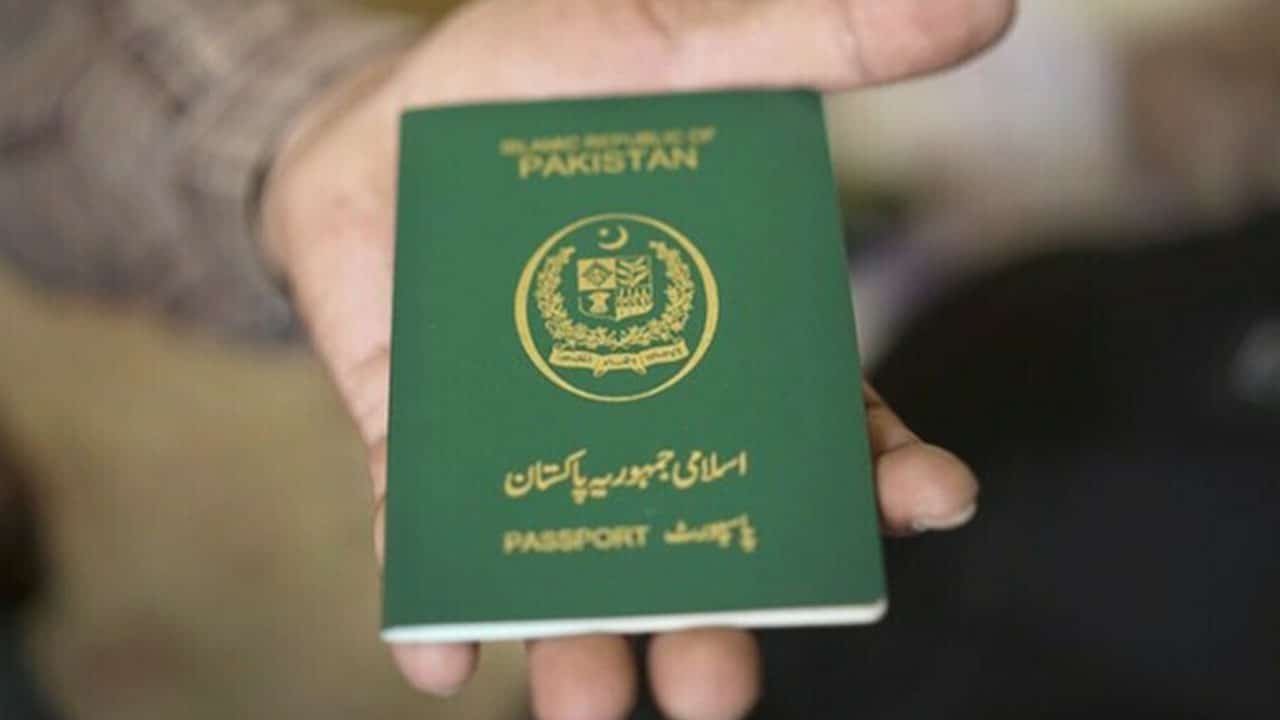
The fee for renewing a passport online has recently undergone an upward revision, resulting in an additional cost of Rs1,000. Consequently, the new fee for online passport renewal has been set at Rs4,000, marking an increase from the previous Rs3,000.
Furthermore, the urgent fee for passport renewal, applicable to both online and offline applications, has also been subject to a revision. It now stands at Rs6,000, representing an increase from the earlier amount of Rs5,000.
The rationale behind these fee adjustments is attributed to the added service of home delivery of the passport via courier. Applicants can now receive their renewed passport conveniently at their doorstep.
To apply for an online passport renewal, applicants must fulfill certain requirements. These include attaching a copy of their national identity card and passport as part of the application process. Additionally, the application fee must be paid securely online.
As Pakistan joins a regional startup financing boom, Airlift Technologies Pvt. has raised the biggest single private investment round in the country’s history, ahead of plans to enter international markets.
As per details, with involvement from former Y Combinator president Sam Altman, the Lahore-based online retail delivery company received $85 million in Series B funding headed by Harry Stebbings of 20VC and Josh Buckley of Buckley Ventures Ltd. According to a data tracker from venture capitalist firm Invest2Innovate, it would be the largest-ever investment for a Pakistani company.
Pakistan is “in the very early stages, but the transformation is happening very, very quickly and we are seeing a shift in behavior,” Airlift co-founder Usman Gul said in an interview. “We have a lot of people who previously didn’t shop online.”
The investment in Pakistan, a country with a population of more than 200 million people and a nascent digital sector, parallels a surge of investment over the border in India.
According to Invest2Innovate statistics, Pakistani entrepreneurs, most of which are focused on e-commerce, raised a record $101 million in the first half of this year, compared to $66 million in all of 2020. That still pales in comparison to its neighbor, where technology companies made a record $6.3 billion in the second quarter.
The investment comes after Airlift switched to e-commerce with 30-minute shipping in September after the epidemic forced them to abandon their primary business of providing air-conditioned bus trips. It joins a very competitive market across the globe, where supermarkets and e-commerce companies like Dunzo, Gorillas, Getir, and GoPuff compete for fast deliveries in congested areas ranging from Delhi to New York and London.
The total money raised by Pakistani startups in the first half of the year is equal to the amount raised by Airlift. According to statistics collected by Bloomberg, it also surpasses the biggest initial public offering by the private sector in the United States.
It now intends to expand to 15 Pakistani cities by the end of the year, up from the existing eight. It’s also on a recruiting frenzy, with ambitions to increase its core staff to 400 people by the end of next year, according to Gul. In approximately three months, the firm plans to join a growing market abroad.
“Very quickly we realised that the distribution of consumer goods was quite broken,” he said. “I ordered groceries and had to wait six hours to get that delivery. So we wanted to change that.”
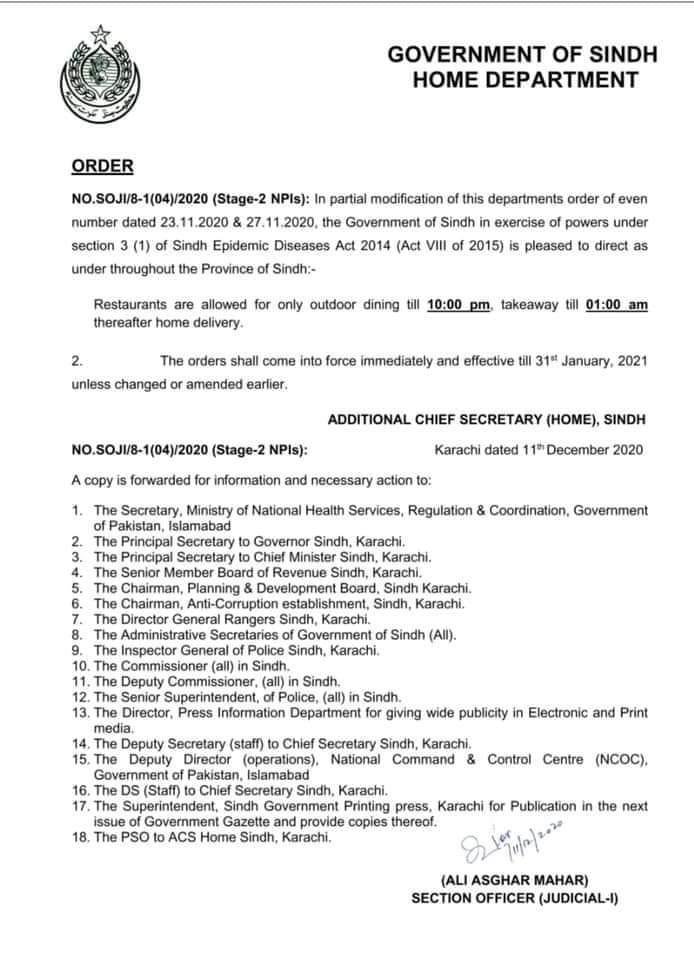
The home department of Sindh government has released new COVID-related instructions allowing take-aways and deliveries of restaurants till 1 am.
The notification reads that the restaurants can provide dine out service until 10 pm while they can facilitate customers for take-away services for up to an hour into the midnight.
Previously, the restaurants were only allowed to operate till 10 pm for dine-out, take-aways and deliveries.
“The smartphone has transformed online shopping in Pakistan and the COVID-19 lockdown has accelerated it,” says Jarrar Shah of 24seven, an online grocery store based in Lahore.
Shah’s words ring true because the past couple of weeks have witnessed a great shift in the way the world functions. As cases of coronavirus rose in Pakistan, the country went into lockdown, until recently, with all offices, shops, malls, restaurants closed. Only pharmacies, grocery stores and essential businesses were allowed to operate and that too for a limited number of hours. Unfortunately, us Pakistanis are not very used to that lifestyle – our day begins well into the afternoon and ends just before midnight – but changing circumstances forced us all to alter our routines and many of us turned to online shopping in a bid to make life easier for ourselves. According to Google Trends, searches for ‘online grocery’ grew exponentially in the last few weeks with the sharpest rise registered in the week following the lockdown.
While we’re all aware of how online shopping works at our end, on the other side it’s a whole different ball game.
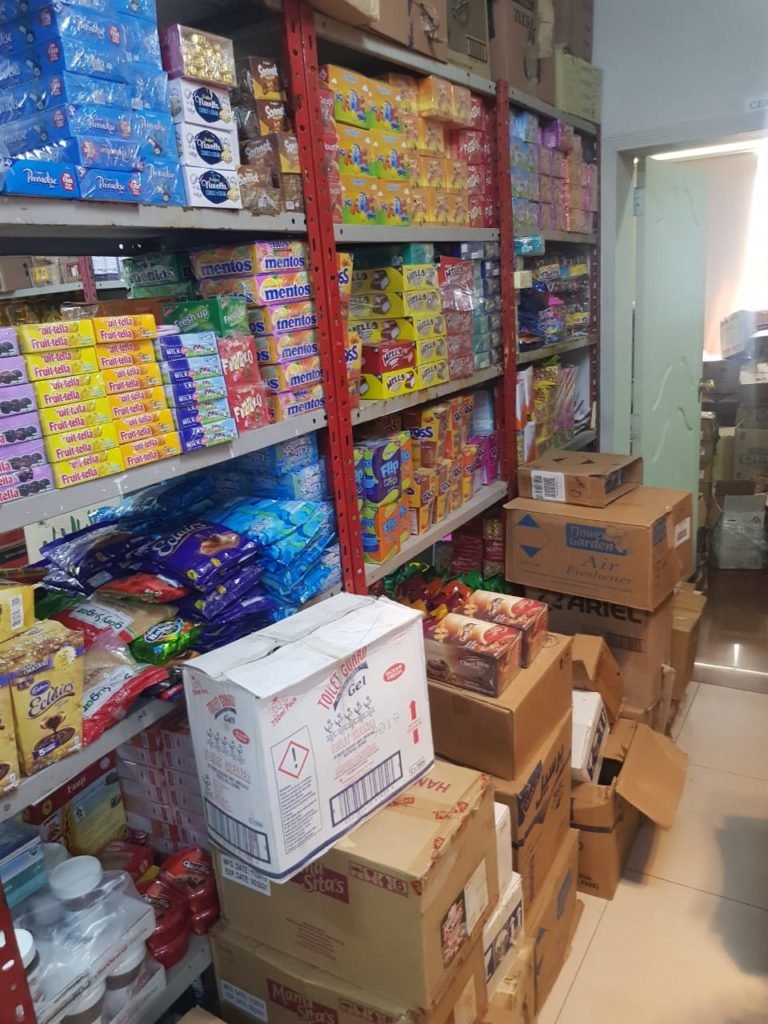
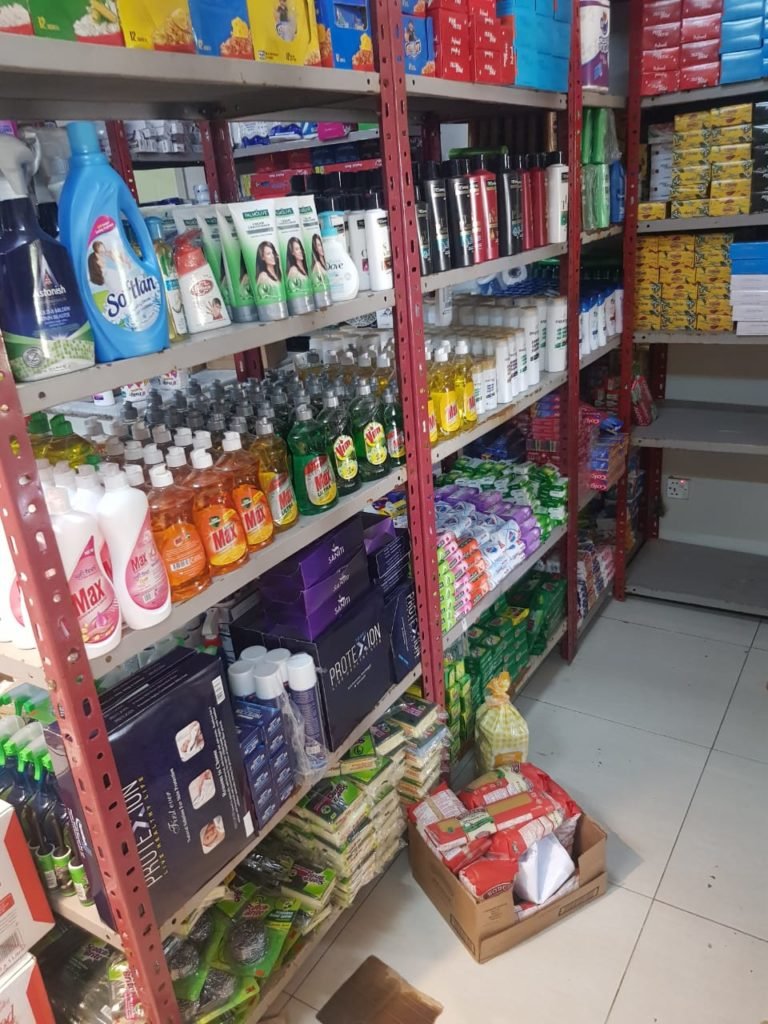
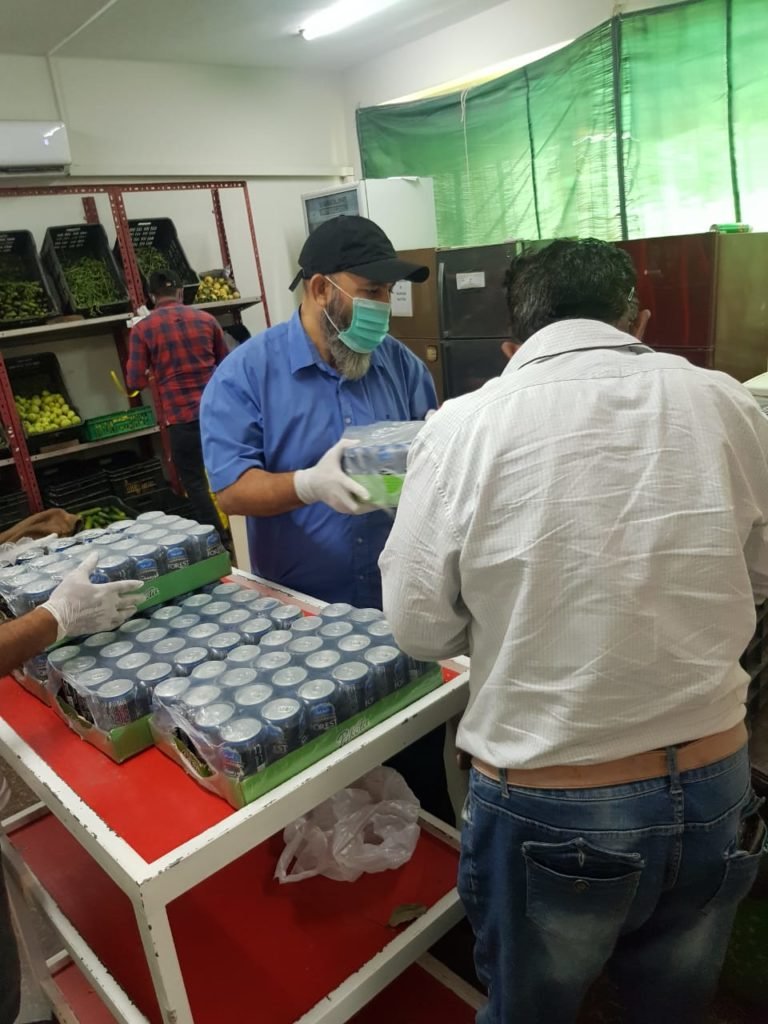
Speaking to The Current about the procedure that follows, Jarrar explained that after the customer places an order on any of their portals – website, application, Whatsapp – the order is processed and their team begins to collect the items. He shared that though they have their own warehouse, they have partnered with other stores, bakeries and meat shops and sometimes depending on the order placed, they have to collect items from different locations to complete an order. Both Jarrar and Bilal Bakhtawari of D Watson, Islamabad said that the app is the most convenient of them all because it mentions the price and availability of products saving the time of both the customers and the stores. Once the order is complete, the riders deliver it.
In this whole process, the rider perhaps has the toughest job.
“We provide the riders with all the necessary precautions, including sanitisers, masks and regular temperature checks, but to what extent can we keep them safe? These guys often have to deliver stuff, come rain, come sun and often have to travel long distances to deliver orders,” says Bilal, adding that if any of the riders feel ill, they are told to immediately get themselves checked and are sent home.
Both Jarrar and Bilal also asserted that their premises are regularly disinfected and cleaned.
While most customers are accommodating and patient and are willing to overlook delays and incomplete orders, given the situation, there is a small percentage of them who tend to be unreasonable.
“Customers have been by and large accommodating. Only ten percent of them have issues,” says Shah.
Both business owners explained that they initially faced problems because they were not prepared to manage such a situation as they went from a few orders to a hundred or more orders every day. However, with time they managed to streamline their services by increasing staff and opting for better rider services.
24Seven’s warehouse
Sharing a particularly harrowing experience, Shah shared that someone placed an order from abroad for their loved ones in Lahore using a credit card.
“When the rider went to deliver they said the stuff is not up to the mark and kept the rider hostage, demanding that we refund them the amount in cash. It turned out that the whole situation was a scam. The person from abroad wanted to send money to Pakistan and because all money wiring services were closed, they attempted to use our store to do so.”
“We’ve referred the matter to the police,” he added.
Similarly, Bilal recounting his nightmarish experience shared that a lady placed an order for fruits and vegetables on their app after store timings. He said that the prices of fresh goods are revised daily and when her order was processed the next day, she was informed of the change in prices before confirming her order. However, when the rider went to deliver her order, she claimed that she had cancelled her order. After a whole fuss, it was revealed that her husband was not satisfied with the prices and was not willing to pay for the order because of which she put the entire blame on the management to try to get out of the situation.
Orders being put together at 24Seven’s warehouse
While people in Pakistan still prefer to go and buy their groceries in person, online shopping is slowly but steadily getting popular, especially among those who lead fast-paced lifestyles and have limited time.
On whether this is feasible in Pakistan or not, Jarrar is positive that it is. However, Bilal feels that until online payments like Paypal don’t come to Pakistan, online businesses won’t flourish.
“As we have observed in the past couple of weeks, the market for online shopping is definitely promising. However, in my opinion, it won’t flourish until a proper payment system is put into place,” says Bilal. “We often receive bogus orders with Cash on Delivery because of which our business suffers. People place orders but when our rider goes to the address, there is no one to receive the order.”
“Until online payments come to Pakistan, online businesses will not flourish.”
Restaurants, hotels and ‘nanbais’ in Karachi have been granted permission to operate from 8 am to 5 pm.
According to a notification issued by Commissioner Karachi, restaurants will be allowed to offer takeaway and home delivery services. However, dine-in is strictly prohibited.
The government has also issued a number of SOPs which need to be followed. This includes following the proper procedure to ensure everything is disinfected. Every worker should be checked before entering the workplace.
Commissioner Karachi has also made wearing face masks mandatory for those going outside their houses.
“Face masks are mandatory for all people who come out of the houses for a valid reason or are exempted during the lockdown. The mask shall cover the nose, mouth and chin.”
If symptoms of flu, cough or fever are found, he/she may be referred to the hospital immediately, the notification read.
Meanwhile some areas of Karachi, where a large number of COVID-19 cases have been reported have been completely sealed by the Sindh government.