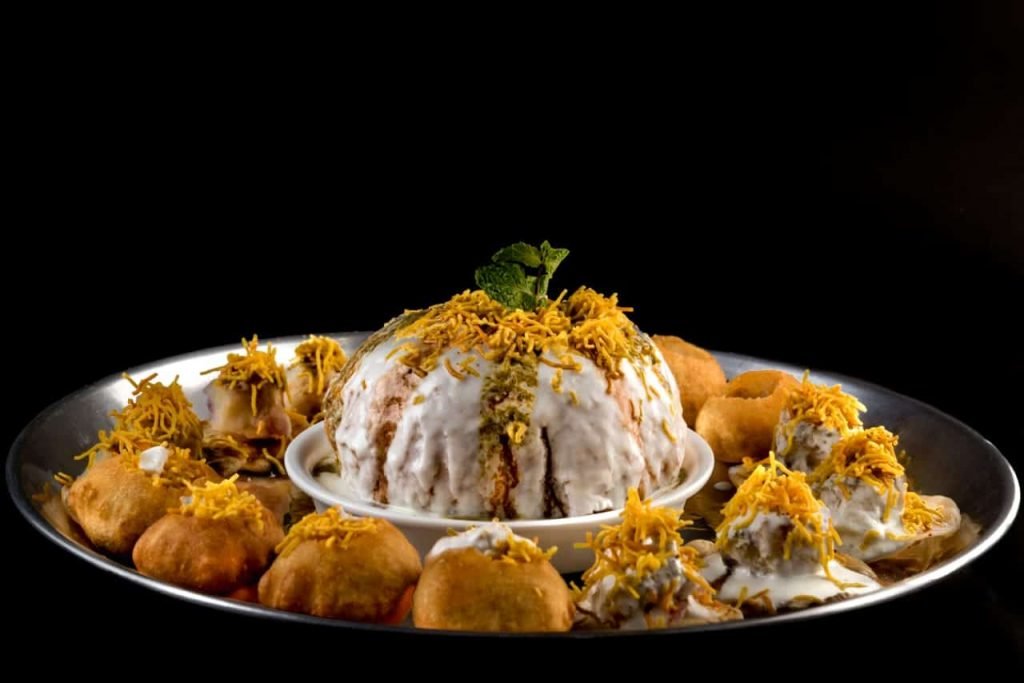
Tag: home-life

  • Mummies here’s how you can look fresh when dropping your kids to school

    Mummies here’s how you can look fresh when dropping your kids to school

    School season is back and children of all ages are getting ready to go back to school in a couple of days. Even more nervous than the children are possibly the first-time mummies who will be going to drop their children to school. More than anything, it is the pressure of looking good and presentable which makes them all the more anxious. Lucky for you, we have three easy hacks which will make mummies of all ages look fresh.

    Dab concealer on your dark circles

    A mother is the one person in the household who probably gets the least amount of sleep. To look awake and fresh, just dab a bit of concealer on the undereye area and blend with your middle finger.

    Use lipstick to give a light flush

    For that flushed, early morning look take a bit of your favourite pink lipstick and blend into your cheeks. Use the same on your lips or you can use a tint for the lips.

    Brush your eyebrows

    Defining your eyebrows can make you look more put together. Just take some tinted eyebrow gel and brush your eyebrows with it.

    There, you’re done.

    Doing all this will barely take more than five minutes and in the end you’ll feel fresh and more confident.

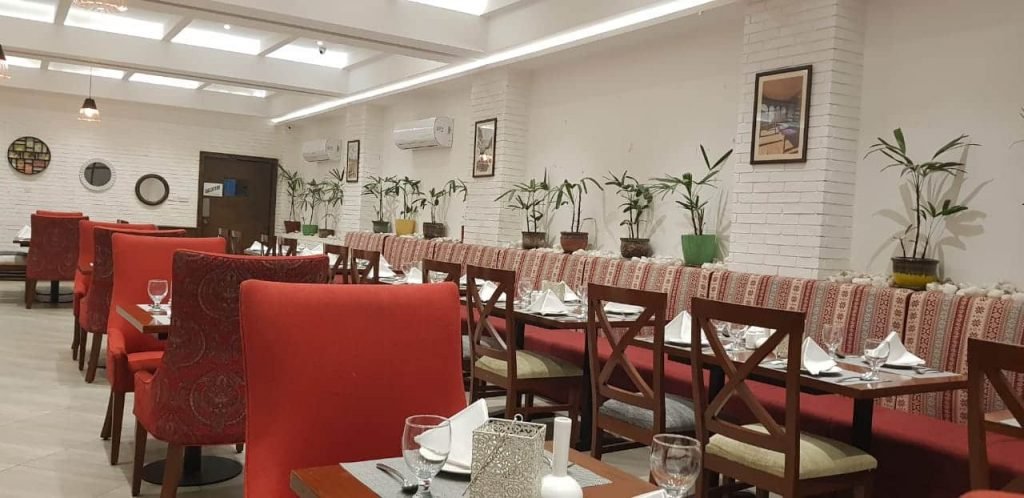
  • Bombay Chowpatty Faisalabad is pleasantly surprising

    Bombay Chowpatty Faisalabad is pleasantly surprising

    We’ve all visited Bombay Chowpatty in Lahore several times but we recently got a chance to visit Bombay Chowpatty in Faisalabad and it made us very happy.

    Faisalabad’s Bombay Chowpatty is not a fast-food joint but is a proper restaurant offering a wide variety of cuisines. From Continental to Pakistani, from South Indian dishes to thaals (combos) of all sorts, the food there is quite diverse along with being delicious. Located at Kohinoor City in Faisalabad, it is also centrally located. The ambiance is also very nice and service on the dot.

    Being a chaat lover, I first ordered a Raj Kachori and a chaat platter. We were not disappointed. Everything was fresh and crispy with just the right amount of spices and sweet tangy flavour. The serving sizes were also quite big.

    Bombay Chowpatty is famous for its dosas, which is a desi version of a crepe. Making dosas is an art and if you have had dosas at a proper South Indian place, you usually don’t find dosas elsewhere authentic. But the dosas at Bombay Chowpatty were crisp and well-made. The good thing about this branch is that they customise the dosas. We had children with us who wanted cheese dosas and that’s what they got even though cheese dosa isn’t on the menu. We, on the other hand, ordered masala dosas and they were finger-licking good!

    If you’re a tea lover, you would enjoy their refreshing Karrak Chai and if you’ve got a sweet tooth, you won’t be disappointed with their desi desserts. We didn’t try out their western desserts – cakes and ice-cream – as we had had too much of desi meetha.

    If you’re in Faisalabad, we highly recommend Bombay Chowpatty. Despite visiting the place after a shaadi and eaten already, we couldn’t resist their delicious dishes and stuffed ourselves till we literally couldn’t breathe. You won’t regret it.

  • Secret to a happy marriage!

    Secret to a happy marriage!

    A woman in UAE has asked for divorce because her husband loves her a lot and is too obedient.

    Most women would not want any other type of husband — one who cooks, cleans and does not argue at all! But a wife in the UAE has sought divorce for this very reason!

    Apparently, she felt choked by his affection and wants to divorce him. She says her husband’s love was choking her.

    “He never yelled at me or turned me down,” the woman told the court.

    “I was choked by extreme love and affection. He even helped me clean the house.”

    In their year-long marriage, the husband sometimes cooked for her and there were no disputes.

    The wife complained that her life turned into “hell”. Why? Because the husband was so good to her.

    “I long for one day of dispute, but this seems impossible with my romantic husband who always forgave me and showered me with gifts.

    “I need a real discussion, even an argument, not this hassle-free life of obedience.”

    The husband said he did nothing wrong. “I wish to be a perfect and kind husband,” he said.

    The husband has asked the court to advise his wife to withdraw the case.

    “It’s not fair to judge a marriage from the first year, and everybody learns from their mistakes.”

    The court ordered the adjournment of the case to give the couple a chance at reconciliation.

  • How to save on your electricity bill?

    How to save on your electricity bill?

    The ever-increasing inflation has disturbed our budget to no extent. And considering its the summers, the electricity bill has practically sky-rocketed just like the mercury making it a feat to pay.

    Here are four ways you can save on your electricity bill.

    Save on your appliances

    Electronic devices consume energy even when they are not in use but plugged in. Unplug every electrical device that’s not needed. Moreover, fit LED lights instead of traditional bulbs as they use less energy and last longer than bulbs. Bulbs also produce more heat and make your home warmer.

    Save on your AC

    Set the air-conditioning unit to “Auto” rather than the “On” mode, as this will regulate room temperature more effectively.

    Don’t keep your AC’s temperature lower than 24 degrees celsius. Each degree cooler can represent the equivalent of a nine percent savings on cooling costs.

    Ensure your air-conditioners are well maintained by regularly getting them checked from a good maintenance company. It is important to ensure that air filters are clean, refrigerant levels are maintained and electrical connections are working properly. If they’re not checked everyday issues have the potential to cause bigger problems which will eventually contribute to your expenses.

    Save when
    doing laundry   

    Around 90% of a washing machine’s energy is used to heat the water, so washing your clothes at 30-40C will help keep your electricity bill less. Another tip is don’t start the machine until you have a full load.

    Use less
    energy during peak hours

    According to LESCO and K-electric, these are the peak and off-peak hours so try to use less energy during these hours.

    LESCO Peak and Off-Peak Hours
    K-Electric Peak and Off-Peak Hours
  • Savour Foods sealed, fined after staff misbehaves with officials of climate ministry

    Savour Foods sealed, fined after staff misbehaves with officials of climate ministry

    Popular food joint Savour Food has been sealed and fined Rs 200,000 after their staff “manhandled, pushed and misbehaved” with officials of the Ministry of Climate Change and Pakistan Environmental Protection Agency.

    The action was taken after videos of the incident, which show a man being pushed and shoved, went viral on social media. Minister for Climate Change Zartaj Gul Wazir said that nobody is above the law and “mishandling with ministry officials will not be tolerated.”

    According to details, officials from the ministry went to the food outlet for inspection and implementation of their new ‘no plastic bags’ policy. When the officials questioned the staff, an argument ensued following which a scuffle broke out between the two parties.

    After the video of the incident went viral, people began to call for a boycott of the food outlet and arresting of the owners.

    https://twitter.com/MHBHanif/status/1163808758427860992?s=20

    Savour Foods is an extremely popular food spot in the twin cities of Islamabad and Rawalpindi. Their signature pulao kabab is a local favourite.

  • Tips to minimize water damage from a flood

    Tips to minimize water damage from a flood

    As
    monsoon season is in full swing and there is also a flood alert after India
    releases water in River Sutlej.  Most of us are mostly worried that water
    is going to get into our houses.

    Here are the ways you
    can protect your home.

    Before the flood: Prevent

    Clean the drains and
    gutters

    Seal the cracks (if
    any) in your house with plaster of Paris.

    Don’t dispose of fats,
    oil, grease or other objects in your sinks or toilets as they block the
    drainage systems.

    Electrical equipment
    should be at least one foot above flood level to help reduce the risk of
    electrical damage.

    Moving your valuables
    items and documents to the first or second floor will help to protect them. Or
    try to put them on higher places if you live on the ground floor.

    During
    the flood: Protect

    If the flood is imminent then these are the ways that might help to minimize the damage

    Open up windows and
    door (if it is not raining) to allow air to circulate through your home and dry
    things out

    Shut off all the
    electrical appliances if safe.

    Try to place handy electrical appliances to wooden or cement blocks.

    After a flood: Restore

    Remove the water and
    damaged material.

    Disinfect and dry
    every flood-contaminated room.

    Keep fans running. Make sure switches are dry and safe to touch.

    Most
    importantly follow all the instructions by the official departments of the
    government.

  • The Laddoo Diet

    The Laddoo Diet

    There is a new diet in town. It’s called the ‘Laddoo Diet’. We all love laddoos — especially the moti-choor variety — but we thought it only piles up pounds! Well, maybe that’s not the only thing it does. The Laddoo Diet can also lead to divorce.

    An Indian man from Uttar Pradesh has sought divorce on the grounds that his wife was feeding him laddoos every day.

    The couple has been married for 10 years and they have three children. Unfortunately, due to the advice of a tantric (shaman), the UP man’s wife was giving him four laddoos to eat in the morning and four laddoos in the evening. He was not allowed to eat anything else in between. The man approached a family court and said that he wasn’t feeling well for some time and his wife approached the ‘tantrik’ who asked her to make her husband eat only laddoos.

    Officials at the family counselling centre don’t know what to do about the wife’s superstitions.

    “We can call the couple for counselling, but we cannot treat the woman for being superstitious. She firmly believes that laddoos will cure her husband and is unwilling to accept otherwise,” said a counsellor.

    Well, who thought yummy sweets can actually lead to divorce!

  • 6 surprising sources of calcium other than milk

    6 surprising sources of calcium other than milk

    Everyone wants strong bones that will last a lifetime. Calcium is very important for both children and teens, as well as adults.

    Here is a table that will give you an idea about the number of serves of calcium-rich foods your child needs every day.

    Serves Per Day

    2-3 Years 4-8 Years 9-11 Years 12-13 Years 14-18 Years
    Boys 1.5 2 2.5 3.5 3.5
    Girls 1.5 1.5 3 3.5 3.5

    We all know that dairy products are rich in calcium but most children are not very fond of dairy products. Here is a list of food items that are rich in calcium.

    Ice cream

    You all will be surprised to know that ice cream also has a lot of calcium. Though milk and yogurt are definitely a better choice.

    Almonds

    While almonds are known to boost brain power and memory, they are also a very good source of calcium.

    Green Vegetables

    Many green vegetables such as spinach, okra and sweet potatoes are an excellent source of calcium.

    Cereals

    Cereals are a good way of adding calcium to your/ your child’s diet. Ragi, brown rice, etc are a good source of calcium.

    Fish and Meat

    Fish such as tuna, salmon, are an excellent source of calcium, while meat such as beef is also a good source.

    Eggs

    Eggs are amongst one of the first few food items that you may
    give to your baby. Eggs are rich in calcium and can be used in various forms
    and dishes.

  • Rain damages ancient Buddhist heritage site in Taxila

    Rain damages ancient Buddhist heritage site in Taxila

    Recent rains in the country have not only created hurdles for human life, but old heritage sites are also being affected by the storms. First, the small wooden entrance gate to the Shahi Qila in Lahore was damaged due to the rain and now the rains have damaged an ancient Buddhist heritage site in Taxila.

    As per details, the double-headed eagle Stupa located at Sirkap is crumbling fast. An architectural marvel, the double-headed eagle Stupa is made of Kanjur stone and was originally plastered with lime.

    The second city of ancient Taxila, Sirkap is significant in the archaeological history of Pakistan as it is among three of the 18 Buddhist sites of the Taxila valley with intact sculptures. The site which has relics dating back to the Achaemenid, Greek and Kushan periods has been classified as World Heritage Site by the Unesco.

    According to the curator of Taxila Museum, Sirkap was founded by the Bactrian King Demetrius, who conquered the region in the 180s BCE. The city was expanded by Gondophares who also built the famous double-headed eagle Stupa and the Temple of the Sun.

    Apart from the double-headed eagle Stupa, the recent torrential rains have also caused severe damages to scores of priceless stucco sculptures of the Buddhist period (2–5th century AD).

    The government and others responsible have not taken the necessary measures to preserve and protect these heritage sites, which these sites may soon cease to exist if things continue to be like this.

    Irshad Hussain, the deputy director of the archaeology department, said the department was facing a shortage of staff from the last 15 years as no recruitment has been made and employees were retiring every year after reaching their age limits. He said after the 18th amendment the site had been handed over to the provincial government. However, he added that the department had planned to erect a protective roof over such endangered stupas to save them from natural elements such as rain.

  • All you need to know about Congo virus

    All you need to know about Congo virus

    Crimean-Congo Hemorrhagic fever, commonly known as Congo fever, is a viral disease that spreads through tick bites. The virus infects wild as well as domestic animals like sheep and cattle.

    Humans are infected when they come in direct contact with blood or tissues from infected animals or bites of infected ticks. Crushing of infected tick could also result in infection. The infection spreads to other people if they come in contact with the patient’s infected blood or body fluids.

    According to Agha Khan Hospital, Congo virus does not survive high temperatures, and well-cooked meat does not pose any risk of transmission of the virus.

    What are ticks?

    Ticks are scientifically classified as Arachnida (a classification that includes spiders). Ticks require blood meals to complete their complex life cycles.

    Tick

    Symptoms

    A person infected with the virus may show general symptoms like high fever, headache, joint and muscle aches, nausea, stomach pain, sore eyes and loose motions. He may suffer from severe bleeding, jaundice, and photophobia (sensitivity to light).

    If you experience any of the above symptoms and suspect that you may have been exposed to, or if you work in an environment where Congo virus is likely present, seek medical advice immediately.

    Prevention

    • Reducing the risk of tick-to-human transmission:
      • Wear protective clothing (long sleeves, long trousers)
      • Wear light-colored clothing to allow easy detection of ticks on the clothes
      • Use approved repellent on the skin and clothing
      • Regularly examine clothing and skin for ticks; if found, remove them safely
      • Avoid areas where ticks are abundant and seasons when they are most active.
    • Reducing the risk of animal-to-human transmission:
      • Wear gloves and other protective clothing while handling animals notably during slaughtering and butchering procedures.
      • Routinely treat animals with pesticides two weeks prior to slaughter.
    • Reducing the risk of human-to-human transmission in the community:
      • Avoid close physical contact with CCHF-infected people;
      • Wear gloves and protective equipment when taking care of ill people;
      • Wash hands regularly after caring for or visiting ill people.