Tag: hospitals

  • Sarmad Khoosat calls out ‘fashion police’ in hospitals

    Sarmad Khoosat calls out ‘fashion police’ in hospitals

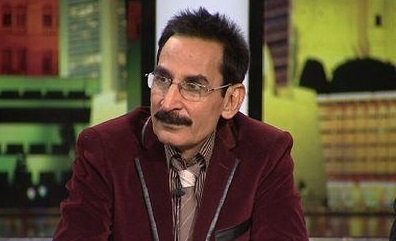
    Award winning director Sarmad Khoosat had a bad run in with hospital administration and he’s venting out anger.

    He recently spoke out about a frustrating experience at a hospital, sharing on Instagram that he was scolded for wearing knee-length shorts while visiting the medical facility. Khoosat questioned why hospitals should control what visitors wear, especially when they’re just there to see someone, not for treatment. He recalled being asked to change into old, uncomfortable pants pulled from a dusty drawer by a guard.

    The actor criticized what he saw as unnecessary policing, saying, “The policing and moral policing in this country are like a circus.” He pointed out how silly it is to worry about clothing instead of taking care of patients in a hospital, saying, “I hope they don’t judge patients by their clothes.”

    Khoosat found it ironic that he was stopped because there were women around, sarcastically saying, “Can I ask the ladies to focus on their loved ones’ health instead of worrying about me?”

    His experience highlights bigger issues about personal freedom and unfair rules in public places. He hopes for more sensible rules in hospitals and everywhere else.

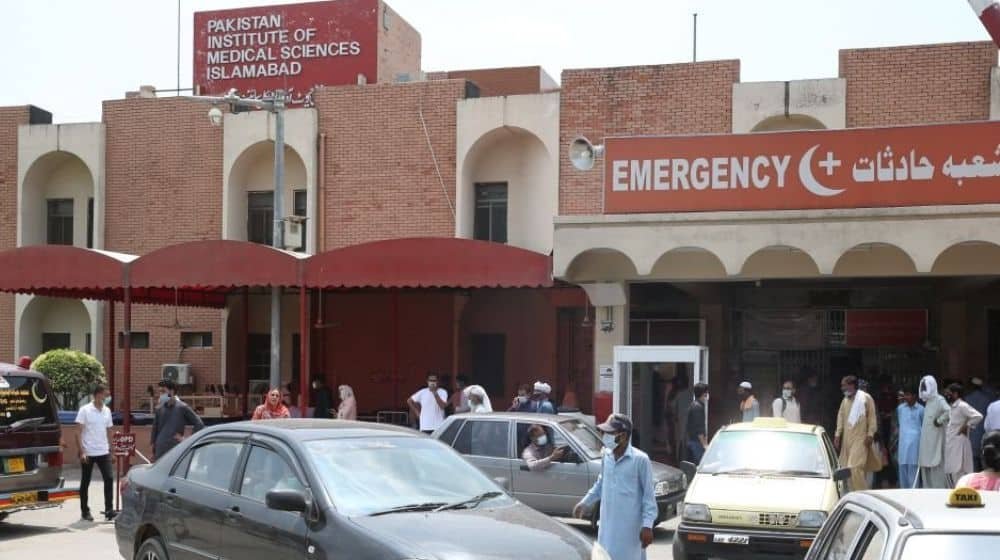
    On his Instagram story, Sarmad Khoosat wrote, “In what world are hospitals supposed to police what you are wearing? Not here for treatment but to meet a patient only. I was wearing shorts (not too short either – knee length), and the management told me to either go back or wear these pants, which emerged from a guard’s dusty drawer. The fit and the look of them would have made me look vulgar. I hope they don’t treat patients in wards and rooms based on their clothes. It’s a hospital for god’s sake. This country’s policing and moral policing are truly a circus. The guard said, “There are ladies inside!” May I please request the said ladies to focus on their loved one’s health and treatment and not be tempted by me? Not naming the hospital because I am sure such ridiculous laws are the easiest and quickest to implement across the country. Also: I entered through the emergency gate and the guard didn’t even bother asking me if I had an emergency or not.”
  • Parvez Elahi to be placed under house arrest within 15 days

    Parvez Elahi to be placed under house arrest within 15 days

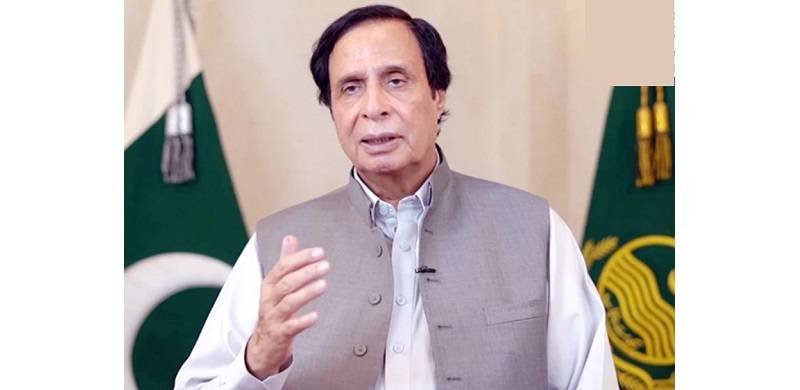
    The Islamabad High Court (IHC) has directed the Interior Ministry to complete the process of placing Pakistan Tehreek e Insaf (PTI) leader Chaudhry Parvez Elahi under house arrest in 15 days.

    The court approved the petition, seeking the transfer of the senior politician to a hospital or declaring his residence a sub-jail.

    The wife of the former chief minister Punjab, Qaisra Elahi, submitted a petition for the transfer of Parvez Elahi to a hospital or to declare his residence a sub-jail.

    IHC’s Justice Arbab Muhammad Tahir heard the petition and issued the order. He also directed the superintendent of Adiala jail to provide all the medical facilities to the veteran politician.

    “Parvez Elahi is not convicted. He is a 78-year-old undertrial prisoner, and medical facilities should be provided according to his satisfaction,” the court order read. It added that the politician should also be allowed to undergo a medical examination by a personal physician every week in jail.

  • PMA refuses to appoint military officials at public hospitals

    PMA refuses to appoint military officials at public hospitals

    The Islamabad chapter of Pakistan Medical Association (PMA) on Monday recommended to the federal health ministry to not appoint serving military officials as executive directors for Pakistan Institute of Medical Sciences (PIMS) and Federal Government Polyclinic Hospital.

    According to Geo News, the PMA condemned the letter of appointment of serving military officials sent by the federal health ministry.

    In response to a letter, PMA officeholders warned the federal health ministry about appointing serving military officers to manage public sector health institutions.

    The officials expressed strong disapproval of replacing federal government officials with military personnel, emphasising that such a move would be unacceptable under any circumstances. Furthermore, they mentioned that even military authorities would be unwilling to endorse the action initiated by the federal health ministry.

    On the other hand, a spokesman of federal health ministry said earlier that the appointment will be conducted as per recruitment rules, adding that the government believes in merit.

    The health ministry’s spokesman further stated that the government believes in providing best health facilities to Pakistanis by appointing competent officials.

  • Inquiry initiated in ‘500 dead bodies on Multan hospital rooftop’ case

    Inquiry initiated in ‘500 dead bodies on Multan hospital rooftop’ case

    A six-person team has been assembled by the South Punjab Health Department on Thursday to look into the matter of hundreds of remains that were found on the roof of Multan’s Nishtar Hospital.

    According to reports on social media, up to 500 bodies were allegedly found on the rooftop of the hospital, however, the exact number remains unknown.

    Earlier, Punjab Chief Minister’s Advisor, Chaudhry Zaman Gujjar, visited the hospital and discovered numerous putrid bodies on the hospital roof. He ordered health authorities to take action against the concerned staff and instructed that the abandoned bodies be cremated.
    Dawn was informed by a student at Nishtar Medical University that the students were using the bodies for medical research. He claimed that the victims had already been put to use in these experiment and had been left on the roof so that bones and skulls could be removed for future medical study.

    Moonis Elahi shared a message from the Head of Department (HOD) of Anatomy at Nishtar Medical University Multan.

  • Lahore: 550 doses of COVID-19 vaccine go missing from one hospital, 350 spoiled at another

    Lahore: 550 doses of COVID-19 vaccine go missing from one hospital, 350 spoiled at another

    Around 550 doses of the COVID-19 vaccine have reportedly gone missing from Lahore’s Services Hospital, media reports have claimed citing sources at the health department.

    According to the reports, an additional 350 doses of coronavirus vaccines stored at the city’s Government Mozang Teaching Hospital have “gone to waste”, while no record could be found for the nearly 600 missing ones.

    The missing vaccines have been administered to important personalities, bureaucrats, and their friends, sources at the health department said, adding that Federal Minister for Housing Tariq Bashir Cheema of the Pakistan Muslim League – Quaid (PML-Q), along with his wife, also received the COVID-19 jab from the missing doses.

    On the other hand, the principal of the Services Hospital says that the vaccines haven’t disappeared but there has been an issue with the compilation of records.

    Provincial Health Minister Dr Yasmin Rashid maintains that the government is carrying out an audit of the vaccine doses and a report related to that will be submitted soon.

    Meanwhile, the medical superintendent of Mozang Teaching Hospital has been suspended after 350 coronavirus vaccine doses stored there were spoiled.

    According to a notification of the Punjab Specialised Healthcare and Medical Education Department dated March 29, the MS, Dr Munir Ahmad Ghouri, was “placed under suspension, under Section 6 of PEEDA Act, 2006, on accounts of inefficiency and misconduct, with immediate effect”.

    A senior official of the provincial health department said that the medical superintendent was suspended after 350 coronavirus vaccine doses, stored in the refrigerator at his office were spoiled.

    “He stored the doses in the refrigerator in his office and then went on leave,” the official added.

  • Iftikhar Thakur to set up hospital for children with thalassaemia

    Iftikhar Thakur to set up hospital for children with thalassaemia

    Iftikhar Thakur has expressed his desire to build a hospital for children suffering from thalassemia in his native town Mian Channu.

    According to reports, the veteran comedian has said that he wants to build a state-of-the-art facility that would provide free of cost treatment to children with thalassaemia. He said that work on the hospital, which would also provide liver transplant facility to the patients in need, would begin in January 2021.

    Thakur said he decided to build the facility while doing charity work at a hospital in Multan. He shared that he felt that there was a lack of treatment facilities for children with thalassaemia in the country.

    “When I worked on this subject, I came to know that there were mobile hospitals for such children [in some countries],” said Thakur.

    The comedian further said that later during a show in the United Kingdom (UK), he appealed for donations for a mobile hospital, adding that responding to his appeal one of his fans donated funds for the facility that was working here. Thakur said over 25,000 children were registered as thalassaemia patients only in south Punjab.

    Thakur also hailed late journalist, poet and playwright Munno Bhai for establishing the Sundas Foundation which works for children with thalassaemia.

    Meanwhile, responding to a question, Thakur suggested that in order to bring improvement in the local commercial theatre, there should be proper script scrutiny committees to eliminate “vulgar content”.

    To another question regarding the Artist Support Fund, Thakur suggested that the government should create job opportunities for artistes, instead of giving them Rs5,000 per month scholarships.

  • Are Punjab’s hospitals ready to continue dealing with COVID-19?

    Are Punjab’s hospitals ready to continue dealing with COVID-19?

    An additional burden has been placed on hospitals due to the sharp increase in confirmed COVID-19 cases across the country, including Punjab where the number of coronavirus cases is way past 38,000 and is likely to cross the 40,000 mark by tomorrow (Tuesday).

    But while Punjab Health Minister Dr Yasmin Rashid says the “situation is still not alarming” and Special Assistant to the Prime Minister (SAPM) on Health Dr Zafar Mirza says authorities have “ample resources to deal with coronavirus patients so far”, here’s what the situation in the country’s most populous province looks like:

    No. of Hospitals No. of Beds No. of HDUs (High Dependency Units) No. of Ventilators
    249 9644 944 568

    The Punjab government has allocated 249 hospitals for COVID-19 patients with 9,644 beds, of which 53 hospitals (21.2%) are private. According to data provided to The Current by Punjab Health Department, 7,346 beds are vacant so far across the province as most people are choosing to quarantine themselves at home amid reports of the dreadful conditions at government facilities.

    While the availability of beds is not yet an issue, other necessities do not seem up to the mark.

    As per estimated stats, almost 2,272 (7.3%) patients in the province are admitted to different hospitals. Of the total 2,272, at least 497 (21.8%) patients are in Intensive Care Units (ICUs) or HDUs, which means they are in a critical condition.

    Almost 1,500 beds were allocated by the government for ICUs and HDUs, of which 473 (30%) are at private hospitals, or so the authorities claim.

    When contacted by The Current, Lahore’s Shalamar Hospital, which according to official claims is supposed to be treating at least five coronavirus patients, refused to share any details pertaining to treatment or costs, saying no infected persons were being treated by the hospital. The response received from Sargodha’s Central Hospital was not that different either, even though the government claims to have mandated it to treat at least three patients.

    By the time this report was filed, 21% of patients admitted to hospitals were reported to be critically ill. If a mere 5% of patients visiting hospitals need HDUs or ventilators, within the next two weeks, the healthcare system of the country’s most populous province could collapse, suggests the current number of life-saving facilities available in Punjab.

  • Surge in number of dead on arrival, near-death patients at Karachi hospitals amid COVID-19

    As the country, especially Punjab and Sindh, remains in the grip of the coronavirus pandemic, it has emerged that the number of deaths at Karachi hospitals has recorded a significant increase with a large number of patients being brought in dead or in a near-death condition.

    According to The News, over 300 such patients were brought to both public and private sector hospitals within the past two weeks. All of them were either declared dead on arrival (DOA), or showed COVID-19 symptoms.

    The report in the English daily quoted a doctor on emergency duty at Jinnah Postgraduate Medical Centre (JPMC) as saying that a 35-year-old woman was brought in dead. An X-ray revealed that she was suffering from some respiratory disease as a large patch could be seen on her lungs.

    He said the report was sent to a senior pulmonologist treating coronavirus patients, who said that it was most likely a case of COVID-19.

    Doctors also told the media outlet that only a few such cases could be examined in this regard as a majority of deceased patients could not undergo any tests or an autopsy.

    A critical care specialist at JPMC said that the number of patients, who either died on arrival or within a few hours, rose every day for the past few weeks. The patients were mostly 45 to 60 years old.

    Within the past 15 days, 109 patients have been brought in dead and 90 others were brought in a very critical condition and died mysteriously in a very short time at JPMC.

    While private hospitals are reluctant to share any details in this regard, they have confirmed that the number of pneumonia-like symptoms in patients has been climbing. Indus Hospital sources also admitted that the number of patients in critical condition had soared sharply.

    Sindh Health Department officials, on the other hand, refused to comment on the report.

  • Punjab parks to be converted into field hospitals

    The Punjab government has decided to set up field hospitals at various parks across the province to treat patients who have been infected with COVID-19.

    Asif Mehmood, the chairperson of the Parks and Horticulture Authority, said that these field hospitals will serve as quarantine centres when the burden on hospitals increases.

    He said he has issued directions to administrations of different cities to follow these orders.

    In Rawalpindi, Hilal-e-Ahmar has set up a 200-bed field hospital in a park.

    “These hospital will be used for treating the coronavirus,” Hilal-e-Ahmar chairperson Abrarul Haq said, adding that the hospital has ICU beds and ventilators.

    The United States of America has also done this when its cases were increased and almost 1,000 New Yorkers were killed by the virus.

    Emergency field hospitals were readied in New York’s Central Park and at the home of the US Open tennis tournament when the US death toll from the coronavirus surpassed that of China.

  • ‘Punjab hospitals cured 18 patients with anti-malaria drug, azithromycin,’ says expert

    Chief executive officer (CEO) of the Mayo Hospital and Corona Experts Advisory Group (CEAG) co-chairperson, Professor Dr Asad Aslam, has said that 18 patients of the new coronavirus — COVID-19 — were successfully treated with anti-malaria drug hydroxychloroquine and antibiotic azithromycin during the past five days.

    According to reports, Dr Aslam on Thursday said that eight patients at Mayo Hospital, four at Pakistan Kidney and Liver Institute (PKLI) and five at other hospitals of the province were administered the drugs during the past five days.

    “The patients were administered two tablets of hydroxychloroquine in the morning and two in the evening on the first day whereas, on the remaining four days, they were given one tablet in the morning and one in the evening. Simultaneously, they were given one tablet of azithromycin in the morning and one in the evening for five days.”

    He, however, urged people to avoid self-medication and said these medicines should only be used upon a doctor’s prescription because they could have serious side-effects, including hepatotoxicity (drug-induced liver damage), bone marrow suppression and risk of sudden death, especially when used with azithromycin and many other medications that can affect heart rhythm.

    Meanwhile, the Medical Microbiology and Infectious Diseases Society of Pakistan (MMIDSP) strongly advised against the inappropriate use and hoarding of hydroxychloroquine and chloroquine.

    According to Dawn, they said there was a lack of undisputed scientific evidence and the risk of adverse events. “Hydroxychloroquine and chloroquine should only be used as a therapeutic or prophylactic agent for COVID-19, under the supervision of an expert,” read a press release.

    It further said that the anti-malaria drugs were also used to treat immune system disorders.

    “Both these drugs have a new and emerging role in treatment of COVID-19 pneumonia (off-label) and a presumed role in prevention against the infection.”

    Experts associated with MMIDSP include infectious diseases physicians, clinical microbiologists and nurses who are trained in infection prevention and control.