Tag: HRCP

  • HRCP condemns government’s decision to allow phone tapping

    HRCP condemns government’s decision to allow phone tapping

    The Human Rights Commission of Pakistan (HRCP) has raised concerns about the government’s “unconstitutional notification”, which gives immense power to security agencies to trace calls of any citizen.

    “HRCP is deeply concerned by the recent unconstitutional notification issued by the federal government giving intelligence personnel carte blanche to intercept and trace the calls of any citizen in the interest of ‘national security’,” the commission wrote in a post on X (formerly Twitter).

    On Monday, the federal government gave the authority to Inter-Services Intelligence (ISI) to trace the calls and messages of citizens to deal with terrorism in the country.

  • Maryam Nawaz’s govt stabbed our back after holding negotiations over bill, say journalist leaders

    Maryam Nawaz’s govt stabbed our back after holding negotiations over bill, say journalist leaders

    The Punjab Assembly on Monday approved the highly controversial Defamation Bill 2024 amidst immense opposition from journalists, human rights organisations and political opponents.

    The government considers the bill, aimed at stopping ‘fake news’, necessary while journalist leaders and opposition leaders labelled it “draconian” and a “black law”.

    Earlier in the day, representatives of media bodies met Punjab Information Minister Azma Bokhari and requested her to defer the controversial bill for a few days.

    However, the government decided to bulldoze the bill through Punjab Assembly despite strong opposition.

    Journalist leaders were of the view that the government stabbed them in the back after holding negotiations over the bill.

    Meanwhile, the Human Rights Commission of Pakistan (HRCP) has also expressed grave concern over the defamation bill, saying that it aims to uphold “parallel judicial structures” for defamation cases which goes against the very spirit of the Constitution.

    HRCP remarked that implementation of this bill would be a huge blow to freedom of speech and dissent in our society because there would be no due process or fair trials.

    “This is not a democratic bill. There is no compromise on press freedom,” stated Lahore Press Club President Arshad Ansari.

    He slammed the PML-N-led provincial government for passing the controversial bill and remarked, “You have cheated us. You have trapped us.”

  • As street crime escalates in Karachi, HRCP voices concern

    As street crime escalates in Karachi, HRCP voices concern

    Street crime in Karachi has been on an alarming rise since the beginning of the year and the Human Rights Commission of Pakistan (HRCP) has voiced its concern on the matter.

    Once known as the city of lights, Karachi has long been the victim of street crimes and the breakdown of law and order, making the lives of common people difficult.

    In 2023, over 90,000 crimes were reported in the metropolitan city which was, unfortunately, an increased number as compared to 2022 when 80,000 crimes were registered.

    As per the reports, out of 90,000 incidents a total of 134 citizens were brutally murdered, hundreds injured over resisting robberies, while 411 civilians were killed in various incidents.

    HRCP released a statement on X saying, “The first quarter of 2024 has followed the same pattern. While vigilantism and increased brutality in response by citizens is not the answer, the government’s failure to address rising crime levels is shocking.”

    It further stated that the core reasons for this upward tick in crimes have always been “unemployment” and “economic desperation” which must be urgently addressed to restore law and order in the city.

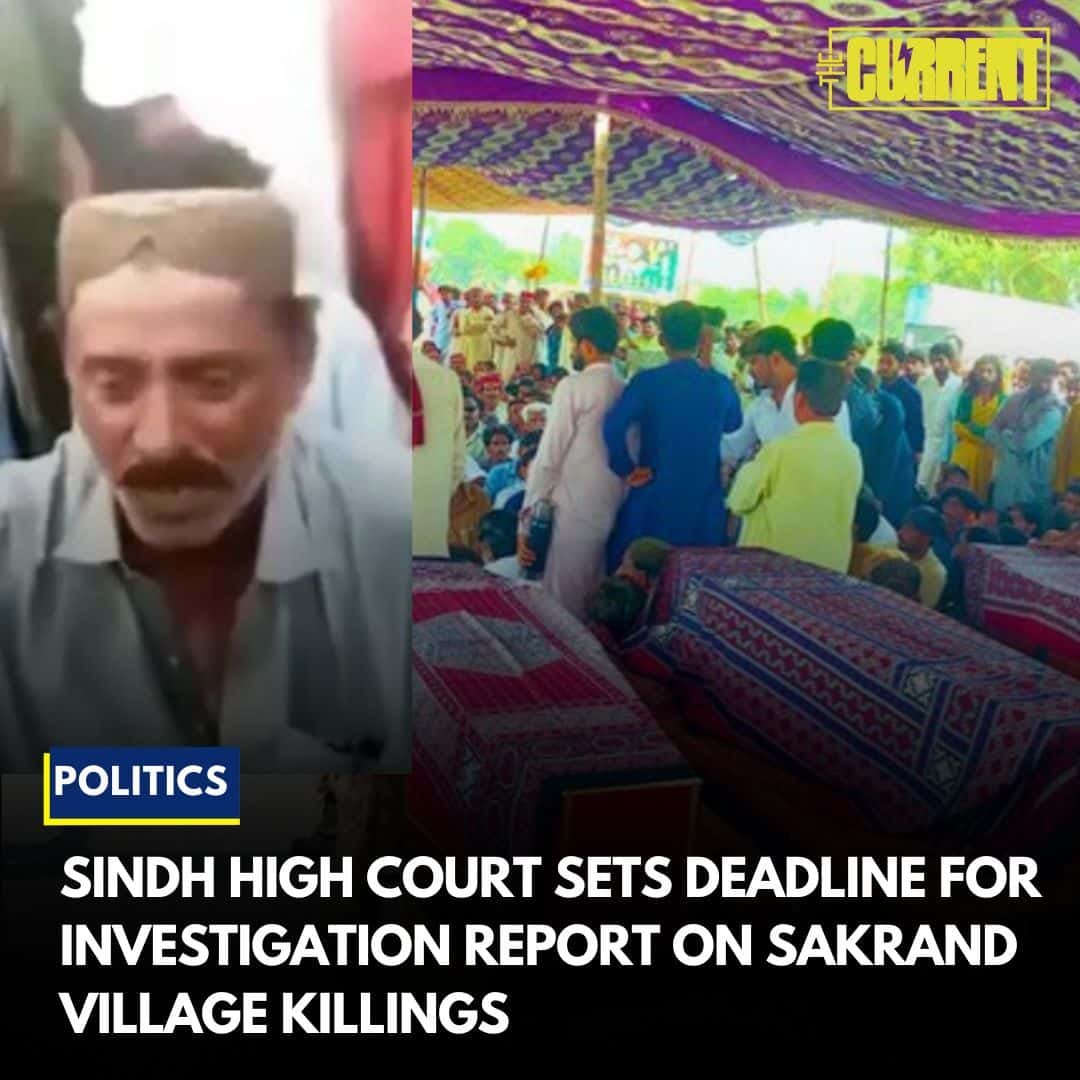
  • Sindh High Court sets deadline for investigation report on Sakrand Village killings

    Sindh High Court sets deadline for investigation report on Sakrand Village killings

    The Sindh High Court (SHC) has instructed the Deputy Inspector General (DIG) of Shaheed Benazirabad police to oversee the ongoing investigation into the killing of four villagers during a law enforcement raid in Sakrand.

    The court has set December 1 as the deadline for the submission of the investigation report.

    Headed by Justice Naimatullah Phulpoto, the two-judge bench also directed the inquiry committee established by the Sindh government to present its findings at the next hearing.

    In the previous court session, the SHC had instructed the in Senior Superintendent of Police (SSP) of Shaheed Benazirabad to produce both the complainants from the First Information Reports (FIRs) and the legal heirs of the deceased villagers.

    SSP Haider Raza appeared at the hearing and submitted a report indicating that notices had been served to one of the complainants, Rajab Ali.

    However, Ali failed to appear before the SHC, prompting the bench to reissue notices and instruct the SSP to ensure the presence of the complainant and legal heirs in the next hearing.

    Representing the petitioners, Advocate Syed Haider Imam Rizvi submitted that a fair investigation was not being conducted in the cases.

    The bench in its order said, “After hearing learned counsel for the parties, DIGP, Shaheed Benazirabad, is directed to supervise further investigation of the cases/FIRs mentioned in this petition and report shall be submitted before the trial court as well as before this court on the next date of hearing. Enquiry committee, constituted by the government of Sindh, shall also submit the report on the next date of hearing”.

    At the previous hearing, the SHC was also informed that the Sindh government had notified compensation for the legal heirs/families of victims.

    Tahmasp Rasheed Razvi and two other lawyers had petitioned the SHC and submitted that in order to harass the villagers and save their own skin, the law enforcement agencies had lodged two FIRs in violation of the apex court’s judgment.

    The Case

    The operation carried out by law enforcement agencies on September 9 aimed to apprehend militants associated with the banned Sindhudesh Revolutionary Army (SUA).

    In the course of the operation, four individuals were killed, and nine others, including four Rangers personnel, sustained injuries.
    A Rangers spokesman released a statement mentioning that the operation was intelligence-based and targeted high-value individuals.

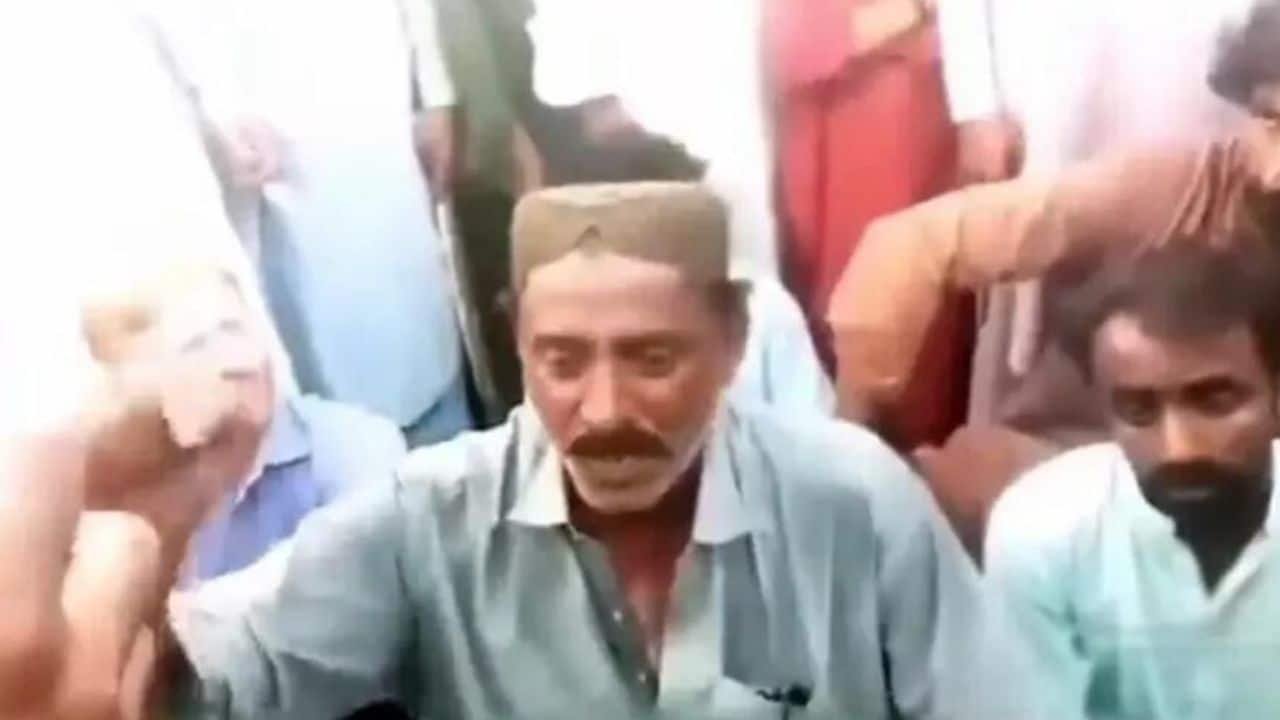
    However, Sindh United Party (SUP) Secretary General Roshan Burriro claimed that those killed were supporters and revealed that a confrontation had ensued between security forces and villagers.

    The situation escalated when law enforcement officers opened fire, resulting in tragic deaths and injuries.
    Subsequently, grieving villagers staged a protest and blocked a section of the National Highway while carrying the coffins of the deceased individuals.

    Protests by the families and relatives of the deceased villagers came to an end after the initiation of the judicial inquiry and the registration of a First Information Report (FIR).

    The FIR was filed under Sections 302 (intentional murder) and 324 (murder attempt) of the Pakistan Penal Code based on the complaint of Rahib Jalbani, the brother of one of the deceased individuals.

    According to the FIR, the security officials arrived at a house in the village and accused those present of being terrorists before opening fire. The complainant’s brother and another individual died on the spot, while several others were injured.

    SUP President Syed Zain Shah clarified that the deceased villagers were not politically affiliated.


  • Inquiry launched into killing of four villagers during operation in Sakrand

    Inquiry launched into killing of four villagers during operation in Sakrand

    Caretaker Chief Minister of Sindh, Justice (retd) Maqbool Baqar, has on Saturday initiated an inquiry into the tragic incident in Sakrand, where four villagers lost their lives during a law enforcement operation. The CM has called for a comprehensive report on the incident within four days.

    The operation, carried out by law enforcement agencies, aimed to apprehend militants associated with the banned Sindhudesh Revolutionary Army. In the course of the operation, four individuals were killed, and nine others, including four Rangers personnel, sustained injuries. A Rangers spokesman released a statement mentioning that the operation was intelligence-based and targeted high-value individuals, as per Dawn.

    However, Sindh United Party (SUP) Secretary General Roshan Burriro claimed that those killed were supporters and revealed that a confrontation had ensued between security forces and villagers. The situation escalated when law enforcement officers opened fire, resulting in tragic deaths and injuries.

    Subsequently, grieving villagers staged a protest and blocked a section of the National Highway while carrying the coffins of the deceased individuals.

    The Human Rights Commission of Pakistan (HRCP) took to X (former Twitter) to demand an independent investigation into the incident, emphasizing the importance of justice for the affected families.

    “The deaths of at least four people, killed allegedly by law enforcement agencies during a security operation in a village near #Sarkand in Sindh, must be investigated independently. While the government should take all possible steps to improve law and order in the province, this in no way excuses extrajudicial killings, which HRCP has always opposed. We urge the caretaker chief minister to take notice of this incident. Those families currently protesting in Sarkand deserve justice. Additionally, the whereabouts of Liaquat Jalbani, a student initially in the custody of law enforcement personnel, who was brought to the village when this incident took place, must be established.”

    CM Baqar firmly stated that such incidents should not occur and formed a three-member committee to conduct a thorough inquiry into the matter, with a mandate to deliver its findings within four days.

    The Sindh Home Department has issued an order appointing Hyderabad Commissioner Khalid Hyder Shah to lead the inquiry committee, assisted by the Shaheed Benazirabad deputy Inspector General of Police (DIG) and Karachi DIG Special Branch. The committee’s task is to ascertain the causes behind the clash that resulted in the loss of lives and injuries to law enforcement personnel.

    Protest by the families and relatives of the deceased villagers came to an end after the initiation of the judicial inquiry and the registration of a First Information Report (FIR).

    The FIR was filed under Sections 302 (intentional murder) and 324 (murder attempt) of the Pakistan Penal Code based on the complaint of Rahib Jalbani, the brother of one of the deceased individuals. According to the FIR, the security officials arrived at a house in the village and accused those present of being terrorists before opening fire. The complainant’s brother and another individual died on the spot, while several others were injured.

    SUP President Syed Zain Shah clarified that the deceased villagers were not politically affiliated, and their bodies will be laid to rest following a funeral in the village. He also mentioned that the villagers agreed to end their protest after authorities committed to conducting a judicial inquiry.

    SUP leaders highlighted that the villagers were ready to visit and inquire about the health of injured Rangers personnel, expressing concern that labeling the villagers as terrorists was a significant stigma. Law enforcement officers had claimed they had acted based on information about miscreants in the area.

  • New HRCP report reveals human rights violations in Northern Sindh

    New HRCP report reveals human rights violations in Northern Sindh

    Human Rights Commission of Pakistan (HRCP) has released a fact-finding report titled “Northern Sindh: In Search of Solutions”, detailing violations of human rights in the region.

    The report is based upon a mission conducted by HRCP in February 2023 in which the team conducted interviews and consultations in Ghotki, Mirpur Mathelo, Kandhkot, Jacobabad, Larkana and Karachi where they met human rights defenders, lawyers, journalists, students, workers, political leaders, government representatives and law enforcement authorities.

    The report reveals the lack of law and order, inaccessibility of education and healthcare, and other barriers on basic rights.

    Due to lack of shelters for survivors, the conviction rates in gender-based violence including physical and sexual assault, abductions, premature burials and murders, cases are low and hence, violence is high. Many cases, in fact, remain unreported. Existing shelters lack medical care and legal assistance, where victims are kept in unpleasant conditions. The rooms are few while the management and staff lacks sensitivity as they are untrained.

    Similarly, religious minorities are at a threat due to discrimination, arbitrary blasphemy accusations and faith-based conversions.
    People of the province, especially those residing in kachi abadis, are vulnerable to organised crime, enforced disappearances, extrajudicial killings and exploitative feudal power systems. This too, is linked to poor governance and lack of accountability.

    Conflicts are further topped by tribal feuds, stagnating the socio-economic development.

    And then, the rehabilitation of flood victims and long-term climate sustainability measures are issues still unaddressed.

    Over and above, law enforcement personnel and fake FIRs against journalists are used a weapon to stop coverage of human rights violations.

  • Gomal University, are you listening? Women deserve the same education as men

    Gomal University, are you listening? Women deserve the same education as men

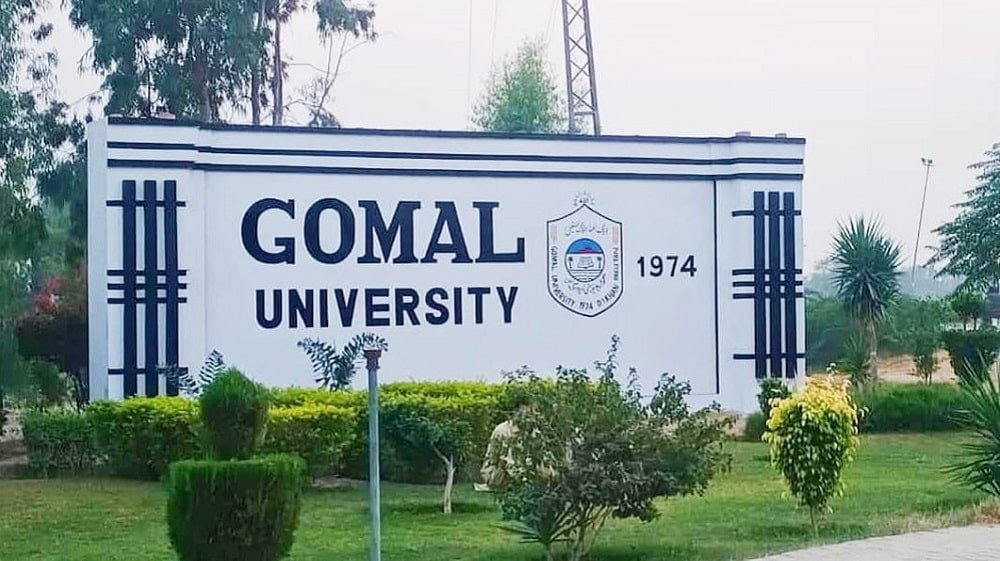
    Gomal University in Khyber Pakhtunkhwa’s (KP) Dera Ismail Khan implemented a total ban on joint gatherings of male and female students on campus. The university issued a notification in this regard on Wednesday, which stated: “Gathering/coupling (male and female) is totally banned in any ground, roads etc. beyond the premises of department. Female students are directed to be careful and limit themselves just in their class rooms and department common rooms.” Interestingly, the notification was issued a day after Valentine’s Day.

    The Human Rights Commission of Pakistan (HRCP) rightly demanded that the notification must be withdrawn immediately. HRCP said that it takes strong exception to the said notification and that “segregation will reinforce a culture of ignorance and inequality”. This notification reminds us of the Afghan Taliban and their regressive mindset. Universities are not supposed to ask women to restrict themselves or limit themselves. In fact, universities are the learning grounds for both men and women so that they are prepared to go out into the world once they finish their education. This is the year 2023, a world where that is progressing rapidly and then comes such actions and/or notifications that make us question our choices towards education and developing critical mindsets. Are we against women’s education or moves like these are done just for restricting and policing women? We must not forget that in a patriarchal society like ours, females are told how to sit how to speak, how to dress. Policing of women’s behaviour is quite common in our country. Every year at Aurat March, the women are told not to raise slogans that challenge patriarchy, that challenge their own lived experiences. They are told by men, who have no idea what it is to be a woman in Pakistan, on what to do, what to say, what words to use for their slogans, what tone to take when they chant those slogans, how to ask for their rights, etc.

    According to the university administration, the decision would help provide a better and safer environment for female students. If it is all about safety, then one thinks of how is it logical that restricting the movement of women would help in providing security. The regressive outlook makes us one wonder if the male-dominated university administration would enforce the same or stricter curbs on the movement of male students and will the same kinds of bans and limitation be put on male students?

    In 2018, the KP government called for banning the entry of male MPs and politicians in girls’ schools as guest speakers. In 2019, the provincial government decided to make the wearing of an abaya or burka mandatory. And now a ban on joint gatherings by a university. We can only hope that those who make such rules understand that universities are a place for education. They act as places where individuals are trained, developed and prepared to be change-makers, influencers and leaders. Imagine how such restrictions and bans will hamper students’ growth and evolution. We hope these regressive double standards end, and both our men and women are treated equally.

  • ‘Fawad Chaudhry’s face shouldn’t have been covered’: PML-N’s Malik Ahmad Khan

    ‘Fawad Chaudhry’s face shouldn’t have been covered’: PML-N’s Malik Ahmad Khan

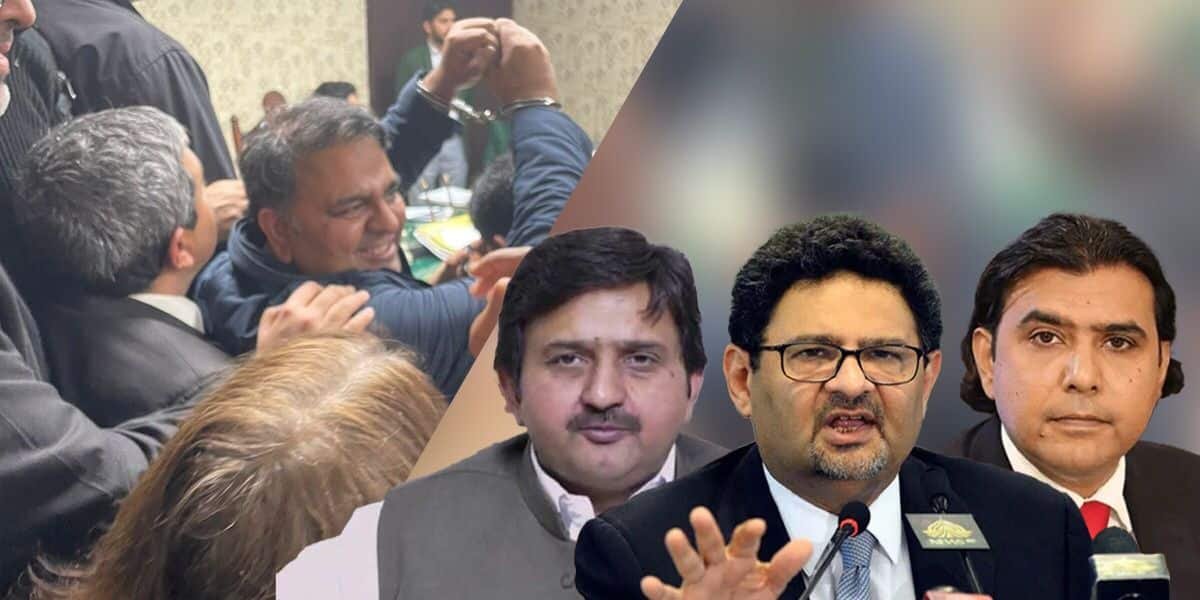
    Special Assistant to Prime Minister (SAPM) Malik Ahmad Khan has said Pakistan Tehreek-e-Insaf (PTI) leader Fawad Chaudhry should not have been presented in court with a white cloth covering his face.

    “If any kind of brutality happens with Fawad, I will condemn it. If due process is not followed, or in case of mistreatment, I will be the first one to [protest]. His face shouldn’t have been covered yesterday. They should have presented him in court openly,” said the Pakistan Muslim League-Nawaz (PML-N) leader while addressing a press conference on Thursday.

    However, Malik believed that Fawad should not have threatened the Election Commission and their families. He said that his relationship with Chaudhry spans 30 years. “The one who threatened the Election Commission of Pakistan (ECP) isn’t the Fawad I know,” said Malik Khan.

    Former Pakistan People’s Party (PPP) leader Mustafa Nawaz Khokhar tweeted that such actions by the ECP will damage the remaining reputation of the institution.

    Former Finance Minister Miftah Ismail also spoke up, tweeting, “Fawad should not have been arrested and handcuffed.”

    Stating that Chaudary was wrong to threaten ECP officials and families, Miftah said he should have instead been served a notice. “IK was wrong to jail us for months without charge only—-because we opposed him.”

    Former Chairman Senate, Mian Raza Rabbani, said that the Chaudhary’s arrest under section 124A, PPC, 1860, for sedition is unwarranted.

    The Human Rights Commission of Pakistan (HRCP), deploring the continuous use of archaic, colonial laws against sedition by successive governments against their political opponents, said that Fawad Chaudhry was the latest in the series.

    “The charges must be dropped immediately, and the government of the day must act more responsibly,” the human rights watchdog has stated.

    Supreme Court Bar Association (SCBA) also strongly condemned Fawad Chaudhry’s arrest and demanded his immediate release.

    SCBA termed his arrest a classic example of abuse of power and political victimisation.

  • Rights champion IA Rehman passes away at 90

    Rights champion IA Rehman passes away at 90

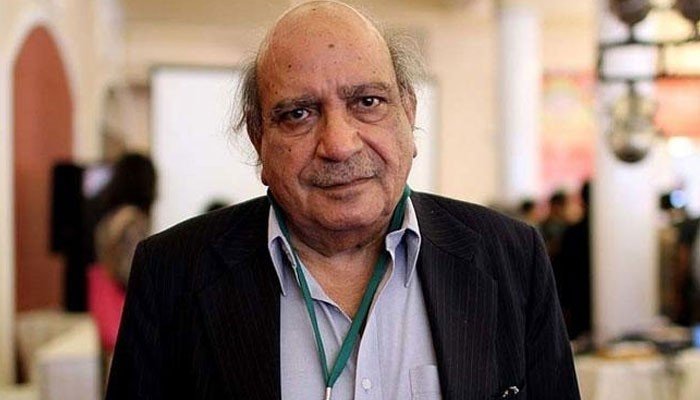
     Journalist and veteran human rights activist Ibn Abdur Rehman aka I A Rehman passed away in Lahore at the age of 90 on Monday.

    He died of old age and high sugar and blood pressure levels, Human Rights Commission of Pakistan (HRCP) Secretary General Harris Khalique said.

    The deceased left behind three sons and two daughters. His wife, Tauseef I A Rehman, had died in 2015.

    A protégé of Faiz Ahmad Faiz, Abdur Rehman became chief editor of the now-defunct Pakistan Times in 1989. He wrote a regular column for Dawn until a few days before his death.

    He was the founding chair of the Pakistan-India Peoples’ Forum for Peace and Democracy (PIPFPD) and a director of the HRCP since 1990.

    Between 1978 and 1988, he remained executive editor of weekly Viewpoint.

    Tributes poured in from all quarters as word of Abdur Rehman’s passing spread.

    “A titan of human rights, Mr Rehman’s integrity, conscience and compassion were unparalleled,” HRCP said.

    Foreign Minister Shah Mahmood Qureshi said the country had lost a “true icon”.

    Political leaders from both the government and opposition, media persons and rights activists are among those expressing grief and sorrow over Rehman’s death on Twitter.

  • HRCP concerned over govt’s decision of asking private sector to import COVID-19 vaccine

    HRCP concerned over govt’s decision of asking private sector to import COVID-19 vaccine

    The Human Rights Commission of Pakistan (HRCP) has expressed serious concern over the federal government’s decision to ask provinces and the private sector to import the coronavirus vaccine.

    As per the details, with the Cabinet Committee on Procurement of COVID-19 Vaccine briefing Prime Minister (PM) Imran Khan on efforts being made to engage more pharmaceutical companies for procurement, HRCP has said that the government’s decision in this regard was not the right step.

    “It is the responsibility of the federal government to provide vaccines at heavily subsidised rates to the poor masses which form a majority of the country’s population,” read a statement by the rights watchdog.

    “The people of lower-income groups are struggling hard to survive the unprecedented economic crisis unleashed by misplaced priorities and pro-rich policies of the federal government. The foreign aid received and funding allocated for fighting the pandemic must be used transparently and spent on vaccinating the citizens,” the HRCP said.

    It also expressed concern after reports appearing in the electronic and social media that some of the agents in Karachi had started pre-booking of AstraZeneca vaccine for Rs 20,000 per dose.

    Earlier, the PM was informed that two vaccines had been registered for emergency use and efforts for fast-track registration of more vaccines were under way.

    He was also told that that the vaccine would be available within the first quarter of the current year.