Tag: HSD

  • Govt expected to increase petrol price by Rs3.5 for first half of March

    Govt expected to increase petrol price by Rs3.5 for first half of March

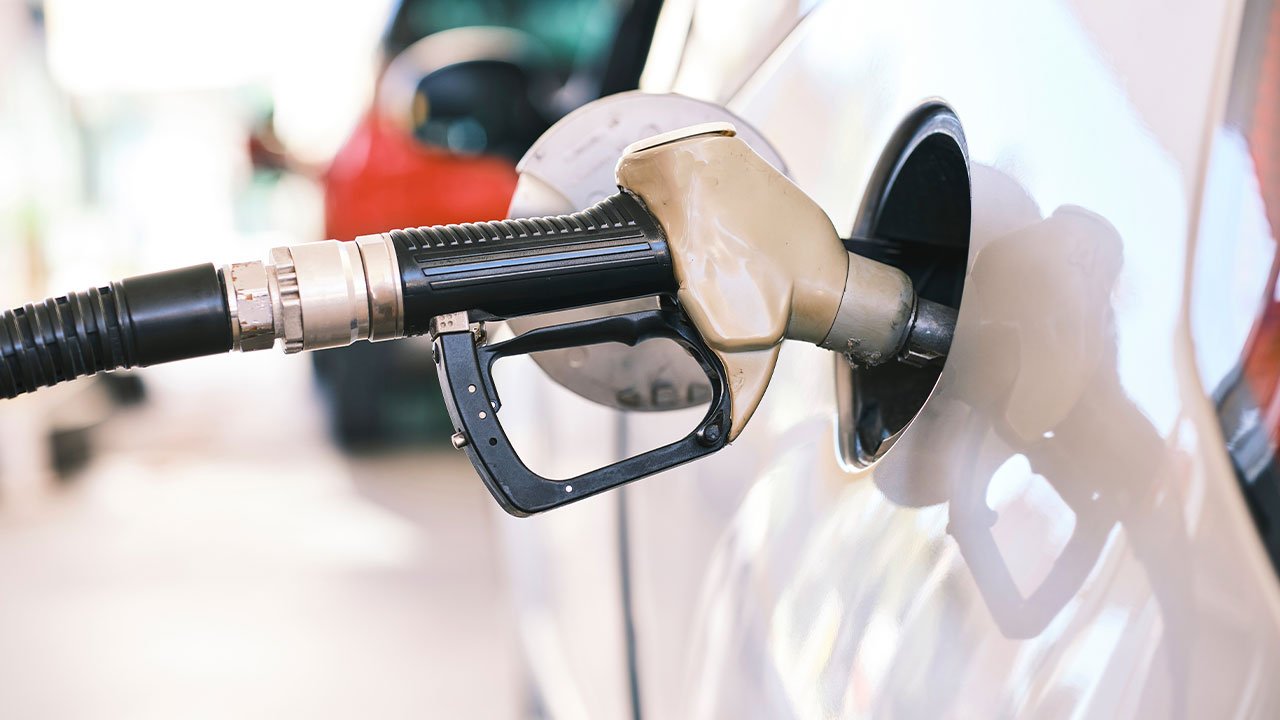
    In a possible move that could impact consumers, the government is considering a hike in petrol prices by Rs3.5 per litre for the initial half of March 2024.

    As of the latest estimates until February 27, 2024, the ex-refinery price of petroleum has seen a noticeable rise, reaching Rs195.75 per litre. This reflects an increase of approximately Rs3.58 compared to the preceding fortnight’s price of Rs192.17 per litre.

    Contrary to petrol, there might be no significant adjustment in the price of high-speed diesel (HSD), with the government likely to maintain the current rate due to marginal changes in its pricing structure.

    The national currency has experienced a modest appreciation against the USD since the previous fortnight’s decision, settling at a weighted average rate of approximately PKR 279.37 per USD.

    It is crucial to highlight that, with two more sessions pending before the next pricing update, the final prices will be subject to global market fluctuations and exchange rate variations.

    The official announcement revealing the new prices is scheduled for midnight on February 29, 2024. If approved, these adjustments will remain effective for the first half of March. 

  • International petrol, diesel prices drop, but no relief for Pakistanis

    The government has decided not to reduce the prices of diesel and petrol for local consumers, despite a significant decrease in their international prices. This decision is intended to offset previous exchange losses and raise taxation.

    On February 28, 2023, the average fortnightly prices of petrol and diesel in the global market will be used for the next price revision. According to industry sources, the average price of diesel for the next fortnightly review has dropped by $7 per barrel, which equates to a reduction of Rs30 per litre for domestic diesel prices.

    The global average price of diesel has fallen to approximately $100 per barrel compared to $107 per barrel in the previous fortnight. Similarly, the average price of petrol has dropped to $90 per barrel for the next review of prices compared to $93 per barrel in the last fortnightly review, which translates into a reduction of Rs10 per litre for consumers in the local market.

    According to Geo, the appreciation of the Pakistani rupee against the dollar in the last two weeks has also contributed to the reduction in import prices of diesel and petrol. However, industry sources do not expect any significant reduction in the prices of diesel and petrol for domestic consumers.

    The government is expected to adjust the exchange losses, which were not passed on fully to the oil sector in the last several reviews. For example, an exchange loss adjustment of Rs88 per litre was due on diesel, but the government only transferred Rs12 per litre on this head, leaving the remaining amount to be adjusted. The same is true for petrol, with an exchange loss adjustment of Rs34 per litre due, but only Rs12 per litre being given to the oil industry.

    Under the conditions set by the International Monetary Fund (IMF), the government may increase the petroleum levy (PL) on diesel to Rs50 per litre, as it now has room to do so. Currently, the PL on diesel is Rs40 per litre.

    If the government does not impose GST, sources expect a cut of Rs10 per litre in diesel prices, which would otherwise deprive local consumers of the drop in diesel prices in the global market.

    However, official industry sources do not anticipate any reduction in the price of petrol for local consumers, which would otherwise have been down by Rs10, as per the trends of its price in the global market.

  • Petrol price likely to rise by Rs20 per litre in upcoming review

    Petrol price likely to rise by Rs20 per litre in upcoming review

    Oil industry sources report that there may be a Rs20 per litre increase in petrol prices at the upcoming review on February 15, 2023. The increase is based on calculations of the international price of petrol, specifically on a free on board (FOB) basis.

    During the previous fortnightly review of fuel prices, the government implemented a substantial increase of Rs35 per litre. Currently, the government imposes a petroleum levy (PL) of Rs50 per litre, while the general sales tax (GST) has not yet been levied.

    Sources suggest that the price of petrol could increase further if the foreign exchange rate is adjusted at the next review. They noted that the exchange rate is currently unfavorable, negating any potential benefits or reductions for local consumers.

    Despite a decrease in international petrol prices, the sharp depreciation of the rupee against the dollar has offset gains, adversely affecting domestic consumers. Additionally, the sources warned that the government may implement a Rs20 per litre adjustment to account for the exchange rate, which could result in an overall increase of up to Rs40 per litre.

    The price of diesel, as reported by sources, has not seen any increase on FOB without exchange rate adjustments. However, they stated that diesel prices could potentially increase in the next review if the exchange rate is adjusted. The government previously adjusted Rs14 per litre on diesel due to the exchange rate, but the recent appreciation of the dollar has effectively negated this adjustment from the last review.

    While global diesel prices have reportedly decreased by five to six dollars per barrel, the depreciation of the rupee prevents the government from passing on the reduction to local consumers.

    The most recent price adjustment of petroleum products was made on January 29, 2021, by the federal government. Following the review, petrol was priced at Rs249.80 per litre, high-speed diesel at Rs262.80 per litre, kerosene oil at Rs189.83 per litre, and light-speed diesel at Rs187 per litre.

    The government implemented an increase in petrol and high-speed diesel prices by Rs35 per litre each, and raised the rates of kerosene oil and light diesel oil by Rs18 per litre each on January 29, 2023.

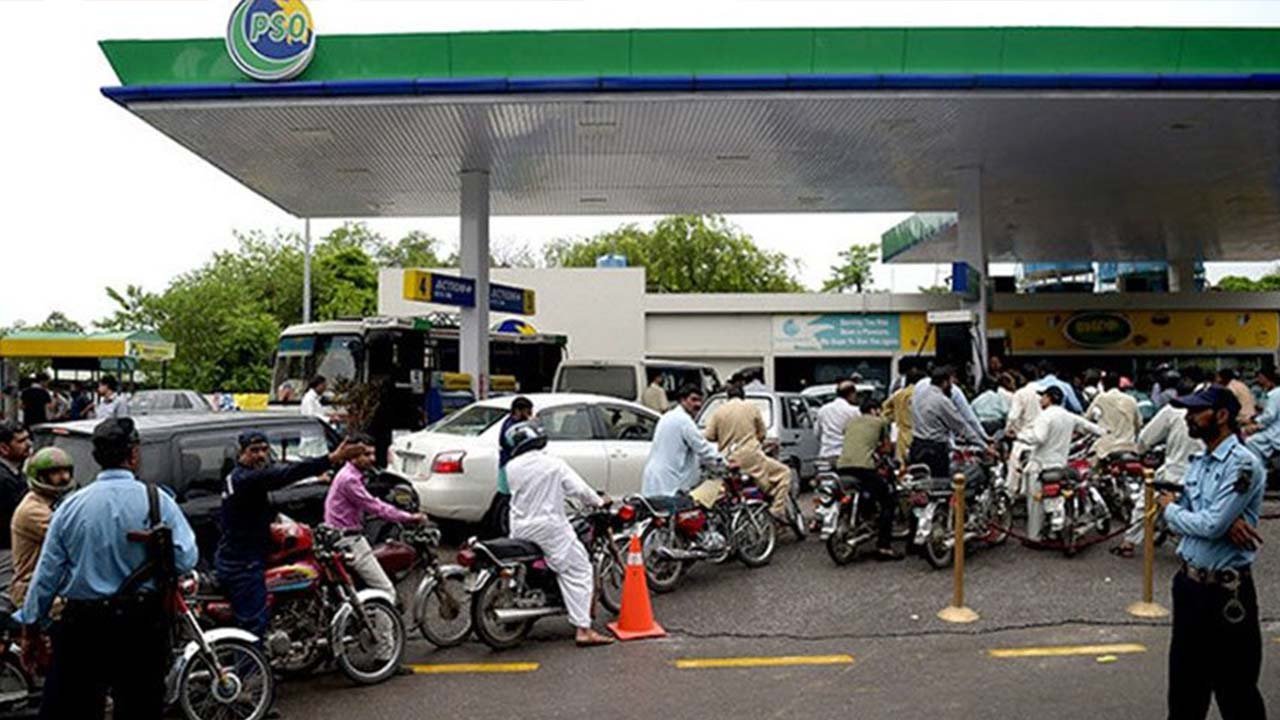
    Pakistan is currently experiencing a shortage of petrol, with its most populous province, Punjab, being hit the hardest. The crisis has affected major and minor cities, towns, and villages in Punjab, with the shortage being attributed to petroleum dealers.

    Sources previously reported that in addition to a low import of petrol by most Oil Marketing Companies (OMCs), petroleum dealers were also involved in hoarding petrol in anticipation of an expected price increase in mid-February.

  • Punjab police seizes 1.3 million litres of illegally hoarded petrol in a crackdown

    Punjab police seizes 1.3 million litres of illegally hoarded petrol in a crackdown

    Pursuant to the warning issued by Petroleum Minister Dr Musadik Malik, the Punjab police initiated a crackdown against individuals engaged in the illicit stockpiling of petrol and diesel in several areas of the province, including Sheikhupura, Patoki, and Daska.

    The Inspector General of Punjab issued directives for strict enforcement against such practices and instructed that decisive action be taken against those found to be responsible.

    In accordance with the directives, police teams conducted raids on multiple fuel stations in Sheikhupura and Patoki, resulting in the recovery of over 1.3 million litres of petrol that had been illegally stockpiled by mafias. The contraband was found stored in underground tanks in warehouses, and over a dozen containers filled with gasoline were also seized.

    The District Police Officer, Zahid Marwat, reported that the value of the recovered gasoline exceeds 300 million rupees. He further stated that appropriate legal action, including the filing of charges, will be taken against those found to be responsible for the hoarding of fuel.

    On Wednesday, Minister of State for Petroleum, Musadik Malik, dispelled all rumors of a shortage of petroleum products in the country.

    According to ARY News, during a press conference held in Islamabad, the state minister stated that Pakistan has an ample supply of both diesel and gasoline. He issued a warning to those engaged in hoarding, stating that the government will revoke licenses for those found to be artificially creating a shortage of these products.

    The minister also sought to dispel any notion that the government is responsible for increasing the prices of petroleum products.

  • Pakistan has enough petrol for 20 days: Musadik Malik refutes fuel shortage rumours

    Pakistan has enough petrol for 20 days: Musadik Malik refutes fuel shortage rumours

    On Tuesday, many petrol stations in the cities of Punjab were closed, causing inconvenience for commuters searching for fuel. However, State Minister for Petroleum, Musadik Malik, refuted reports of a nationwide fuel shortage.

    Despite a recent increase of Rs35 per litre in petrol and diesel prices, consumers are still facing difficulties due to limited supply.

    This situation mirrors a similar occurrence earlier this month prior to the price hike. On January 29, the government raised the prices of petrol and diesel by Rs35 per litre in response to the significant devaluation of the rupee against the dollar.

    The devaluation of the local currency against the dollar reached historic lows after the unofficial cap on the greenback was removed. Consumers in cities such as Faisalabad, Gujranwala, Sargodha, Shakargarh, Khushab, Mandi Bahauddin, and Gojra have encountered difficulties obtaining fuel. Petrol stations that remained operational have experienced long lines of vehicles, with reports of owners rationing the commodity by only providing limited amounts to customers.

    According to Geo, the State Minister for Petroleum has issued a warning against hoarding, as the fuel supply is already precarious. The minister stated that hoarders should be prepared for the possibility of having their licenses revoked.

    He said that there is a 20-day supply of petrol and a 25-day supply of diesel in the country. He urged the public to report any petrol stations that may be restricting supply for profit.

    Malik emphasized that there is no shortage of petrol in the country and confirmed that there will be no increase in the prices of petroleum products before February 15.

  • ‘Misleading and incorrect’: OGRA rejects speculations about massive petrol price hike

    ‘Misleading and incorrect’: OGRA rejects speculations about massive petrol price hike

    The Oil and Gas Regulatory Authority (OGRA) on Saturday rubbished rumours about a whooping increase of Rs80 per litre in petrol price.

    “It has been observed that speculative prices of gasoline and diesel are being reported in the print and electronic media since last evening, which is misleading and incorrect,” an OGRA spokesman said in a press statement.

    He advised the elements to avoid disseminating speculative prices of petroleum products in the “public interest” by spreading misleading and incorrect information.

    Earlier, OGRA also denied reports of a shortage of diesel and gasoline in the country, saying that sufficient stocks were available. However, in line with the government’s aim to convince the International Monetary Fund (IMF), the Ministry of Finance is expected to increase the price of petroleum in the upcoming fortnightly review.

    The massive depreciation of the local currency against the US dollar in the last two days would not reflect greatly in the review due on January 31 (Tuesday) as the average exchange rate would clock in at Rs240, information gathered from the country’s oil sector showed.

    However, the fortnightly review due on February 15 may reflect a significant increase in domestic petroleum prices on account of rupee depreciation.

    Free on board (FOB) pricing will result in a significant increase in the price of fuel and gasoline in the subsequent weekly review the following week, according to The News.

    According to sources with knowledge of the situation, using FOB would likely result in an increase of Rs25 in the price of fuel. “The exchange rate would create some hike, but not so much”, they said, attributing the hike to FOB as diesel price in the international market went up to $117 per barrel compared to $114 per barrel.

  • Russia refuses to give Pakistan 30–40% discount on crude oil

    Russia refuses to give Pakistan 30–40% discount on crude oil

    It appears that talks with Russia came to an end without any conclusion since Moscow has refused to offer Pakistan a 30–40 per cent discount on crude oil, claiming that all volumes were committed.

    During the negotiations, the Pakistani group, which included State Minister for Petroleum Musadik Malik, the joint secretary, and representatives of the Pakistani Embassy in Moscow, sought a reduction.

    However, Russia has pledged to take Pakistan’s request into consideration and to later communicate its opinion through diplomatic channels.

    Nevertheless, according to sources, Russia can provide oil at the rates it is currently offering to its major client countries, which are stable and solid economies, at an appropriate time. All quantities are currently contracted with significant purchasers, they claimed.

    The Russian side urged Pakistan to start by keeping its word over the Pakistan Stream Gas Pipeline, which will be built from Karachi to Lahore, Punjab.

    During the negotiations, the Pakistani side expressed a desire to alter the PSGP project’s model. The Russian side claimed that only a few provisions of the shareholding agreement needed to be finalised and that the model of the project under the GtG arrangement had already been established.

    According to Geo, the official delegation from Pakistan travelled to Moscow on November 29 for a three-day meeting with Russian officials to discuss the possibility of importing crude oil at a reduced price, as well as the mode of payment and shipping costs.

    Russian crude oil may be processed in Pakistan’s refineries, and one private refinery has previously used Russian crude oil to provide completed goods, according to sources in the industry ministry.

  • Petrol, diesel prices to remain unchanged for the next 15 days

    Petrol, diesel prices to remain unchanged for the next 15 days

    Despite a global decrease in oil prices, the federal government has decided to maintain the existing prices of petrol and diesel for the next 15 days.

    Finance Minister Ishaq Dar announced to keep the prices of petrol and high-speed diesel unchanged for the next 15 days. However, he announced a reduction of Rs10 per litre in the prices of kerosene oil and Rs7 on light diesel oil.

    The current prices for petrol are Rs224.80 per litre and Rs235.30 for High-Speed Diesel (HSD).

    Furthermore, Dar also announced a 15-day extension in the filing of income tax returns.

    On November 15, the finance minister announced to keep the prices of petrol, diesel, and other petroleum products unchanged. He said that the prices of petrol, diesel, light diesel and kerosene oil will remain unchanged till November 30 as per the federal government’s decision.

  • Govt expected to increase petroleum levy on diesel

    Govt expected to increase petroleum levy on diesel

    The government is expected to raise the petroleum levy beginning tomorrow, implying that diesel customers are unlikely to receive any relief. 

    Finance Minister Ishaq Dar is also anticipated to maintain the oil prices for the first two weeks of December.

    The government now has the flexibility to raise the rate of PL on diesel, a crucial good that is extensively utilised in the transportation and agricultural sectors, thanks to the recent rise in PL on gasoline and High-Octane Blending Component (HOBC) to the budgeted level of Rs50 per litre.

    However, this change will directly affect how the majority of people live. High-speed diesel (HSD) is currently priced per litre at Rs12.59. However, according to sources, the price of diesel had decreased by Rs11.95 per litre during the past two weeks. Diesel prices could decrease to Rs223.35 per litre from Rs235.3 per litre if the government decides to pass along the savings.

    Despite the rupee losing Rs1.81 to reach Rs223.62, the cost of diesel, kerosene, and light diesel oil (LDO) fell significantly. The current rate of PL and GST is the basis for the variation in oil prices.

    The Inland Freight Equalization Margin has been set at Rs1.90 for HSD and Rs6.69 for gasoline per litre. The exchange loss for Pakistan State Oil was Rs3.01 for gasoline and Rs2.10 for HSD per litre.

    PSO imports goods, therefore it may experience exchange gains or losses depending on how much the local currency is worth. Kerosene oil prices also decreased by Rs9.91 per litre, and LDO prices decreased by Rs13.39 per litre.

    In isolated locations without access to LPG, kerosene oil is used for cooking. Kerosene oil’s price could decrease from Rs191.83 to Rs181.92 per litre and LDO’s price from Rs186.50 to Rs173.11 per litre if the government grants relief.

    Petrol prices have increased by Rs2.62 per litre, with a potential increase to Rs227.42 per litre from the current level of Rs224.80 per litre.

  • Forced stabilisation of oil prices causes oil industry to face over Rs7 billion in losses: OCAC

    Forced stabilisation of oil prices causes oil industry to face over Rs7 billion in losses: OCAC

    Maintaining oil prices for the second consecutive fortnight could harm the oil industry and disrupt petroleum products supply. The oil industry claims that it has suffered a loss of over Rs7 billion due to the government’s plan to keep oil prices artificially low.

    The nation’s oil industry protested against the government’s “manipulation” of the pricing system in its most recent fortnightly review to keep ex-depot petroleum product prices the same for the next 15 days.

    “This forced stabilisation of oil prices at the cost of the industry is not sustainable and will severely impact the already crippled oil industry,” wrote the Oil Companies Advisory Council (OCAC) — an umbrella organisation of more than three dozen oil marketing companies (OMCs) and refineries — to the Ministry of Energy on Wednesday.

    Following political pressure from the opposition Pakistan Tehreek-i-Insaf (PTI), the government declared on Tuesday that all product prices will remain unchanged. However, market participants, including Ogra, had predicted hikes in POL prices beginning on November 16.

    The oil sector claimed that the government was maintaining the rates in defiance of the long-standing pricing system. Over the next 15 days, the oil industry is expected to lose more than Rs7.6 billion as a result of the unilateral shift in pricing.

    According to the OCAC, the price freeze would result in losses for OMCs of Rs8.34 on each litre of petrol and Rs7.15 on each litre of high-speed diesel (HSD), totaling Rs7.55 billion.

    Even though the rates were rising in accordance with the pricing methodology set by the government itself, it claimed that the prices of motor fuels had remained the same for the second fortnight of November. Instead of passing on the increase or absorbing the increase by lowering the petroleum levy, it was claimed that the price components were “very forcefully and unjustly reduced.”

    “The industry is already facing a severe financial crunch due to high global prices, depreciation of the rupee, increased charges on confirmation of letters of credit, high premiums on import, etc and will not be able to survive if these unfair adjustments are not removed immediately”, the OCAC wrote to the Oil and Gas Regulatory Authority (Ogra) and the Petroleum Division.

    According to Dawn, inland freight equalisation margin (IFEM), a collection of transportation fees paid to OMCs, was decreased by Rs3.21 and Rs2.72 per litre on petrol and HSD, respectively, according to the OCAC. According to sources, the Ministry of Finance called the senior Ogra officials on Tuesday night to make these cuts.

    On gasoline and HSD, respectively, the exchange loss adjustment was also decreased by Rs3.01 and Rs2.11 per litre. Additionally, the long-awaited increase of OMC’s sales margins from Rs2.68 to Rs6 per litre was approved by the ECC on October 31. With another loss of Rs2.32 per litre on both products, the “revised margin for both products has not been incorporated in the prices.”

    Based on estimated sales volumes for the second fortnight of November from Ogra, the OCAC estimated a total loss of Rs7.55 billion, including Rs4.25 billion for petrol and Rs3.30 billion for HSD.

    The “forced price stabilization” could pose problems for the supply chain and jeopardise the industry’s survival, according to the OCAC, given the lower stock levels and higher import volume requirements.