Tag: HSD

  • Mazeed mehnga petrol: Oil prices may go up by Rs4 per litre

    Mazeed mehnga petrol: Oil prices may go up by Rs4 per litre

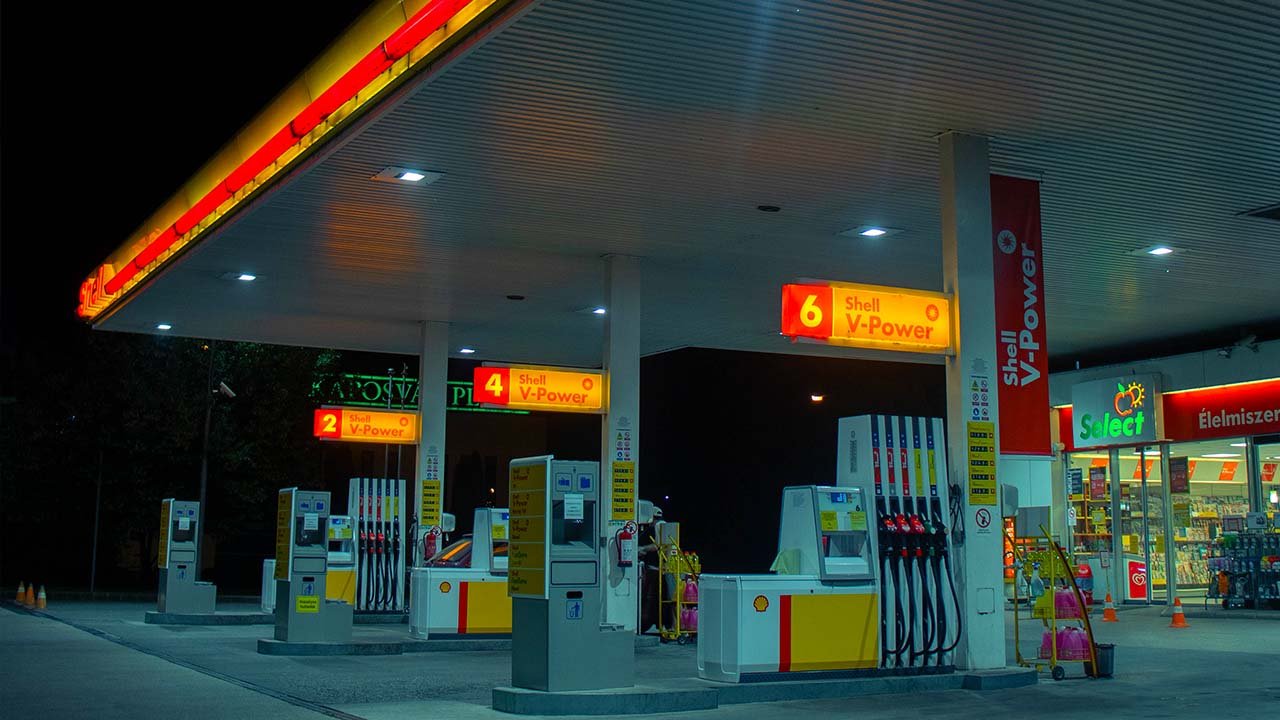
    The government is expected to marginally increase the price of petroleum products for the next two weeks in order to collect revenue from local consumers.

    According to an official of the Petroleum Division, price increases for petroleum products may range from Rs3 to Rs4 per litre.

    He noted that in order to fulfill its promise to the International Monetary Fund, the government was anticipated to adjust tariffs on petroleum goods (IMF). In an effort to increase revenue, it has already increased the petroleum duty on petrol and high-octane blending component (HOBC) to Rs50 per litre.

    The petroleum charge on Super and HOBC is at an all-time high, yet there is no general sales tax on petroleum goods.

    According to sources in the petroleum industry, oil products’ ex-refinery prices could decrease marginally during the next two weeks. According to them, the price of gasoline might drop by about Rs1.6 per litre and the price of high-speed diesel (HSD) by Rs3, although they said that these figures did not account for exchange rate loss adjustments. As a result, given that the government skipped it the last time, there might be an addition of around Rs 4 to the price of HSD per litre.

    Additionally, they noted that the previous oil price revision had resulted in a negative Inland Freight Equalisation Margin (IFEM) of roughly Rs 5 per litre for HSD consumers; however, it was anticipated that this would change in the new price announcement.

    In addition to this, changes in the petroleum levy on HSD and the imposition of general sales tax on both gasoline and HSD also affect price revision.

    Oil prices had previously been held steady for the seven days of November 1–15.

    For the first week of November, it was anticipated that the price of gasoline would decrease by Rs2.86 per litre and the price of HSD would increase by Rs3.70 per litre in accordance with the Platts trading platform and exchange rate movement. The government, however, refused to lower the price of petrol for the public.

    HSD currently costs Rs235.30 per litre, while a litre of petrol costs Rs224.80. Light diesel oil costs Rs186.50 per litre, while kerosene costs Rs191.83 per litre.
  • Pakistan has sufficient petrol and diesel to meet domestic demand: Petroleum Division

    Pakistan has sufficient petrol and diesel to meet domestic demand: Petroleum Division

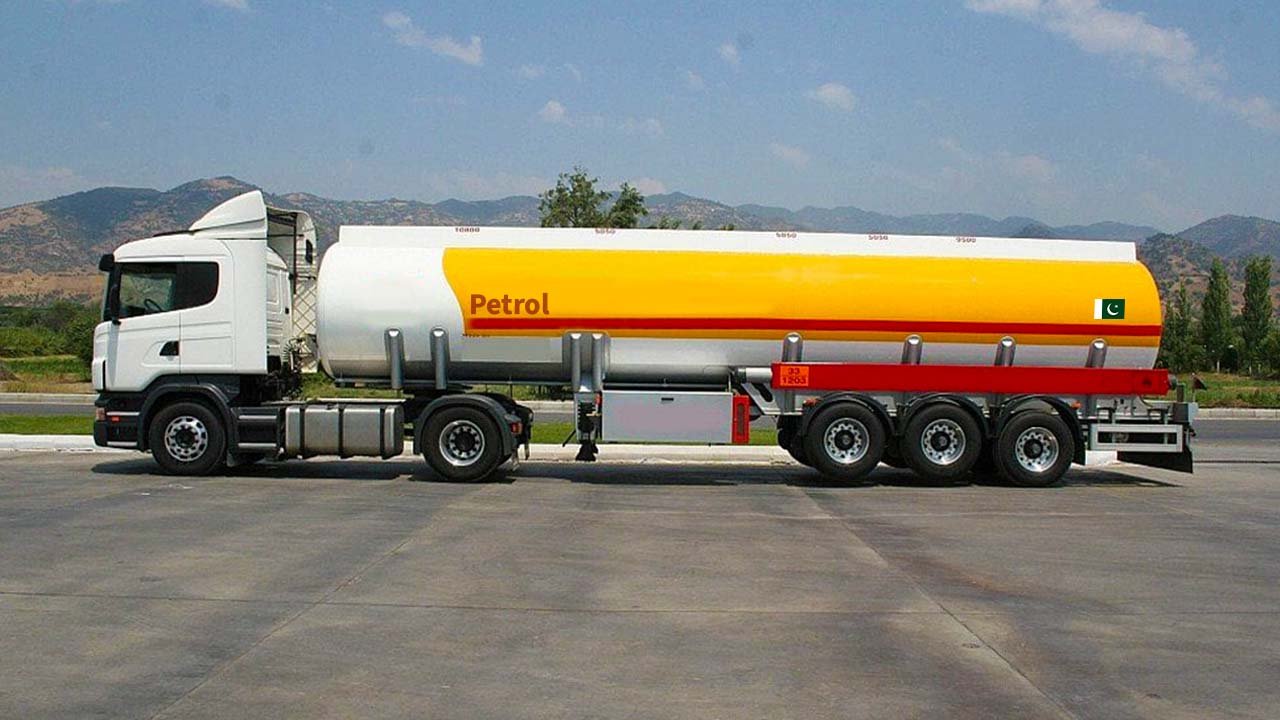
    The Petroleum Division said on Tuesday that the country has sufficient petrol and High-Speed Diesel (HSD) in stock to meet domestic demand after allowing Oil Marketing Companies (OMCs) to recover Rs10 per litre on HSD for the next two months (November-December 2022) by raising the premium limit to $15 per barrel.

    The OCAC had cautioned the federal government about a likely shortage of petrol and HSD in the coming days due to limited imports and limited local availability.

    According to the OCAC’s letter to the Oil and Gas Regulatory Authority (Ogra), the gap is due to limited supply and excessive premiums on fuel stocks on the international market.

    The Economic Coordination Committee (ECC), led by Finance Minister Ishaq Dar, approved the summary proposed by the Ministry of Energy on Friday (Petroleum Division).

    The ministry aimed to secure sustainable HSD imports for November-December 2022 by loading the country’s risk factors of $6 bbl, with an upper limit premium of $15 to the OMCs for pricing computation.

  • Oil industry warns OGRA of looming petrol, diesel shortage

    Oil industry warns OGRA of looming petrol, diesel shortage

    Due to limited imports and constrained domestic supplies, the oil industry has warned the government that the country may witness a shortage of petrol and high-speed diesel (HSD) in the upcoming days.

    The Oil & Gas Regulatory Authority (OGRA) has been written about the shortfall by the Oil Companies Advisory Council (OCAC), an organisation that represents the oil industry.

    The Oil Marketing Companies (OMCs) were given permission to import motor spirit/petrol and HSD in accordance with their demand in the product availability review of products for the month of November 2022, the OCAC stated. This decision followed considerable consideration.

    A shortage of 210,000 MT of HSD and 147,000 MT of gasoline was calculated during the product review. Due to restricted supply on the global market and extremely expensive premiums, it was noted at the meeting that HSD imports in November would be difficult. As a result, only PSO has so far reserved supplies from Flow Petroleum of 220,000 MT and 10,000 MT.

    Alarmingly, though, fuel import that corresponds to the expected sales volume and the stock cover has also not been scheduled. According to the OCAC letter, the importers were supposed to finalise the import plan, but as of now, there is a gap in the import plan.

    The conference with representatives from the industry held on November 1 also brought up this crucial issue, but no clear guarantees have been obtained in writing from the importing OMCs, it stated.

    According to Geo, the OMCs, who were expected to bring imports for use in October, got their shipments in the final week of the month; hence, the product wasn’t ready for usage during the month it was intended for. Similar to how OMCs who were permitted to import goods the month before for usage the following month had already used the shipments, the letter observed.

  • Top driving techniques for reducing fuel consumption

    Top driving techniques for reducing fuel consumption

    The price of petrol in Pakistan is unforgivably high and motorists have no recourse since fuel is the basic and continuous expense for gasoline-powered vehicles. Still, the vast majority of auto owners want to lower their monthly fuel costs.

    Fuel economy may not be a huge concern if an individual rarely drives a car for short trips, but regular commuting and lengthy excursions make it challenging to save fuel.

    Here are a few tried-and-true tips that are well-known to increase mileage:

    Go easy on the accelerator

    This entails just accelerating the car when necessary. Frequent braking and engine revving increase fuel consumption whereas keeping the speed of the vehicle steady reduces fuel consumption. This is why you get greater mileage on long routes or motorways.

    It is strongly advised to maintain a low RPM (preferably less than 2,500), and if your automobile has an eco-mode, it would be helpful to frequently use it. Depending on the vehicle, this mode is especially made to improve fuel efficiency and can reduce fuel consumption by up to 15%.

    Watch your speed

    If your car has a small engine (under 1300cc), it will use more gasoline when travelling at speeds of 100 km/h or greater. To provide higher output, the engine must push harder, which raises the RPM and petrol usage.

    Bigger engines may generate greater power at lower RPMs, hence they are often unaffected by higher speeds as they require less power and repeated flooring.

    Be aware that hybrid engines are less affected by this as they may employ electric motors to maintain a high power output while consuming little fuel.

    Drive smartly

    A motorist may handle traffic more effectively by keeping an eye on the surroundings, maintaining safe distances, and analysing the driving habits of other drivers. By doing this, the motorist may prepare for obstacles including roadblocks, red lights, road closures, and bumps.

    Additionally, it aids in intelligent acceleration and deceleration. Ultimately, smart driving is one of the best ways to increase safety and reduce fuel consumption.

    Avoid idling

    This is the most basic fuel-saving advice offered by automotive specialists. It is clear that idling for an extended period of time wastes fuel. In addition, warming up a car shouldn’t take more than 60 seconds.

    Use AC when needed

    When the air conditioner (AC) is on, cars use more petrol. More fuel is saved by just using the AC when necessary.

    Still, driving with your windows down in the summer only to save on fuel is not advised, especially on highways. The automobile experiences higher drag when the windows are rolled down, especially at high speeds. As a result, the automobile encounters higher air resistance and requires more engine power to maintain the same speed.

    This is why while driving at faster speeds, such as on a highway, the driver would be wise to put on the AC rather than rolling down the windows.

    Remove excess weight

    Many automobile owners ignore this underrated advice. If your trunk is empty, it might not make much of a difference, but if you have heavy items within your car, this could be the cause of your excessive fuel usage.

    The engine is put under more stress as the automobile gets heavier because it requires more power to move ahead, which increases fuel consumption.

    Perform regular maintenance

    Every automobile owner’s primary priority should be maintenance. Regularly having your automobile serviced is crucial since there may be many underlying problems and components under the hood that you are unable to inspect or maintain.

  • Petrol price may go down by Rs7.24 to Rs230.19 per liter

    According to industry projections, the ex-depot cost of petrol has declined by Rs7.24 per litre to Rs230.19 per litre for the upcoming fortnight from the current price of Rs237.43 per litre, as reported by The News.

    Considering recent reports, this might lead to a fall in the price of petrol by Rs7.24 per litre and diesel by Rs16.61 per litre in Pakistan at the upcoming fortnightly review if the government does not raise taxes to offset the effects of the declining worldwide market.

    Expected new prices

    In comparison to the present price of Rs247.43 per litre, the ex-depot price of diesel has fallen by Rs16.61 to Rs230.82 per litre for the upcoming two weeks.

    In comparison to the current fortnight, the ex-depot price of light diesel decreased by Rs10.87 to Rs186.41 per litre.

    Kerosene’s ex-depot price fell from Rs197.28 per litre to Rs187.82 per litre, a decrease of Rs14.20.

    The oil sector bases its prices on the current taxes levied by the government. Petroleum goods are exempt from general sales tax (GST), which is charged at a rate of Rs37.42 for petrol and Rs7.58 for diesel per litre.

    There has been a considerable decline in international oil prices, but it is unclear if the government would pass the impact through to the public or offset it by increasing taxes.

  • Govt increases petrol price instead of decreasing, new rate stands at Rs237.43 per litre

    Govt increases petrol price instead of decreasing, new rate stands at Rs237.43 per litre

    The government officially announced the amended prices for petroleum products on Wednesday after a delay of almost a week, notifying consumers of an increase of Rs1.45 in the price of petrol.

    According to the notification, the price of gasoline has gone up from Rs235.98 to Rs237.43, while the price of high-speed diesel (HSD) has remained the same at Rs247.43.

    Light diesel oil’s price has dropped from Rs201.54 to Rs197.28 by Rs4.26, and kerosene’s price has dropped from Rs210.32 to Rs202.02 by Rs8.3.

    According to initial reports, the cost of petroleum products were expected to decrease from Rs235.98 per litre to Rs226.36 per litre on Friday, September 16, after a reduction of Rs9.62 per litre for the next two weeks.

    The new petroleum prices were expected to be revealed on September 16, but the administration postponed the announcement.

  • Govt raises petrol price by Rs6.72 to Rs233.91 per litre

    Govt raises petrol price by Rs6.72 to Rs233.91 per litre

    Despite several reports of an expected decrease in prices of petroleum products, the government increased the price of petrol by Rs6.72 per litre and decreased the price of high-speed diesel (HSD) by Rs0.51 and kerosene oil by Rs1.67 per litre.

    The price of light diesel oil (LDO) was raised by Rs0.43 per litre by the government.

    Prior to this, the coalition administration had decreased the cost of petrol and LDO starting on August 1 by Rs3.05 and Rs0.12, respectively.

    However, starting on August 1, 2022, the government had increased the price of HSD by Rs8.95 per litre and kerosene oil by Rs4.62 per litre.

    With the most recent announcement, the price of petrol has gone up from Rs227.19 per litre to Rs233.91 per litre, and that of LDO has gone up to Rs191.75 from Rs191.32 per litre; and that of HSD has gone up to Rs244.95 from Rs244.44.

    Kerosene oil is now available for Rs199.40 per litre as opposed to its earlier price of Rs201.07 per litre.

    The rapid depreciation of the rupee against the dollar had previously also been a significant determinant of oil prices.

    The standing of the rupee against the dollar had improved recently. In spite of this, the cost of gasoline had increased.

    Additionally, there had not been a significant decrease in the cost of diesel, which is widely used in the nation’s transportation and agricultural sectors.

  • Annual inflation in Pakistan jumps to 38.63% after weekly increase of 0.82%

    Annual inflation in Pakistan jumps to 38.63% after weekly increase of 0.82%

    The sensitive price indicator (SPI) hit an annualised high of 38.63 per cent due to a lack of perishable goods brought on by severe rains, and weekly inflation increased by 0.82 per cent for the seven days ending August 4, 2022.

    The base for most cooked meals in the country is an onion and tomato. Onions increased in price from Rs75.41/kg to Rs94.2/kg while tomatoes increased from Rs74.07/kg to Rs82.91/kg.

    Data from the Pakistan Bureau of Statistics (PBS) indicates that the increase is attributable to the increased price of diesel (109.15 per cent), onions (107.95 per cent), pulse masoor (106.71 per cent), petrol (88.94 per cent), cooking oil 5 litre (74.44 per cent), mustard oil (73.89 per cent), chicken (73.42 per cent), vegetable ghee 1 kg and 2 kg (72.26 and 70.48 per cent), washing soap (62.62 per cent), pulse gramme (59.07 per cent), electricity for Q1 (52.61 per cent), gents sponge slippers (52.21 per cent), pulse maash (46.01 per cent) and garlic (41.16 per cent).

    According to The News, consumers are struggling with soaring food and fuel prices. Hi-speed diesel was being sold last August 5 for Rs117.58 per litre, but it is now Rs245.92 per litre.

    Various items in the SPI basket are given varying weightages. The goods with the heaviest weights in the bottom quintile are milk (17.5449 per cent), electricity (8.3627 per cent), wheat flour (6.1372 per cent), sugar (5.1148 per cent), firewood (5.0183 per cent), long cloth (4.2221 per cent), and vegetable ghee (3.2833 per cent).

    While the cost of firewood and electricity remained consistent, the cost of milk, wheat flour, sugar, long fabric, and vegetable ghee 2.5kg increased. Vegetable ghee 1kg saw a decrease in price.

    SPI is made up of 51 necessities that were gathered from 50 markets spread over 17 cities across the nation.

    Out of 51 goods, 33 (64.71 per cent) of the prices rose during the week, 4 (7.84 per cent) of the prices fell, and only 14 (27.45 per cent) of the prices kept the same.

    The price of onions increased by 24.92 per cent, tomatoes by 11.93 per cent, pulse moong by 5.72 per cent, pulse mash by 5.28 per cent, potatoes by 5.03 per cent, pulse masoor by 4.43 per cent, diesel by 3.78 per cent, pulse gramme by 2.69 per cent, eggs by 2.44 per cent, powdered milk by 1.61 per cent, gur by 1.53 per cent, LPG by 1.49 per cent, salt by 1.46 per cent, and garlic by 1.30 per cent on a WoW basis.

  • Govt slashes petrol price by Rs3.05,  raises diesel by Rs8.95 per litre

    Govt slashes petrol price by Rs3.05, raises diesel by Rs8.95 per litre

    Due to changes in oil prices on the global market, the government announced a revision in petroleum prices on Sunday.

    According to a statement released by the Finance Division, the cost of petrol has been reduced by Rs3.05 a litre for the first half of August 2022.

    Petrol will now be sold for Rs227.19 per litre as a result of the pricing revisions. Previously, the price of petrolin the country per litre was Rs230.34.

    The price of high-speed diesel has been upped by Rs8.95, the new price per litre is now Rs244.95.

    The depreciation of the rupee against US dollar has raised the cost of purchasing petroleum products, the Ministry of Energy notified the Economic Coordination Committee (ECC) of the cabinet today.

  • Petroleum prices may increase by Rs28.44 on Monday

    Petroleum prices may increase by Rs28.44 on Monday

    The Oil and Gas Regulatory Authority (OGRA) has calculated a price increase for petroleum products of up to Rs28.44 per litre that could go into effect on August 1.

    According to regulatory agency sources, the estimated ex-depot price of gasoline may increase by Rs6.53, high-speed diesel (HSD) by Rs28.44, kerosene oil (SKO) by Rs11.02, and light diesel oil (LDO) by Rs5.64 per litre based on the current rate of petroleum levy (PL).

    On Saturday (today), the Finance Division will move a summary calling for an increase in gasoline prices of up to approximately 11 per cent beginning August 1. The prime minister will, as usual, make the final choice in this matter.

    The cost of gasoline and HSD will also increase if the government decides to include the Rs7 per litre petroleum dealer’s per centage in the pricing structure. The Economic Coordination Committee (ECC) had earlier that day approved the petroleum dealers’ increased margin.

    The Petroleum Division had given the dealers assurances that the government would implement the margin as of August 1, 2022.

    According to these projected prices, the price of gasoline would increase from Rs230.24 to Rs236.77 per litre, the price of HSD from Rs236.00 to Rs264.44 per litre, the price of SKO from Rs196.45 to Rs207.47 per litre, and the price of LDO from Rs191.68 to Rs197.32 per litre.

    Presently, the PL on gasoline is Rs10 per litre, the PL on HSD, SKO, and LDO are each Rs5, and there is no sales tax.

    In order to reach the budgetary goal of Rs750 billion set in the Finance Bill 2022–23, the National Assembly has approved a rise in the maximum limit of PL from Rs30 per litre to Rs50 per litre.

    Read more: Petrol, diesel prices may increase by Rs10-17 per litre

    However, sources in the Petroleum Division believed that, at the current rate, the government was unlikely to collect Rs750 billion from PL in the current fiscal year, as that would only amount to a maximum of Rs14 billion per month.

    In addition, if the 17.5 per cent general sales tax (GST) is not imposed on these goods, a revenue shortfall of Rs45 billion per month is likely.