Tag: Huawei

  • Apple’s iPhone sales decline by 24% in China, while Huawei’s sales surge

    Apple’s iPhone sales decline by 24% in China, while Huawei’s sales surge

    In the first six weeks of 2024, Apple experienced a significant downturn in iPhone sales in China, facing a 24 per cent year-on-year decrease, according to a report by research firm Counterpoint.

    The decline was attributed to heightened competition from local rivals, notably Huawei, which witnessed a remarkable 64 per cent increase in unit sales during the same period.

    Apple, once holding the second position in the Chinese smartphone market in 2023 with a 19 per cent market share, now finds itself in fourth place with a reduced share of 15.7 per cent.

    On the other hand, Huawei climbed to second place, expanding its market share from 9.4 per cent to 16.5 per cent year-over-year.

    Counterpoint’s senior analyst, Mengmeng Zhang, explained the dynamics, stating that Apple faced formidable competition from a resurgent Huawei at the high end while also encountering pricing pressures from domestic brands like OPPO, Vivo, and Xiaomi in the middle segment.

    To counteract the decline, Apple initiated measures such as subsidising certain iPhone models by up to 1,300 yuan ($180.68) through flagship stores on Tmall, Alibaba’s major marketplace platform.

    Earlier, the company had offered discounts of up to 500 yuan on its official sites.

    Huawei’s resurgence in premium smartphone sales was attributed to the successful release of its Mate 60 series in August.

    Overcoming years of challenges posed by US restrictions on key component exports, Huawei managed to reclaim its position in the market.

    Additionally, Honour, the smartphone brand that separated from Huawei in 2020, witnessed a 2 per cent increase in unit sales, making it the only other top-five brand to experience growth in the first six weeks of the year.

    Contrastingly, Chinese brands Vivo, Xiaomi, and Oppo faced declines of 15 per cent, 7 per cent, and 29 per cent, respectively, highlighting the fiercely competitive landscape in the Chinese smartphone market.

    Overall, the report indicates a 7 per cent shrinkage in the country’s smartphone market during this period.
  • Indian-made iPhone 15 units expected to reach Pakistan soon

    Indian-made iPhone 15 units expected to reach Pakistan soon

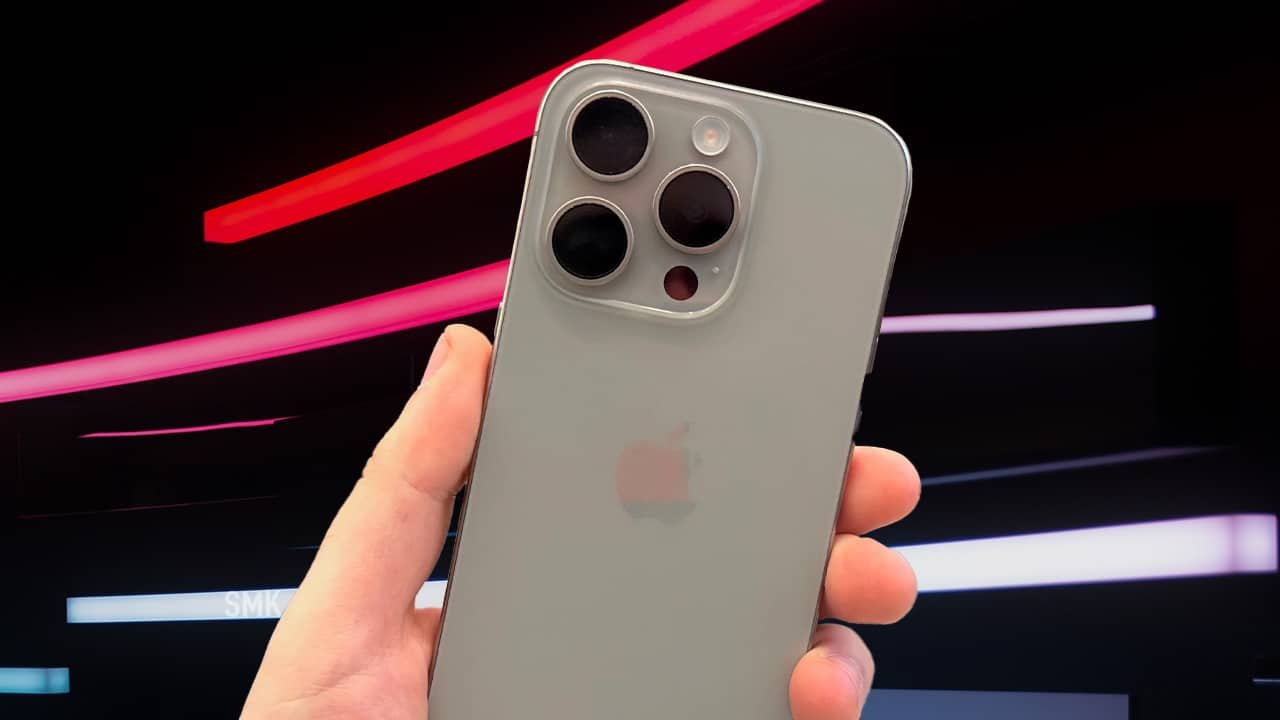
    Apple is expected to release iPhone 15 units manufactured in India for sale in India and other countries. This means that we might also see these made in India iPhones in Pakistan, as Pakistani mobile sellers import iPhones from various countries like China, Japan, Hong Kong, and the US. While these Indian-made iPhones may not arrive in Pakistan directly from India, they are likely to become available as they enter international markets.

    Unfortunately, there are no official Apple stores in Pakistan, and there are limited authorised Apple product sellers. It remains uncertain how many iPhones made in India will be available in Pakistan in the future, but as Indian iPhone production increases, we can expect to see more of them.

    Although the majority of iPhone 15 units will still come from China, Apple’s efforts to scale production in India are making progress, reducing its reliance on Chinese manufacturing. Apple began assembling previous iPhone generations in India in 2017 and has been producing flagship iPhones there since 2020. The company aims to increase its production in India from 7 per cent to 25 per cent by 2025. However, there may still be some delays due to logistical challenges.

    Closing the production gap between China and India is crucial for Apple, as it provides a reliable manufacturing alternative and helps the company comply with India’s Make in India law to avoid steep tariffs. This move also aligns with Apple’s strategy to navigate geopolitical issues and local labour disputes.

    Given recent Chinese nationalism, which encourages the use of domestic brands like Huawei, this shift in production location is timely. Despite their high cost and the requirement for PTA approval in Pakistan, Apple iPhones remain popular among those who can afford them.

  • Huawei aims to boost Pakistan’s IT ecosystem: CEO and PM Kakar hold key talks

    Huawei aims to boost Pakistan’s IT ecosystem: CEO and PM Kakar hold key talks

    A delegation from Huawei Pakistan, under the leadership of its Chief Executive Officer (CEO), Ethan Sun, held a formal meeting with caretaker Prime Minister (PM) Anwaar ul Haq Kakar, wherein they engaged in discussions concerning potential investment opportunities in Pakistan. 

    During this high-level encounter, CEO Sun articulated the company’s keen interest in making investments in Pakistan’s Information Technology (IT) sector, a proposition that garnered appreciative acknowledgment from the PM. 

    Furthermore, the Huawei delegation provided comprehensive insights into their ongoing initiatives aimed at cultivating and elevating the IT ecosystem within Pakistan. 

    Of notable mention is Huawei’s establishment of approximately 100 IT centers within various universities across Pakistan, as officially documented.

    The PM, recognising the significance of Huawei’s endeavors, lauded the company’s commitment to advancing the field of IT in Pakistan.

    He expressed optimism regarding potential collaborations between Huawei and the government for the purpose of equipping the youth and women, particularly those residing in remote regions, with valuable skills in the domain of IT.

    According to Brecorder, PM Kakar extended a cordial invitation to Huawei, encouraging the company to consider establishing manufacturing facilities for mobile handsets within the borders of Pakistan.

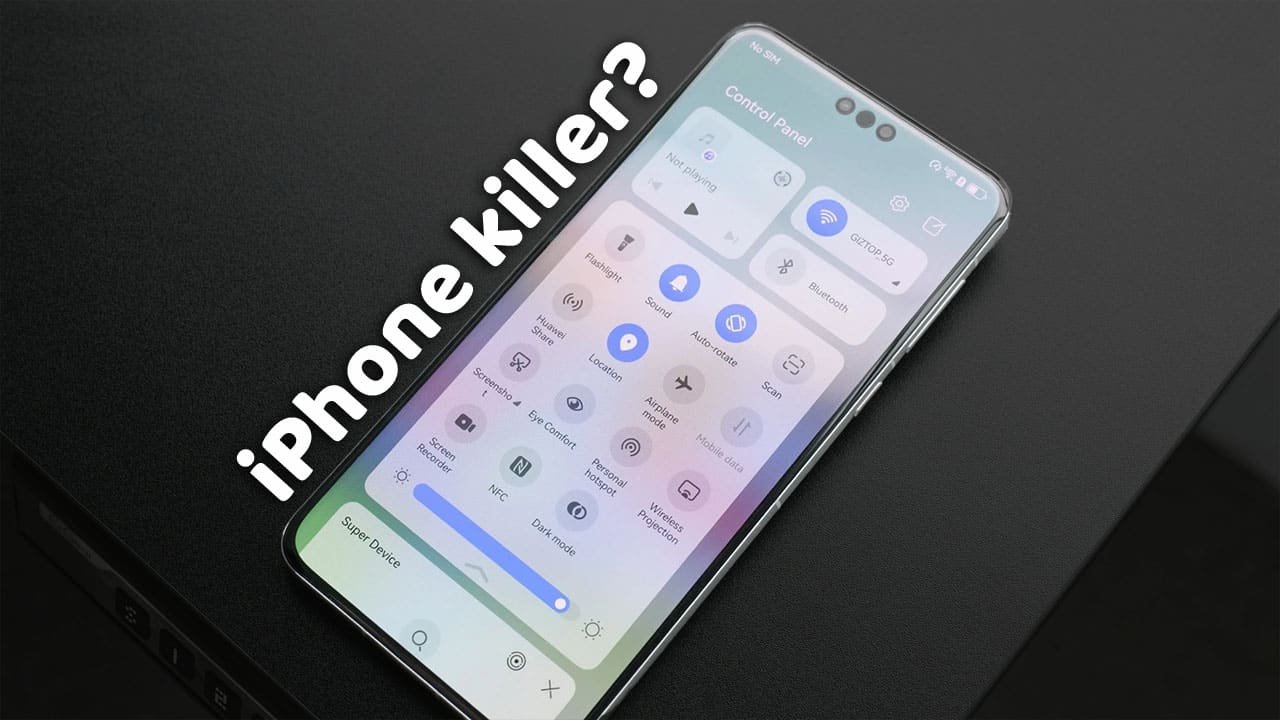
  • Can Huawei’s Mate 60 Pro finally kill the iPhone’s dominance?

    Can Huawei’s Mate 60 Pro finally kill the iPhone’s dominance?

    Huawei’s tenacity in the smartphone market, despite grappling with the challenges of the US embargo, has been nothing short of remarkable. Undeterred by adversity, the company has fervently strived to regain its foothold in the realms of both hardware and software.

    The latest chapter in Huawei’s resurgent narrative is embodied in the Huawei Mate 60 and Mate 60 Pro, devices that have ignited widespread intrigue and earned global user acclaim. In a mere five days following their debut, these smartphones remarkably achieved nearly 800,000 unit sales, signifying a triumphant comeback. 

    Within the confines of China, the Huawei Mate 60 series has emerged as a resounding success story. Officially launched on August 29th, these devices rapidly gained traction in the market, boasting sales figures that approached the 800,000-unit milestone within the initial five days.

    This achievement stands as a substantial improvement over the sales performance of their predecessors in the Mate series, which managed to muster approximately 500,000 units. Such resounding success is undoubtedly a testament to meticulous planning and unwavering commitment. 

    In the wake of challenging years, Huawei’s aspiration for resurgence led to the creation of a technological marvel. Powered by the cutting-edge Kirin 9000S processor, it reigns supreme as the swiftest mobile processor available in China. Notably, the Mate 60 series is equipped with a novel triple-lens rear camera system, featuring a 50MP main sensor, a 48MP ultrawide sensor, and a 12MP telephoto sensor. 

    The fervor surrounding the Huawei Mate 60 series extends beyond the Chinese borders, capturing the enthusiasm of international consumers. For instance, Japanese consumers have been keen to acquire the 12GB + 512GB version of the Huawei Mate 60 Pro, which is priced at approximately 70,000 Chinese yuan in the Chinese market, translating to around 140,000 Japanese yen (PKR 292,800).

    Interestingly, local dealers in Japan have been pricing the same smartphone model at levels exceeding 200,000 Japanese yen, roughly equivalent to 10,000 Chinese yuan, underscoring its immense popularity in the Japanese market. 

    Key Specifications: 

    Huawei Mate 60 

    – Display: 6.69-inch LTPO OLED display with a 1-120 Hz variable refresh rate 

    – Processor: Kirin 9000S 

    – RAM: 12GB 

    – Storage: 256GB, 512GB, or 1TB 

    – Rear Cameras: 50MP main camera with variable aperture (f/1.4 to f/4.0), 48MP telephoto camera, 12MP ultrawide camera 

    – Front Camera: 13MP 

    – Battery: 5000mAh 

    – Charging: 88W wired charging, 50W wireless charging 

    Huawei Mate 60 Pro 

    – Display: 6.82-inch LTPO OLED display with a 1-120 Hz variable refresh rate 

    – Processor: Kirin 9000S 

    – RAM: 12GB 

    – Storage: 256GB, 512GB, or 1TB 

    – Rear Cameras: 50MP main camera with variable aperture (f/1.4 to f/4.0), 48MP telephoto camera, 12MP ultrawide camera 

    – Front Camera: 13MP 

    – Battery: 4750mAh 

    – Charging: 88W wired charging, 50W wireless charging 

  • WhatsApp will stop working on older smartphones after December 31

    WhatsApp will stop working on older smartphones after December 31

    Every year, WhatsApp discontinues support for specific devices that are considered obsolete. After December 31, the Meta-owned messaging platform will no longer be available on more than 40 smartphones, including two older iPhones.

    WhatsApp is discontinuing support for devices and operating systems that are rarely used and quite old. The messenger currently supports Android 4.1 and higher, iOS 12 and higher, and KaiOS 2.5.0 and higher.

    GizChina has compiled a list of 49 phones that will no longer be able to operate WhatsApp after December 31.

    Apple: iPhone 5, iPhone 5c

    Samsung: Galaxy Ace 2, Galaxy Core, Galaxy S2, Galaxy S3 mini, Galaxy Trend II, Galaxy Trend Lite, Galaxy Xcover 2

    LG: LG Enact, Lucid 2, Optimus 4X HD, Optimus F3, Optimus F3Q, Optimus F5, Optimus F6, Optimus F7, Optimus L2 II, Optimus L3 II, Optimus L3 II Dual, Optimus L4 II, Optimus L4 II Dual, Optimus L5, Optimus L5 Dual, Optimus L5 II, Optimus L7, Optimus L7 II, Optimus L7 II Dual, Optimus Nitro HD

    Sony: Xperia Arc S, Xperia miro, Xperia Neo L

    Huawei: Ascend D, Ascend D1, Ascend D2, Ascend G740, Ascend Mate, Ascend P1

    Given that the majority of individuals use the latest recent smartphones, very few people may be impacted by WhatsApp’s expiration. However, it’s time to upgrade if your phone is on the aforementioned list.

  • Huawei faces lawsuit after allegedly spying on Pakistani citizens through stolen tech

    Huawei faces lawsuit after allegedly spying on Pakistani citizens through stolen tech

    Huawei has been sued in California federal court for creating a “backdoor” that allowed it to collect sensitive data “important to Pakistan’s national security”, reports Reuters.

    Business Efficiency Solutions (BES), a California-based IT consultant company, filed a complaint against the China-based tech giant on Wednesday, August 11.

    According to the complaint, Huawei subcontracted with BES in 2016 for its $150 million bid to develop software for a Pakistani government programme providing new technology for police and law enforcement in Lahore. BES said it created software for the project that collects data from government agencies, controls access to buildings, monitors social media and manages drones, among other things.

    Huawei officials allegedly demanded that BES send this information to the company in China for testing, and BES said it agreed to the demand but terminated its authorisation to use the technology after Huawei revoked its access to the testing laboratory.

    The complaint said Huawei has yet to return any of the confidential software design tools or uninstall the software, as BES said it had agreed to.

    BES said Huawei later demanded it install its data-aggregation software – used by Pakistani law enforcement to collect and analyse “sensitive data from different sources and government agencies” – in its Chinese lab, “this time not merely for testing purposes but with full access to data at the Lahore Safe City project.” BES said it agreed, under threat of termination and withheld payments, after Huawei said it had approval from the Pakistani government.

    Huawei has yet to respond to the lawsuit filed by BES through its legal team. BES also did not share any more information beyond the case that it filed in the federal court.

    The IT consulting firm also accused Huawei of stealing the “trade secrets, and other intellectual properties in its possessions after officials of the China tech company demanded it for testing.”

    Up until now, the lawsuit alleged that Huawei has not returned the software design tools to BES.

    Moreover, BES said that it only allowed Huawei to use the software with full access as the latter threatened that they will not be paid, which the Chinese giant has yet to do for some of the software in the project.

    Huawei is a Chinese firm that has been banned in the United States (US) after it was accused of being a security risk. Thus, Google forcibly removed its services from the devices of the Chinese phone maker.

    However, Huawei recently decided to live without Google by debuting its own operating system across all of its devices.

  • Huawei to launch training for IT Ministry officials

    Huawei to launch training for IT Ministry officials

    Huawei Technologies Pakistan is going to launch a training programme for the government employees of the Ministry of Information Technology and Telecommunication.

    Huawei, Chief Executive Officer (CEO) of Mark Meng, and a delegation of Huawei Technologies Pakistan called on Federal Minister for IT and Telecommunication Syed Amin Ul Haque on Wednesday.

    The Minister welcomed the delegation in his office and matters related to information and communication technology (ICT), connectivity, and digitization were discussed during the meeting.

    CEO Huawei Pakistan briefed the Federal Minister about the company’s programs and its initiatives in the ICT sector.

    The Federal Minister also praised Huawei Technologies Pakistan for it’s IT training program for government employees and development projects for ICT sector. He also assured Ministry full support to Huawei.

  • Huawei overtakes Samsung, Apple as top smartphone seller

    Huawei overtakes Samsung, Apple as top smartphone seller

    Chinese phone maker Huawei has overtaken Samsung and Apple to become the top smartphone seller worldwide in the second quarter of 2020 due to strong domestic demand.

    Canalys, a global technology analysis firm, revealed that Huawei shipped 55.8 million devices and they have overtaken Samsung for the first time. Samsung has shipped 53.7 million units in comparison to Huawei.

    The findings marked the first quarter in nine years that a company other than Samsung or Apple has led the market, Canalys said. According to their latest report, Huawei sold over 5,000 more smartphones than Apple in the second quarter of the financial year.

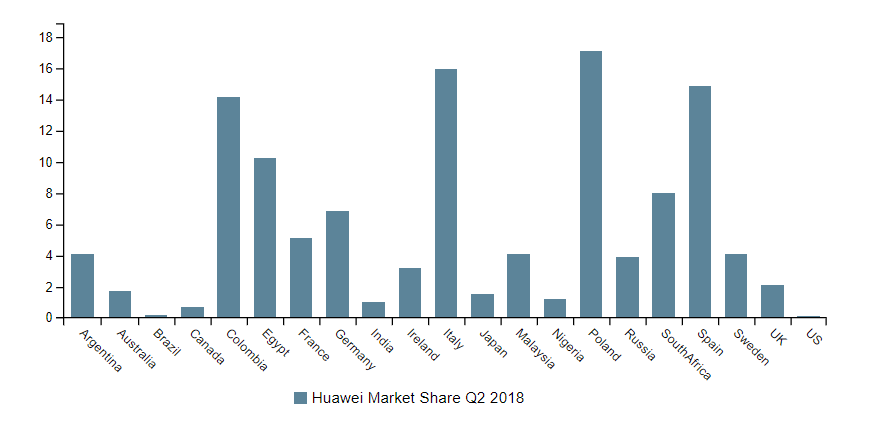
    According to sales data, Huawei is most popular in Germany, Italy, Poland, Spain as well as Colombia, Egypt and South Africa.

    Although the sanctions from the United States (US) has choked Huawei business outside mainland China, yet it has grown to dominate its substantial home market.

    Huawei said in a statement it is a sign of “exceptional resilience”. However, overseas shipment fell nearly a third in the second quarter and Canalys analyst Mo Jia warned that strength in China alone “will not be enough to sustain Huawei at the top once the global economy starts to recover”.

    “Its major channel partners in key regions, such as Europe, are increasingly wary of ranging Huawei devices, taking on fewer models, and bringing in new brands to reduce risk,” Mo said.

  • Chinese phone makers: A big threat to Google Play

    China’s top smartphone makers Huawei, Oppo, Xiaomi, and Vivo have collaborated to build a shared platform to compete with Google’s Play store, latest reports have revealed. The move is believed to be a direct threat to the $1 trillion parent Alphabet company and the de-facto US dominance of Android.

    Manufacturers in China rely on Android to run their devices but they use domestic app stores inside China, where Google services are blocked. Chinese manufacturers have continued to reply to pre-installed Google Play, offering the users the most popular social apps like Facebook and WhatsApp that are not available for download in China.

    The four Chinese handset makers together shipped around 40pc of the world’s smartphones in the fourth quarter of 2019.

    They will now let foreign app developers like Facebook upload and update the software to all the respective stores, through the new platforms, with a single click.

    If this initiative materializes successfully, this will create a new universe of apps which will be in direct competition with Google Play Store.

  • Huawei to invest $170 million in Pakistan this year

    Huawei to invest $170 million in Pakistan this year

    Chinese tech giant Huawei Group has unveiled an $170 million investment plan to set up its regional headquarters and upgrade technical support centre in Pakistan, a private media outlet reported.

    Huawei Group Vice President Mark Xueman said on Wednesday that his company would invest around $100 million in Pakistan this year.

    “Huawei will also set up a regional headquarters in Islamabad at a cost of $55 million that will create job opportunities for young engineers in Pakistan,” he said while talking to Planning, Development and Reforms Minister Makhdoom Khusro Bakhtiar.

    Huawei’s official further informed the minister that the company would also invest $15 million more in its technical support centre and it will also hire more workforce for the centre, taking the number of its staff to 800 from 600 this year.

    “Huawei is eager to initiate more projects in Pakistan on grant funding from the Chinese government,” Xueman said; responding to which the minister assured him of all cooperation in future joint ventures.

    Pakistan is a fast-growing telecom market with subscribers of mobile phones having crossed the 160 million mark compared with the country’s population of 210 million. Of total subscribers, 68 million use 3G/4G. There are 70 million broadband subscribers.

    The country imports millions of dollars of mobile phones to meet the local requirements with manufacturing and assembling of handheld devices not present in the country.

    According to the government, Huawei has a 25 per cent share in the country’s mobile industry and is also the top tax paying Chinese company in the country.