Tag: Human Rights violation

  • Poverty-driven child marriages surge in flood-hit Balochistan

    Poverty-driven child marriages surge in flood-hit Balochistan

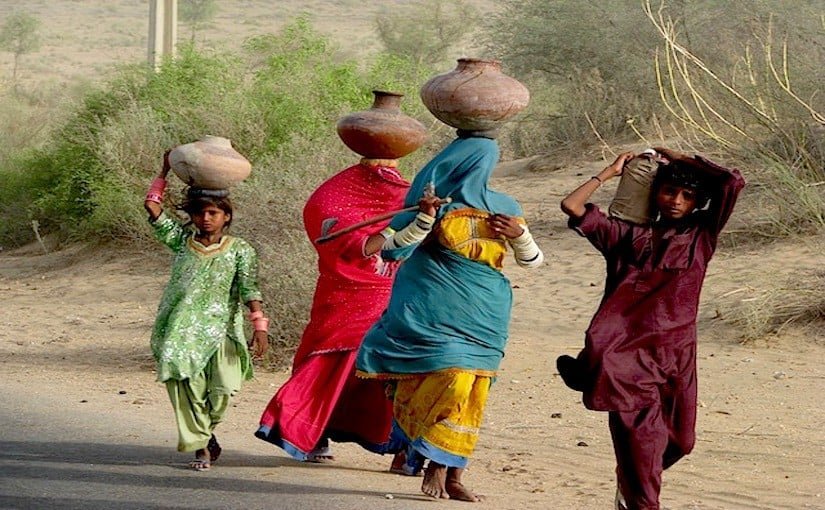
    Journalist and storyteller Shahar Baloch has recently reported for BBC about the aftermath of the devastating floods in Balochistan last year. The report reveals that families from lower income backgrounds, impacted by the aftereffects of the floods, are being compelled to sell their daughters due to mounting debts. The dire situation was uncovered in the Chowki Jamali area, one of the regions hit hardest by the 2022 floods.

    Chowki Jamali, a remote area on the border of Sindh and Balochistan, is home to approximately 50,000 people, primarily farmers and daily wage laborers. The 2023 floods displaced over 3.2 million families in 2022, with Sindh and Balochistan experiencing the worst of the brunt.

    As families struggled to recover, the economic downturn pushed many to sell their young daughters to older men, aged between 40 and 60 years, in exchange for money to pay off debts or cover medical expenses. Daily wage laborers, earning as little as 500 rupees a day, say that they are left with no other option.

    Residents of the area say that early marriages have been conducted here in the past as well.

    The Provincial Disaster Management Authority (PDMA) conducted a survey of 14 districts of Balochistan in August 2022. According to the survey, there has been a 13 per cent increase in the number of cases of selling female children.

    Most girls are sold for amounts ranging from three to five lakh rupees, providing relief for financially strained families, who often rely on the transaction to settle debts, access medical treatment, or invest in their son’s education.

    The situation is exacerbated by the fact that in some cases, girls are sold multiple times if they do not “adjust” to their new circumstances. Some girls even run away upon learning of their impending sale, leaving their younger sisters to be married off in their place.

    The term “climate brides” is used to describe these girls, and this alarming practice is not unique to Balochistan; it also occurs in countries like Africa and India where poverty and climate change intersect.

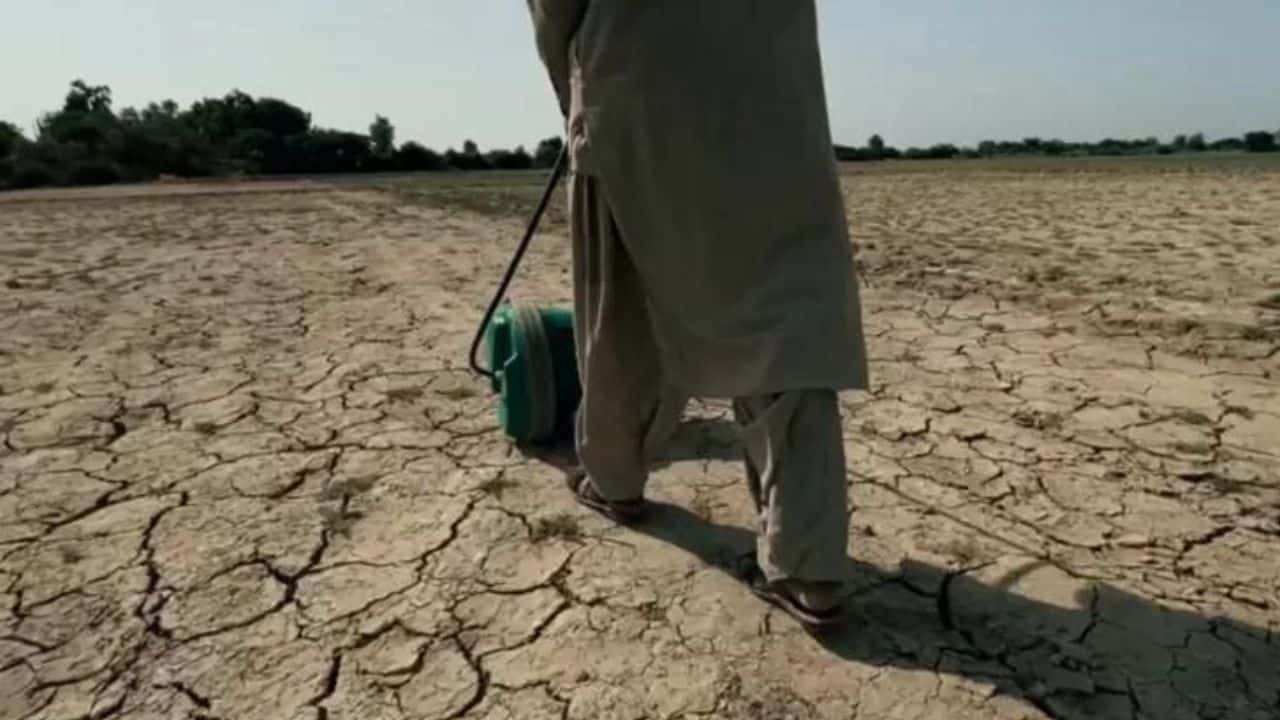
    Climate change and floods have made agriculture increasingly unprofitable in Balochistan, driving families to desperate measures. With little income and food scarcity, many in Chowki Jamali resort to selling their daughters to survive.

    Even though education has made a difference, parents continue to sell their daughters due to extreme poverty.

    Health workers report severe health consequences for young girls married off early, including complications during pregnancy and the development of conditions like fistulas. Despite being aware of this issue, authorities have struggled to curb these marriages.

    Lady health worker Shehzadi told the BBC that in some cases, girls cry in pain, and some die here. “We still make noise, we can say something, but the mothers of these girls cannot say anything in this matter because it is the men of the house who decide to sell the girls.”

    Madad Community, an organization working on climate change in Balochistan, recently said that as a result of climate change and floods, it has become very difficult to earn from the agriculture sector.

    Organizer Maryam Jamali said that most people were forced to migrate, including the middle class of Balochistan. Poor farmers still have nowhere to go. As a result of extreme heat, more droughts and floods have been predicted.

    Fauzia Shaheen, Chairperson of the Government Commission for Women, revealed that Balochistan lacks effective laws to prevent child marriages, and efforts to pass the Child Marriage Restraint Bill have faced obstacles.

    In Balochistan, it is clear that the true cost of flood damage is being borne by the region’s vulnerable young girls, who are forced into early marriages due to dire economic circumstances.
  • New HRCP report reveals human rights violations in Northern Sindh

    New HRCP report reveals human rights violations in Northern Sindh

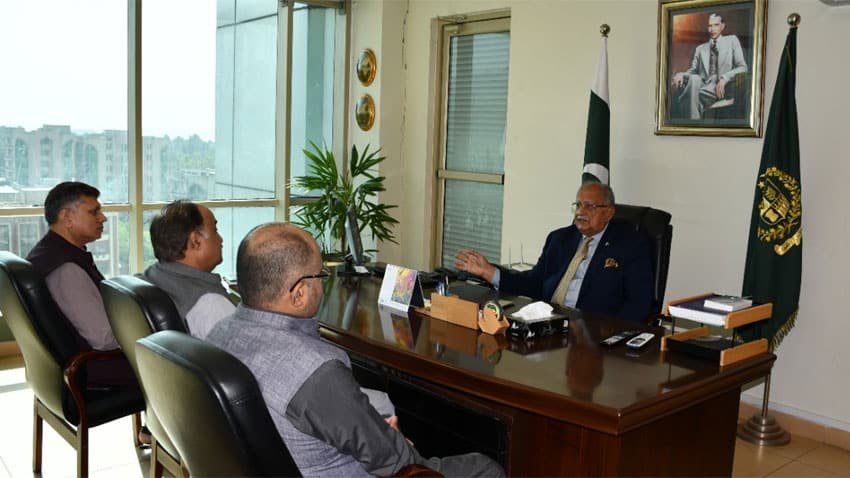
    Human Rights Commission of Pakistan (HRCP) has released a fact-finding report titled “Northern Sindh: In Search of Solutions”, detailing violations of human rights in the region.

    The report is based upon a mission conducted by HRCP in February 2023 in which the team conducted interviews and consultations in Ghotki, Mirpur Mathelo, Kandhkot, Jacobabad, Larkana and Karachi where they met human rights defenders, lawyers, journalists, students, workers, political leaders, government representatives and law enforcement authorities.

    The report reveals the lack of law and order, inaccessibility of education and healthcare, and other barriers on basic rights.

    Due to lack of shelters for survivors, the conviction rates in gender-based violence including physical and sexual assault, abductions, premature burials and murders, cases are low and hence, violence is high. Many cases, in fact, remain unreported. Existing shelters lack medical care and legal assistance, where victims are kept in unpleasant conditions. The rooms are few while the management and staff lacks sensitivity as they are untrained.

    Similarly, religious minorities are at a threat due to discrimination, arbitrary blasphemy accusations and faith-based conversions.
    People of the province, especially those residing in kachi abadis, are vulnerable to organised crime, enforced disappearances, extrajudicial killings and exploitative feudal power systems. This too, is linked to poor governance and lack of accountability.

    Conflicts are further topped by tribal feuds, stagnating the socio-economic development.

    And then, the rehabilitation of flood victims and long-term climate sustainability measures are issues still unaddressed.

    Over and above, law enforcement personnel and fake FIRs against journalists are used a weapon to stop coverage of human rights violations.

  • The Minister for Human Rights Should Resign: Here is His Resignation Letter

    The Minister for Human Rights Should Resign: Here is His Resignation Letter

    Last month, a 24-year-old woman was gang-raped at gun point by two men in Islamabad’s F9 park. The First Information Report (FIR) filed by the victim stated that after she was raped, the assailants gave her Rs1,000 and told her that she should not have been in the park at night.

    How did the federal Minister for Human Rights react to this heinous crime? Almost three weeks later, in a televised interview with Nadir Guramani, on the topic of the F9 rape case, Mian Riaz Hussain Pirzada said that mothers of ‘tarbiyat’ (good upbringing) do not let their children go out at night. In one breath, Mr Pirzada not only victim-shamed the victim of the rape but he also blamed her mother for not having “properly reared” her daughter.

    Clearly, Mr Pirzada has no understanding of what his job entails as the federal Minister for Human Rights. Here is a tailor-made letter of resignation he can sign on his way out.

    TO:​​ Prime Minister Shehbaz Sharif
    FROM:​​ Mian Riaz Hussain Pirzada
    RE:​​ Letter of Resignation (Federal Minister for Human Rights)

    Dear Excellency,

    I write to you with the heavy weight of self-awareness on my shoulders. I have come to see that I am a misogynist and therefore I cannot represent fairly and equally the rights of all the citizens of Pakistan.

    The term “misogyny” is often linked to woman-hating. The problem with this outdated view of misogyny is that, when it is used like this, it is a circuitous nonsense. As soon as I tell you that I love my mother and my wife, which I do, I have proven to you that I simply cannot be a misogynist.

    What I have come to learn is that misogyny is an enforcement system that keeps women in gendered roles. A woman who carves out her own path, or steps outside the role of being a well-behaved, supportive, giving woman, is disrespectable in the eyes of a misogynist and he (or she) is then entitled to put that woman back in “her place” to ensure she complies with the norms and expectations of patriarchy.

    In my interview with Mr Guramani, I concurred with the F9 rapists: the woman who got raped had it coming because good girls do not venture out at night. I went one step further and I also blamed the victim’s mother because, clearly, she has not raised a good girl. This justification of rape makes me a misogynist. I wonder if the rapists’ criminal defence will quote my words and use my line of reasoning?

    As the Minister for Human Rights, I should have known that Chapter 1 (Fundamental Rights) of the Constitution of Pakistan provides for equality of citizens and “no discrimination on the basis of sex” (Article 25) and that security of person entails that no person shall be deprived of life or liberty (Article 9).

    As the Minister for Human Rights, I should have demanded that my own government (and the police) do more to protect our citizens, who have every right to enjoy their liberties, which include taking in the night air, free of fear and discrimination, whether man or woman.

    As the Minister for Human Rights, I should have made clear that the rapists are the real and only culprits of the F9 rape and that I stand firmly with the victims, enraged at the violation of their human rights.

    I am an embarrassment to the Ministry of Human Rights and I hereby resign, with immediate effect.

    Mian Riaz Hussain Pirzada

  • Taliban dissolve US-backed Human Rights Commission in Afghanistan

    Taliban dissolve US-backed Human Rights Commission in Afghanistan

    Taliban authorities dissolved the United States (US)-backed Human Rights Commission in Afghanistan and other five key departments on Monday as the country faces an economic crisis.

    The Afghan government’s spokesman Inamullah Samangani told Reuters, “These departments were not deemed necessary and were not included in the budget, they have been dissolved.”

    However, he added that these departments could be reactivated in the future “if needed”.

    The announcement was made in the country’s first annual budget since the Taliban takeover. The budget stated that Afghanistan faces a budget deficit of 44 billion Afghanis ($501 million) this financial year.

    Samangani said the budget was “based on objective facts” and intended only for departments that had been active and productive.

    The High Council for National Reconciliation (HCNR), the National Security Council, and the commission for overseeing the implementation of the Afghan Constitution have also been dissolved. It is pertinent to mention that HCNR was last headed by former Chief Executive Officer of Afghanistan Abdullah Abdullah who was working to negotiate peace between the US-backed government of former Afghan President Ashraf Ghani and the then-insurgent Taliban.

    Last week, the Taliban ordered women to cover themselves from head to toe in public, expanding a series of oppressive restrictions on women.

  • ‘India should stop harassing journalists’: Human Rights Watch

    ‘India should stop harassing journalists’: Human Rights Watch

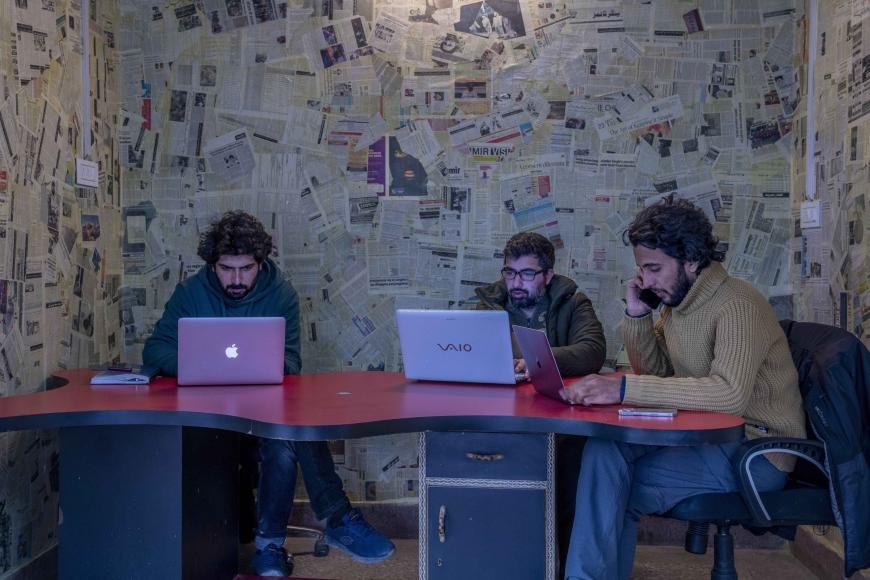
    Human Rights Watch (HRW) has released its report to address the unlawful arrest of journalists in Indian-Occupied Kashmir (IoK). According to the report, so far at least 35 journalists in IoK have faced police interrogation, raids, threats, physical assault, or fabricated criminal cases for their reporting.

    The recent arrest of Fahad Shah, an editor-in-chief of a leading Kashmir-based news site The Kashmir Walla, has led to condemnation from several journalism organisations including United States (US)-based Committee to Protect Journalists (CPJ).

    South Asia director at Human Rights Watch (HRW) said, “Instead of ensuring justice for security force violations in Kashmir, the [Indian] government is more interested in silencing those who bring these abuses to light.”

    Ganguly also demanded Indian authorities in Kashmir to release Shah and all journalists, activists, and critics jailed on “politically motivated charges” and stop harassing them with draconian laws.

    Furthermore, HRW has stated a number of journalist names who are behind bars on baseless grounds. Last month, the police arrested another journalist at the Kashmir Walla.

    In September, the police raided the homes of four Kashmiri journalists and confiscated their phones and laptops. Not only this, the Indian authorities give threats to journalists with jail if their work criticises them and pressured them to self-censor, says the HRW report.

    It states that India has placed over 40 people, including 22 journalists, on lists to stop them from travelling abroad.

  • Forced conversions are against the spirit of the constitution 

    On Wednesday, a parliamentary committee rejected the anti-forced conversion bill after the Ministry of Religious Affairs opposed the proposed law. According to Dawn, Religious Affairs Minister Noor-ul-Haq Qadri said the “environment is unfavourable” for formulating a law against forced conversions and warned that forming a law on forced conversions would “create further problems for minorities” as they will be made more vulnerable. He also said the proposed law will deteriorate peace in the country.

    It is unfortunate that the minister thinks such a law will lead to problems and will affect peace in the country. Minorities in Pakistan make up a very small number as more than 96 per cent population of the country is Muslim. So why would a bill that is against forced conversions, something that our religion also does not allow, make the minorities vulnerable? The Constitution of Pakistan guarantees that the rights of the minorities would be fully protected. Forced conversions are against the spirit of the Constitution as well as our religious teachings. 

    The Joint Action Committee for People’s Rights (JAC), a collection of  37 human rights groups, in an open letter has urged Prime Minister Imran Khan to take legal as well as administrative measures to protect minorities, especially the under age girls from forced conversions and marriages. The letter has also urged PM Khan to ensure the approval of the draft bill for timely legislation. The JAC also expressed its concern on the statements of the Minister for Religious Affairs on the draft bill to curb forced conversions, recalling that such statements are not only against the spirit of the Constitution, judgments of the Supreme Court of Pakistan but are also in contradiction with the stand taken by the PM against forced conversion of minority groups in Pakistan.

    Hopefully, the government will address this issue soon. We know that the majority of these forced conversions are underage girls from minority communities. Such practices should not be condoned by the government. Quaid-e-Azam Muhammad Ali Jinnah had envisioned a Pakistan where the minorities would feel safe. We should not let our founding father down. 

  • ‘You are lucky you weren’t beheaded’, Journalists open up about Taliban beatings

    Adding to a list of Taliban atrocities, two Afghan Journalists were left with immense bruises in Kabul. Their crime: covering protests in the Afghan capital.

    According to Taqi Daryabi and his colleague Nematullah Naqdi, of the daily newspaper Etilaat Roz (Information Daily), the Taliban separated them into two rooms, insulted, and flogged them with cables after accusing them of organising the protest as per Agence France-Presse (AFP).

    https://twitter.com/lnajafizada/status/1435818054332653576?s=21

    The two were reporting on a protest by women demanding the right to work and education in front of a police station.

    Naqdi said he was stopped by a Taliban fighter as soon as he started taking pictures.

    “They told me that you cannot film’,” he told AFP. Moreover he said that Taliban fighters insulted him and kicked him in the head and that a Taliban fighter placed his foot on his head and crushed his face against the concrete. When he was asked why he was being beaten, he was told, “you are lucky you weren’t beheaded.”

    Zaki Daryabi, the daily newspaper publisher told Committee to Protect Journalist (CPJ) via phone that the Taliban subjected the reporters to severe physical abuse that he described as “torture” for four hours that each lost consciousness at least four times in custody. However, CPJ could not independently confirm allegations of torture.

    According to the BBC, their journalists were also prevented from filming. Not only this, Al-Jazeera reported that three of their reporters said that Taliban fighters pushed, slapped them and took their belongings.

    Over the last days, the Taliban detained and later released at least 14 journalists covering protests against the group, At least nine of these journalists were subject to violence during their detention.

  • Amnesty International halts operations in India after government freezes bank accounts

    Amnesty International halts operations in India after government freezes bank accounts

    The government of India has completely frozen the Amnesty International Bank accounts by alleging them for money laundering which has brought all operations of the company at a complete halt.

    Moreover, the organisation was forced to let go of staff in India and pause all its ongoing research project and campaigns on human rights.

    The official statement posted on the website of the organisation claims government actions to be the “latest in the incessant witch-hunt of human rights organisations by the Government of India over unfounded and motivated allegations.”

    Furthermore “The continuing crackdown on Amnesty International India over the last two years and the complete freezing of bank accounts is not accidental.

    The constant harassment by government agencies including the Enforcement Directorate is a result of our unequivocal calls for transparency in the government, more recently for accountability of the Delhi police and the Government of India regarding the grave human rights violations in Delhi riots and Jammu & Kashmir. For a movement that has done nothing but raise its voices against injustice, this latest attack is akin to freezing dissent,” said Avinash Kumar, Executive Director of Amnesty International India.

    More than four million Indians have supported Amnesty International India’s work in the last eight years and around 100,000 Indians have made financial contributions.

    These contributions evidently cannot have any relation with the Foreign Contribution (Regulation) Act, 2010. The fact that the Government is now portraying this lawful fundraising model as money-laundering is evidence that the overbroad legal framework is maliciously activated when human rights activists and groups challenge the government’s grave inactions and excesses.

    The attacks on Amnesty International India and other outspoken human rights organizations, activists and human rights defenders is only an extension of the various repressive policies and sustained assault by the government on those who speak truth to power.

    “Treating human rights organisations like criminal enterprises and dissenting individuals as criminals without any credible evidence is a deliberate attempt by the Enforcement Directorate and Government of India to stoke a climate of fear and dismantle the critical voices in India.