Tag: Human Rights Watch

  • ‘Deliberate’ Israeli strike on journalists in Lebanon warrants ‘war crime’ investigation: watchdogs

    ‘Deliberate’ Israeli strike on journalists in Lebanon warrants ‘war crime’ investigation: watchdogs

    The Israeli strike that killed one journalist and wounded six others in Lebanon merits a “war crime” investigation, rights groups Amnesty International and Human Rights Watch (HRW) told AFP on Thursday.

    Reuters journalist Issam Abdallah, 37, was killed instantly in the strike on October 13 in the south of the country near the Israeli border.

    The others present — two more Reuters journalists, two from Al Jazeera, and two from AFP — were all injured.

    AFP photographer Christina Assi, 28, was seriously wounded, later had a leg amputated and is still in hospital.

    Independent investigations by both rights groups concluded, like an AFP investigation published earlier on Thursday, that the first strike that killed Abdallah and severely wounded Assi was most likely a tank round fired from Israel.

    Amnesty said the strikes “were likely a direct attack on civilians that must be investigated as a war crime”.

    “Those responsible for Issam Abdallah’s unlawful killing and the injuring of six other journalists must be held accountable,” said Aya Majzoub, Amnesty’s deputy regional director for the Middle East and North Africa.

    “No journalist should ever be targeted or killed simply for carrying out their work. Israel must not be allowed to kill and attack journalists with impunity.”

    HRW said the two Israeli strikes “were apparently deliberate attacks on civilians, which is a war crime”.

    Under international humanitarian law, “it is forbidden in any circumstances to carry out direct attacks against civilians”, it said.

    The group’s investigation indicated that the journalists were “well removed from ongoing hostilities, clearly identifiable as members of the media, and had been stationary for at least 75 minutes before they were hit”.

    Amnesty said images it verified showed “the seven journalists were wearing body armour labelled ‘press’, and that the blue Reuters crew car was marked ‘TV’ with yellow tape on its hood”.

    “The evidence strongly suggests that Israeli forces knew or should have known that the group that they were attacking were journalists,” HRW’s Lebanon researcher Ramzi Kaiss said.

    “This is an unlawful and apparently deliberate attack on a very visible group of journalists,” he said.

    ‘Justice and accountability’

    Speaking at a press conference in Beirut, Dylan Collins, the other AFP journalist wounded in the attack, said: “I know they (the investigations) won’t bring Issam back to life. I know they won’t help Christina walk again.

    “But what I do hope is that they at least will mark the start of some sort of process of justice and accountability,” he said.

    He shared a message from Assi that said: “We chose journalism with a mission to deliver the truth, and despite the inevitable costs, our commitment remains unwavering. Nothing can silence us.”

    Lebanese Prime Minister Najib Mikati said in a statement his government would “take all measures to include” the conclusions of the investigation “in the complaint filed before the UN Security Council”.

    Since Israel’s bombardment of Gaza started after Palestinian fighter group Hamas struck Israel in a surprise attack on October 7, 63 journalists and media workers have been killed — 56 Palestinians, four Israelis and three Lebanese, the Committee to Protect Journalists says.

    The New York-based rights group on Thursday called for “an immediate, independent, and transparent investigation that holds the perpetrators to account” for the strike on journalists in Lebanon.
  • Human Rights Watch confirms use of white phosphorus in Gaza, Lebanon

    Human Rights Watch confirms use of white phosphorus in Gaza, Lebanon

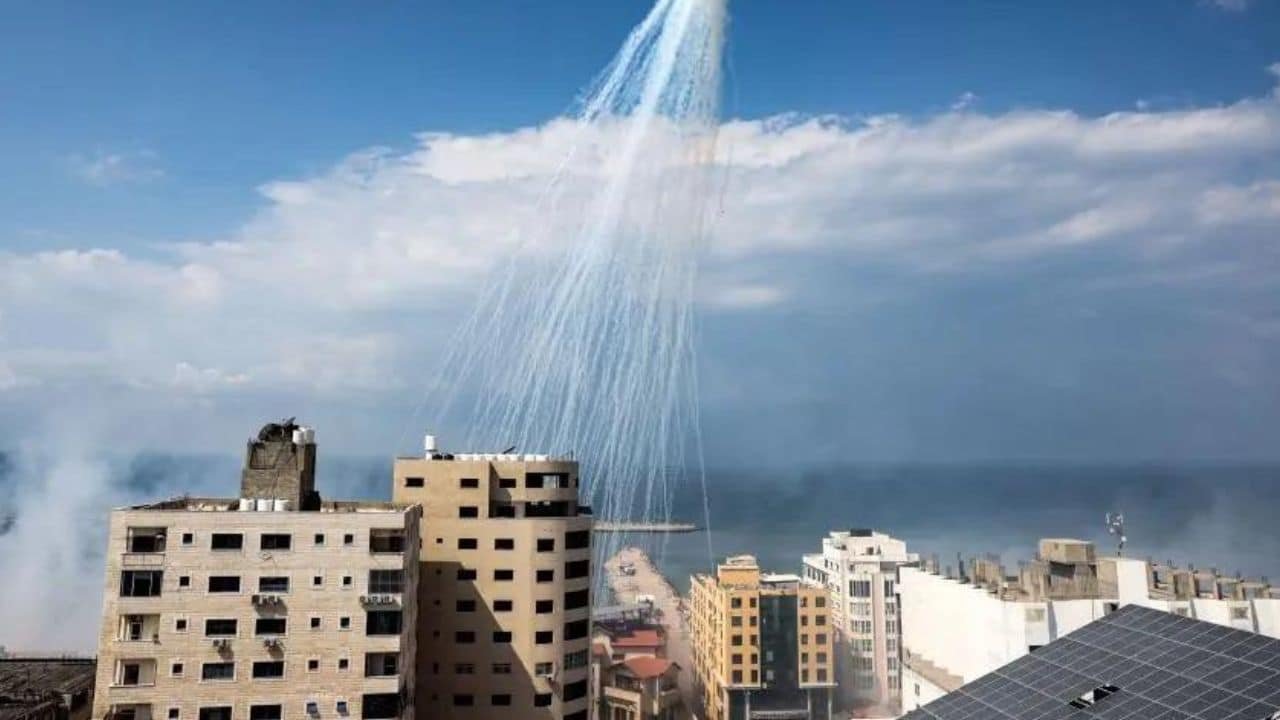
    As Israel’s onslaught on Gaza enters the seventh day, multiple sources claimed that Israeli forces were using white phosphorus to attack Gaza and Lebanon.

    The Palestinians claimed the news to be true but many news platforms did not verify the reports.

    The use of white phosphorus has now been confirmed by Human Rights Watch.

    “Human Rights Watch verified videos taken in Lebanon and Gaza on October 10 and 11, 2023, respectively, showing multiple airbursts of artillery-fired white phosphorus over the Gaza City port and two rural locations along the Israel-Lebanon border, and interviewed two people who described an attack in Gaza,” they have stated.

    Additionally, Lama Fakih, Middle East and North Africa director at Human Rights Watch explains that “Any time that white phosphorus is used in crowded civilian areas, it poses a high risk of excruciating burns and lifelong suffering,

    “White phosphorous is unlawfully indiscriminate when airburst in populated urban areas, where it can burn down houses and cause egregious harm to civilians.”

    The United Nations has banned the use of incendiary weapons in 1972.

    “Incendiary weapons are weapons or munitions designed to set fire to objects or cause burn or respiratory injury to people through the action of flame, heat, or combination thereof, resulting from a chemical reaction of a flammable substance such as napalm or white phosphorus,” the UN says.

    Nonetheless, it is not the first time that Israel has used white phosphorus against Palestinians. One of the first recorded incidents of its use is from 2009.

  • Farmers ‘harassed and threatened’: Human Rights Watch releases report on RUDA project

    Human Rights Watch (HRW) has released a report on Ravi Urban Development Authority (RUDA) project, stating that authorities are forcibly evicting thousands of farmers near the city of Lahore for a massive infrastructure project.

    The international organisation spoke to 14 farmers, who said they have been evicted or threatened with eviction since August 2020. According to them, not only have the authorities “harassed” them but have “criminally charged more than 100 farmers with resisting or refusing to hand over the land they occupied.”

    The report noted that in 2022, the Supreme Court allowed the government to continue development only on the land it had already acquired and for which it had paid compensation.

    Despite that farmers and activists alleged that the development authority has continued to seize land.

    Although the project claimed that it will ease Lahore’s many problems including pollution, sewage, water, housing, and employment, the report said otherwise.

    “Environmental groups have raised concerns that the project’s proposed changes to the flow of the Ravi River could significantly increase the risks of flooding. Pakistan’s Sindh province experienced catastrophic floods in mid-2022.”

    In 2022, former Chief Minister Pervaiz Elahi allocated 700 kanals of land for the construction of a journalists’ housing society in RUDA.

    However, journalists openly criticised the government and refused to accept the offer.

    In August 2020, then-Prime Minister Imran Khan laid the foundation stone of the controversial real estate project.

  • Prisoners in Pakistan exposed to diseases in overcrowded jails: HRW

    Prisoners in Pakistan exposed to diseases in overcrowded jails: HRW

    According to a report released by Human Rights Watch, Pakistani authorities have systematically deprived prisoners of adequate health care, leaving thousands at risk of disease and death.

    The report, titled “A Nightmare for Everyone: The Health Care Crisis in Pakistan’s Prisons,” highlights the widespread deficiencies in prison health care in Pakistan and the impact on a total prison population of over 88,000 people. Outdated and discriminatory bail laws have contributed to severe overcrowding, with most prisoners still awaiting trial or conviction.

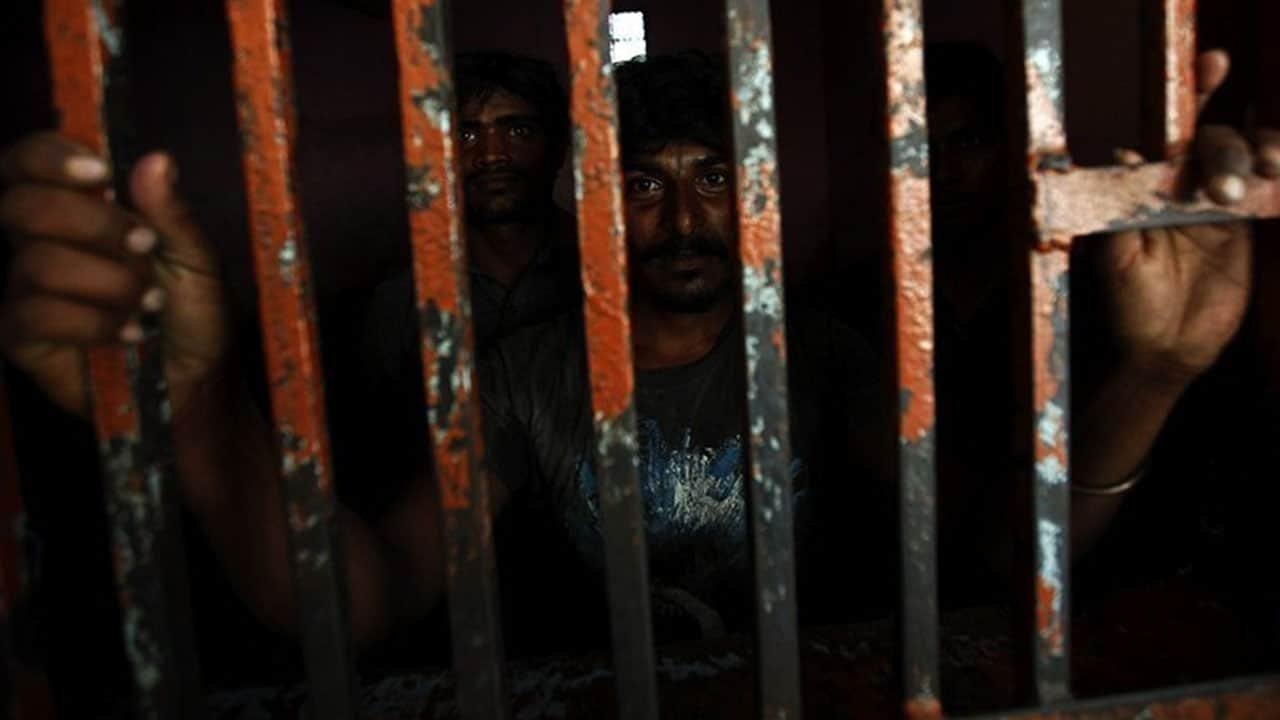
    Pakistan’s prison system is one of the world’s most overcrowded, with cells designed for a maximum of three people holding up to 15. This overcrowding has compounded existing healthcare deficiencies, leaving inmates vulnerable to communicable diseases and unable to obtain even basic health care, let alone emergency medical treatment.

    Human Rights Watch interviewed 54 people, including former inmates, lawyers, prison health officials, and advocacy organizations working on prisoner rights, and found that the principal cause of overcrowding is the dysfunctional criminal justice system itself. Most inmates are under trial and have yet to be convicted, and the majority facing criminal trials are poor and lack access to legal aid.

    The crisis in prison health care reflects deeper failures in access to health care across Pakistan, exacerbated most recently by an economic crisis. Corruption among prison officials and impunity for abusive conduct contribute to serious human rights abuses.

    The report calls for urgent, systemic reform of Pakistan’s prison system, including changing bail laws, expediting the trial process, and prioritizing noncustodial sentences to reduce overcrowding. Pakistani governments at the federal and provincial levels should urgently adopt measures to bring health care in its jails and prisons in line with international standards, such as the Nelson Mandela Rules.

  • No more Amreeki sazish? Fawad Chaudhry meets Donald Blome

    No more Amreeki sazish? Fawad Chaudhry meets Donald Blome

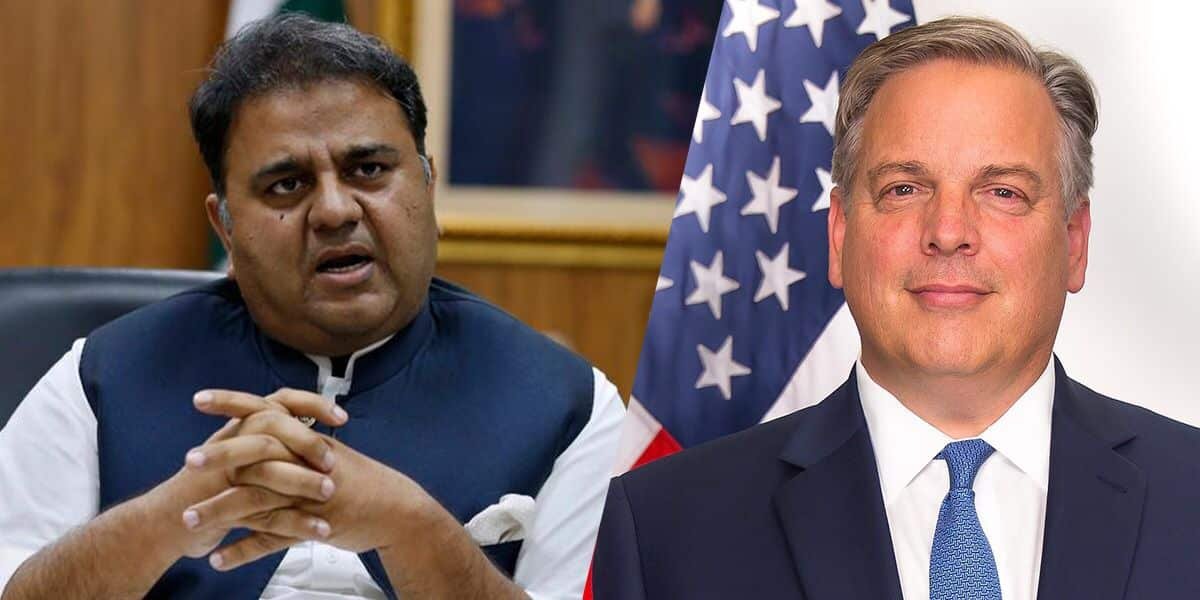
    Pakistan Tehreek-e-Insaf (PTI) Senior Vice-President Fawad Chaudhry has confirmed on Twitter that he met with United States (US) Ambassador Donald Blome and other senior American officials.

    Taking to Twitter, Chaudhry wrote, “Had a good meeting with US ambassador and senior officials. The worsening HR [human rights] situation in Pakistan was a particular focus of discussion.”

    Chaudhry said, “The political situation and PTI position on various issues came under discussion. Such meetings are part of mutual desire to have relationship based on equality and well being of people.”

    Last week, PTI Chairman Imran Khan yet again came up with another narrative regarding his version of “regime change”. The former Prime Minister said that former army chief General (retd) Qamar Javed Bajwa told United States (US) that Khan is anti-America, which resulted in his ouster.

    In an interview with Voice of America, Khan said, “As things unfolded, it wasn’t the US who told Pakistan, it was unfortunately, from what evidences have now come out, it was General Bajwa who actually somehow managed to tell the Americans that I was anti-America and so it was not imported from there actually it was exported from here to there.”

  • IMF should protect low-income people in Pakistan’s economic crisis: Human Rights Watch

    IMF should protect low-income people in Pakistan’s economic crisis: Human Rights Watch

    International Monetary Fund (IMF) should collaborate with the government of Pakistan to protect the economically disadvantaged by expanding social protection systems and minimizing reforms that may have adverse effects on the most vulnerable population, according to Human Rights Watch.

    The country is currently grappling with pressing issues such as inflation, poverty, inadequate governance, limited reserves, and high unemployment. Pakistan initiated discussions with the IMF on February 1st to formulate a plan to revive the economy, including securing the ninth tranche of $1.1 billion in loans from the $6.5 billion bailout.

    “Millions of Pakistanis have been pushed into poverty and denied their fundamental social and economic rights,” said Patricia Gossman, associate Asia director at Human Rights Watch.

    In addition, she emphasized that the IMF and the Pakistani government have a duty to manage this crisis in a manner that prioritizes and safeguards the well-being of low-income individuals.

    According to data from the State Bank of Pakistan (SBP), foreign exchange reserves have reached their lowest level at $3.09 billion, a decrease of 16%, sufficient to cover less than three weeks of imports.

    Pakistan is currently experiencing its highest inflation rates since 1975, with the cost of perishable food items rising by over 60% in January. In response to IMF demands, the government of Pakistan recently raised prices of petrol and diesel by Rs35 and removed the cap on the dollar, as it was a crucial condition of the IMF and the dollar should be market-driven.

    The ongoing negotiations with the International Monetary Fund (IMF) are aimed at concluding the ninth review of the IMF’s Extended Fund Facility, designed to support countries facing balance-of-payments challenges.

    The completion of this review would provide the necessary clearance for the IMF’s bailout installment, which would alleviate the severe shortage of foreign exchange and enable access to additional funding sources, including from multilateral and bilateral donors.

  • ‘Dissolution of Assembly deprives Pakistanis of right to choose govt’: Human Rights Watch

    ‘Dissolution of Assembly deprives Pakistanis of right to choose govt’: Human Rights Watch

    Human Rights Watch (HRW) denounced Prime Minister (PM) Imran Khan’s action of dissolving the National Assembly and escaping from facing the no-confidence motion tabled against him. “This move of the premier has infringed on the rights of Pakistani citizens to choose their government.”

    “To dissolve parliament rather than face a no-confidence vote that could remove him from power effectively deprives Pakistani citizens of their right to choose their government,” said HRW in a statement.

    The watchdog for advocating human rights said, “Move has plunged Pakistan into a constitutional crisis. Under Pakistan’s constitution, the prime minister ceases to hold office if a majority of the National Assembly votes for a motion of no confidence – Imran Khan’s party appeared to have lost its majority by April 3. The action allows Khan to continue as prime minister until a caretaker government takes over, with neither a national assembly nor a federal cabinet.”

    “Government officials threatened to blow up the Opposition in a suicide attack and called on supporters to go out and take traitors to the task,” said HRW.

    “One member of parliament from Khan’s party tweeted that all Opposition members should be shot – a tweet he subsequently deleted. Senior members of Khan’s party have called for Opposition members to be arrested for treason,” added Human Rights Watch.

    Pakistan is in a state of political chaos as the no-confidence motion against Khan was dismissed abruptly on Sunday, April 3. Deputy Speaker Qasim Suri said that the no-confidence motion, presented on March 8, should be according to the law and the Constitution. “No foreign power shall be allowed to topple an elected government through a conspiracy,” he said, adding that the points raised by the minister were “valid”.

  • Human Rights Watch calls on govt, Opposition to refrain from violence

    Human Rights Watch calls on govt, Opposition to refrain from violence

    Human Rights Watch (HRW) said Wednesday that the Pakistani government has a responsibility to uphold the constitution and allow for voting without threats or violence on the no-confidence motion.

    HRW Associate Asia Director Patricia Gossman, in a statement, said both the government and Opposition should send a “strong message” to their supporters not to subvert the democratic process or sway the vote through intimidation or other criminal acts.

    The voting on the no-trust motion in the National Assembly is expected to take place on March 28.

  • ‘India should stop harassing journalists’: Human Rights Watch

    ‘India should stop harassing journalists’: Human Rights Watch

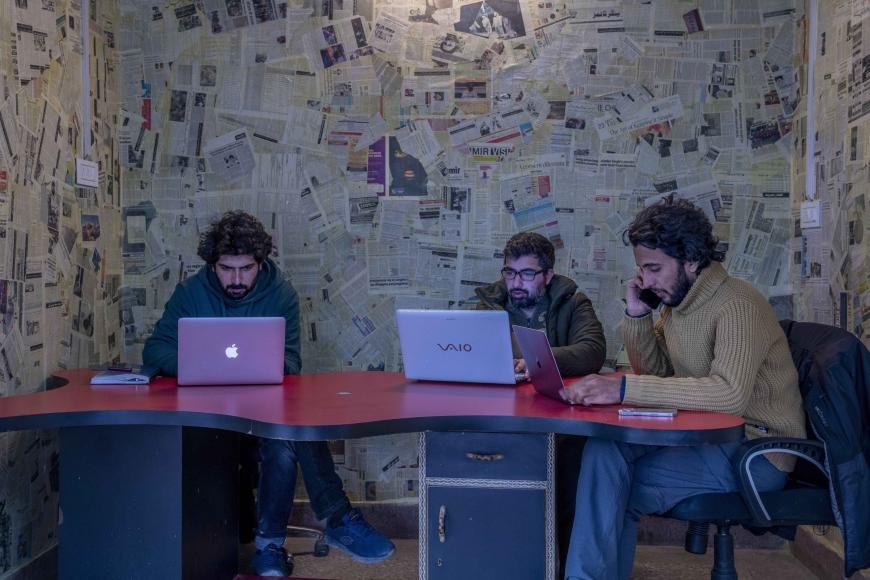
    Human Rights Watch (HRW) has released its report to address the unlawful arrest of journalists in Indian-Occupied Kashmir (IoK). According to the report, so far at least 35 journalists in IoK have faced police interrogation, raids, threats, physical assault, or fabricated criminal cases for their reporting.

    The recent arrest of Fahad Shah, an editor-in-chief of a leading Kashmir-based news site The Kashmir Walla, has led to condemnation from several journalism organisations including United States (US)-based Committee to Protect Journalists (CPJ).

    South Asia director at Human Rights Watch (HRW) said, “Instead of ensuring justice for security force violations in Kashmir, the [Indian] government is more interested in silencing those who bring these abuses to light.”

    Ganguly also demanded Indian authorities in Kashmir to release Shah and all journalists, activists, and critics jailed on “politically motivated charges” and stop harassing them with draconian laws.

    Furthermore, HRW has stated a number of journalist names who are behind bars on baseless grounds. Last month, the police arrested another journalist at the Kashmir Walla.

    In September, the police raided the homes of four Kashmiri journalists and confiscated their phones and laptops. Not only this, the Indian authorities give threats to journalists with jail if their work criticises them and pressured them to self-censor, says the HRW report.

    It states that India has placed over 40 people, including 22 journalists, on lists to stop them from travelling abroad.

  • Pakistan judiciary’s missed moment

    September 9, 2021, could have been a historic day for Pakistan had Justice Ayesha Malik of the Lahore High Court (LHC) been elevated to the Supreme Court (SC). Unfortunately, the Judicial Commission of Pakistan (JCP) could not elevate the first woman judge to the country’s highest court due to an equal split in voting with four votes in her favour and four against her elevation. An elevation requires a majority vote by JCP members. Justice Qazi Faez Isa, who is also part of the JCP, could not attend the meeting as he was out of the country for his wife’s medical treatment. He could have voted in writing or through a video link.

    According to the Human Rights Watch (HRW), Pakistan is the only nation in South Asia to have never had a female Supreme Court judge. HRW also says that only about four percent of Pakistan’s High Court judges are women. “Of the 3,005 Pakistani judges in the lower and higher courts, only 519 – or 17 percent – are women.”

    It just shows how — like other professions in the country — the legal fraternity, too, suffers from gender imbalance and gender inequality. It is unfortunate that an institution that has to dispense justice to society is bereft of doing justice to the women in the legal fraternity. If a woman judge cannot make it to our top court, how are we to expect a just system for women who face extensive abuse in the country? When there is so much sexism in the country, so much misogyny all around us, a woman making it to our top court would have given us some confidence in our systems, in our institutions. It is a sad reflection of our society that when it comes to equal participation of women in courts, men get to decide their fate. Not one single member of the JCP is a woman. The decision-making for such high offices is left in the hands of a few men. 

    Some in the legal fraternity say that the process of judges’ appointments is problematic and should be more transparent instead of a pick and choose a principle that is being applied at the moment. We hope that the judiciary and bars and the legal fraternity will address these issues, resolve them and also make sure that women are equally represented in Bars as well as the judiciary. And we hope that Justice Ayesha Malik will be nominated again to the apex court. It is the 21st century and our judiciary should not be seen as a boy’s club. More power to Justice Ayesha Malik!