Tag: humans

  • Gadhe aur Insaan; Massive surge reported in Pakistani donkey, human population

    Gadhe aur Insaan; Massive surge reported in Pakistani donkey, human population

    Pakistan’s Economic Survey 2023-24 has revealed a shocking rise in the population of both donkeys and humans in the country.

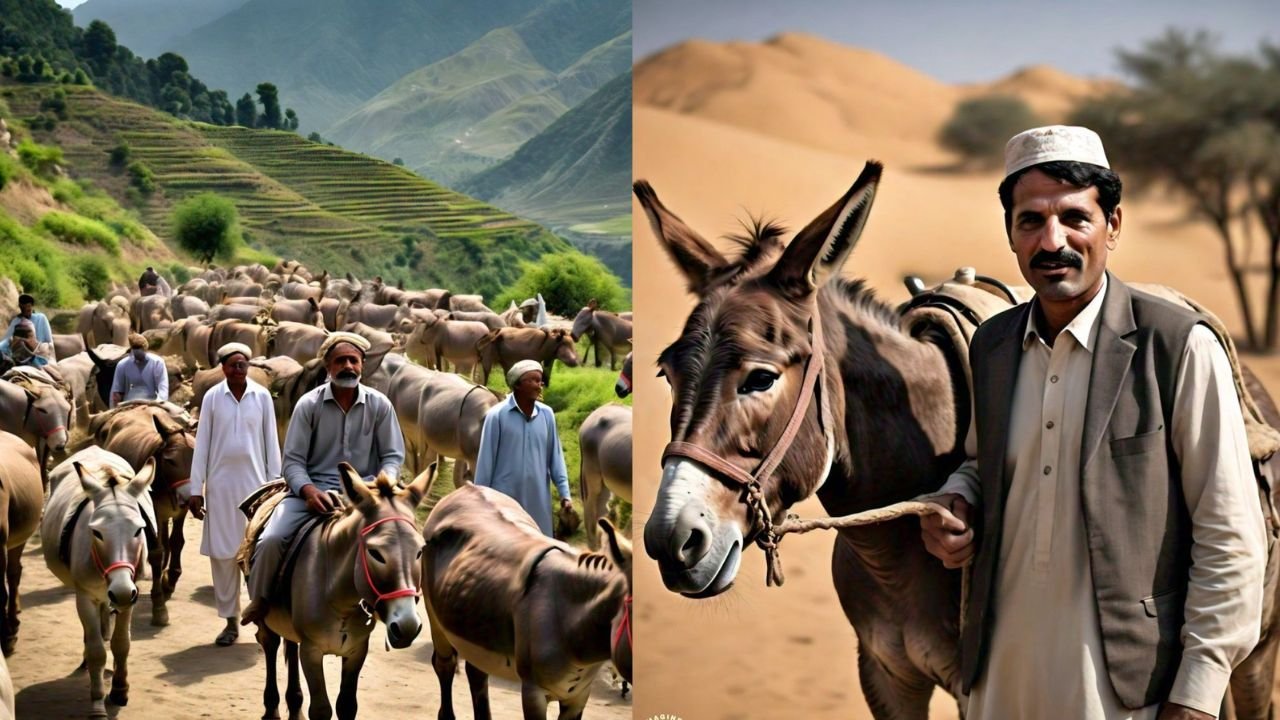
    Pakistan’s donkey population has climbed to 5.9 million, marking a significant increase from the previous financial year’s count of 5.8 million, according to the survey.

    The upward trend in donkey numbers has persisted over the past two years, with an additional 0.2 million donkeys born within this time.

    Meanwhile, Pakistan’s population has increased by 16.3 percent to 241.5 million compared to 2017 (excluding Azad Jammu and Kashmir and Gilgit-Baltistan), showing that the country is facing a population explosion.

    According to Economic Survey 2023-24, population growth rate at the national level is 2.55 percent. In contrast, the growth rate in urban areas is 3.65 percent, which is higher than the population growth rate in rural areas—1.90 percent—due to rural-urban migration.

    Population density increased from 260.88 persons per square km in 2017 to 303 in 2023. Additionally, the average household size has decreased from 6.39 in 2017 to 6.30 in 2023.

    Pakistan’s urban population increased from 75.67 million to 93.75 million between 2017 and 2023, making it one of the most urbanised nations in South Asia.

    Almost 39 percent of its population lives in urban areas. Urbanisation impacts a country’s economy and development, leading to changes in various areas such as labour market opportunities, family structures, education, health, environment management, security systems, and governance.

    The literacy rate has gone up in all provinces, with Punjab (increased 66.1 percent to 66.3 percent), Sindh (61.6 percent to 61.8 percent), Khyber Pakhtunkhwa (52.4 percent to 55.1 percent), and Balochistan (53.9 percent to 54.5 percent).

  • Pakistan ranks 99th in Global Hunger Index 2022, faces serious hunger levels

    Pakistan ranks 99th in Global Hunger Index 2022, faces serious hunger levels

    In the recently published Global Hunger Index (GHI-2022), Pakistan has been ranked 99th out of 121 countries assessed for their hunger levels.

    The GHI report, launched in Islamabad on Tuesday, revealed a drop in Pakistan’s score from 38.1 in 2006 to 26.1 in 2022, but the hunger level is still considered serious, reported Dawn.

    The Global Hunger Index is an annual pre-reviewed report jointly published by Welthungerhilfe and Concern Worldwide. Its primary objective is to raise awareness and understanding of the challenges faced in the fight against hunger worldwide.

    According to the report, the combination of armed conflicts, climate change, and the coronavirus pandemic has exacerbated hunger issues, forcing approximately 828 million people into hunger globally. Moreover, it highlights that 46 countries are not on track to achieve even a low level of hunger by 2030, signaling the need for urgent action.

    The regions most affected by hunger are Africa, specifically South of the Sahara, and South Asia, with the latter being the worst-hit. Notably, South Asia has the highest child stunting rate and the highest child wasting rate among all world regions.

    Pakistan, with a serious level of hunger, faces significant challenges in eradicating this issue. As the nation strives to address this pressing problem, stakeholders are urged to collaborate and implement solutions that involve local communities and diverse voices in shaping effective policies for food security.

    The Global Hunger Index serves as a vital tool in identifying and tackling hunger-related problems, and it is hoped that with collective efforts, progress will be made towards achieving a hunger-free world.

  • Birds outsmart humans, incorporate anti-bird spikes into nests

    Birds of the Corvidae type, including magpies and crows, have been observed incorporating anti-bird spikes into their nests in Scotland, Holland and Belgium, effectively repurposing the hostile architecture designed to prevent them from perching.

    A recent study published by Auke-Florian Hiemstra, the lead author of the study, highlights the remarkable behavior.

    The metal spikes provide structural support to the nests, creating dome-like roofs, and also serve as a defense mechanism against predators. Hiemstra’s study, featured in the online journal Deinsea, suggests that birds may be seeking evolutionary advantages by utilizing human-made objects for nest construction.

    The findings have astounded researchers and shed light on the cognitive abilities of the clever birds.

    While anti-bird spikes are commonly used in various urban settings to deter birds from perching, it appears that birds are turning the tables on humans and repurposing these materials to their advantage. Jim Reynolds, an ornithology and animal conservation expert, believes that this adaptive behavior is an effective strategy for birds that inhabit urban environments.

    Furthermore, the presence of shiny and spiky nest materials may serve as a signal to potential mates, indicating the quality of the nest and the suitability of the bird as a partner.

  • Almost 25,000 cases of lumpy skin disease diagnosed in cattle in Sindh, humans not at risk

    Almost 25,000 cases of lumpy skin disease diagnosed in cattle in Sindh, humans not at risk

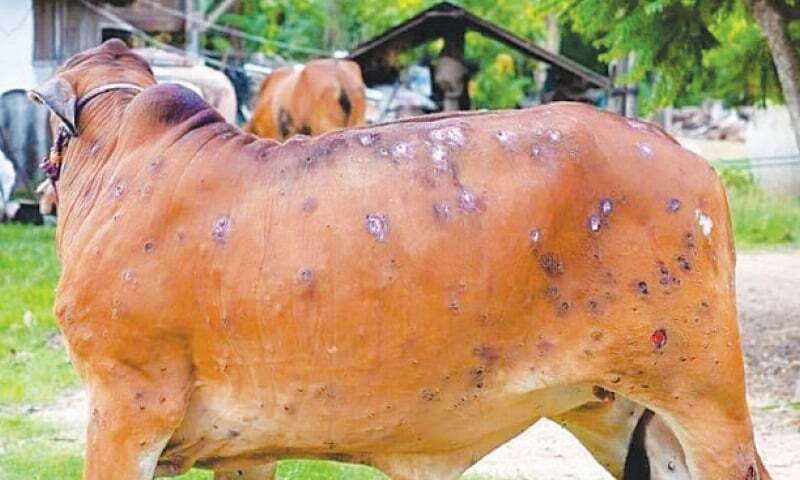
    At least 750 cases of lumpy skin disease have been reported in various parts of Sindh in 24 hours, Sindh Livestock Secretary Tameezuddin Khero has said.

    The number of infected cattle in the province has risen to 24,948, of which 8,491 are recovered and 16,295 are under-recovery, whereas 162 deaths have been reported.

    Talking about the possibility of transmission of disease to humans, Tameezuddin said, “Humans are not at risk as meat and milk were safe for consumption.

    “It is transmitted by blood-sucking insects such as certain species of flies and mosquitoes, or ticks.”

    As per the provincial task force, as many as 156 animals have died due to the infectious disease of lumpy skin.

    Most cases are reported from, Karachi, Thatta, Sujawal, Badin, Hyderabad, Tando Mohammad Khan, Tharparkar, Umerkot, Mirpurkhas, Sanghar, Tando Allahyar, Matiari, Shaheed Benazirabad, Naushahro Feroze, Ghotki, Khairpur, Shikarpur, Jacobabad, Kashmore, Qamber Shahdadkot, Larkana, Dadu, Jamshoro, Thana Bula Khan, Kachho and Johi.

    The disease had its origin in Africa. The livestock department has advised cattle owners to keep sick animals isolated from healthy ones and to use an anti-mosquito spray on a regular basis to prevent skin disease.