Tag: hunger

  • Nearly 282 million people faced acute hunger in 2023: UN-led report

    Nearly 282 million people faced acute hunger in 2023: UN-led report

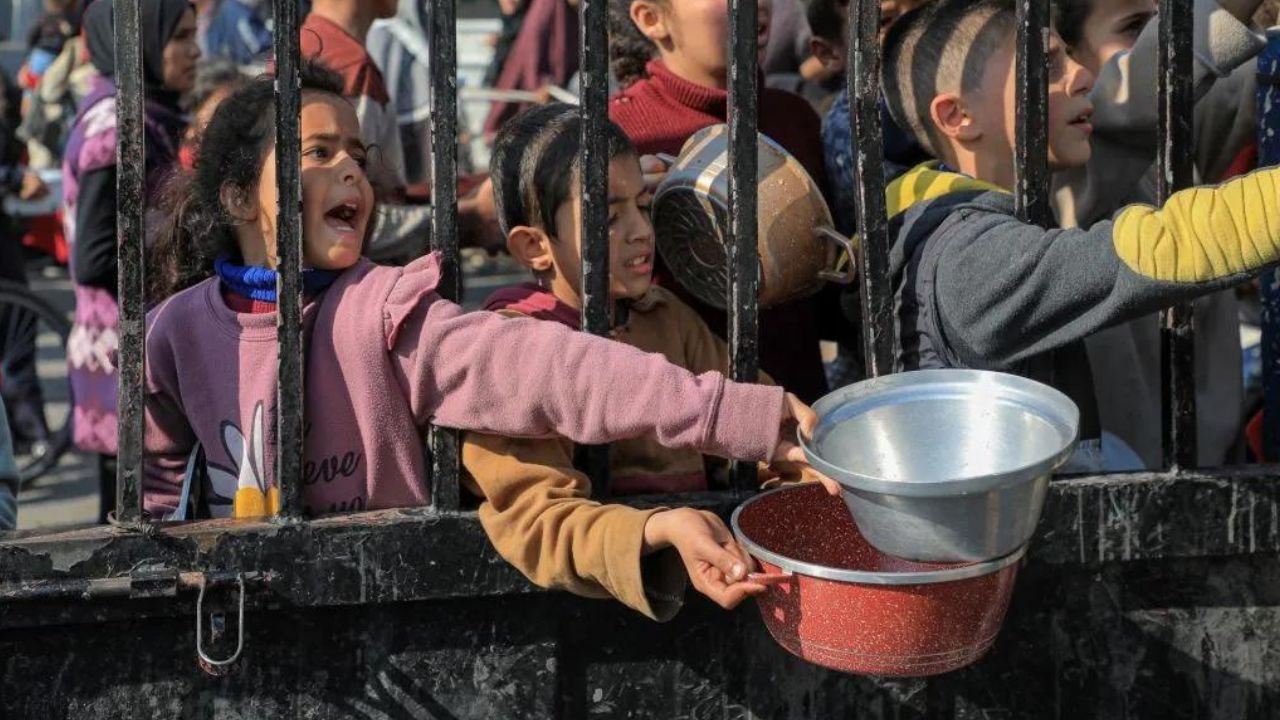
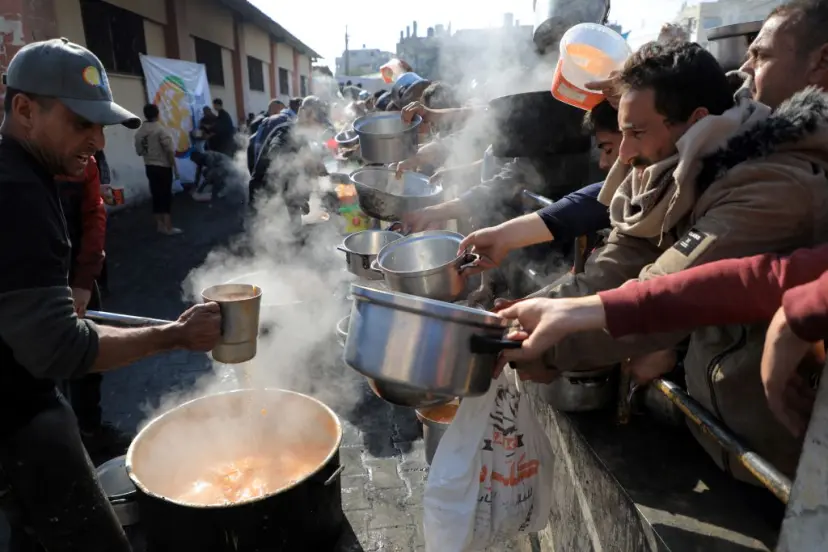
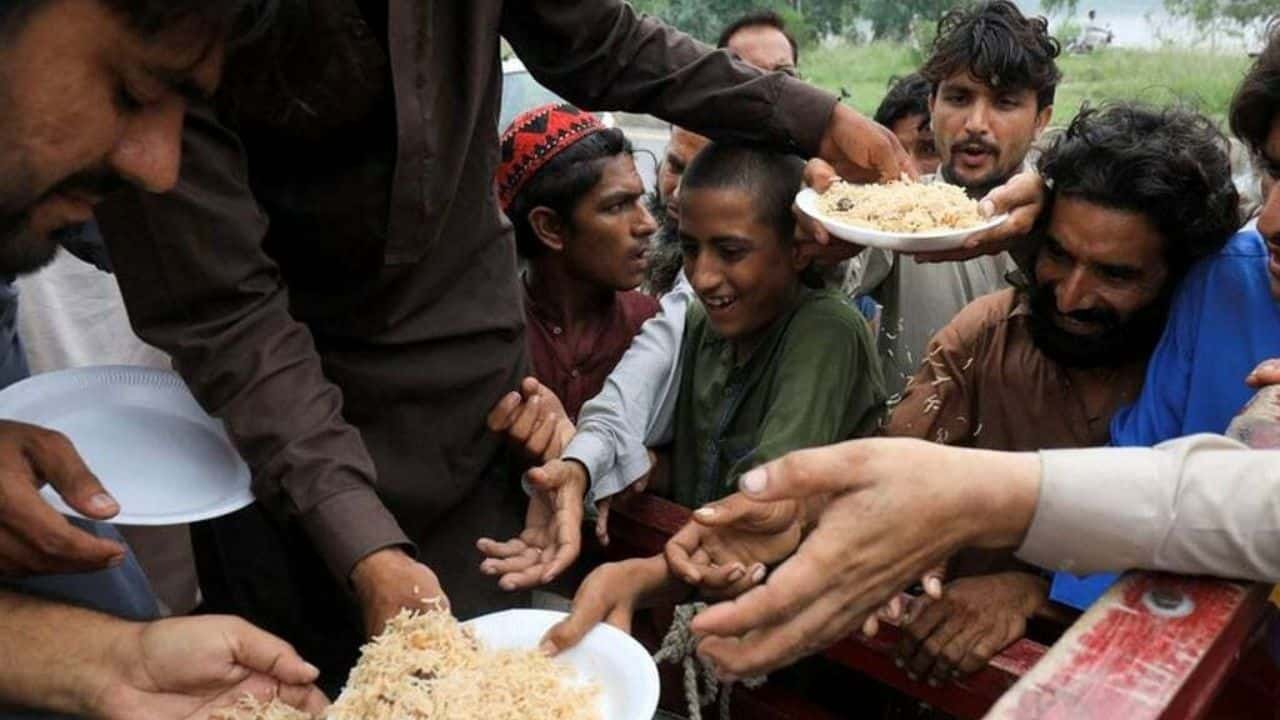
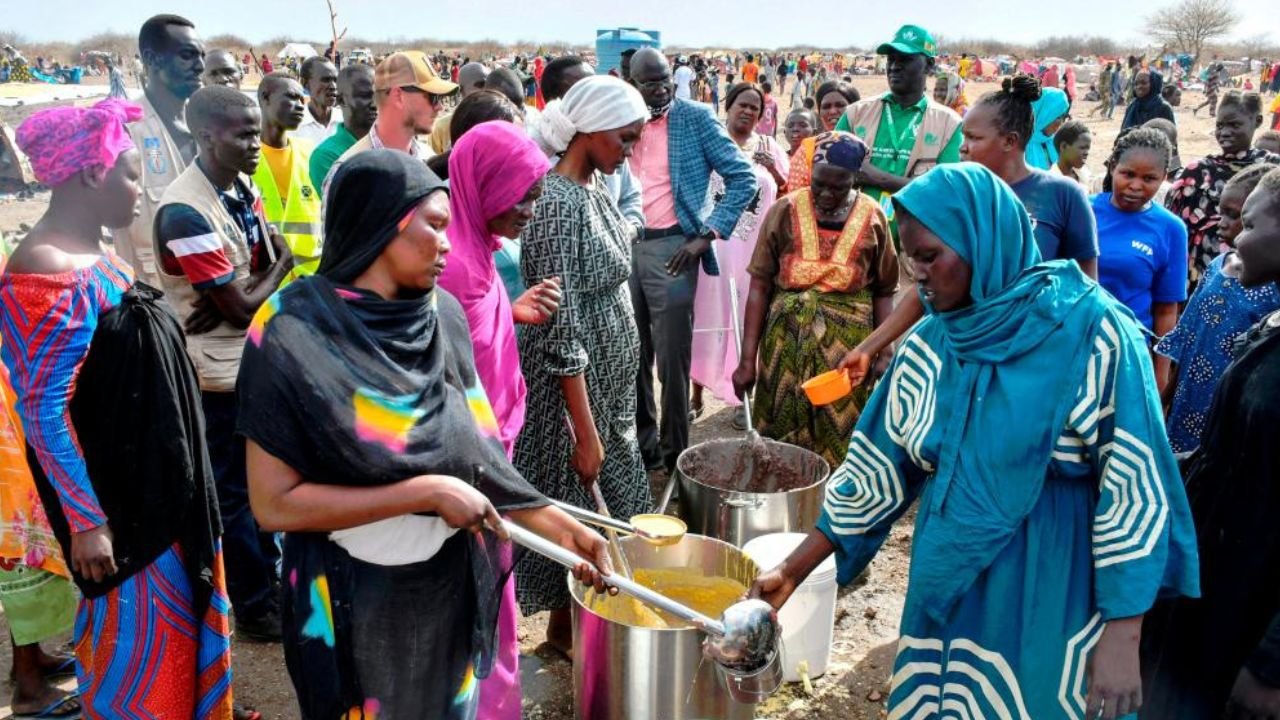
    Food insecurity worsened around the world in 2023, with some 282 million people suffering from acute hunger due to conflicts, particularly in Gaza and Sudan, UN agencies and development groups said Wednesday.

    Extreme weather events and economic shocks also added to the number of those facing acute food insecurity, which grew by 24 million people compared with 2022, according to the latest global report on food crises from the Food Security Information Network (FSIN).

    The report, which called the global outlook “bleak” for this year, is produced for an international alliance bringing together UN agencies, the European Union and governmental and non-governmental bodies.

    2023 was the fifth consecutive year of rises in the number of people suffering acute food insecurity — defined as when populations face food deprivation that threatens lives or livelihoods, regardless of the causes or length of time.

    Much of last year’s increase was due to report’s expanded geographic coverage, as well as deteriorating conditions in 12 countries.

    More geographical areas experienced “new or intensified shocks” while there was a “marked deterioration in key food crisis contexts such as Sudan and the Gaza Strip”, Fleur Wouterse, deputy director of the emergencies office within the UN’s Food and Agricultural Organization (FAO), told AFP.

    Some 700,000 people, including 600,000 in Gaza, were on the brink of starvation last year, a figure that has since climbed yet higher to 1.1 million in the war-ridden Palestinian territory.

    Since the first report by the Global Food Crisis Network covering 2016, the number of food-insecure people has risen from 108 million to 282 million, Wouterse said.

    Meanwhile, the share of the population affected within the areas concerned has doubled 11 percent to 22 percent, she added.

    Protracted major food crises are ongoing in Afghanistan, the Democratic Republic of Congo, Ethiopia, Nigeria, Syria and Yemen.

    “In a world of plenty, children are starving to death,” wrote UN Secretary-General Antonio Guterres in the report’s foreword.

    “War, climate chaos and a cost-of-living crisis — combined with inadequate action — mean that almost 300 million people faced acute food crisis in 2023.”

    “Funding is not keeping pace with need,” he added.

    This is especially true as the costs of distributing aid have risen.

    For 2024, progress will depend on the end of hostilities, said Wouterse, who stressed that aid could “rapidly” alleviate the crisis in Gaza or Sudan, for example, once humanitarian access to the areas is possible.

    Worsening conditions in Haiti were due to political instability and reduced agricultural production, “where in the breadbasket of the Artibonite Valley, armed groups have seized agricultural land and stolen crops”, Wouterse said.

    The El Nino weather phenomenon could also lead to severe drought in West and Southern Africa, she added.

    According to the report, situations of conflict or insecurity have become the main cause of acute hunger in 20 countries or territories, where 135 million people have suffered.

    Extreme climatic events such as floods or droughts were the main cause of acute food insecurity for 72 million people in 18 countries, while economic shocks pushed 75 million people into this situation in 21 countries.

    “Decreasing global food prices did not transmit to low-income, import-dependent countries,” said the report.

    At the same time, high debt levels “limited government options to mitigate the effects of high prices”.

    On a positive note, the situation improved in 17 countries in 2023, including the Democratic Republic of Congo and Ukraine, the report found.

  • Entire Gaza population at ‘severe levels of acute food insecurity’: Blinken

    Entire Gaza population at ‘severe levels of acute food insecurity’: Blinken

    The entire population of Gaza is experiencing “severe levels of acute food insecurity”, US Secretary of State Antony Blinken said Tuesday, underscoring the urgency for increasing the delivery of humanitarian aid into the Palestinian territory.

    “According to the most respected measure of these things, 100 percent of the population in Gaza is at severe levels of acute food insecurity. That’s the first time an entire population has been so classified,” Blinken told a press conference in the Philippines where he is on an official visit.

    Blinken’s remarks came on the eve of his return to the Middle East, this time to Saudi Arabia and Egypt, to discuss efforts to secure a ceasefire in Gaza and ramp up aid deliveries.

    A United Nations-backed food security assessment warned Monday that half of Gazans are experiencing “catastrophic” hunger, with famine projected to hit the north of the territory by May unless there is urgent intervention.

    Martin Griffiths, the UN’s humanitarian chief, has called for Israel to allow unfettered aid into the besieged Palestinian territory, saying there was “no time to lose”.

    With aid agencies reporting huge difficulties gaining access to Gaza, particularly the north, the UN has warned for weeks that a famine is looming.

    Donors have turned to deliveries by air or sea, but these are not viable alternatives to land deliveries, UN agencies say.

    The Integrated Food Security Phase Classification partnership said Monday that while the technical criteria for a famine had not yet been met, “all evidence points towards a major acceleration of deaths and malnutrition”.

    Citing UN data, Blinken said 100 percent of the population in Gaza needed humanitarian assistance, compared with 80 percent in Sudan and 70 percent in Afghanistan.

    “This only underscores both the urgency, the imperative, of making this the priority,” Blinken said of aid deliveries.

    “We need more, we need it to be sustained, and we need it to be a priority if we’re going to effectively address the needs of people.”

    Blinken is in Manila as part of a brief Asia tour aimed at reinforcing US support for regional allies against China.

    During a joint press conference with his Philippine counterpart, Blinken was asked about steps he was taking to address the lack of access to Gaza for foreign journalists.

    “There are obviously profound security considerations in an active war zone and those have to be taken into account,” Blinken said.

    “But the basic principle of access for journalists is something we stand strongly behind.”

  • Nearly 230,000 children, new mothers risk dying of hunger in Sudan: NGO

    Nearly 230,000 children, new mothers risk dying of hunger in Sudan: NGO

    Without critical action, nearly 230,000 children and new mothers in war-ravaged Sudan are “likely to die from hunger”, Save the Children warned on Wednesday.

    Nearly 11 months of fighting between the forces of two rival generals has killed thousands and displaced eight million people in the northeast African country, the United Nations says.

    The bombing and destruction of fields and factories have plunged Sudan into “one of the worst” nutrition situations in the world, said Arif Noor, Save the Children’s country director in Sudan.

    “Nearly 230,000 children, pregnant women and new mothers could die in the coming months,“ the British non-governmental organisation said.

    The charity said “more than 2.9 million children in Sudan are acutely malnourished and an additional 729,000 children under five are suffering from severe acute malnutrition — the most dangerous and deadly form of extreme hunger”.

    It warned “about 222,000 severely malnourished children and more than 7,000 new mothers are likely to die” under the current levels of funding which “only covers 5.5 percent” of Sudan’s total needs.

    The United Nations’ World Food Programme sounded the alarm on Sudan this month, warning the war risked triggering the world’s largest hunger crisis.

    The conflict, which experts have warned could last years, is being fought between Sudan’s army chief Abdel Fattah al-Burhan and Mohamed Hamdan Daglo, his former deputy and commander of the paramilitary Rapid Support Forces (RSF).

    Noor warned the situation would only worsen as the consequences of the current fighting take hold.

    “No planting last year means no food today. No planting today means no food tomorrow. The cycle of hunger is getting worse and worse with no end in sight — only more misery,“ he said.

    Already, more than half of all Sudanese, including 14 million children, require humanitarian assistance to survive, the United Nations says.

    The UN has described a “climate of sheer terror”, reporting the use of heavy artillery in densely populated urban areas, sexual violence as a weapon of war, the destruction of hospitals and schools.

    The United States has accused both sides of war crimes and alleged the RSF has carried out ethnic cleansing and crimes against humanity.

    A report before the UN Human Rights Council details gross violations and abuses of international human rights law and possible war crimes.

    Earlier in March, the UN’s human rights chief Volker Turk called the conflict a “living nightmare” and said it had “slipped into the fog of global amnesia”.

    The conflict has driven 18 million people into food insecurity, including five million who are only one stage away from famine.

    Humanitarian organisations have been prevented from entering Sudan or moving freely and have come under attack by both sides. – AFP

  • Rotten food and cat hunting as famine hits Gaza

    Rotten food and cat hunting as famine hits Gaza

    As the war on Gaza extends into its 90th day, impending famine and starvation are haunting the besieged strip.

    According to an assessment of the integrated food security phase classification initiative, a UN-backed body that sets the international standard that determines the severity of the food crisis, food shortage in Gaza is solely a consequence of war. Before it began, about 150 to 180 food lorries entered Gaza every day. Since, the end of the “humanitarian pause” a month ago, only about 30 do so. They are blocked by Israeli bombardment, fighting on the ground, and by restrictions and inspections on the border with Egypt, imposed by the Israeli and Egyptian authorities, cites The Times.

    More than a million people are displaced in Gaza but none is safe from hunger. It is rampant in Gaza, it is in the wasteland of al-Mawasi encampment in Gaza where handfuls of dirty flour are kneaded by mothers to make bread for their children. It is in the fires, stoked with plastic bottles, which produce nothing but choking black smoke. Children in Gaza no longer play but lie around, exhausted by hunger. It is in food that is rotten and makes you sick but is eaten just the same.

    Camellia Subeh talked to The Times who stated that her breasts no longer produce milk for her baby son.⁠ “My other sons keep saying, ‘Mum, I’m dizzy, I have a headache,” said the mother of five, sitting outside a shelter she built on the mud from scraps of plastic and wood. Subeh and her children left their home in northern Gaza weeks ago on the instructions of the Israel Defence Forces (IDF). They said this is a safe area. Perhaps it is safe from the bombs that have destroyed Gaza’s cities and towns but not from hunger, diseases, or thirst that will kill just the same as a bullet will. “This place is like a desert, all sand,” Subeh said. “We are so tired.” The Palestinian death toll in the Gaza Strip after nearly three months of war stands at 21,672, with more than 55,000 wounded, the territory’s health ministry said on Saturday.

    A 13-year-old, Muhammad al-Yaziji, told The Times, “I feel that this burden is very heavy for us. We became like beggars. We were not like that.”

    In an interview with the New Yorker, Arif Hussain, the chief economist at the United Nations World Food Program explains that according to a consensus-based analysis by Integrated Phase Classification, the entire population of 2.2 million people is in a food-security crisis or a worse situation implying a famine is coming because the conditions are “catastrophic”.

    Human Rights Watch drew from Israeli officials’ statements, interviews with people in the territory about the lack of food, and evidence of bombardment that has destroyed infrastructure and resources to accuse Israel in a December report of starvation as a war crime.

  • The Weeknd donates $2.5 million to Gaza for aid

    The Weeknd donates $2.5 million to Gaza for aid

    Singer The Weeknd has made international headlines after his XO Humanitarian Fund is sending $2.5 million to Gaza to provide four million meals for civilians. Israel is again bombing the vulnerable population where already more than 15,000 civilians have died. Currently, the death toll after the ending of truce is 160 Palestinians.

    The artist, whose real name is Abel Tesfaya, stepped into the role of the Goodwill Ambassador in 2021 in October 2021, and set up the XO Humanitarian Fund with the United Nations World Food Program.

    “WFP is working round the clock to provide aid in Gaza but a major scale up is needed to address the desperate level of hunger we are seeing,” said UN WFP’s director for the Middle East, North Africa and Eastern European Region,  Corinne Fleischer. “Our teams need safe and sustained humanitarian access, and continued support from donors to reach as many people as we can. We thank Abel for this valuable contribution towards the people of Palestine. We hope others will follow Abel’s example and support our efforts.”

    On November 23, Tunasian Egyptian actress Hend Sabri announced on her Instagram account that she was resigning from her role as Goodwill Ambassador from the UN World Food Program because of the organisation’s inability to condemn the ongoing genocide of Gaza.

    “Over the past weeks, I have witnessed and shared the experiences of my dedicated WFP colleagues. Their frustration at being unable to do what they do best towards children, mothers, fathers and grandparents in Gaza. They could only do so much in the face of a grinding war machine that would not stop and would not spare civilians the agony and anguish as war encircles them.”

    “I had faith,” the actress wrote to her 3.3 million followers, “that WFP – which was named Nobel Peace Prize Laureate only three years ago after championing UN resolution 2417, against using hunger and starvation as a weapon of war – would use its voice forcefully as it had done in multiple emergencies and human crises. However, hunger and starvation have been used as weapons of war for over the past 46 days against more than 2 million civilians in Gaza.”

  • Hungry man calls 15 for food; police helps

    Hungry man calls 15 for food; police helps

    Malik Tahseen Raza has reported in Dawn News that police received a call on the 15 emergency number from a man in dire need of help.

    The man told the police that his family had nothing to eat in the past two days, adding that he is at the verge of committing suicide. 

    The caller, Bashir Ahmed from Sargani village in tehsil Karor Lal Esan, is a daily labourer but is currently jobless since quite some time, while inflation has worsened his circumstances. He had a wife and four children who had nothing to eat since the last two days.

    Resultantly, Layyah DPO Asadur Rehman called Bashir back and counselled him. In the morning, the DPO met Bashir at his house in village Sargani along with his team. They brought enough food to feed the family for the coming few weeks. He also gave Bashir cash.

    In a video clip, Bashir told a YouTuber that the items of daily use that the DPO had given him must be worth about Rs60,000 to Rs70,000.

    The DPO was accompanied by Inspector Muhammad Idris Khan, the SHO of Karor Police Station.

    Talking to the media, the DPO said it was the first time a citizen called at 15 to say that his family was dying of hunger.

    “I asked him to be patient, telling him that we (police) would come to his home to help him.”

    The DPO said he requested him to not put the lives of his children and wife in danger. He then urged people to remain conscious of their surroundings and people.

  • Pakistan ranks 99th in Global Hunger Index 2022, faces serious hunger levels

    Pakistan ranks 99th in Global Hunger Index 2022, faces serious hunger levels

    In the recently published Global Hunger Index (GHI-2022), Pakistan has been ranked 99th out of 121 countries assessed for their hunger levels.

    The GHI report, launched in Islamabad on Tuesday, revealed a drop in Pakistan’s score from 38.1 in 2006 to 26.1 in 2022, but the hunger level is still considered serious, reported Dawn.

    The Global Hunger Index is an annual pre-reviewed report jointly published by Welthungerhilfe and Concern Worldwide. Its primary objective is to raise awareness and understanding of the challenges faced in the fight against hunger worldwide.

    According to the report, the combination of armed conflicts, climate change, and the coronavirus pandemic has exacerbated hunger issues, forcing approximately 828 million people into hunger globally. Moreover, it highlights that 46 countries are not on track to achieve even a low level of hunger by 2030, signaling the need for urgent action.

    The regions most affected by hunger are Africa, specifically South of the Sahara, and South Asia, with the latter being the worst-hit. Notably, South Asia has the highest child stunting rate and the highest child wasting rate among all world regions.

    Pakistan, with a serious level of hunger, faces significant challenges in eradicating this issue. As the nation strives to address this pressing problem, stakeholders are urged to collaborate and implement solutions that involve local communities and diverse voices in shaping effective policies for food security.

    The Global Hunger Index serves as a vital tool in identifying and tackling hunger-related problems, and it is hoped that with collective efforts, progress will be made towards achieving a hunger-free world.

  • Maryam Nawaz criticises PM Khan for watching the Pak vs Ind T20 match

    Maryam Nawaz criticises PM Khan for watching the Pak vs Ind T20 match

    As the world celebrated the historic victory of the Men in Green, Pakistan Muslim League-Nawaz (PML-N) vice president Maryam Nawaz did not let go of a chance to criticise Prime Minister (PM) Imran Khan for watching the Pakistan and India T20 World Cup match.

    PM Khan shared a picture on Twitter watching the match along with various other government figures and ministers, saying that the “entire nation was proud of the Pakistan team.”

    Maryam Nawaz, tweeting the photo PM Khan tweeted, wrote, “God! People in the country are dying of hunger, inflation, and incompetence, and look at them!”

    PM Khan is currently in Saudi Arabia for a three-day visit. The premier performed Umrah along with his accompanying delegation.

    The prime minister is visiting Saudi Arabia to attend the launch of the Middle East Green Initiative (MGI) Summit being held in Riyadh, at the invitation of Crown Prince Mohammed bin Salman bin Abdulaziz.