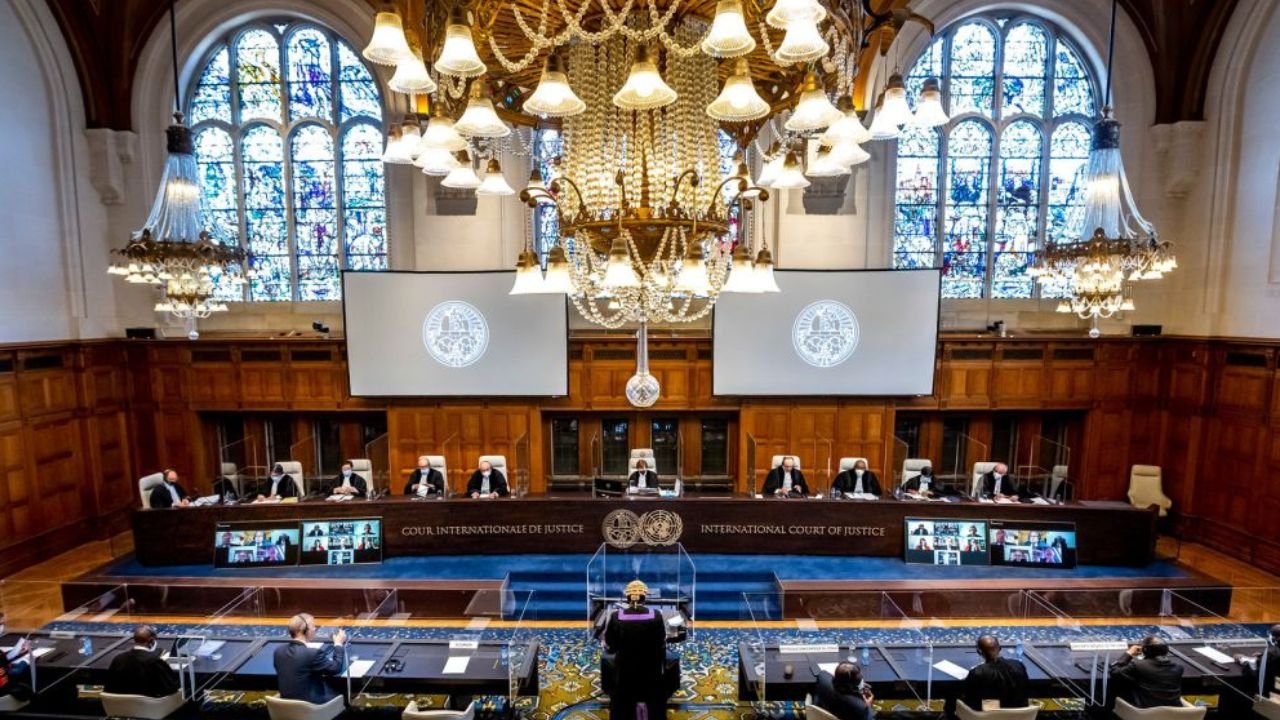
Tag: ICJ

  • Saudi crackdown on anti-Israel social media comments intensifies

    Saudi crackdown on anti-Israel social media comments intensifies

    In recent months, Saudi Arabian authorities have arrested a growing number of citizens for criticising Israel on social media.

    This surge in arrests comes amid Israel’s ongoing military campaign in Gaza, which has triggered widespread condemnation and protests across the Middle East.

    According to a report by Bloomberg, among those detained is a high-ranking executive involved in Crown Prince Mohammed bin Salman’s economic development initiatives, including the ambitious Vision 2030 project.

    Another detainee is reported to have urged Saudi citizens to boycott American brands operating in the Gulf Kingdom, while a third is a media figure who publicly stated that Israel should never be forgiven for its actions in Gaza.

    A source close to the Saudi government, who requested anonymity, stated that these arrests are driven by concerns about national security and the potential influence of pro-Iranian groups in Saudi Arabia.

    However, there are no official figures indicating how many individuals have been arrested since the Israeli offensive in Gaza began on October 7, 2023.

    The crackdown on dissent coincides with efforts by the United States to broker a deal for the normalisation of ties between Riyadh and Tel Aviv.

    During a recent visit to Saudi Arabia, US Secretary of State Antony Blinken noted that negotiations have brought both parties “potentially very close to completion.”

    However, Saudi Arabia has repeatedly emphasised that it will not establish diplomatic relations with Israel until an independent Palestinian state is recognised.

    Meanwhile, Israel’s ongoing military offensive in Gaza has had devastating consequences.

    According to the Wafa news agency, more than 34,500 Palestinians have been killed and over 77,000 wounded since the start of the conflict.

    The United Nations reports that 85 per cent of Gaza’s population has been internally displaced due to the violence, and 60 per cent of the enclave’s civilian infrastructure has been severely damaged or destroyed.

    Critical shortages of food, clean water, and medical supplies have compounded the humanitarian crisis.

    Israel has been accused of genocide at the International Court of Justice (ICJ). In January, the World Court issued an interim ruling ordering Israel to halt genocidal acts and ensure the delivery of humanitarian aid to Gaza’s civilians.

    South Africa, which initiated the case against Israel, has since accused the country of disregarding the court’s ruling. Israel has denied all allegations against it.

    As tensions continue to rise, the arrest of Saudi citizens for criticising Israel reflects the broader geopolitical complexities in the region.

    The outcome of US-led negotiations and the humanitarian situation in Gaza will likely have significant implications for the future of Saudi-Israeli relations and the stability of the Middle East.

  • India has right to Ravi water, says federal law minister

    India has right to Ravi water, says federal law minister

    Federal Minister for Law and Justice, Azam Nazeer Tarar, said on Tuesday that neighbouring India has the right to the waters of the River Ravi according to the Indus Waters Treaty. Pakistan can’t take the matter of India’s “water aggression” to the International Court of Justice (ICJ).

    “There is a water treaty between Pakistan and India, and it is an international obligation. The right to water on the River Ravi belongs to India, and we cannot interfere with it. Pakistan has right on the water of the rivers Chanab, Jhelum, and Indus,” the law minister said while addressing in National Assembly (NA) on Tuesday, adding that the Indians have the right to the waters of Ravi, Satluj, and Beas.

    He also stressed that legal issues shouldn’t be politicised.

    He told NA that India wants to exit the 1960 Indus Waters Treaty but is unable to do so due to Pakistan’s disagreements.

  • Palestinians call out Israel for ‘apartheid’ at UN top court

    Palestinians call out Israel for ‘apartheid’ at UN top court

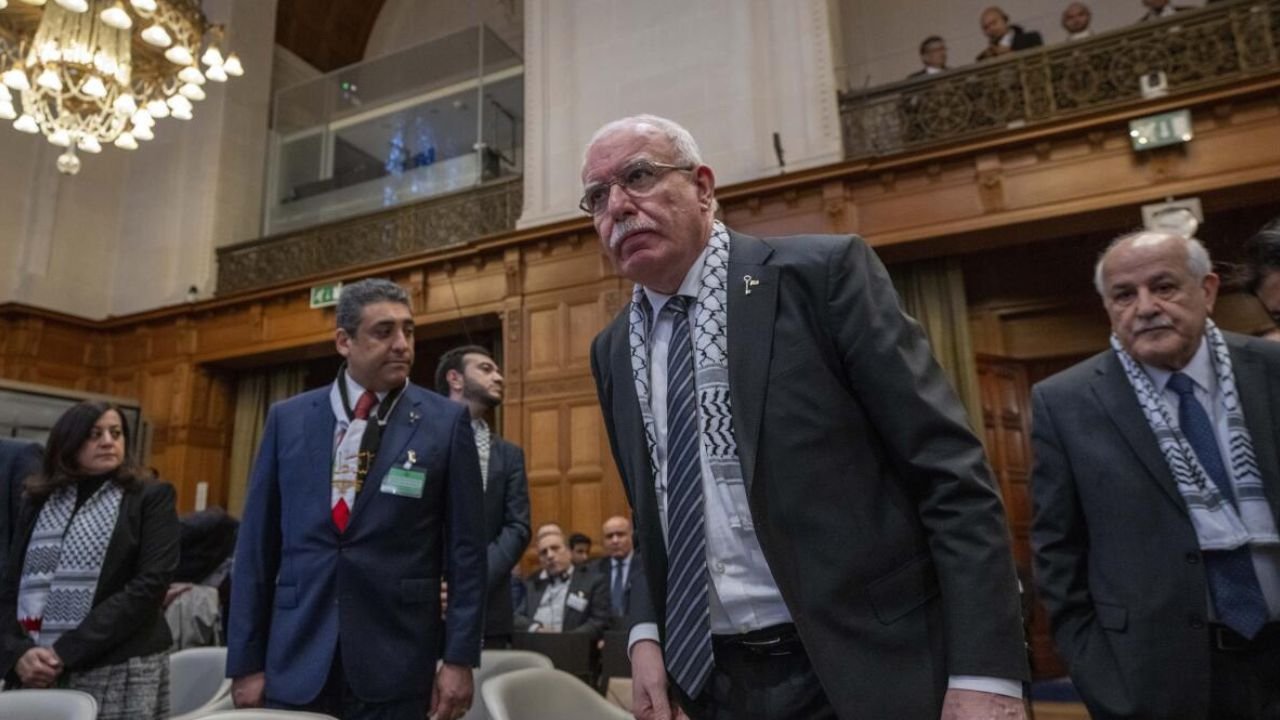
    The Hague (AFP) – Palestinian foreign minister Riyad Al-Maliki told the UN’s top court Monday his people were suffering “colonialism and apartheid” under the Israelis, urging judges to order an immediate and unconditional end to the occupation.

    “The Palestinians have endured colonialism and apartheid… There are those who are enraged by these words. They should be enraged by the reality we are suffering,” Al-Maliki told the International Court of Justice (ICJ).

    The ICJ is holding hearings all week on the legal implications of Israel’s occupation since 1967, with an unprecedented 52 countries, including the United States and Russia, expected to give evidence.

    Speaking in the Peace Palace in The Hague, where the ICJ sits, the minister urged judges to declare the occupation illegal and order it to stop “immediately, totally and unconditionally.”

    “Justice delayed is justice denied and the Palestinian people have been denied justice for far too long,” he said.

    “It is time to put an end to the double standards that have kept our people captive for far too long.”

    ‘Impunity and inaction’

    In December 2022, the UN General Assembly asked the ICJ for a non-binding “advisory opinion” on the “legal consequences arising from the policies and practices of Israel in the Occupied Palestinian Territory, including East Jerusalem.”

    While any ICJ opinion would be non-binding, it comes amid mounting international legal pressure on Israel over the intense attacks on Gaza.

    The hearings are separate from a high-profile case brought by South Africa alleging that Israel is committing genocidal acts during the current Gaza offensive.

    Al-Maliki charged however that “the Genocide underway in Gaza is a result of decades of impunity and inaction.”

    “Ending Israel’s impunity is a moral, political and legal imperative,” he said.

    In January, the ICJ ruled in that case that Israel must do everything in its power to prevent genocide and allow humanitarian aid into Gaza, stopping short of ordering a ceasefire.

    On Friday, it rejected South Africa’s bid to impose additional measures on Israel, but reiterated the need to carry out the ruling in full.

    ‘Prolonged occupation’

    The UN General Assembly asked the ICJ to consider two questions.

    Firstly, the court should examine the legal consequences of what the UN called “the ongoing violation by Israel of the right of the Palestinian people to self-determination”.

    This relates to the “prolonged occupation, settlement and annexation of the Palestinian territory occupied since 1967” and “measures aimed at altering the demographic composition, character and status of the Holy City of Jerusalem”.

    In June 1967, Israel crushed some of its Arab neighbours in a six-day war, seizing the West Bank including east Jerusalem from Jordan, the Golan Heights from Syria, and the Gaza Strip and Sinai Peninsula from Egypt.

    Israel then began to settle the 70,000 square kilometres (27,000 square miles) of seized Arab territory. The UN later declared the occupation of Palestinian territory illegal. Cairo regained Sinai under its 1979 peace deal with Israel.

    The ICJ has also been asked to look into the consequences of what it described as Israel’s “adoption of related discriminatory legislation and measures.”

    Secondly, the ICJ should advise on how Israel’s actions “affect the legal status of the occupation” and what are the consequences for the UN and other countries.

    The court will rule “urgently” on the affair, probably by the end of the year.

    Dozens of pro-Palestinian protesters demonstrated outside the court, waving flags and brandishing banners.

    “I really hope justice will prevail,” organiser Nadia Slimi told AFP.

    “I really hope all the combined efforts to pressure Israel, to demand a more humane policy, will finally lead to some steps to liberate the Palestinian people,” said the 27-year-old.

    ‘Despicable’

    The ICJ rules in disputes between states and its judgements are binding although it has little means to enforce them.

    However, in this case, the opinion it issues will be non-binding although most advisory opinions are in fact acted upon.

    Israel is not participating in the hearings and reacted angrily to the 2022 UN request, with Prime Minister Benjamin Netanyahu calling it “despicable” and “disgraceful”.

    Human Rights Watch (HRW) said that while advisory opinions are non-binding, “they can carry great moral and legal authority” and can eventually be inscribed in international law.

  • Top UN court rejects South Africa request for more Gaza measures

    Top UN court rejects South Africa request for more Gaza measures

    THE HAGUE: The UN’s top court Friday rejected South Africa’s request to put more legal pressure on Israel to halt a threatened offensive against the Gaza city of Rafah, saying it was “bound to comply with existing measures.”

    Pretoria has already filed a complaint against Israel in the International Court of Justice (ICJ) in The Hague, alleging that its assault on Gaza amounts to a breach of the Genocide Convention.

    The court has yet to rule on the underlying issue, but on January 26 it ordered Israel to ensure it took action to protect Palestinian civilians from further harm and to allow in humanitarian aid.

    South African officials on Tuesday filed a further request to the court, asking it to order new measures in the light of Israel’s preparation of a new operation against Rafah.

    More than half of Gaza’s 2.4 million population have sought shelter there from Israel’s offensive on the Gaza Strip.

    The ICJ’s judges acknowledged that the recent developments “’would exponentially increase what is already a humanitarian nightmare with untold regional consequences’” — citing remarks by UN Secretary-General Antonio Guterres.

    But although Israel needed to act immediately to ensure the safety and security of Palestinians, that did not require “the indication of additional provisional measures,” they added.

    Israel remained “bound to fully comply with its obligations under the Genocide Convention and with the said Order,” the ICJ ruling said.

    Hamas’s October 7 attack resulted in the deaths of about 1,160 people in Israel, mostly civilians, according to an AFP tally based on official Israeli figures.

    Militants also took about 250 people hostage, around 130 of whom are still in Gaza, including 30 who are presumed dead, according to Israeli figures.

    Israel’s assault on Gaza has since killed at least 28,775 people, mostly women and children, according to the territory’s health ministry.

    Israel’s foreign minister on Friday said the country would coordinate with Egypt before launching any military offensive in the southern border city of Rafah.

    “We will operate in Rafah after we coordinate with Egypt,” Israel Katz told journalists on the sidelines of the Munich Security Conference, where 180 dignitaries have gathered to discuss conflicts around the globe.

    Fears had been growing for the hundreds of thousands of people who have fled the north of Gaza to Rafah as Israeli troops advanced into the territory to wage war on Hamas.

    But Israel is now planning a major operation in the overcrowded city. With the border to Egypt closed, nearly 1.5 million Palestinians are essentially trapped there.

  • Saudi Says Israel Must Be Held ‘Accountable’, After UN Court Rules

    Saudi Says Israel Must Be Held ‘Accountable’, After UN Court Rules

    Saudi Arabia on Friday welcomed the UN top court’s decision on Israel’s genocide against Palestinians in Gaza, and called for the international community to “hold Israel accountable” for “violations” of international law.

    In a statement, the kingdom’s Foreign Ministry also called for “more measures” to reach a ceasefire in Gaza and provide protection for the Palestinian people.

  • International Court of Justice acknowledges Israeli genocide against Palestinians; does not call for ceasefire

    International Court of Justice acknowledges Israeli genocide against Palestinians; does not call for ceasefire

    The International Court of Justice (ICJ) has announced its first ruling on South Africa’s genocide case against Israel on Friday evening, calling on Israel to take urgent and effective measure to protect Palestinians, contain death toll and destruction, acknowledging that there is a risk of genocide in Gaza. However, it did not call for an immediate ceasefire.

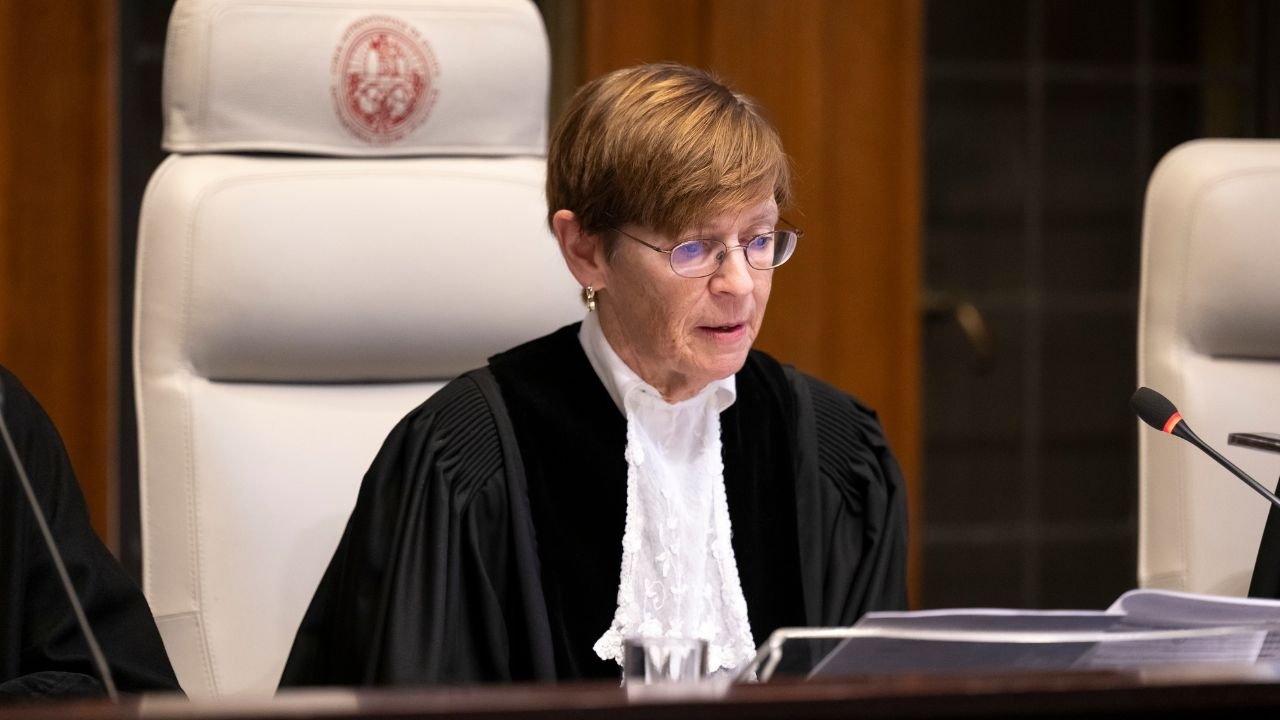
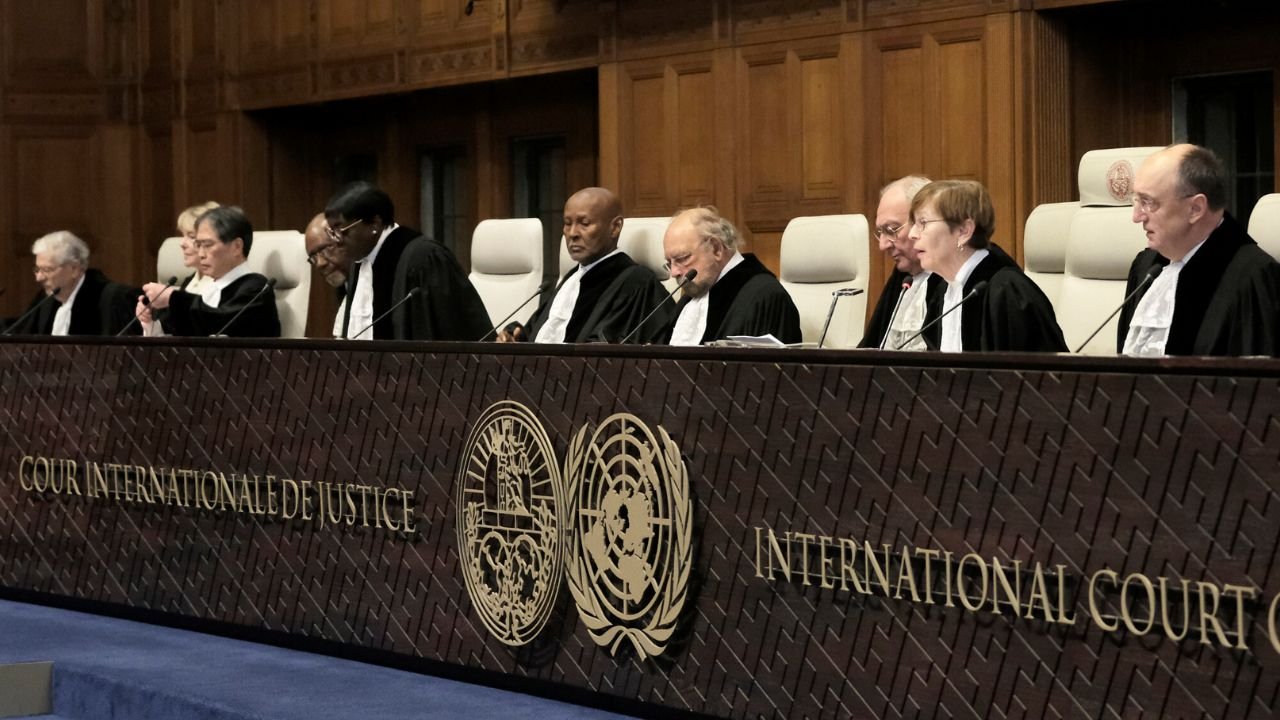
    The hearing took place on Friday with 16 judges out of the court’s 17-member panel, present. Presiding Judge Joan Donoghue asserted that the court has the authority to rule over emergency measures in the case.

    The court noted that the charges against Israel fall under the provisions of the Genocide Convention, additionally acknowledging that Israeli military operations have killed as well as injured a large number Palestinians in Gaza, destroyed a number of homes and infrastructure, and resulted in the internal displacement of about 1.7 million people.

    It was further acknowledged that the Palestinians’ have the right to be protected from acts of genocide.

    The issue of “dehumanising language” used against Palestinians was also highlighted, particularly shedding light on statements by Israeli Defence Minister Yoav Gallant ordering a “complete siege” of Gaza and apprising the soldiers that they are fighting against “human animals”.

    Social Media Reacts

  • Game of Thrones’ actors read South Africa’s case file charging Israel with genocide at ICJ

    Game of Thrones’ actors read South Africa’s case file charging Israel with genocide at ICJ

    Famous actors from ‘Game of Thrones’ read excerpts from South Africa’s case filed at the International Court of Justice (ICJ) against Israeli genocide of Palestinians.

    Among dozens of readers were the megahit series’ stars Charles Dance, Lena Heady, Liam Cunningham, and Carice van Houten. Other notable names include Hollywood veteran Susan Sarandon, comedy film star Steve Coogan, Tobias Menzies, and Tunde Adebimpe.

    The actors read excerpts in support of South Africa’s charges against Israel. The hearing of the first day, January 11, was not aired by the mainstream western media when South Africa laid out its case.

    The case put in motion by South Africa in The Hague, Netherlands, called for the court to look into the genocide being committed by Israel against Palestinians and impose emergency measures, putting a stop to the offensives at urgent basis.

  • ‘We love life’: Gaza couple celebrate wartime wedding

    ‘We love life’: Gaza couple celebrate wartime wedding

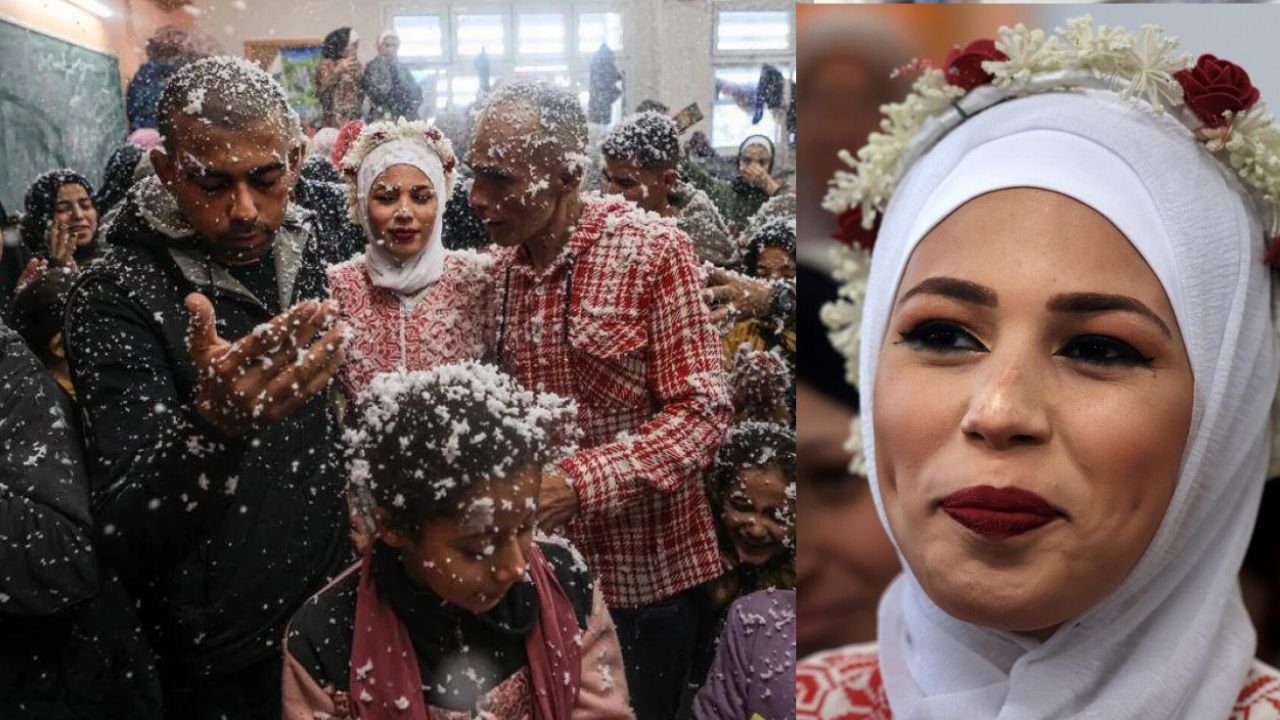
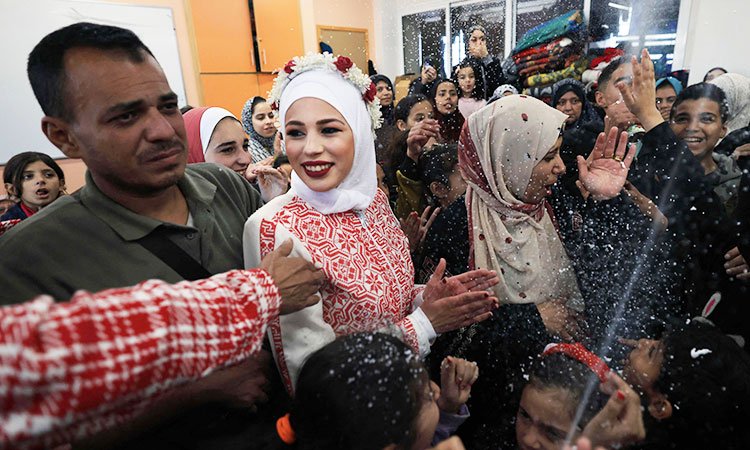
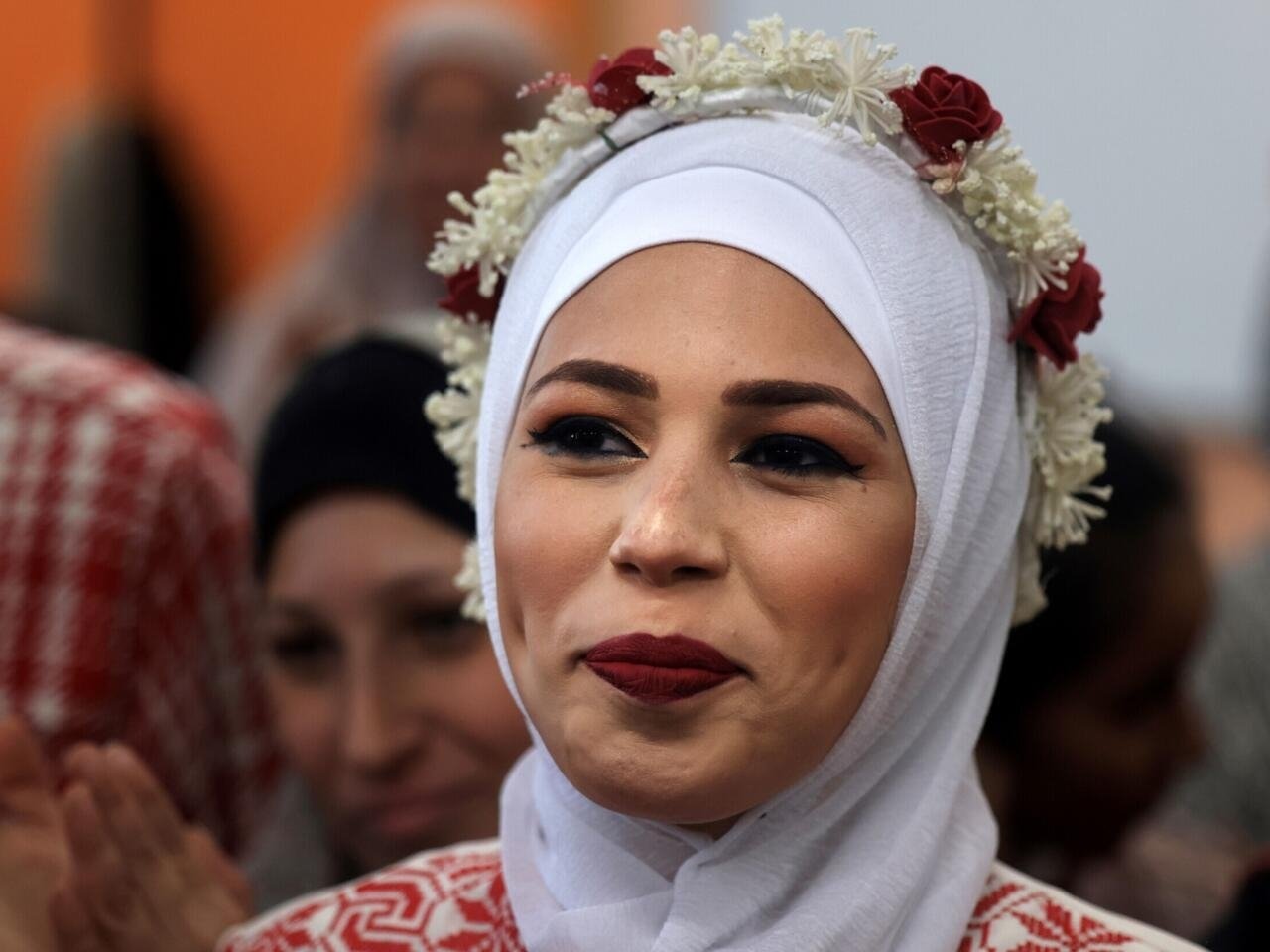
    Surrounded by family and friends, clapping and cheering, Gaza woman Afnan Jibril beams a brilliant smile on her wedding day, determined to celebrate even as war rages.

    “We are a people that love life, despite death, murders and destruction,” said her father, Mohamed Jibril.

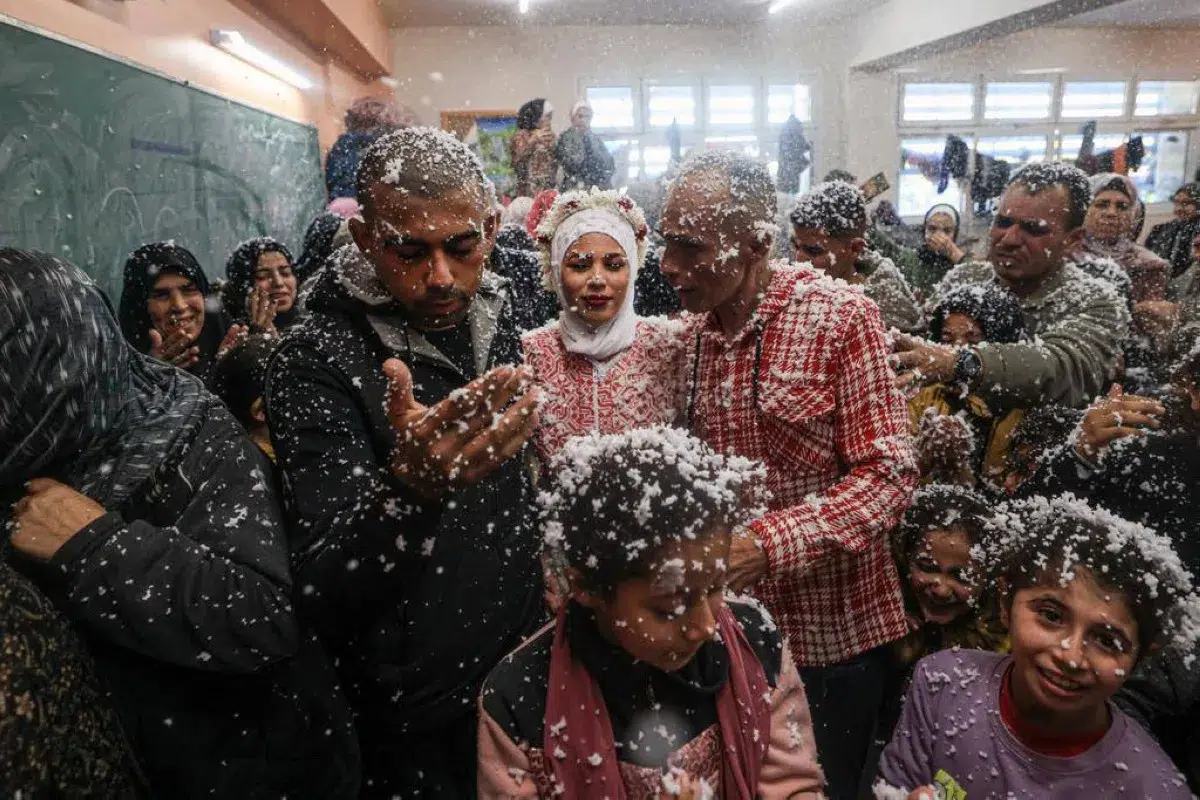
    Relatives were gathered on Friday for the wartime wedding in a tiny room at an abandoned school building in the besieged Gaza Strip’s southern city of Rafah, near the frontier with Egypt.

    The city has suffered daily Israeli bombardment, and the families of both bride and groom are among hundreds of thousands of Palestinians who have fled the fighting further north.

    “The usual preparations for marriage are not possible, and traditional ceremonies are not feasible,” said the bride’s father. “However, clothes are available, although they are scarce and expensive.”

    Afnan, 17, donning a crown of flowers and pristine white dress with stark red embroidery, and her partner Mustafa Shamlakh, 26, want to make the most of their rare chance to celebrate.

    They dance and laugh as guests spray white mousse around the room.

    But eventually they have to face reality.

    Israel’s relentless military campaign, triggered by attacks by Palestinian militants, has killed at least 23,843 people, mostly women and children, in Gaza, according to the health ministry in the Hamas-run territory.

    The war began when Hamas militants launched an unprecedented attack on October 7, which resulted in about 1,140 deaths in Israel, mostly civilians, according to an AFP tally based on official figures.

    The newlyweds make up part of another grim tally — those displaced by the violence, which UN estimates put at 1.9 million Palestinians out of a total population in Gaza of 2.4 million.

    “The house where the groom was supposed to live was destroyed,” Ayman Shamlakh, the groom’s uncle, told AFP.

    As the war went on, both families felt there was nothing to be gained from waiting and they agreed to the marriage.

    After the school celebration, the couple head for a ceremony set to take place in a tent.

    As they dive into a waiting black SUV, surrounded by a massive crowd of well-wishers, it almost looks like any other wedding day.

    “We are all living through the same tragedy,” said Ayman Shamlakh. “However, we must continue to live, and life should go on.”

  • Israel accused at UN court of Gaza ‘genocide’

    Israel accused at UN court of Gaza ‘genocide’

    South Africa on Thursday accused Israel of breaching the UN Genocide Convention, arguing that even the deadly October 7 Hamas attack could not justify such alleged actions, as it launched a landmark case at the top UN court.

    Pretoria has lodged an urgent appeal at the International Court of Justice (ICJ) to force Israel to “immediately suspend” its military operations in Gaza.

    Israel has dismissed the case as “atrocious” and “preposterous” and vowed to set out a robust defence on Friday.

    “No armed attack on a state territory, no matter how serious… can provide justification for or defend breaches of the convention,” said Pretoria’s Justice Minister Ronald Lamola.

    “Israel’s response to the October 7 attack has crossed this line and given rise to the breaches of the convention,” he added.

    The Gaza war erupted when Hamas launched its unprecedented attack, which resulted in about 1,140 people killed in Israel, mostly civilians, according to an AFP tally based on official figures.

    Israel has responded with a relentless military campaign that has killed at least 23,357 people, mostly women and children, according to Gaza’s health ministry.

    A world away from the death and destruction in Gaza and Israel, robed lawyers battled it out over technical legal arguments in the Peace Palace in The Hague.

    South Africa argues Israel is breaking its commitments under the UN Genocide Convention, a treaty signed in 1948 in the wake of the Holocaust.

    Top lawyer for South Africa Adila Hassim said Israel’s bombing campaign aimed at the “destruction of Palestinian life” and had pushed Palestinians “to the brink of famine”.

    “Genocides are never declared in advance, but this court has the benefit of the past 13 weeks of evidence that shows incontrovertibly a pattern of conduct and related intention that justifies a plausible claim of genocidal acts,” she said.

    As a fellow signatory to the treaty, South Africa can take Israel to the ICJ, which rules on disputes between countries and is often described as the “World Court”.

    The ruling African National Congress (ANC) has long been a firm supporter of the Palestinian cause, often linking it to its own historic struggle against the white-minority government, which had cooperative relations with Israel.

    South Africa has acknowledged the “particular weight of responsibility” of accusing Israel of genocide. It “unequivocally” condemned the Hamas attacks that sparked off the war in Gaza.

    ‘Atrocious and preposterous’

    Israel President Isaac Herzog has already hinted at his country’s likely defence against what he called an “atrocious and preposterous… claim”.

    “We will present proudly our case of using self defence… under international humanitarian law,” he said.

    Herzog said the Israeli army was “doing its utmost under extremely complicated circumstances on the ground to make sure that there will be no unintended consequences and no civilian casualties”.

    The United States is backing its ally Israel, with the State Department describing the charges as “unfounded”.

    “In fact, it is those who are violently attacking Israel who continue to openly call for the annihilation of Israel and the mass murder of Jews,” said State Department spokesman Matthew Miller.

    As it is an urgent procedure, the ICJ could rule in a matter of weeks.

    Its rulings are final and cannot be appealed. However, countries do not always follow the court’s verdicts — the ICJ has ordered Russia to stop its invasion of Ukraine, for example.

    But a court ruling against Israel would certainly increase political pressure on the country, with many speculating it could serve as a pretext for sanctions.

    Cecily Rose, assistant professor of public international law at Leiden University, noted the court did not have to rule on the fundamentals of the case at this stage — that issue will likely take years.

    “Instead, the court would only be evaluating whether there is a risk of irreparable prejudice to rights held under the Genocide Convention, in particular the right of the Palestinians in Gaza to be protected from acts that threaten their existence as a group,” Rose told AFP.

    Dutch police kept rival demonstrations apart in The Hague. Hundreds of pro-Israeli protesters waving flags marched through the streets while a smaller group of pro-Palestinian supporters brandished placards saying: “End Israel apartheid.”

    Pro-Israeli protester Ada Deyl, an 80-year-old pensioner, said: “I think it’s a shame that Israel — who is doing all the right things and is attacked by Hamas — is now facing a lawsuit.”

    On the other side, Zohar Janovitch, 40, alleged that Israeli leaders had “explicitly expressed their disregard for the lives of Palestinian civilians.”

  • All you need to know about South Africa’s genocide case against Israel at ICJ

    All you need to know about South Africa’s genocide case against Israel at ICJ

    A case in the International Court of Justice (ICJ) has been put in motion by South Africa in The Hague, Netherlands, asking the court to look into the genocide being committed by Israel against Palestinians.

    The imposition of charges do not only pertain to the crimes perpetrated during the last few months since October 7 that have killed more than 23,000 people till now, but also the 75-year long apartheid, 56-year hostile occupation, and 16-year blockade on Gaza.

    The hearing will take place on January 11th and 12th in which a 15-judge panel will hear and deliberate the case.

    South Africa filed an 84-page suit with the court on December 29, quoting proofs and references of atrocities being committed by Israel in Gaza, asking the Court – a United Nations body established for settling interstate discords – to pronounce Israeli breaches of responsibilities under international law since October 7.

    “No armed attack on a State’s territory no matter how serious — even an attack involving atrocity crimes — can, however, provide any possible justification for, or defence to, breaches of the 1948 Convention on the Prevention and Punishment of the Crime of Genocide (‘Genocide Convention’ or ‘Convention’), whether as a matter of law or morality.”, read an excerpt from the suit.

    While the rulings are intended to be “binding”, a number of countries do not recognise its results. To give an example, the previous ICJ rulings of Russia invasion of Ukraine, and China’s claims in the South China Sea, were disregarded by China and Russia, consequently affecting ICJ’s credibility.

    Additionally, an NGO called Protect Palestine, an Action Guide, writes that according to experts, while South Africa “will make a strong case, it still may not be enough to rule against Israel. Israel will likely continue claims that “Hamas is embedded with civilians”, and that they “try to warn civilians”.

    The votes for and against, however, can pave the way to additional challenges for Israel and further affect the legal global standing of the country.

    Who is supporting South Africa’s ICJ case against Israel?

    The 57-member bloc known as the Organization of Islamic Countries (OIC) which includes Saudi Arabia, Iran, Pakistan and Morocco; Malaysia; Turkey; Jordan; Bolivia; The Maldives; and Namibia.

    A number of advocacy groups and civil society groups across the world including Terreiro Pindorama in Brazil, Asociación Nacional de Amistad Italia-Cuba in Italy, and Collectif Judeo Arabe et Citoyen pour la Palestine in France.

    Previously, Bolivia had filed a request to International Criminal Court (ICC) Prosecutor Karim Khan alongside South Africa, Bangladesh, Comoros, and Djibouti to probe into the matter in Palestine.

    Read more: Can South Africa’s ICJ case against Israel stop war in Gaza?