Tag: ICT

  • Citizens receiving extortion calls and threats in Islamabad too

    Citizens receiving extortion calls and threats in Islamabad too

    After Karachi’s long, dark phase, people have reportedly started receiving extortion calls and threats in the federal capital Islamabad as well.

    A case has been registered after a woman in Islamabad allegedly received extortion calls and threats.

    According to the FIR, the banned TTP demanded a ransom of Rs 1 billion, using one number from Afghanistan and another from Iran.

    The accused sent pictures of the woman and her daughter’s house to scare them, after which an investigation into the incident has been initiated.

  • Asian Development Bank believes Pakistan is the “least ready” country for digital education

    Asian Development Bank believes Pakistan is the “least ready” country for digital education

    The Asian Development Bank (ADB) in its report titled “Toward mature digital education ecosystems, the Digital Education Readiness Framework”, has stated that Pakistan is the least ready country for digital education among the developing member countries (DMC).

    The report has highlighted major areas of improvement in Pakistan, including low internet connectivity, low fixed broadband speeds, high fixed line broadband costs and low rural electricity supply. Only 34.1 percent of households are connected with an internet connection.

    There is an absence of teacher training in information and communication technology (ICT) skills with a special focus on delivering online education. Pakistan has also the lowest shares of ICT graduates from the total pool of tertiary education graduates-1.1 percent- standing at the lowest among all 10 ADB members.

    However, Pakistan has surpassed all countries in its cable TV subscriptions coverage with over 482 subscriptions per 1000 persons. The country’s household TV coverage rate is at 62.8 percent.

    Six of the ten DMCs are in the “initial category of readiness”. They are Cambodia, Bangladesh, the Kyrgyz Republic, Mongolia, Pakistan and Fiji in order.

    The other four countries in the “emerging category of readiness” are Indonesia, the Philippines, Vietnam and Uzbekistan.

    Fixed broadband prices play an important role in the ranking of these countries. While Cambodia, Indonesia and Pakistan are least affordable in broadband, Bangladesh, Mongolia and Uzbekistan are the most affordable.

    The difference between the model country’s normalized score and the highest-scoring country’s score is almost 45 points.


  • Govt issues warning to be cautious with Indian tech products 

    Govt issues warning to be cautious with Indian tech products 

    The government has warned information technology (IT) and financial institutions, including regulators, to avoid using artificial intelligence (AI) and information and communication technology (ICT) products from India. They say these products could pose a serious threat to Pakistan’s critical information systems. 

    According to Geo News, this warning came through a cybersecurity advisory shared with federal and provincial ministries and regulators. The advisory noted that AI and ICT products from India are used worldwide, especially in the financial industry, to help businesses grow. 

    However, it pointed out that some Pakistani fintech companies and banks are working with Indian firms that offer IT, cybersecurity, and AI solutions. The government is concerned for two main reasons: 

    Indian products could have hidden “backdoors” or malicious software that collects data, including personal information. 

    There might be direct access to Pakistan’s critical systems by Indian entities, allowing them to monitor and control these systems. 

    Read more:

    The government has asked all ministries and regulators to make sure their affiliated organisations and licensees understand the risks of using Indian products. Instead, they suggest consulting with the Pakistan Software House Association (P@SHA) to find affordable alternatives from local tech companies. 

    Two years ago, a US company called Exodus Intelligence claimed that India used its software vulnerabilities to spy on Pakistan and China. 

  • Islamabad Police destroys over 4,000 pressure horns to reduce noise pollution in the capital

    Islamabad Police destroys over 4,000 pressure horns to reduce noise pollution in the capital

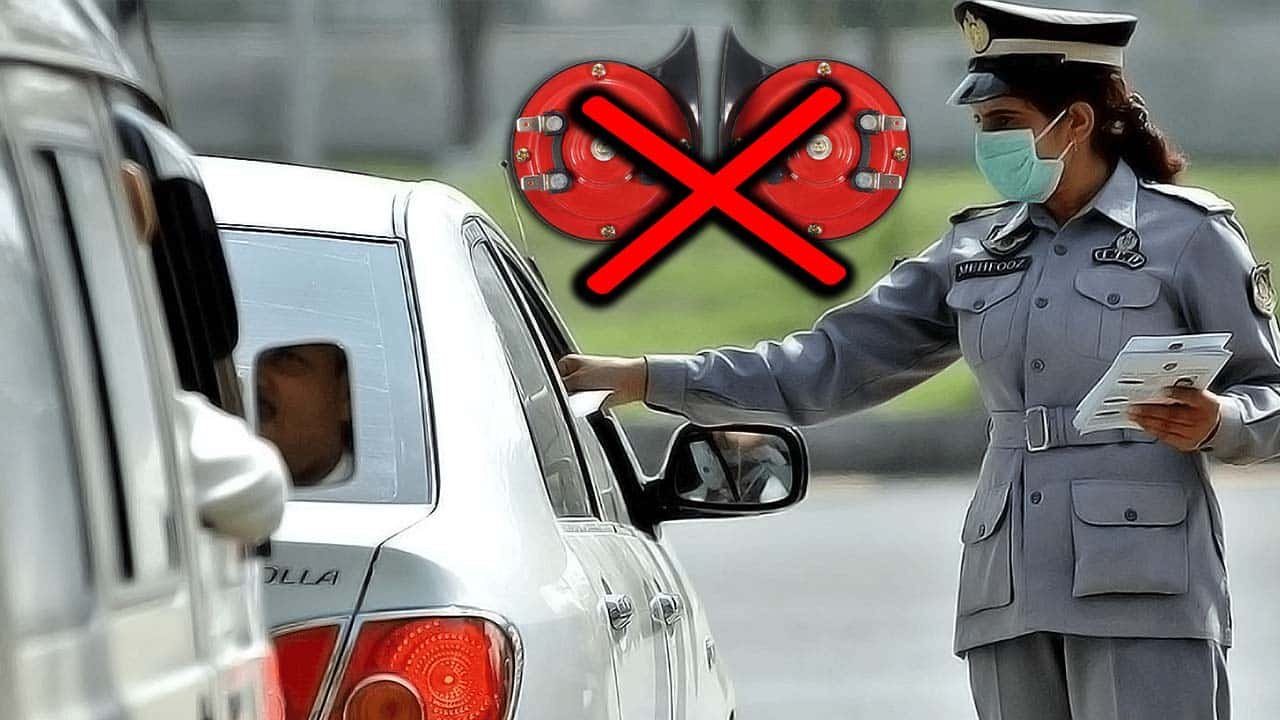
    More than 4,000 pressure horns and fancy license plates were destroyed by the Islamabad Capital Police in an attempt to reduce noise pollution and guarantee public safety.

    The destruction process at the Traffic Police Office Faizabad was observed by Chief Traffic Officer (CTO) Dr Syed Mustafa Tanveer, Superintendent (SP) Traffic Ch Abid Hussain, and other top police officers.

    On the advice of Inspector General Police (IGP) Islamabad Dr Akbar Nasir Khan, actions are being taken to guarantee a secure driving environment and a controlled traffic structure in the capital. The traffic police are working to make the capital noise-free, according to CTO Tanveer.

    To address the smog-causing issues and expedite the conversion of the brick kilns to modern technology, Commissioner Rawalpindi Division Saqib Manan has instructed the relevant authorities to take strong action against SOP violators.

    More than Rs21.1 million fine imposed on smoke-emitting vehicles

    During the previous month in the Rawalpindi area, 3,559 smoke-emitting vehicles were issued challan slips, and fines totaling more than Rs2.1 million were imposed on the violators. In addition, an industrial facility that had broken environmental laws had been sealed and fined Rs100,000.

    According to The News, drivers were urged to adopt all necessary precautions when driving in the fog by District Emergency Officer (DEO) Rawalpindi. He recommended the populace stay home during times of dense fog.

    He further advised that the drivers must keep the fog lights on and drive slowly while maintaining a safe following distance during fog.

  • Terrorism threats: Five places to remain closed on New Year’s eve

    Terrorism threats: Five places to remain closed on New Year’s eve

    Local authorities have decided to close down five key recreational points ahead of New Year’s Eve in Islamabad as threats of terrorist attacks loom over the capital.

    According to Samaa News, the decision has been taken to prevent large gatherings on New Year’s eve out of fear of terrorism.

    The places include F-9 Park, Centaurus Mall, Safa Mall, Lake View Park, and Faisal Masjid. Residents of the city won’t be allowed to go to these places to welcome 2023.

    The Deputy Commissioner (DC) has directed Assistant Commissioners (ACs) to implement the orders.

    Moreover, to prevent any untoward incident, Islamabad Capital Territory (ICT) Police have also decided to beef up the security of the federal capital and called in 1,000 Frontier Constabulary (FC) personnel to assist the police at checkposts.

    These decisions have been taken following a suicide car bomb blast in Islamabad on December 23 that left one policeman martyred and 10 injured.

  • Pizza delivery boy allegedly raped in Islamabad

    Pizza delivery boy allegedly raped in Islamabad

    On Monday, a 20-year-old pizza delivery boy was allegedly raped in Islamabad.

    The boy had gone to the Sharifabad area in the capital to deliver pizza where he was raped by a man. The suspect has been identified as Ahmed Gogi.

    A First Information Report (FIR) has been registered by the police and the ICT Director-General of Police (Operations) Suhail Zafar Chattha has directed the officials to arrest the suspect as soon as possible.

    It is pertinent to mention that this is the second case of sexual violence reported in Islamabad within the last two months. In June, a woman alleged that she was raped by her security guard in her own house.

    Last month, Punjab Home Minister Attaullah Tarar announced that the Punjab government would declare an emergency following an increase in rape and sodomy cases in the province.

  • Indians hack federal govt apps recently launched by PM Imran

    Government smartphone applications for Islamabad Traffic Police (ITP), Islamabad Capital Territory (ICT) Police, and Captial Development Authority (CDA) were hacked by Indian groups and they were siphoned for data extraction.

    Upon trying to pay an annual tax for a car, the users pointed out that the apps were not working and only had basic information such as rates of taxes of different cars and the location of offices.

    According to the media reports, The Deputy Commissioner Islamabad Hamza Shafqat revealed that the apps and services had been jammed to stop hackers from collecting data. He said that the relevant authorities are working on dealing with the issue and they will hopefully resolve the technical glitches.

    These apps were recently launched in the company of Prime Minister (PM) Imran Khan who personally attended the launch ceremony. He said that “the launch would be proven revolutionary for the people of Islamabad and these apps will soon be replicated for the rest of the country.”