Tag: IHC

  • Interior Ministry ordered banning of Twitter in Pakistan

    Interior Ministry ordered banning of Twitter in Pakistan

    The Ministry of Interior, headed by Mohsin Naqvi, has accepted that it directed Pakistan Telecommunication Authority (PTA) to ban X, formerly Twitter. The Ministry revealed this information in a reply to the Islamabad High Court (IHC), after the court had asked why the social media platform had been shutdown.

    In its reply to the IHC, the Ministry quoted the controversial 2021 social media rules stating that Twitter had not registered itself in Pakistan nor signed any MoU with the government of Pakistan.

    The reply to IHC said, “As a foreign entity operating in Pakistan, Twitter/X is subject to the regulatory framework of the country, including the compliance with legal directives issued by the Government of Pakistan.”

    It further said, “The ban on Twitter/X serves as a necessary step to address this regulatory vacuum and compel the platform to respect the sovereignty and legal jurisdiction of Pakistan.”

    The Ministry’s reply also said that the Federal Investigation Agency (FIA) has forwarded numerous requests to Twitter/X through PTA to block those accounts involved in a defamatory campaign against CJP Qazi Faez Isa and criticized the lack of cooperation from Twitter/X.

    It also mentioned that TikTok was also banned for a while by Pakistan, after which the company signed an MoU to abide by local laws, address content moderation issues, and enhance cooperation with Pak authorities.

    Meanwhile, the Sindh High Court (SHC) also directed the Ministry of Interior to revoke its letter regarding the suspension of X within one week.

    “What are you [interior ministry] achieving via shutting down trivial things […] The world must laugh at us,” said SHC Chief Justice Aqeel Ahmed Abbasi.

    As of now, X/Twitter has been inaccessible in Pakistan for the last two months.
  • Petition filed against IHC judge who wrote the letter alleging interference

    In a surprising turn of events, a complaint has been filed with the Supreme Judicial Council (SJC) against Islamabad High Court (IHC) Senior Puisne Judge Mohsin Akhtar Kayani, seeking his removal over alleged misconduct.

    The complainant, Waqas Malik Advocate, is a former secretary of the IHC Bar Association. He filed the complaint accusing the judge of pursuing an ‘anti-state agenda’ and also collusion with other judges.

    Justice Kayani is one of the six judges on March 27 wrote a scathing letter to SJC alleging deep meddling in judicial affairs by spy agencies.

    The letter had stirred a national controversy and even an inquiry commission was not enough when Justice Tassaduq Jillani refused to head the one-man commission.

    The Supreme Court took Suo Moto notice after Justice Jillani refused to head the commission.

    Coincidentally, the letter by IHC judges was followed by a series of threatening and poison-pen letters sent to judges of the higher judiciary by anonymous individuals.

  • Arsenic found in suspicious letters sent to judges

    Arsenic found in suspicious letters sent to judges

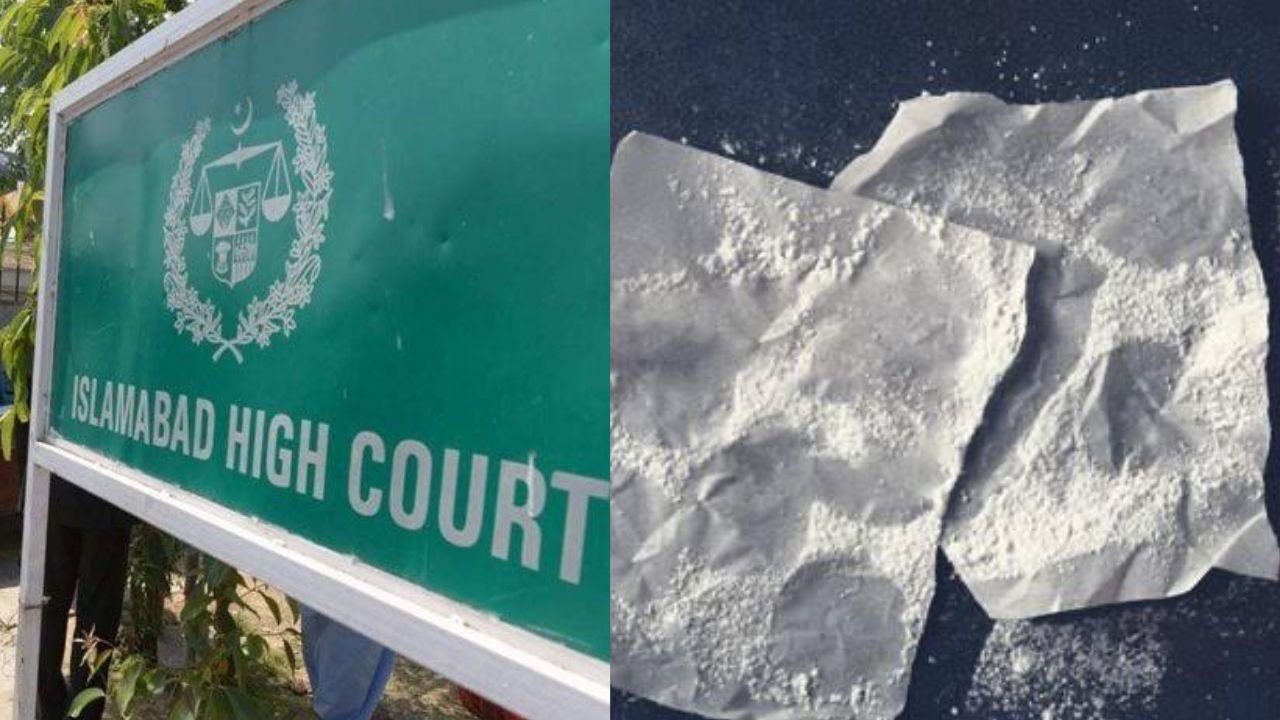
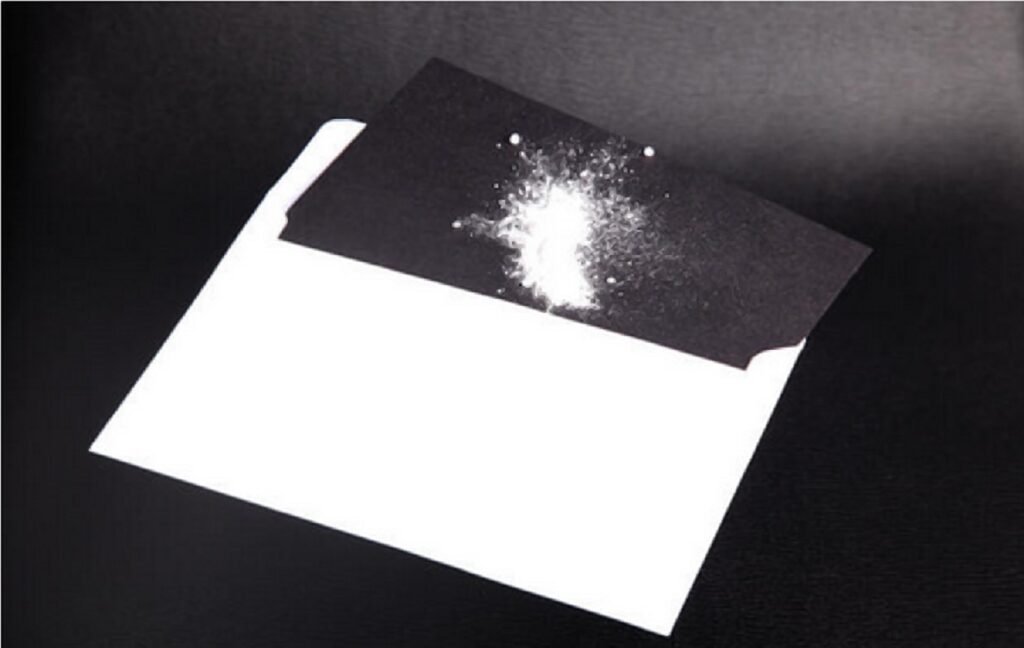
    The Counter Terrorism department (CTD) has obtained a forensic report of the powder found in the suspicious letters sent to judges of the High Court and Supreme Court (SC).

    At least four SC judges and judges of the high court—eight of the Islamabad High Court and six of the Lahore High Court—received the letters, creating fear among the judiciary.

    Justice Ali Baqar Najfi of Lahore High Court (LHC) was the last judge to receive a letter filled with white powder.

    The CTD registered two FIRs against unknown people and initiated an investigation into the matter.

    The report revealed that arsenic was mixed in powder found in the letters. The sources of GEO also uncovered that 10 percent arsenic was mixed in the powder, as a higher amount of arsenic could be “very poisonous” and harmful to the human body.

    The investigators have obtained videos of the CCTV cameras installed near the letterboxes in the sub-divisional post office in Satellite Town, Rawalpindi.

  • Tehreek e Namoos Pakistan sends threatening letters to SC

    Tehreek e Namoos Pakistan sends threatening letters to SC

    After arriving at the doorsteps of Islamabad High Court (IHC) judges, letters containing suspicious powdery substance and threatening messages have been sent to the four Supreme Court (SC) judges – including Justice Qazi Faez Isa and Justice Mansoor Ali Shah.

    Importantly, on the same day four judges of Lahore High Court received the threatening letter as well containing suspicious powdery substance.

    The suspicious powder was suspected to be anthrax.

    The letter sent to the SC jurists read, “You people at the Supreme court of Pakistan are pretending to do justice since the inception of this country. Year after year this country is pluming into chaos, poverty, corruption and disorder. SCP was supposed to be the final and ultimate check for all that is wrong in our holy country instead it became very part of the problem and rescuer of evil.”

    It further said, “Judges, Generals and politicians are the curse and disease of motherland. We Tehreek e Namoos e Pakistan say NO More…”

    Tehreek e Namoos Pakistan (TNP) is a relatively new militant group whose name emerged once before last year. It was when a team of the Wild Life Department discovered explosives and maps related to sensitive installations of the Red Zone at Margalla hills, on Trail 5 of Islamabad, September 17 2023.

  • ‘Kisi ka koyi aur agenda hai…woh chief justice bun jayein’, CJ Isa says won’t allow attack on judiciary

    ‘Kisi ka koyi aur agenda hai…woh chief justice bun jayein’, CJ Isa says won’t allow attack on judiciary

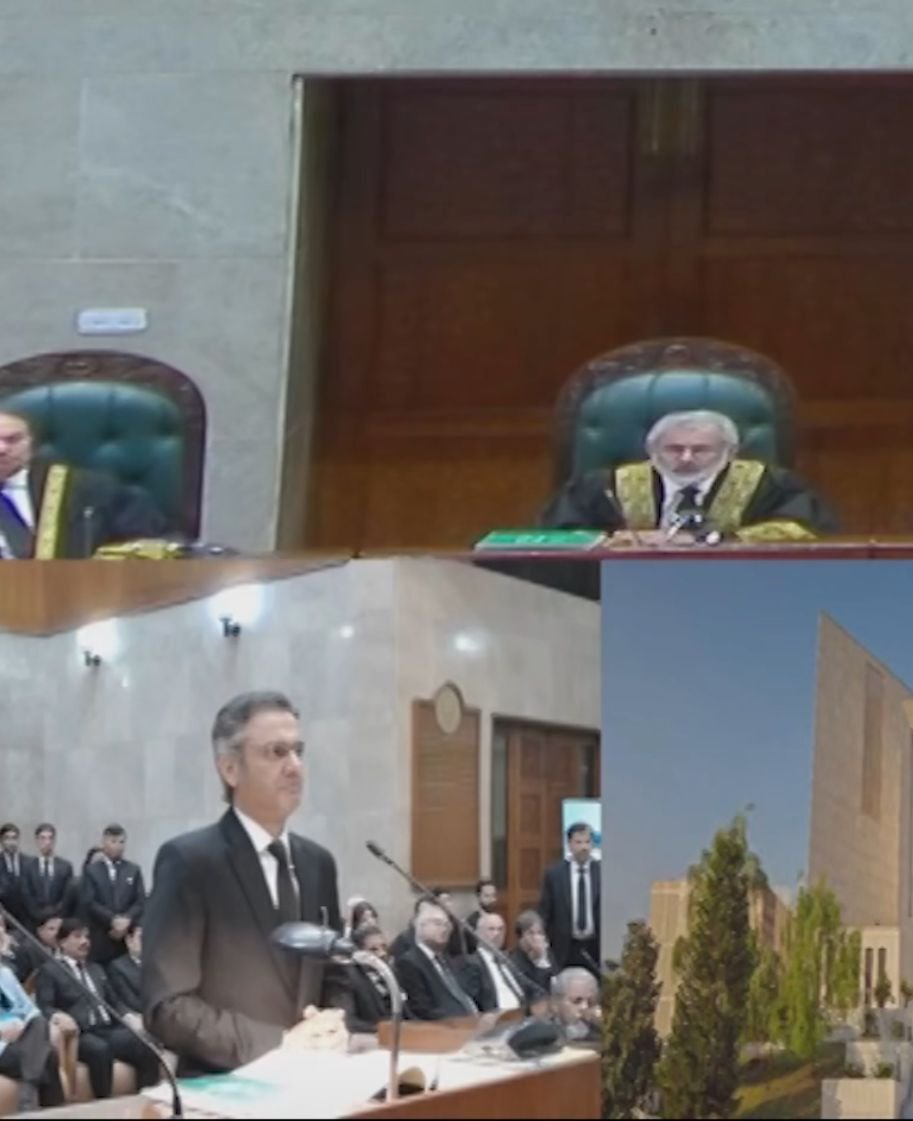
    Justice Qazi Faez Isa has said during the hearing of Supreme Court’s Suo moto notice taken on the Islamabad High Court judges’ letter that, “There is zero tolerance on the independence of judiciary.”

    The hearing is being conducted by a seven-member SC bench headed by Chief Justice Qazi Faez Isa and comprising six other judges — Justice Syed Mansoor Ali Shah, Justice Yahya Afridi, Justice Jamal Khan Mandokhel, Justice Athar Minallah, Justice Musarrat Hilali and Justice Naeem Akhtar Afghan.

    CJP Isa remarked, “Judges must be sure that they are not in danger.” He also emphasized that he could not exercise contempt power in any other court because “the court which is in contempt will exercise this power itself.”

    Importantly, the lawyers had demanded a full court in the suo moto case to which CJP raised an important point that where were these lawyers when not a single meeting of the full court was conducted in four years.

    The chief justice said: “My colleagues and I will stand before any attack on the independence of judiciary.”

  • Judges were sent letters possibly containing anthrax: CJ Islamabad High Court

    Judges were sent letters possibly containing anthrax: CJ Islamabad High Court

    The Chief Justice of Islamabad High Court (IHC), Aamer Farooq has made the startling revelation on Tuesday afternoon that judges have been sent suspicious letters possibly containing anthrax spores, leading to a delay in the divisional bench’s hearing of the cipher case.

    The letters were sent by Resham, wife of Waqar Hussain. However, the envelopes were not marked by an address.

    The threatening letters prompted the judges to call on the Islamabad Inspector General of police. A team of experts is now present in the vicinity of the court.

    Reportedly, when the letter was opened, it contained a powder which caused intense burning in the eyes. The staff immediately disinfected their hands with sterilising liquid. A crossbones symbol was also stamped inside the letter.

    The powder has been handed over to the Anti Terrorism department for further investigation.

    Anthrax is a potentially fatal disease caused by the Bacillus Anthracis bacteria. It is commonly found in soil and infects domestic DND wild animals. Dangerous levels of exposure to the spores can cause sepsis in humans, inflammation of the spinal cord and even death if internal hemorrhaging begins.

  • PTI demands full court, rejects ‘like-minded’ judges bench

    PTI demands full court, rejects ‘like-minded’ judges bench

    In an echo to past objections, former ruling party Pakistan Tehreek-e-Insaf (PTI) has rejected the constitution of a seven-member bench led by the Chief Justice of Pakistan (CJP) to investigate the six judges’ letter documenting alleged interference by intelligence agencies in judicial matters.

    At a press conference, former Chief Minister of Gligit-Baltistan Khalid Khurshid along with the party’s central information secretary Raoof Hasan declared that PTI would not accept the legitimacy of the seven-member bench terming it “like-minded judges” that was made at the behest of the CJP to get a decision of their choice.

    He demanded that a full court be constituted to investigate the serious allegations levelled by the six IHC judges and the proceedings should be telecast live. Raoof also added that judges should be allowed to tell their stories in a judicial conference as well.

    He lauded ex-CJP Tasadduq Hussain Jillani’s decision to recuse himself from the inquiry commission and congratulated the legal fraternity for their principled stance. He also commented that the IHC judges demonstrated great courage by writing the letter.

  • Tasadduq passes the buck back to the Supreme Court

    Tasadduq passes the buck back to the Supreme Court

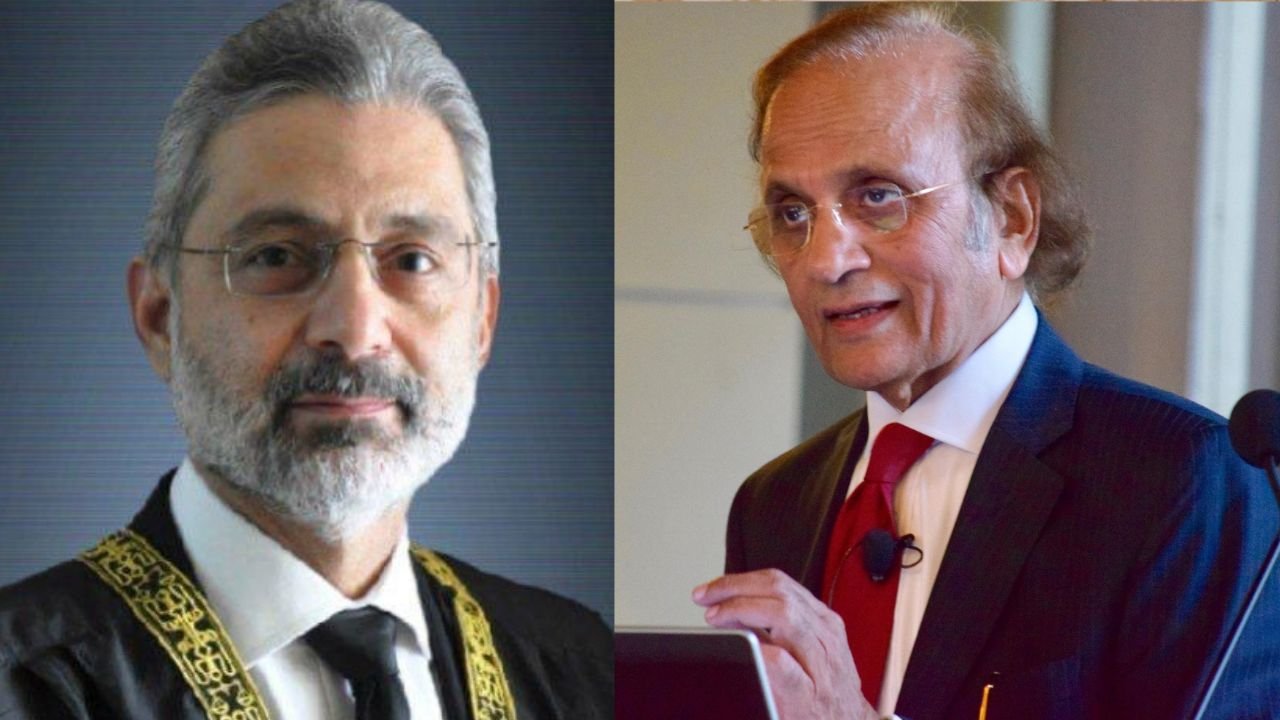
    Former Chief Justice Pakistan Tassaduq Hussain Jillani on April 1 recused himself from heading the “inquiry committee” that was approved by the Federal Cabinet regarding the Islamabad High Court judges’ letter.

    Jillani’s letter was written to Prime Minister Shehbaz Sharif with the subject “One Man Inquiry Commission.”
    Last week, on Tuesday, six judges of IHC wrote an explosive letter to the Supreme Judicial Council (SJC) alleging blatant interference of intelligence agencies in judicial matters.

    The very next day, calls for investigations began to gain ground which led to CJP Qazi Faez Isa holding a full court meeting of the Supreme Court judges.

    On Thursday, the PM met with CJP and an inquiry commission was made to probe into the matter. The Federal Cabinet approved and appointed Tassaduq Jillani as the commission head on Saturday.

    However, more than 300 lawyers wrote a joint letter to the Supreme Court urging them to take Suo Moto initiative in the judges’ allegations.

    The Supreme Court on Monday took suo motu notice of the IHC judges’ letter while the former CJP Jillani also refused to head the one-man inquiry commission citing that the letter referenced the top court to intervene so it would be “violative of judicial propriety” for him to inquire into a matter which “may fall within the jurisdiction of a constitutional body which is the SJC or the Supreme Court itself”

  • Lawyers call upon the SC to use suo moto powers to probe IHC judges letter

    More than 300 lawyers across the country have urged the Supreme Court to initiate proceedings under Article 184(3) on the Islamabad High Court Judges’ letter to the Chief Justice of Pakistan alleging “interference” by the executive in judicial matters.

    On March 26, six IHC judges — Justice Mohsin Akhtar Kiyani, Justice Tariq Mehmood Jahangiri, Justice Babar Sattar, Justice Sardar Ejaz Ishaq Khan, Justice Arbab Muhammad Tahir, and Justice Saman Fafat Imtiaz — wrote a letter to the Supreme Judicial Council (SJC), demanding a judicial convention over the alleged meddling of spy agencies in legal matters.

    Last week, the CJP met with the Prime Minister to discuss this matter and it was mutually agreed to make an inquiry commission chaired by a retired judge to investigate the allegations.

    “We further call upon the Supreme Court of Pakistan to take cognisance of the matter in its jurisdiction under Article 184(3) of the Constitution as this issue eminently relates to the public interest and to the enforcement of fundamental rights,” the lawyers’ statement came after the commission was approved by the federal cabinet.

  • Cabinet names ex-CJP Tassaduq Hussain Jillani as head of commission

    The federal cabinet on Saturday officially approved the constitution of an inquiry commission to investigate the shocking allegations made by the six Islamabad High Court (IHC) judges and forwarded the name of former Chief Justice of Pakistan Justice (retired) Tassaduq Hussain Jillani as its head.

    The IHC judges — Justice Mohsin Akhtar Kiyani, Justice Tariq Mehmood Jahangiri, Justice Babar Sattar, Justice Sardar Ejaz Ishaq Khan, Justice Arbab Muhammad Tahir, and Justice Saman Fafat Imtiaz — sent the letter on Tuesday to Supreme Judicial Council headed by CJP Qazi Faez Isa.

    The letter sent shockwaves across the country as it underscored the alleged “interference” of intelligence agencies in legal matters of the court.
    Responding to the letter, the CJP and the Prime Minister held a meeting and a decision was reached to establish a commission to investigate the contents of the letter.

    Justice Jillani is known for his ‘balanced’ approach. He was awarded the 2020 J Clifford Wallace Award by the J Reuben Clark Law Society (JRCLS) to honor his “extraordinary career as a judge and a jurist”. He also received the 2023 American Bar Association (ABA) International Human Rights Award.